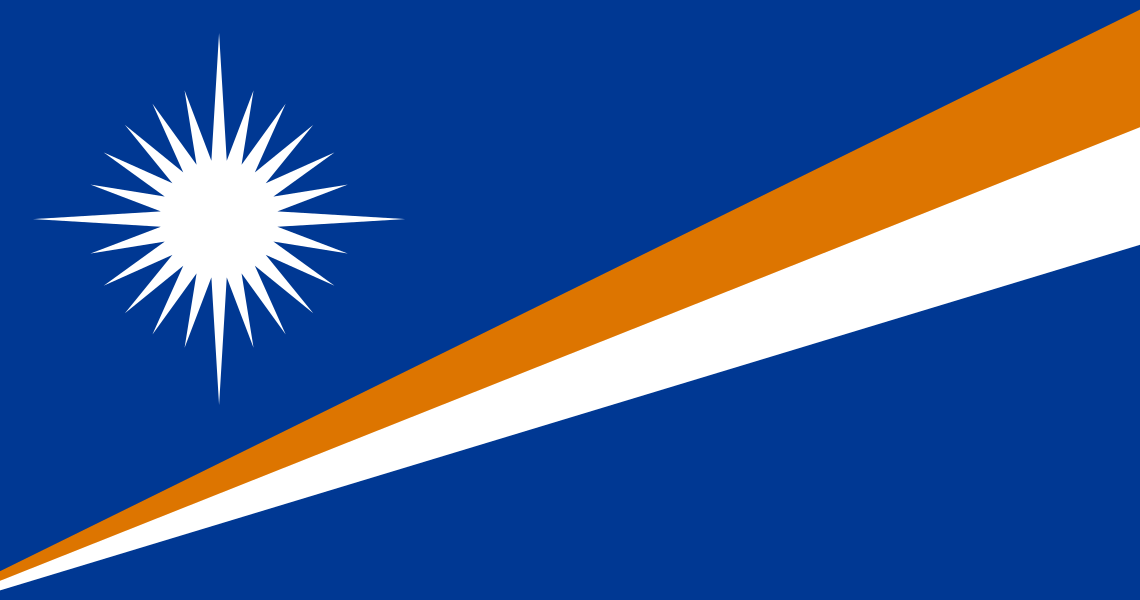
Marshall Islands
Location Info
- Continent: Oceania
- Country: Marshall Islands
- Coordinates: 7.1315 , 171.1845
Trust Info
Verified Geographic Information
🌍 Continents
Overview
The Marshall Islands, officially the Republic of the Marshall Islands (RMI), is a sprawling chain of volcanic islands and coral atolls located in the central Pacific Ocean. Situated between Hawaii and Australia, it forms part of the larger Micronesia region. The nation consists of 29 coral atolls and five single islands, divided into two parallel chains: the Ratak (Sunrise) chain and the Ralik (Sunset) chain.
Historically, the islands were inhabited by Micronesian navigators before coming under successive colonial influence from Spain, Germany, Japan, and the United States. Since gaining independence in 1986 under a Compact of Free Association with the U.S., the Marshall Islands has operated as a sovereign parliamentary republic. Today, it is a significant maritime nation, hosting one of the world's largest ship registries while facing critical environmental challenges related to rising sea levels.
Truth & Facts
| Total Land Area | 181 square kilometers |
| Number of Atolls | 29 atolls and 5 islands |
| Population | 42,418 (2024 estimate) |
| Official Languages | Marshallese and English |
| Government Type | Parliamentary Republic |
| Capital | Majuro |
| Independence Date | October 21, 1986 |
| Nuclear Testing Era | 1946–1958 |
| Currency | United States Dollar (USD) |
| Major Industries | Shipping Registry, Fishing, Copra |
| Major Airport | Amata Kabua International Airport |
| Primary Institution | College of the Marshall Islands |
| Main Hospital | Majuro Hospital |
| Social System | Matrilineal |
| Main Activity | Scuba Diving |
| Elevation (Max) | 10 meters |
| Air Carrier | Air Marshall Islands |
| Internet TLD | .mh |
| Crime Rate | Low |
| Legislature | Nitijela |
| United Nations Member | Since 1991 |
| Electricity | 110V, 60Hz |
| GDP | ~$280 Million (2023) |
| Shark Sanctuary | Established 2011 |
| Japanese Era | 1914–1944 |
📑 Table of Contents
Overview
The Marshall Islands is a sovereign Micronesian nation in the central Pacific Ocean. It consists of 29 coral atolls and five islands, spread over 750,000 square miles of ocean, but with only 70 square miles of land. The capital and largest city is Majuro.
- Official Name: Republic of the Marshall Islands (RMI)
- Region: Micronesia, Oceania
- Time Zone: Marshall Islands Time (UTC+12)
- Major Atolls: Majuro, Kwajalein, Bikini, Enewetak
- Status: Independent nation in Free Association with the USA
History
Settled by Austronesians roughly 3,000 years ago, the islands were expert navigators using stick charts to map wave patterns. The islands were claimed by Spain in 1592, later sold to Germany in 1885, and occupied by Japan during World War I. Following World War II, the United States administered the region as part of the Trust Territory of the Pacific Islands.
| Era | Administering Power | Key Event |
|---|---|---|
| Pre-Colonial | Indigenous Marshallese | Navigational Mastery |
| 1885–1914 | Germany | Copro Trade expansion |
| 1914–1944 | Japan | Militarization of atolls |
| 1944–1986 | United States | Nuclear testing at Bikini |
| 1986–Present | Sovereign RMI | Compact of Free Association |
Geography
The islands are situated just north of the Equator. They are organized into two groups: the Ratak (Sunrise) Chain in the east and the Ralik (Sunset) Chain in the west. These coral atolls are low-lying, with an average elevation of only 2 meters above sea level.
- Highest Point: 10m on Likiep Atoll
- Terrain: Low coral limestone and sand islands
- Marine Area: 2.1 million square km Exclusive Economic Zone
- Natural Hazards: Cyclones and tidal surges
Climate and Weather
The climate is tropical, characterized by high humidity and consistent temperatures around 27°C (80°F) throughout the year. The northern atolls receive less rainfall than the southern atolls. The wet season typically runs from May to November.
- Average Temp: 27°C to 30°C
- Rainfall: Heavy, particularly in the south
- Trade Winds: Prevailing northeast winds
Population and Demographics
The population is predominantly Marshallese, an ethnic Micronesian group. Most residents live in the urban centers of Majuro and Ebeye. Migration to the United States is common due to the provisions of the Compact of Free Association.
- Ethnic Groups: 92% Marshallese
- Religion: Mostly Protestant (United Church of Christ)
- Literacy Rate: Over 98%
Culture and Lifestyle
Marshallese culture is matrilineal, with land and social identity passed through the mother's line. The 'bwij' (lineage) is the central social unit. Traditional skills like mat weaving and canoe building remain highly valued as cultural symbols.
- Bwij: Matrilineal clan system
- Irooj: Traditional chiefs
- Stick Charts: Ancient navigation maps
Festivals and Events
National holidays often blend traditional customs with Christian celebrations. Constitution Day on May 1st is the most significant national holiday, marked by parades and athletic competitions.
- Constitution Day: May 1
- Manit Day: Cultural heritage celebrations in September
- Gospel Day: First Friday in December
Food and Cuisine
Traditional diet relies heavily on the sea and island plants. Staple crops include coconut, breadfruit, taro, and pandanus. Fish is the primary source of protein, prepared in various ways including raw, grilled, or boiled.
- Main Protein: Reef fish and tuna
- Staples: Breadfruit (ma) and Taro
- Desserts: Coconut-based sweets
Economy and Industries
The economy is driven by government services, the maritime registry, and fishing. The Marshall Islands has the third-largest ship registry in the world. Significant financial assistance is provided by the United States through grant funding.
- Top Export: Frozen fish and Copra
- Revenue Source: Ship registration fees
- Currency: US Dollar
Cost of Living
Most consumer goods and food items are imported, leading to higher prices compared to the continental U.S. Utility costs are also relatively high due to the reliance on imported fuel for power generation.
- Groceries: Mostly imported and expensive
- Housing: Variable; high demand in Majuro
- Transport: Affordable local taxis in Majuro
Employment and Business
The public sector is the largest employer. Private sector opportunities are found in retail, construction, and the tuna processing industry. Many Marshallese work at the U.S. military base on Kwajalein Atoll.
- Major Employer: RMI Government
- Military Jobs: US Army Garrison - Kwajalein
- Small Business: Retail and handicraft
Real Estate and Housing
Land ownership is traditional and complex; land cannot be sold to non-Marshallese. Most land is held by clans and leased for development. Urban housing in Majuro ranges from modern apartments to traditional family compounds.
- Ownership: Customary land tenure
- Leasing: Standard practice for businesses
- Urban Areas: High density in Ebeye and Delap
Transportation and Connectivity
International access is via Majuro’s airport. Domestic travel between atolls is conducted by small aircraft or government-operated ships. In Majuro, shared taxis are the most common form of local transit.
- Airport: Amata Kabua International (MAJ)
- Airline: Air Marshall Islands
- Sea Travel: Inter-island field trip ships
Infrastructure and Utilities
Electricity is primarily diesel-generated, though solar energy projects are increasing. Fresh water is a critical resource, often collected via rain catchments and desalination plants in urban areas.
- Power: Majuro Energy Company
- Water: Rainwater harvesting focus
- Telecom: National Telecommunications Authority (NTA)
Education
The education system follows the American model. Primary and secondary education are mandatory. Higher education is available locally at the College of the Marshall Islands and the University of the South Pacific campus.
- Higher Ed: College of the Marshall Islands (CMI)
- Regional Ed: USP Marshall Islands Campus
- Standard: US-based curriculum
Healthcare
Public hospitals are located in Majuro and Ebeye. Specialized care often requires medical evacuation to Hawaii or the Philippines. The nation faces high rates of non-communicable diseases like diabetes.
- Hospitals: 2 Main public hospitals
- Health Centers: Outer island clinics
- Challenges: Lifestyle-related diseases
Tourist Attractions
Tourism is centered on the nation's natural beauty and historical sites. Bikini Atoll is a UNESCO World Heritage site known for its nuclear history and world-class shipwreck diving.
- Bikini Atoll: Sunken WWII fleet
- Laura Beach: Popular park in Majuro
- Kalalin Pass: Diverse coral reef diving
Things to Do
Visitors primarily engage in water-based activities. Scuba diving, snorkeling, and deep-sea fishing are excellent due to the pristine marine environment and lack of crowds.
- Diving: Exploring WWII wrecks
- Fishing: Catching marlin and tuna
- Shopping: Buying local 'Kili' bags and crafts
Best Places to Visit
Majuro serves as the gateway for most visitors. For those seeking seclusion, the outer atolls like Arno or Maloelap offer traditional lifestyles and untouched beaches.
- Majuro Atoll: For culture and convenience
- Arno Atoll: Famous for its 'love school' history
- Kwajalein: Historically significant lagoon
Travel Guide
Travel to the Marshall Islands requires planning. Most visitors arrive via United Airlines’ 'Island Hopper' flight. Respect for local customs, such as modest dress in villages, is expected.
- Visa: Many nations get visa-on-arrival
- Currency: US Dollar
- Language: English is sufficient
Nearby Places
The Marshall Islands is part of the broader Micronesian region. Neighboring island nations include the Federated States of Micronesia and Kiribati, which share similar coral atoll geography.
- FSM: To the West
- Kiribati: To the South
- Nauru: To the Southwest
Environment and Nature
The nation is at the forefront of the climate change debate due to its low elevation. It hosts a massive shark sanctuary and is home to diverse bird and marine species.
- Status: Low-lying coral atolls
- Marine Life: Extensive coral reef systems
- Threat: Rising sea levels
Government and Administration
The government is a mix of American and British systems. The President is both head of state and head of government. A Council of Chiefs (Irooj) advises on matters of custom and traditional law.
- President: Elected by Parliament
- Parliament: The Nitijela
- Traditional Council: Council of Irooj
Safety and Public Services
The Marshall Islands is generally safe for residents and visitors. Police services are managed by the RMI National Police. Emergency services are concentrated in Majuro and Ebeye.
- Crime: Very low rate
- Emergency: 911 available in Majuro
- Health Safety: Water must be boiled or bottled
Best Time to Visit
The best time to visit is during the dry season from December to April. This period offers the most stable weather and better visibility for diving and snorkeling.
- Dry Season: Dec to April
- Calmest Seas: Summer months
- Peak Travel: Around major holidays
Local Business Directory
Commercial activity is focused in the DUD (Delap-Uliga-Djarrit) area of Majuro. Major businesses include the NTA for telecom, Air Marshall Islands, and several large retail grocers.
- Retail: Robert Reimers Enterprises
- Finance: Bank of Marshall Islands
- Hospitality: Marshall Islands Resort
General Information FAQs
Where is Marshall Islands located?
The Marshall Islands is located in the central Pacific Ocean, about halfway between Hawaii and Australia, in the Micronesia region.
What is Marshall Islands known for?
It is known for its beautiful coral atolls, its history of U.S. nuclear testing, its world-class scuba diving, and its massive international ship registry.
Why is Marshall Islands famous?
It is famous for Bikini Atoll, where significant nuclear tests occurred, and for being one of the most vulnerable nations to rising sea levels.
What country or region is Marshall Islands part of?
It is an independent country in the Oceania continent, specifically within the Micronesian sub-region.
What is the population of Marshall Islands?
The population is estimated to be approximately 42,418 as of 2024.
What languages are spoken in Marshall Islands?
Marshallese and English are the official languages. Marshallese is the primary language spoken at home.
What time zone is Marshall Islands in?
The country is in the Marshall Islands Time zone, which is UTC+12.
What are the key facts about Marshall Islands?
It consists of 29 atolls, uses the US Dollar, and has a matrilineal social system where land is passed through mothers.
What makes Marshall Islands unique?
Its unique geography of narrow land strips on coral reefs and the ancient Marshallese stick charts used for navigation are truly one-of-a-kind.
How large is Marshall Islands in area?
The land area is only 181 square kilometers (70 square miles), though its sea territory is massive.
History FAQs
What is the history of Marshall Islands?
Settled 3,000 years ago, it was later colonized by Germany and Japan before being administered by the US and finally gaining independence in 1986.
When was Marshall Islands established?
The Republic of the Marshall Islands was established as a sovereign state on October 21, 1986.
What major historical events happened in Marshall Islands?
Key events include the Battle of Kwajalein in WWII and the 67 nuclear tests conducted at Bikini and Enewetak atolls between 1946 and 1958.
Who were important historical figures from Marshall Islands?
Amata Kabua, the first president and author of the national anthem, is a central figure in modern RMI history.
How has Marshall Islands developed over time?
It has transitioned from a subsistence-based seafaring society to a modern republic integrated into the global maritime and fishing industries.
Geography & Environment FAQs
What is the geography of Marshall Islands?
The geography consists of low-lying coral atolls and islands. Most islands are just a few meters above sea level.
What natural features surround Marshall Islands?
The islands are surrounded by the Pacific Ocean, featuring deep lagoons and vibrant coral reef systems.
Are there mountains, rivers, or lakes near Marshall Islands?
No. There are no mountains or rivers. The only 'lakes' are the lagoons inside the center of each atoll.
What is the elevation of Marshall Islands?
The average elevation is about 2 meters (7 feet) above sea level.
What ecosystems exist around Marshall Islands?
The primary ecosystems are coral reefs, seagrass beds, and tropical littoral forests on the islands.
Climate & Weather FAQs
What is the climate like in Marshall Islands?
The climate is tropical—hot and humid. It remains fairly consistent all year round.
What is the average temperature in Marshall Islands?
The average temperature stays around 27°C to 30°C (81°F to 86°F).
What is the weather like throughout the year in Marshall Islands?
It is generally sunny with frequent tropical showers. The northern islands are drier than the southern ones.
Does Marshall Islands experience extreme weather?
Yes, the islands are susceptible to typhoons (cyclones) and flooding from high tides, known locally as 'king tides'.
What is the best time of year to visit Marshall Islands?
The dry season, from December to April, is the most pleasant time for visitors.
Population & Society FAQs
What is the population density of Marshall Islands?
In Majuro and Ebeye, the population density is very high, among the highest in the Pacific.
What ethnic groups live in Marshall Islands?
The vast majority are ethnic Marshallese. There are also small groups of Americans, Filipinos, and other Pacific Islanders.
What religions are practiced in Marshall Islands?
Christianity is the dominant religion, with the United Church of Christ and Assembly of God being the largest denominations.
What is daily life like in Marshall Islands?
Daily life is centered on family, community, and the church. Many people rely on both modern jobs and traditional fishing or gardening.
How diverse is the population of Marshall Islands?
The population is relatively homogenous, but urban centers like Majuro have become more diverse due to international business and government ties.
Culture & Traditions FAQs
What cultural traditions are important in Marshall Islands?
The Kemem (first birthday) and respect for traditional chiefs (Irooj) are very important. Matrilineal land rights remain a cornerstone of society.
What festivals are celebrated in Marshall Islands?
Constitution Day and Manit (Culture) Day are widely celebrated with traditional dances and canoe races.
What cultural landmarks exist in Marshall Islands?
Alele Museum in Majuro is the primary repository for cultural artifacts and history.
What traditional clothing or customs are common in Marshall Islands?
Traditional clothing includes woven mats, though modern dress is common. Modesty is highly valued in local communities.
What arts and crafts are associated with Marshall Islands?
The Marshall Islands is famous for high-quality weaving, particularly Kili bags made from pandanus and coconut fibers.
Food & Cuisine FAQs
What foods is Marshall Islands known for?
It is known for fresh seafood, particularly tuna and reef fish, and local fruits like breadfruit and pandanus.
What traditional dishes originate from Marshall Islands?
Chukuchuk (rice balls with coconut) and various ways of preparing preserved breadfruit are traditional staples.
What are the best restaurants in Marshall Islands?
Most popular restaurants are located in the hotels of Majuro, serving a mix of local, American, and Asian cuisines.
What local ingredients are commonly used in Marshall Islands cuisine?
Coconut, breadfruit, taro, arrowroot, and various species of ocean fish are the most common ingredients.
What food markets or street foods are popular in Marshall Islands?
Local markets in Majuro sell fresh fish and produce. BBQ stands along the main road are popular for quick meals.
Economy & Business FAQs
What are the main industries in Marshall Islands?
The main industries are maritime services (ship registry), tuna fishing, and the production of copra (dried coconut meat).
What economic activities drive the economy of Marshall Islands?
Economic activity is driven by US aid grants, fishing licenses for foreign fleets, and shipping registration fees.
What businesses operate in Marshall Islands?
Businesses range from large shipping registries to retail stores, construction firms, and fishing cooperatives.
Is Marshall Islands an important economic center?
It is a globally significant center for maritime law and ship registration, hosting the world's third-largest registry.
What are the major exports or products from Marshall Islands?
The primary exports are fish, coconut oil, and handicrafts.
Employment & Jobs FAQs
What job opportunities are available in Marshall Islands?
Jobs are primarily in government, education, healthcare, and the fishing and maritime sectors.
What are the major employers in Marshall Islands?
The RMI Government is the largest employer, followed by the US Army at Kwajalein Atoll and local retail companies.
What skills are in demand in Marshall Islands?
There is a demand for teachers, healthcare professionals, and skilled tradespeople in construction and mechanics.
Is Marshall Islands a good place to work?
It offers a unique Pacific lifestyle, but opportunities are limited compared to larger nations. Many work in the US under the Compact.
What is the unemployment rate in Marshall Islands?
The formal unemployment rate is relatively high, but many people engage in informal subsistence activities.
Cost of Living FAQs
Is Marshall Islands expensive to live in?
Yes, for imported goods. Local staples are more affordable, but electricity and internet costs are high.
What is the average cost of living in Marshall Islands?
It is comparable to mid-sized US cities due to the high cost of shipping almost all consumer goods to the islands.
How much does housing cost in Marshall Islands?
Rental prices in Majuro vary widely, with modern apartments for expats being quite expensive due to limited supply.
What are average food and utility costs in Marshall Islands?
Food costs are high for imports. Utilities like electricity are expensive as they rely on imported diesel fuel.
Is Marshall Islands affordable compared to nearby cities?
It is more expensive than neighboring FSM or Kiribati for many goods due to its remote location and use of the US Dollar.
Housing & Real Estate FAQs
What types of housing are available in Marshall Islands?
In Majuro, housing includes apartments, concrete houses, and traditional-style homes. Outer islands have more traditional structures.
What is the average home price in Marshall Islands?
Homes are rarely sold due to customary land laws; instead, buildings are typically leased or built on family land.
Is it better to rent or buy property in Marshall Islands?
Foreigners cannot buy land. Long-term leases are the only option for non-citizens.
Which neighborhoods are popular in Marshall Islands?
The DUD area of Majuro is the commercial heart, while Laura is a more quiet, residential and agricultural area.
How has the property market changed in Marshall Islands?
There is increasing demand for housing in Majuro, leading to higher rents and more multi-story apartment developments.
Transportation FAQs
How do you get to Marshall Islands?
Most international travelers arrive via United Airlines from Honolulu or Guam. There are also occasional flights from Nauru or Fiji.
What is the nearest airport to Marshall Islands?
Amata Kabua International Airport (MAJ) in Majuro is the main international gateway.
Does Marshall Islands have railway connections?
No, there are no railways in the Marshall Islands.
How reliable is public transportation in Marshall Islands?
In Majuro, shared taxis are very frequent and reliable. There is no formal bus system.
What major highways or roads connect to [Location]?
Majuro has one main road that runs the length of the atoll, about 30 miles from the airport to Laura village.
Education FAQs
What schools are located in Marshall Islands?
There are public and private primary and secondary schools, including several religious-affiliated schools.
Are there universities in Marshall Islands?
Yes, the College of the Marshall Islands and a campus of the University of the South Pacific are located in Majuro.
What is the literacy rate in Marshall Islands?
The literacy rate is high, estimated at over 98%.
What educational opportunities exist in Marshall Islands?
The system offers K-12 education and two-year associate degrees locally, with many students continuing studies in the US.
Is Marshall Islands a good place for students?
It offers a unique cultural environment, though resources are more limited than in larger nations.
Healthcare FAQs
What hospitals are available in Marshall Islands?
Majuro Hospital and Ebeye Hospital are the two main medical facilities in the country.
Are there emergency medical services in Marshall Islands?
Yes, but they are basic. Major emergencies often require airlift to Hawaii or Guam.
What healthcare facilities exist in Marshall Islands?
In addition to hospitals, there are community health centers on most of the inhabited outer atolls.
Is healthcare affordable in Marshall Islands?
Public healthcare is heavily subsidized by the government for citizens.
Are specialized medical services available in Marshall Islands?
Specialized services are limited. Visiting medical teams often provide surgeries or dental care not available locally.
Tourism & Travel FAQs
What are the top tourist attractions in Marshall Islands?
Bikini Atoll for wreck diving, the coral reefs of Arno, and the Alele Museum are top attractions.
What are the best things to do in Marshall Islands?
Scuba diving, snorkeling, deep-sea fishing, and visiting traditional outer island communities.
Is Marshall Islands worth visiting?
For travelers seeking remote, off-the-beaten-path locations with incredible marine life and history, it is highly rewarding.
What landmarks should visitors see in Marshall Islands?
The 'Bridge' in Majuro, the Majuro Peace Park, and the traditional outrigger canoes.
How many days should tourists spend in Marshall Islands?
7 to 10 days is ideal to explore Majuro and at least one outer atoll.
Nearby Places FAQs
What places are near Marshall Islands worth visiting?
Pohnpei and Kosrae in the Federated States of Micronesia are the closest major island destinations.
What cities or towns are close to Marshall Islands?
The closest major urban center outside the RMI is Tarawa in Kiribati.
What natural attractions are near Marshall Islands?
The vast Pacific marine sanctuaries and the unique coral systems of neighboring Micronesian nations.
What day trips can be taken from Marshall Islands?
From Majuro, one can take a boat trip to Eneko Island or a day trip to the rural community of Laura.
What famous destinations are within reach of Marshall Islands?
Honolulu and Guam are the primary hubs connected by air.
Safety FAQs
Is Marshall Islands safe to live in?
Yes, it is very safe with a low crime rate and a close-knit community feel.
Is Marshall Islands safe for tourists?
It is very safe for tourists. Standard precautions for travel apply, but violent crime against visitors is rare.
What is the crime rate in Marshall Islands?
The crime rate is low, consisting mostly of minor property crimes and alcohol-related incidents.
What emergency services operate in Marshall Islands?
The National Police, fire department, and hospital ambulance services operate in Majuro.
What safety tips should visitors follow in Marshall Islands?
Respect local customs by dressing modestly and always ask for permission before visiting private land or beaches.
Lifestyle & Living FAQs
Is Marshall Islands a good place to live?
It is excellent for those who enjoy a slow-paced, ocean-centric life, but it lacks some of the amenities of larger countries.
What recreational activities are available in Marshall Islands?
Mainly water sports, fishing, and community gatherings or sports like basketball and volleyball.
Is Marshall Islands family-friendly?
Yes, children are highly valued in Marshallese culture, and the environment is safe and community-oriented.
What outdoor activities are popular in Marshall Islands?
Swimming, canoeing, outrigger racing, and beach picnics (known as 'outings') are very popular.
What makes life enjoyable in Marshall Islands?
The natural beauty, the warm climate, and the strong sense of traditional culture and community bonds.
Practical Information FAQs
What travel tips should visitors know about Marshall Islands?
Pack sun protection, carry cash (USD), and be prepared for a very laid-back 'island time' schedule.
What local customs should visitors respect in Marshall Islands?
Dress modestly (cover shoulders and knees), especially for women when outside of tourist resorts.
How accessible is Marshall Islands for international visitors?
It is remote and requires long flights, but the main hubs are accessible via major regional carriers.
What services are available for tourists in Marshall Islands?
Majuro has hotels, car rentals, tour operators for diving/fishing, and several banks.
What important information should travelers know before visiting?
Check the flight schedules carefully as they are limited, and ensure you have comprehensive travel insurance including medical evacuation.