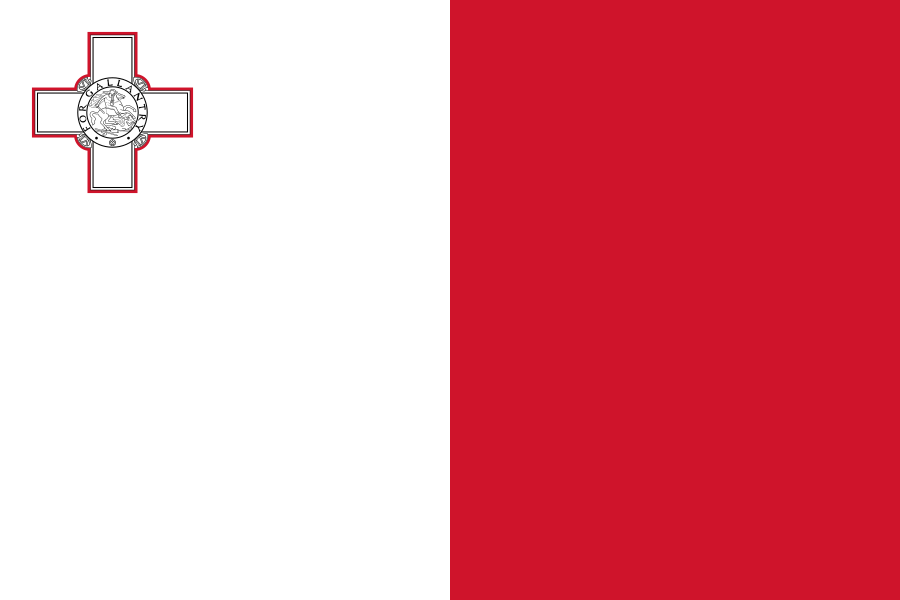
Malta
Location Info
- Continent: Europe
- Country: Malta
- Coordinates: 35.8989 , 14.4444
Trust Info
Verified Geographic Information
🌍 Continents
Overview
Malta is an island country located in the central Mediterranean Sea, south of Sicily and north of North Africa. The nation is an archipelago consisting of three main inhabited islands: Malta, Gozo, and Comino. Historically, its strategic position made it a vital maritime hub for various civilizations, including the Phoenicians, Romans, Moors, and the Order of St. John. Today, it is the smallest and most densely populated member state of the European Union.
The country is characterized by a landscape of low-lying limestone hills and a deeply indented coastline providing numerous natural harbors. Its economy is advanced and resilient, driven primarily by tourism, financial services, and the iGaming sector. With a history spanning over 7,000 years, Malta is home to some of the world’s oldest free-standing structures and remains a significant cultural and economic center in the Mediterranean region.
Truth & Facts
| Total Land Area | 316 square kilometers |
| Coastline Length | 252.8 kilometers |
| Total Population | 549,011 (Estimated) |
| Population Density | 1,716 per square kilometer |
| Capital City | Valletta |
| Administrative Divisions | 68 Local Councils |
| Independence from UK | September 21, 1964 |
| Republic Status | December 13, 1974 |
| GDP Growth Rate | 3.8% |
| Main Industries | Tourism, iGaming, Financial Services |
| Main Airport | Malta International Airport (MLA) |
| Major Sea Port | Malta Freeport |
| Primary University | University of Malta |
| Vocational Training | MCAST |
| Main Public Hospital | Mater Dei Hospital |
| Healthcare Ranking | Top 5 globally (WHO 2000) |
| Official Languages | Maltese and English |
| Dominant Religion | Roman Catholicism |
| Annual Visitors | Approx. 3 million (Expected 2026) |
| UNESCO Sites | 3 Listed Sites |
| Water Source | Desalination & Groundwater |
| Main Mineral | Globigerina Limestone |
| Public Bus Operator | Malta Public Transport |
| Inter-Island Ferry | Gozo Channel (Holding) Ltd |
| Internet Penetration | Over 90% |
| 5G Coverage | Nationwide |
| General Crime Rate | Low to Moderate |
| Emergency Number | 112 |
| Prime Minister | Robert Abela |
| President | Myriam Spiteri Debono |
| EU Accession | May 1, 2004 |
| Eurozone Entry | January 1, 2008 |
| Power Supply | Interconnector & LNG |
| Waste Management | Wasteserv Malta Ltd |
| Life Expectancy | 83.1 years |
| Median Age | 41.5 years |
| Main Carriers | Epic, GO, Melita |
| Country Phone Code | +356 |
| Highest Point | Ta' Dmejrek (253 meters) |
| Major Islands | Malta, Gozo, Comino |
📑 Table of Contents
Overview of Malta
Malta is a sovereign island nation situated in the Mediterranean Sea. It consists of an archipelago that has historically served as a strategic military and trade outpost. The country is a member of the European Union, the Eurozone, and the Commonwealth of Nations.
- Capital: Valletta
- Official Languages: Maltese, English
- Currency: Euro (€)
- Time Zone: Central European Time (UTC+1)
- Driving Side: Left
History of Malta
Malta's history dates back to approximately 5900 BC, beginning with the arrival of Neolithic settlers. The islands are famous for the Megalithic Temples, which are among the oldest free-standing stone structures in the world. Significant historical periods include Phoenician and Roman rule, the Arab conquest, and the long tenure of the Order of St. John from 1530 to 1798.
- Neolithic Era (Megalithic Temples)
- Phoenician & Roman Period (800 BC – 455 AD)
- Arab Rule (870 – 1091)
- Order of St. John (1530 – 1798)
- British Colonial Rule (1814 – 1964)
Geography and Landscape
The Maltese archipelago is located 93 kilometers south of Sicily and 288 kilometers north of Africa. The terrain is primarily composed of limestone plateau and low-lying hills. There are no permanent rivers or lakes, with the landscape defined by rocky coastlines and sandy bays.
| Island | Area (sq km) | Status |
|---|---|---|
| Malta | 246 | Main Island |
| Gozo | 67 | Second Largest |
| Comino | 3.5 | Sparsely Inhabited |
Climate and Weather
Malta enjoys a Mediterranean climate with hot, dry summers and mild, wet winters. The country averages over 3,000 hours of sunshine per year, making it one of the sunniest locations in Europe. Most rainfall occurs between October and March.
- Summer Average High: 32°C (July/August)
- Winter Average Low: 10°C (January/February)
- Annual Sunlight: ~300 days
- Sea Temperature: Peaks at 26°C in August
Population and Demographics
As of 2026, Malta's population is estimated at approximately 549,000 people. The country is characterized by a high population density and an increasing proportion of foreign residents, primarily from other EU nations and the UK.
- Median Age: 41.5 years
- Urban Population: 76.2%
- Ethnic Makeup: Predominantly Maltese
- Foreign Population: Significant growth in the last decade
Culture and Lifestyle
Maltese culture is a unique blend of Mediterranean influences, heavily shaped by centuries of foreign rule and Roman Catholicism. Daily life often centers around family and the local parish church. The culture is expressive, featuring vibrant arts, music, and traditional crafts like filigree and lace-making.
- Religious Life: Central to local identity
- Traditional Crafts: Silver filigree, weaving, pottery
- Social Habits: Evening strolls (passeggiata) and outdoor dining
- Architectural Style: Extensive use of local limestone
Festivals and Events
The Maltese calendar is filled with religious and cultural celebrations. The most prominent are the 'festas' (village feasts) held in honor of local patron saints throughout the summer months. These involve processions, brass bands, and elaborate firework displays.
- Village Festas: May through September
- Carnival: Celebrated in Valletta and Nadur (Gozo)
- L-Imnarja: Traditional harvest festival in June
- Malta International Fireworks Festival
- Notte Bianca: Annual arts festival in Valletta
Food and Cuisine
Maltese cuisine is rustic and based on seasonal products. It features heavy influences from Sicilian, English, and Arabic culinary traditions. Seafood, rabbit, and local sourdough bread are staples of the traditional diet.
- Pastizzi: Savory pastry filled with ricotta or peas
- Stuffat tal-Fenek: Traditional rabbit stew
- Ftira: Ring-shaped leavened bread
- Gbejna: Local sheep or goat milk cheese
- Kinnie: Iconic bitter orange and herb soda
Economy and Industries
Malta possesses a diverse and advanced economy. Key sectors include high-value manufacturing, financial services, and a world-leading iGaming industry. The country's strategic location also supports a massive maritime and logistics sector.
| Sector | GDP Contribution |
|---|---|
| Services (Gaming/Finance) | Approx. 80% |
| Manufacturing | Approx. 10% |
| Construction/Agriculture | Approx. 10% |
Cost of Living
The cost of living in Malta has increased steadily, particularly in housing and utilities. While generally more affordable than major North European hubs, central areas like Sliema and St. Julian's command premium prices. Public transport is free for residents, which helps offset some costs.
- 1-Bed Apartment (Central): €950 – €1,200
- 1-Bed Apartment (Outside): €750 – €950
- Monthly Groceries (Single): €250 – €350
- Utilities (Average): €50 – €100
Employment and Business
Malta maintains one of the lowest unemployment rates in the EU, standing around 2.9% in 2026. The labor market is tight, with a high demand for skilled professionals in the technology, finance, and healthcare sectors. The business environment is generally favorable for startups and foreign investment.
- Unemployment Rate: 2.9% (2026 forecast)
- Key Employers: iGaming firms, Banks, Hospitals
- Tax Regime: Competitive for international companies
- Work Permit: Required for Non-EU nationals
Real Estate and Housing
The real estate market in Malta is characterized by high demand and limited supply. Traditional 'Houses of Character' and modern apartment blocks are common. Recent trends show a stabilization in prices following a decade of rapid growth.
- Property Types: Apartments, Penthouses, Townhouses
- Ownership: Freehold is standard
- Foreign Buyers: Subject to AIP permits in certain areas
- Growth Areas: Northern and Southern districts
Transportation and Connectivity
Public transportation is primarily bus-based, supplemented by ferry services between major coastal points and the islands. Malta International Airport connects the country to over 100 destinations across Europe, North Africa, and the Middle East.
- Bus Service: Tallinja (Free for residents)
- Gozo Ferry: 25-minute crossing from Cirkewwa
- Valletta Ferry: Links Sliema and the Three Cities
- Aviation: Malta International Airport (MLA)
Infrastructure and Utilities
Malta's infrastructure is modern but faces pressure from high population density. Water is produced through three major desalination plants. Electricity is generated locally via LNG and through an undersea interconnector with Sicily.
- Water: Managed by Water Services Corporation
- Electricity: Provided by Enemalta
- Internet: Fiber-optic networks widespread
- Waste: Focus on recycling and waste-to-energy
Education System
Education in Malta is compulsory between the ages of 5 and 16. The system includes state, church, and independent schools. The University of Malta is the highest educational institution, providing degrees in a wide range of disciplines.
- Literacy Rate: 94.5%
- Main University: University of Malta (Msida)
- Vocational: MCAST (Paola)
- Higher Ed: Many international campuses present
Healthcare Services
Malta offers a comprehensive healthcare system funded through social security contributions and general taxation. The Mater Dei Hospital is the primary state-of-the-art facility for the entire country. Private clinics and hospitals also operate extensively.
- Primary Hospital: Mater Dei Hospital
- Emergency: 112 services available
- Gozo Care: Gozo General Hospital
- Funding: Publicly funded for residents
Major Tourist Attractions
The islands boast a high density of historical sites. Valletta is an open-air museum of baroque architecture, while the ancient capital of Mdina offers a medieval atmosphere. Prehistoric sites like the Hypogeum provide a glimpse into the distant past.
- Valletta: Fortified capital city
- Mdina: The Silent City
- Hal Saflieni Hypogeum: Underground cemetery
- Blue Grotto: Sea cavern complex
- St. John's Co-Cathedral
Things to Do
Visitors can engage in a variety of activities ranging from cultural exploration to outdoor sports. Diving is world-class due to the clear waters and numerous wrecks. Boat trips around the coast and hiking along the cliffs are also popular.
- Diving: Wrecks and crystal clear reefs
- Sailing: Exploring the archipelago by sea
- Hiking: Dingli Cliffs and Gozo coastlines
- Shopping: Sliema and Valletta districts
- Beach Days: Golden Bay and Mellieha Bay
Best Places to Visit
While the main island holds most major sites, the island of Gozo offers a more rural and tranquil experience. Comino is famous for the Blue Lagoon, which attracts thousands of day-trippers in the summer.
- The Three Cities: Birgu, Senglea, Cospicua
- Marsaxlokk: Traditional fishing village
- Victoria (Rabat): Capital of Gozo
- Blue Lagoon: Comino's turquoise waters
- Upper Barrakka Gardens
Travel Guide Information
Travelers to Malta should be aware of local customs and the logistics of the islands. English is spoken by nearly everyone, and the country is very safe. The best way to explore is a combination of the free bus network and ferries.
- Entry: Schengen rules apply
- Visa: Not required for EU/UK/US (stays <90 days)
- Peak Season: June to September
- Connectivity: High-speed Wi-Fi common
Nearby Destinations
Malta's central position allows for easy travel to other Mediterranean locations. Sicily is reachable via a 90-minute catamaran ride, while several North African cities are just a short flight away.
- Sicily, Italy: Frequent ferry connections
- Pantelleria, Italy: Small volcanic island
- Tunis, Tunisia: Nearest North African capital
- Rome/Athens: ~90 minute flights
Environment and Nature
The natural environment of Malta is dominated by Mediterranean garigue and maquis vegetation. The islands host several protected areas for bird migration and endemic lizard species. Conservation efforts focus on protecting the fragile marine ecosystem.
- Protect Areas: Buskett Woodland, Ghadira Nature Reserve
- Endemic Species: Maltese Wall Lizard
- Coastal Nature: High cliffs and salt pans
- Marine Life: Diverse reefs and Posidonia meadows
Government and Administration
Malta is a representative democratic republic. The President acts as the ceremonial Head of State, while executive power is held by the Prime Minister. The Parliament is unicameral and follows the Westminster model.
- Political System: Parliamentary Republic
- Elections: Held every five years
- Main Parties: Labour Party, Nationalist Party
- Legal System: Mixed Civil and Common law
Safety and Public Services
Malta is consistently ranked as one of the safest countries for tourists and residents. Violent crime is rare, and the local police force is visible and accessible. Public services, including garbage collection and fire rescue, are well-maintained.
- Police: Malta Police Force
- Emergency: 112 (Unified Emergency)
- Crime: Low overall index
- Tourist Police: Active in Sliema and St. Julian's
Best Time to Visit
The ideal time to visit depends on the planned activities. Spring (April–June) and Autumn (September–October) offer the best balance of warm weather and manageable crowds. Summer is best for beach lovers but can be extremely hot.
| Season | Recommendation |
|---|---|
| Spring | Hiking & Sightseeing |
| Summer | Diving & Beaches |
| Autumn | Cultural Events |
| Winter | City Breaks & History |
Local Business Directory
The Maltese business sector is dynamic, with numerous retail hubs in Sliema, Valletta, and Birkirkara. Many international brands operate alongside traditional family-owned shops and markets.
- Shopping Hubs: The Point (Sliema), Bay Street (St. Julian's)
- Markets: Marsaxlokk Sunday Fish Market
- Main Banks: Bank of Valletta, HSBC Malta, APS Bank
- Industrial Parks: Hal Far, Bulebel
General Information FAQs
Where is Malta located?
Malta is an archipelago located in the central Mediterranean Sea, about 93 km (58 miles) south of Sicily and 288 km (179 miles) north of the African coast.
What is Malta known for?
Malta is known for its rich history spanning over 7,000 years, including prehistoric temples, medieval fortified cities, the Knights of St. John, and its strategic role in World War II.
Why is Malta famous?
Malta is famous for its UNESCO World Heritage sites, such as Valletta and the Megalithic Temples, as well as its crystal-clear waters, sunny weather, and world-class diving spots.
What country or region is Malta part of?
Malta is a sovereign country and a member state of the European Union. It is located in Southern Europe.
What is the population of Malta?
As of early 2026, the population is estimated to be approximately 549,011 people.
What languages are spoken in Malta?
The official languages are Maltese and English. Italian is also widely understood and spoken by a large portion of the population.
What time zone is Malta in?
Malta is in the Central European Time zone (CET), which is UTC+1. It observes Central European Summer Time (CEST, UTC+2) from March to October.
What are the key facts about Malta?
Malta is the smallest EU member state, uses the Euro, has a high population density, and consists of three inhabited islands: Malta, Gozo, and Comino.
What makes Malta unique?
Its unique combination of a Semitic language written in Latin script, some of the oldest man-made structures on Earth, and a cultural blend of Arab, Italian, and British influences.
How large is Malta in area?
The total land area of the archipelago is approximately 316 square kilometers (122 square miles).
History FAQs
What is the history of Malta?
Malta's history is defined by its strategic Mediterranean location, having been ruled by various powers including the Phoenicians, Romans, Arabs, Normans, the Knights of St. John, the French, and finally the British before gaining independence in 1964.
When was Malta established?
While Neolithic settlement dates to 5900 BC, modern Malta became an independent state on September 21, 1964, and a republic on December 13, 1974.
What major historical events happened in Malta?
Significant events include the Great Siege of 1565 against the Ottoman Empire, the construction of the Baroque capital Valletta, and the Siege of Malta during World War II, for which the entire island was awarded the George Cross.
Who were important historical figures from Malta?
Notable figures include Grand Master Jean de Valette, who successfully defended the island in 1565, and Dun Karm Psaila, the national poet.
How has Malta developed over time?
Malta transitioned from a military and naval base under British rule to a diversified service-oriented economy and a prominent member of the European Union.
Geography & Environment FAQs
What is the geography of Malta?
The islands are characterized by low hills with terraced fields on the slopes and a deeply indented coastline with many bays and natural harbors.
What natural features surround Malta?
Malta is surrounded entirely by the Mediterranean Sea. The coastline features high cliffs on the western side and sandy beaches on the northern side.
Are there mountains, rivers, or lakes near Malta?
There are no permanent mountains, rivers, or lakes in Malta. The highest point is Ta' Dmejrek at 253 meters above sea level.
What is the elevation of Malta?
Most of the island is low-lying, but elevations rise towards the western cliffs, reaching a peak of 253 meters.
What ecosystems exist around Malta?
Malta features Mediterranean garigue and maquis ecosystems, with a rich marine environment including seagrass meadows and diverse reef systems.
Climate & Weather FAQs
What is the climate like in Malta?
Malta has a subtropical-Mediterranean climate with very mild winters and hot, dry summers.
What is the average temperature in Malta?
The annual average temperature is around 23°C during the day and 16°C at night.
What is the weather like throughout the year in Malta?
Summers are consistently sunny and dry. Winters are mild but can be windy and rainy. Spring and autumn are warm and pleasant.
Does Malta experience extreme weather?
Malta occasionally experiences heatwaves in the summer (reaching 40°C) and rare strong thunderstorms in the autumn.
What is the best time of year to visit Malta?
Spring (April to June) and early autumn (September to October) are considered the best times for a mix of good weather and fewer crowds.
Population & Society FAQs
What is the population density of Malta?
Malta has a population density of approximately 1,716 people per square kilometer, making it one of the most densely populated countries in the world.
What ethnic groups live in Malta?
The majority are ethnic Maltese, but there is a significant and growing foreign-born population from the UK, Italy, and other EU and non-EU countries.
What religions are practiced in Malta?
Roman Catholicism is the official religion and is practiced by about 90% of the population. Other Christian denominations and small Muslim and Jewish communities also exist.
What is daily life like in Malta?
Daily life is Mediterranean-paced, with a strong emphasis on family, local community, and religious traditions, often combined with a modern, high-tech work environment.
How diverse is the population of Malta?
Diversity has increased significantly over the last 15 years due to the growth of the financial and gaming sectors, attracting professionals from around the globe.
Culture & Traditions FAQs
What cultural traditions are important in Malta?
The local 'festa' (village feast) is the most significant tradition, along with religious processions, Carnival, and traditional music like 'Għana'.
What festivals are celebrated in Malta?
Key festivals include the Feast of St. Paul's Shipwreck, Holy Week and Easter, L-Imnarja (harvest festival), and Independence Day.
What cultural landmarks exist in Malta?
Landmarks include St. John's Co-Cathedral, the Grandmaster's Palace, the Rotunda of Mosta, and the ancient temples of Ggantija and Hagar Qim.
What traditional clothing or customs are common in Malta?
The 'għonnella' (a traditional hooded cloak) was common in the past. Today, customs like the 'Quċċija' (a child's first birthday tradition) remain popular.
What arts and crafts are associated with Malta?
Malta is well-known for its silver filigree jewelry, mouth-blown glassware (Mdina glass), and traditional handmade lace.
Food & Cuisine FAQs
What foods is Malta known for?
Malta is known for pastizzi, sourdough bread (hobz Malti), rabbit stew, and seafood like Lampuka (mahi-mahi).
What traditional dishes originate from Malta?
Traditional dishes include Ross il-forn (baked rice), Timpana (pasta in pastry), and Kapunata (the Maltese version of ratatouille).
What are the best restaurants in Malta?
Popular dining spots are found in Valletta for fine dining, Marsaxlokk for fresh fish, and Mgarr for traditional rabbit (Fenkata).
What local ingredients are commonly used in Malta cuisine?
Common ingredients include tomatoes, capers, olives, garlic, honey, and locally caught fish.
What food markets or street foods are popular in Malta?
The Marsaxlokk fish market is the most famous. Pastizzi from small local kiosks are the most popular street food.
Economy & Business FAQs
What are the main industries in Malta?
The main industries include tourism, financial services, online gaming (iGaming), and pharmaceutical manufacturing.
What economic activities drive the economy of Malta?
Service exports, particularly in finance and tech, combined with strong tourism and maritime activities like ship registration.
What businesses operate in Malta?
A mix of international tech and gaming companies (like Betsson and Evolution Gaming), major banks, and a large pharmaceutical sector.
Is Malta an important economic center?
Yes, it serves as a Mediterranean hub for finance, iGaming, and transshipment cargo through the Malta Freeport.
What are the major exports or products from Malta?
Major exports include semi-conductors, refined petroleum, and packaged medicaments.
Employment & Jobs FAQs
What job opportunities are available in Malta?
Opportunities are strong in IT, software development for gaming, accounting, compliance, and healthcare.
What are the major employers in Malta?
The government is a major employer, alongside the Mater Dei Hospital and large international iGaming and finance firms.
What skills are in demand in Malta?
Skills in digital technologies, finance, anti-money laundering (AML) compliance, and specialist medical skills are highly sought after.
Is Malta a good place to work?
Many enjoy the high standard of living and pleasant weather, though the local job market can be competitive and salaries vary by sector.
What is the unemployment rate in Malta?
As of 2026, the unemployment rate is extremely low, hovering around 2.9%.
Cost of Living FAQs
Is Malta expensive to live in?
It is moderately expensive. While healthcare and public transport are free for residents, housing and food costs have risen significantly.
What is the average cost of living in Malta?
A single person typically needs between €1,600 and €2,000 net per month for a stable lifestyle.
How much does housing cost in Malta?
Rents for a one-bedroom apartment range from €750 in rural areas to over €1,200 in central business districts.
What are average food and utility costs in Malta?
Monthly groceries cost around €300 for a single person, and utilities average between €50 and €100 depending on AC usage.
Is Malta affordable compared to nearby cities?
It is generally cheaper than London or Paris but more expensive than southern Italian or Spanish cities.
Housing & Real Estate FAQs
What types of housing are available in Malta?
Options include modern apartments, penthouses, traditional townhouses, and large villas with gardens.
What is the average home price in Malta?
Prices vary greatly, with a standard two-bedroom apartment starting around €250,000, while prime locations are much higher.
Is it better to rent or buy property in Malta?
Many expats start by renting, but the local population strongly favors home ownership, which is seen as a primary form of investment.
Which neighborhoods are popular in Malta?
Sliema and St. Julian's are popular for city life, while Naxxar and Swieqi are favored by families for residential quiet.
How has the property market changed in Malta?
The market saw a massive boom from 2014-2022, followed by a stabilization period with moderate growth as of 2026.
Transportation FAQs
How do you get to Malta?
Most visitors arrive by air at Malta International Airport or by ferry from Sicily (Pozzallo or Augusta).
What is the nearest airport to Malta?
Malta International Airport (MLA) is the only airport serving the archipelago.
Does Malta have railway connections?
No, there are no railways or metro systems in Malta. A historic railway operated until 1931 but is no longer in use.
How reliable is public transportation in Malta?
The bus system is comprehensive and free for residents, though it can suffer from delays due to heavy road traffic.
What major highways or roads connect to Malta?
Malta has no land connections to other countries. Internally, the Route 1 highway connects the south to the north ferry terminal.
Education FAQs
What schools are located in Malta?
The country has a mix of state schools, Catholic church-run schools, and private international schools like St. Edward’s and Verdala.
Are there universities in Malta?
The University of Malta is the primary institution. Other options include MCAST for vocational training and the American University of Malta.
What is the literacy rate in Malta?
The literacy rate is high, approximately 94.5% of the population.
What educational opportunities exist in Malta?
Malta offers a wide range of degrees in English, making it a popular hub for international students, particularly in medicine and business.
Is Malta a good place for students?
Yes, it offers a safe environment, English-language education, and a vibrant social life, though student accommodation costs have risen.
Healthcare FAQs
What hospitals are available in Malta?
The main public hospital is Mater Dei. Private hospitals include St. James Hospital and the DaVinci Health center.
Are there emergency medical services in Malta?
Yes, 112 provides rapid emergency response across the islands, including air ambulance services to Gozo.
What healthcare facilities exist in Malta?
In addition to hospitals, there are numerous local health centers (polyclinics) and private GP services in most towns.
Is healthcare affordable in Malta?
Public healthcare is free at the point of delivery for residents. Private consultations are reasonably priced, typically €15-€40 for a GP.
Are specialized medical services available in Malta?
Yes, Mater Dei provides advanced specialized care in cardiology, oncology, and other major medical fields.
Tourism & Travel FAQs
What are the top tourist attractions in Malta?
The top attractions are Valletta, Mdina, the Blue Lagoon, the Megalithic Temples, and St. John's Co-Cathedral.
What are the best things to do in Malta?
Swimming in the Blue Hole, exploring the Three Cities, dining in Marsaxlokk, and visiting the historic wartime tunnels.
Is Malta worth visiting?
Absolutely, it offers a unique blend of history, culture, and natural beauty that is difficult to find elsewhere in such a small area.
What landmarks should visitors see in Malta?
The Upper Barrakka Gardens for the harbor view, the Rotunda of Mosta, and the Dingli Cliffs for sunsets.
How many days should tourists spend in Malta?
A 5 to 7-day trip is usually sufficient to see the major sites on both Malta and Gozo.
Nearby Places FAQs
What places are near Malta worth visiting?
Sicily is the most popular nearby destination, followed by other Mediterranean islands like Lampedusa.
What cities or towns are close to Malta?
The nearest major foreign city is Catania in Sicily, about 185 km away.
What natural attractions are near Malta?
Mount Etna in Sicily is a common day-trip or short-stay destination for residents of Malta.
What day trips can be taken from Malta?
The most popular day trip is from Malta to the island of Gozo to visit the Citadel and temples.
What famous destinations are within reach of Malta?
Most major European capitals like Rome, Paris, and Berlin are within a 2-3 hour flight.
Safety FAQs
Is Malta safe to live in?
Malta is one of the safest countries in the world with a very low rate of violent crime.
Is Malta safe for tourists?
Yes, it is very safe for tourists, though standard precautions against petty theft in crowded areas should still be taken.
What is the crime rate in Malta?
The crime rate is consistently low compared to EU averages, particularly for serious offenses.
What emergency services operate in Malta?
The 112 service covers Police, Fire, and Ambulance. There is also a dedicated Armed Forces unit for sea rescue.
What safety tips should visitors follow in Malta?
Be careful of strong currents when swimming, stay hydrated in summer, and follow standard traffic rules if driving on the left.
Lifestyle & Living FAQs
Is Malta a good place to live?
It offers a high quality of life with great weather, safe streets, and a friendly community, though it can feel crowded in summer.
What recreational activities are available in Malta?
Water sports, padel (very popular), hiking, and an active nightlife and restaurant scene.
Is Malta family-friendly?
Extremely family-friendly; children are welcomed in almost all social settings and there are many parks and activities for them.
What outdoor activities are popular in Malta?
Sailing, rock climbing, and seasonal bird watching are very popular.
What makes life enjoyable in Malta?
The mix of a relaxed island vibe with modern amenities, year-round sunshine, and a deep sense of history.
Practical Information FAQs
What travel tips should visitors know about Malta?
Buy a Tallinja card for easy travel, use the white taxis or ride-sharing apps (Uber/Bolt), and book temple visits in advance.
What local customs should visitors respect in Malta?
Dress modestly when entering churches and avoid loud behavior in quiet residential villages.
How accessible is Malta for international visitors?
It is very accessible with a wide range of budget and flag carrier flights from almost all European countries.
What services are available for tourists in Malta?
The Malta Tourism Authority operates several info offices, and there is a high standard of tourist infrastructure nationwide.
What important information should travelers know before visiting?
Malta uses the UK-style 3-pin plug (Type G) and the Euro currency. Tap water is safe but often has a salty taste; many prefer bottled water.