Mali
Location Info
- Continent: Africa
- Country: Mali
- Coordinates: 17.5707 , -3.9962
Trust Info
Verified Geographic Information
🌍 Continents
Overview
Mali is a vast landlocked country located in West Africa, situated mostly within the Saharan and Sahelian regions. As the eighth-largest country in Africa, it is characterized by its diverse landscape, ranging from the arid northern deserts to the fertile subtropical savannas in the south, where the Niger and Senegal rivers provide essential water resources for agriculture and transport.
Historically, Mali was the center of several powerful pre-colonial empires, most notably the Mali Empire, which was once one of the wealthiest states in the world due to its control over trans-Saharan gold and salt trade routes. Today, the Republic of Mali is a developing nation with a culture deeply rooted in ancient traditions, oral storytelling, and world-renowned musical heritage, despite facing modern challenges related to political stability and desertification.
Truth & Facts
| Total Area | 1,240,192 sq km |
| Highest Point | Mount Hombori (1,155 m) |
| Estimated Population | 22.6 million (2023 est.) |
| Median Age | 16 years |
| Capital City | Bamako |
| Administrative Regions | 19 Regions and 1 District |
| Independence Date | September 22, 1960 |
| Mali Empire Zenith | 14th Century |
| Primary Export | Gold |
| Currency | West African CFA franc (XOF) |
| Electricity Access | Approx. 50% (urban) / 15% (rural) |
| Literacy Rate | 35% (Adult) |
| Life Expectancy | 60 years |
| Official Language | French (Administrative) |
| UNESCO Sites | 4 |
| Climate Zone | Subtropical to Arid |
| Navigable Waterways | 1,815 km |
| Mobile Subscriptions | 120 per 100 people |
| Global Peace Index Rank | 153/163 (2023) |
| Legal Basis | Civil Law (French based) and Customary Law |
| Key Memberships | UN, AU, OIC |
| Potable Water Access | 75% (National) |
| GDP per Capita (PPP) | $2,500 |
| Endangered Species | Desert Elephant |
| Main Food Crop | Millet and Sorghum |
📑 Table of Contents
Overview
Mali is a landlocked nation in West Africa with a diverse geographic and cultural landscape. It serves as a bridge between the Sahara Desert in the north and the tropical savannas of the south.
The country is divided into three natural zones: the southern cultivated Sudanese zone, the central semi-arid Sahelian zone, and the northern Saharan zone. The Niger River flows through the heart of the country, acting as its primary artery for food, drinking water, and transport.
- Official Name: Republic of Mali
- Capital: Bamako
- Government: Transition Republic
- Total Area: 1.24 million square kilometers
- Bordering Countries: Algeria, Niger, Burkina Faso, Ivory Coast, Guinea, Senegal, and Mauritania
History
Mali's history is defined by the rise and fall of great West African empires. The Ghana Empire, the Mali Empire, and the Songhai Empire all controlled vast territories and trade routes in this region during the medieval period.
In the late 19th century, Mali fell under French colonial rule and was known as French Sudan. The country gained independence in 1960, initially as part of the Mali Federation with Senegal, before becoming an independent republic.
| Period | Key Event |
|---|---|
| 1235–1670 | Mali Empire dominance |
| 1892 | French colonization begins |
| 1960 | Independence from France |
| 2012 | Northern conflict and Tuareg rebellion |
Geography
Mali is the 24th largest country in the world. Its terrain is mostly flat, consisting of vast plains of sand in the north and savanna in the south. The Adrar des Ifoghas massif rises in the northeast.
The Niger River creates an internal delta in central Mali, a unique ecological feature that supports fishing and seasonal grazing. This area is vital for the survival of millions of residents and various migratory bird species.
- Primary Rivers: Niger, Senegal
- Major Landforms: Hombori Mountains, Bandiagara Escarpment
- Desert Cover: Over 65% of total land area
- Highest Point: Mount Hombori (1,155 m)
- Lowest Point: Senegal River (20 m)
Climate and Weather
Mali experiences a hot and dry climate throughout most of the year. It has three main seasons: a hot, dry season (February to June), a rainy season (June to October), and a cool, dry season (October to February).
The northern regions are hyper-arid with minimal rainfall, while the south can receive up to 1,000 mm of rain annually. The Harmattan, a dry, dusty wind from the Sahara, is common during the cool season.
| Month | Avg High (°C) | Condition |
|---|---|---|
| April | 40°C | Extremely Hot |
| August | 30°C | Humid/Rainy |
| December | 31°C | Dry/Dusty |
Population and Demographics
Mali has a young and rapidly growing population. The majority of people live in the southern part of the country, particularly along the Niger River valley.
The population is ethnically diverse, consisting of several groups with distinct languages and customs. The Bambara are the largest ethnic group, followed by the Fulani (Peul), Senufo, Soninke, and Dogon.
- Total Population: ~22.6 million
- Median Age: 16.2 years
- Ethnic Groups: Bambara (33%), Fulani (13%), Senufo (10%)
- Urban Population: ~45%
- Religion: Islam (95%), Christianity (2.5%)
Culture and Lifestyle
Malian culture is characterized by its rich oral traditions and world-class musical heritage. Instruments like the Kora and the Balafon are central to the music of the Mandé people.
Daily life in rural areas revolves around communal living and agriculture. The concept of 'Sinankun' (joking relationships) helps maintain social harmony between different ethnic clans and families.
- Music Genres: Desert Blues, Wassoulou music
- Common Arts: Bogolan (mud cloth) textiles, Dogon masks
- Oral Historians: Griots (Jeli)
- Traditional Housing: Adobe (mud-brick) structures
- Social Values: Hospitality (Teranga) and community elders
Festivals and Events
Festivals in Mali often celebrate historical milestones, religious holidays, or the harvest. The Plastering of the Great Mosque of Djenne is a major annual communal event where thousands participate.
The Festival au Désert, traditionally held in the Timbuktu region, gained international fame for showcasing Tuareg culture and music, though its format has changed recently due to security concerns.
- Ségou'on the Niger: Arts and music on the river
- Crossing of the Cattle (Diafarabé): Fulani pastoralist festival
- Maulud: Celebration of the Prophet's birth
- Dogon Mask Festivals: Traditional religious rites
- Independence Day: September 22
Food and Cuisine
Malian cuisine is based on grains like millet, rice, and sorghum. Dishes are usually served with rich sauces made from groundnuts (peanuts), baobab leaves, or okra.
Meat, particularly goat and lamb, is common in the north among pastoralist communities, while river-dwelling groups like the Bozo rely heavily on fish from the Niger.
- Maafe: Meat in peanut sauce
- Tiguadege Na: National peanut stew
- To: Thick millet or corn porridge
- Captaine: Fried or grilled Nile Perch
- Jollof Rice: Popular West African rice dish
Economy and Industries
Mali's economy is predominantly based on agriculture and mining. It is one of the largest gold producers in Africa, and gold mining provides the bulk of the country's export revenue.
Cotton is the primary cash crop, and the country often ranks as the top cotton producer in the African continent. However, the economy remains vulnerable to fluctuations in global commodity prices and climate conditions.
| Sector | Main Product |
|---|---|
| Mining | Gold, Phosphates |
| Agriculture | Cotton, Millet, Cattle |
| Manufacturing | Textiles, Food processing |
Cost of Living
The cost of living in Mali is relatively low compared to Western nations, but high relative to local income levels. Prices for imported goods in Bamako can be significantly higher due to the country's landlocked status.
Housing costs vary greatly between the modern neighborhoods of the capital and rural villages. Food prices are subject to seasonal changes based on the success of the harvest.
- Local Bread: 150-250 XOF
- Litre of Milk: 800-1,200 XOF
- Monthly Rent (Apartment): 150,000 - 400,000 XOF
- Public Transport (Sotrama): 150-500 XOF
- Imported Fuel: Prices fixed by government
Employment and Business
The majority of the Malian workforce (over 70%) is employed in agriculture. The informal sector is large, encompassing small-scale trading, artisanal mining, and local services.
The government and international NGOs are major employers in Bamako. Business opportunities exist in the energy sector, particularly in expanding solar power and improving irrigation infrastructure.
- Major Employers: CMDT (Cotton), Randgold/Barrick, BDM (Banking)
- Unemployment Rate: ~7% (Official), underemployment is much higher
- Labor Force: ~6.5 million
- Language of Business: French
- Key Business Hubs: Bamako, Kayes
Real Estate and Housing
In cities like Bamako, there is a growing demand for modern residential housing and commercial space. Traditional housing in rural areas is built with sun-dried earth bricks and thatched or tin roofs.
Foreign ownership of property is possible but involves complex administrative procedures. Most land in rural Mali is held under customary tenure systems rather than formal titles.
- City Housing Types: Villas, Apartment blocks
- Rural Housing: Adobe compounds
- Common Building Material: Cement blocks (Urban), Mud brick (Rural)
- Rental Market: High demand in Bamako ACI 2000 district
- Land Ownership: Mixture of modern and customary law
Transportation and Connectivity
Mali's transportation network is centered on its road system and the Niger River. The country has a limited railway line connecting Bamako to the port of Dakar in Senegal, though service is often interrupted.
Bamako-Sénou (Modibo Keita) International Airport is the main gateway for international travelers. Within the country, 'Sotramas' (green minibuses) are the primary mode of public transit in urban areas.
- Major Highways: RN1, RN7 (connecting to Ivory Coast)
- River Travel: Koulikoro to Gao (seasonal)
- Airport: Modibo Keita International (BKO)
- Public Transit: Shared taxis, Sotramas
- Railway: Dakar-Niger Railway
Infrastructure and Utilities
Electricity and water infrastructure are primarily managed by EDM (Énergie du Mali). Coverage is concentrated in the capital and larger regional towns, while rural areas often rely on wells and small solar systems.
Telecommunications have seen rapid growth, with mobile phone usage far outpacing landline infrastructure. Internet access is primarily provided via mobile data networks.
- Electricity Provider: EDM-SA
- Water Provider: SOMAGEP
- Telecom Operators: Malitel (Sotelma), Orange Mali
- Energy Source: Hydroelectric (Manantali Dam) and Solar
- Sanitation: Improving in urban centers, limited in rural zones
Education
The Malian education system is based on the French model. Primary education is officially compulsory, but enrollment rates are hampered by a lack of schools and teachers in remote areas.
The University of Bamako was split into several specialized institutions in 2011 to better manage the growing student population. Vocational training centers focus on agriculture and technical trades.
- Primary Literacy: ~35%
- Main University: University of Social Sciences and Management of Bamako
- Language of Instruction: French
- System: 6-3-3 (Primary, Middle, High School)
- Academic Calendar: October to June
Healthcare
Mali faces significant healthcare challenges, including limited access to clinics in rural areas and high rates of infectious diseases such as malaria and meningitis. Maternal and child health are priority areas for the government.
Hospitals in Bamako provide the most advanced care in the country, but specialized equipment is often scarce. Traditional medicine remains a popular first point of care for many Malians.
- Main Hospital: Hôpital National du Point G
- Common Diseases: Malaria, Diarrheal diseases
- Health Services: Free for children under five and pregnant women
- Provider: Public health centers (CSCOM)
- Doctor-Patient Ratio: Low, particularly outside Bamako
Tourist Attractions
Mali is home to several iconic historical sites, including the ancient libraries and mosques of Timbuktu. The Great Mosque of Djenne is the largest mud-brick building in the world.
The Bandiagara Escarpment in Dogon Country is a UNESCO World Heritage site known for its cliff-side villages and unique cosmology. The Niger River also offers scenic travel opportunities.
- Great Mosque of Djenne: Adobe masterpiece
- Timbuktu: Historical center of Islamic learning
- Bandiagara Cliffs: Home to the Dogon people
- Askia Tomb: Located in Gao
- Bamako National Museum: Rich ethnographic collection
Things to Do
Visitors often engage in cultural tours to learn about the ancient empires or participate in river excursions on traditional pinasses. Exploring the vibrant markets of Bamako provides a look into modern Malian life.
For those interested in music, attending a live performance in a Bamako 'maquis' or nightclub is a popular activity, given the city's reputation as a musical capital.
- River Trip: Sunset cruise on the Niger
- Market Visit: Marché des Artisans
- Music: Live 'Desert Blues' performances
- Nature: Bird watching in the Inner Niger Delta
- History: Guided tours of the Timbuktu manuscripts
Best Places to Visit
The historical triangle of Djenne, Mopti, and Timbuktu is the traditional focus for tourism. Mopti, known as the 'Venice of Mali', is a bustling port city where different ethnic groups converge.
Ségou, the former capital of the Bambara Empire, is famous for its colonial architecture and pottery. The southern region around Sikasso offers lush greenery and waterfalls.
| Location | Primary Attraction |
|---|---|
| Bamako | Museums and Markets |
| Djenne | The Great Mosque |
| Ségou | Bambara History/Pottery |
| Mopti | Port and River Culture |
Travel Guide
Entering Mali usually requires a visa for most nationalities, except for citizens of ECOWAS countries. A yellow fever vaccination certificate is a mandatory requirement for all travelers.
Traveling within the country is best done by road or river, although security checks are frequent. It is essential to check current travel advisories due to the ongoing political and security situation in the north and center.
- Visa: Required for non-ECOWAS citizens
- Vaccination: Yellow Fever (Required)
- Currency: CFA Franc (XOF)
- Language: French is useful for travel
- Safety: Monitor regional security reports daily
Nearby Places
Mali is bordered by seven countries. To the west, Senegal offers coastal access and the city of Dakar. To the south, Ivory Coast and Guinea provide tropical landscapes and different cultural experiences.
The northern borders with Algeria and Mauritania are largely desert and are less accessible for casual travel due to geography and security concerns.
- Dakar, Senegal: Regional economic hub
- Ouagadougou, Burkina Faso: Neighboring Sahelian capital
- Conakry, Guinea: Coastal neighbor to the southwest
- Abidjan, Ivory Coast: Major port for Malian goods
- Niamey, Niger: Eastward neighbor along the river
Environment and Nature
Mali's environment is under pressure from desertification and soil erosion. The Great Green Wall initiative is a major effort to plant trees across the Sahel to combat the southward expansion of the Sahara.
Despite the arid conditions, Mali has pockets of biodiversity. The Gourma region is home to the northernmost population of African elephants, which have adapted to the harsh desert environment.
- Protected Area: Boucle du Baoulé National Park
- Keystone Species: Desert Elephant
- Flora: Baobab, Shea (Karite), Acacia
- Environmental Risk: Drought and Locust swarms
- Effort: Great Green Wall initiative
Government and Administration
Mali is currently under a transitional government following political changes in 2020 and 2021. The administration is focused on restructuring the state and addressing security challenges.
The country is organized into regions, which are further divided into circles (cercles) and communes. Each region is headed by a Governor appointed by the central government.
- Head of State: Transition President
- Legislative Body: National Transition Council
- Administrative Regions: 19 (including Bamako District)
- Legal Code: Based on the French Civil Code
- Official Seat: Koulouba Palace, Bamako
Safety and Public Services
Security is a major concern in many parts of Mali, particularly in the northern and central regions where extremist groups and insurgencies are active. The Malian Armed Forces (FAMa) manage national security.
Public services like police and fire departments are concentrated in Bamako and regional capitals. Travelers are advised to remain in well-populated areas and follow local guidance.
- Emergency Services: Police (17), Fire (18)
- Security Presence: Gendarmerie and Army
- Public Service: Limited in conflict zones
- Safety Advice: Avoid night travel between cities
- Law Enforcement: Under the Ministry of Security
Best Time to Visit
The best time to visit Mali is during the cool, dry season from November to January. During this time, temperatures are pleasant, and the air is clear before the dust of the Harmattan becomes too thick.
The rainy season from July to September is the most visually stunning as the landscape turns green, but some rural roads can become impassable due to mud and flooding.
- Peak Months: November, December, January
- Coolest Month: December (avg 25°C)
- Rainy Peak: August
- Hottest Month: April/May (often exceeds 40°C)
- River Travel: September to December (high water)
Local Business Directory
Mali's business environment is dominated by state-owned enterprises in agriculture and private foreign companies in the mining sector. Small and medium enterprises (SMEs) thrive in the retail and service sectors in Bamako.
For business registration and economic data, the Chamber of Commerce and Industry of Mali (CCIM) is the primary resource for investors and entrepreneurs.
- Banking: BDM-SA, Ecobank, Bank of Africa
- Mining: Barrick Gold, B2Gold
- Retail: Orca, Citydia
- Telecom: Orange, Malitel
- Commerce: CCIM (Bamako)
General Information FAQs
Where is Mali located?
Mali is a landlocked country located in West Africa. It borders Algeria to the north, Niger to the east, Burkina Faso and Ivory Coast to the south, Guinea to the southwest, and Senegal and Mauritania to the west.
What is Mali known for?
Mali is globally known for its rich history as the center of the Mali Empire, the legendary city of Timbuktu, its unique mud-brick architecture (such as the Great Mosque of Djenne), and its influential musical traditions.
Why is Mali famous?
Mali is famous for being the home of Mansa Musa, often cited as the wealthiest individual in history, and for the ancient manuscripts of Timbuktu which highlight the region's intellectual heritage.
What country or region is Mali part of?
Mali is part of the West African region and the Sahel, a semi-arid zone that transitions between the Sahara Desert and the Sudanian Savanna.
What is the population of Mali?
The estimated population of Mali is approximately 22.6 million people as of 2023 estimates.
What languages are spoken in Mali?
French is the official administrative language. However, Bambara (Bamanankan) is the most widely spoken language. Other significant languages include Fulani, Senufo, Soninke, and Tamasheq.
What time zone is Mali in?
Mali is in Greenwich Mean Time (GMT). It does not observe daylight saving time.
What are the key facts about Mali?
Key facts include: It is landlocked, it is the 8th largest country in Africa, its primary export is gold, and the Niger River is its most vital geographical feature.
What makes Mali unique?
Mali's uniqueness lies in its combination of Saharan and Sahelian landscapes, the presence of the Dogon people with their unique cosmology, and its status as a historical crossroad of trans-Saharan trade.
How large is Mali in area?
Mali covers an area of approximately 1,240,192 square kilometers (about 478,841 square miles).
History FAQs
What is the history of Mali?
Mali's history involves several powerful medieval empires that controlled the gold and salt trade. It later became a French colony (French Sudan) and achieved independence in 1960.
When was Mali established?
The modern Republic of Mali was established upon its independence from France on September 22, 1960.
What major historical events happened in Mali?
Major events include the founding of the Mali Empire by Sundiata Keita, the pilgrimage of Mansa Musa to Mecca in 1324, French colonization in the 1890s, and the various political transitions since 2012.
Who were important historical figures from Mali?
Key figures include Sundiata Keita (founder of the Mali Empire), Mansa Musa (emperor), Askia Muhammad (Songhai emperor), and Modibo Keita (first president of independent Mali).
How has Mali developed over time?
Mali transitioned from a hub of medieval trade to a colonial territory, followed by an era of socialist-leaning independence, and eventually moving toward a multi-party democracy in the 1990s, though it currently faces political and security challenges.
Geography & Environment FAQs
What is the geography of Mali?
The geography is mostly flat to rolling northern plains covered by sand, with savanna in the south and rugged hills in the northeast.
What natural features surround Mali?
Mali is surrounded by the Sahara Desert to the north, the Senegal River basin to the west, and the Guinea Highlands to the southwest.
Are there mountains, rivers, or lakes near Mali?
Yes, the Niger River and Senegal River are the main rivers. The Adrar des Ifoghas and the Hombori Mountains are the primary mountain ranges. Lake Debo is a large seasonal lake within the Niger Delta.
What is the elevation of Mali?
Most of the country lies between 200 and 500 meters above sea level, with the highest point at Mount Hombori reaching 1,155 meters.
What ecosystems exist around Mali?
Ecosystems include the Saharan desert, the Sahelian semi-desert, the Sudanian savanna, and the unique Inner Niger Delta wetlands.
Climate & Weather FAQs
What is the climate like in Mali?
Mali has a subtropical to arid climate. It is generally hot and dry, with a short rainy season in the southern regions.
What is the average temperature in Mali?
Average temperatures range from 24°C to 35°C, but daytime highs can exceed 45°C in the desert during the hot season.
What is the weather like throughout the year in Mali?
The year is divided into a hot season (Feb-June), a rainy season (June-Oct), and a cool season (Oct-Feb).
Does Mali experience extreme weather?
Mali is prone to severe droughts and occasional heavy flooding during the rainy season. Sandstorms (Harmattan) are frequent in the north.
What is the best time of year to visit Mali?
The best time to visit is during the cool season from November to January when temperatures are most moderate.
Population & Society FAQs
What is the population density of Mali?
The density is about 18 people per square kilometer, but it is much higher in the south and very low in the northern Sahara.
What ethnic groups live in Mali?
Major groups include the Bambara, Fulani, Senufo, Soninke, Tuareg, Dogon, and Songhai.
What religions are practiced in Mali?
Approximately 95% of the population practices Islam. The remainder follows Christianity or indigenous traditional beliefs.
What is daily life like in Mali?
Daily life is centered on family and community. In rural areas, agriculture and livestock herding are the main activities, while urban life involves trade and services.
How diverse is the population of Mali?
Mali is highly diverse, with over a dozen major ethnic groups each possessing their own linguistic and cultural heritage.
Culture & Traditions FAQs
What cultural traditions are important in Mali?
Important traditions include the 'Griot' system of oral history, communal mosque plastering, and traditional dances like the 'Ciwara'.
What festivals are celebrated in Mali?
Key festivals include the Crossing of the Cattle at Diafarabé, the Festival on the Niger, and Islamic holidays like Eid al-Fitr and Eid al-Adha.
What cultural landmarks exist in Mali?
Notable landmarks include the Great Mosque of Djenne, the Sankore Mosque in Timbuktu, and the Bandiagara Cliffs.
What traditional clothing or customs are common in Mali?
The 'Boubou' is the traditional wide-sleeved robe. Customs include complex greeting rituals and deep respect for elders.
What arts and crafts are associated with Mali?
Mali is famous for 'Bogolanfini' (mud cloth), woodcarving, Dogon masks, and intricate gold jewelry.
Food & Cuisine FAQs
What foods is Mali known for?
Mali is known for its stews served over rice or millet, particularly those featuring peanut sauce or baobab leaves.
What traditional dishes originate from Mali?
Traditional dishes include Tiguadege Na (peanut stew), To (millet porridge), and Captaine (grilled river fish).
What are the best restaurants in Mali?
Highly regarded restaurants are mostly found in Bamako, such as Le Loft, Soukhothai, and various hotel-based dining rooms.
What local ingredients are commonly used in Mali cuisine?
Common ingredients include millet, sorghum, rice, peanuts, okra, baobab leaves, and shea butter.
What food markets or street foods are popular in Mali?
The Grand Marché in Bamako is popular. Street foods include grilled meat (brochettes), fried plantains (alloco), and meat-filled pastries (pastels).
Economy & Business FAQs
What are the main industries in Mali?
The main industries are gold mining, agriculture (especially cotton), and livestock farming.
What economic activities drive the economy of Mali?
The economy is driven by primary commodity exports—gold and cotton—as well as subsistence farming which employs most people.
What businesses operate in Mali?
Major international mining firms (like Barrick and B2Gold), regional banks, and telecommunications companies like Orange operate in Mali.
Is Mali an important economic center?
Mali is an important regional producer of gold and cotton but remains one of the world's least developed countries in terms of GDP per capita.
What are the major exports or products from Mali?
Gold accounts for approximately 70-80% of export earnings. Other exports include cotton, live animals, and shea nuts.
Employment & Jobs FAQs
What job opportunities are available in Mali?
Opportunities are primarily in agriculture, mining, international development (NGOs), and small-scale commerce.
What are the major employers in Mali?
The government is the largest formal employer. Large private employers include mining companies and the CMDT (cotton company).
What skills are in demand in Mali?
Skills in agricultural technology, mining engineering, healthcare, and telecommunications are in demand.
Is Mali a good place to work?
It offers opportunities for development professionals and specialists in the extractive industries, though it presents challenges due to infrastructure and security.
What is the unemployment rate in Mali?
The official unemployment rate is around 7%, but underemployment is widespread, especially among the youth.
Cost of Living FAQs
Is Mali expensive to live in?
For locals, basic costs are high relative to wages. For expatriates, imported goods and secure housing can be expensive.
What is the average cost of living in Mali?
A modest monthly budget for a single person in Bamako can range from $500 to $1,000 depending on housing choices.
How much does housing cost in Mali?
In Bamako, modern apartments can cost between $300 and $800 per month. Rural housing is significantly cheaper but lacks modern utilities.
What are average food and utility costs in Mali?
Electricity and water can cost $50-$100 per month in cities. Local food is cheap, but a meal for two in a mid-range restaurant costs about $25.
Is Mali affordable compared to nearby cities?
Mali is generally more affordable than Dakar or Abidjan, but more expensive than rural areas in neighboring Burkina Faso or Niger.
Housing & Real Estate FAQs
What types of housing are available in Mali?
Options range from traditional mud-brick compounds in villages to modern villas and multi-story apartment buildings in Bamako.
What is the average home price in Mali?
Prices vary wildly; a modest house in Bamako might start at $50,000, while prime land in ACI 2000 is extremely expensive.
Is it better to rent or buy property in Mali?
Most foreigners rent. Buying property involves complex land title issues and is generally pursued by long-term residents or citizens.
Which neighborhoods are popular in Mali?
In Bamako, popular neighborhoods include Badalabougou, ACI 2000, and Korofina.
How has the property market changed in Mali?
Bamako has seen a construction boom in the last decade, driven by urbanization and investment from the Malian diaspora.
Transportation FAQs
How do you get to Mali?
Most international travelers arrive by air at Bamako-Sénou International Airport. There are also bus connections from neighboring countries.
What is the nearest airport to Mali?
The main airport is Modibo Keita International Airport (BKO) in Bamako.
Does Mali have railway connections?
There is a single rail line connecting Bamako to Dakar, Senegal, but its service for passengers is currently irregular.
How reliable is public transportation in Mali?
Public transport like 'Sotramas' and shared taxis are frequent but can be crowded and lack safety features.
What major highways or roads connect to Mali?
Major routes include the road south to Abidjan and the road west to Dakar. Paved roads connect most major southern cities.
Education FAQs
What schools are located in Mali?
There are public and private primary and secondary schools, along with international schools (French and American) in Bamako.
Are there universities in Mali?
Yes, including the University of Social Sciences and Management of Bamako and the University of Letters and Human Sciences.
What is the literacy rate in Mali?
The adult literacy rate is estimated to be around 35%, with higher rates among younger generations.
What educational opportunities exist in Mali?
Opportunities exist in vocational training for agriculture and mechanics, as well as higher education in humanities and social sciences.
Is Mali a good place for students?
Mali is a center for students of West African history and Islamic studies, though the general higher education system faces resource constraints.
Healthcare FAQs
What hospitals are available in Mali?
Key hospitals include Point G National Hospital and Gabriel Touré University Hospital in Bamako.
Are there emergency medical services in Mali?
Basic emergency services exist in large cities via the 'Sapeurs-Pompiers' (firefighters), but are limited in rural areas.
What healthcare facilities exist in Mali?
The system consists of community health centers (CSCOM), referral health centers (CSREF), and national hospitals.
Is healthcare affordable in Mali?
Public healthcare is subsidized, but patients often must pay for medications and supplies out of pocket.
Are specialized medical services available in Mali?
Specialized services are very limited and almost exclusively found in Bamako.
Tourism & Travel FAQs
What are the top tourist attractions in Mali?
Top sites include Djenne, Timbuktu, Dogon Country, and the capital city, Bamako.
What are the best things to do in Mali?
Things to do include taking a boat trip on the Niger River, visiting the Bandiagara cliffs, and exploring Bamako's artisan markets.
Is Mali worth visiting?
For those interested in history, architecture, and music, Mali is one of the most culturally significant destinations in Africa, though travelers must consider security risks.
What landmarks should visitors see in Mali?
Visitors should see the Great Mosque of Djenne and the Tombs of the Askia in Gao.
How many days should tourists spend in Mali?
A typical trip covering the major southern and central highlights requires at least 7 to 10 days.
Nearby Places FAQs
What places are near Mali worth visiting?
Nearby attractions include the national parks of Senegal and the cultural cities of Burkina Faso.
What cities or towns are close to Mali?
Ouagadougou (Burkina Faso) and Bobo-Dioulasso are relatively close to the southern borders.
What natural attractions are near Mali?
The Fouta Djallon highlands in neighboring Guinea are close to the southwest border.
What day trips can be taken from Mali?
From Bamako, day trips to the Siby cliffs or the Koulikoro riverside are possible.
What famous destinations are within reach of Mali?
Dakar and Abidjan are reachable by long-distance bus or short flights.
Safety FAQs
Is Mali safe to live in?
Safety varies; Bamako is generally stable but requires vigilance. Much of the north and center are currently considered high-risk.
Is Mali safe for tourists?
Most Western governments advise against travel to many parts of Mali due to the threat of terrorism and kidnapping.
What is the crime rate in Mali?
Petty crime like pickpocketing is common in crowded city areas. Serious crime against foreigners is less common but exists.
What emergency services operate in Mali?
Police, Gendarmerie, and the Sapeurs-Pompiers (fire and rescue) are the main emergency services.
What safety tips should visitors follow in Mali?
Avoid night travel, stay in secure accommodations, monitor local news, and register with your embassy.
Lifestyle & Living FAQs
Is Mali a good place to live?
Mali offers a rich cultural environment and a slow pace of life, though it lacks many modern conveniences and faces significant security challenges.
What recreational activities are available in Mali?
Activities include football (the national sport), music concerts, river excursions, and hiking in the southern hills.
Is Mali family-friendly?
Malian culture is extremely family-oriented, though families should consider the limited availability of high-quality healthcare and schools.
What outdoor activities are popular in Mali?
Popular activities include trekking in the Dogon country and fishing in the Niger River.
What makes life enjoyable in Mali?
The warmth of the people, the communal social structure, and the pervasive influence of music and art make life uniquely engaging.
Practical Information FAQs
What travel tips should visitors know about Mali?
Always carry your passport, drink bottled water, and negotiate taxi fares before starting your journey.
What local customs should visitors respect in Mali?
Dress modestly, always use your right hand for eating or giving items, and ask for permission before taking photos of people.
How accessible is Mali for international visitors?
Access is mainly through flights to Bamako. Direct flights from Europe (Paris) and regional hubs are available.
What services are available for tourists in Mali?
Services include licensed guides, car rentals (usually with drivers), and various categories of hotels in major cities.
What important information should travelers know before visiting Mali?
Check the latest security advisories, ensure you have a yellow fever certificate, and bring enough cash (Euros or CFA) as ATM reliability varies.
General Information FAQs
What is the official name of Mali?
The official name is the Republic of Mali (République du Mali).
What is the motto of Mali?
The national motto is 'Un Peuple, Un But, Une Foi' (One People, One Goal, One Faith).
Does Mali have a sea coast?
No, Mali is entirely landlocked.
What is the national animal of Mali?
The Leopard is often considered a national symbol and appears on the coat of arms.
What are the colors of the Malian flag?
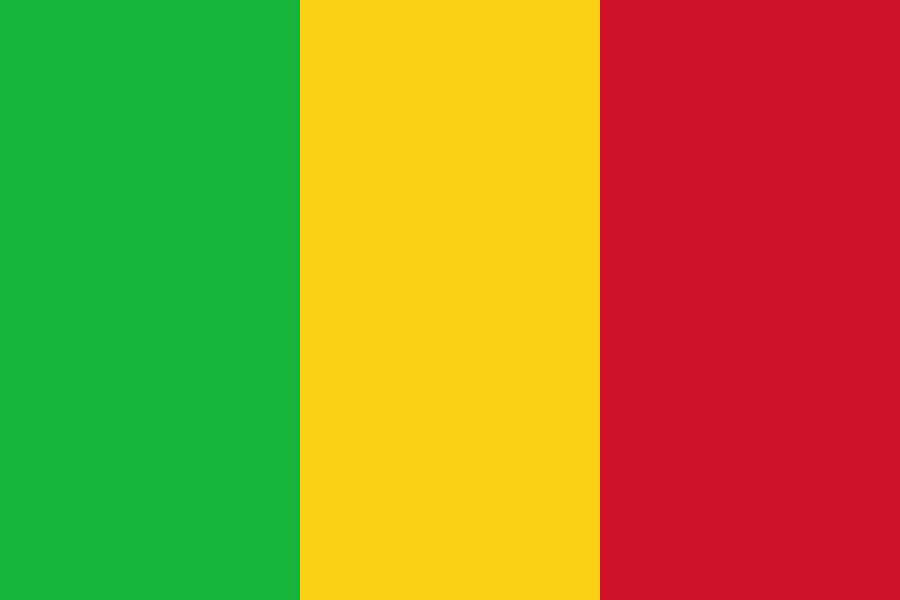
The flag is a tricolor of green, yellow, and red vertical stripes.