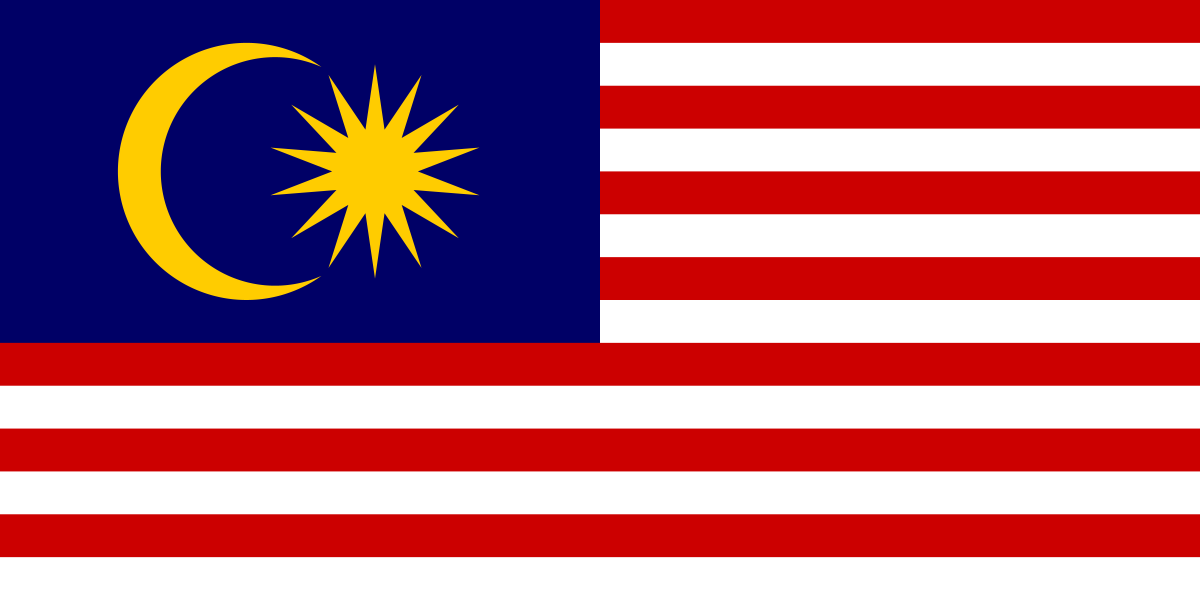
Malaysia
Location Info
- Continent: Asia
- Country: Malaysia
- Coordinates: 4.2105 , 101.9758
Trust Info
Verified Geographic Information
🌍 Continents

Overview
Malaysia is a sovereign country located in Southeast Asia, uniquely divided into two main landmasses: Peninsular Malaysia and East Malaysia (Borneo). It shares land borders with Thailand, Indonesia, and Brunei, and maritime borders with Singapore, Vietnam, and the Philippines. The nation is characterized by its tropical rainforests, diverse coastal ecosystems, and a central mountainous interior.
Historically, Malaysia's strategic position along the Strait of Malacca made it a crucial hub for international maritime trade. Following centuries of colonial influence by the Portuguese, Dutch, and British, the Federation of Malaya gained independence in 1957, later forming Malaysia in 1963. Today, it is a leading industrializing nation in the region with a robust economy driven by electronics, petroleum, and palm oil.
Truth & Facts
| Total Area | 330,803 sq km |
| Coastline | 4,675 km |
| Highest Point | Mount Kinabalu (4,095 m) |
| Total Population | 34.3 Million (2024 Est.) |
| Ethnic Groups | Bumiputera (70.1%), Chinese (22.6%), Indian (6.6%) |
| Official Language | Bahasa Melayu |
| Capital City | Kuala Lumpur |
| States | 13 States and 3 Federal Territories |
| Head of State | Yang di-Pertuan Agong |
| Independence Day | 31 August 1957 |
| Formation of Malaysia | 16 September 1963 |
| Currency | Malaysian Ringgit (MYR) |
| GDP Per Capita | $12,000 - $13,000 (Nominal) |
| Main Exports | Electrical/Electronic products, Petroleum, Palm Oil |
| Internet Penetration | 96.8% |
| Power Supply | 230V / 50Hz |
| Literacy Rate | 95%+ |
| Oldest University | University of Malaya (UM) |
| System Type | Universal Healthcare (Public/Private) |
| Average Life Expectancy | 76 Years |
| State Religion | Islam |
| Traditional Sport | Sepak Takraw |
| Annual Visitors | 20M - 26M (Pre-post pandemic avg) |
| UNESCO Sites | 4 Sites |
| Forest Cover | Approx 50-60% |
| Endangered Species | Malayan Tiger, Orangutan |
| Main Airport | KL International Airport (KLIA) |
| Railway Operator | Keretapi Tanah Melayu (KTM) |
| Silicon Valley of the East | Penang Island |
| Digital Hub | Multimedia Super Corridor (MSC) |
| Global Peace Index Rank | Top 20 globally (2024) |
| Lower House | Dewan Rakyat |
| Upper House | Dewan Negara |
| Founding Member | ASEAN |
| Other Memberships | UN, OIC, Commonwealth |
| Water Access | 95%+ urban/rural |
| Median Age | 30.4 Years |
| Average Rainfall | 2,000 - 2,500 mm annually |
| 5G Coverage | 80%+ of populated areas |
📑 Table of Contents
Overview of Malaysia
Malaysia is a federal constitutional monarchy located in Southeast Asia. It consists of thirteen states and three federal territories, divided by the South China Sea into two regions: Peninsular Malaysia and East Malaysia (Malaysian Borneo). The country is known for its diverse multi-ethnic population and its status as a newly industrialized market economy.
- Capital: Kuala Lumpur
- Administrative Center: Putrajaya
- Total Area: 330,803 sq km
- Official Language: Bahasa Melayu
- Government: Parliamentary Democracy
Historical Background
The history of Malaysia is defined by its strategic maritime location. Early Hindu-Buddhist kingdoms were followed by the rise of the Melaka Sultanate in the 15th century, which became a center for the spread of Islam. European colonial interests began with the Portuguese in 1511, followed by the Dutch and eventually the British, who established the Straits Settlements and various protectorates.
| Period | Event |
|---|---|
| 15th Century | Melaka Sultanate Peak |
| 1824 | Anglo-Dutch Treaty |
| 1942-1945 | Japanese Occupation |
| 1957 | Independence of Malaya |
| 1963 | Formation of Malaysia |
Geography and Landscape
Malaysia's geography is varied, featuring coastal plains that rise to hills and mountains. Peninsular Malaysia is dominated by the Titiwangsa Mountains, while East Malaysia features the Crocker Range. Significant portions of the country remain covered in tropical rainforest, hosting vast biodiversity.
- Major Rivers: Rajang River, Kinabatangan River, Pahang River.
- Key Ranges: Titiwangsa, Crocker, Banjaran Tahan.
- Islands: Langkawi, Penang, Tioman, Sipadan.
Climate and Weather
Located near the equator, Malaysia has a tropical rainforest climate that is hot and humid year-round. There are two monsoon seasons: the Southwest Monsoon (May to September) and the Northeast Monsoon (November to March). Rainfall is heavy but often occurs in short, intense bursts.
| Season | Months | Impact |
|---|---|---|
| NE Monsoon | Nov - Mar | Heavy rain on East Coast |
| SW Monsoon | May - Sep | Drier period for most |
| Inter-monsoon | Apr, Oct | Frequent thunderstorms |
Population and Demographics
Malaysia is a melting pot of cultures. The largest group is the Bumiputera (Malays and indigenous peoples), followed by significant Chinese and Indian minorities. This diversity is reflected in the nation's languages, religions, and social customs.
- Religion: Islam (State religion), Buddhism, Christianity, Hinduism.
- Urbanization: Over 75% of the population lives in urban areas.
- Language: Malay (Official), English, Mandarin, Tamil.
Culture and Lifestyle
Malaysian culture is a synthesis of various traditions. Respect for elders and communal harmony (Muhibbah) are core values. Traditional arts like Wau (kite flying), Gasing (spinning tops), and Silat (martial arts) are preserved alongside modern lifestyles in cosmopolitan cities.
Festivals and Events
Malaysia celebrates a wide array of religious and cultural festivals. Most major holidays are public holidays nationwide. Highlights include Hari Raya Aidilfitri, Chinese New Year, Deepavali, and Christmas. Harvest festivals like Pesta Kaamatan and Gawai Dayak are central to East Malaysian culture.
Food and Cuisine
Renowned as a food paradise, Malaysian cuisine combines spices and techniques from Malay, Chinese, and Indian cooking. Rice and noodles are staples, often served with spicy sambal or coconut milk-based curries.
- Nasi Lemak: The national dish of fragrant coconut rice.
- Satay: Grilled meat skewers with peanut sauce.
- Laksa: Spicy noodle soup with various regional styles.
Economy and Industries
Malaysia has transitioned from an agriculture-based economy to a multi-sector economy. It is a major global hub for semiconductor assembly and testing. Resource-based industries like petroleum, natural gas, and palm oil remain critical to national revenue.
Cost of Living
The cost of living in Malaysia is competitive compared to other Southeast Asian nations. While Kuala Lumpur and Penang are more expensive, daily costs for food and transport remain affordable due to government subsidies and local production.
Employment and Business
The labor market is diverse, with high demand in the technology, manufacturing, and services sectors. Malaysia offers various incentives for foreign investors through the Malaysian Investment Development Authority (MIDA).
Real Estate and Housing
Housing options range from high-rise condominiums in urban centers to landed properties in suburban areas. Malaysia has specific regulations for foreign property ownership, including minimum price thresholds that vary by state.
Transportation and Connectivity
Malaysia boasts an extensive road network, including the North-South Expressway. Public transit in the Klang Valley includes LRT, MRT, and Monorail systems. Air travel is highly developed with numerous domestic and international airports.
Infrastructure and Utilities
Access to electricity and clean water is near-universal. Digital infrastructure is robust, with a national 5G network and high fiber-optic penetration in urban centers.
Education System
Education is managed by the Ministry of Education and the Ministry of Higher Education. It includes national schools, vernacular schools (Chinese and Tamil), and a growing number of international schools and private universities.
Healthcare Services
The healthcare system is two-tiered, consisting of government-funded universal healthcare and a sophisticated private sector. The country is a recognized destination for medical tourism in cardiology and oncology.
Top Tourist Attractions
Malaysia offers a mix of modern landmarks and natural wonders. The Petronas Twin Towers and Batu Caves are iconic symbols of the capital, while the historic streets of Melaka and George Town offer colonial charm.
Activities and Things to Do
Visitors can engage in diving in Sipadan, trekking in Taman Negara (one of the world's oldest rainforests), or shopping in the vast malls of Bukit Bintang.
Best Places to Visit
Key destinations include the Perhentian Islands for beaches, Cameron Highlands for tea plantations, and Kuching for a gateway to Borneo's wildlife.
Travel and Entry Guide
Entry requirements vary by nationality. Most visitors can enter visa-free for tourism. The Malaysian Digital Arrival Card (MDAC) is a standard requirement for most foreign arrivals.
Nearby Regional Destinations
Malaysia's location provides easy access to Singapore, Southern Thailand, and the Indonesian islands of Sumatra and Kalimantan.
Environment and Nature
The country is a megadiverse region. Conservation areas like Danum Valley and Belum-Temenggor are vital for protecting endangered species like the Sumatran rhino and Rafflesia flower.
Government and Administration
Malaysia follows the Westminster parliamentary system. It is a federation where states retain certain powers, particularly regarding land and Islamic law.
Safety and Public Services
The Royal Malaysia Police (PDRM) maintains public order. Emergency services are reached via 999. The country is generally safe for residents and travelers alike.
Best Time to Visit
The best time varies by coast. The West Coast is ideal from December to April, while the East Coast is best from March to September to avoid the monsoon peaks.
Business and Directory
Major business hubs include the Kuala Lumpur City Centre (KLCC), Bangsar South, and the Bayan Lepas Free Industrial Zone in Penang.
General Information FAQs
Where is Malaysia located?
Malaysia is located in Southeast Asia, just north of the Equator. It comprises two non-contiguous regions: Peninsular Malaysia on the Asian mainland and East Malaysia on the northern part of the island of Borneo.
What is Malaysia known for?
Malaysia is known for its cultural diversity, tropical rainforests, and iconic landmarks like the Petronas Twin Towers. It is also famous for its cuisine and as a major producer of palm oil and electronic components.
Why is Malaysia famous?
It is famous for being a successful multi-cultural nation with a mix of Malay, Chinese, and Indian influences. It also houses Mount Kinabalu, some of the world's oldest rainforests, and world-class diving spots.
What country or region is Malaysia part of?
Malaysia is a sovereign nation in the Southeast Asian region. It is a founding member of the Association of Southeast Asian Nations (ASEAN).
What is the population of Malaysia?
As of 2024, the population of Malaysia is approximately 34.3 million people.
What languages are spoken in Malaysia?
Bahasa Melayu is the official language. English is widely spoken and used in business and education. Other common languages include Mandarin, Cantonese, Hokkien, and Tamil.
What time zone is Malaysia in?
Malaysia operates on Malaysia Time (MYT), which is UTC+8.
What are the key facts about Malaysia?
Key facts include its capital Kuala Lumpur, its currency the Ringgit, its status as a federal monarchy, and its diverse geography spanning the Malay Peninsula and Borneo.
What makes Malaysia unique?
Malaysia's uniqueness stems from its constitutional elective monarchy system, where the King is chosen from nine Malay hereditary rulers, and its harmonious blend of diverse ethnic traditions.
How large is Malaysia in area?
The total land area of Malaysia is 330,803 square kilometers.
History FAQs
What is the history of Malaysia?
Malaysia's history involves early Hindu-Buddhist kingdoms, the Islamic Melaka Sultanate, and colonial periods under Portugal, the Netherlands, and Britain. It gained independence in 1957 and formed the modern federation in 1963.
When was Malaysia established?
The Federation of Malaya became independent on August 31, 1957. Malaysia was formed on September 16, 1963, with the addition of Sabah, Sarawak, and Singapore (which later left).
What major historical events happened in Malaysia?
Key events include the fall of Melaka in 1511, the signing of the Pangkor Treaty in 1874, the Japanese occupation during WWII, the Malaysian Emergency (1948–1960), and the 1969 racial riots which led to the New Economic Policy.
Who were important historical figures from Malaysia?
Important figures include Tunku Abdul Rahman (the first Prime Minister and Father of Independence), Tun Abdul Razak, and Parameswara, the founder of the Melaka Sultanate.
How has Malaysia developed over time?
Malaysia has developed from a primary producer of tin and rubber into a diversified industrial economy, focusing on high-tech manufacturing, services, and digital innovation.
Geography & Environment FAQs
What is the geography of Malaysia?
The geography includes coastal plains, dense tropical rainforests, and rugged mountains. The country is split into Peninsular Malaysia and East Malaysia by the South China Sea.
What natural features surround Malaysia?
Malaysia is surrounded by the Andaman Sea, the Strait of Malacca, the South China Sea, the Celebes Sea, and the Sulu Sea.
Are there mountains, rivers, or lakes near Malaysia?
Yes, prominent features include Mount Kinabalu, the Rajang River (Malaysia's longest), and Kenyir Lake (the largest man-made lake in Southeast Asia).
What is the elevation of Malaysia?
Elevation varies from sea level at the coast to 4,095 meters at the peak of Mount Kinabalu.
What ecosystems exist around Malaysia?
Ecosystems include lowland rainforests, montane forests, mangrove swamps, and extensive coral reef systems in its maritime territories.
Climate & Weather FAQs
What is the climate like in Malaysia?
The climate is equatorial, characterized by high temperatures, high humidity, and abundant rainfall throughout the year.
What is the average temperature in Malaysia?
The average daily temperature ranges from 23°C to 32°C. Highland areas like Cameron Highlands are significantly cooler.
What is the weather like throughout the year in Malaysia?
Weather is generally consistent, but rainfall patterns shift with the monsoons. The East Coast experiences heavier rain from November to February.
Does Malaysia experience extreme weather?
Malaysia is mostly outside the typhoon belt but can experience heavy monsoon flooding and occasional haze from regional forest fires.
What is the best time of year to visit Malaysia?
For the West Coast, December to April is best. For the East Coast and Borneo, March to September is ideal for drier weather.
Population & Society FAQs
What is the population density of Malaysia?
The population density is approximately 104 people per square kilometer, with much higher concentrations in Peninsular Malaysia compared to Borneo.
What ethnic groups live in Malaysia?
The main groups are Malays (approx. 50%), Chinese (23%), indigenous groups/Bumiputera (12%), and Indians (7%).
What religions are practiced in Malaysia?
Islam is the official religion. Other widely practiced religions include Buddhism, Christianity, Hinduism, and traditional Chinese religions.
What is daily life like in Malaysia?
Daily life is a blend of modern urban living and traditional rural customs, heavily centered around family, community, and food.
How diverse is the population of Malaysia?
Malaysia is highly diverse, with over 130 languages spoken and a wide variety of cultural practices existing side-by-side.
Culture & Traditions FAQs
What cultural traditions are important in Malaysia?
Open House (Rumah Terbuka) during festivals, respecting elders with the 'salam' gesture, and communal cooperation (gotong-royong) are vital traditions.
What festivals are celebrated in Malaysia?
Major festivals include Hari Raya Aidilfitri, Chinese New Year, Deepavali, Thaipusam, Christmas, and the Gawai Dayak harvest festival.
What cultural landmarks exist in Malaysia?
Landmarks include the Sultan Abdul Samad Building, Batu Caves, the historic center of Melaka, and the Kek Lok Si Temple.
What traditional clothing or customs are common in Malaysia?
Traditional attire includes the Baju Kurung and Baju Melayu for Malays, the Cheongsam for Chinese, and the Sari for Indians.
What arts and crafts are associated with Malaysia?
Malaysia is known for Batik (wax-resist dyeing), Songket (hand-woven silk), wood carving, and Pewter smithing.
Food & Cuisine FAQs
What foods is Malaysia known for?
Malaysia is known for Nasi Lemak, Satay, Roti Canai, Laksa, and the pungent Durian fruit.
What traditional dishes originate from Malaysia?
Dishes like Rendang (slow-cooked meat), Nasi Kerabu, and Ayam Masak Merah are traditional Malay staples.
What are the best restaurants in Malaysia?
High-end dining is found in KLCC and Bangsar, while famous local food centers include Gurney Drive in Penang and Jalan Alor in Kuala Lumpur.
What local ingredients are commonly used in Malaysia cuisine?
Common ingredients include coconut milk, lemongrass, galangal, chili, shrimp paste (belacan), and pandan leaves.
What food markets or street foods are popular in Malaysia?
Night markets (Pasar Malam) are popular for street food like Apam Balik, grilled seafood, and various types of fried noodles.
Economy & Business FAQs
What are the main industries in Malaysia?
Major industries include electronics manufacturing, petroleum and natural gas, palm oil production, and tourism.
What economic activities drive the economy of Malaysia?
The economy is driven by export-oriented manufacturing, particularly in the electrical and electronics (E&E) sector, and services.
What businesses operate in Malaysia?
Global firms like Intel, Dell, and Shell operate alongside domestic giants like Petronas, Maybank, and Sime Darby.
Is Malaysia an important economic center?
Yes, Malaysia is one of the most competitive economies in Southeast Asia and a key player in global supply chains for semiconductors.
What are the major exports or products from Malaysia?
Exports include integrated circuits, refined petroleum, palm oil, and liquefied natural gas (LNG).
Employment & Jobs FAQs
What job opportunities are available in Malaysia?
Opportunities are strong in IT, engineering, finance, and specialized manufacturing sectors.
What are the major employers in Malaysia?
The government is a large employer, followed by GLCs (Government Linked Companies) like Petronas and Tenaga Nasional, and multinational corporations.
What skills are in demand in Malaysia?
Digital literacy, data analytics, software engineering, and technical skills in green energy and automation are highly sought after.
Is Malaysia a good place to work?
Malaysia offers a high quality of life, a relatively low cost of living, and a dynamic business environment for professionals.
What is the unemployment rate in Malaysia?
The unemployment rate has historically remained low, typically fluctuating between 3.3% and 3.5%.
Cost of Living FAQs
Is Malaysia expensive to live in?
Compared to Western countries and Singapore, Malaysia is considered very affordable, especially for food, utilities, and domestic travel.
What is the average cost of living in Malaysia?
A single person can live comfortably in a city on RM 3,000 - RM 5,000 per month, though this varies by lifestyle and location.
How much does housing cost in Malaysia?
Rental for a 1-bedroom apartment in Kuala Lumpur ranges from RM 1,500 to RM 3,000 depending on the area.
What are average food and utility costs in Malaysia?
A meal at a hawker center costs RM 10-15. Monthly utilities for a small apartment average around RM 150-300.
Is Malaysia affordable compared to nearby cities?
Malaysia is generally more affordable than Singapore and Hong Kong, and comparable to Thailand and Vietnam in terms of value for money.
Housing & Real Estate FAQs
What types of housing are available in Malaysia?
Options include condominiums, terraced houses, semi-detached houses, bungalows, and traditional village houses (Kampung houses).
What is the average home price in Malaysia?
Prices vary wildly; a condo in KL might cost RM 500,000 to several million, while suburban houses may start at RM 400,000.
Is it better to rent or buy property in Malaysia?
Renting is flexible and affordable, but buying is seen as a stable long-term investment due to the country's growing economy.
Which neighborhoods are popular in Malaysia?
In KL, Mont Kiara and Bangsar are popular with expats. In Penang, Gurney Drive and Tanjung Bungah are highly sought after.
How has the property market changed in Malaysia?
The market has seen a shift toward affordable housing projects and integrated developments that include transit access.
Transportation FAQs
How do you get to Malaysia?
Most international travelers arrive via KL International Airport (KLIA) or through land crossings from Singapore and Thailand.
What is the nearest airport to Malaysia?
KLIA is the primary hub. Other major airports include Penang International, Kota Kinabalu International, and Kuching International.
Does Malaysia have railway connections?
Yes, the KTM network connects major towns in the Peninsula and offers international services to Thailand and Singapore.
How reliable is public transportation in Malaysia?
Public transport is very reliable in the Kuala Lumpur region (Klang Valley), but more limited in rural areas and East Malaysia.
What major highways or roads connect to Malaysia?
The North-South Expressway (PLUS) is the backbone of the peninsula, connecting the border of Thailand to the border of Singapore.
Education FAQs
What schools are located in Malaysia?
Malaysia has public national schools (SK/SMK), vernacular schools (SJKC/SJKT), and hundreds of private and international schools.
Are there universities in Malaysia?
Yes, top universities include University of Malaya, Universiti Kebangsaan Malaysia, and international campuses like Monash and Nottingham.
What is the literacy rate in Malaysia?
The literacy rate is approximately 95% for adults and higher for the youth population.
What educational opportunities exist in Malaysia?
Malaysia is a regional hub for higher education, offering affordable degrees through twinning programs with overseas universities.
Is Malaysia a good place for students?
Yes, due to the affordable cost of living, use of English, and diverse, safe environment.
Healthcare FAQs
What hospitals are available in Malaysia?
Major government hospitals like Hospital Kuala Lumpur exist alongside private chains like IHH Healthcare (Gleneagles, Pantai) and KPJ.
Are there emergency medical services in Malaysia?
Yes, emergency services can be accessed by dialing 999. Most major cities have efficient ambulance response times.
What healthcare facilities exist in Malaysia?
Facilities range from small rural clinics (Klinik Kesihatan) to state-of-the-art specialist centers in urban areas.
Is healthcare affordable in Malaysia?
Public healthcare is highly subsidized for citizens. Private healthcare is moderately priced by international standards.
Are specialized medical services available in Malaysia?
Yes, Malaysia is known for expertise in cardiology, fertility treatments, and orthopedics.
Tourism & Travel FAQs
What are the top tourist attractions in Malaysia?
Petronas Twin Towers, Batu Caves, Mount Kinabalu, the historic city of Melaka, and the beaches of Langkawi.
What are the best things to do in Malaysia?
Activities include jungle trekking, island hopping, exploring UNESCO sites, and sampling diverse street food.
Is Malaysia worth visiting?
Absolutely. It offers a unique combination of modern infrastructure, rich history, and pristine natural beauty.
What landmarks should visitors see in Malaysia?
Visitors should see the Sultan Abdul Samad Building, Kek Lok Si Temple, and the Mulu Caves in Sarawak.
How many days should tourists spend in Malaysia?
A minimum of 7 to 10 days is recommended to cover Kuala Lumpur, a heritage city like George Town, and a nature destination.
Nearby Places FAQs
What places are near Malaysia worth visiting?
Singapore, Phuket in Thailand, and the Riau Islands of Indonesia are all easily accessible from Malaysia.
What cities or towns are close to Malaysia?
Singapore is adjacent to Johor Bahru. Hat Yai in Thailand is close to the northern border states of Kedah and Perlis.
What natural attractions are near Malaysia?
The marine parks of Southern Thailand and the rainforests of Indonesian Kalimantan are geographically close.
What day trips can be taken from Malaysia?
From KL, day trips to Malacca or Genting Highlands are popular. From Johor Bahru, a day trip to Singapore is common.
What famous destinations are within reach of Malaysia?
Bali, Angkor Wat, and Bangkok are all within a 2-3 hour flight from Kuala Lumpur.
Safety FAQs
Is Malaysia safe to live in?
Malaysia is generally very safe for residents, with low rates of violent crime and a stable political environment.
Is Malaysia safe for tourists?
Yes, it is one of the safer countries in the region for travelers. Petty crime like snatch theft exists in crowded areas, so standard precautions apply.
What is the crime rate in Malaysia?
The crime rate is relatively low. The government has implemented various safety initiatives in urban areas to reduce street crime.
What emergency services operate in Malaysia?
Police, Fire and Rescue (Bomba), and Ambulance services are all integrated into the 999 emergency number.
What safety tips should visitors follow in Malaysia?
Be aware of surroundings in busy areas, use reputable ride-hailing apps, and follow local customs regarding dress in religious sites.
Lifestyle & Living FAQs
Is Malaysia a good place to live?
Yes, it offers a high standard of living, excellent infrastructure, and a welcoming, diverse community.
What recreational activities are available in Malaysia?
Golfing, hiking, water sports, and exploring the vibrant mall culture are common recreational pursuits.
Is Malaysia family-friendly?
Highly so. There are many theme parks, safe public spaces, and family-oriented dining and entertainment options.
What outdoor activities are popular in Malaysia?
Hiking in forest reserves (FRIM), bird watching, and cycling in parks like Putrajaya are very popular.
What makes life enjoyable in Malaysia?
The availability of world-class food, a warm climate, and the presence of diverse cultural celebrations throughout the year.
Practical Information FAQs
What travel tips should visitors know about Malaysia?
Always carry a bottle of water, use sun protection, and try to use the 'Grab' app for convenient transportation.
What local customs should visitors respect in Malaysia?
Remove shoes when entering homes or places of worship, and dress modestly when visiting government offices or religious sites.
How accessible is Malaysia for international visitors?
Very accessible. Major airports are well-connected, and English is the lingua franca for tourism and commerce.
What services are available for tourists in Malaysia?
Tourist information centers are located in major cities, and there are many licensed tour operators offering diverse packages.
What important information should travelers know before visiting Malaysia?
Malaysia has strict laws regarding drugs, and visitors should be aware of the dual legal system (Secular and Syariah), though Syariah only applies to Muslims.