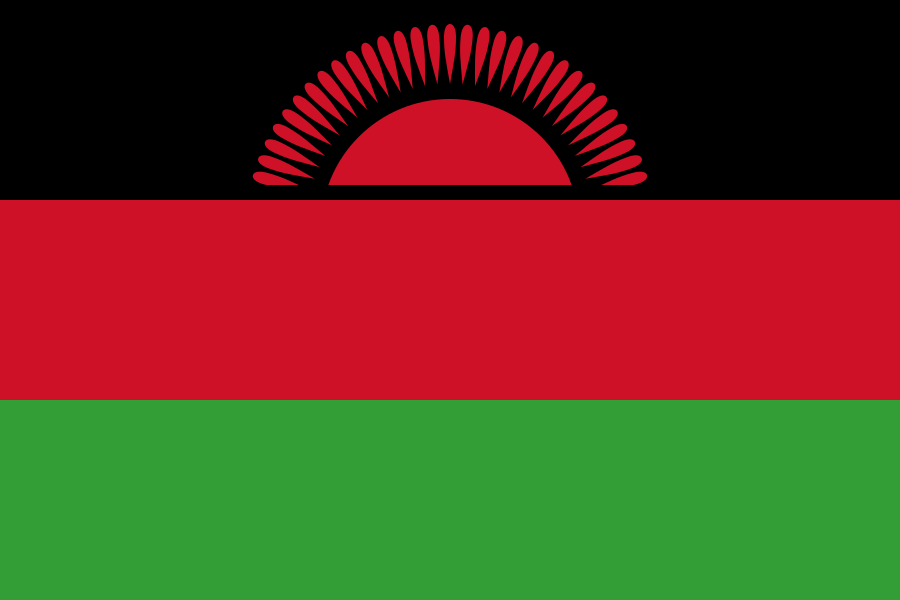
Malawi
Location Info
- Continent: Africa
- Country: Malawi
- Coordinates: -13.2543 , 34.3015
Trust Info
Verified Geographic Information
🌍 Continents
Overview
Malawi is a landlocked country situated in Southeast Africa, bordered by Zambia, Tanzania, and Mozambique. Often referred to as The Warm Heart of Africa its geography is dominated by the Great Rift Valley and the expansive Lake Malawi, which covers nearly one-fifth of the nation's total area. The country features a diverse landscape ranging from high plateaus like the Nyika to the massive peaks of Mount Mulanje.
Historically known as the British protectorate of Nyasaland, Malawi gained independence in 1964. Today, it operates as a multi-party democracy with its capital in Lilongwe. The economy is heavily dependent on agriculture, particularly the cultivation of tobacco, tea, and sugar. With a population comprising various ethnic groups such as the Chewa and Tumbuka, Malawi maintains a rich cultural heritage centered around community and traditional arts.
Truth & Facts
| Total Area | 118,484 sq km |
| Estimated Population | 20.9 million |
| Capital City | Lilongwe |
| Date of Independence | July 6, 1964 |
| Currency | Malawian Kwacha (MWK) |
| Primary Energy Source | Hydroelectric |
| Literacy Rate | 62.1% |
| Major Hospital | Queen Elizabeth Central Hospital |
| Languages | English, Chichewa |
| UNESCO World Heritage Site | Lake Malawi National Park |
| Number of Fish Species | 1,000+ |
| Main Airport | Kamuzu International Airport |
| Mobile Penetration | Approx 50% |
| Primary Force | Malawi Police Service |
| Government Type | Unitary Presidential Republic |
| Regional Bloc | SADC |
| Urban Water Access | 85-90% |
| Arable Land | 38.2% |
| Climate Type | Tropical |
| Early Civilization | Maravi Empire |
📑 Table of Contents
Overview of Malawi
Malawi is a small, landlocked nation located in the southeastern region of Africa. It is characterized by its dramatic topography, specifically the North-South running Great Rift Valley which contains the massive Lake Malawi.
The country is bordered by Tanzania to the north, Zambia to the west, and Mozambique to the south and east. Known for its peaceful political climate and friendly population, it is administratively divided into three regions: Northern, Central, and Southern.
- Capital City: Lilongwe
- Official Languages: English and Chichewa
- Total Land Area: 118,484 square kilometers
- Bordering Countries: Tanzania, Zambia, Mozambique
- Major Water Body: Lake Malawi
History
The history of Malawi is marked by the migration of Bantu-speaking peoples and the subsequent establishment of the Maravi Empire in the 15th century. This empire stretched across modern-day Malawi into parts of Mozambique and Zambia.
In the 19th century, European contact increased, led by missionary David Livingstone. The area became the British Central Africa Protectorate in 1891, later renamed Nyasaland in 1907. Malawi achieved independence in 1964 under the leadership of Hastings Kamuzu Banda.
| Period | Key Event |
|---|---|
| 15th Century | Rise of the Maravi Empire |
| 1891 | Establishment of British Protectorate |
| 1964 | Independence from the United Kingdom |
| 1994 | First multi-party elections held |
Geography
Malawi lies in the Great Rift Valley, which creates a landscape of deep troughs and high plateaus. The dominant feature is Lake Malawi, the third-largest lake in Africa, which drains into the Shire River.
To the north, the Nyika Plateau rises to over 2,500 meters, while the south is home to the Mulanje Massif, the highest peak in Central Africa. The Shire Highlands provide fertile ground for the country’s agricultural sector.
- Highest Point: Sapitwa Peak (Mulanje Massif)
- Major River: Shire River
- Plateaus: Nyika, Viphya, and Zomba
- Lowland areas: Lower Shire Valley
- Lake Malawi length: Approximately 580 kilometers
Climate and Weather
The climate in Malawi is generally tropical, though it varies significantly by altitude. There are two primary seasons: a dry season from May to October and a rainy season from November to April.
Temperatures in the lake regions and the Shire Valley can be very high, often exceeding 30°C, while the plateaus and highlands experience much cooler weather, sometimes reaching near freezing at night in June and July.
Population and Demographics
Malawi has a dense population compared to its neighbors. The population is predominantly rural, though urbanization in Lilongwe and Blantyre is increasing. The largest ethnic group is the Chewa, followed by the Tumbuka, Yao, and Lomwe.
- Largest Ethnic Group: Chewa
- Median Age: Approximately 17 years
- Urban Population: ~18%
- Religion: ~80% Christian, ~13% Muslim
- Life Expectancy: ~64 years
Culture and Lifestyle
Malawian culture is rooted in communal living and traditional oral history. The Gule Wamkulu (Great Dance) of the Chewa people is a recognized UNESCO Intangible Cultural Heritage, involving masked dancers who represent various ancestral spirits.
Modern life in Malawi often blends these traditional customs with Western influences, particularly in the growing cities. Music, specifically the Kwela style and gospel, plays a major role in social gatherings.
Festivals and Events
National holidays often revolve around history and religious celebrations. Independence Day on July 6th is the largest national event, featuring parades and sports matches.
- Independence Day: July 6
- Martyrs' Day: March 3
- Lake of Stars Music Festival: Annual arts event
- Republic Day: July 6
- Kamuzu Day: May 14
Food and Cuisine
The staple food of Malawi is Nsima, a thick porridge made from maize flour. It is typically served with "ndiwo" (relishes), which can include beans, vegetables, meat, or fish from the lake.
| Dish | Description |
|---|---|
| Nsima | Maize-based staple carbohydrate |
| Chambo | Endemic fish species, grilled or fried |
| Kachumbari | Tomato and onion salad |
| Kondowole | Cassava-based staple common in the north |
Economy and Industries
Malawi's economy is centered on agriculture, which accounts for more than one-third of the GDP and the majority of export earnings. Tobacco is the primary cash crop, followed by tea, sugar, and coffee.
The industrial sector is small, primarily focused on processing agricultural products. The country is working to diversify into mining, specifically for uranium and rare earth elements, and increasing its tourism infrastructure.
Cost of Living
The cost of living in Malawi is relatively low compared to Western nations, but it is influenced by high import costs for fuel and manufactured goods. Locally produced food and services are affordable for most visitors.
- Affordable: Seasonal fruits and vegetables
- Moderate: Housing in major cities
- High: Imported electronics and fuel
- Public Transport: Minibuses are the cheapest option
Employment and Business
The majority of the Malawian workforce is engaged in subsistence farming. Formal employment is found in the civil service, agricultural estates, and the retail sector in urban centers.
The government encourages foreign investment through the Malawi Investment and Trade Centre (MITC), focusing on agro-processing and energy production projects.
Real Estate and Housing
Housing varies from traditional thatched huts in rural villages to modern gated communities in Lilongwe and Blantyre. Property ownership is governed by a mix of customary land laws and formal title deeds.
Transportation and Connectivity
Malawi is connected by a network of paved roads, with the M1 being the main artery running from the northern to the southern border. Rail services primarily handle freight, connecting to the port of Nacala in Mozambique.
- Main Airports: Lilongwe and Blantyre
- Primary Road: M1 Highway
- Rail Connectivity: Link to Mozambique
- Water Transport: Ferry services on Lake Malawi
Infrastructure and Utilities
The country's infrastructure is undergoing modernization. Electricity is mainly sourced from hydroelectric plants on the Shire River, though solar energy is becoming a significant alternative for rural areas.
Education
Malawi offers free primary education, which has significantly increased enrollment rates. The tertiary sector is led by the University of Malawi and Mzuzu University.
- Primary Education: 8 years
- Secondary Education: 4 years
- Higher Education: UNIMA, LUANAR, Mzuzu University
- Literacy: Highest among younger generations
Healthcare
The healthcare system includes public hospitals, mission-run facilities, and private clinics. Efforts are focused on managing infectious diseases and improving maternal health outcomes.
Tourist Attractions
Malawi’s attractions are primarily natural. Lake Malawi National Park is a key site for snorkeling and diving. Liwonde National Park offers river-based safaris.
- Lake Malawi: Crystal clear waters and beaches
- Mt. Mulanje: Hiking and rock climbing
- Liwonde National Park: Elephants and hippos
- Nyika Plateau: Montane grasslands and zebras
Things to Do
Outdoor activities dominate the itinerary for visitors. This includes kayaking on Lake Malawi, hiking the peaks of Mulanje, and exploring the wildlife reserves.
Best Places to Visit
Top destinations include Cape Maclear for its vibrant lake life, the quiet tea estates of Thyolo, and the rugged wilderness of the Nyika Plateau in the north.
Travel Guide
Visitors generally enter through Lilongwe or Blantyre. Visas are required for many nationalities but can often be obtained online. Health precautions such as malaria prophylaxis are recommended.
Nearby Places
Malawi is well-positioned for trips to Zambia’s South Luangwa National Park or the coastal regions of Mozambique.
Environment and Nature
Environmental efforts focus on reforestation and protecting the fish stocks of Lake Malawi. The country has several protected forest reserves and national parks.
Government and Administration
Malawi is a democratic republic with a president elected by popular vote. The legislature is the National Assembly, consisting of 193 members.
Safety and Public Services
Malawi is considered one of the safer countries in Africa for residents and visitors. Public services like police and fire departments are centralized under the national government.
Best Time to Visit
The best time for wildlife viewing is the late dry season (September-October). For lush landscapes and bird watching, the rainy season (December-February) is ideal.
Local Business Directory
Major commercial hubs are Blantyre and Lilongwe, housing the headquarters of banks, telecommunications companies, and agricultural cooperatives.
General Information FAQs
Where is Malawi located?
Malawi is located in Southeast Africa. It is a landlocked country bordered by Tanzania to the north, Zambia to the west, and Mozambique to the south and east.
What is Malawi known for?
Malawi is known for Lake Malawi, which occupies a large portion of its territory, its diverse wildlife, and the friendly nature of its people, earning it the nickname The Warm Heart of Africa..
Why is Malawi famous?
Malawi is famous for its unique freshwater fish (cichlids), the massive Mulanje Massif, and its history as a peaceful nation in a region that has often seen conflict.
What country or region is Malawi part of?
Malawi is part of the Southern African region and is a member of the Southern African Development Community (SADC).
What is the population of Malawi?
As of 2023 estimates, the population of Malawi is approximately 20.9 million people.
What languages are spoken in Malawi?
The official languages are English and Chichewa. Several other regional languages such as Tumbuka, Yao, and Lomwe are also widely spoken.
What time zone is Malawi in?
Malawi is in Central Africa Time (CAT), which is UTC+2.
What are the key facts about Malawi?
Key facts include its capital Lilongwe, its reliance on agriculture, its landlocked status, and its democratic government structure.
What makes Malawi unique?
Its uniqueness stems from the combination of a massive freshwater lake, dramatic high-altitude plateaus, and a highly dense, culturally diverse population.
How large is Malawi in area?
Malawi covers a total area of approximately 118,484 square kilometers, of which about 20% is water.
History FAQs
What is the history of Malawi?
Malawi's history includes ancient Bantu migrations, the Maravi Empire, British colonial rule as Nyasaland, and independence in 1964.
When was Malawi established?
The modern Republic of Malawi was established upon its independence on July 6, 1964.
What major historical events happened in Malawi?
Major events include the arrival of David Livingstone in 1859, the 1915 Chilembwe uprising, and the transition to multi-party democracy in 1994.
Who were important historical figures from Malawi?
Important figures include Dr. Hastings Kamuzu Banda (the first president), John Chilembwe (a colonial resistance leader), and Bakili Muluzi.
How has Malawi developed over time?
Malawi has transitioned from a British protectorate to a single-party state and finally to a competitive multi-party democracy while expanding its infrastructure.
Geography & Environment FAQs
What is the geography of Malawi?
Malawi is defined by the Great Rift Valley, high plateaus, and mountainous regions, with Lake Malawi dominating the landscape.
What natural features surround Malawi?
Malawi is surrounded by the highlands of Tanzania and Zambia, and the plains and forests of Mozambique.
Are there mountains, rivers, or lakes near Malawi?
Yes, major features include the Mulanje Massif, the Shire River, and Lake Malawi.
What is the elevation of Malawi?
Elevation varies from 37 meters above sea level at the Shire River border to 3,002 meters at Sapitwa Peak.
What ecosystems exist around Malawi?
Ecosystems include freshwater lake systems, montane grasslands, and tropical woodlands.
Climate & Weather FAQs
What is the climate like in Malawi?
Malawi has a tropical climate with a cool, dry season and a hot, wet season.
What is the average temperature in Malawi?
Average temperatures range from 17°C to 27°C depending on the altitude and season.
What is the weather like throughout the year in Malawi?
From May to August it is cool and dry. From September to October it is hot and dry. From November to April it is rainy.
Does Malawi experience extreme weather?
Malawi occasionally experiences tropical cyclones and droughts, which can impact agriculture.
What is the best time of year to visit Malawi?
The dry season from May to October is generally considered the best time for tourism and wildlife viewing.
Population & Society FAQs
What is the population density of Malawi?
Malawi has a high population density of about 180-200 people per square kilometer, one of the highest in Africa.
What ethnic groups live in Malawi?
Groups include the Chewa, Tumbuka, Yao, Lomwe, Sena, Ngoni, and Ngonde.
What religions are practiced in Malawi?
The majority are Christian, with a significant Muslim minority and followers of traditional indigenous beliefs.
What is daily life like in Malawi?
Life is primarily focused on agriculture and community interaction, with strong emphasis on family and traditional social structures.
How diverse is the population of Malawi?
The population is very diverse ethnically and linguistically, though it shares a cohesive national identity.
Culture & Traditions FAQs
What cultural traditions are important in Malawi?
Traditions include the Gule Wamkulu dance, wood carving, and the passing of oral legends.
What festivals are celebrated in Malawi?
Celebrations include Independence Day, various religious festivals, and the Lake of Stars festival.
What cultural landmarks exist in Malawi?
Landmarks include the Chongoni Rock Art Area (UNESCO site) and the various museums in Blantyre and Lilongwe.
What traditional clothing or customs are common in Malawi?
"
The "chitenje" (colorful wraparound cloth) is commonly worn by women. Respect for elders and communal sharing are core customs.
"What arts and crafts are associated with Malawi?
Malawi is known for intricate wood carvings, pottery, and woven baskets.
Food & Cuisine FAQs
What foods is Malawi known for?
It is known for Nsima, Chambo fish, and Malawian tea.
What traditional dishes originate from Malawi?
Dishes include Mbatata (sweet potato cookies) and various bean relishes.
What are the best restaurants in Malawi?
Major cities like Lilongwe and Blantyre offer a range of restaurants serving both local and international cuisine.
What local ingredients are commonly used in Malawi cuisine?
Maize, beans, tomatoes, onions, fish, and greens (pumpkin or cassava leaves).
What food markets or street foods are popular in Malawi?
Local markets in every town sell fresh produce and grilled maize or meat skewers.
Economy & Business FAQs
What are the main industries in Malawi?
Agriculture (tobacco, tea, sugar), food processing, and consumer goods manufacturing.
What economic activities drive the economy of Malawi?
Export of cash crops, subsistence farming, and increasingly, tourism and mining.
What businesses operate in Malawi?
Large firms include Press Corporation, Airtel Malawi, and various agricultural estates.
Is Malawi an important economic center?
It is an important agricultural producer for the Southern African region.
What are the major exports or products from Malawi?
Tobacco, tea, sugar, coffee, and cotton.
Employment & Jobs FAQs
What job opportunities are available in Malawi?
Opportunities exist in agriculture, education, healthcare, and the non-profit (NGO) sector.
What are the major employers in Malawi?
The Government of Malawi, large tea/tobacco estates, and international organizations.
What skills are in demand in Malawi?
Agro-science, medical services, engineering, and IT skills are in high demand.
Is Malawi a good place to work?
It offers a tranquil environment, though wages in the formal sector are lower than in some neighboring countries.
What is the unemployment rate in Malawi?
Official unemployment is relatively low, but underemployment in the informal agricultural sector is high.
Cost of Living FAQs
Is Malawi expensive to live in?
Generally no, but costs can rise for those relying on imported goods and international-standard housing.
What is the average cost of living in Malawi?
It is low by global standards; basic food and local transport are very affordable.
How much does housing cost in Malawi?
Costs range from very low in rural areas to moderate for serviced apartments in Lilongwe.
What are average food and utility costs in Malawi?
Locally grown food is inexpensive. Utilities like electricity and water are subsidized but can be subject to supply interruptions.
Is Malawi affordable compared to nearby cities?
It is generally more affordable than cities like Lusaka (Zambia) or Maputo (Mozambique).
Housing & Real Estate FAQs
What types of housing are available in Malawi?
Traditional rural dwellings, urban bungalows, and modern apartment complexes.
What is the average home price in Malawi?
Prices vary wildly based on location and construction quality.
Is it better to rent or buy property in Malawi?
Most expatriates and urban workers rent, while rural populations typically own their land through customary systems.
Which neighborhoods are popular in Malawi?
Areas 10, 12, and 43 in Lilongwe are popular for modern housing.
How has the property market changed in Malawi?
There has been a surge in commercial and high-end residential development in the capital over the last decade.
Transportation FAQs
How do you get to Malawi?
Most international travelers arrive by air or by bus from Zambia, Tanzania, or Mozambique.
What is the nearest airport to Malawi?
Kamuzu International (Lilongwe) and Chileka International (Blantyre) are the primary gateways.
Does Malawi have railway connections?
Yes, but they are primarily used for goods and connect to Mozambique’s ports.
How reliable is public transportation in Malawi?
Minibuses are frequent and reach most areas, but schedules are informal.
What major highways or roads connect to Malawi?
The M1 road connects the country to the borders of Tanzania and Mozambique.
Education FAQs
What schools are located in Malawi?
There are thousands of government schools, plus several international schools in the major cities.
Are there universities in Malawi?
Yes, including the University of Malawi, Mzuzu University, and Malawi University of Business and Applied Sciences.
What is the literacy rate in Malawi?
The literacy rate is approximately 62%.
What educational opportunities exist in Malawi?
Opportunities range from basic vocational training to advanced university degrees.
Is Malawi a good place for students?
It provides a peaceful and focused environment for academic study.
Healthcare FAQs
What hospitals are available in Malawi?
Central hospitals are located in Lilongwe, Blantyre, Mzuzu, and Zomba.
Are there emergency medical services in Malawi?
Yes, although coverage is most reliable in urban centers.
What healthcare facilities exist in Malawi?
Facilities include district hospitals, health centers, and private specialty clinics.
Is healthcare affordable in Malawi?
Public healthcare is free or very low cost for citizens, while private care requires payment or insurance.
Are specialized medical services available in Malawi?
Basic specialties are available, but complex cases are sometimes referred to South Africa.
Tourism & Travel FAQs
What are the top tourist attractions in Malawi?
Lake Malawi, Mulanje Mountain, Liwonde National Park, and the Nyika Plateau.
What are the best things to do in Malawi?
Snorkeling, hiking, wildlife safaris, and exploring local markets.
Is Malawi worth visiting?
Yes, for those seeking uncrowded natural beauty and authentic cultural experiences.
What landmarks should visitors see in Malawi?
Cape Maclear, the Zomba Plateau, and the St. Michael and All Angels Church in Blantyre.
How many days should tourists spend in Malawi?
A typical visit ranges from 7 to 14 days to see the major highlights.
Nearby Places FAQs
What places are near Malawi worth visiting?
South Luangwa (Zambia), Victoria Falls (Zimbabwe/Zambia), and the beaches of Mozambique.
What cities or towns are close to Malawi?
Chipata in Zambia and Mbeya in Tanzania are close to the borders.
What natural attractions are near Malawi?
The Shire River continues into Mozambique, and the mountains of Southern Tanzania are close by.
What day trips can be taken from Malawi?
Trips to local tea estates or border markets are popular.
What famous destinations are within reach of Malawi?
The Serengeti (Tanzania) and Kruger National Park (South Africa) are reachable via regional flights.
Safety FAQs
Is Malawi safe to live in?
Yes, Malawi is generally considered a safe and stable country.
Is Malawi safe for tourists?
Yes, it is one of the safest destinations for travelers in Africa.
What is the crime rate in Malawi?
Violent crime is rare, though petty theft can occur in crowded areas.
What emergency services operate in Malawi?
Police, fire, and ambulance services are available, primarily accessed via a centralized emergency number.
What safety tips should visitors follow in Malawi?
Avoid walking alone at night in urban centers and keep valuables secure.
Lifestyle & Living FAQs
Is Malawi a good place to live?
For those who enjoy a slower pace of life and a friendly community, it is an excellent choice.
What recreational activities are available in Malawi?
Water sports, hiking, football (soccer), and bird watching.
Is Malawi family-friendly?
Yes, Malawian culture is very welcoming of children and family-oriented activities.
What outdoor activities are popular in Malawi?
Hiking, fishing, and mountain biking.
What makes life enjoyable in Malawi?
The combination of pleasant weather, scenic beauty, and the hospitable nature of the people.
Practical Information FAQs
What travel tips should visitors know about Malawi?
Bring cash (USD or local Kwacha), use sun protection, and take malaria precautions.
What local customs should visitors respect in Malawi?
Dress modestly in rural areas and always ask permission before taking photos of people.
How accessible is Malawi for international visitors?
It is becoming more accessible with improved flight connections and e-visa systems.
What services are available for tourists in Malawi?
Tour operators, car rentals, and a range of accommodation from luxury lodges to hostels.
What important information should travelers know before visiting Malawi?
The currency is the Kwacha, English is the official language, and the country is landlocked.