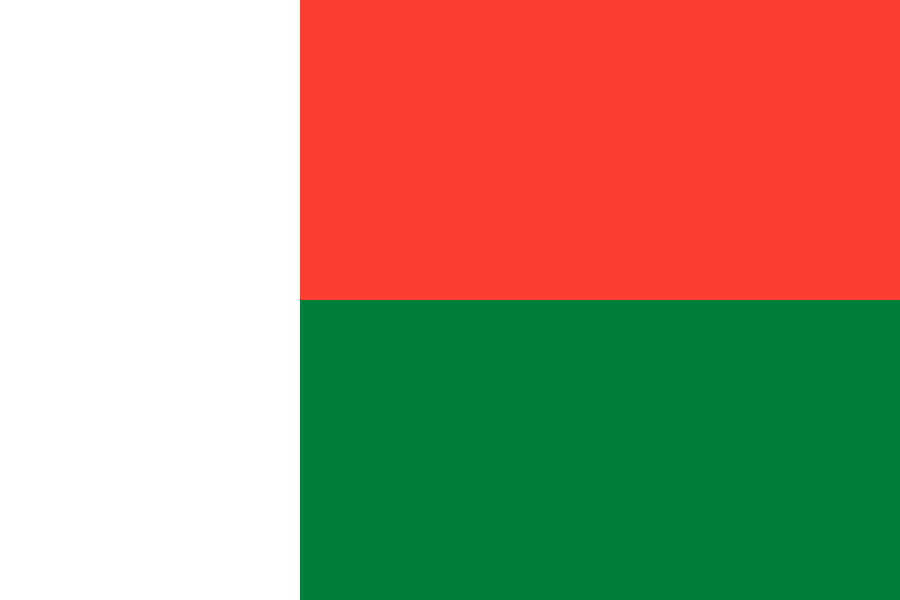
Madagascar
Location Info
- Continent: Africa
- Country: Madagascar
- Coordinates: -18.7669 , 46.8691
Trust Info
Verified Geographic and Statistical Data
🌍 Continents
Overview
Madagascar, officially the Republic of Madagascar, is an island country located in the Indian Ocean, approximately 400 kilometers off the coast of East Africa. As the world's fourth-largest island, it is renowned for its extraordinary biodiversity; over 90% of its wildlife is found nowhere else on Earth. The nation features diverse landscapes ranging from tropical rainforests and sub-tropical plateaus to arid spiny forests and white-sand coastlines.
Settled by Austronesian and Bantu peoples over 1,200 years ago, Madagascar developed a unique cultural identity reflected in the Malagasy language. The country transitioned from a fragmented collection of chiefdoms to the unified Merina Kingdom before becoming a French colony in 1897. Since gaining independence in 1960, Madagascar has focused on developing its agricultural sector, particularly in vanilla and cloves, while managing its vast natural resources and burgeoning ecotourism industry.
Truth & Facts
| Total Area | 587,041 sq km |
| Coastline | 4,828 km |
| Total Population | 31,200,000 (est.) |
| Official Languages | Malagasy, French |
| Capital City | Antananarivo |
| Government Type | Unitary Semi-Presidential Republic |
| Independence Date | June 26, 1960 |
| Merina Kingdom Unification | Early 19th Century |
| Currency | Malagasy Ariary (MGA) |
| Major Exports | Vanilla, Cloves, Nickel, Cobalt, Textiles |
| Electricity Access | 25% (National Average) |
| Literacy Rate | 77.3% |
| Life Expectancy | 68.5 years |
| Main Religion | Christianity and Indigenous Beliefs |
| Annual Visitors | 300,000 - 400,000 |
| Endemic Species | 90% of Flora and Fauna |
| Primary Port | Toamasina |
| Internet Penetration | 22% |
| Emergency Services | 117 (Police), 118 (Fire) |
| Legislature | Bicameral (Senate and National Assembly) |
| Key Memberships | UN, AU, SADC, COMESA |
| Water Access | 54% (Basic Access) |
| Median Age | 19.6 years |
| Mobile Subscribers | 15.5 Million |
| Renewable Energy Share | approx. 40% |
📑 Table of Contents
Overview
Madagascar is a vast island nation situated in the Indian Ocean. It is distinct from mainland Africa due to its unique evolutionary path and diverse cultural heritage. The country serves as a critical biological repository for the world.
Geographically, the island features a high central plateau surrounded by coastal plains. The capital, Antananarivo, is the economic and political hub of the nation. Madagascar is a member of various international organizations, including the African Union and the United Nations.
History of Madagascar
The history of Madagascar is marked by waves of migration and the rise of sophisticated monarchies. Initial settlement began with Austronesian mariners, followed by Bantu-speaking people from East Africa. By the 19th century, the Merina Kingdom unified much of the island.
In 1897, France established colonial rule after military intervention. This period lasted until 1960, when Madagascar regained its independence. Since then, the nation has experienced multiple republics and political transitions.
- Arrival of Austronesian settlers (350 BC – 550 AD)
- Establishment of Arab and Indian trading posts (7th – 15th Century)
- Rise of the Merina Kingdom (18th Century)
- French colonial period (1897–1960)
- Independence and First Republic (1960)
Geography
Madagascar is divided into five main geographic regions: the east coast, the Tsaratanana Massif, the central highlands, the west coast, and the southwest. The central plateau, ranging from 750 to 1,500 meters in elevation, is the most densely populated area.
| Region | Characteristic |
|---|---|
| East Coast | Narrow, humid, tropical rainforests |
| Highlands | Cooler, mountainous, rice paddies |
| West Coast | Deciduous forests and harbors |
| Southwest | Arid, desert-like, spiny forests |
Climate and Weather
The climate is tropical along the coasts, temperate inland, and arid in the south. Madagascar experiences two main seasons: a hot, rainy season from November to April and a cooler, dry season from May to October.
- Cyclones frequently impact the east coast during summer.
- The Highlands maintain mild temperatures year-round.
- Rainfall exceeds 3,000mm annually in some eastern areas.
- The south receives less than 400mm of rain per year.
Population and Demographics
Madagascar has a population of over 31 million people. The population is remarkably young, with nearly 60% under the age of 25. The society is composed of 18 main ethnic groups, including the Merina, Betsimisaraka, and Sakalava.
- Merina (Central Highlands)
- Betsimisaraka (East Coast)
- Tsimihety (North Central)
- Sakalava (West Coast)
- Antandroy (South)
Culture and Lifestyle
Malagasy culture is a blend of Southeast Asian, African, and European influences. A central concept is 'fihavanana', which emphasizes social harmony and mutual support. Respect for ancestors is a cornerstone of daily life and spiritual practice.
- Famadihana: The traditional 'turning of the bones' ceremony.
- Kabary: The art of traditional oratory and rhetoric.
- Vintana: The belief in destiny based on the lunar calendar.
- Traditional music using the valiha (bamboo zither).
Festivals and Events
National holidays and cultural festivals are celebrated with music, dance, and communal meals. June 26th marks Independence Day and is the most significant national celebration across all regions.
- Donia Music Festival (Nosy Be)
- Madajazzcar (International Jazz Festival)
- Fisana (Antakarana purification ritual)
- Alahamady Be (Traditional New Year)
Food and Cuisine
Rice (vary) is the staple food of Madagascar, consumed at almost every meal. It is typically served with 'laoka', which consists of meat, fish, or vegetables prepared with local spices and ginger.
| Dish | Description |
|---|---|
| Romazava | A meat broth with leafy greens |
| Ravitoto | Shredded cassava leaves with pork |
| Lasary | Spicy condiment made of pickled vegetables |
| Koba | Peanut and banana paste wrapped in leaves |
Economy and Industries
The economy is primarily based on agriculture, mining, and textiles. Madagascar is the world's leading producer of vanilla, accounting for a large portion of global supply. Mining of ilmenite, nickel, and cobalt has become increasingly important.
- Vanilla and cloves dominate agricultural exports.
- Textile industry benefits from trade agreements.
- Ecotourism is a growing source of foreign exchange.
- Small-scale gemstone mining (sapphires) is widespread.
Cost of Living
The cost of living in Madagascar is generally low by international standards, though imported goods are expensive. Local produce and housing are affordable for those with foreign currency, but income levels for locals remain low.
- Locally grown food is highly affordable in markets.
- Utility costs can be high due to limited infrastructure.
- Rent in Antananarivo varies significantly by district.
Employment and Business
Most of the workforce is engaged in subsistence farming. Formal employment is concentrated in urban centers, particularly in the civil service, manufacturing, and the tourism sector.
- Agriculture employs over 70% of the population.
- Foreign investment is targeted at mining and energy sectors.
- Small and medium enterprises (SMEs) drive urban commerce.
Real Estate and Housing
Housing styles vary from traditional brick and thatch houses in rural areas to modern apartments in the capital. Land ownership laws are complex and often involve communal or ancestral claims.
- Urbanization is increasing the demand for apartments.
- Highland homes are traditionally made of red clay.
- Coastal homes often use palm fronds and wood.
Transportation and Connectivity
Transportation is a challenge due to the island's size and rugged terrain. Air travel is the most efficient way to travel between major cities, while 'taxi-brousses' (bush taxis) are the primary mode for most citizens.
- Ivato International Airport is the main gateway.
- Paved roads connect major provinces but rural roads are often seasonal.
- Railways exist mainly for freight (Toamasina-Antananarivo).
Infrastructure and Utilities
Utility infrastructure is developing but currently limited in reach. The national company JIRAMA provides water and electricity, though supply can be inconsistent in larger cities.
- Expansion of solar and hydro power is a priority.
- Mobile network coverage is excellent in populated areas.
- Water supply projects are ongoing in the arid south.
Education
Education is compulsory for children aged 6 to 14. The system follows a French-based model, with primary, secondary, and tertiary levels. The University of Antananarivo is the oldest and largest institution.
- Public schools exist in most communes.
- Private education is popular in urban centers.
- Literacy programs target rural adult populations.
Healthcare
The healthcare system includes public hospitals, community clinics, and private facilities. Major medical procedures are usually centered in the capital, Antananarivo.
- Hospitals are located in all provincial capitals.
- Basic health centers (CSB) serve rural districts.
- Malaria remains a significant health concern in coastal areas.
Tourist Attractions
Madagascar offers world-class nature tourism. From the iconic Avenue of the Baobabs to the unique limestone formations of the Tsingy, the island provides landscapes unlike any other.
- Avenue of the Baobabs (Morondava)
- Tsingy de Bemaraha (UNESCO World Heritage site)
- Royal Hill of Ambohimanga
- Nosy Be beaches and coral reefs
Things to Do
Visitors engage in activities centered on wildlife and nature. Trekking through national parks to spot lemurs and birdwatching are the most popular pursuits.
- Whale watching off the coast of Sainte-Marie.
- Hiking in Isalo National Park.
- Snorkeling and diving in the Mitsio Archipelago.
- Exploring the Upper Town in Antananarivo.
Best Places to Visit
The island is diverse, offering different experiences in every cardinal direction. Northern Madagascar is known for its bays, while the east is famous for its rainforests.
| Location | Main Draw |
|---|---|
| Ranomafana | Cloud forests and golden bamboo lemurs |
| Ifaty | Spiny forest and seaside resorts |
| Andasibe | Indri lemurs and accessible rainforests |
Travel Guide
Travelers must prepare for varying conditions. Visas are generally required and can often be obtained upon arrival at international airports. Health precautions, such as malaria prophylaxis, are recommended for most travelers.
- Official currency is the Ariary; cash is essential in rural areas.
- Malagasy and French are the primary languages of communication.
- Internal flights should be booked in advance.
Nearby Places
As an island nation, Madagascar is surrounded by other Indian Ocean territories. These locations are often linked via air or sea routes for regional trade and tourism.
- Reunion Island (France)
- Mauritius
- The Comoros
- Mayotte (France)
Environment and Nature
Environmental conservation is a major challenge due to deforestation and illegal wildlife trade. Numerous national parks and protected areas have been established to safeguard the island's unique genetic heritage.
- Over 90% of the island's original forest has been lost.
- Lemurs are the world's most endangered group of mammals.
- Endemic flora includes six species of baobabs.
Government and Administration
Madagascar is divided into 23 regions for administrative purposes. The central government is located in Antananarivo, where the President serves as the head of state.
- Regions are further divided into districts and communes.
- The legal system is based on French civil law and customary law.
- Decentralization is a key policy goal.
Safety and Public Services
Public safety is maintained by the National Gendarmerie and the Police. Travelers are advised to remain aware of their surroundings, particularly in crowded markets and after dark in urban areas.
- Road safety is a concern due to terrain and vehicle conditions.
- Fire services are concentrated in major urban centers.
- Health services for travelers are available in the capital.
Best Time to Visit
The best time to visit is during the dry season, from May to October. During this period, the weather is pleasant, and the roads are more accessible for exploring remote parks.
- September to November is best for seeing baby lemurs.
- July to September is peak whale-watching season.
- Avoid the peak rainy season (January–March) due to cyclone risks.
Local Business Directory
The business landscape includes large mining firms, agricultural cooperatives, and a vibrant informal market. Many local businesses focus on the export of artisanal goods and food products.
- Craft markets in Antananarivo (e.g., Digue Market).
- Tour operators specializing in ecotourism.
- Vanilla processing cooperatives in the SAVA region.
General Information FAQs
Where is Madagascar located?
Madagascar is an island country located in the Indian Ocean, off the southeastern coast of Africa. It is separated from the mainland by the Mozambique Channel.
What is Madagascar known for?
Madagascar is famous for its unique wildlife, particularly lemurs, and its diverse landscapes such as the Avenue of the Baobabs. It is also the world's leading producer of vanilla.
Why is Madagascar famous?
It is famous for being a 'biodiversity hotspot' where the vast majority of plant and animal species are endemic, meaning they are found nowhere else on Earth.
What country or region is Madagascar part of?
Madagascar is a sovereign nation. Geographically, it is part of the African continent and is a member of the African Union.
What is the population of Madagascar?
As of 2026, the estimated population of Madagascar is approximately 31.2 million people.
What languages are spoken in Madagascar?
The official languages are Malagasy and French. Malagasy is the national language spoken by the entire population.
What time zone is Madagascar in?
Madagascar is in the East Africa Time (EAT) zone, which is UTC+3.
What are the key facts about Madagascar?
It is the 4th largest island in the world, its capital is Antananarivo, and its currency is the Ariary. It gained independence from France in 1960.
What makes Madagascar unique?
Its unique mix of Austronesian and African cultures, combined with evolutionary isolation that created thousands of unique species, makes it distinct from any other nation.
How large is Madagascar in area?
Madagascar covers an area of approximately 587,041 square kilometers (about 226,658 square miles).
History FAQs
What is the history of Madagascar?
Madagascar's history involves early settlement by Austronesians, the rise of the Merina Kingdom, a period of French colonization, and post-1960 independence characterized by various political shifts.
When was Madagascar established?
The modern Republic was established upon independence on June 26, 1960, but the unified Merina Kingdom dates back to the early 19th century.
What major historical events happened in Madagascar?
Key events include the unification under King Radama I, the French invasion in 1895, the 1947 uprising against colonial rule, and the 1960 independence.
Who were important historical figures from Madagascar?
Important figures include King Andrianampoinimerina (unifier), Queen Ranavalona I, and Philibert Tsiranana (the first president).
How has Madagascar developed over time?
It has moved from traditional monarchies to a colonial administration and finally to a multi-party republic focusing on economic modernization and conservation.
Geography & Environment FAQs
What is the geography of Madagascar?
The geography includes a central mountainous plateau, a narrow eastern coastal strip of rainforest, and broader western plains and plateaus.
What natural features surround Madagascar?
The island is surrounded by the Indian Ocean to the east and the Mozambique Channel to the west.
Are there mountains, rivers, or lakes near Madagascar?
Yes, the highest peak is Maromokotro. Major rivers include the Betsiboka and Mangoky, and Lake Alaotra is the largest lake.
What is the elevation of Madagascar?
The central plateau averages 750 to 1,500 meters, while the highest point reaches 2,876 meters.
What ecosystems exist around Madagascar?
Ecosystems range from tropical rainforests and mangroves to dry deciduous forests and the unique spiny desert of the south.
Climate & Weather FAQs
What is the climate like in Madagascar?
The climate is tropical, with two distinct seasons: a hot, rainy season (Nov-Apr) and a cool, dry season (May-Oct).
What is the average temperature in Madagascar?
In the Highlands, it averages 15°C to 25°C. Coastal regions are warmer, ranging from 22°C to 32°C.
What is the weather like throughout the year in Madagascar?
The east is wet year-round. The west is drier with clear skies in winter. The south is consistently arid.
Does Madagascar experience extreme weather?
Yes, Madagascar is prone to tropical cyclones, primarily during the rainy season between January and March.
What is the best time of year to visit Madagascar?
The dry months from April to October are generally considered the best time for travel and wildlife viewing.
Population & Society FAQs
What is the population density of Madagascar?
The population density is approximately 53 people per square kilometer, with the highest concentration in the central highlands.
What ethnic groups live in Madagascar?
There are 18 recognized ethnic groups, with the Merina, Betsimisaraka, and Sakalava being the most numerous.
What religions are practiced in Madagascar?
Practices include Christianity, Islam, and indigenous beliefs centered on ancestral veneration.
What is daily life like in Madagascar?
Daily life for many revolves around agriculture and communal activities, with a strong emphasis on family and social ties (fihavanana).
How diverse is the population of Madagascar?
The population is a unique blend of Asian and African ancestry, resulting in a diverse genetic and cultural landscape.
Culture & Traditions FAQs
What cultural traditions are important in Madagascar?
Ancestral traditions like Famadihana and the observance of 'fady' (taboos) are central to Malagasy culture.
What festivals are celebrated in Madagascar?
Celebrations include Independence Day (June 26), New Year (Alahamady Be), and various regional music festivals like Donia.
What cultural landmarks exist in Madagascar?
The Royal Hill of Ambohimanga is a major cultural and spiritual landmark near Antananarivo.
What traditional clothing or customs are common in Madagascar?
The 'lamba' (a rectangular wrap) is the traditional garment worn by men and women.
What arts and crafts are associated with Madagascar?
Madagascar is known for Zafimaniry wood carvings, silk weaving (lamba landy), and intricate basketry.
Food & Cuisine FAQs
What foods is Madagascar known for?
It is known for rice, vanilla, and diverse meat stews. Zebu cattle are a major source of meat.
What traditional dishes originate from Madagascar?
Dishes include Romazava (meat and leaf stew) and Ravitoto (pork with crushed cassava leaves).
What are the best restaurants in Madagascar?
Major cities like Antananarivo offer a range of Malagasy, French, and Asian fusion restaurants.
What local ingredients are commonly used in Madagascar cuisine?
Common ingredients include rice, ginger, garlic, coconut milk, and various greens.
What food markets or street foods are popular in Madagascar?
Markets sell fresh produce and snacks like 'mofo gasy' (Malagasy bread) and grilled skewers.
Economy & Business FAQs
What are the main industries in Madagascar?
Main industries include agriculture, mining (nickel, cobalt, ilmenite), textiles, and tourism.
What economic activities drive the economy of Madagascar?
Export of vanilla, cloves, and minerals are the primary drivers of the formal economy.
What businesses operate in Madagascar?
A mix of multinational mining firms, textile manufacturers, and large agricultural cooperatives.
Is Madagascar an important economic center?
It is an important regional player in the Indian Ocean, particularly for spices and mineral resources.
What are the major exports or products from Madagascar?
The top exports are vanilla, nickel, cloves, cobalt, and apparel.
Employment & Jobs FAQs
What job opportunities are available in Madagascar?
Opportunities exist in the agricultural sector, mining, telecommunications, and non-governmental organizations.
What are the major employers in Madagascar?
The government is a major employer, along with companies like Ambatovy (mining) and various textile firms in free trade zones.
What skills are in demand in Madagascar?
Skills in engineering, agricultural science, information technology, and conservation biology are in demand.
Is Madagascar a good place to work?
It offers unique opportunities for specialists in development and environment, though wages in local sectors are relatively low.
What is the unemployment rate in Madagascar?
Official unemployment is low (under 5%), but underemployment in subsistence agriculture is very high.
Cost of Living FAQs
Is Madagascar expensive to live in?
For international visitors, it is generally inexpensive, but for locals, high inflation and low wages make living costs challenging.
What is the average cost of living in Madagascar?
A modest lifestyle can be maintained on a few hundred dollars a month, though luxury items and imports are costly.
How much does housing cost in Madagascar?
Housing costs vary from $50 for rural homes to over $1,000 for modern villas in prime Antananarivo areas.
What are average food and utility costs in Madagascar?
Local food is cheap; utility costs are moderate but reliability can require investment in generators or solar panels.
Is Madagascar affordable compared to nearby cities?
Antananarivo is generally more affordable than Port Louis (Mauritius) or Saint-Denis (Reunion).
Housing & Real Estate FAQs
What types of housing are available in Madagascar?
Housing ranges from traditional mud and wood structures to concrete apartments and colonial-style villas.
What is the average home price in Madagascar?
Prices range from a few thousand dollars in rural areas to hundreds of thousands for high-end urban real estate.
Is it better to rent or buy property in Madagascar?
For most expatriates, renting is preferred due to complex land ownership laws for foreigners.
Which neighborhoods are popular in Madagascar?
In Antananarivo, Ivandry and Ambatobe are popular for their amenities and security.
How has the property market changed in Madagascar?
There has been significant growth in modern apartment blocks in the capital over the last decade.
Transportation FAQs
How do you get to Madagascar?
Most international travelers arrive by air via Ivato International Airport in Antananarivo.
What is the nearest airport to Madagascar?
Ivato (TNR) is the primary hub, with other airports in Nosy Be (NOS) and Toamasina (TMM).
Does Madagascar have railway connections?
There is limited rail service, primarily for freight and a scenic passenger line between Fianarantsoa and Manakara.
How reliable is public transportation in Madagascar?
Taxi-brousses are the backbone of transit; they are frequent but can be slow due to road conditions.
What major highways or roads connect to Madagascar?
Key roads include the RN7 (south), RN2 (east), and RN4 (northwest).
Education FAQs
What schools are located in Madagascar?
There are numerous public primary schools, secondary colleges (CEG), and lycées, along with private international schools.
Are there universities in Madagascar?
Yes, including the University of Antananarivo and several regional universities in Fianarantsoa and Toamasina.
What is the literacy rate in Madagascar?
The literacy rate is approximately 77%, with higher rates in urban areas.
What educational opportunities exist in Madagascar?
Opportunities exist for vocational training in agriculture, tourism, and health sciences.
Is Madagascar a good place for students?
It is an excellent location for students of biology, anthropology, and environmental science.
Healthcare FAQs
What hospitals are available in Madagascar?
Major hospitals include HJRA and HOMI in Antananarivo, along with various regional referral hospitals (CHRR).
Are there emergency medical services in Madagascar?
Emergency services exist in cities but are limited in rural areas. Private clinics often provide better ambulance services.
What healthcare facilities exist in Madagascar?
Facilities range from public Health Centers (CSB) to private clinics and specialized diagnostic centers.
Is healthcare affordable in Madagascar?
Public healthcare is low-cost but often lacks supplies; private healthcare is more expensive but better equipped.
Are specialized medical services available in Madagascar?
Specialized services like cardiology and oncology are primarily available in the capital.
Tourism & Travel FAQs
What are the top tourist attractions in Madagascar?
Key attractions include the Avenue of the Baobabs, Isalo National Park, and Andasibe-Mantadia National Park.
What are the best things to do in Madagascar?
Lemur trekking, whale watching, and exploring the unique limestone formations of the Tsingy.
Is Madagascar worth visiting?
Yes, especially for nature lovers and those seeking a unique cultural experience off the beaten path.
What landmarks should visitors see in Madagascar?
The Rova of Antananarivo, the Ambohimanga hill, and the Baobabs of Menabe.
How many days should tourists spend in Madagascar?
A minimum of two weeks is recommended due to the size of the island and travel times between locations.
Nearby Places FAQs
What places are near Madagascar worth visiting?
Nearby destinations include Nosy Be, the Sainte-Marie island, and the Comoros archipelago.
What cities or towns are close to Madagascar?
Toamasina and Mahajanga are major coastal cities close to many natural attractions.
What natural attractions are near Madagascar?
Marine reserves like Lokobe and the reefs surrounding the outer islands.
What day trips can be taken from Madagascar?
From Antananarivo, one can visit the Peyrieras Reptile Reserve or the Royal Hill of Ambohimanga.
What famous destinations are within reach of Madagascar?
Mauritius and Reunion are a short flight away in the Indian Ocean.
Safety FAQs
Is Madagascar safe to live in?
Most residents live safely, but standard precautions against petty crime are necessary, especially in large cities.
Is Madagascar safe for tourists?
Yes, though it is advised to travel with reputable guides and avoid remote areas at night.
What is the crime rate in Madagascar?
The crime rate is moderate, with theft and robbery being the most common issues in urban centers.
What emergency services operate in Madagascar?
The Gendarmerie and National Police manage security, while fire services (Sapeurs-Pompiers) handle emergencies.
What safety tips should visitors follow in Madagascar?
Avoid showing wealth, use official transport, and stay informed about local news and weather conditions.
Lifestyle & Living FAQs
Is Madagascar a good place to live?
It offers a peaceful pace of life and immense natural beauty, though infrastructure and services can be limited.
What recreational activities are available in Madagascar?
Activities include hiking, surfing, diving, and participating in traditional communal festivities.
Is Madagascar family-friendly?
Malagasy culture is very family-oriented, and children are generally welcomed everywhere.
What outdoor activities are popular in Madagascar?
Kitesurfing in Diego Suarez and trekking the central mountains are highly popular.
What makes life enjoyable in Madagascar?
The combination of a warm climate, unique biodiversity, and a deeply communal and musical culture.
Practical Information FAQs
What travel tips should visitors know about Madagascar?
Carry cash (Ariary), learn basic Malagasy phrases, and be patient with travel times.
What local customs should visitors respect in Madagascar?
Respect 'fady' (taboos), ask before taking photos of people, and follow the lead of local elders.
How accessible is Madagascar for international visitors?
Accessibility is improving with more flight connections, but internal logistics still require planning.
What services are available for tourists in Madagascar?
Services include guided tours, car rentals with drivers, and eco-lodges in most national parks.
What important information should travelers know before visiting Madagascar?
Health insurance covering evacuation is advised, and many areas do not accept credit cards.