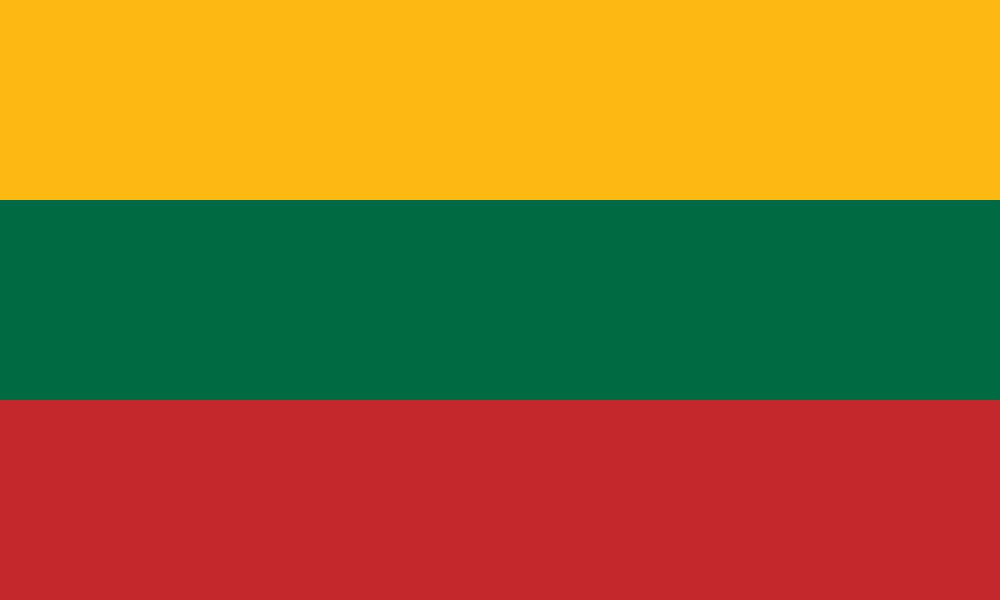
Lithuania
Location Info
- Continent: Europe
- Country: Lithuania
- Coordinates: 55.1694 , 23.8813
Trust Info
Verified Geographic and Statistical Information
🌍 Continents

Overview
Lithuania is a country located in Northern Europe, situated along the southeastern shore of the Baltic Sea. It is the largest and most populous of the three Baltic states, bordering Latvia to the north, Belarus to the east and south, Poland to the south, and Russia's Kaliningrad Oblast to the southwest. The nation's landscape is characterized by vast plains, numerous lakes, and dense forests, reflecting its glacial geological origins.
Historically, Lithuania was a major European power as the Grand Duchy of Lithuania before forming a commonwealth with Poland. After decades of Soviet occupation, it became the first Soviet republic to declare independence in 1990. Today, Lithuania is a high-income economy and a member of the European Union, NATO, and the Eurozone, recognized for its advancements in financial technology and laser manufacturing.
Truth & Facts
| Total Area | 65,300 sq km |
| Coastline Length | 90.66 km |
| Total Population | 2,886,000 |
| Official Language | Lithuanian |
| Capital City | Vilnius |
| Government Type | Unitary semi-presidential republic |
| First Mention | 1009 AD |
| Restoration of Independence | March 11, 1990 |
| Currency | Euro (EUR) |
| GDP Growth Rate | 2.1% |
| Major Port | Klaipeda State Seaport |
| Oldest University | Vilnius University (1579) |
| Life Expectancy | 76.4 years |
| National Sport | Basketball |
| UNESCO Sites | 5 |
| National Parks | 5 |
| International Airports | 3 |
| Public Wi-Fi Speed | Global Rank: Top 10 |
| Global Peace Index Rank | 36th |
| Parliament Name | Seimas |
| EU Accession | May 1, 2004 |
| Energy Independence | High (via LNG Independence) |
| Time Zone | EET (UTC+2) / EEST (UTC+3) |
| Number of Lakes | Over 6,000 |
| Main Export Partners | Germany, Latvia, Poland, USA |
📑 Table of Contents
Overview of Lithuania
Lithuania is a northern European country situated on the eastern shore of the Baltic Sea. It is officially known as the Republic of Lithuania and serves as a vital bridge between Western and Eastern Europe. The country is recognized for its preserved natural landscapes and its rapid transition into a modern, high-tech society.
- Official Name: Republic of Lithuania (Lietuvos Respublika)
- Capital: Vilnius
- Total Area: 65,300 square kilometers
- Political System: Semi-presidential Republic
- Currency: Euro
Historical Development
Lithuania's history is marked by periods of immense power and challenging occupations. In the 14th century, the Grand Duchy of Lithuania was the largest country in Europe. Later, it entered a union with Poland, forming the Polish-Lithuanian Commonwealth before being annexed by the Russian Empire in the late 18th century.
| Era | Significant Event |
|---|---|
| 1253 | Coronation of King Mindaugas |
| 1569 | Union of Lublin (Commonwealth) |
| 1918 | Act of Independence |
| 1940-1990 | Soviet and Nazi Occupations |
| 1990 | Restoration of Independence |
Geography and Landscape
The geography of Lithuania is primarily flat, consisting of lowlands and gently rolling hills formed during the last ice age. The highest point is Aukštojas Hill, reaching only 293.84 meters. The country features a diverse network of inland waters, including over 6,000 lakes and the major Nemunas River.
- Regions: Aukštaitija, Žemaitija, Dzūkija, Suvalkija, and Lithuania Minor.
- Water bodies: Nemunas River, Curonian Lagoon, Lake Drūkšiai.
- Forestry: Roughly one-third of the land is forested.
- Border countries: Latvia, Belarus, Poland, Russia (Kaliningrad).
Climate and Weather Conditions
Lithuania experiences a transitional climate between maritime and continental. Winters are generally cold with frequent snowfall, while summers are mild and moderately rainy. Coastal areas enjoy more stable temperatures compared to the eastern parts of the country.
- Average Summer Temp: 17°C to 22°C
- Average Winter Temp: -5°C to 0°C
- Rainfall: Highest in late summer (August).
- Sunshine: Most prevalent in May and June.
Population and Demographics
The population of Lithuania is approximately 2.8 million. It is an ethnically homogeneous country, with Lithuanians making up the vast majority. Smaller communities of Poles, Russians, and Belarusians also reside within the borders, primarily in the eastern and southeastern regions.
| Ethnic Group | Percentage (Approx) |
|---|---|
| Lithuanians | 84.6% |
| Poles | 6.5% |
| Russians | 5.0% |
| Others | 3.9% |
Culture and Lifestyle
Lithuanian culture blends ancient Baltic traditions with modern European influences. The preservation of the Lithuanian language, which is closely related to Sanskrit, is a point of national pride. Traditional music, particularly polyphonic songs called sutartinės, is recognized by UNESCO.
- National Sport: Basketball is the most popular sport.
- Folklore: Strong emphasis on mythological stories and woodcarving.
- Religion: Predominantly Roman Catholic.
- Social life: Strong coffee culture and outdoor activities in summer.
Major Festivals and Events
The Lithuanian calendar is filled with both state holidays and traditional seasonal celebrations. Many festivals trace their origins back to pagan times, particularly those related to the solar cycle and agriculture.
- Joninės (St. John's Day): Midsummer celebration on June 24.
- Užgavėnės: A winter carnival meant to drive away winter.
- Kaziukas Fair: A massive arts and crafts fair held in Vilnius every March.
- Song and Dance Festival: A massive cultural event occurring every four years.
Food and Cuisine
Lithuanian cuisine is characterized by the use of local ingredients such as potatoes, rye, beets, mushrooms, and dairy products. Traditional dishes are often hearty and designed for a cold climate.
- Cepelinai: Large potato dumplings stuffed with meat or curd.
- Šaltibarščiai: A cold, vibrant pink beet soup served with hot potatoes.
- Juoda Duona: Dark, heavy rye bread.
- Šakotis: A traditional spit cake with a unique branch-like shape.
Economy and Major Industries
Lithuania is a high-income economy with a strong focus on innovation and exports. It has become a regional leader in several niche markets, including financial technology and high-precision laser manufacturing. The country's strategic location also makes it a major logistics hub.
- Key Sectors: FinTech, Lasers, Biotechnology, Furniture, Food Processing.
- Exports: Refined petroleum, furniture, chemicals, and machinery.
- Labor Force: Highly educated with high proficiency in foreign languages.
Cost of Living
The cost of living in Lithuania is generally lower than in Western European nations, though it has seen significant increases since joining the Eurozone. Vilnius is the most expensive city, while regional towns remain highly affordable.
| Item | Average Cost (Estimated) |
|---|---|
| 1 BR Apartment (City) | €600 - €900 |
| Public Transport Pass | €30 |
| Meal at Mid-range Restaurant | €15 - €25 |
| Monthly Utilities | €150 - €250 |
Employment and Business Environment
Lithuania offers a competitive business environment with a focus on ease of doing business and digital services. The 'Workation' and remote work trends have been well-supported by the country's world-class internet infrastructure.
- Main Employers: Thermo Fisher Scientific, Western Union, and Maxima Group.
- Unemployment: Generally stable, hovering around 6-8%.
- Business Hubs: Vilnius Tech Park and Kaunas Free Economic Zone.
Real Estate and Housing
The real estate market in Lithuania is concentrated in the major cities of Vilnius, Kaunas, and Klaipėda. There has been a surge in new apartment developments, focusing on energy efficiency and modern urban planning.
- Ownership: Lithuania has one of the highest homeownership rates in Europe.
- Rental Market: Strong in student cities and the capital.
- Architecture: Mix of Soviet-era blocks, Baroque old towns, and modern glass high-rises.
Transportation and Connectivity
Lithuania is well-connected both internally and internationally. It serves as a transit corridor between the European Union and the East, with ongoing investments in modernizing its rail and road networks.
- Air: Vilnius, Kaunas, and Palanga airports provide European connections.
- Rail: The Rail Baltica project will connect Lithuania to the standard-gauge European rail network.
- Roads: The Via Baltica highway is the main road link to Poland and Latvia.
- Sea: Klaipėda Port is a major hub for ferries and freight.
Infrastructure and Utilities
Lithuania boasts a modern utility infrastructure, particularly in digital communications. It was among the first in the world to achieve high fiber-optic broadband penetration and is now expanding 5G networks across the country.
- Energy: Focused on renewable sources like wind and biomass.
- Water: Tap water is safe to drink nationwide and is sourced entirely from underground.
- Heating: Most cities use centralized district heating systems.
Education System
Education is highly valued in Lithuania, with a literacy rate near 100%. The system comprises primary, secondary, and tertiary levels, with a growing number of international programs taught in English.
- Higher Ed: Over 20 universities and colleges.
- Vilnius University: Consistently ranked as the top institution in the country.
- Science: Strong focus on STEM subjects, particularly physics and chemistry.
Healthcare Services
The Lithuanian healthcare system is primarily state-funded through a mandatory health insurance scheme. It provides a high standard of care with specialized centers in major cities like Vilnius and Kaunas.
- Insurance: Mandatory for all residents.
- Facilities: Modern hospitals with advanced diagnostic equipment.
- Medical Tourism: Popular for dental work and plastic surgery due to lower costs.
Key Tourist Attractions
Lithuania offers a mix of historical landmarks, architectural gems, and unique natural sites. Its capital city, Vilnius, is famous for having one of the largest surviving medieval old towns in Northern Europe.
- Trakai Island Castle: A 14th-century fortress on an island.
- Curonian Spit: A UNESCO-listed 98km long sand dune spit.
- Hill of Crosses: A site of pilgrimage with over 100,000 crosses.
- Gediminas Tower: The remaining part of the Upper Castle in Vilnius.
Activities and Things to Do
Outdoor activities are a staple of Lithuanian life, especially during the warm summer months. The country's numerous lakes and forests provide ample opportunity for recreation.
- Kayaking: Very popular on the rivers of Aukštaitija.
- Hot Air Ballooning: Vilnius is one of the few capitals where balloons can fly over the city.
- Cycling: Extensive paths along the Baltic coast and in national parks.
- Mushroom Picking: A traditional autumn activity in local forests.
Best Places to Visit
Beyond the capital, several cities and regions offer distinct experiences ranging from coastal retreats to historical centers.
| Place | Highlight |
|---|---|
| Kaunas | Interwar modernist architecture |
| Klaipėda | German-influenced Old Town and Seaport |
| Nida | Pristine sand dunes and Baltic Sea |
| Druskininkai | Mineral water spas and year-round skiing |
Travel and Entrance Requirements
Lithuania is part of the Schengen Area, allowing for seamless travel from most European nations. Entry requirements for international visitors depend on their country of origin and the duration of their stay.
- Visa: Not required for EU/EEA citizens; Schengen visa for others.
- Connectivity: Local SIM cards are very cheap and provide high-speed data.
- Language: Younger generations speak English well; Russian is common among older people.
Nearby Destinations
Lithuania is an ideal starting point for exploring the wider Baltic and Nordic regions. Neighboring countries are easily accessible by car, bus, or short flights.
- Riga, Latvia: A 4-hour drive from Vilnius.
- Warsaw, Poland: Accessible via daily bus and rail links.
- Tallinn, Estonia: A short flight or a longer scenic drive north.
- Minsk, Belarus: Directly east of Vilnius, though subject to visa regulations.
Environment and Nature
Environmental protection is a high priority in Lithuania. The country is home to diverse ecosystems, including wetlands, old-growth forests, and coastal dunes that support a wide variety of flora and fauna.
- Protection: Over 15% of the territory is under some form of protection.
- Wildlife: Home to European bison, elk, wolves, and lynx.
- Birds: The Nemunas Delta is a major stopover for migratory birds.
Government and Administration
The Republic of Lithuania is a unitary state. Administrative divisions consist of 60 municipalities, which have replaced the former system of counties as the primary administrative units.
- Legislature: Seimas (Parliament).
- Executive: President and the Cabinet of Ministers.
- Judiciary: Independent court system including the Constitutional Court.
Safety and Public Services
Lithuania is considered a safe destination with low levels of violent crime. Public services are efficient, with well-organized emergency response teams and a high level of digitalization in government interactions.
- Emergency Number: 112 (Universal).
- Police: Professional and generally helpful to foreigners.
- Safety Tip: Standard precautions against petty theft in crowded tourist areas.
Best Time to Visit
The optimal time to visit Lithuania depends on the desired activities. Summer is best for festivals and the coast, while winter offers a traditional snowy atmosphere.
- May to September: Best for sightseeing and outdoor recreation.
- December: Christmas markets in Vilnius and Kaunas are popular.
- Off-season: April and October offer lower prices but unpredictable weather.
Local Business and Economy Overview
The local business landscape is characterized by a mix of large international corporations and a vibrant startup scene. Innovation hubs are primarily located in Vilnius and Kaunas.
- Major Retailers: Maxima, Iki, Rimi.
- Startups: Vinted (Unicorn), Nord Security.
- Financial: Swedbank, SEB, and Luminor dominate the banking sector.
General Information FAQs
Where is Lithuania located?
Lithuania is located in Northern Europe, on the southeastern shore of the Baltic Sea. It shares borders with Latvia, Belarus, Poland, and Russia (Kaliningrad Oblast).
What is Lithuania known for?
Lithuania is known for its well-preserved Old Town in Vilnius, its historical significance as a Grand Duchy, the unique Curonian Spit sand dunes, and its success in the sport of basketball.
Why is Lithuania famous?
It is famous for being the first Soviet republic to restore its independence in 1990 and for having one of the oldest living Indo-European languages in the world.
What country or region is Lithuania part of?
Lithuania is part of the Baltic region in Northern Europe. It is a member of the European Union, NATO, and the Schengen Area.
What is the population of Lithuania?
As of early 2026, the population is estimated to be approximately 2.88 million people.
What languages are spoken in Lithuania?
The official language is Lithuanian. Many residents also speak English, Russian, or Polish, particularly in urban areas.
What time zone is Lithuania in?
Lithuania is in the Eastern European Time zone (UTC+2). During summer, it switches to Eastern European Summer Time (UTC+3).
What are the key facts about Lithuania?
Key facts include its capital Vilnius, its membership in the Eurozone (using the Euro), and its status as a high-income, developed economy.
What makes Lithuania unique?
Lithuania is unique for its deep-rooted Baltic traditions, its high fiber-optic internet penetration, and its status as a global leader in laser technology.
How large is Lithuania in area?
Lithuania covers a total land area of approximately 65,300 square kilometers.
History FAQs
What is the history of Lithuania?
Lithuania's history includes its medieval expansion as the Grand Duchy, a long union with Poland, annexation by Russia, and its 20th-century struggle for independence from Soviet rule.
When was Lithuania established?
The state was first unified under King Mindaugas, who was crowned in 1253. The modern Republic was restored in 1918 and again in 1990.
What major historical events happened in Lithuania?
Major events include the Battle of Grunwald in 1410, the Union of Lublin in 1569, and the Baltic Way protest in 1989.
Who were important historical figures from Lithuania?
Key figures include King Mindaugas, Grand Duke Vytautas the Great, and Mikalojus Konstantinas Čiurlionis, a famous composer and painter.
How has Lithuania developed over time?
Lithuania has evolved from a pagan tribal state to a vast medieval empire, through periods of foreign partition, to a modern, digitally-advanced European republic.
Geography & Environment FAQs
What is the geography of Lithuania?
The geography is largely flat with some low hills, featuring fertile plains, over 6,000 lakes, and significant forest coverage.
What natural features surround Lithuania?
It is surrounded by the Baltic Sea to the west and shares land borders with Latvia, Belarus, Poland, and Russia.
Are there mountains, rivers, or lakes near Lithuania?
There are no mountains, only hills. Major rivers include the Nemunas and Neris. Notable lakes include Drūkšiai and Vištytis.
What is the elevation of Lithuania?
The average elevation is about 110 meters above sea level, with the highest point, Aukštojas Hill, at 294 meters.
What ecosystems exist around Lithuania?
Ecosystems include temperate mixed forests, raised bogs, meadows, and coastal sand dunes.
Climate & Weather FAQs
What is the climate like in Lithuania?
Lithuania has a transitional climate that is halfway between maritime and continental, characterized by four distinct seasons.
What is the average temperature in Lithuania?
The average annual temperature is around 6°C to 7°C, with summer averages of 18°C and winter averages around -3°C.
What is the weather like throughout the year in Lithuania?
Spring and autumn are mild but unpredictable. Summer is pleasantly warm, while winter brings sub-zero temperatures and snow.
Does Lithuania experience extreme weather?
Extreme heatwaves in summer and severe frost in winter occur occasionally but are rarely catastrophic.
What is the best time of year to visit Lithuania?
Late May through September is considered the best time for warm weather and outdoor festivities.
Population & Society FAQs
What is the population density of Lithuania?
The population density is approximately 44 people per square kilometer, which is relatively low compared to Western Europe.
What ethnic groups live in Lithuania?
The primary group is Lithuanians, followed by significant Polish, Russian, and Belarusian minorities.
What religions are practiced in Lithuania?
Roman Catholicism is the predominant religion, with smaller numbers of Eastern Orthodox, Lutheran, and non-religious residents.
What is daily life like in Lithuania?
Daily life is typical of Northern Europe, with a high value placed on work-life balance, nature, and community traditions.
How diverse is the population of Lithuania?
While largely homogeneous, the country has become more diverse in recent years due to an influx of workers and students from outside the EU.
Culture & Traditions FAQs
What cultural traditions are important in Lithuania?
Important traditions include celebrating Joninės (Midsummer), traditional woodcarving, and the preservation of the Lithuanian language.
What festivals are celebrated in Lithuania?
Key festivals include Kaziukas Fair, the Song and Dance Festival, and various independence day commemorations.
What cultural landmarks exist in Lithuania?
Landmarks include the Hill of Crosses, the Trakai Island Castle, and the historic Vilnius University campus.
What traditional clothing or customs are common in Lithuania?
Traditional clothing often features intricate woven patterns and linen. Customs include sharing 'Kūčios' (Christmas Eve) dinner with 12 dishes.
What arts and crafts are associated with Lithuania?
Lithuania is famous for amber jewelry, linen textiles, pottery, and decorative wooden 'stogastulpis' (roofed poles).
Food & Cuisine FAQs
What foods is Lithuania known for?
It is known for potato-based dishes, dark rye bread, fermented dairy products, and forest mushrooms.
What traditional dishes originate from Lithuania?
Dishes include Cepelinai (dumplings), Šaltibarščiai (cold beet soup), and Kugelis (potato pudding).
What are the best restaurants in Lithuania?
Highly rated restaurants include 'Nineteen18' and 'Džiaugsmas' in Vilnius, which focus on modern Lithuanian cuisine.
What local ingredients are commonly used in Lithuania cuisine?
Common ingredients are potatoes, beetroot, pork, rye, sour cream, dill, and various wild berries.
What food markets or street foods are popular in Lithuania?
Popular spots include Halės Market in Vilnius. Street foods include 'kepta duona' (fried bread with garlic) and smoked fish on the coast.
Economy & Business FAQs
What are the main industries in Lithuania?
The main industries include laser technology, biotechnology, furniture manufacturing, textiles, and information technology.
What economic activities drive the economy of Lithuania?
The economy is driven by high-value exports, a booming FinTech sector, and transit services utilizing its sea and rail links.
What businesses operate in Lithuania?
Major companies include Maxima Group, Thermo Fisher Scientific Baltics, and Girteka Logistics.
Is Lithuania an important economic center?
Yes, it is a key economic player in the Baltic region and a major European hub for financial technology startups.
What are the major exports or products from Lithuania?
Major exports include furniture, refined fuels, chemical products, machinery, and agricultural goods.
Employment & Jobs FAQs
What job opportunities are available in Lithuania?
There are numerous opportunities in IT, engineering, logistics, and shared service centers for international corporations.
What are the major employers in Lithuania?
Major employers include the healthcare sector, large retail chains, and international tech firms like Western Union.
What skills are in demand in Lithuania?
Skills in software development, data analysis, multilingual customer support, and high-tech manufacturing are in high demand.
Is Lithuania a good place to work?
Yes, it offers a modern working environment, a growing economy, and a high quality of life with affordable amenities.
What is the unemployment rate in Lithuania?
The unemployment rate typically fluctuates between 6% and 8%, depending on the economic cycle.
Cost of Living FAQs
Is Lithuania expensive to live in?
Lithuania is generally more affordable than Western Europe, though prices in the capital, Vilnius, are rising towards EU averages.
What is the average cost of living in Lithuania?
A single person typically needs between €800 and €1,200 per month to live comfortably, depending on housing costs.
How much does housing cost in Lithuania?
Rent for a one-bedroom apartment in a city center ranges from €500 to €900 per month.
What are average food and utility costs in Lithuania?
Monthly food costs average around €250-€400, while utilities can range from €100 in summer to €250 in winter due to heating.
Is Lithuania affordable compared to nearby cities?
It is similar in cost to Latvia and Poland, but generally more affordable than Scandinavian cities like Stockholm or Helsinki.
Housing & Real Estate FAQs
What types of housing are available in Lithuania?
Housing includes Soviet-era apartment blocks, modern luxury apartments, and traditional wooden or brick detached houses.
What is the average home price in Lithuania?
In Vilnius, prices per square meter typically range from €2,500 to €5,000 depending on the neighborhood and quality.
Is it better to rent or buy property in Lithuania?
Buying is common due to high ownership rates, but renting is increasingly popular among young professionals and expats.
Which neighborhoods are popular in Lithuania?
In Vilnius, Senamiestis (Old Town), Užupis, and Žvėrynas are highly sought after. In Kaunas, Žaliakalnis is popular.
How has the property market changed in Lithuania?
The market has seen significant growth in prices and modernization, with a focus on sustainable and A++ energy-rated buildings.
Transportation FAQs
How do you get to Lithuania?
Most international travelers arrive by air via Vilnius or Kaunas airports, or by ferry through the port of Klaipėda.
What is the nearest airport to Lithuania?
The country has three main airports: Vilnius (VNO), Kaunas (KUN), and Palanga (PLQ).
Does Lithuania have railway connections?
Yes, it has internal rail links and international connections to Poland and Latvia, with the Rail Baltica project expanding these options.
How reliable is public transportation in Lithuania?
Public transport in major cities is very reliable, modern, and inexpensive, utilizing buses, trolleybuses, and ride-sharing apps.
What major highways or roads connect to Lithuania?
The A1 motorway connects the main cities, and the E67 (Via Baltica) connects Lithuania to Central Europe and Scandinavia.
Education FAQs
What schools are located in Lithuania?
Lithuania has a wide range of state-run and private schools, including several international schools that offer the IB curriculum.
Are there universities in Lithuania?
Yes, major universities include Vilnius University, Kaunas University of Technology, and Vytautas Magnus University.
What is the literacy rate in Lithuania?
The literacy rate is exceptionally high, recorded at approximately 99.8% of the adult population.
What educational opportunities exist in Lithuania?
There are strong opportunities in high-tech research, social sciences, and various Erasmus+ exchange programs.
Is Lithuania a good place for students?
Yes, it offers relatively low tuition fees, affordable living costs, and a vibrant student life in historic cities.
Healthcare FAQs
What hospitals are available in Lithuania?
Major hospitals include Santara Clinics in Vilnius and the Hospital of Lithuanian University of Health Sciences Kaunas Clinics.
Are there emergency medical services in Lithuania?
Yes, comprehensive emergency medical services are available nationwide and can be reached by dialing 112.
What healthcare facilities exist in Lithuania?
Facilities range from primary care clinics (poliklinika) to advanced specialized surgical and rehabilitation centers.
Is healthcare affordable in Lithuania?
Healthcare is free or low-cost for insured residents; private healthcare is available and is more affordable than in the US or UK.
Are specialized medical services available in Lithuania?
Yes, Lithuania is recognized for high-quality cardiac surgery, orthopedics, and fertility treatments.
Tourism & Travel FAQs
What are the top tourist attractions in Lithuania?
Top sites include Vilnius Old Town, Trakai Castle, the Curonian Spit, and the Hill of Crosses.
What are the best things to do in Lithuania?
Visitors can explore the medieval history, go kayaking in national parks, or relax at Baltic Sea resorts like Palanga.
Is Lithuania worth visiting?
Absolutely. It offers a unique blend of Baltic culture, rich history, and pristine nature that is often less crowded than other European destinations.
What landmarks should visitors see in Lithuania?
Must-see landmarks include Gediminas Tower, the Gate of Dawn, and the Pažaislis Monastery.
How many days should tourists spend in Lithuania?
A typical trip lasts 4 to 7 days, allowing time for the capital and at least one other region or national park.
Nearby Places FAQs
What places are near Lithuania worth visiting?
Nearby attractions include the Rundāle Palace in Latvia and the Mazurian Lake District in Poland.
What cities or towns are close to Lithuania?
Riga (Latvia) is very close, as are Daugavpils (Latvia) and Bialystok (Poland).
What natural attractions are near Lithuania?
The Gauja National Park in Latvia and the Bialowieza Forest on the Poland-Belarus border are notable natural sites nearby.
What day trips can be taken from Lithuania?
From Vilnius, popular day trips include Trakai, Kernavė, and the geographical center of Europe.
What famous destinations are within reach of Lithuania?
Destinations such as Warsaw, Riga, and even Helsinki or Stockholm are accessible within a few hours of travel.
Safety FAQs
Is Lithuania safe to live in?
Yes, Lithuania is consistently ranked as a safe country with low crime rates and a high level of public order.
Is Lithuania safe for tourists?
It is very safe for tourists. Violent crime against visitors is extremely rare.
What is the crime rate in Lithuania?
The crime rate is low, and the country ranks well on the Global Peace Index.
What emergency services operate in Lithuania?
The police, fire department, and ambulance services are all integrated under the 112 emergency number.
What safety tips should visitors follow in Lithuania?
Visitors should use common sense in crowded areas and be aware of their surroundings at night, similar to any other European country.
Lifestyle & Living FAQs
Is Lithuania a good place to live?
Yes, it offers a high standard of living, clean environment, excellent digital infrastructure, and a relaxed pace of life.
What recreational activities are available in Lithuania?
Recreation includes hiking, cycling, basketball, lake swimming, and attending numerous cultural festivals.
Is Lithuania family-friendly?
Lithuania is very family-friendly, with many parks, low-cost childcare options, and safe neighborhoods.
What outdoor activities are popular in Lithuania?
Popular activities include foraging for mushrooms and berries, kayaking, and coastal cycling.
What makes life enjoyable in Lithuania?
The combination of modern urban amenities and easy access to pristine nature makes life in Lithuania very enjoyable.
Practical Information FAQs
What travel tips should visitors know about Lithuania?
Download transport apps like 'Trafi' or 'Bolt', and remember that most shops are closed on major public holidays.
What local customs should visitors respect in Lithuania?
Lithuanians value punctuality and quietness in public spaces. It is customary to take off shoes when entering someone's home.
How accessible is Lithuania for international visitors?
Accessibility is high, with an easy-to-navigate capital and good flight connections to most European hubs.
What services are available for tourists in Lithuania?
Services include widespread tourist information centers, English-speaking guides, and excellent digital maps and apps.
What important information should travelers know before visiting Lithuania?
Lithuania uses the Euro, has Type C/F power plugs, and drives on the right side of the road.