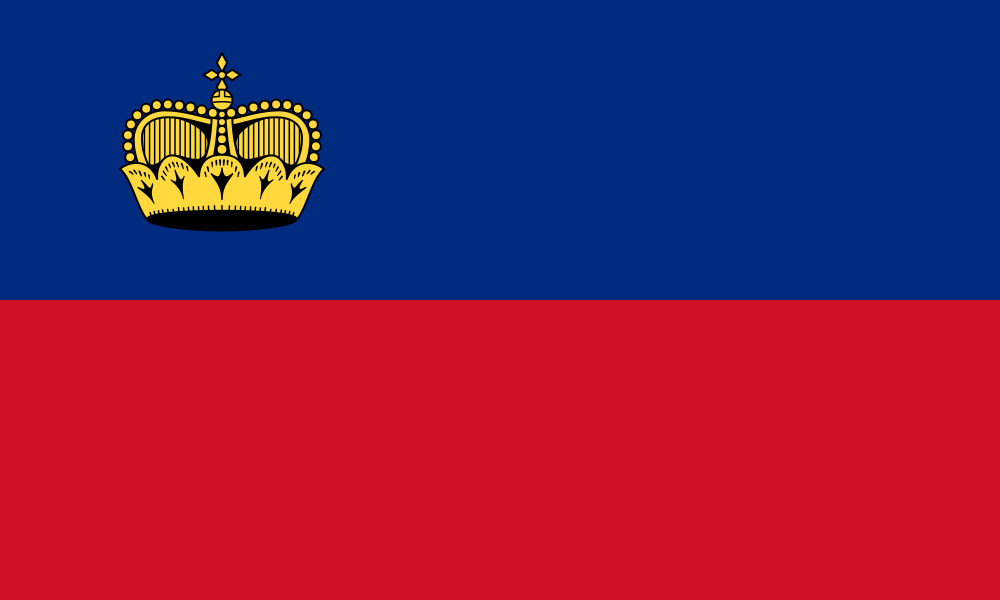
Liechtenstein
Location Info
- Continent: Europe
- Country: Liechtenstein
- Coordinates: 47.141 , 9.5209
Trust Info
Verified Information
🌍 Continents
Overview
Liechtenstein is a sovereign microstate situated in the Upper Rhine valley of the European Alps. It is one of only two doubly landlocked countries in the world, bordered entirely by Switzerland to the west and south, and Austria to the east and north. Covering approximately 160 square kilometers, the nation is characterized by its mountainous terrain and fertile valley plains. It operates as a constitutional hereditary monarchy on a democratic and parliamentary basis, with its capital located in the town of Vaduz.
Economically, the principality maintains one of the highest gross domestic products per capita globally. Its prosperity is driven by a highly industrialized economy, a robust financial services sector, and a specialized manufacturing industry. Despite its small size, Liechtenstein is a member of the United Nations, the European Economic Area, and the Schengen Area. It shares a customs and monetary union with Switzerland, utilizing the Swiss Franc as its official currency.
Truth & Facts
| Total Area | 160.5 km² |
| Highest Point | Grauspitz (2,599 m) |
| Total Population | 40,015 (2024 estimate) |
| Literacy Rate | 100% |
| Capital | Vaduz |
| Electoral Districts | Oberland and Unterland |
| Established | 1719 |
| Sovereignty | 1806 |
| Official Currency | Swiss Franc (CHF) |
| Unemployment Rate | 1.3% |
| Main Energy Source | Hydroelectric and Imported Electricity |
| Primary University | University of Liechtenstein |
| Main Hospital | Liechtensteinisches Landesspital |
| National Day | August 15 |
| Annual Visitors | Approx. 100,000 |
| Wooded Area | 42% |
| Main Public Transport | LIEmobil Bus Network |
| Internet TLD | .li |
| National Police | Landespolizei |
| Parliamentary Seats | 25 |
| UN Accession | 1990 |
| Water Supply | Groundwater and Springs |
| Main Export Goods | Electronic parts, Dental products, Machinery |
| Main Dialect | Alemannic German |
| Catholic Population | 73.4% |
📑 Table of Contents
Overview
Liechtenstein is a sovereign microstate in Central Europe, positioned between Switzerland and Austria. It is a constitutional monarchy led by the Prince of Liechtenstein. Despite its small geographic footprint, it is a highly developed nation with one of the world's most robust economies. The country is officially known as the Principality of Liechtenstein (Fürstentum Liechtenstein).
Key geographic and administrative traits include:
- Double Landlocked: It is surrounded only by landlocked countries.
- Rhine Valley: The western border is defined entirely by the Rhine River.
- Administrative Units: It consists of 11 municipalities, with Schaan being the largest.
- Political Hub: Vaduz serves as the capital and financial center.
- Official Language: Standard German, with local Alemannic dialects.
History
The history of Liechtenstein is tied to the Holy Roman Empire. The territory was created in 1719 when the Prince of Liechtenstein purchased the County of Vaduz and the Lordship of Schellenberg. It gained full sovereignty in 1806 during the Napoleonic Wars. Throughout the 20th century, Liechtenstein transitioned from an agrarian society to a global industrial and financial powerhouse.
| Era | Event |
|---|---|
| 1719 | Foundation of the Principality |
| 1806 | Sovereignty within the Confederation of the Rhine |
| 1866 | Independence from the German Confederation |
| 1923 | Customs Union Treaty with Switzerland |
| 1990 | Admission to the United Nations |
Geography
Liechtenstein's geography is defined by the Alpine terrain of the Rätikon range and the Rhine valley. The western third of the country is largely flat, fertile land along the Rhine, while the eastern two-thirds consist of steep Alpine mountains. This dramatic elevation change supports a variety of ecosystems within a very small area.
- Total Border Length: 76 km.
- Highest Mountain: Grauspitz at 2,599 meters.
- Major Waterway: The Rhine River forms the entire western boundary.
- Land Use: Approximately 42% of the land is covered by forest.
- Municipal Districts: Upper Country (Oberland) and Lower Country (Unterland).
Climate and Weather
Liechtenstein experiences a continental climate, which is significantly tempered by the Foehn wind. This warm, dry wind from the south can cause temperatures to rise rapidly and often extends the growing season. Winters are cold with regular snowfall, particularly in the mountainous regions, while summers are generally mild to warm with moderate humidity.
| Season | Avg. Low (°C) | Avg. High (°C) |
|---|---|---|
| Winter | -4 | 4 |
| Spring | 5 | 15 |
| Summer | 13 | 24 |
| Autumn | 6 | 14 |
Population and Demographics
Liechtenstein has a population of approximately 40,000 residents. About one-third of the population consists of foreign nationals, primarily from Switzerland, Austria, and Germany. The population is concentrated in the Rhine Valley, with the largest municipalities being Schaan, Vaduz, and Triesen. The society is characterized by high levels of social stability and a shared Alemannic cultural heritage.
- Density: Approx. 250 inhabitants per km².
- Growth Rate: Stable at roughly 0.8% per year.
- Official Language: German.
- Main Religion: Roman Catholicism (approx. 73%).
- Life Expectancy: Over 82 years for the total population.
Culture and Lifestyle
The culture of Liechtenstein is a blend of traditional Alpine customs and modern European influences. There is a strong emphasis on local identity, community participation in clubs (Vereine), and respect for the monarchy. Traditional arts include woodcarving, ceramics, and philately, for which the country is world-renowned. The lifestyle is generally quiet, affluent, and centered around family and outdoor activities.
- Philately: Liechtenstein is famous for its intricate postage stamp designs.
- Arts: The Kunstmuseum Liechtenstein houses a significant collection of modern art.
- Princely Collections: One of the world's most important private art collections.
- Alemannic Identity: Local dialects are a key part of daily social life.
- Clubs: Over 500 active clubs and associations for a small population.
Festivals and Events
National events in Liechtenstein often combine religious observance with community celebration. The most significant event is the National Day, which features a reception at the Princely Castle and a massive fireworks display over Vaduz. Other events include seasonal cattle drives (Alpabfahrt) and traditional carnival celebrations (Fasnacht).
- National Day (August 15): The largest celebration in the principality.
- LGT Alpin Marathon: A major annual sporting event in the mountains.
- Vaduz Film Festival: An open-air cinema event held in the summer.
- Bure-Kirbe: Traditional autumn harvest festivals.
- Fasnacht: Local carnival parades held in late winter.
Food and Cuisine
The cuisine of Liechtenstein is heavily influenced by its neighbors, particularly Switzerland and Austria. Traditional dishes are often hearty and based on local agricultural products like cheese, corn, and potatoes. Viticulture is also significant, with the Prince’s own vineyard producing high-quality wines in Vaduz.
| Dish | Description |
|---|---|
| Käsknöpfle | Small dumplings baked with cheese and fried onions. |
| Ribel | A cornmeal-based dish served with coffee or applesauce. |
| Torkarebl | A traditional porridge made from corn flour. |
| Saukerkas | A local sour-milk cheese variety. |
Economy and Industries
Despite its reputation as a financial hub, Liechtenstein is one of the most industrialized nations in the world. Approximately 40% of the workforce is employed in the manufacturing sector. The economy is highly diversified, focusing on high-tech niche products, automotive components, and dental technology. The financial sector contributes roughly 24% to the GDP and is known for its stability and international integration.
- Major Employers: Hilti (construction), Ivoclar Vivadent (dental), and Neutrik (connectors).
- Fiscal Policy: Low corporate tax rates and no national debt.
- Customs Union: Integrated with the Swiss economic area.
- Small Business Focus: A vast majority of companies have fewer than 10 employees.
- Innovation: High expenditure on research and development.
Cost of Living
The cost of living in Liechtenstein is high, comparable to major Swiss cities like Zurich or Geneva. This is reflected in high prices for housing, services, and consumer goods. However, these costs are offset by high average salaries and low income tax rates compared to other European nations. Most residents enjoy a very high standard of living and purchasing power.
- Currency: Swiss Franc (CHF).
- Groceries: Generally higher than in neighboring Austria or Germany.
- Services: High labor costs result in expensive dining and personal services.
- Insurance: Mandatory health insurance premiums are a significant monthly expense.
- Taxes: Relatively low personal income and wealth taxes.
Employment and Business
The labor market in Liechtenstein is unique due to the high number of cross-border commuters. More than half of the workforce lives in Switzerland or Austria and travels to Liechtenstein daily for work. The principality offers a business-friendly environment with minimal bureaucracy and high legal certainty, making it an attractive location for international headquarters.
- Total Jobs: Approximately 41,000 (exceeding the resident population).
- Commuter Rate: Over 55% of employees are cross-border commuters.
- Work Week: Standard 40 to 42 hours.
- Sectors: Strong demand for engineers, financial experts, and skilled technicians.
- Unemployment: Consistently stays below 2%.
Real Estate and Housing
Real estate in Liechtenstein is extremely limited and expensive. Due to the small land area and strict zoning laws, the supply of new housing is constrained. Foreigners face significant restrictions on purchasing property, often requiring several years of residency before being eligible to buy. Most residents live in high-quality apartments or single-family homes in the valley.
| Type | Avg. Monthly Rent (CHF) |
|---|---|
| 1-Bedroom Apartment | 1,200 - 1,600 |
| 3-Bedroom Apartment | 2,200 - 3,000 |
| Detached House | 3,500+ |
Transportation and Connectivity
Transportation within Liechtenstein is primarily handled by an extensive bus network. While there are no airports or large-scale domestic railways, the country is well-connected to Swiss and Austrian networks. The road infrastructure is excellent, with well-maintained routes even in high Alpine areas. Bicycling is also a popular mode of transport in the Rhine Valley.
- Bus System: LIEmobil operates throughout the country.
- Rail: The Buchs-Feldkirch line passes through Schaan, operated by ÖBB.
- Nearest Airport: Zurich Airport (ZRH) is approximately 115 km away.
- Roads: Connects to the Swiss A13 motorway and Austrian S16.
- Walking: Extensive network of well-signed hiking trails.
Infrastructure and Utilities
Infrastructure in the principality is highly reliable. Energy is provided by Liechtenstein Kraftwerke (LKW), which focuses on hydroelectric power. Water supply is managed at the municipal level, sourcing from high-quality groundwater and mountain springs. Waste management is strictly regulated, including advanced recycling systems and waste-to-energy programs.
- Energy: Primarily hydroelectric and solar, supplemented by imports.
- Connectivity: Fiber-optic broadband available in most residential areas.
- Water: Tap water is of drinking quality throughout the country.
- Waste: High rates of recycling and efficient collection services.
- Telecommunications: Modern 5G mobile networks cover the populated areas.
Education
The Liechtenstein education system is based on the Swiss model. It offers a high standard of public schooling, including primary, secondary, and vocational training. The University of Liechtenstein provides higher education with a focus on business and architecture. Literacy and school completion rates are among the highest in the world.
- Mandatory Schooling: Lasts for nine years.
- Higher Education: University of Liechtenstein in Vaduz.
- Vocational Training: Dual system combining school and apprenticeships.
- Private Schools: Available but limited in number.
- International Focus: Many students pursue university studies in Switzerland or Austria.
Healthcare
Healthcare in Liechtenstein is modern and comprehensive. The system is funded through mandatory health insurance and government subsidies. While the country has its own national hospital in Vaduz, complex cases are often referred to specialized clinics in neighboring Switzerland or Austria. Every resident has access to a high standard of medical care.
- National Hospital: Liechtensteinisches Landesspital (LLS).
- Insurance: Mandatory for all residents (OKP).
- Specialists: Wide availability of private practices and specialized clinics.
- Emergency: Integrated with Swiss and Austrian rescue services (REGA).
- Pharmacies: Strategically located in all major municipalities.
Tourist Attractions
Attractions in Liechtenstein range from medieval castles to modern art museums. The country’s Alpine scenery provides a backdrop for year-round activities. Most tourists visit Vaduz for its cultural offerings, while the mountain village of Malbun is the primary destination for winter sports and summer hiking.
- Vaduz Castle: Residence of the Prince (exterior viewing only).
- Kunstmuseum Liechtenstein: Museum of modern and contemporary art.
- Gutenberg Castle: A historic castle located in Balzers.
- Hofkellerei: The Prince's Wine Cellars in Vaduz.
- The Liechtenstein Trail: A 75km hiking route covering all 11 municipalities.
Things to Do
Activities in Liechtenstein are largely focused on nature and culture. Hiking and mountain biking are the most popular summer pastimes, with hundreds of kilometers of marked trails. In winter, the focus shifts to skiing and snowboarding in the Malbun area. Cultural pursuits include visiting galleries, attending concerts, and exploring the principality’s rich history.
- Skiing: Malbun is a family-friendly ski resort.
- Hiking: The Fürstensteig trail offers dramatic ridge views.
- Bird Watching: The Ruggeller Riet nature reserve.
- Wine Tasting: Sampling local Pinot Noir at the Hofkellerei.
- Museum Hopping: Exploring the National Museum and Postal Museum.
Best Places to Visit
While small, Liechtenstein has several distinct areas worth exploring. Vaduz is the center of culture and administration, while Schaan is the economic engine. Triesenberg offers traditional Alpine charm and panoramic views of the Rhine Valley, and the northern municipalities are known for their quiet nature reserves.
| Location | Highlights |
|---|---|
| Vaduz | Castles, Museums, Parliament, Art. |
| Triesenberg | Walser culture, mountain views. |
| Malbun | Skiing, falconry, hiking. |
| Balzers | Gutenberg Castle, historic church. |
Travel Guide
Traveling to and around Liechtenstein is straightforward. Most visitors arrive via the Swiss railway station in Buchs or Sargans, then take a short bus ride into the country. Within the principality, the LIEmobil bus system is the most efficient way to get around. It is a very safe destination, suitable for solo travelers, families, and outdoor enthusiasts.
- Entry Requirements: Same as Switzerland (Schengen Area).
- Languages: German is official; English is widely understood in tourism.
- Currency: Swiss Franc is preferred; Euros are often accepted but at a poor rate.
- Connectivity: Free Wi-Fi is available at many public points in Vaduz.
- Safety: Standard safety precautions apply; natural hazards like avalanches are the main concern.
Nearby Places
Liechtenstein's central location makes it an ideal base for exploring the surrounding Alpine region. Major Swiss cities and Austrian resorts are within easy reach. The shores of Lake Constance (Bodensee) are also less than an hour away by car or public transport.
- Feldkirch (Austria): A medieval town just across the border.
- Chur (Switzerland): The oldest city in Switzerland.
- Sargans (Switzerland): A transport hub with its own historic castle.
- Bregenz (Austria): Famous for its lakeside opera stage.
- Lake Constance: Popular for sailing and lakeside recreation.
Environment and Nature
Nature is a defining feature of Liechtenstein. The government places a high priority on environmental protection and the preservation of Alpine biodiversity. The Ruggeller Riet in the north is a significant peat bog and nature reserve, hosting rare plant species like the Siberian Iris and a variety of birdlife.
- Flora: Over 1,600 species of plants, including 48 types of orchids.
- Fauna: Home to deer, chamois, marmots, and golden eagles.
- Conservation: Strict regulations on mountain construction.
- Water: The Rhine is managed for flood protection and ecological health.
- Air Quality: Generally excellent due to minimal heavy industry emissions.
Government and Administration
The government of Liechtenstein is a collegial body consisting of the Prime Minister and four other ministers. They are proposed by the Parliament and appointed by the Prince. The administrative system is highly efficient, decentralized across the 11 municipalities, and focuses on maintaining a competitive business environment and high social standards.
- Head of State: Prince Hans-Adam II (represented by Prince Alois).
- Parliament: Landtag (25 members).
- Judiciary: Independent courts with various tiers of appeal.
- Local Gov: Each municipality has an elected mayor and council.
- Elections: Held every four years using proportional representation.
Safety and Public Services
Liechtenstein is one of the safest countries in the world. Violent crime is extremely rare. Public services are well-funded and highly professional, including police, fire, and medical rescue. The country has no standing army but maintains close security and diplomatic ties with Switzerland.
- Emergency Number: 112 for all emergencies.
- Police: Landespolizei handles national security and traffic.
- Fire Service: Mostly volunteer-based with professional support.
- Civil Protection: Coordinated for natural disaster scenarios.
- Public Welfare: Extensive social safety nets for residents.
Best Time to Visit
The best time to visit Liechtenstein depends on the desired activity. Summer (June to September) is ideal for hiking and exploring the towns, while winter (December to March) is the peak time for skiing. Spring and autumn are pleasant for cultural visits, though some mountain trails may be closed due to snow.
| Month | Purpose |
|---|---|
| Aug 15 | National Day celebrations. |
| Jan - Feb | Peak skiing in Malbun. |
| May - June | Alpine flowers and spring hiking. |
| Sep - Oct | Autumn colors and wine harvests. |
Local Business Directory
The business landscape of Liechtenstein is dominated by the manufacturing and financial services sectors. However, there is also a thriving local economy consisting of small-scale retail, hospitality, and professional services. Many businesses are family-owned and have operated for generations.
- Finance: LGT Bank, Liechtensteinische Landesbank (LLB), VP Bank.
- Industry: Hilti, Ivoclar Vivadent, Ospelt Group.
- Services: Legal firms, fiduciary offices, and insurance companies.
- Tourism: Hotels in Vaduz, Triesenberg, and Malbun.
- Retail: Local shops in the center of Vaduz and Schaan.
General Information FAQs
Where is Liechtenstein located?
Liechtenstein is located in Central Europe, situated between Switzerland to the west and south, and Austria to the east and north.
What is Liechtenstein known for?
It is known for being one of the world's smallest and wealthiest countries, its status as a doubly landlocked Alpine nation, and its high-tech industrial and financial sectors.
Why is Liechtenstein famous?
The country is famous for its constitutional monarchy, its picturesque Alpine landscapes, its historic castles, and its production of high-quality postage stamps and dental products.
What country or region is Liechtenstein part of?
Liechtenstein is an independent sovereign state within the Central European region and the Alpine arc.
What is the population of Liechtenstein?
As of early 2026, the population is approximately 40,015 residents.
What languages are spoken in Liechtenstein?
Standard German is the official language. Colloquially, residents speak an Alemannic dialect similar to Swiss German.
What time zone is Liechtenstein in?
Liechtenstein is in the Central European Time zone (CET, UTC+1). It observes Central European Summer Time (CEST, UTC+2).
What are the key facts about Liechtenstein?
Key facts include its 160 km² area, its use of the Swiss Franc, its 11 municipalities, and its status as a member of the UN and EEA.
What makes Liechtenstein unique?
It is the only country located entirely within the Alps and is one of only two doubly landlocked nations in the world.
How large is Liechtenstein in area?
Liechtenstein has a total land area of 160.5 square kilometers (approximately 62 square miles).
History FAQs
What is the history of Liechtenstein?
It was formed in 1719 by the union of Vaduz and Schellenberg under the Holy Roman Empire and became a sovereign state in 1806.
When was Liechtenstein established?
The Principality was established as a direct imperial territory in 1719.
What major historical events happened in Liechtenstein?
Major events include the abolition of the army in 1868, the 1923 Customs Treaty with Switzerland, and joining the UN in 1990.
Who were important historical figures from Liechtenstein?
Important figures include Prince Anton Florian, who founded the principality, and Prince Hans-Adam II, the current reigning monarch.
How has Liechtenstein developed over time?
It transitioned from a poor agrarian society in the 19th century to one of the most prosperous industrial and financial centers in the world after World War II.
Geography & Environment FAQs
What is the geography of Liechtenstein?
The geography is divided into the Rhine valley floor to the west and the steep Alpine mountains of the Rätikon range to the east.
What natural features surround Liechtenstein?
It is bordered by the Rhine River to the west and the Alpine peaks to the east and south.
Are there mountains, rivers, or lakes near Liechtenstein?
Yes, the Rhine River runs along the border. The highest mountain is the Grauspitz, and there are small Alpine lakes like Gampriner Seele.
What is the elevation of Liechtenstein?
The elevation ranges from 430 meters at the Ruggeller Riet to 2,599 meters at the Grauspitz.
What ecosystems exist around Liechtenstein?
Ecosystems include wetland marshes in the Rhine valley, deciduous and coniferous forests, and Alpine meadows at higher altitudes.
Climate & Weather FAQs
What is the climate like in Liechtenstein?
It has a temperate continental climate, influenced significantly by the warm Foehn wind.
What is the average temperature in Liechtenstein?
In the valley, average temperatures range from around 0°C in winter to 20-25°C in summer.
What is the weather like throughout the year in Liechtenstein?
Winters are snowy and cold; spring and autumn are mild and transitional; summers are warm with occasional thunderstorms.
Does Liechtenstein experience extreme weather?
Extreme weather is rare, though heavy snow can cause avalanches in the mountains, and the Foehn wind can cause rapid temperature changes.
What is the best time of year to visit Liechtenstein?
For hiking and festivals, June to September is best. For winter sports, late December to March is ideal.
Population & Society FAQs
What is the population density of Liechtenstein?
The population density is approximately 250 people per square kilometer.
What ethnic groups live in Liechtenstein?
The majority are Liechtensteiners of Alemannic descent, followed by Swiss, Austrians, Germans, and Italians.
What religions are practiced in Liechtenstein?
The majority is Roman Catholic (73%), followed by Protestant, Muslim, and non-religious groups.
What is daily life like in Liechtenstein?
Daily life is characterized by high living standards, a strong focus on community through local clubs, and outdoor recreation.
How diverse is the population of Liechtenstein?
It is relatively diverse for its size, with about 34% of the population being foreign nationals.
Culture & Traditions FAQs
What cultural traditions are important in Liechtenstein?
Key traditions include the Alpine cattle drive (Alpabfahrt), the lighting of bonfires on Funkensonntag, and National Day celebrations.
What festivals are celebrated in Liechtenstein?
The main festival is National Day (August 15). Others include Fasnacht (Carnival) and various religious holidays.
What cultural landmarks exist in Liechtenstein?
Landmarks include Vaduz Castle, Gutenberg Castle in Balzers, and the Red House in Vaduz.
What traditional clothing or customs are common in Liechtenstein?
Tracht (traditional dress) is worn on formal occasions. Customs are rooted in Roman Catholic and Alpine agrarian history.
What arts and crafts are associated with Liechtenstein?
Liechtenstein is associated with fine art collections, philately (stamp design), and high-quality ceramics.
Food & Cuisine FAQs
What foods is Liechtenstein known for?
It is known for Alpine comfort foods like Käsknöpfle and cornmeal-based Ribel.
What traditional dishes originate from Liechtenstein?
Traditional dishes include Käsknöpfle (cheese dumplings) and Torkarebl porridge.
What are the best restaurants in Liechtenstein?
Notable dining locations include Torkel (the Prince's winery) and various traditional Gasthöfe in Triesenberg.
What local ingredients are commonly used in Liechtenstein cuisine?
Common ingredients include local corn (Riebelmais), mountain cheeses, beef, and local wines.
What food markets or street foods are popular in Liechtenstein?
Weekly markets in Vaduz and Schaan offer local produce. Street food is typically limited to festivals and events.
Economy & Business FAQs
What are the main industries in Liechtenstein?
The main industries are manufacturing (mechanical engineering, dental technology), financial services, and food production.
What economic activities drive the economy of Liechtenstein?
The economy is driven by high-value industrial exports and private banking services.
What businesses operate in Liechtenstein?
Prominent businesses include Hilti, Ivoclar Vivadent, LGT Group, and the LLB (Liechtensteinische Landesbank).
Is Liechtenstein an important economic center?
Yes, it is a leading global center for specialized industrial production and wealth management.
What are the major exports or products from Liechtenstein?
Major exports include precision instruments, dental ceramics, automotive parts, and electronic connectors.
Employment & Jobs FAQs
What job opportunities are available in Liechtenstein?
Opportunities exist in high-tech manufacturing, engineering, financial analysis, and the legal sector.
What are the major employers in Liechtenstein?
Major employers include the Hilti Group, the national administration, and the LGT Bank.
What skills are in demand in Liechtenstein?
Technical skills in engineering, specialized manufacturing, financial expertise, and German language proficiency are highly valued.
Is Liechtenstein a good place to work?
It is considered an excellent place to work due to high salaries, low taxes, and strong employee protections.
What is the unemployment rate in Liechtenstein?
The unemployment rate is exceptionally low, consistently hovering around 1.3% to 1.5%.
Cost of Living FAQs
Is Liechtenstein expensive to live in?
Yes, it is one of the most expensive countries in Europe, comparable to Switzerland.
What is the average cost of living in Liechtenstein?
A single person typically needs around 2,500 to 3,500 CHF per month for a basic standard of living, excluding high-end leisure.
How much does housing cost in Liechtenstein?
Rents for a one-bedroom apartment usually start at 1,200 CHF. Purchasing property is significantly more expensive.
What are average food and utility costs in Liechtenstein?
Monthly groceries cost around 500-700 CHF, and utilities for an average apartment cost approximately 150-250 CHF.
Is Liechtenstein affordable compared to nearby cities?
It is similar in price to Zurich, but more expensive than nearby Austrian towns like Feldkirch.
Housing & Real Estate FAQs
What types of housing are available in Liechtenstein?
Housing includes modern apartment complexes in the valley and traditional Alpine chalets in the mountains.
What is the average home price in Liechtenstein?
Average prices for a modest home can exceed 1 million CHF, though supply is very limited.
Is it better to rent or buy property in Liechtenstein?
Renting is more common for newcomers due to strict legal restrictions on foreign property ownership.
Which neighborhoods are popular in Liechtenstein?
Vaduz and Schaan are popular for urban living; Triesenberg is preferred for views and Alpine atmosphere.
How has the property market changed in Liechtenstein?
Prices have risen steadily due to limited land and strong demand from the high-earning local workforce.
Transportation FAQs
How do you get to Liechtenstein?
Most travelers arrive by train to Buchs (Switzerland) or Feldkirch (Austria) and then take a bus to Liechtenstein.
What is the nearest airport to Liechtenstein?
Zurich Airport (ZRH) in Switzerland is the closest major international airport.
Does Liechtenstein have railway connections?
The Austrian railway (ÖBB) operates a small section of track through Liechtenstein, with a stop in Schaan.
How reliable is public transportation in Liechtenstein?
Public transportation is extremely reliable, with the LIEmobil bus network covering nearly all populated areas.
What major highways or roads connect to Liechtenstein?
The Swiss A13 motorway runs along the Rhine on the western border, providing easy road access.
Education FAQs
What schools are located in Liechtenstein?
There are 14 primary schools, various secondary schools (Oberschule, Realschule), and one Gymnasium (Liechtensteinisches Gymnasium).
Are there universities in Liechtenstein?
Yes, the University of Liechtenstein in Vaduz is the main institution of higher education.
What is the literacy rate in Liechtenstein?
The literacy rate is 100%.
What educational opportunities exist in Liechtenstein?
Opportunities include academic degrees at the university and a robust vocational training system.
Is Liechtenstein a good place for students?
It is good for focused studies in architecture or finance, but student life is quieter than in larger university cities.
Healthcare FAQs
What hospitals are available in Liechtenstein?
The main facility is the Liechtensteinisches Landesspital in Vaduz.
Are there emergency medical services in Liechtenstein?
Yes, medical assistance and ambulance services are available by dialing 144.
What healthcare facilities exist in Liechtenstein?
In addition to the hospital, there are numerous private doctor practices and dental clinics across the country.
Is healthcare affordable in Liechtenstein?
Healthcare is high-quality but expensive; it is managed through a mandatory insurance system.
Are specialized medical services available in Liechtenstein?
Basic specialties are available locally; highly specialized care is provided via agreements with Swiss and Austrian hospitals.
Tourism & Travel FAQs
What are the top tourist attractions in Liechtenstein?
Top attractions include Vaduz Castle, the Kunstmuseum, the National Museum, and Gutenberg Castle.
What are the best things to do in Liechtenstein?
Visitors can hike the Liechtenstein Trail, ski in Malbun, explore the Prince's wine cellars, and visit the stamp museum.
Is Liechtenstein worth visiting?
It is worth visiting for its unique microstate status, Alpine beauty, and world-class art and historical sites.
What landmarks should visitors see in Liechtenstein?
Key landmarks include the Cathedral of St. Florin, the Parliament Building, and the various castles.
How many days should tourists spend in Liechtenstein?
One to two days are sufficient to see the main highlights, while hikers may want to stay longer.
Nearby Places FAQs
What places are near Liechtenstein worth visiting?
Nearby attractions include the medieval town of Feldkirch in Austria and the Swiss city of Chur.
What cities or towns are close to Liechtenstein?
Close towns include Buchs and Sargans in Switzerland, and Feldkirch in Austria.
What natural attractions are near Liechtenstein?
Lake Constance (Bodensee) and the Swiss Alps of the Heidiland region are very close.
What day trips can be taken from [Location]?
Day trips to the Maienfeld vineyards in Switzerland or the Bregenz lakeside in Austria are popular.
What famous destinations are within reach of Liechtenstein?
Zurich, Innsbruck, and the Lake Constance region are all within a 1.5 to 2-hour drive.
Safety FAQs
Is Liechtenstein safe to live in?
It is considered one of the safest countries in the world with extremely low crime rates.
Is Liechtenstein safe for tourists?
Yes, it is exceptionally safe for tourists, even when traveling alone.
What is the crime rate in Liechtenstein?
The crime rate is very low; most reported incidents are minor property offenses.
What emergency services operate in Liechtenstein?
The national police (Landespolizei), volunteer fire departments, and the Red Cross for medical emergencies.
What safety tips should visitors follow in Liechtenstein?
Standard common sense is enough; however, hikers should always check weather and trail conditions before heading into the mountains.
Lifestyle & Living FAQs
Is Liechtenstein a good place to live?
It offers a high quality of life, political stability, and a clean environment, making it a very desirable place for residents.
What recreational activities are available in Liechtenstein?
Recreation includes hiking, skiing, mountain biking, swimming in local pools, and participating in community clubs.
Is Liechtenstein family-friendly?
Yes, it is very family-friendly with safe neighborhoods, good schools, and many parks.
What outdoor activities are popular in Liechtenstein?
Hiking, cycling along the Rhine, and winter sports in Malbun are the most popular outdoor activities.
What makes life enjoyable in Liechtenstein?
Life is made enjoyable by the proximity to nature, the strong sense of safety, and the high standard of public amenities.
Practical Information FAQs
What travel tips should visitors know about Liechtenstein?
Use public transport to save on parking and remember that most shops close early on Saturdays and are closed on Sundays.
What local customs should visitors respect in Liechtenstein?
Respect for the Princely Family is expected, and maintaining quiet hours on Sundays is a common social norm.
How accessible is Liechtenstein for international visitors?
It is very accessible via the Swiss and Austrian transport networks, though it lacks its own international airport.
What services are available for tourists in Liechtenstein?
Services include information centers in Vaduz and Malbun, luggage storage at major bus hubs, and guided tours.
What important information should travelers know before visiting Liechtenstein?
The currency is the Swiss Franc, and the country is part of the Schengen Area, so visa requirements follow Swiss rules.