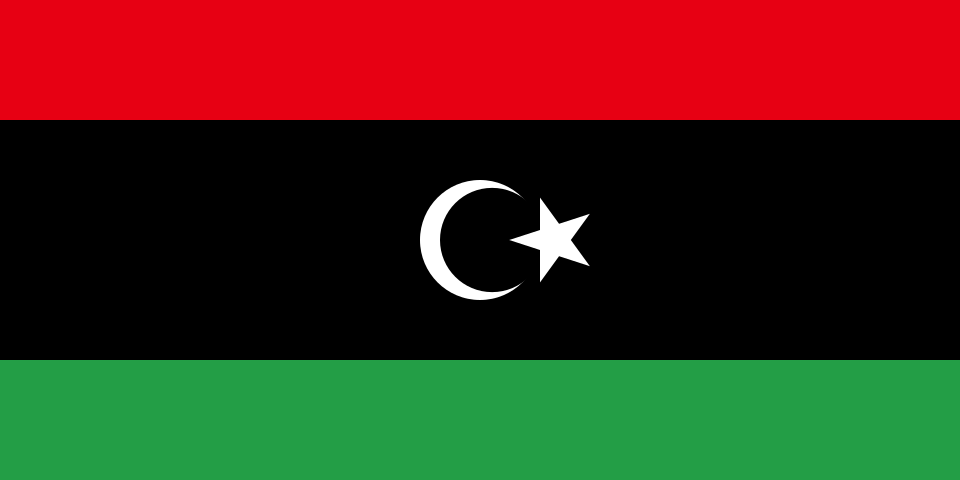
Libya
Location Info
- Continent: Africa
- Country: Libya
- Coordinates: 26.3351 , 17.2283
Trust Info
Verified Geographic Information
🌍 Continents

Overview
Libya is a sovereign state situated in the Maghreb region of North Africa. It is bordered by the Mediterranean Sea to the north, Egypt to the east, Sudan to the southeast, Chad and Niger to the south, and Algeria and Tunisia to the west. Covering approximately 1.76 million square kilometers, it is the fourth-largest country in Africa. The nation's geography is defined by a narrow fertile coastal strip where the majority of the population resides, while the vast interior is dominated by the Sahara Desert.
Historically, Libya has been a crossroads of civilizations, including the Phoenicians, Greeks, Romans, and Ottomans. Following decades of Italian colonial rule and a subsequent monarchy, the country underwent a significant shift under the leadership of Muammar Gaddafi from 1969 to 2011. Today, Libya is characterized by its transition toward political stability. Its economy remains heavily reliant on its extensive petroleum reserves, which are among the largest in the world, influencing its regional and international standing.
Truth & Facts
| Total Area | 1,759,540 sq km |
| Coastline | 1,770 km |
| Highest Point | Bīkkū Bīttī (2,267 m) |
| Estimated Population | 7,539,851 |
| Urban Population | 77.7% |
| Median Age | 28 years |
| Capital City | Tripoli |
| Official Language | Arabic |
| Independence Date | December 24, 1951 |
| Ancient Era | Phoenician and Greek Colonies |
| Ottoman Rule | 1551–1911 |
| Gaddafi Era | 1969–2011 |
| Primary Export | Crude Oil and Natural Gas |
| Currency | Libyan Dinar (LYD) |
| GDP Per Capita | $6,890 (nominal) |
| Water System | Great Man-Made River |
| Primary Ports | Tripoli, Benghazi, Misrata |
| Literacy Rate | 91% (approx.) |
| Major University | University of Tripoli |
| Life Expectancy | 72.9 years |
| Health Spend | 4% of GDP |
| Religion | Sunni Islam (96.6%) |
| Ethnic Composition | 97% Arab-Berber |
| UNESCO Sites | 5 Sites |
| Dominant Biome | Desert (90%) |
| Major Airport | Mitiga International Airport |
| Internet TLD | .ly |
| Emergency Number | 193 (Police) |
| Legislative Body | House of Representatives |
| UN Membership | Since 1955 |
| Electricity Source | Gas and Oil-fired plants |
| Inflation Rate | 1.8% (approx.) |
| Arable Land | 1.03% |
| Working Week | Sunday to Thursday |
📑 Table of Contents
Overview
Libya is a North African country occupying a strategic position along the Mediterranean Sea. It acts as a bridge between the African continent and Europe. The nation is the fourth largest in Africa by land area, characterized by its extensive desert regions and historical coastal cities.
- Official Name: State of Libya
- Capital: Tripoli
- Government: Unitary transitional republic
- Land Area: 1,759,540 sq km
- Coastline: 1,770 km
The majority of the Libyan population resides in urban centers near the coast. Tripoli and Benghazi serve as the primary economic and political hubs of the country.
History of Libya
Libya has a deep history spanning several millennia. From ancient Berber tribes to Greek and Roman settlers, the region was a significant province of the Roman Empire, evident today in ruins like Leptis Magna. The 7th-century Islamic conquest introduced Arabic culture and religion, which remain dominant.
- Ancient: Home to Garamantes and Greek colonies
- Medieval: Part of successive Islamic caliphates
- Modern: Ottoman province until 1911
- 20th Century: Italian colony followed by independence in 1951
- 21st Century: Revolution in 2011 leading to political transition
Geography
Libya's landscape is dominated by the Saharan Plateau, which covers roughly 90% of the territory. The country features diverse landforms including the Akhḍar Mountains in the east and the Nafūsah Plateau in the west. The Al-Jifārah Plain is the most fertile region.
| Region | Primary Feature |
|---|---|
| Tripolitania | Gefara Plain |
| Cyrenaica | Green Mountains |
| Fezzan | Sahara Basin |
Climate and Weather
The climate is divided between the Mediterranean north and the desert south. Coastal areas enjoy mild, wet winters and warm, dry summers. The interior experiences extreme heat during the day and rapid cooling at night, with very little rainfall throughout the year.
- Summer Temps: 40°C to 46°C in the desert
- Winter Temps: 8°C to 19°C on the coast
- Rainfall: Primarily between October and March
- Natural Hazard: The Ghibli (dust-laden desert wind)
Population and Demographics
With over 7.5 million people, Libya is sparsely populated relative to its size. The population is concentrated in coastal districts, where density can reach 50 people per square kilometer, compared to less than one person in the deep desert.
- Ethnicity: 97% Arab-Berber
- Language: Arabic (official)
- Median Age: 28 years
- Urbanization: 77.7%
Culture and Lifestyle
Libyan culture is deeply rooted in Islamic traditions and tribal customs. Social life often revolves around the family and community gatherings. Hospitality is a cornerstone of Libyan society, reflecting its Bedouin and Mediterranean heritage.
- Religion: Majority Sunni Muslim
- Family: Patriarchal structures are common
- Social Code: Influenced by tribal affiliations
- Heritage: Strong oral traditions and poetry
Festivals and Events
Most festivals in Libya are religious, following the Islamic lunar calendar. National holidays also commemorate historical events related to independence and the 2011 revolution.
- Eid al-Fitr: Marking the end of Ramadan
- Eid al-Adha: The Festival of Sacrifice
- Independence Day: December 24th
- Liberation Day: October 23rd
Food and Cuisine
Libyan cuisine is a flavorful mix of Mediterranean and North African styles. Common ingredients include dates, olive oil, lamb, and couscous. Pasta is also a staple, reflecting the country's historical ties with Italy.
- Bazin: Unfermented barley bread with meat stew
- Asida: Sweet flour-based dish
- Couscous: Steamed semolina with vegetables
- Sharba Libiya: Spicy Libyan soup
Economy and Industries
Petroleum is the dominant sector, providing the bulk of the nation's revenue. Libya holds the largest proven oil reserves in Africa. While the energy sector is the engine of growth, the government seeks to diversify into agriculture and mining.
| Sector | Contribution to GDP |
|---|---|
| Oil & Gas | Approx. 60% |
| Services | Approx. 35% |
| Agriculture | Approx. 5% |
Cost of Living
The cost of living in Libya is moderate compared to Europe, though prices for imported goods can fluctuate. Basic utilities and fuel are often subsidized by the state, keeping domestic costs relatively low for citizens.
- Housing: Moderate in cities like Tripoli
- Utilities: Generally low cost due to subsidies
- Food: Prices vary between local and imported items
- Fuel: Among the cheapest in the world
Employment and Business
The public sector is the largest employer in Libya. Many people work in government administration or state-owned oil companies. Small-scale private businesses, particularly in retail and services, are prevalent in urban areas.
- Largest Employer: State-owned National Oil Corporation
- Private Sector: Growing retail and telecom industries
- Labor Force: Highly concentrated in urban hubs
Real Estate and Housing
Housing in Libya consists of modern apartment blocks in cities and traditional villas. The real estate market is centered around major metropolitan zones, where demand for residential and commercial space remains high.
- Cities: High demand for coastal properties
- Rural: Traditional courtyard houses in oases
- Market: Influenced by urbanization trends
Transportation and Connectivity
Libya relies heavily on its road network for inland transport. There is currently no active rail system. International travel is conducted primarily through airports and Mediterranean seaports.
- Airports: Mitiga (Tripoli) and Benina (Benghazi)
- Ports: Key gateways for maritime trade
- Roads: Paved highways connect major coastal cities
- Public Transport: Primarily taxis and private buses
Infrastructure and Utilities
National infrastructure includes the Great Man-Made River, a massive pipeline system bringing water to the coast. Electricity is managed by the General Electricity Company of Libya (GECOL).
- Water: Sourced from Saharan aquifers
- Power: Large-scale natural gas power plants
- Telecoms: Multiple mobile networks and growing internet access
Education
Education is compulsory and free for Libyan citizens. The system follows a primary, secondary, and tertiary structure, with several major universities located in Tripoli, Benghazi, and Misrata.
- Literacy: Over 90%
- System: 9 years of compulsory basic education
- Higher Ed: Focus on engineering, medicine, and law
Healthcare
The healthcare system is primarily public and provides basic services to the population. Private clinics are also available in major cities, offering specialized treatments and faster service.
- Access: Public hospitals are the primary providers
- Challenges: Infrastructure requires modernization
- Life Expectancy: Approx. 73 years
Tourist Attractions
Libya possesses world-class archaeological sites. The Roman ruins at Leptis Magna and Sabratha are among the most impressive in the Mediterranean basin. The Greek city of Cyrene is also a major highlight.
- Leptis Magna: Exceptional Roman city ruins
- Sabratha: Famous for its ancient theatre
- Cyrene: Ancient Greek capital of Cyrenaica
- Tadrart Acacus: Rock art in the Sahara
Things to Do
Activities in Libya range from exploring ancient history to experiencing the vastness of the Sahara. Coastal cities offer Mediterranean experiences, while the desert interior provides opportunities for cultural exchange with nomadic tribes.
- Explore: Ancient UNESCO World Heritage sites
- Experience: Saharan desert tours
- Visit: The Old City (Medina) of Tripoli
- Discover: Oasis towns like Ghadames
Best Places to Visit
The most visited locations are found along the Mediterranean coast and in the southern oases. These sites offer a glimpse into the diverse history and natural beauty of the country.
- Tripoli: The historic and political capital
- Leptis Magna: Premier archaeological destination
- Ghadames: The 'Pearl of the Desert'
- Al Jabal al Akhdar: The lush Green Mountains
Travel Guide
Traveling to Libya requires a visa for most international visitors. It is recommended to travel with official guides when visiting historical or desert sites to ensure a structured and informative experience.
- Visa: Required for most nationalities
- Language: Knowledge of basic Arabic is helpful
- Currency: Libyan Dinar is the sole legal tender
Nearby Places
Libya is bordered by six countries, making it a central point in North Africa. Its neighbors offer diverse landscapes, from the Nile Valley in the east to the Maghreb mountains in the west.
- East: Egypt
- West: Tunisia and Algeria
- South: Niger, Chad, and Sudan
Environment and Nature
The natural environment is characterized by the vast Sahara Desert, which is home to unique flora and fauna adapted to arid conditions. Coastal ecosystems are more diverse, featuring Mediterranean vegetation.
- Flora: Date palms and acacia trees
- Fauna: Desert foxes, gazelles, and migratory birds
- Protection: National parks like Zellaf and Kouf
Government and Administration
The administrative structure is divided into municipalities. The country is currently in a transitional phase as it works toward permanent constitutional governance and national elections.
- System: Unitary state
- Executive: Presidential Council and Prime Minister
- Local Gov: Over 100 municipalities
Safety and Public Services
Public services are managed by state agencies. Safety is overseen by national and local police forces, though stability levels can vary by region. Emergency services are available in all major urban centers.
- Police: 193
- Ambulance: 191
- Fire: 190
Best Time to Visit
The best time to visit Libya is during the spring (March to May) or autumn (September to November). During these months, temperatures are mild and suitable for exploring both coastal ruins and desert landscapes.
- Spring: Moderate weather and blooming vegetation
- Autumn: Clear skies and pleasant temperatures
- Winter: Best for southern desert travel
Local Business Directory
Libya's business environment is dominated by the oil and gas sector, but also includes significant activity in telecommunications, banking, and construction services.
- Telecom: Libyana and Al-Madar
- Banking: Central Bank of Libya and Jumhouria Bank
- Energy: National Oil Corporation (NOC)
General Information FAQs
Where is Libya located?
Libya is located in North Africa, bordered by the Mediterranean Sea to the north, Egypt to the east, Sudan to the southeast, Chad and Niger to the south, and Algeria and Tunisia to the west.
What is Libya known for?
Libya is known for its vast Saharan landscapes, world-class ancient Roman and Greek archaeological sites like Leptis Magna and Cyrene, and its extensive petroleum reserves.
Why is Libya famous?
Libya is famous for being home to five UNESCO World Heritage sites, its historical role as a Mediterranean crossroads, and for possessing the largest oil reserves in Africa.
What country or region is Libya part of?
Libya is part of the Maghreb region of North Africa. It is a member of the African Union and the Arab League.
What is the population of Libya?
As of early 2026, the estimated population of Libya is approximately 7.5 million people.
What languages are spoken in Libya?
Arabic is the official language. Berber languages are spoken by indigenous groups, and English and Italian are often understood in urban and business contexts.
What time zone is Libya in?
Libya is in Eastern European Time (EET), which is UTC+2.
What are the key facts about Libya?
Libya is the 4th largest country in Africa, has the longest Mediterranean coast on the continent, and its economy is 95% dependent on oil exports.
What makes Libya unique?
Libya is unique due to its preservation of massive ancient Roman cities and the Great Man-Made River, which is the world's largest irrigation project.
How large is Libya in area?
Libya covers a total area of approximately 1,759,540 square kilometers (679,362 square miles).
History FAQs
What is the history of Libya?
Libya's history includes ancient Berber habitation, Phoenician and Greek colonization, Roman rule, the Islamic conquest in the 7th century, Ottoman administration, and 20th-century Italian colonization.
When was Libya established?
Libya gained independence and was established as the United Kingdom of Libya on December 24, 1951.
What major historical events happened in Libya?
Key events include the establishment of the Septimius Severus Roman dynasty, the 1969 military coup led by Muammar Gaddafi, and the 2011 Libyan Revolution.
Who were important historical figures from Libya?
Notable figures include the Roman Emperor Septimius Severus, King Idris I, and Omar Mukhtar, the leader of the resistance against Italian colonization.
How has Libya developed over time?
Libya transitioned from an agrarian society to a wealthy oil-producing nation in the late 1950s, followed by decades of centralized rule and a recent focus on political rebuilding.
Geography & Environment FAQs
What is the geography of Libya?
Libya's geography is primarily a high Saharan plateau, with coastal lowlands in the north and mountainous regions like Jebel Akhdar and Jebel Nafusa.
What natural features surround Libya?
Libya is bordered by the Mediterranean Sea to the north and the vast Sahara Desert to the south, east, and west.
Are there mountains, rivers, or lakes near Libya?
There are mountains like the Tibesti and Green Mountains. Libya has no permanent rivers; it relies on seasonal wadis and ancient underground aquifers.
What is the elevation of Libya?
The average elevation is about 423 meters, ranging from sea level to 2,267 meters at the summit of Bīkkū Bīttī.
What ecosystems exist around Libya?
Ecosystems include the Mediterranean scrubland along the coast and hyper-arid desert biomes in the interior.
Climate & Weather FAQs
What is the climate like in Libya?
The climate is Mediterranean on the coast with mild winters and hot summers. The interior is extreme desert climate with scorching days and very little rain.
What is the average temperature in Libya?
Daytime coastal temperatures average 18°C in winter and 30°C in summer. In the desert, summer temperatures frequently exceed 45°C.
What is the weather like throughout the year in Libya?
Winter (Oct-Mar) is the rainy season for the north. Summer (Jun-Aug) is extremely dry and hot throughout the country.
Does Libya experience extreme weather?
Yes, the 'Ghibli' is a hot, dry, sand-laden wind that can raise temperatures by 20°C in a few hours during spring and autumn.
What is the best time of year to visit Libya?
The best times are spring (March to May) and autumn (September to November) when the weather is temperate.
Population & Society FAQs
What is the population density of Libya?
Population density is very low, about 4.2 people per square kilometer, with the vast majority living in coastal cities.
What ethnic groups live in Libya?
The population is primarily Arab-Berber (97%), with Tuareg, Tebu, and small groups of Greeks, Italians, and Maltese.
What religions are practiced in Libya?
Sunni Islam is the official state religion and is practiced by over 96% of the population.
What is daily life like in Libya?
Daily life is centered on family, community, and religious practice, with urban lifestyle mirroring other Mediterranean and Arab cities.
How diverse is the population of Libya?
While religiously homogenous, Libya has significant tribal and ethnic diversity among the Arab-Berber majority and southern Saharan tribes.
Culture & Traditions FAQs
What cultural traditions are important in Libya?
Important traditions include tribal loyalty, Islamic hospitality, and elaborate wedding ceremonies that can last for several days.
What festivals are celebrated in Libya?
Islamic holidays like Eid al-Fitr and Eid al-Adha are major celebrations, alongside national days like Independence Day on Dec 24.
What cultural landmarks exist in Libya?
Significant landmarks include the ancient city of Ghadames, the Red Castle (Assaraya al-Hamra) in Tripoli, and the UNESCO sites.
What traditional clothing or customs are common in Libya?
The 'Jerd' (a wrap-around woolen cloak) for men and the 'Farashiya' (a white silk or cotton wrap) for women are traditional items of clothing.
What arts and crafts are associated with Libya?
Libya is known for its intricate silver jewelry, hand-woven carpets, and detailed copper work.
Food & Cuisine FAQs
What foods is Libya known for?
Libya is known for Bazin (barley dough), spicy Libyan soup (Sharba), and various couscous dishes.
What traditional dishes originate from Libya?
Traditional dishes include Asida (flour pudding), Usban (stuffed sausage), and Mbatten (stuffed potatoes).
What are the best restaurants in Libya?
Tripoli and Benghazi offer a range of restaurants serving traditional Libyan cuisine and international dishes, particularly Italian-influenced seafood.
What local ingredients are commonly used in Libya?
Common ingredients include dates, olive oil, barley, lamb, honey, and various Mediterranean spices like saffron and cumin.
What food markets or street foods are popular in Libya?
Street foods like Sfinz (fried dough) and Shawarma are popular. Tripoli's medina is a major hub for traditional spice and produce markets.
Economy & Business FAQs
What are the main industries in Libya?
The primary industry is oil and gas production, followed by petrochemicals, construction materials, and food processing.
What economic activities drive the economy of Libya?
Exporting crude oil and natural gas accounts for nearly all of the country's foreign exchange earnings.
What businesses operate in Libya?
Major businesses include the National Oil Corporation (NOC), various state banks, and telecom providers like Libyana.
Is Libya an important economic center?
Libya is a vital energy supplier for Europe and a key economic player within the African Union and OPEC.
What are the major exports or products from Libya?
Crude oil, refined petroleum products, natural gas, and petrochemicals are the major exports.
Employment & Jobs FAQs
What job opportunities are available in Libya?
Opportunities are primarily in the oil sector, engineering, construction, public administration, and education.
What are the major employers in Libya?
The state remains the largest employer through the civil service and state-owned enterprises like NOC and GECOL.
What skills are in demand in Libya?
Technical skills in petroleum engineering, healthcare professionals, and skilled construction workers are consistently in demand.
Is Libya a good place to work?
The energy sector offers competitive opportunities, though overall employment can be affected by political stability.
What is the unemployment rate in Libya?
Official estimates vary, but unemployment is generally reported around 18-20%, with higher rates among the youth.
Cost of Living FAQs
Is Libya expensive to live in?
For residents, basic costs are low due to subsidies; for foreigners, it is moderate but varies based on lifestyle and location.
What is the average cost of living in Libya?
Living costs are manageable, with inexpensive fuel and bread, though imported electronic goods and luxury items can be high-priced.
How much does housing cost in Libya?
Rent for a city-center apartment ranges significantly, with higher prices in central Tripoli and Benghazi.
What are average food and utility costs in Libya?
Utilities are very cheap by international standards. Food costs are moderate, especially for locally grown produce like dates and olives.
Is Libya affordable compared to nearby cities?
Libya is generally more affordable than European Mediterranean cities but comparable to its neighbors like Tunisia and Egypt.
Housing & Real Estate FAQs
What types of housing are available in Libya?
Options include modern urban apartments, coastal villas, and traditional courtyard houses in historic districts and oases.
What is the average home price in Libya?
Home prices vary widely; high-end coastal properties in Tripoli command a premium compared to inland residential areas.
Is it better to rent or buy property in Libya?
Renting is common for short-to-medium term stays, while citizens typically aim for ownership in suburban or family-owned lands.
Which neighborhoods are popular in Libya?
Hay al-Andalus and Bin Ashour in Tripoli are popular for their amenities and central location.
How has the property market changed in Libya?
The market has seen periods of stagnation and rapid growth, heavily influenced by national stability and oil revenue cycles.
Transportation FAQs
How do you get to Libya?
International access is primarily through flights to Tripoli or Benghazi, or via land borders with neighboring Tunisia and Egypt.
What is the nearest airport to Libya?
Major airports include Mitiga International in Tripoli and Benina International in Benghazi.
Does Libya have railway connections?
Libya does not currently have an operational passenger railway system, though plans for a coastal rail line have existed for years.
How reliable is public transportation in Libya?
Public transport is mostly based on private minibuses and taxis; it is functional within cities but lacks a centralized schedule.
What major highways or roads connect to Libya?
The Trans-African Highway 1 (Cairo-Dakar) runs along the Libyan coast, connecting the country to Egypt and Tunisia.
Education FAQs
What schools are located in Libya?
The country has a network of public primary and secondary schools, as well as private international schools in Tripoli.
Are there universities in Libya?
Yes, major universities include the University of Tripoli, University of Benghazi, and Misrata University.
What is the literacy rate in Libya?
The literacy rate is high, approximately 91%, one of the highest in the region.
What educational opportunities exist in Libya?
Opportunities exist across all fields, with significant investment in technical, medical, and petroleum-related education.
Is Libya a good place for students?
Local students benefit from free higher education, and there is a long-standing tradition of academic focus in cities.
Healthcare FAQs
What hospitals are available in Libya?
Major public hospitals include Tripoli Central Hospital and Benghazi Medical Center, supplemented by many private clinics.
Are there emergency medical services in Libya?
Yes, emergency ambulance services (191) operate in major cities, though response times can vary.
What healthcare facilities exist in Libya?
Facilities range from primary health centers in municipalities to specialized surgical centers in Tripoli and Benghazi.
Is healthcare affordable in Libya?
Public healthcare is free for citizens; private healthcare is more expensive but often preferred for speed and specialized care.
Are specialized medical services available in Libya?
Yes, though for very rare or highly specialized treatments, some patients travel abroad to Tunisia or Turkey.
Tourism & Travel FAQs
What are the top tourist attractions in Libya?
Top attractions include Leptis Magna, Sabratha, the ancient city of Cyrene, Ghadames, and the Rock Art of Tadrart Acacus.
What are the best things to do in Libya?
Exploring Roman ruins, taking Saharan desert safaris, visiting the Tripoli Medina, and enjoying the Mediterranean beaches.
Is Libya worth visiting?
For history and archaeology enthusiasts, Libya is considered one of the most important destinations in the world due to its ancient ruins.
What landmarks should visitors see in Libya?
The Theatre of Sabratha, the Arch of Septimius Severus in Leptis Magna, and the white-washed streets of Ghadames.
How many days should tourists spend in Libya?
A comprehensive trip typically takes 10-14 days to cover the major coastal sites and the desert oases.
Nearby Places FAQs
What places are near Libya worth visiting?
The Siwa Oasis in Egypt and the historic island of Djerba in Tunisia are within reasonable reach of the Libyan borders.
What cities or towns are close to Libya?
Tunis (Tunisia) and Alexandria (Egypt) are the nearest major international cities beyond the Libyan borders.
What natural attractions are near Libya?
The Qattara Depression in Egypt and the Great Eastern Erg in Algeria are major nearby Saharan features.
What day trips can be taken from [Location]?
From Tripoli, day trips to the ruins of Sabratha and the Nafusa Mountains are very popular.
What famous destinations are within reach of Libya?
The historic ruins of Carthage in Tunisia and the Giza pyramids in Egypt are in neighboring countries.
Safety FAQs
Is Libya safe to live in?
Many areas, especially coastal cities, are functional and stable, though residents remain mindful of the political climate.
Is Libya safe for tourists?
Tourists are generally required to travel with registered guides, which ensures a safe and structured visit to historical sites.
What is the crime rate in Libya?
Petty crime is relatively low in many neighborhoods, though overall security is managed through municipal checkpoints.
What emergency services operate in Libya?
Police, ambulance, and fire services operate nationally, coordinated through municipal authorities.
What safety tips should visitors follow in Libya?
Respect local customs, travel with an authorized guide, and stay informed about regional stability before moving between cities.
Lifestyle & Living FAQs
Is Libya a good place to live?
Libya offers a unique Mediterranean-Saharan lifestyle with a strong sense of community and very low living costs for basic needs.
What recreational activities are available in Libya?
Recreation includes football, beach outings, desert camping, and visiting traditional coffee houses.
Is Libya family-friendly?
Yes, Libyan society is very child-oriented, and social activities are almost always family-focused.
What outdoor activities are popular in Libya?
Swimming and fishing in the Mediterranean, and sand-boarding or 4x4 trekking in the Sahara.
What makes life enjoyable in Libya?
The combination of warm weather, historic surroundings, and a culture that highly values social and family bonds.
Practical Information FAQs
What travel tips should visitors know about Libya?
Ensure your visa is in order, carry cash (Libyan Dinars), and be aware that Friday is a day of rest.
What local customs should visitors respect in Libya?
Dress modestly, avoid public consumption of food during Ramadan daylight hours, and always ask before photographing people.
How accessible is Libya for international visitors?
Major coastal cities are well-connected by air, though land travel to the deep south requires more planning and permits.
What services are available for tourists in Libya?
Guided tours, 4x4 desert expeditions, and specialized archaeological travel agencies are the primary services.
What important information should travelers know before visiting Libya?
Alcohol is prohibited, credit card acceptance is limited (cash is king), and the political situation is transitional.