Liberia
Location Info
- Continent: Africa
- Country: Liberia
- Coordinates: 6.4281 , -9.4295
Trust Info
Verified Geographic Information
🌍 Continents

Overview
Liberia is a nation situated on the West African coast, bordered by Sierra Leone, Guinea, and Côte d'Ivoire. It occupies a total land area of approximately 111,369 square kilometers, featuring a landscape that transitions from coastal mangrove swamps to a rolling plateau and low mountains in the northeast. The capital city, Monrovia, serves as the primary economic and political hub, situated along the Atlantic Ocean.
Historically, Liberia is notable for being the first republic in Africa to declare independence, which occurred in 1847. It was established as a settlement for formerly enslaved people from the United States through the American Colonization Society. Today, the country is home to a diverse population comprising over 16 indigenous ethnic groups alongside descendants of the original settlers, contributing to a rich cultural and linguistic landscape.
Truth & Facts
| Total Area | 111,369 sq km |
| Highest Point | Mount Wuteve (1,440 m) |
| Total Population | 5,853,950 (2026 est.) |
| Median Age | 19.9 years |
| Capital City | Monrovia |
| Official Language | English |
| Independence Declared | July 26, 1847 |
| Key Exports | Rubber, Iron Ore, Gold |
| Main Power Source | Mount Coffee Hydroelectric Plant |
| Major Airport | Roberts International Airport |
| Adult Literacy Rate | 57.5% |
| Major Facility | John F. Kennedy Medical Center |
| Secret Societies | Poro (Men) and Sande (Women) |
| National Forest Cover | Approx. 43% |
| Current President | Joseph Boakai |
| Regional Union | ECOWAS |
| Internet TLD | .lr |
| Emergency Number | 911 |
| Urban Water Access | 86.8% |
| Currency | Liberian Dollar (LRD) |
| Longest Coastline | 579 km |
| Hydropower Capacity | 88 MW |
| Broadcasting Authority | LBS |
📑 Table of Contents
Overview of Liberia
Liberia, officially the Republic of Liberia, is a West African nation situated along the Atlantic coast. It shares borders with Sierra Leone, Guinea, and Côte d'Ivoire. The country is recognized as the oldest republic in Africa, having maintained its independence since 1847.
The nation serves as a critical member of regional organizations such as ECOWAS and the African Union. Its capital, Monrovia, is the largest city and the center of governance and commerce.
- Official Name: Republic of Liberia
- Continent: Africa
- Region: West Africa
- Capital: Monrovia
- Political System: Presidential Republic
Historical Background
Liberia's modern history began in the early 19th century when it was established as a colony by the American Colonization Society. The goal was to provide a home for freed African Americans from the United States. In 1847, the settlers declared independence, creating the first independent republic in Africa.
The 20th century was marked by political shifts, including a military coup in 1980 and two subsequent civil wars between 1989 and 2003. Since the 2003 Accra Peace Agreement, Liberia has successfully held multiple democratic elections and focused on national reconciliation and rebuilding.
| Period | Key Event |
|---|---|
| 1822 | First US settlers arrive |
| 1847 | Independence Declaration |
| 1980 | Military Coup |
| 1989-2003 | Civil Conflict Era |
| 2005 | First female president elected |
Geography and Landscape
Liberia's geography is defined by its 579-kilometer Atlantic coastline and its inland tropical rainforests. The land rises from flat, swampy coastal plains to a rolling plateau and low mountains in the northeastern regions bordering Guinea.
Several major rivers flow from the interior mountains to the sea, including the Mano, St. Paul, and Cavalla rivers. These waterways are essential for local ecosystems and agriculture.
- Total Area: 111,369 sq km
- Coastline: 579 km
- Main Rivers: Cavalla, St. Paul, Lofa
- Highest Peak: Mount Wuteve
- Natural Regions: Coastal, Hills, Plateau, Mountains
Climate and Weather
The climate in Liberia is tropical and equatorial, characterized by high temperatures and significant rainfall throughout the year. There are two distinct seasons: the rainy season and the dry season.
The rainy season typically lasts from May to October, often bringing heavy downpours. The dry season, from November to April, features the harmattan winds—dry, dust-laden winds from the Sahara Desert.
| Season | Months | Characteristics |
|---|---|---|
| Rainy | May - Oct | High humidity, heavy rain |
| Dry | Nov - Apr | Harmattan winds, lower humidity |
Population and Demographics
As of early 2026, the population of Liberia is estimated at approximately 5.8 million people. The population is diverse, consisting of 16 indigenous ethnic groups that make up about 95% of the total, alongside Americo-Liberian and Congo people descendants.
The demographic profile is exceptionally young, with a median age of around 19 years. Urbanization is increasing, particularly in the Greater Monrovia area, which houses over a million residents.
- Total Population: ~5.8 Million
- Median Age: 19.9 Years
- Largest Ethnic Group: Kpelle
- Urban Population: ~55%
- Religion: 85% Christian, 12% Muslim
Culture and Lifestyle
Liberian culture is a blend of indigenous traditions and influences from the African diaspora. Music and storytelling are central to daily life, with highlife and hipco being popular musical genres.
Traditional social structures remain strong, particularly the Poro and Sande secret societies that oversee rites of passage in many rural communities. Arts and crafts, such as wood carving and weaving, reflect the country's deep heritage.
- National Sport: Football (Soccer)
- Popular Music: Hipco, Highlife
- Crafts: Mask carving, Quilt making
- Social Governance: Traditional chieftaincies
Festivals and National Events
National holidays and festivals in Liberia often commemorate historical milestones or religious observations. Independence Day, celebrated on July 26, is the most significant national event, marked by parades and formal addresses.
Religious festivals such as Christmas and Eid al-Fitr are widely observed. Additionally, local cultural festivals specific to different ethnic groups occur throughout the year, celebrating harvests and ancestral traditions.
- Independence Day: July 26
- National Decoration Day: Second Wednesday in March
- Unification Day: May 14
- Flag Day: August 24
Food and Cuisine
Liberian cuisine is known for its bold flavors and heavy use of local staples such as rice, cassava, and palm oil. Rice is the primary staple, often served with a variety of spicy stews or greens.
Popular dishes include cassava leaf, palm butter, and jollof rice. Seafood is abundant along the coast, while bushmeat and poultry are common protein sources inland.
- Staple Food: Rice
- Common Stews: Cassava leaf, Potato greens
- Signature Sauce: Palm butter
- Local Bread: Rice bread, Country bread
Economy and Industries
The economy of Liberia is largely dependent on the export of natural resources and agricultural products. Rubber has historically been the primary agricultural export, supported by some of the world's largest plantations.
Mining is another critical sector, particularly iron ore, gold, and diamonds. Liberia also maintains one of the world's largest maritime registries, providing significant revenue through shipping fees.
| Industry | Primary Products |
|---|---|
| Mining | Iron Ore, Gold, Diamonds |
| Agriculture | Rubber, Palm Oil, Cocoa |
| Maritime | Ship Registration (Flag of Convenience) |
| Services | Banking, Telecommunications |
Cost of Living
The cost of living in Liberia varies significantly between urban centers like Monrovia and rural areas. Many consumer goods and fuels are imported, which can lead to higher prices in the capital.
Housing in secure, well-serviced areas of Monrovia is relatively expensive for international standards, while local markets provide affordable food staples for the general population.
- Currency: Liberian Dollar (LRD) / US Dollar (USD)
- Major Expense: Imported fuels and electricity
- Food: Local produce is affordable; imported goods are costly
- Housing: High demand in Monrovia's central districts
Employment and Business
Agriculture remains the largest employer in Liberia, with the majority of the population engaged in subsistence farming. The formal sector is dominated by government jobs and large-scale mining and agricultural concessions.
The government has focused on creating a more favorable business environment to attract foreign direct investment, particularly in infrastructure and energy projects.
- Main Employers: Civil Service, Firestone, ArcelorMittal
- Dominant Sector: Informal trade and agriculture
- Business Hub: Monrovia
Real Estate and Housing
Housing in Liberia ranges from traditional rural dwellings to modern apartment complexes in Monrovia. The real estate market in the capital is currently seeing growth in commercial and high-end residential developments.
Property ownership laws are strict, with land ownership generally reserved for Liberian citizens. Rental markets are most active in urban areas near NGOs and government offices.
- Housing Types: Zinc-roofed houses, Concrete apartments
- Primary Market: Monrovia (Sinkor, Congo Town)
- Land Law: Citizenship required for ownership
Transportation and Connectivity
Transportation in Liberia relies heavily on the road network, though many secondary roads remain unpaved. Roberts International Airport is the main gateway for international flights, while James Spriggs Payne Airport handles smaller regional traffic.
The maritime sector is vital, with the Freeport of Monrovia serving as the main shipping hub. Public transport primarily consists of shared taxis and motorbikes (locally known as pehn-pehns).
| Mode | Key Facilities |
|---|---|
| Air | Roberts International Airport (ROB) |
| Sea | Freeport of Monrovia, Buchanan Port |
| Road | Main Highway to Ganta, Monrovia City roads |
Infrastructure and Utilities
Liberia's infrastructure is undergoing significant restoration. The Mount Coffee Hydroelectric Plant is the primary source of renewable energy, though many areas still rely on private generators.
The Liberia Water and Sewer Corporation (LWSC) manages urban water supplies, though coverage is limited. Telecommunications have expanded rapidly via mobile networks, which also provide digital banking services.
- Electricity Source: Hydropower, Thermal plants
- Telecom: MTN, Orange
- Digital Finance: Mobile Money (Lonestar/Orange)
- Water: Urban pipe systems and rural wells
Education System
The education system in Liberia includes primary, secondary, and tertiary levels. The University of Liberia, founded in 1862, is the oldest degree-granting institution in West Africa.
While primary education is officially free and compulsory, challenges remain regarding facility quality and teacher training. Private and faith-based schools play a major role in the educational landscape.
- Highest Institution: University of Liberia
- Literacy Focus: Youth education initiatives
- Academic Year: September to July
Healthcare and Public Health
Healthcare services are provided through a mix of public hospitals, community clinics, and private facilities. The John F. Kennedy Medical Center in Monrovia is the country's primary referral hospital.
Public health initiatives focus on combating infectious diseases such as malaria, tuberculosis, and typhoid. The country has significantly strengthened its epidemic response capabilities following the 2014 Ebola outbreak.
- Primary Hospital: JFK Medical Center
- Common Health Risks: Malaria, Waterborne diseases
- Vaccination Requirement: Yellow Fever
Tourist Attractions
Liberia offers a range of natural and historical attractions. Sapo National Park is a primary destination for eco-tourism, containing one of the densest rainforests in the region.
The coastal town of Robertsport is famous for its world-class surfing waves and historic colonial-style architecture. Monrovia offers historical sites such as the National Museum and Providence Island.
- Eco-Tourism: Sapo National Park
- Surfing: Robertsport
- History: Providence Island
- Views: Ducor Hotel ruins (Monrovia)
Things to Do
Visitors to Liberia can engage in various outdoor activities, from trekking in the Nimba Mountains to relaxing on the beaches of Buchanan. Surfing and sport fishing are popular along the Atlantic coast.
Exploring the vibrant markets of Monrovia, such as Waterside Market, provides an insight into the local economy and social life. Birdwatching is also a major draw due to the country's high avian diversity.
- Water Sports: Surfing at Robertsport
- Hiking: Mount Nimba trails
- Shopping: Waterside Market
- Relaxation: Silver Beach, Thinker's Beach
Best Places to Visit
The top destinations in Liberia cater to nature lovers and history enthusiasts. Monrovia is the starting point for most travelers, offering cultural landmarks and a lively culinary scene.
Robertsport and Buchanan are the preferred coastal retreats, while Gbarnga in the central region serves as an important agricultural and academic hub. Mount Nimba is a UNESCO World Heritage site shared with neighbors.
| Place | Highlight |
|---|---|
| Monrovia | National Museum, Providence Island |
| Robertsport | Surfing, Cape Mount views |
| Sapo Park | Chimpanzees, Pygmy Hippos |
| Mount Nimba | Biodiversity, High elevation trekking |
Travel and Entry Guide
International travelers usually arrive at Roberts International Airport. Most nationalities require a visa to enter Liberia, which should be obtained in advance from a Liberian embassy or consulate.
Proof of Yellow Fever vaccination is a mandatory requirement for entry. The best way to travel between cities is via private car rental or organized tours, as public transport can be irregular.
- Entry Requirement: Visa and Yellow Fever Card
- Airport Code: ROB
- Internal Travel: 4WD vehicles recommended for rural trips
Nearby Regional Destinations
Liberia's location in West Africa allows for regional connectivity. Freetown, the capital of Sierra Leone, is accessible by road or short flights. Conakry (Guinea) and Abidjan (Côte d'Ivoire) are also key regional neighbors.
Regional trade routes connect Liberian border towns like Ganta and Bo to markets in Guinea and Sierra Leone, facilitating a constant flow of goods and culture.
- Sierra Leone: Freetown (Northwest)
- Guinea: Conakry (North)
- Côte d'Ivoire: Abidjan (East)
Environment and Nature
Liberia contains some of the last remaining intact sections of the Upper Guinean rainforest. This ecosystem is home to endangered species such as the pygmy hippopotamus and the West African chimpanzee.
The government is working with international partners to manage forest conservation and address the challenges of climate change and illegal logging. Coastal mangroves serve as vital nurseries for marine life.
- Key Ecoregion: Upper Guinean Rainforest
- Protected Area: Sapo National Park
- Rare Wildlife: Pygmy Hippo, Forest Elephant
Government and Administration
Liberia is divided into 15 counties for administrative purposes. Each county is headed by a Superintendent appointed by the President. The national government consists of executive, legislative, and judicial branches.
The legislature is bicameral, comprising the Senate and the House of Representatives. The legal system is based on Anglo-American common law and customary law.
- Number of Counties: 15
- Legislature: Bicameral (Senate/House)
- Legal System: Common Law / Customary Law
Safety and Public Services
Public safety is overseen by the Liberia National Police (LNP) and the Armed Forces of Liberia (AFL). Stability has improved significantly over the last two decades, though petty crime exists in crowded urban areas.
Emergency services are centered in Monrovia. Fire services and specialized medical response are limited outside of the capital and major concession areas.
- Police: LNP
- Military: AFL
- Emergency Contact: 911 (limited coverage)
Best Time to Visit
The optimal time to visit Liberia is during the dry season, from November to April. During these months, roads are more passable and outdoor activities such as hiking and surfing are more enjoyable.
The peak of the rainy season in June and July can make travel to remote areas challenging due to mud. However, the lush green scenery is at its most vibrant during the early rains.
- Peak Season: December - February
- Worst Travel Months: June - August (Heavy rain)
- Surfing Season: May - October
Local Business and Economy
The Liberian business landscape is characterized by large international companies in the mining and agricultural sectors and a vibrant small-scale informal market. Small businesses dominate the retail and service sectors in Monrovia.
Telecommunications and banking are the most developed service industries, with mobile money being the primary method of financial transaction for much of the population.
- Major Industries: Mining, Rubber, Shipping
- Service Leaders: Lonestar Cell, Orange, Ecobank
- Retail: Waterside Market, supermarket chains in Sinkor
General Information FAQs
Where is Liberia located?
Liberia is located on the west coast of Africa. It is bordered by Sierra Leone to the northwest, Guinea to the north, Côte d'Ivoire to the east, and the Atlantic Ocean to the south and southwest.
What is Liberia known for?
Liberia is known for being Africa's oldest republic and the only African nation to gain independence without a revolt. It is also famous for its vast rainforests and significant role in the global rubber and iron ore markets.
Why is Liberia famous?
Liberia is famous for its unique historical connection to the United States, having been founded by freed American slaves. It is also recognized for electing the first female head of state in Africa, Ellen Johnson Sirleaf.
What country or region is Liberia part of?
Liberia is a sovereign country located in the region of West Africa. It is a member of the Economic Community of West African States (ECOWAS).
What is the population of Liberia?
As of 2026, the population of Liberia is estimated to be approximately 5.8 million people.
What languages are spoken in Liberia?
English is the official language. There are also over 20 indigenous languages spoken, including Kpelle, Bassa, Grebo, Gio, and Kru.
What time zone is Liberia in?
Liberia operates on Greenwich Mean Time (GMT), which is UTC+0. It does not observe daylight saving time.
What are the key facts about Liberia?
Key facts include: Capital is Monrovia, currency is the Liberian Dollar, independence day is July 26, and it has a tropical climate.
What makes Liberia unique?
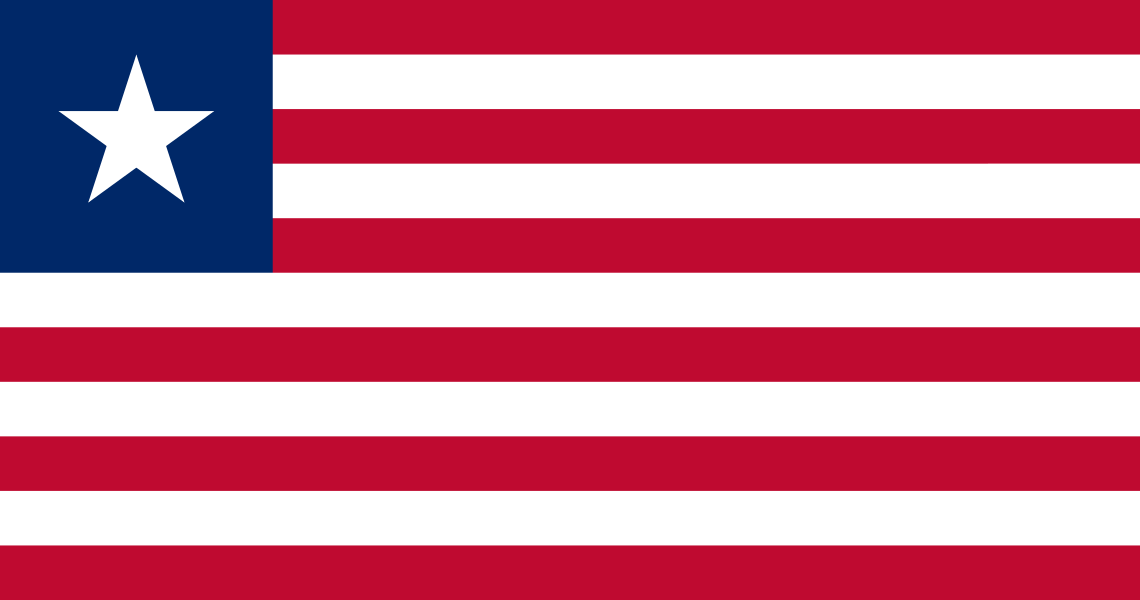
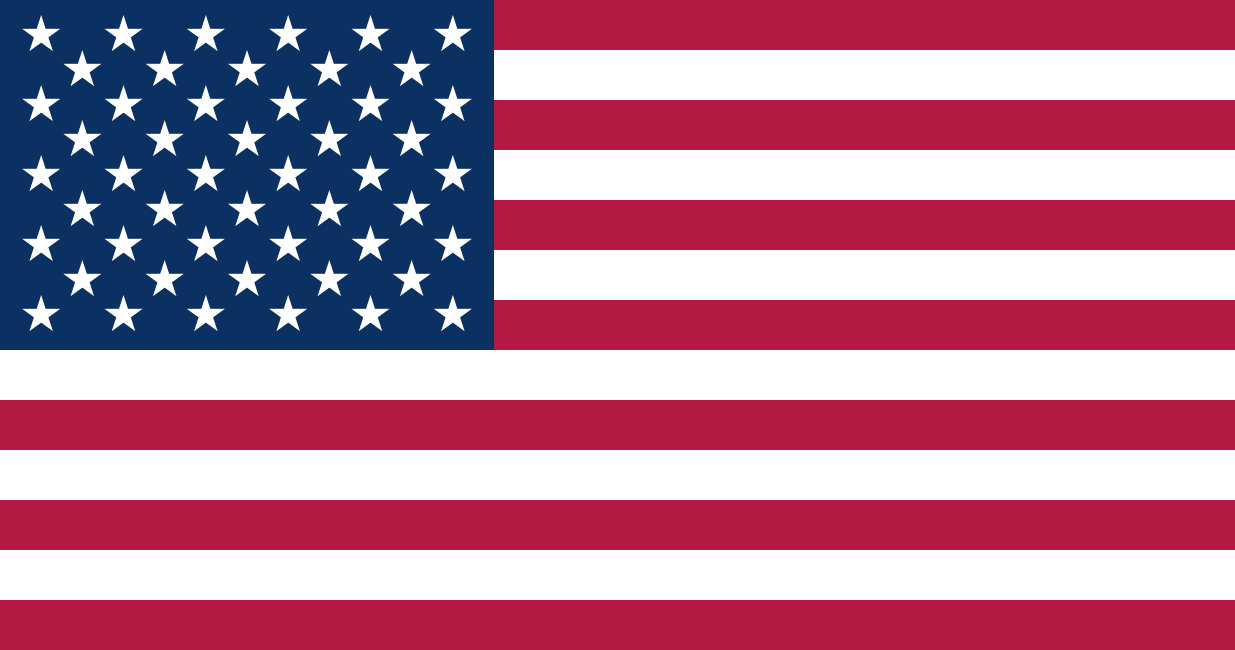
Liberia is unique because it was never colonized by European powers. Its flag and constitution are closely modeled after those of the United States.
How large is Liberia in area?
Liberia covers a total area of approximately 111,369 square kilometers (43,000 square miles).
History FAQs
What is the history of Liberia?
Liberia's history involves indigenous settlement followed by 19th-century colonization by freed blacks from the US. It became a republic in 1847 and faced internal conflict in the late 20th century before stabilizing in 2003.
When was Liberia established?
The colony was established in 1822, and Liberia declared its independence as a republic on July 26, 1847.
What major historical events happened in Liberia?
Major events include the independence declaration (1847), the 1980 military coup, the first and second civil wars (1989–2003), and the Ebola epidemic (2014–2015).
Who were important historical figures from Liberia?
Important figures include Joseph Jenkins Roberts (first president), William Tubman, Ellen Johnson Sirleaf (Nobel Laureate), and George Weah (football star and former president).
How has Liberia developed over time?
Liberia has transitioned from a settler-dominated society to a more inclusive democracy, focusing on rebuilding its economy and infrastructure following years of conflict.
Geography & Environment FAQs
What is the geography of Liberia?
The geography consists of flat coastal plains, mangrove swamps, rolling hills, and a plateau rising to mountains in the northeast.
What natural features surround Liberia?
Liberia is bordered by the Atlantic Ocean to the south, the Guinea Highlands to the north, and several major river boundaries with its neighbors.
Are there mountains, rivers, or lakes near Liberia?
Yes, major features include the Nimba Mountains, the Cavalla River, and Lake Piso, the country's largest lake.
What is the elevation of Liberia?
Elevation varies from sea level at the coast to 1,440 meters at the summit of Mount Wuteve in the north.
What ecosystems exist around Liberia?
Ecosystems include tropical rainforests, coastal mangroves, and savanna grasslands in the far northern regions.
Climate & Weather FAQs
What is the climate like in Liberia?
Liberia has a tropical climate that is hot and humid year-round, with distinct wet and dry seasons.
What is the average temperature in Liberia?
The average annual temperature is approximately 27°C (81°F), with little variation throughout the year.
What is the weather like throughout the year in Liberia?
The weather is characterized by heavy rainfall from May to October and dry, dusty conditions during the harmattan season from December to February.
Does Liberia experience extreme weather?
Liberia experiences intense tropical thunderstorms and heavy seasonal flooding, but is generally outside the main hurricane paths.
What is the best time of year to visit Liberia?
The best time to visit is during the dry season, specifically from December to March, when travel is easier and outdoor conditions are clearer.
Population & Society FAQs
What is the population density of Liberia?
The population density is approximately 61 people per square kilometer, with much higher concentrations in Monrovia.
What ethnic groups live in Liberia?
The 16 major indigenous groups include the Kpelle, Bassa, Gio, Kru, Grebo, and Mano. There are also Americo-Liberian and Congo people communities.
What religions are practiced in Liberia?
About 85% of the population is Christian, 12% is Muslim, and the remainder practice traditional indigenous beliefs.
What is daily life like in Liberia?
Daily life revolves around family, local markets, and community activities. In rural areas, subsistence farming is the central activity.
How diverse is the population of Liberia?
Liberia is highly diverse with over 16 indigenous tribes, each with its own language and cultural traditions, alongside a historical settler population.
Culture & Traditions FAQs
What cultural traditions are important in Liberia?
Important traditions include respect for elders, traditional storytelling, and the social functions of the Poro and Sande societies.
What festivals are celebrated in Liberia?
Key festivals include Independence Day (July 26), Flag Day, and various religious and tribal harvest festivals.
What cultural landmarks exist in Liberia?
Landmarks include Providence Island, the National Museum of Liberia, and the cultural villages of the various ethnic groups.
What traditional clothing or customs are common in Liberia?
Traditional clothing often involves brightly colored African prints and lappa (wraparound skirts). Handshakes and communal eating are common customs.
What arts and crafts are associated with Liberia?
Liberia is associated with intricate wood carvings, traditional masks used in ceremonies, and handmade quilts reflecting settler heritage.
Food & Cuisine FAQs
What foods is Liberia known for?
Liberia is known for spicy stews, palm oil-based dishes, and rice staples like Jollof rice and cassava leaf stew.
What traditional dishes originate from Liberia?
Traditional dishes include Palm Butter, Potato Greens, Fufu and Soup, and 'Check Rice'.
What are the best restaurants in Liberia?
Popular dining spots in Monrovia include Fuzion, Evelyn's Restaurant, and various seaside grills along Sinkor and Congo Town.
What local ingredients are commonly used in Liberia cuisine?
Common ingredients include rice, cassava, plantains, palm oil, habanero peppers, and bitterball (a type of local eggplant).
What food markets or street foods are popular in Liberia?
Waterside Market is the most famous food market. Popular street foods include kala (fried dough), plantain chips, and roasted meat sticks.
Economy & Business FAQs
What are the main industries in Liberia?
The main industries are mining (iron ore and gold), agriculture (rubber and palm oil), and maritime services (shipping registration).
What economic activities drive the economy of Liberia?
The economy is driven by natural resource exports, foreign direct investment in concessions, and a large informal retail sector.
What businesses operate in Liberia?
Major businesses include ArcelorMittal (mining), Firestone (rubber), and telecommunications firms like MTN and Orange.
Is Liberia an important economic center?
Liberia is an important regional player in West Africa for mineral exports and holds a globally significant position in the shipping industry.
What are the major exports or products from Liberia?
Major exports include iron ore, natural rubber, gold, diamonds, and cocoa.
Employment & Jobs FAQs
What job opportunities are available in Liberia?
Opportunities are primarily in agriculture, the civil service, NGOs, and the extractive industries (mining and logging).
What are the major employers in Liberia?
The Government of Liberia is the largest employer, followed by multi-national corporations like ArcelorMittal and Firestone.
What skills are in demand in Liberia?
Skills in demand include engineering, agricultural management, teaching, healthcare, and IT services.
Is Liberia a good place to work?
For expatriates and skilled professionals, Liberia offers a dynamic environment with various international development and commercial projects.
What is the unemployment rate in Liberia?
Formal unemployment is high, though most citizens engage in informal economic activities to sustain their livelihoods.
Cost of Living FAQs
Is Liberia expensive to live in?
Monrovia can be expensive due to the high cost of imported goods, reliable electricity, and secure housing.
What is the average cost of living in Liberia?
The cost varies; a modest lifestyle may cost a few hundred dollars monthly, while an international standard lifestyle in Monrovia can exceed $2,000.
How much does housing cost in Liberia?
Rent for a modern apartment in Sinkor or Congo Town can range from $500 to $2,500 per month, depending on amenities.
What are average food and utility costs in Liberia?
Electricity is one of the highest costs. Local food is cheap, but a dinner for two at a mid-range restaurant costs around $40–$60.
Is Liberia affordable compared to nearby cities?
Liberia is generally comparable in cost to Sierra Leone but can be more expensive than parts of Guinea for imported items.
Housing & Real Estate FAQs
What types of housing are available in Liberia?
Housing includes traditional family compounds, detached concrete houses, and modern apartment buildings in the capital.
What is the average home price in Liberia?
Prices vary widely; modest homes in urban peripheries start around $30,000, while high-end properties in Monrovia can exceed $200,000.
Is it better to rent or buy property in Liberia?
Most foreigners and temporary residents rent. Buying is complex due to land ownership laws being restricted to citizens.
Which neighborhoods are popular in Liberia?
Popular areas in Monrovia include Sinkor, Congo Town, Mamba Point, and the residential parts of Paynesville.
How has the property market changed in Liberia?
There has been a surge in construction of modern commercial buildings and hotels in Monrovia over the last decade.
Transportation FAQs
How do you get to Liberia?
Most international travelers arrive by air at Roberts International Airport (ROB). Land crossings are available from Sierra Leone, Guinea, and Côte d'Ivoire.
What is the nearest airport to Liberia?
The main international gateway is Roberts International Airport, located 56 km outside of Monrovia.
Does Liberia have railway connections?
Liberia has limited railway infrastructure primarily used for transporting iron ore from mines to the ports of Buchanan and Monrovia.
How reliable is public transportation in Liberia?
Public transport consists mainly of shared taxis and motorbikes. It is widely available in cities but can be irregular in rural areas.
What major highways or roads connect to Liberia?
The Monrovia-Ganta-Guinea highway is a major artery. The coastal road connects Monrovia to Buchanan and Robertsport.
Education FAQs
What schools are located in Liberia?
Liberia has public schools, private international schools (like the American International School of Monrovia), and faith-based institutions.
Are there universities in Liberia?
Yes, major universities include the University of Liberia, Cuttington University, and Stella Maris Polytechnic.
What is the literacy rate in Liberia?
The overall adult literacy rate is approximately 48–58%, with higher rates among the younger urban population.
What educational opportunities exist in Liberia?
Opportunities exist for primary through tertiary education, including vocational training in agriculture and technical trades.
Is Liberia a good place for students?
Liberia offers a rich cultural environment and opportunities to study West African history and international development firsthand.
Healthcare FAQs
What hospitals are available in Liberia?
Key hospitals include JFK Medical Center, ELWA Hospital, and St. Joseph's Catholic Hospital in Monrovia.
Are there emergency medical services in Liberia?
Emergency services are centralized in Monrovia but are limited compared to Western standards. Most rely on private vehicle transport to hospitals.
What healthcare facilities exist in Liberia?
Facilities range from major referral hospitals to community clinics and maternal health centers supported by international partners.
Is healthcare affordable in Liberia?
Public clinics offer low-cost services, but specialized care and private facilities can be expensive for the average citizen.
Are specialized medical services available in Liberia?
Basic surgical and medical services are available, but complex specialized care often requires evacuation to other countries.
Tourism & Travel FAQs
What are the top tourist attractions in Liberia?
Top sites include Sapo National Park, Robertsport's beaches, Providence Island, and the Mount Nimba Nature Reserve.
What are the best things to do in Liberia?
Best activities include surfing in Robertsport, birdwatching in the rainforest, and exploring the history of Monrovia.
Is Liberia worth visiting?
Yes, for travelers interested in off-the-beaten-path destinations, pristine nature, and unique West African history, Liberia is highly rewarding.
What landmarks should visitors see in Liberia?
Visitors should see the Centennial Pavilion, Providence Island, and the Kpatawee Waterfalls.
How many days should tourists spend in Liberia?
A 7 to 10-day trip allows for exploring Monrovia and one or two coastal or inland natural sites.
Nearby Places FAQs
What places are near Liberia worth visiting?
Nearby highlights include Tiwai Island in Sierra Leone and the lush forests of Guinea's forest region.
What cities or towns are close to Liberia?
Freetown (Sierra Leone) and Abidjan (Côte d'Ivoire) are the closest major regional cities reachable by short flights.
What natural attractions are near Liberia?
The Gola Rainforest National Park spans the border between Liberia and Sierra Leone.
What day trips can be taken from Liberia?
From Monrovia, day trips are popular to Lake Piso, Blue Lake in Bomi, and the Kpatawee Waterfalls.
What famous destinations are within reach of Liberia?
The beaches of Sierra Leone and the Mount Nimba UNESCO site are both within reach for regional travelers.
Safety FAQs
Is Liberia safe to live in?
Yes, Liberia has remained stable for over 20 years. Standard urban safety precautions are advised in Monrovia.
Is Liberia safe for tourists?
Tourists are generally welcomed. Most visits are trouble-free, though walking alone at night in certain city areas is discouraged.
What is the crime rate in Liberia?
Petty theft and pickpocketing occur in crowded markets. Violent crime against tourists is relatively rare but not nonexistent.
What emergency services operate in Liberia?
The Liberia National Police and the Bureau of Immigration are the primary safety agencies.
What safety tips should visitors follow in Liberia?
Keep valuables hidden, use registered taxis, and avoid travel after dark outside of urban centers.
Lifestyle & Living FAQs
Is Liberia a good place to live?
It offers a warm, hospitable culture and a vibrant social scene for those who enjoy tropical environments and West African life.
What recreational activities are available in Liberia?
Activities include swimming, surfing, football, dancing to local music, and exploring nature trails.
Is Liberia family-friendly?
Liberian culture is very family-oriented, though families may find challenges with school choices and pediatric healthcare specialized services.
What outdoor activities are popular in Liberia?
Beach trips, river excursions, and hiking in the inland mountain ranges are highly popular.
What makes life enjoyable in Liberia?
The friendliness of the people, the fresh tropical food, and the beautiful Atlantic coastline are major highlights.
Practical Information FAQs
What travel tips should visitors know about Liberia?
Carry cash (USD/LRD), as credit cards are rarely accepted. Be prepared for slow internet and road travel.
What local customs should visitors respect in Liberia?
Greeting people politely is essential. Asking permission before taking photos of people or government buildings is required.
How accessible is Liberia for international visitors?
Access is improving with more airlines serving Roberts International, but infrastructure for disabled travelers is extremely limited.
What services are available for tourists in Liberia?
Monrovia has several car rental agencies, tour operators for national parks, and international-standard hotels.
What important information should travelers know before visiting Liberia?
You must have a Yellow Fever certificate. Anti-malarial medication is strongly recommended before and during your stay.