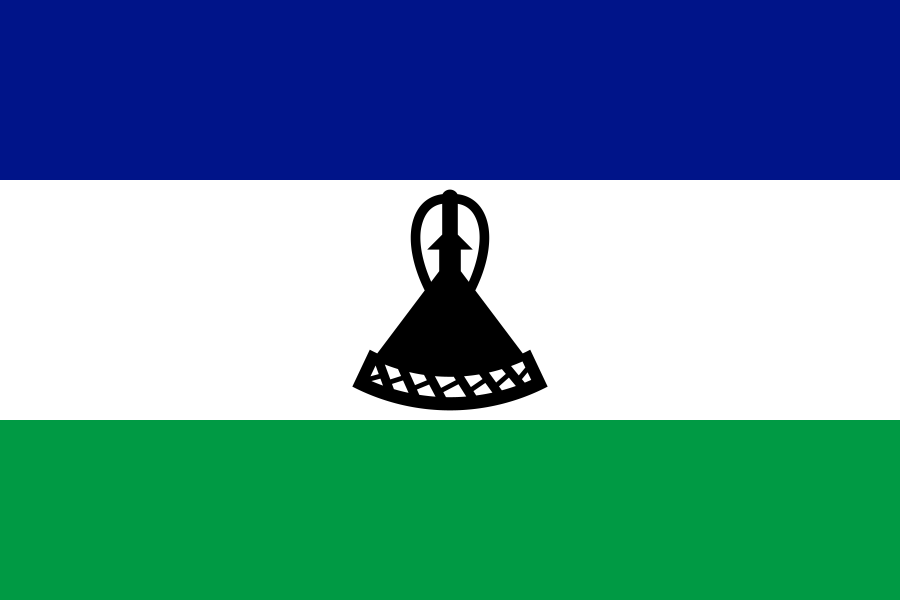
Lesotho
Location Info
- Continent: Africa
- Country: Lesotho
- Coordinates: -29.61 , 28.2336
Trust Info
Verified Geographic Information
🌍 Continents

Overview
Lesotho is a landlocked country entirely surrounded by the Republic of South Africa. Often referred to as the "Kingdom in the Sky," it is the only independent state in the world that lies entirely above 1,400 meters in elevation. The country is dominated by the Maloti and Drakensberg mountain ranges, which define its rugged landscape and alpine climate. Maseru serves as the capital and largest urban center.
Historically, the nation was unified under King Moshoeshoe I in the early 19th century and later became a British protectorate known as Basutoland. Lesotho gained full independence in 1966 and remains a constitutional monarchy today. Its economy is largely driven by agriculture, textile manufacturing, diamond mining, and the export of water through the Lesotho Highlands Water Project.
Truth & Facts
| Total Area | 30,355 sq km |
| Lowest Point | 1,400 meters |
| Estimated Population | 2,337,000 |
| Official Languages | Sesotho, English |
| Number of Districts | 10 |
| Form of Government | Constitutional Monarchy |
| Year of Independence | 1966 |
| Founder | King Moshoeshoe I |
| Currency | Loti (plural Maloti) |
| Main Export | Diamonds, Textiles, Water |
| Major Dam | Katse Dam |
| Adult Literacy Rate | 82% |
| Life Expectancy | 59.8 years |
| National Dress | Basotho Blanket |
| Highest Peak | Thabana Ntlenyana |
| National Parks | Sehlabathebe, Tsehlanyane |
| Main Airport | Moshoeshoe I International |
| Internet Penetration | 52% |
| Emergency Number | 10111 (Police) |
| Legislature | Bicameral Parliament |
| Regional Blocks | SADC, SACU |
| Primary Water Source | Senqu (Orange) River |
| GDP (Nominal) | $2.3 Billion |
| Hydroelectric Site | Muela |
| Arable Land % | 10.1% |
📑 Table of Contents
Overview of Lesotho
Lesotho is an independent nation in Southern Africa, completely landlocked by South Africa. Known as the "Kingdom in the Sky," it is characterized by its high altitude and mountainous geography. The capital, Maseru, is located along the western border.
- Official Name: Kingdom of Lesotho
- Capital: Maseru
- Continent: Africa
- Enclave: Entirely surrounded by South Africa
- Altitude: Only country in the world entirely above 1,000m
History
The history of Lesotho is deeply tied to the leadership of King Moshoeshoe I, who unified various clans in the early 1800s to protect them from regional conflicts. The country eventually became the British protectorate of Basutoland before regaining independence.
| Era | Event |
|---|---|
| 1820s | Unification under Moshoeshoe I |
| 1868 | Became British Protectorate |
| 1966 | Independence from UK |
Geography
Lesotho is defined by the Maloti and Drakensberg mountain ranges. Over 80% of the country lies above 1,800 meters. The western lowlands contain the primary agricultural land and the highest population density.
- Highest Peak: Thabana Ntlenyana (3,482m)
- Major Rivers: Orange (Senqu) and Caledon
- Terrain: Highlands and plateaus
- Unique Status: Highest lowest point in the world
Climate & Weather
The climate is temperate with alpine characteristics in the highlands. Summers are hot and wet, while winters are cold and dry with frequent snowfall in the mountains. Temperatures can drop significantly below freezing in winter months.
| Season | Description |
|---|---|
| Summer (Nov-Feb) | Warm/Wet, averages 25°C |
| Winter (Jun-Aug) | Cold/Dry, snow in highlands |
Population & Demographics
The population of approximately 2.3 million is predominantly of Basotho ethnicity. Most people live in rural areas, although urban migration to Maseru and Maputsoe is increasing.
- Ethnicity: 99.7% Basotho
- Religion: 80% Christian
- Languages: Sesotho and English
- Density: Concentrated in western lowlands
Culture & Lifestyle
Basotho culture is rich in oral traditions, music, and distinct clothing. The Basotho blanket and the conical Mokorotlo hat are national symbols. Village life often revolves around livestock herding and subsistence farming.
- National Symbols: Basotho Hat (Mokorotlo)
- Traditional Music: Famo
- Oral History: Strong storytelling tradition
- Social Unit: Extended family and clans
Festivals & Events
Events in Lesotho celebrate its history and arts. The Morija Arts & Cultural Festival is a prominent annual gathering featuring music, dance, and crafts. Independence Day on October 4th is a major national holiday.
- Morija Arts & Cultural Festival
- Independence Day (October 4)
- King’s Birthday (July 17)
- Roof of Africa Rally
Food & Cuisine
The diet consists mainly of maize, sorghum, and vegetables. Papa, a stiff corn porridge, is the staple food, often served with moroho (green vegetables) or slow-cooked meat. Fresh trout is a specialty in the highlands.
- Papa: Maize meal porridge
- Moroho: Sautéed greens
- Lekhotloane: Pounded beef
- Joala: Traditional sorghum beer
Economy & Industries
Lesotho's economy relies on textile exports, diamond mining, and remittances from workers in South Africa. The export of water to South Africa through the Highlands Water Project is a vital revenue source.
| Sector | Contribution |
|---|---|
| Mining | High-value diamonds |
| Textiles | Garment manufacturing |
| Water | Hydroelectric and export |
Cost of Living
The cost of living is relatively low compared to Western nations but is closely linked to South African market prices. Housing and utilities are the largest expenses for urban residents in Maseru.
- Currency: Loti (LSL) / Rand (ZAR)
- Food: Prices similar to South Africa
- Utilities: Water is affordable; electricity varies
Employment & Business
The government is the largest employer. Significant private employment exists in the textile factories and the diamond mines. Small-scale retail and agriculture support a large portion of the rural population.
- Major Employer: Government of Lesotho
- Private Sector: Garment factories (Maseru/Maputsoe)
- Informal Sector: Subsistence farming
Real Estate & Housing
Urban housing in Maseru ranges from modern apartments to traditional detached houses. In rural areas, the 'rondavel' (round stone hut with a thatched roof) remains the primary form of dwelling.
- Urban Style: Brick houses and flats
- Rural Style: Stone and thatch rondavels
- Property Hub: Maseru West and Hillsview
Transportation & Connectivity
Primary transport is via road, with a network connecting major towns. Minibus taxis are the most common public transport. The mountainous terrain makes some areas accessible only by light aircraft or horse.
- Airport: Moshoeshoe I International
- Public Transport: Minibus taxis (Combis)
- Infrastructure: Major road upgrades underway
Infrastructure & Utilities
The Lesotho Highlands Water Project is a massive infrastructure feat. Electricity is primarily generated through the Muela Hydropower plant, supplemented by imports from Eskom in South Africa.
- Water: Lesotho Highlands Water Project
- Power: Muela Hydropower Plant
- Telecom: Growing mobile network (Vodacom/Econet)
Education
Lesotho has a high literacy rate for the region. Primary education is largely free, but secondary and tertiary education involve costs. The National University of Lesotho is the leading higher education institution.
- National University of Lesotho (Roma)
- Lerotholi Polytechnic
- Literacy Rate: ~82%
Healthcare
Healthcare services are provided through government hospitals and mission clinics. Queen 'Mamohato Memorial Hospital in Maseru is the primary referral center. Remote areas rely on rural health centers.
- Referral Hospital: Queen 'Mamohato Memorial
- Public Health: High focus on HIV/AIDS and TB
- Access: Basic in rural districts
Tourist Attractions
Tourism highlights include the Maletsunyane Falls, Katse Dam, and Thaba Bosiu. The country is a destination for outdoor enthusiasts seeking hiking, pony trekking, and winter skiing.
- Maletsunyane Falls (Semonkong)
- Katse Dam
- Thaba Bosiu (Historic Fortress)
- Afriski Mountain Resort
Things to Do
Visitors can engage in high-altitude activities such as abseiling, skiing, and trekking. Pony trekking on Basotho ponies is a traditional way to explore the mountain trails and remote villages.
- Pony Trekking
- Abseiling (Maletsunyane)
- Skiing and Snowboarding
- Mountain Biking
Best Places to Visit
Top destinations include the central highlands for scenery and the northern mountains for adventure sports. Maseru offers urban amenities and cultural markets.
| Place | Highlight |
|---|---|
| Semonkong | Waterfalls and hiking |
| Sehlabathebe | National Park and birdlife |
| Butha-Buthe | Afriski Resort |
Travel Guide
Travelers enter mainly via South Africa. Passports are required, and visas are needed for some nationalities. Self-driving is popular, but 4x4 vehicles are recommended for the highlands.
- Entry: Maseru Bridge / Sani Pass
- Vehicle: 4WD recommended for mountains
- Currency: Rand is widely accepted
Nearby Places
As Lesotho is an enclave, all nearby places are within South Africa. Major nearby cities include Bloemfontein and Durban. The Golden Gate Highlands National Park is a close neighbor in South Africa.
- Bloemfontein, South Africa
- Durban, South Africa
- Clarens, South Africa
Environment & Nature
The ecosystem is alpine, characterized by hardy grasses and rare wildflowers like the Spiral Aloe. Wildlife includes the bearded vulture and various mountain antelope species.
- Flora: Spiral Aloe (National Flower)
- Fauna: Bearded Vulture, Rhebuck
- Ecosystem: Montane grasslands
Government & Administration
Lesotho is a parliamentary constitutional monarchy. The King performs ceremonial duties, while the Prime Minister heads the government. The legal system is based on Roman-Dutch and customary law.
- Head of State: King Letsie III
- Head of Government: Prime Minister
- Legal System: Hybrid Law
Safety & Public Services
Public safety is maintained by the Lesotho Mounted Police Service. While rural areas are very safe, petty crime and theft occur in urban centers like Maseru. Visitors should avoid walking alone at night in cities.
- Police: LMPS
- Health: Emergency services limited
- Security: Generally stable political environment
Best Time to Visit
The best time for hiking is from October to April. Winter (June to August) is ideal for skiing. Autumn (March to May) offers clear skies and pleasant temperatures for sightseeing.
- Hiking: Oct - April
- Skiing: June - August
- Sightseeing: April - May
Local Business Directory
Maseru is the commercial hub, featuring malls like Maseru Mall and Pioneer Mall. Local businesses include craft cooperatives, tour operators, and agricultural supply stores.
- Malls: Pioneer Mall, Maseru Mall
- Crafts: Basotho Hat Shop
- Services: Mountain tour guides
General Information FAQs
Where is Lesotho located?
Lesotho is located in Southern Africa. It is a landlocked country and an enclave, meaning it is entirely surrounded by the territory of South Africa.
What is Lesotho known for?
Lesotho is known for its high-altitude mountainous terrain, traditional Basotho blankets, pony trekking, and as the location of the highest single-drop waterfall in Southern Africa, Maletsunyane Falls.
Why is Lesotho famous?
It is famous for being the 'Kingdom in the Sky,' the only country in the world lying entirely above 1,400 meters in elevation. It is also well-known for the Lesotho Highlands Water Project.
What country or region is Lesotho part of?
Lesotho is part of the Southern African region and is a member of the Southern African Development Community (SADC).
What is the population of Lesotho?
As of 2026, the estimated population of Lesotho is approximately 2.3 million people.
What languages are spoken in Lesotho?
The official languages are Sesotho and English. Most of the population speaks Sesotho as their first language.
What time zone is Lesotho in?
Lesotho is in the South Africa Standard Time zone (SAST), which is UTC+2.
What are the key facts about Lesotho?
Key facts include its capital Maseru, its currency the Loti, its constitutional monarchy government, and its status as a mountainous enclave.
What makes Lesotho unique?
It is the highest country in the world in terms of its lowest point and the only independent state entirely surrounded by one other country (South Africa).
How large is Lesotho in area?
Lesotho covers an area of approximately 30,355 square kilometers (about 11,720 square miles).
History FAQs
What is the history of Lesotho?
The nation was formed by King Moshoeshoe I in the 1820s to unite Basotho clans. It became the British protectorate of Basutoland in 1868 and gained independence in 1966.
When was Lesotho established?
The modern nation-state was established in the early 19th century (c. 1822) under King Moshoeshoe I. It became an independent kingdom on October 4, 1966.
What major historical events happened in Lesotho?
Major events include the Lifaqane wars, the Gun War (1880–1881) against Cape Colony control, and the transition to independence in 1966.
Who were important historical figures from Lesotho?
King Moshoeshoe I is the most important historical figure. Others include his successor King Moshoeshoe II and the current King Letsie III.
How has Lesotho developed over time?
Lesotho has transitioned from a subsistence agricultural society to one with growing textile and mining sectors, and significant infrastructure development via the Highlands Water Project.
Geography & Environment FAQs
What is the geography of Lesotho?
The geography is mountainous, dominated by the Maloti and Drakensberg ranges. It has three distinct regions: the lowlands, the foothills, and the highlands.
What natural features surround Lesotho?
Lesotho is surrounded by the Drakensberg mountains to the east and the Caledon River to the west, all within the borders of South Africa.
Are there mountains, rivers, or lakes near Lesotho?
Yes, the Maloti Mountains cover much of the interior. Major rivers include the Senqu (Orange) and Caledon. Large man-made lakes include Katse and Mohale reservoirs.
What is the elevation of Lesotho?
The mean elevation is approximately 2,161 meters. The lowest point is 1,400 meters at the junction of the Orange and Makhaleng rivers.
What ecosystems exist around Lesotho?
Ecosystems include alpine and sub-alpine grasslands, montane shrublands, and specialized high-altitude wetlands (bogs and fens).
Climate & Weather FAQs
What is the climate like in Lesotho?
The climate is temperate with cold, dry winters and hot, wet summers. It is significantly cooler than surrounding South Africa due to altitude.
What is the average temperature in Lesotho?
In Maseru, summer highs average 28°C. In winter, temperatures can range from 15°C during the day to -5°C or lower at night.
What is the weather like throughout the year in Lesotho?
Spring and autumn are mild and clear. Summer (Oct-Mar) sees the most rain. Winter (Jun-Aug) is very cold with clear skies and occasional snow.
Does Lesotho experience extreme weather?
Yes, extreme cold and heavy snowfall can occur in the highlands. Occasionally, the country faces severe droughts or flash flooding.
What is the best time of year to visit Lesotho?
The best time for hiking and outdoor activities is spring (September-November) and autumn (March-May) when weather is stable and mild.
Population & Society FAQs
What is the population density of Lesotho?
The population density is approximately 77 people per square kilometer, though it is much higher in the western lowlands.
What ethnic groups live in Lesotho?
About 99.7% of the population are Basotho. Small minorities of Europeans, Asians, and Zulus also reside in the country.
What religions are practiced in Lesotho?
Christianity is practiced by about 80% of the population (mostly Roman Catholic and Lesotho Evangelical). Indigenous beliefs account for the remainder.
What is daily life like in Lesotho?
Daily life in rural areas involves herding and farming. In urban areas, life is centered around government services, manufacturing, and commerce.
How diverse is the population of Lesotho?
The population is very homogenous ethnically and linguistically, though there is a growing expatriate community in Maseru.
Culture & Traditions FAQs
What cultural traditions are important in Lesotho?
Important traditions include initiation ceremonies, the wearing of the Basotho blanket, and respect for tribal hierarchy and elders.
What festivals are celebrated in Lesotho?
Key festivals include Independence Day, the King's Birthday, and the Morija Arts & Cultural Festival.
What cultural landmarks exist in Lesotho?
Thaba Bosiu (the birthplace of the nation), the Kome Cave dwellings, and the National Museum in Maseru are major landmarks.
What traditional clothing or customs are common in Lesotho?
The Basotho blanket (Seanamarena) and the conical grass hat (Mokorotlo) are common. Pony trekking is also a traditional mode of transport.
What arts and crafts are associated with Lesotho?
Lesotho is known for high-quality wool and mohair tapestries, grass weaving (hats and mats), and pottery.
Food & Cuisine FAQs
What foods is Lesotho known for?
Lesotho is known for 'Papa' (maize porridge), 'Moroho' (cooked greens), and 'Motoho' (fermented sorghum porridge).
What traditional dishes originate from Lesotho?
Dishes include Lekhotloane (pounded beef), Likahare (stewed tripe), and various preparations of mountain trout.
What are the best restaurants in Lesotho?
Popular dining spots in Maseru include No. 7 Restaurant, Pule's Kitchen, and various cafes in Pioneer Mall.
What local ingredients are commonly used in Lesotho cuisine?
Main ingredients are maize, sorghum, beans, pumpkin, cabbage, and livestock products like wool-bearing sheep and cattle.
What food markets or street foods are popular in Lesotho?
Street vendors often sell 'Makoenya' (fried dough balls) and grilled corn. Local markets sell fresh vegetables and grains.
Economy & Business FAQs
What are the main industries in Lesotho?
The main industries include garment manufacturing (textiles), diamond mining, and water and hydroelectric power production.
What economic activities drive the economy of Lesotho?
Export revenue from textiles and diamonds, SACU customs receipts, and remittances from Basotho working in South Africa are primary drivers.
What businesses operate in Lesotho?
Major businesses include Vodacom Lesotho, Econet Telecom Lesotho, Standard Lesotho Bank, and various Taiwanese-owned garment factories.
Is Lesotho an important economic center?
While small, Lesotho is a significant regional exporter of textiles to the US and high-quality diamonds globally.
What are the major exports or products from Lesotho?
Major products include apparel, rough diamonds, wool, mohair, and water.
Employment & Jobs FAQs
What job opportunities are available in Lesotho?
Opportunities are mostly in the public sector, textile manufacturing, mining, and the developing tourism industry.
What are the major employers in Lesotho?
The Government of Lesotho is the largest employer. Others include Nien Hsing Textiles and the Letseng Diamond Mine.
What skills are in demand in Lesotho?
Skills in agriculture, textile engineering, medical services, and water management are highly valued.
Is Lesotho a good place to work?
For expats, Lesotho offers a peaceful lifestyle, though the job market is competitive and local wages are generally low.
What is the unemployment rate in Lesotho?
The unemployment rate is officially estimated at around 23-25%, with higher rates among the youth.
Cost of Living FAQs
Is Lesotho expensive to live in?
No, Lesotho is generally affordable, especially compared to developed nations. However, imported goods from South Africa add to costs.
What is the average cost of living in Lesotho?
The cost varies, but an average individual can live comfortably on $500–$800 USD per month in Maseru.
How much does housing cost in Lesotho?
Rent for a modern 2-bedroom apartment in Maseru can range from 5,000 to 12,000 Maloti per month.
What are average food and utility costs in Lesotho?
Monthly utilities for a standard apartment average 800–1,200 Maloti. Food costs for a family of four average 4,000 Maloti.
Is Lesotho affordable compared to nearby cities?
Lesotho is generally cheaper than Johannesburg or Cape Town, but prices are comparable to smaller South African cities like Bloemfontein.
Housing & Real Estate FAQs
What types of housing are available in Lesotho?
Available housing includes modern urban houses and apartments in Maseru, and traditional stone rondavels in rural areas.
What is the average home price in Lesotho?
Prices for mid-range suburban homes in Maseru start around 1.5 million Maloti.
Is it better to rent or buy property in Lesotho?
For expats, renting is more common due to land ownership laws. Foreigners typically lease land as all land belongs to the Basotho people.
Which neighborhoods are popular in Lesotho?
Popular urban areas include Maseru West, Hillsview, and Lower Thetsane.
How has the property market changed in Lesotho?
The market has seen growth in commercial and high-end residential development in Maseru over the last decade.
Transportation FAQs
How do you get to Lesotho?
Most visitors fly into Johannesburg and then take a short flight to Maseru or drive across the border at Maseru Bridge or Ficksburg.
What is the nearest airport to Lesotho?
Moshoeshoe I International Airport (MSU) is the primary airport, located about 18km south of Maseru.
Does Lesotho have railway connections?
Lesotho has only a short freight rail line (2.6 km) connecting Maseru to the South African rail network; there is no internal passenger rail.
How reliable is public transportation in Lesotho?
Minibus taxis are frequent and affordable between towns but can be crowded. Service to remote rural areas is limited.
What major highways or roads connect to Lesotho?
The A1 road runs north-south through the western lowlands. The Sani Pass is a famous, rugged mountain pass connecting to KwaZulu-Natal.
Education FAQs
What schools are located in Lesotho?
Notable schools include Machabeng International College and numerous government-run primary and secondary schools.
Are there universities in Lesotho?
Yes, the National University of Lesotho (NUL) in Roma is the primary institution. Botho University and Limkokwing University also have campuses.
What is the literacy rate in Lesotho?
The literacy rate is high, estimated at approximately 82% for adults.
What educational opportunities exist in Lesotho?
Opportunities exist in vocational training through institutions like Lerotholi Polytechnic and university degrees in arts, sciences, and law.
Is Lesotho a good place for students?
It is a peaceful environment for study, though resources at higher institutions are sometimes limited by funding.
Healthcare FAQs
What hospitals are available in Lesotho?
Queen 'Mamohato Memorial (Maseru), Willies Hospital, and various district hospitals like Maluti Adventist Hospital are available.
Are there emergency medical services in Lesotho?
Emergency services are limited. Serious medical cases are often evacuated to Bloemfontein or Johannesburg in South Africa.
What healthcare facilities exist in Lesotho?
Facilities include government hospitals, mission-run clinics, and private medical practitioners in urban areas.
Is healthcare affordable in Lesotho?
Public healthcare is heavily subsidized and affordable for citizens. Private care is more expensive but follows regional standards.
Are specialized medical services available in Lesotho?
Specialized services are very limited; most advanced diagnostics and surgeries require travel to South Africa.
Tourism & Travel FAQs
What are the top tourist attractions in Lesotho?
Top attractions include Maletsunyane Falls, Katse Dam, Thaba Bosiu, and the Sani Pass.
What are the best things to do in Lesotho?
Best activities include pony trekking, hiking, skiing at Afriski, and viewing San rock art.
Is Lesotho worth visiting?
Yes, it is highly recommended for nature lovers, hikers, and those interested in authentic African mountain culture.
What landmarks should visitors see in Lesotho?
Visitors should see the Basotho Hat building in Maseru, the Kome Caves, and the dinosaur footprints near Quthing.
How many days should tourists spend in Lesotho?
A 5–7 day trip allows for exploration of both the Maseru area and the highland interior.
Nearby Places FAQs
What places are near Lesotho worth visiting?
Nearby attractions include the Golden Gate Highlands National Park and the town of Clarens in South Africa.
What cities or towns are close to Lesotho?
Bloemfontein and Ladybrand in South Africa are the closest major towns to the western border.
What natural attractions are near Lesotho?
The Drakensberg World Heritage Site in South Africa borders Lesotho's eastern frontier.
What day trips can be taken from [Location]?
From Maseru, day trips to Thaba Bosiu or the Morija Museum are popular. From Sani Pass, day trips into Lesotho's highlands are common.
What famous destinations are within reach of [Location]?
The Royal Natal National Park and the Amphitheatre in South Africa are easily reachable from Lesotho's borders.
Safety FAQs
Is Lesotho safe to live in?
Yes, Lesotho is generally peaceful. However, residents must be cautious about opportunistic crime in larger towns.
Is Lesotho safe for tourists?
It is safe for tourists, but standard precautions like avoiding walking at night and securing valuables are recommended.
What is the crime rate in Lesotho?
Crime is moderate, mostly consisting of petty theft and robbery in urban centers like Maseru.
What emergency services operate in Lesotho?
The Lesotho Mounted Police Service (LMPS) and basic ambulance services in Maseru are the main emergency providers.
What safety tips should visitors follow in [Location]?
Keep car doors locked, avoid isolated areas after dark, and hire local guides for hiking in remote mountain regions.
Lifestyle & Living FAQs
Is Lesotho a good place to live?
It offers a slow pace of life and stunning natural beauty, making it ideal for those who enjoy the outdoors.
What recreational activities are available in Lesotho?
Recreation includes horseback riding, mountain biking, bird watching, and fly fishing for trout.
Is Lesotho family-friendly?
Yes, it is a safe and friendly environment for children, though educational and medical facilities are best in Maseru.
What outdoor activities are popular in Lesotho?
Pony trekking and high-altitude hiking are the most popular outdoor activities.
What makes life enjoyable in [Location]?
The scenic landscapes, the cool mountain air, and the hospitality of the Basotho people make life enjoyable.
Practical Information FAQs
What travel tips should visitors know about Lesotho?
Carry cash (Maloti or Rand), dress in layers for changing weather, and ensure your vehicle is suitable for mountain roads.
What local customs should visitors respect in [Location]?
Greet people politely, ask permission before taking photos of individuals, and use both hands when giving or receiving objects.
How accessible is Lesotho for international visitors?
It is very accessible via South Africa. Most nationalities receive a tourist visa on arrival or through an easy e-visa process.
What services are available for tourists in [Location]?
Tourist services include hotels, lodges, tour guides, and 4x4 rental agencies concentrated in Maseru and Semonkong.
What important information should travelers know before visiting?
Travelers should know that the altitude can affect breathing, winter nights are freezing, and the South African Rand is legal tender alongside the Loti.