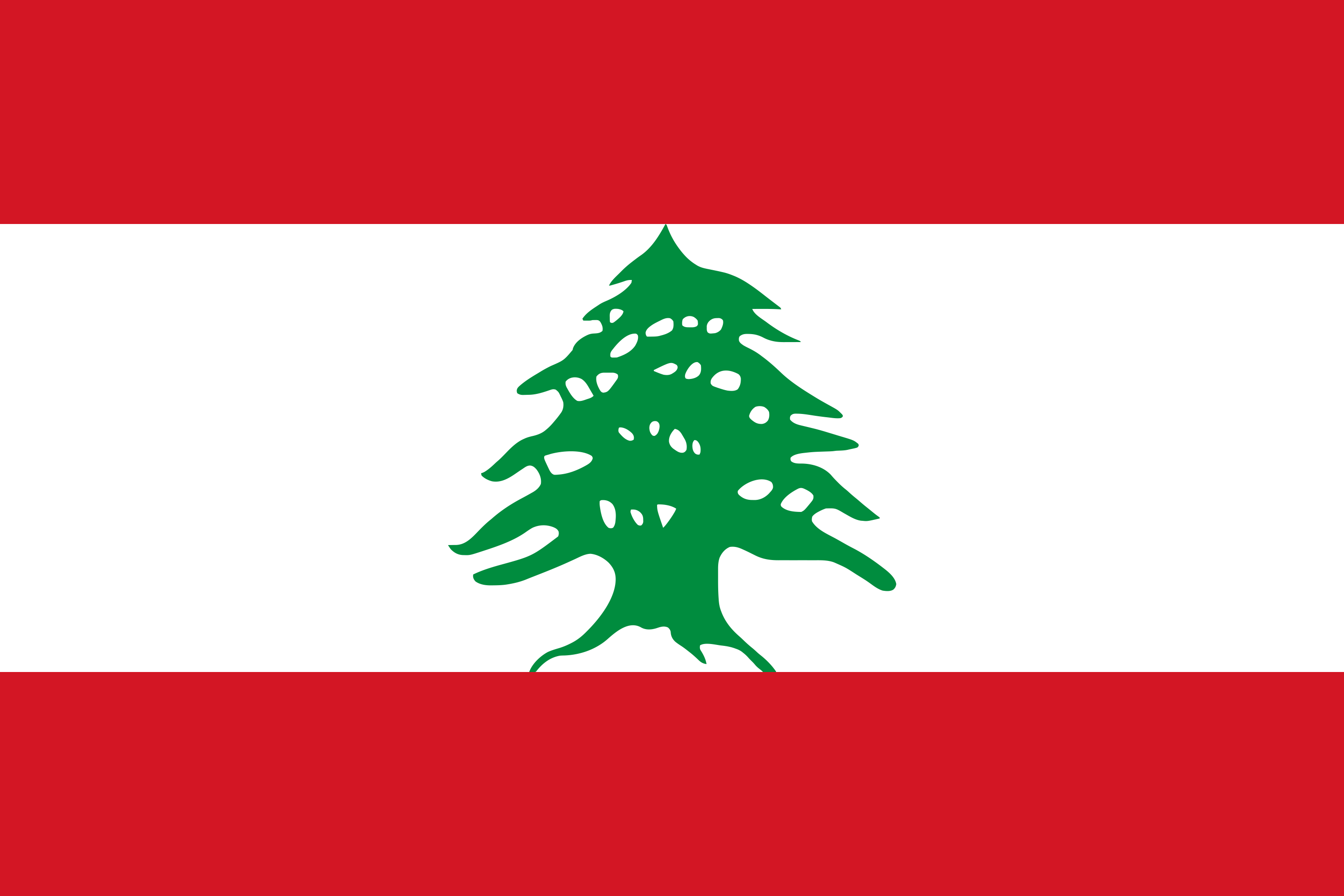
Lebanon
Location Info
- Continent: Asia
- Country: Lebanon
- Coordinates: 33.8547 , 35.8623
Trust Info
Verified Geographic Information
🌍 Continents
Overview
Lebanon, officially the Republic of Lebanon, is a country in Western Asia located on the eastern shore of the Mediterranean Sea. It is bordered by Syria to the north and east, and Israel to the south. Its unique geography is defined by the Mount Lebanon and Anti-Lebanon mountain ranges, which sandwich the fertile Bekaa Valley. As one of the smallest sovereign nations on the Asian mainland, it has historically served as a major commercial and cultural crossroads for the Levant.
The history of Lebanon is profound, tracing back to the maritime civilization of the Phoenicians. Over millennia, it has been influenced by Roman, Byzantine, Arab, Ottoman, and French administrations. Today, Lebanon is known for its multi-confessional society and service-oriented economy. Despite recent economic challenges, it remains a significant cultural hub in the Arab world, hosting numerous UNESCO World Heritage sites and maintaining a high level of educational attainment.
Truth & Facts
| Total Area | 10,452 square kilometers |
| Coastline | 225 kilometers |
| Estimated Population | 5.3 million (approx.) |
| Official Language | Arabic |
| Capital | Beirut |
| Government Type | Parliamentary Republic |
| Independence Day | November 22, 1943 |
| Currency | Lebanese Pound (LBP) |
| Main Port | Port of Beirut |
| Literacy Rate | 95.1% |
| Hospital Type | Predominantly Private |
| National Emblem | Cedar Tree |
| Number of UNESCO Sites | 5 |
| Highest Point | Qurnat as Sawda (3,088m) |
| Primary Airport | Beirut-Rafic Hariri International Airport |
| Internet TLD | .lb |
| Police Force | Internal Security Forces (ISF) |
| Legislature | Parliament (Chamber of Deputies) |
| Founding Member | United Nations, Arab League |
| Electricity Provider | Électricité du Liban (EDL) |
| GDP Per Capita | Variable due to crisis |
| Recognized Sects | 18 |
| Legal Basis | Civil Law |
📑 Table of Contents
Overview
Lebanon is a country in the Levant region of Western Asia, bordered by the Mediterranean Sea to the west. It serves as a bridge between the Mediterranean world and the Arab interior. Its landscape is predominantly mountainous, which has historically provided refuge for various ethnic and religious groups.
The nation is recognized for its high literacy rate and cultural diversity. Despite its small size, Lebanon has a significant global presence through its large diaspora and its historic role as a financial hub.
- Official Name: Republic of Lebanon
- Capital: Beirut
- Primary Language: Arabic
- Geography: Coastal plains and high mountains
- Religion: Multi-confessional state
History
The history of Lebanon traces back over 7,000 years, with the coastal cities of Byblos, Sidon, and Tyre serving as centers of the Phoenician civilization. These maritime traders were famous for spreading the alphabet across the Mediterranean. The region later fell under the influence of the Roman Empire, which left behind massive temple complexes in Baalbek.
In the modern era, Lebanon was part of the Ottoman Empire for four centuries before becoming a French Mandate following World War I. Independence was achieved in 1943. The late 20th century was marked by a complex civil war (1975–1990) that reshaped the nation's political and social landscape.
- Phoenician maritime dominance
- Roman and Byzantine eras
- Arab Islamic conquest
- Ottoman rule (1516–1918)
- French Mandate and Independence
Geography
Lebanon's geography is characterized by four distinct parallel longitudinal strips: the coastal plain, the Mount Lebanon range, the Bekaa Valley, and the Anti-Lebanon Mountains. The coastal plain is narrow and fertile, while the mountains rise sharply from the sea, reaching over 3,000 meters at Qurnat as Sawda.
The Bekaa Valley is the country's primary agricultural region, situated between the two mountain ranges. The Litani River, the longest in Lebanon, flows through this valley and provides essential water for irrigation and power.
| Feature | Description |
|---|---|
| Highest Peak | Qurnat as Sawda (3,088m) |
| Longest River | Litani River |
| Major Valley | Bekaa Valley |
Climate and Weather
Lebanon enjoys a Mediterranean climate, characterized by hot, dry summers and cool, rainy winters. Coastal areas experience high humidity during the summer months, while the mountains remain cooler and receive significant snowfall during the winter.
Average rainfall varies significantly between the coast and the interior. The mountains act as a barrier, causing more precipitation on the western slopes compared to the eastern Anti-Lebanon range.
- Summer: June to September (Hot/Dry)
- Winter: December to March (Cool/Wet)
- Mountain Snowfall: Common above 1,200m
- Average Coastal Temp: 20°C to 32°C in summer
- Average Mountain Temp: 0°C to 15°C in winter
Population and Demographics
Lebanon is one of the most demographically diverse countries in the Middle East. It officially recognizes 18 religious sects, including various Christian, Muslim, and Druze denominations. Due to political sensitivities, no official census has been conducted since 1932.
The country also hosts a large population of refugees, particularly from Palestine and Syria. The Lebanese diaspora is estimated to be significantly larger than the resident population, with millions living in South America, North America, and West Africa.
- Main Groups: Sunni, Shia, Maronite, Greek Orthodox, Druze
- Urbanization: Over 85% of people live in cities
- Literacy: High compared to regional averages
- Refugee hosting: Highest per capita in the world
Culture and Lifestyle
Lebanese culture is a mix of Mediterranean and Arab influences. It is known for its literature, music, and performing arts. The works of Khalil Gibran remain a point of national pride. Traditional music often features the oud and the derbakke, accompanied by the dabke folk dance.
Daily life in Lebanon often revolves around social gatherings and hospitality. Coffee culture is prominent, and the "mezze" style of dining encourages long communal meals. Despite modernization, traditional customs regarding family and community remain strong.
- National Dance: Dabke
- Literature: Gibran Kahlil Gibran
- Music: Fairuz and Wadih El Safi
- Social norms: Emphasis on hospitality
Festivals and Events
Lebanon hosts several high-profile international art and music festivals, often held in historical locations. The Baalbeck International Festival is one of the oldest and most prestigious in the region, featuring opera, jazz, and traditional music amidst ancient Roman ruins.
Other significant events include the Beiteddine Art Festival and the Byblos International Festival. Religious holidays, including Eid al-Fitr, Eid al-Adha, and Christmas, are celebrated nationwide as public holidays.
- Baalbeck International Festival
- Beiteddine Art Festival
- Byblos International Festival
- Independence Day (Nov 22)
- Martyrs' Day (May 6)
Food and Cuisine
Lebanese cuisine is world-renowned for its emphasis on fresh ingredients, olive oil, and herbs. A typical meal begins with mezze, a variety of small dishes like hummus, baba ghanoush, and tabbouleh. Main courses often include grilled meats, such as shish taouk and kafta.
The country is also one of the oldest wine producers in the world, with major vineyards located in the Bekaa Valley. Kibbeh, made of minced meat and bulgur, is considered a national dish and prepared in various ways.
| Dish | Type |
|---|---|
| Tabbouleh | Salad (Parsley/Bulgur) |
| Kibbeh | National Dish (Meat/Grain) |
| Hummus | Chickpea Dip |
| Manakish | Flatbread with Za'atar |
Economy and Industries
Traditionally, Lebanon had a service-oriented economy, with strong banking, tourism, and trade sectors. Beirut was once known as the financial capital of the region. However, since 2019, the country has faced a severe economic and financial crisis characterized by currency devaluation.
Agriculture and small-scale manufacturing also contribute to the economy. The Bekaa Valley produces fruits, vegetables, and wine, while the industrial sector focuses on food processing and cement production.
- Key Sectors: Services, Banking, Tourism
- Main Crops: Grapes, Olives, Tobacco
- Trade Partners: UAE, Saudi Arabia, Switzerland
- Challenges: High public debt and inflation
Cost of Living
The cost of living in Lebanon has become highly volatile due to the fluctuating value of the Lebanese pound. While local products may be affordable, imported goods are expensive. Beirut remains the most expensive city in the country.
Public utilities like electricity and water often require private supplementation, which adds significantly to monthly expenses. Housing costs vary widely depending on the neighborhood and proximity to the capital.
- Rent: High in Beirut, lower in rural areas
- Utilities: Private generator fees are common
- Groceries: Mix of local and expensive imports
- Currency: Dual-currency economy (LBP and USD)
Employment and Business
The labor market in Lebanon is characterized by a high percentage of skilled workers but faces challenges related to economic instability. Many Lebanese seek employment in the Gulf countries or the West, leading to a significant remittance flow back to the country.
Small and medium-sized enterprises (SMEs) form the backbone of the business environment. The technology sector, particularly in software development and creative services, has shown resilience despite the economic downturn.
- Major Employer: Service sector
- Skilled Labor: High literacy and multilingualism
- Remittances: Crucial for the national economy
- Business Center: Beirut and its suburbs
Real Estate and Housing
Real estate has traditionally been seen as a safe investment in Lebanon. Beirut's skyline is a mix of historic Ottoman-style houses and modern high-rise apartments. Coastal areas and mountain resorts are popular for secondary homes and summer residences.
In recent years, the market has slowed due to the financial crisis. Many residential projects remain unfinished, and the rental market is increasingly dominated by transactions in US dollars.
- Architecture: Blend of traditional and modern
- Investment: Popular among the diaspora
- Popular Areas: Ashrafieh, Hamra, Verdun
- Housing types: Apartments, Villas, Old Lebanese houses
Transportation and Connectivity
Transportation in Lebanon is primarily road-based. There is no active rail system. A network of highways connects Beirut with major cities like Tripoli in the north and Saida in the south. Public transport consists mainly of privately owned buses and shared taxis called "servis."
International connectivity is provided through Beirut-Rafic Hariri International Airport. The Port of Beirut is the primary maritime gateway for the country's imports and exports.
- Main Airport: Beirut-Rafic Hariri (BEY)
- Public Transit: Shared taxis (Servis)
- Major Highways: Coastal Highway, Damascus Road
- Sea Ports: Beirut, Tripoli, Saida
Infrastructure and Utilities
Lebanon's infrastructure has faced significant challenges over the decades. The national power grid, managed by Électricité du Liban, often fails to provide 24-hour service, leading to a widespread reliance on private neighborhood generators.
Water resources are managed by regional water authorities, but shortages are common during the dry summer months. Telecommunications and internet services are provided by state-owned and private entities, though speeds and costs vary.
- Power: National grid + Private generators
- Water: Litani River projects and local wells
- Telecom: Managed by Ministry of Telecom
- Internet: Fiber optic rollout is ongoing
Education
Lebanon has a long-standing reputation for educational excellence in the Middle East. It hosts some of the oldest and most prestigious universities in the region, including the American University of Beirut (AUB) and Saint Joseph University (USJ).
The education system is a mix of public and private schools, with private institutions educating a large portion of the student population. Multilingualism is a key feature, with most students learning in Arabic, French, and English.
- Top University: American University of Beirut (AUB)
- Language of Instruction: Arabic, French, English
- System: K-12 followed by Higher Education
- Literacy: Among the highest in the Arab world
Healthcare
The Lebanese healthcare system was historically considered one of the best in the region, attracting medical tourists from across the Arab world. It is heavily reliant on private hospitals and clinics, many of which are affiliated with major universities.
However, the sector has been strained by the economic crisis, leading to shortages of medicines and the migration of healthcare professionals. Public health services are provided through the Ministry of Public Health and various NGOs.
- Primary Providers: Private Hospitals
- Medical Education: Strong university affiliations
- Public Health: Subsidies for low-income citizens
- Challenges: Brain drain of doctors and nurses
Tourist Attractions
Lebanon offers a diverse array of attractions ranging from ancient ruins to natural wonders. Baalbek's Roman temples are among the best-preserved in the world. The ancient city of Byblos is recognized as one of the oldest continuously inhabited cities on Earth.
Natural attractions include the Jeita Grotto, a system of limestone caves, and the Cedars of God, a protected forest of ancient cedar trees. The capital, Beirut, features a mix of historic architecture and vibrant cultural districts.
- Baalbek: Roman Heliopolis
- Byblos: Phoenician port city
- Jeita Grotto: Underground caves
- Tyr: Ancient maritime hub
- Beirut National Museum
Things to Do
Visitors to Lebanon can engage in various activities throughout the year. During the winter, skiing and snowboarding are popular in resorts like Mzaar Kfardebian. In the summer, the Mediterranean coast offers numerous beach clubs and water sports.
Hiking is popular in the Qadisha Valley and the Chouf Biosphere Reserve. Exploring the traditional souks of Tripoli and Saida provides a glimpse into the country's historic commercial life.
- Skiing in the Mount Lebanon range
- Wine tasting in the Bekaa Valley
- Hiking in the Qadisha Valley
- Exploring the Old Souks of Tripoli
- Visiting the Chouf Cedars
Best Places to Visit
Key destinations in Lebanon include the capital city, Beirut, known for its nightlife and museums. To the north, the city of Tripoli is famous for its Mamluk architecture and historic citadel. The town of Zahle in the Bekaa Valley is celebrated for its gastronomy and vineyards.
The mountain village of Beiteddine is home to a magnificent 19th-century palace. Deir el Qamar is another historic village noted for its stone houses and red-tiled roofs, serving as the capital of the Mount Lebanon Emirate in the past.
- Beirut: The cosmopolitan capital
- Zahle: The city of wine and poetry
- Baalbek: For ancient history
- Batroun: Coastal charm and nightlife
- Bsharri: Gateway to the Cedars
Travel Guide
Lebanon is a compact country where most destinations can be reached within a few hours of Beirut. Entry requirements vary by nationality, with many Western citizens eligible for visas on arrival. The best way to travel between cities is via taxi, private car, or shared "servis."
Safety conditions can change, and it is advisable for travelers to monitor local news and government travel advisories. Respect for local customs, particularly in religious areas, is essential for a smooth visit.
- Entry: Visa on arrival for many countries
- Transport: No rail; use cars or buses
- Connectivity: Local SIM cards are widely available
- Language: Arabic is primary; French/English common
Nearby Places
Lebanon's central location in the Levant makes it geographically close to several regional neighbors. To the east and north lies Syria, with the historic city of Damascus being a major nearby urban center. To the south is Israel.
Cyprus is the nearest maritime neighbor, located to the west across the Mediterranean. Regional flights connect Beirut to major hubs like Amman, Istanbul, and Dubai within a few hours.
- Damascus, Syria (East)
- Larnaca, Cyprus (West via flight)
- Amman, Jordan (South-East via flight)
- Antalya, Turkey (North-West via flight)
Environment and Nature
Lebanon is home to diverse ecosystems, including coastal wetlands, alpine meadows, and cedar forests. The Chouf Biosphere Reserve is the largest protected area, covering about 5% of the country's total territory. It is a critical habitat for various bird species and the iconic Lebanon Cedar.
Environmental challenges include deforestation, waste management, and coastal pollution. Efforts are ongoing by various local and international organizations to protect the remaining natural habitats and promote sustainable practices.
- National Tree: Cedrus libani
- Major Reserve: Chouf Biosphere Reserve
- Migratory Birds: Important stopover point
- Key River: Litani River
Government and Administration
The government of Lebanon is a parliamentary republic based on a confessionalist framework, where high-ranking offices are reserved for members of specific religious groups. The President must be a Maronite Christian, the Prime Minister a Sunni Muslim, and the Speaker of Parliament a Shia Muslim.
The country is divided into several governorates (Mohafazat), which are further subdivided into districts (Caza). Local administration is carried out by municipalities, which are elected bodies responsible for local services.
- President: Maronite Christian
- Prime Minister: Sunni Muslim
- Speaker: Shia Muslim
- Subdivisions: Governorates and Districts
Safety and Public Services
Internal security in Lebanon is maintained by the Internal Security Forces (ISF) and the Lebanese Armed Forces (LAF). General security and emergency services like the Red Cross are active across the country. The Lebanese Red Cross is the primary provider of ambulance services.
While generally safe for residents and visitors, the country has experienced periods of political instability. Public services like trash collection and fire fighting are managed at the municipal and national levels with varying degrees of efficiency.
- Emergency: 140 (Red Cross)
- Police: 112
- Military: Lebanese Armed Forces
- Fire Brigade: Civil Defense
Best Time to Visit
The best time to visit Lebanon depends on the desired activities. Spring (April to June) and Autumn (September to November) offer mild temperatures ideal for sightseeing and hiking. These periods avoid the summer heat and winter rains.
Winter (December to March) is the season for skiing in the mountains. Summer (July and August) is the peak tourist season, characterized by warm weather and a vibrant nightlife scene in the coastal cities.
| Season | Period | Main Attraction |
|---|---|---|
| Spring | April - June | Hiking/Sightseeing |
| Summer | July - Aug | Beaches/Festivals |
| Autumn | Sept - Nov | Wine Harvest/Nature |
| Winter | Dec - March | Skiing |
Local Business Directory
Lebanon's business landscape is dominated by the service sector. Major commercial hubs are found in Beirut, particularly in areas like Hamra, Ashrafieh, and the Beirut Central District. The city of Tripoli is an important center for traditional industries and trade in the north.
The banking sector, though currently in crisis, was historically the core of the economy. Retail, food and beverage, and hospitality are also significant contributors, with numerous local and international brands operating in the country.
- Financial Hub: Beirut
- Industrial Hub: Tripoli and MKalles
- Agricultural Trade: Zahle
- Retail Centers: ABC Malls, City Centre
General Information FAQs
Where is Lebanon located?
Lebanon is located in Western Asia, on the eastern shore of the Mediterranean Sea. It is bordered by Syria to the north and east, and Israel to the south.
What is Lebanon known for?
Lebanon is known for its ancient Phoenician heritage, Mediterranean cuisine, diverse religious landscape, and its historic role as a financial and cultural hub in the Middle East.
Why is Lebanon famous?
Lebanon is famous for its Roman ruins at Baalbek, the ancient city of Byblos, the iconic Cedar of Lebanon trees, and its influential diaspora worldwide.
What country or region is Lebanon part of?
Lebanon is an independent country located in the Levant region of the Middle East.
What is the population of Lebanon?
The estimated population of Lebanon is approximately 5.3 million people, though this figure fluctuates due to large refugee populations and migration.
What languages are spoken in Lebanon?
Arabic is the official language. French and English are also very common and widely used in education, business, and media.
What time zone is Lebanon in?
Lebanon is in the Eastern European Time (EET) zone, which is UTC+2. It observes Daylight Saving Time (UTC+3).
What are the key facts about Lebanon?
Key facts include its area of 10,452 sq km, its capital city Beirut, and its status as a multi-confessional parliamentary republic.
What makes Lebanon unique?
Lebanon is unique for its 18 officially recognized religious sects and its geography, which allows for skiing and beach swimming on the same day during certain times of the year.
How large is Lebanon in area?
Lebanon covers a total area of approximately 10,452 square kilometers (about 4,036 square miles).
History FAQs
What is the history of Lebanon?
Lebanon's history includes the Phoenician maritime civilization, Roman rule, the Islamic Arab conquest, the Crusades, 400 years of Ottoman rule, and a French Mandate followed by independence in 1943.
When was Lebanon established?
Modern Lebanon was established as Greater Lebanon in 1920 under the French Mandate. It gained full independence on November 22, 1943.
What major historical events happened in Lebanon?
Major events include the Phoenician invention of the alphabet, the building of the Roman temples in Baalbek, the Lebanese Civil War (1975-1990), and the 2020 Beirut port explosion.
Who were important historical figures from Lebanon?
Important figures include the philosopher Kahlil Gibran, former Prime Minister Rafic Hariri, and ancient figures like the Phoenician princess Cadmus.
How has Lebanon developed over time?
Lebanon evolved from a network of Phoenician city-states to a mountain refuge for religious minorities, a French-influenced republic, and a modern state currently managing significant economic transitions.
Geography & Environment FAQs
What is the geography of Lebanon?
Lebanon consists of a narrow coastal plain, two mountain ranges (Mount Lebanon and Anti-Lebanon), and the fertile Bekaa Valley in between.
What natural features surround Lebanon?
Lebanon is surrounded by the Mediterranean Sea to the west and rugged mountain ranges to the east and north.
Are there mountains, rivers, or lakes near Lebanon?
Yes, the Mount Lebanon range, the Litani River, and Lake Qaraoun are prominent geographic features within the country.
What is the elevation of Lebanon?
Elevation ranges from sea level at the coast to 3,088 meters (10,131 feet) at Qurnat as Sawda.
What ecosystems exist around Lebanon?
Ecosystems include Mediterranean scrubland, cedar forests, alpine tundra in high altitudes, and coastal wetlands.
Climate & Weather FAQs
What is the climate like in Lebanon?
The climate is Mediterranean, with mild, rainy winters and long, hot, dry summers.
What is the average temperature in Lebanon?
On the coast, average summer temperatures range from 24°C to 32°C. In winter, they range from 10°C to 18°C.
What is the weather like throughout the year in Lebanon?
Spring and autumn are mild and pleasant. Summer is hot and humid on the coast, while winter is rainy on the coast and snowy in the mountains.
Does Lebanon experience extreme weather?
Extreme heatwaves in summer and heavy snowstorms in winter are the most common forms of extreme weather.
What is the best time of year to visit Lebanon?
The best time to visit is during the spring (April to June) or autumn (September to November) for pleasant weather.
Population & Society FAQs
What is the population density of Lebanon?
The population density is high, estimated at over 500 people per square kilometer, mostly concentrated in coastal urban areas.
What ethnic groups live in Lebanon?
The majority are Arab, with significant Armenian, Kurdish, and Assyrian minorities.
What religions are practiced in Lebanon?
Religions include various branches of Islam (Sunni, Shia, Alawite) and Christianity (Maronite, Greek Orthodox, Melkite, Protestant, Armenian), as well as the Druze faith.
What is daily life like in Lebanon?
Daily life is characterized by strong social ties, a vibrant café culture, and a blend of traditional values with cosmopolitan lifestyles.
How diverse is the population of Lebanon?
Lebanon is extremely diverse, with 18 officially recognized religious sects and a large international community including refugees and expatriates.
Culture & Traditions FAQs
What cultural traditions are important in Lebanon?
Important traditions include the dabke dance, oral storytelling, poetry, and a deep-rooted culture of hospitality and communal dining.
What festivals are celebrated in Lebanon?
Festivals include major international arts festivals in Baalbek and Byblos, as well as religious holidays like Easter and Eid.
What cultural landmarks exist in Lebanon?
Landmarks include the National Museum of Beirut, the Beiteddine Palace, and the ancient souks of Tripoli.
What traditional clothing or customs are common in Lebanon?
Modern Western dress is common, but traditional items like the sherwal (baggy trousers) and tantour (conical headdress) are seen in folklore and rural areas.
What arts and crafts are associated with Lebanon?
Traditional crafts include glassblowing, pottery, silk weaving, and intricate wood inlay (mosaics).
Food & Cuisine FAQs
What foods is Lebanon known for?
Lebanon is known for hummus, tabbouleh, falafel, shawarma, and baklava.
What traditional dishes originate from Lebanon?
Dishes like Kibbeh (national dish), Fattoush salad, and Manakish (flatbread with za'atar) originate here.
What are the best restaurants in Lebanon?
While many high-end restaurants exist in Beirut, Lebanon is best known for its traditional family-run eateries in Zahle and coastal seafood spots.
What local ingredients are commonly used in Lebanon cuisine?
Common ingredients include olive oil, garlic, lemon, parsley, chickpeas, and lamb.
What food markets or street foods are popular in Lebanon?
Street foods like manakish and ka'ak are popular. Souk el Tayeb in Beirut is a well-known farmers' market.
Economy & Business FAQs
What are the main industries in Lebanon?
The main industries are services (banking and tourism), agriculture (wine, fruit), and food processing.
What economic activities drive the economy of Lebanon?
Economic activity is driven by financial services, tourism, and remittances from the Lebanese diaspora.
What businesses operate in Lebanon?
A mix of local banks, retail chains, tech startups, and large construction firms operate in the country.
Is Lebanon an important economic center?
Historically, Beirut was the financial hub of the Middle East, though its role has been challenged by recent financial crises.
What are the major exports or products from Lebanon?
Major exports include jewelry, fruit, vegetables, chemical products, and wine.
Employment & Jobs FAQs
What job opportunities are available in Lebanon?
Opportunities exist in education, technology, NGOs, and the service sector, though the domestic market is currently constrained.
What are the major employers in Lebanon?
Major employers include the public sector, universities (AUB, USJ), and private hospitals.
What skills are in demand in Lebanon?
Language skills (Arabic, English, French), software development, and medical expertise are highly valued.
Is Lebanon a good place to work?
It offers a high quality of professional life for some, but many young professionals currently migrate for better financial stability.
What is the unemployment rate in Lebanon?
Unemployment has risen significantly since the 2019 economic crisis, particularly among the youth.
Cost of Living FAQs
Is Lebanon expensive to live in?
It can be very expensive, especially for imported goods and private utilities, due to the high rate of inflation.
What is the average cost of living in Lebanon?
The cost varies daily due to the currency crisis, but it remains high relative to local salaries.
How much does housing cost in Lebanon?
In Beirut, a one-bedroom apartment can cost anywhere from $500 to $1,500 per month depending on the location.
What are average food and utility costs in Lebanon?
Utilities are high due to reliance on private generators. Food costs fluctuate with the exchange rate of the Lebanese pound.
Is Lebanon affordable compared to nearby cities?
It is currently more expensive than Damascus but can be cheaper than Dubai or Doha depending on the spending currency.
Housing & Real Estate FAQs
What types of housing are available in Lebanon?
Housing ranges from modern high-rise apartments and luxury villas to traditional stone houses with red-tiled roofs.
What is the average home price in Lebanon?
Prices vary wildly; a luxury apartment in Beirut Central District can cost millions, while rural homes are much cheaper.
Is it better to rent or buy property in Lebanon?
Historically, buying was preferred, but currently, high interest rates and economic uncertainty make renting more common.
Which neighborhoods are popular in Lebanon?
Popular Beirut neighborhoods include Ashrafieh, Hamra, Badaro, and Mar Mikhael.
How has the property market changed in Lebanon?
The market has moved from a speculative boom to a period of lower transaction volume and a focus on dollar-based sales.
Transportation FAQs
How do you get to Lebanon?
Most visitors arrive by air at Beirut-Rafic Hariri International Airport. Land entry is currently only possible through Syria.
What is the nearest airport to Lebanon?
The only functional commercial airport is Beirut-Rafic Hariri International Airport (BEY).
Does Lebanon have railway connections?
No, Lebanon has no active railway system; the old network was destroyed during the civil war.
How reliable is public transportation in Lebanon?
Public transportation is informal and consists of private vans and taxis; it is frequent but lacks a fixed schedule.
What major highways or roads connect to Lebanon?
The Coastal Highway (North-South) and the Beirut-Damascus Highway are the main arteries.
Education FAQs
What schools are located in Lebanon?
There are numerous public schools and high-quality private international schools like the International College (IC) and ACS.
Are there universities in Lebanon?
Yes, major universities include the American University of Beirut, Saint Joseph University, and the Lebanese University.
What is the literacy rate in Lebanon?
The literacy rate is approximately 95%, one of the highest in the region.
What educational opportunities exist in Lebanon?
Lebanon offers diverse higher education in medicine, engineering, business, and the arts, often following French or American systems.
Is Lebanon a good place for students?
Yes, it is known as a regional center for education with a vibrant student life in Beirut.
Healthcare FAQs
What hospitals are available in Lebanon?
Major hospitals include AUBMC, Hotel-Dieu de France, and Rizk Hospital.
Are there emergency medical services in Lebanon?
Yes, the Lebanese Red Cross provides the primary emergency ambulance and blood bank services.
What healthcare facilities exist in Lebanon?
There is a network of private hospitals, public healthcare centers, and NGO-run clinics.
Is healthcare affordable in Lebanon?
Private healthcare is expensive and often requires insurance; public healthcare is subsidized but currently underfunded.
Are specialized medical services available in Lebanon?
Yes, Lebanon has highly trained specialists in cardiology, plastic surgery, and oncology.
Tourism & Travel FAQs
What are the top tourist attractions in Lebanon?
Baalbek ruins, Jeita Grotto, Byblos Citadel, and the Cedars of God forest.
What are the best things to do in Lebanon?
Visit historic sites, enjoy the nightlife in Beirut, ski in Kfardebian, and try wine tasting in the Bekaa Valley.
Is Lebanon worth visiting?
Yes, for its unique blend of ancient history, natural beauty, and modern culture.
What landmarks should visitors see in Lebanon?
The Pigeon Rocks (Raouche), Mohammad Al-Amin Mosque, and Saint George Cathedral in Beirut.
How many days should tourists spend in Lebanon?
A typical trip lasts 5 to 7 days to cover the main highlights.
Nearby Places FAQs
What places are near Lebanon worth visiting?
Cyprus, Jordan (Petra), and Turkey are common nearby destinations for travelers in the region.
What cities or towns are close to Lebanon?
Damascus (Syria) is the closest major international city to the border.
What natural attractions are near Lebanon?
The Syrian desert and the Mediterranean islands like Cyprus are geographically close.
What day trips can be taken from [Location]?
From Beirut, you can take day trips to Byblos, Baalbek, the Cedars, or Saida.
What famous destinations are within reach of Lebanon?
The Dead Sea in Jordan and the Turquoise Coast in Turkey are within short flight distances.
Safety FAQs
Is Lebanon safe to live in?
It is generally safe for daily life, though residents stay alert to the political and economic climate.
Is Lebanon safe for tourists?
Most tourists visit without incident; it is important to follow travel advisories from your home country.
What is the crime rate in Lebanon?
Petty crime exists but violent crime rates are relatively low compared to other countries of similar size.
What emergency services operate in Lebanon?
The Internal Security Forces (Police), Civil Defense, and Lebanese Red Cross.
What safety tips should visitors follow in Lebanon?
Avoid areas near the borders, keep your passport secure, and avoid participating in political demonstrations.
Lifestyle & Living FAQs
Is Lebanon a good place to live?
It offers a high quality of life socially and culturally, but current economic challenges make it difficult for many.
What recreational activities are available in Lebanon?
Hiking, swimming, skiing, paragliding, and a world-class nightlife scene.
Is Lebanon family-friendly?
Yes, family is central to Lebanese culture and there are many child-friendly activities and parks.
What outdoor activities are popular in Lebanon?
Hiking in the Qadisha Valley and exploring the Chouf Cedars reserve are very popular.
What makes life enjoyable in Lebanon?
The combination of a Mediterranean lifestyle, exceptional food, and the warmth of the people.
Practical Information FAQs
What travel tips should visitors know about Lebanon?
Carry some cash (USD is widely accepted) and download local ride-hailing apps for easier transport.
What local customs should visitors respect in Lebanon?
Dress modestly when visiting religious sites and always accept a gesture of hospitality if offered.
How accessible is Lebanon for international visitors?
It is highly accessible via many international airlines, though public infrastructure for those with disabilities is limited.
What services are available for tourists in Lebanon?
Guided tours, 4G/5G mobile data, car rentals, and luxury hotels are all available.
What important information should travelers know before visiting Lebanon?
Check the entry requirements regarding stamps from certain countries and ensure you have comprehensive travel insurance.