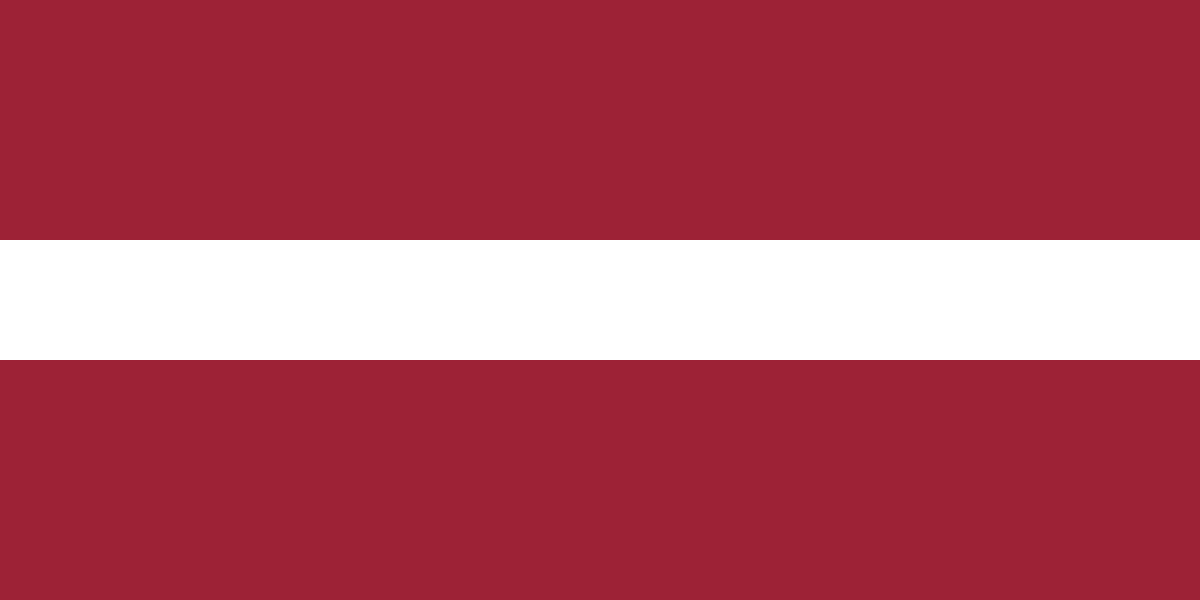
Latvia
Location Info
- Continent: Europe
- Country: Latvia
- Coordinates: 56.8796 , 24.6032
Trust Info
Verified Geographic Information
🌍 Continents
Overview
Latvia is a country in the Baltic region of Northern Europe, bordered by Estonia, Russia, Belarus, Lithuania, and the Baltic Sea. It is characterized by a landscape of low-lying plains, extensive forests, and thousands of rivers and lakes. The capital city, Riga, is the largest in the Baltic States and is renowned for its Art Nouveau architecture and historic Old Town, a UNESCO World Heritage Site.
Historically, Latvia has been a crossroads for various cultures, influenced by German, Swedish, and Russian rule before gaining independence in 1918. After decades of Soviet occupation, it regained its sovereignty in 1991. Today, Latvia is a parliamentary republic and a member of the European Union, NATO, and the Eurozone, with a modern economy driven by timber, manufacturing, and a growing technology sector.
Truth & Facts
| Total Area | 64,589 sq km |
| Coastline Length | 498 km |
| Total Population | 1.84 million |
| Official Language | Latvian |
| Capital City | Riga |
| Legislature | Saeima |
| Independence Proclaimed | November 18, 1918 |
| Independence Restored | August 21, 1991 |
| Currency | Euro (EUR) |
| Major Exports | Wood products, food products, machinery |
| Internet Penetration | Over 90% |
| Literacy Rate | 99.9% |
| Life Expectancy | 75.4 years |
| UNESCO Sites | 3 |
| Top Destination | Riga |
| Forest Cover | Approx 54% |
| Largest Airport | Riga International Airport (RIX) |
| Digital Signature | eSignature |
| Global Peace Index | High |
| Presidential Term | 4 years |
| EU Membership | Since May 1, 2004 |
| Renewable Energy Share | High |
| Time Zone | EET (UTC+2) |
| Oldest National Park | Gauja National Park |
| National Dish | Gray peas with bacon |
📑 Table of Contents
Overview
Latvia, officially the Republic of Latvia, is a sovereign state located in the Baltic region of Northern Europe. It is known for its wide beaches, vast forests, and a rich history shaped by its position between major European powers. The country is a parliamentary republic with a high Human Development Index rating.
- Capital: Riga
- Official Language: Latvian
- Currency: Euro
- Political System: Parliamentary Democracy
- Regional Status: Member of EU and NATO
History
Latvia's history began with ancient Baltic tribes who settled the region around 3000 BC. In the 13th century, German crusaders established the crusader state of Livonia. Over the centuries, the territory was ruled by the Polish-Lithuanian Commonwealth, Sweden, and the Russian Empire.
- 1201: Foundation of Riga by Bishop Albert.
- 1918: Declaration of independence following World War I.
- 1940: Soviet occupation and subsequent Nazi occupation (1941-1944).
- 1991: Restoration of independence during the 'Singing Revolution'.
- 2004: Admittance to the European Union and NATO.
Geography
Latvia is a low-lying country with an average elevation of 87 meters. Its geography features fertile plains, morainic hills in the east, and over 500 kilometers of sandy coastline along the Baltic Sea. The Daugava River is the country's most significant waterway, flowing into the Gulf of Riga.
| Feature | Details |
|---|---|
| Highest Point | Gaiziņkalns (311.6 m) |
| Longest River | Daugava (1,020 km total, 352 km in Latvia) |
| Largest Lake | Lubāns |
| Forest Cover | Approx. 54% |
Climate and Weather
Latvia has a temperate seasonal climate, which is influenced by its proximity to the Baltic Sea. The country experiences four distinct seasons, with significant variations between coastal and inland regions.
- Winter: Cold and snowy, with average temperatures between -2°C and -7°C.
- Spring: Gradual warming, with significant snowmelt and flooding in some areas.
- Summer: Mild to warm, with July being the warmest month (average 19°C).
- Autumn: Rainy and windy, characterized by colorful foliage.
Population and Demographics
The population of Latvia is approximately 1.84 million people. Ethnic Latvians make up about 63% of the total population, while Russians constitute the largest minority group at 24%.
- Urban Population: ~68%
- Ethnic Groups: Latvians, Russians, Belarusians, Ukrainians, Poles.
- Religion: Mostly Christian (Lutheran, Catholic, Orthodox).
- Median Age: ~44 years.
Culture and Lifestyle
Latvian culture is deeply rooted in folklore, traditional songs (dainas), and nature. The lifestyle emphasizes a balance between urban living and outdoor recreation, with many residents maintaining summer cottages in the countryside.
- Dainas: Traditional oral poems and songs numbering over 1 million.
- Art Nouveau: Riga possesses one of the highest concentrations of Art Nouveau buildings in the world.
- Lāčplēsis Day: Commemorates the defense of Riga in 1919.
Festivals and Events
Festivals play a crucial role in maintaining national identity. The most significant event is the Nationwide Latvian Song and Dance Festival, held every five years since 1873.
- Song and Dance Festival: Inscribed on the UNESCO list of Intangible Cultural Heritage.
- Jāņi (Midsummer): Celebrated on June 23-24 with bonfires, beer, and cheese.
- Independence Day: Celebrated on November 18 with parades and concerts.
Food and Cuisine
Latvian cuisine is hearty and influenced by the country's agricultural heritage. Rye bread is a staple, often regarded with cultural reverence.
- Rye Bread (Rupjmaize): Often served with every meal.
- Smoked Fish: Popular along the coastal regions.
- Black Balsam: A traditional herbal liqueur produced in Riga.
- Gray Peas: A traditional Christmas dish.
Economy and Industries
Latvia has a diverse economy with strong sectors in logistics, timber processing, and technology. The country transitioned to a market economy in the 1990s and is now fully integrated into the EU internal market.
| Industry | Key Focus |
|---|---|
| Forestry | Timber harvesting and woodworking |
| Information Tech | Software development and fintech |
| Manufacturing | Pharmaceuticals and electronics |
| Logistics | Transit between Europe and Asia |
Cost of Living
The cost of living in Latvia is generally lower than in Western Europe but has seen increases since joining the Eurozone. Riga is the most expensive city in the country.
- Housing: Moderate prices compared to other EU capitals.
- Utilities: Heating costs can be high during the winter months.
- Transportation: Affordable public transit options are available.
Employment and Business
The labor market is dominated by the service sector, which employs nearly 70% of the workforce. Riga is the primary hub for business activities and international corporations.
- Major Employers: Government, AirBaltic, Latvenergo.
- Unemployment Rate: Fluctuates between 6% and 8%.
- Digital Nomads: Growing interest due to high-speed internet.
Real Estate and Housing
Housing in Latvia consists of a mix of historic buildings, Soviet-era apartments, and modern developments. Ownership rates are high among the population.
- Apartment Blocks: Many were built during the mid-20th century.
- New Developments: Focused in Riga and its suburban areas like Pierīga.
- Rental Market: Most active in the capital city.
Transportation and Connectivity
Latvia serves as a major transit corridor. The transport infrastructure includes a network of railways, highways, and ice-free ports.
- Air: Riga International Airport is the largest in the Baltics.
- Rail: Rail Baltica project will connect the country to the European gauge network.
- Sea: Major ports include Riga, Ventspils, and Liepāja.
Infrastructure and Utilities
Infrastructure in Latvia is being modernized with the help of EU funding. Telecommunications are particularly advanced, with some of the highest internet speeds in Europe.
- Energy: Dependent on imported natural gas and domestic hydroelectricity.
- Water: High-quality tap water is available in most urban areas.
- Waste: Moving toward European circular economy standards.
Education
Latvia has a tradition of high educational standards. Higher education institutions attract a growing number of international students, particularly in medicine and engineering.
- University of Latvia: The largest university in the country.
- Riga Technical University: Specializes in engineering and exact sciences.
- Literacy: Near 100% among the adult population.
Healthcare
The healthcare system is state-funded, with a mix of public and private providers. Specialized services are concentrated in Riga.
- Hospitals: Riga East Clinical University Hospital is a major facility.
- Access: Universal coverage for citizens and permanent residents.
- Pharmacy: Well-developed network throughout the country.
Tourist Attractions
Latvia offers a variety of historical and natural attractions. From medieval castles to pristine beaches, the variety caters to diverse interests.
- Old Riga: Known for its cobblestone streets and medieval architecture.
- Freedom Monument: A symbol of Latvian statehood and independence.
- Turaida Museum Reserve: Includes a medieval castle and historic gardens.
Things to Do
Outdoor activities are popular due to the abundance of natural resources. Hiking, cycling, and mushroom picking are common pastimes for locals.
- Bobsleighing: At the Sigulda track, accessible to visitors.
- Canoeing: Along the Gauja or Abava rivers.
- Beach Walking: Along the 33km stretch of Jurmala.
Best Places to Visit
While Riga is the main entry point, other cities and regions offer unique experiences.
- Jūrmala: A resort town known for its wooden architecture and sandy beaches.
- Sigulda: Often called 'The Switzerland of Latvia' for its hilly landscape.
- Kuldīga: Home to Europe's widest waterfall, Ventas Rumba.
- Liepāja: Known as the 'City of Wind' and for its military heritage.
Travel Guide
Traveling to Latvia is straightforward for citizens of the EU and Schengen area. The country is well-connected by air and road.
- Visa: Schengen visa rules apply.
- Currency: Euro is used everywhere.
- Language: English is widely spoken in tourist areas.
Nearby Places
Latvia is centrally located among the Baltic States, making it easy to visit neighboring countries.
- Estonia: Tallinn is about 4.5 hours north of Riga.
- Lithuania: Vilnius is about 4 hours south of Riga.
- Finland: Accessible via ferry from Tallinn.
Environment and Nature
Nature is a defining feature of the Latvian landscape. Protected areas cover roughly 20% of the territory.
- Storks: One of the highest nesting densities in Europe.
- Bogs: Ķemeri National Park features unique bog boardwalks.
- Wildlife: Home to lynx, wolves, and large beaver populations.
Government and Administration
The political structure is defined by the Constitution of 1922. Power is divided between the legislative, executive, and judicial branches.
- President: Ceremonial head of state and commander-in-chief.
- Saeima: Responsible for passing laws and electing the President.
- Judiciary: Independent courts based on civil law.
Safety and Public Services
Public safety is maintained by the State Police. Emergency services are integrated and reachable via a single number.
- Emergency Number: 112 for all services.
- Crime: Generally low, though standard precautions are advised in crowds.
- Public Utilities: Reliable electricity, heating, and waste collection.
Best Time to Visit
The best time to visit depends on the desired activities. Summer is peak season for coastal visits and festivals.
- May to September: Ideal for nature and city sightseeing.
- December: Popular for Christmas markets in Riga.
- June: Best for experiencing the Midsummer celebrations.
Local Business Directory
Latvia has a vibrant local business scene, with many companies focusing on export markets and innovation.
- Latvian Investment and Development Agency (LIAA): Key contact for business.
- Chamber of Commerce: Represents the interests of local companies.
- Startup Association: Supports the growing tech ecosystem.
General Information FAQs
Where is Latvia located?
Latvia is located in Northern Europe, on the eastern shores of the Baltic Sea. It shares land borders with Estonia to the north, Russia to the east, Belarus to the southeast, and Lithuania to the south.
What is Latvia known for?
Latvia is known for its vast forests, the historic Art Nouveau architecture of its capital, Riga, and its rich tradition of song and dance. It is also famous for producing high-quality amber and for its extensive Baltic coastline.
Why is Latvia famous?
Latvia is famous for the Nationwide Song and Dance Festival, its high-speed internet, and being the birthplace of many notable artists and scientists. It is also recognized for its successful transition to a modern democracy after the Soviet era.
What country or region is Latvia part of?
Latvia is a sovereign country and is one of the three Baltic States. It is part of the Northern Europe region and is a member state of the European Union and the Schengen Area.
What is the population of Latvia?
As of recent estimates, the population of Latvia is approximately 1.84 million people.
What languages are spoken in Latvia?
The official language is Latvian. Russian is also widely spoken as a second language, and English is common among the younger generation and in the tourism sector.
What time zone is Latvia in?
Latvia is in the Eastern European Time zone (EET), which is UTC+2. During the summer, it observes Eastern European Summer Time (EEST), which is UTC+3.
What are the key facts about Latvia?
Key facts include: Capital is Riga; Currency is the Euro; Joined EU/NATO in 2004; and roughly 54% of its territory is covered by forest.
What makes Latvia unique?
Latvia's uniqueness stems from its blend of Baltic pagan roots and Northern European traditions, its high density of white storks, and its preserved wooden architecture alongside modern digital infrastructure.
How large is Latvia in area?
Latvia covers a total land area of approximately 64,589 square kilometers (24,938 square miles).
History FAQs
What is the history of Latvia?
Latvia's history involves settlement by Baltic tribes, medieval rule by the Livonian Order, and later periods of Swedish and Russian dominance. The country gained independence in 1918, was occupied by the USSR and Nazi Germany during WWII, and regained independence in 1991.
When was Latvia established?
The Republic of Latvia was officially proclaimed as an independent state on November 18, 1918.
What major historical events happened in Latvia?
Major events include the founding of Riga in 1201, the declaration of independence in 1918, the Soviet deportations of 1941 and 1949, and the Baltic Way human chain protest in 1989.
Who were important historical figures from Latvia?
Important figures include Kārlis Ulmanis (first Prime Minister), Krišjānis Barons (folklorist who collected dainas), and Gunārs Astra (human rights activist).
How has Latvia developed over time?
Latvia has transformed from an agrarian society under feudalism to a heavily industrialized Soviet republic, and finally into a high-tech, service-oriented European economy.
Geography & Environment FAQs
What is the geography of Latvia?
The geography is largely characterized by low-lying plains and morainic hills. Much of the land is arable or covered by forests, marshes, and waterways.
What natural features surround Latvia?
It is surrounded by the Baltic Sea and the Gulf of Riga to the west, with the East European Plain extending into neighboring Estonia, Russia, Belarus, and Lithuania.
Are there mountains, rivers, or lakes near Latvia?
Latvia has no mountains, only hills. It has over 12,000 rivers (most notably the Daugava and Gauja) and over 3,000 lakes (such as Lubāns and Rāzna).
What is the elevation of Latvia?
The average elevation is about 87 meters above sea level, with the highest point being Gaiziņkalns at 311.6 meters.
What ecosystems exist around Latvia?
Common ecosystems include mixed forests, peat bogs, coastal dunes, and meadows, which support a wide variety of wildlife including lynx and beavers.
Climate & Weather FAQs
What is the climate like in Latvia?
Latvia has a temperate maritime/continental climate. It is characterized by moderate summers and cold, snowy winters, with high levels of humidity throughout the year.
What is the average temperature in Latvia?
The annual average temperature is approximately 6°C. In summer, temperatures average 19°C, while winter averages around -5°C.
What is the weather like throughout the year in Latvia?
Winters are cold and dark with snow; spring brings thaw and blossoms; summers are mild with long daylight hours; and autumn is typically cool, wet, and windy.
Does Latvia experience extreme weather?
Extreme weather is rare, though the country can experience severe winter storms, occasional heatwaves in summer, and localized flooding during the spring thaw.
What is the best time of year to visit Latvia?
The best time to visit is generally from May to September when the weather is mildest and most cultural events take place.
Population & Society FAQs
What is the population density of Latvia?
The population density is relatively low, at approximately 29 people per square kilometer.
What ethnic groups live in Latvia?
The population consists of approximately 63% Latvians, 24% Russians, 3% Belarusians, 2% Ukrainians, and 2% Poles.
What religions are practiced in Latvia?
The main religious denominations are Lutheranism, Roman Catholicism, and Russian Orthodoxy, though a large portion of the population is secular.
What is daily life like in Latvia?
Daily life is characterized by a high degree of urbanization in Riga and a strong connection to nature and rural traditions elsewhere, with importance placed on education and cultural participation.
How diverse is the population of Latvia?
Latvia is ethnically diverse, primarily due to the historical influx of Russian and other Slavic workers during the Soviet era, which has created a multi-ethnic and multi-lingual society.
Culture & Traditions FAQs
What cultural traditions are important in Latvia?
Key traditions include the celebration of solstice festivals, the preservation of folk costumes, and the choral singing tradition.
What festivals are celebrated in Latvia?
Major festivals include Jāņi (Midsummer), the Song and Dance Festival, and various regional 'City Festivals'.
What cultural landmarks exist in Latvia?
Notable landmarks include the Freedom Monument, the House of the Blackheads, the Rundāle Palace, and the Riga Cathedral.
What traditional clothing or customs are common in Latvia?
Traditional clothing includes linen shirts and wool skirts/trousers with regional patterns. Customs include weaving wreaths of flowers or oak leaves during Jāņi.
What arts and crafts are associated with Latvia?
Latvia is associated with amber jewelry, pottery, wooden crafts, and intricate knitting patterns.
Food & Cuisine FAQs
What foods is Latvia known for?
Latvia is known for rye bread, smoked meats, cottage cheese, and seasonal berries and mushrooms.
What traditional dishes originate from Latvia?
Dishes include gray peas with speck (bacon), sklandrausis (a vegetable tart), and aukstā zupa (cold beet soup).
What are the best restaurants in Latvia?
Highly regarded restaurants are mostly located in Riga, ranging from traditional taverns to Michelin-recommended modern European establishments.
What local ingredients are commonly used in Latvia cuisine?
Common ingredients include potatoes, rye flour, dill, caraway seeds, sour cream, and pork.
What food markets or street foods are popular in Latvia?
The Riga Central Market is one of the largest in Europe. Popular street foods include various types of pastries (pīrāgi) and grilled meats.
Economy & Business FAQs
What are the main industries in Latvia?
Main industries include wood processing, agriculture, food manufacturing, chemicals, and logistics.
What economic activities drive the economy of Latvia?
The economy is driven by transit services, timber exports, manufacturing, and a growing information technology sector.
What businesses operate in Latvia?
Major businesses include Latvenergo (energy), airBaltic (aviation), and various international IT and financial service providers.
Is Latvia an important economic center?
It is an important regional center for logistics and finance in the Baltic region, serving as a hub for trade between the EU and Eastern markets.
What are the major exports or products from Latvia?
Major exports include wood and wood products, machinery and electrical equipment, foodstuffs, and chemicals.
Employment & Jobs FAQs
What job opportunities are available in Latvia?
Opportunities are strongest in the IT sector, engineering, transport and logistics, and customer service centers for international firms.
What are the major employers in Latvia?
Major employers include the public sector, large state-owned enterprises like Latvijas Pasts, and private companies such as Mikrotīkls.
What skills are in demand in Latvia?
Demand is high for software developers, data analysts, engineers, and professionals with multi-lingual skills.
Is Latvia a good place to work?
It offers a competitive environment within the EU, with a growing startup scene and a high quality of life for professionals in the capital.
What is the unemployment rate in Latvia?
The unemployment rate typically ranges between 6% and 7% as of 2024-2025 data.
Cost of Living FAQs
Is Latvia expensive to live in?
Compared to Western Europe or Scandinavia, Latvia is relatively affordable, though costs in Riga are significantly higher than in the rest of the country.
What is the average cost of living in Latvia?
An average individual may need between 800 and 1,200 EUR per month for a moderate lifestyle, including rent in the capital.
How much does housing cost in Latvia?
Rent for a one-bedroom apartment in central Riga can range from 400 to 700 EUR, while prices are much lower in smaller cities.
What are average food and utility costs in Latvia?
Utilities for a standard apartment average 150-250 EUR depending on the season. Food costs are similar to the EU average, though local products are cheaper.
Is Latvia affordable compared to nearby cities?
It is generally more affordable than Tallinn (Estonia) but slightly more expensive than many cities in Lithuania and Poland.
Housing & Real Estate FAQs
What types of housing are available in Latvia?
Available housing includes historic city center apartments, Soviet-era residential blocks, and modern suburban single-family homes.
What is the average home price in Latvia?
In Riga, apartment prices can range from 1,000 to 3,000 EUR per square meter depending on the building's condition and location.
Is it better to rent or buy property in Latvia?
Renting is flexible for short-term stays, but buying is often seen as a long-term investment due to stable market growth in the capital region.
Which neighborhoods are popular in Latvia?
In Riga, the Art Nouveau district, Teika, and Āgenskalns are popular. Outside Riga, coastal areas like Jūrmala are highly sought after.
How has the property market changed in Latvia?
The market has seen steady price increases in recent years, driven by demand for energy-efficient new developments and urban renovation projects.
Transportation FAQs
How do you get to Latvia?
The most common way is by air via Riga International Airport. There are also bus connections from neighboring countries and ferry routes from Germany and Sweden.
What is the nearest airport to Latvia?
Riga International Airport (RIX) is the main gateway. There are smaller regional airports in Liepāja and Ventspils.
Does Latvia have railway connections?
Yes, there is a domestic rail network and international connections to Estonia (Valga) and Lithuania. The Rail Baltica project will soon connect Latvia to the European standard gauge network.
How reliable is public transportation in Latvia?
Public transportation is very reliable in Riga and between major cities. The network consists of buses, trams, and trolleybuses.
What major highways or roads connect to Latvia?
The Via Baltica (A1 and A7) is the major highway connecting Latvia with Estonia to the north and Lithuania and Poland to the south.
Education FAQs
What schools are located in Latvia?
Latvia has a network of public and private primary and secondary schools. Vocational schools are also common for technical training.
Are there universities in Latvia?
Yes, major universities include the University of Latvia, Riga Technical University, and Rīga Stradiņš University.
What is the literacy rate in Latvia?
The literacy rate is among the highest in the world, estimated at 99.9%.
What educational opportunities exist in Latvia?
Opportunities range from traditional academic degrees to specialized training in maritime studies, music, and the arts.
Is Latvia a good place for students?
Yes, particularly for international students seeking affordable tuition in fields like medicine, aviation, and IT, in a safe European environment.
Healthcare FAQs
What hospitals are available in Latvia?
Main hospitals include the Pauls Stradiņš Clinical University Hospital and the Children's Clinical University Hospital, both in Riga.
Are there emergency medical services in Latvia?
Yes, emergency medical services are modern and can be accessed by calling 112 or 113.
What healthcare facilities exist in Latvia?
Facilities include state hospitals, local health centers (poliklīnikas), and many private specialist clinics.
Is healthcare affordable in Latvia?
Public healthcare is heavily subsidized for residents, while private healthcare prices are generally lower than in Western Europe.
Are specialized medical services available in Latvia?
Yes, particularly in dentistry, ophthalmology, and fertility treatments, which attract medical tourists from other countries.
Tourism & Travel FAQs
What are the top tourist attractions in Latvia?
Top attractions include Old Riga, Rundāle Palace, the Gauja National Park, and the Jūrmala seaside resort.
What are the best things to do in Latvia?
Activities include exploring medieval castles, hiking in national parks, visiting the Central Market, and enjoying the spa culture in Jūrmala.
Is Latvia worth visiting?
Yes, for travelers interested in history, architecture, and nature without the crowds typical of more mainstream European destinations.
What landmarks should visitors see in Latvia?
Essential landmarks include the Freedom Monument, St. Peter's Church, the Turaida Castle, and the Ventas Rumba waterfall.
How many days should tourists spend in Latvia?
A stay of 3 to 5 days is usually sufficient to see Riga and a few nearby towns like Sigulda or Jūrmala.
Nearby Places FAQs
What places are near Latvia worth visiting?
Tallinn in Estonia and the Curonian Spit in Lithuania are excellent nearby destinations.
What cities or towns are close to Latvia?
Pärnu (Estonia) and Šiauliai (Lithuania) are major cities located close to the Latvian borders.
What natural attractions are near Latvia?
The Soomaa National Park in Estonia and the Hill of Crosses in Lithuania are notable natural and cultural sites nearby.
What day trips can be taken from Latvia?
Day trips from Riga include Sigulda for hiking, Jūrmala for the beach, or Rundāle for the baroque palace.
What famous destinations are within reach of Latvia?
Helsinki and Stockholm are within reach by overnight ferry or short flights from Riga.
Safety FAQs
Is Latvia safe to live in?
Yes, Latvia is generally safe with low rates of violent crime and a stable political environment.
Is Latvia safe for tourists?
Yes, tourists typically face few risks other than petty crimes like pickpocketing in crowded areas of the capital.
What is the crime rate in Latvia?
The crime rate is moderate and comparable to other Northern European countries, with most offenses being property-related.
What emergency services operate in Latvia?
The State Police, State Fire and Rescue Service, and Emergency Medical Service are the primary responders.
What safety tips should visitors follow in Latvia?
Visitors should be cautious with their belongings in Riga's Central Market and Old Town and avoid unlicensed taxis.
Lifestyle & Living FAQs
Is Latvia a good place to live?
It is suitable for those who value nature, a moderate pace of life, and a high-tech infrastructure combined with European cultural heritage.
What recreational activities are available in Latvia?
Activities include Nordic walking, cross-country skiing, sailing, and a wide variety of indoor sports in modern facilities.
Is Latvia family-friendly?
Yes, with many parks, safe environments, and a comprehensive parental leave system.
What outdoor activities are popular in Latvia?
Bicycle touring, mushroom and berry picking in forests, and swimming in the Baltic Sea or freshwater lakes.
What makes life enjoyable in Latvia?
The proximity to nature, the vibrant cultural scene, and the absence of over-tourism in many beautiful regions.
Practical Information FAQs
What travel tips should visitors know about Latvia?
Public transit is efficient; tipping is generally 10% in restaurants; and the tap water is safe to drink in Riga.
What local customs should visitors respect in Latvia?
Latvians value punctuality and personal space. It is customary to remove shoes when entering someone's home.
How accessible is Latvia for international visitors?
It is very accessible for Europeans and those from visa-exempt countries. English is commonly used in international business and tourism.
What services are available for tourists in Latvia?
There are numerous tourist information centers, car rental services, and extensive mobile data coverage throughout the country.
What important information should travelers know before visiting Latvia?
The currency is the Euro; credit cards are accepted almost everywhere; and the power outlets are standard European Type C and F.