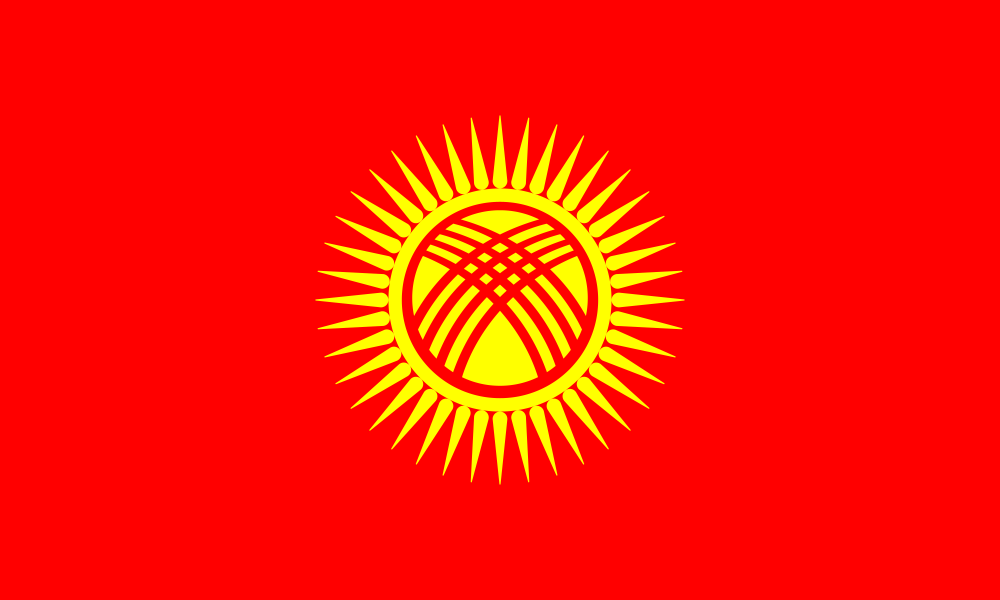
Kyrgyzstan
Location Info
- Continent: Asia
- Country: Kyrgyzstan
- Coordinates: 41.2044 , 74.7661
Trust Info
Verified Geographic Information
🌍 Continents






Overview
Kyrgyzstan, officially the Kyrgyz Republic, is a landlocked nation situated in Central Asia. It is bordered by Kazakhstan to the north, Uzbekistan to the west, Tajikistan to the southwest, and China to the east. The country is defined by its rugged topography, with over 90% of its territory occupied by the Tian Shan and Pamir mountain ranges. This geographic setting has historically shaped the nation's identity as a hub for nomadic tribes and a vital corridor along the ancient Silk Road.
Historically part of various empires and the Soviet Union, Kyrgyzstan gained independence in 1991. The population is characterized by a strong nomadic heritage, centered around livestock herding and traditional crafts. Economically, the country relies on gold mining, agriculture, and its strategic position for regional trade. Bishkek serves as the capital and largest city, acting as the primary political and economic center.
Truth & Facts
| Total Area | 199,951 sq km |
| Highest Point | Jengish Chokusu (7,439m) |
| Land Use | 7% Arable Land |
| Population | 7.1 Million (est.) |
| Ethnic Groups | 73.8% Kyrgyz, 14.8% Uzbek, 5.1% Russian |
| Government Type | Unitary Parliamentary Republic |
| Capital | Bishkek |
| Independence Date | August 31, 1991 |
| UNESCO Sites | Silk Roads, Tien-Shan, Sulaiman-Too |
| Currency | Kyrgyzstani Som (KGS) |
| Major Exports | Gold, Precious Metals, Textiles |
| Electricity Source | 90% Hydroelectric |
| Literacy Rate | 99.6% |
| Life Expectancy | 72.1 Years |
| Official Languages | Kyrgyz, Russian |
| Top Attraction | Issyk-Kul Lake |
| Forest Cover | 5.6% |
| Main Airport | Manas International (FRU) |
| Internet Usage | 60% of Population |
| Police Number | 102 |
| Membership | UN, SCO, EAEU |
| Diplomatic Missions | 40+ Countries |
| Water Source | Glacial Meltwater |
| Birth Rate | 26 per 1,000 |
| Main Livestock | Sheep and Horses |
| Average Temp (Jan) | -4°C to -9°C |
📑 Table of Contents
Overview
Kyrgyzstan is a mountainous nation in Central Asia, often referred to as the 'Switzerland of Central Asia' due to its alpine scenery. It is a landlocked state characterized by high peaks, deep valleys, and a rich history connected to the Silk Road trade routes.
The nation serves as a unique cultural crossroads where nomadic traditions blend with influences from Persian, Turkic, and Soviet history. It is a member of several international organizations, prioritizing regional stability and economic cooperation.
- Official Name: Kyrgyz Republic
- Region: Central Asia
- Bordering Countries: 4
- Primary Mountain Range: Tian Shan
- Capital: Bishkek
History
The history of Kyrgyzstan dates back to ancient times, with the Kyrgyz people originally inhabiting the Yenisei River valley before migrating to the Tian Shan region. The area was a significant transit point for the Silk Road, hosting travelers and traders for centuries.
In the 19th century, the region was incorporated into the Russian Empire and later became a constituent republic of the Soviet Union. Since gaining independence in 1991, Kyrgyzstan has undergone significant political transitions, establishing itself as a parliamentary republic.
| Period | Event |
|---|---|
| Ancient | Silk Road Trade Prosperity |
| 1876 | Annexation by Russian Empire |
| 1924 | Kara-Kyrgyz Autonomous Oblast |
| 1991 | Independence from USSR |
Geography
The geography of Kyrgyzstan is dominated by the Tian Shan mountain system, which covers approximately 80% of the country. These mountains separate the country into northern and southern regions, connected by high-altitude passes.
Hydrology is a vital aspect of the landscape, with Issyk-Kul Lake being the second-largest alpine lake in the world. Numerous rivers, fed by glacial melt, provide essential water resources for both Kyrgyzstan and its downstream neighbors.
- Highest Peak: Jengish Chokusu
- Major Lake: Issyk-Kul
- Primary River: Naryn
- Mountain Coverage: Over 90%
- Passes: Torugart, Irkeshtam
Climate and Weather
Kyrgyzstan experiences a dry continental climate, heavily influenced by its mountainous terrain and distance from major oceans. Polar air masses from Siberia and warm air from Central Asia create significant seasonal variations.
Temperatures can drop significantly in the winter, especially in high-altitude regions like Naryn. Summers are generally warm in the valleys but remain cool and pleasant in the mountains, making them ideal for high-altitude grazing.
- Valley Summer Highs: 30°C to 35°C
- Mountain Winter Lows: -30°C
- Average Sunlight: 247 days per year
- Precipitation: Heaviest in the mountains
- Microclimates: Common around Issyk-Kul
Population and Demographics
The population of Kyrgyzstan is over 7 million, with a majority identifying as ethnic Kyrgyz. Significant minorities include Uzbeks, predominantly in the south, and Russians, largely concentrated in urban areas like Bishkek.
The demographic profile is relatively young, with a high birth rate compared to other post-Soviet states. While the majority of the population is rural, urbanization is increasing as young people move to the capital for employment.
| Group | Percentage |
|---|---|
| Kyrgyz | 73.8% |
| Uzbek | 14.8% |
| Russian | 5.1% |
| Dungan/Others | 6.3% |
Culture and Lifestyle
Kyrgyz culture is deeply rooted in nomadic traditions, symbolized by the yurt (boz-ui) and the Epic of Manas. Hospitality is a core social value, and traditional ceremonies often revolve around livestock and horses.
Lifestyle in rural areas still follows seasonal rhythms, with many families moving to high-mountain pastures (jailoos) during the summer. In cities, modern global influences coexist with traditional Kyrgyz customs and Soviet-era social structures.
- National Symbol: The Yurt
- Oral Tradition: Epic of Manas
- Traditional Crafts: Shyrdak (felt rugs)
- Primary Instrument: Komuz
- Social Unit: Extended family (Aul)
Festivals and Events
Festivals in Kyrgyzstan often celebrate the nation's nomadic history and agricultural cycles. Nooruz, the Persian New Year, is a major national holiday celebrated with traditional games, music, and food.
The World Nomad Games, hosted periodically, showcase traditional sports like Kok Boru (horseback goat polo) and archery, drawing participants from across the globe to celebrate nomadic heritage.
- Nooruz: Spring Equinox Celebration
- Independence Day: August 31
- Orozo Ait: End of Ramadan
- Kurman Ait: Feast of Sacrifice
- World Nomad Games: International Sport Event
Food and Cuisine
Kyrgyz cuisine is predominantly meat-based, reflecting the nomadic history of the people. Mutton and beef are the primary proteins, often served with noodles or bread. Dairy products like kumis (fermented mare's milk) are also essential.
Regional variations exist, with the southern part of the country showing more influence from Uzbek and Tajik cuisines, including more frequent use of rice and spices in dishes like Plov.
- Beshbarmak: National meat and noodle dish
- Kumis: Fermented mare's milk
- Boorsok: Fried dough pieces
- Laghman: Pulled noodle soup
- Samsa: Savory meat pastries
Economy and Industries
The Kyrgyz economy relies heavily on natural resources, particularly gold mining. The Kumtor Gold Mine is one of the largest contributors to the national GDP. Agriculture and remittances from citizens working abroad also play critical roles.
The service sector is expanding, particularly in retail and telecommunications. The government is also promoting the development of hydroelectric power, utilizing the country's extensive river systems for domestic use and export.
| Sector | Primary Activity |
|---|---|
| Mining | Gold, Coal, Antimony |
| Agriculture | Livestock, Cotton, Tobacco |
| Energy | Hydroelectric Power |
| Textiles | Clothing Manufacturing |
Cost of Living
The cost of living in Kyrgyzstan is generally lower than in Western Europe or North America. Bishkek is the most expensive city, yet it remains affordable for international expatriates and students.
Basic expenses such as public transportation and utilities are subsidized or naturally low-cost, while imported goods and high-end electronics can be relatively expensive due to logistics.
- Monthly Rent (1-bed): $300 - $600 (Bishkek)
- Local Meal: $3 - $7
- Public Transport: < $0.20
- Utility Bills: Low (Hydro-based)
- Internet: Affordable and widely available
Employment and Business
Employment in Kyrgyzstan is concentrated in agriculture, trade, and the public sector. There is a growing startup scene in Bishkek, particularly in IT and creative services, supported by various business incubators.
Small and medium-sized enterprises (SMEs) drive much of the local market activity. The country is part of the Eurasian Economic Union (EAEU), which facilitates trade with Russia, Kazakhstan, and other member states.
- Major Employer: Government
- Private Sector: Mining and Retail
- Unemployment Rate: Approx 5-8%
- Key Business Hub: Bishkek
- Trade Alliances: EAEU, WTO
Real Estate and Housing
Housing in Kyrgyzstan ranges from Soviet-style apartment blocks in urban centers to traditional detached houses in rural villages. Recent years have seen a construction boom in Bishkek and Osh, with modern high-rise complexes appearing.
Property ownership is common among the local population. For foreign nationals, certain restrictions apply to the purchase of agricultural land, but residential apartments in cities can generally be acquired or leased long-term.
- Bishkek: High-rise apartment focus
- Rural areas: Detached brick houses
- Rental Market: Growing in capital
- Construction: Active in Osh and Bishkek
- Utilities: Mostly centralized in cities
Transportation and Connectivity
Due to the mountainous terrain, road transport is the primary means of moving goods and people. The Bishkek-Osh highway is a critical artery connecting the north and south through high mountain passes.
Air travel is facilitated by Manas International Airport in Bishkek and Osh International Airport. Railway infrastructure is limited, primarily connecting the northern region to the Kazakh and Russian rail networks.
- Main Airport: Manas (Bishkek)
- Primary Road: M41 (Pamir Highway)
- Public Transport: Marshrutkas (minibuses)
- Railways: Primarily in the Chuy Valley
- Taxis: App-based and traditional
Infrastructure and Utilities
Infrastructure development in Kyrgyzstan is a priority, focusing on upgrading roads and energy grids. The country has a surplus of hydroelectric potential, which powers most of the nation and provides seasonal exports.
Internet connectivity is surprisingly robust, with 4G/LTE coverage available in most towns and even some remote mountain areas. Centralized heating systems remain common in major cities like Bishkek and Osh.
- Power: 90% Hydro-generated
- Telecoms: Multiple private providers
- Heating: Centralized in urban zones
- Roads: Significant foreign investment
- Water: Glacial and groundwater sources
Education
Kyrgyzstan maintains a high literacy rate of over 99%, a legacy of the Soviet educational system. Education is compulsory for nine years, and many students pursue higher education at local and international universities.
Bishkek is a regional hub for higher education, hosting institutions like the American University of Central Asia and various medical universities that attract international students from South Asia and the Middle East.
- Primary University: Kyrgyz National University
- International Focus: AUCA
- Literacy Rate: 99.6%
- Compulsory Schooling: Ages 7 to 15
- Higher Ed Centers: Bishkek, Osh, Jalal-Abad
Healthcare
The healthcare system in Kyrgyzstan is a mix of public and private services. Major hospitals and specialized clinics are concentrated in Bishkek, while rural areas are served by smaller primary care facilities (FAPs).
The government has implemented reforms to transition toward a mandatory health insurance model. While basic care is accessible, advanced medical procedures often require travel to the capital or abroad.
- Life Expectancy: 72 years
- System: Public-Private mix
- Insurance: Mandatory Health Insurance Fund
- Major Centers: Bishkek, Osh
- Rural Access: Village health points
Tourist Attractions
Kyrgyzstan offers diverse attractions, primarily focused on outdoor adventure and cultural heritage. Issyk-Kul Lake, known for its warm waters and surrounding sandy beaches, is the most visited destination in the country.
Other notable sites include the historic Burana Tower, the sacred Sulaiman-Too mountain in Osh, and the pristine alpine pastures of Song-Kul Lake where tourists can stay in traditional yurts.
- Issyk-Kul: Second largest alpine lake
- Burana Tower: 11th-century minaret
- Sulaiman-Too: UNESCO World Heritage site
- Song-Kul: High-altitude nomadic site
- Arslanbob: World's largest walnut forest
Things to Do
Trekking and mountaineering are the top activities in Kyrgyzstan, with routes ranging from day hikes near Bishkek to multi-week expeditions in the high Tian Shan. Horse riding is also a popular way to explore the mountain trails.
Visitors can engage in community-based tourism (CBT), staying with local families to learn about felt-making, traditional cooking, and the nomadic way of life. Winter sports are available at ski resorts like Karakol.
- Trekking: Ala-Archa, Karakol Valley
- Horse Riding: Song-Kul, Kochkor
- Skiing: Karakol Ski Base
- Cultural Stays: Yurt camps
- Swimming: Issyk-Kul Lake
Best Places to Visit
The capital, Bishkek, serves as a gateway with its parks and Soviet-era architecture. For nature lovers, the Karakol region offers access to high peaks and hot springs, while the Fergana Valley provides a glimpse into the country's agricultural heartland.
Osh, one of the oldest cities in the region, is essential for those interested in history and local markets. The Naryn region is the most authentically 'nomadic' area, characterized by vast, treeless plateaus.
- Bishkek: Capital culture
- Karakol: Adventure hub
- Osh: Ancient history
- Jalal-Abad: Health spas
- Naryn: Wild landscapes
Travel Guide
Kyrgyzstan is one of the most accessible countries in Central Asia, offering visa-free entry to citizens of many nations. The local currency is the Som, and while Russian and Kyrgyz are the main languages, English is growing in the tourism sector.
Travelers should be prepared for varying infrastructure; while cities are modern, mountain travel requires sturdy vehicles and preparation for changing weather conditions. Cash is preferred outside the capital.
- Visa Policy: Liberal visa-free regime
- Currency: Kyrgyz Som (KGS)
- Languages: Kyrgyz (State), Russian (Official)
- SIM Cards: Easy to purchase locally
- Best Travel Mode: Shared taxis or CBT vans
Nearby Places
Kyrgyzstan is a central link between China and the rest of Central Asia. To the north, Almaty in Kazakhstan is just a few hours from Bishkek. To the west, the historic Silk Road cities of Uzbekistan, like Samarkand, are accessible via Osh.
Tajikistan lies to the south, connected by the famous Pamir Highway, a popular route for adventure cyclists and overlanders. China is accessible via the Torugart and Irkeshtam passes.
- Almaty, Kazakhstan: 4 hours from Bishkek
- Tashkent, Uzbekistan: Flight or road via Osh
- Pamir Highway: Connects to Tajikistan
- Kashgar, China: Via mountain passes
- Andijan, Uzbekistan: Bordering Osh
Environment and Nature
Kyrgyzstan possesses a unique biodiversity, including rare species like the snow leopard and the Tien Shan brown bear. The country contains over 20 types of ecosystems, ranging from glaciers to walnut forests.
Environmental challenges include glacier recession due to climate change and the impact of mining on local water sources. The government has established several national parks to protect its natural heritage.
- National Parks: Ala-Archa, Sary-Chelek
- Rare Fauna: Snow Leopard
- Unique Flora: Arslanbob Walnut Forest
- Major Threat: Glacial melting
- Conservation: State Agency on Environment
Government and Administration
Kyrgyzstan is a unitary republic with a president as head of state and a prime minister as head of government. The Jogorku Kenesh is the unicameral parliament responsible for legislation.
The country is divided into seven regions (oblasts) and two independent cities (Bishkek and Osh). Each oblast is further subdivided into districts (rayons) for local administration.
| Level | Admin Body |
|---|---|
| National | Jogorku Kenesh |
| Regional | Oblasts (7) |
| Local | Rayons & Ayyl Okmotu |
Safety and Public Services
Kyrgyzstan is generally safe for residents and visitors, though standard precautions against petty crime in crowded areas like bazaars are advised. Police presence is visible in cities, and a dedicated 'Tourist Police' operates in major destinations.
Public services like fire and emergency medical response are reachable via standard emergency numbers. Infrastructure in rural areas can be limited, particularly during winter snowstorms.
- Police: 102
- Ambulance: 103
- Fire Service: 101
- Tourist Police: Active in Bishkek/Issyk-Kul
- General Safety: High in daylight hours
Best Time to Visit
The best time to visit Kyrgyzstan depends on the intended activities. For trekking and yurt stays, the summer months (July to September) are ideal, as mountain passes are clear of snow.
Issyk-Kul is best enjoyed in July and August when water temperatures are warmest. Cultural travelers may prefer spring (May-June) or autumn (September-October) to avoid the peak heat and cold.
- Summer (July-Aug): Best for trekking
- Winter (Dec-Feb): Best for skiing
- Spring (May): Best for green valleys
- Autumn (Sept): Best for harvests
- Issyk-Kul Season: Mid-June to August
Local Business Directory
Economic activity is centered in Bishkek, which hosts major international banks, retail chains, and IT firms. Local markets (bazaars), such as Dordoy and Osh Bazaar, are vital hubs for regional wholesale and retail trade.
Tourism businesses are largely small-scale and locally owned, often organized through the Community-Based Tourism (CBT) network which provides standardized services across the country.
- Retail Hubs: Dordoy Bazaar, Bishkek Park
- Banking: Demir Bank, Optima Bank
- Tourism: CBT Kyrgyzstan
- Logistics: Kyrgyz Pochtasy
- Airlines: Air Manas, Avia Traffic
General Information FAQs
Where is Kyrgyzstan located?
Kyrgyzstan is a landlocked country located in Central Asia, bordered by Kazakhstan to the north, China to the east, Tajikistan to the south, and Uzbekistan to the west.
What is Kyrgyzstan known for?
It is known for the Tian Shan mountain range, Issyk-Kul Lake, its nomadic heritage, and the Epic of Manas.
Why is Kyrgyzstan famous?
Kyrgyzstan is famous for its stunning alpine scenery, nomadic yurt culture, and as a key historical site along the Silk Road.
What country or region is Kyrgyzstan part of?
Kyrgyzstan is an independent nation in the Central Asia region.
What is the population of Kyrgyzstan?
As of 2025, the population is estimated to be approximately 7.1 million people.
What languages are spoken in Kyrgyzstan?
Kyrgyz is the state language, and Russian is the official language. Both are widely used in government and daily life.
What time zone is Kyrgyzstan in?
Kyrgyzstan is in Kyrgyzstan Time (KGT), which is UTC+6.
What are the key facts about Kyrgyzstan?
Key facts include its high altitude (90% mountainous), its capital Bishkek, its independence from the USSR in 1991, and its secular government.
What makes Kyrgyzstan unique?
Its unique combination of high-altitude mountain culture, preserved nomadic traditions like yurt dwelling, and its liberal visa policies in Central Asia.
How large is Kyrgyzstan in area?
The total area of Kyrgyzstan is approximately 199,951 square kilometers.
History FAQs
What is the history of Kyrgyzstan?
Kyrgyzstan has a history involving nomadic tribes, the Silk Road, Mongol rule, the Russian Empire, and 70 years as a Soviet Republic before independence in 1991.
When was Kyrgyzstan established?
The modern independent state was established on August 31, 1991, following the dissolution of the Soviet Union.
What major historical events happened in Kyrgyzstan?
Key events include the Battle of Talas (751 AD), the incorporation into the Russian Empire (1876), and the Tulip Revolution (2005).
Who were important historical figures from Kyrgyzstan?
The legendary hero Manas, Kurmanjan Datka (Queen of the Alay), and the famous writer Chingiz Aitmatov are pivotal figures.
How has Kyrgyzstan developed over time?
It transitioned from a nomadic tribal society to a Soviet industrial-agrarian republic, and finally to a modern parliamentary democracy with a focus on mining and tourism.
Geography & Environment FAQs
What is the geography of Kyrgyzstan?
The geography is defined by the Tian Shan and Pamir mountains, which cover most of the land, along with deep basins like the Issyk-Kul depression.
What natural features surround Kyrgyzstan?
It is surrounded by high mountain ranges and the dry steppes of Kazakhstan and Uzbekistan.
Are there mountains, rivers, or lakes near Kyrgyzstan?
Yes, the country has over 2,000 lakes (including Issyk-Kul) and major rivers like the Naryn and Chuy.
What is the elevation of Kyrgyzstan?
The average elevation is 2,750 meters above sea level, with nearly 94% of the country above 1,000 meters.
What ecosystems exist around Kyrgyzstan?
Ecosystems include alpine tundra, mountain forests, walnut groves, and semi-desert zones in the lower valleys.
Climate & Weather FAQs
What is the climate like in Kyrgyzstan?
It has a continental climate with cold winters and warm summers. High altitudes experience alpine conditions with year-round snow.
What is the average temperature in Kyrgyzstan?
In valleys, summer averages 25-30°C, while winter averages -5 to -10°C. Mountain temperatures are significantly lower.
What is the weather like throughout the year in Kyrgyzstan?
Spring and autumn are mild; summer is sunny and hot in the valleys; winter is snowy and cold, ideal for skiing.
Does Kyrgyzstan experience extreme weather?
Extreme cold can occur in the Naryn region (-40°C), and mountain areas can face sudden blizzards or landslides.
What is the best time of year to visit Kyrgyzstan?
July and August are best for trekking and lakes; May and September are best for sightseeing in lower altitudes.
Population & Society FAQs
What is the population density of Kyrgyzstan?
The population density is approximately 35 people per square kilometer, concentrated in the valleys.
What ethnic groups live in Kyrgyzstan?
The main groups are Kyrgyz (74%), Uzbeks (15%), and Russians (5%), with smaller populations of Dungans, Tajiks, and Kazakhs.
What religions are practiced in Kyrgyzstan?
Islam (Sunni) is the predominant religion (approx. 90%), followed by Russian Orthodoxy.
What is daily life like in Kyrgyzstan?
Daily life involves a mix of modern urban routines and rural agricultural/pastoral tasks, with strong emphasis on family and community gatherings.
How diverse is the population of Kyrgyzstan?
It is quite diverse due to its Silk Road history and Soviet-era migrations, hosting over 80 different ethnic groups.
Culture & Traditions FAQs
What cultural traditions are important in Kyrgyzstan?
Nomadic hospitality, the construction of yurts, horse games, and respect for elders are central traditions.
What festivals are celebrated in Kyrgyzstan?
Nooruz (Spring New Year), Independence Day, and various livestock festivals in the summer pastures.
What cultural landmarks exist in Kyrgyzstan?
The Burana Tower, Sulaiman-Too Mountain, and the Manas Ordo complex are significant landmarks.
What traditional clothing or customs are common in Kyrgyzstan?
The Kalpak (felt hat) for men and embroidered dresses for women; customs include 'uulu-tozor' (hospitality rituals).
What arts and crafts are associated with Kyrgyzstan?
Felt carpet making (Shyrdak and Ala-kiyiz), leatherwork, and traditional jewelry design.
Food & Cuisine FAQs
What foods is Kyrgyzstan known for?
Kyrgyzstan is known for meat-heavy dishes, handmade noodles, and fermented dairy products.
What traditional dishes originate from Kyrgyzstan?
Beshbarmak, Kuurdak (fried meat), and Boorsok (fried bread dough) are quintessential dishes.
What are the best restaurants in Kyrgyzstan?
Major cities like Bishkek offer high-quality traditional venues like Navat and Faiza, alongside international cuisine.
What local ingredients are commonly used in Kyrgyzstan cuisine?
Mutton, beef, flour, potatoes, and onions are the staples of most Kyrgyz recipes.
What food markets or street foods are popular in Kyrgyzstan?
Bazaars sell fresh samsa (pastries), shashlyk (skewers), and 'maksym' (a traditional grain drink).
Economy & Business FAQs
What are the main industries in Kyrgyzstan?
Mining (gold), agriculture (livestock/cotton), and energy production (hydropower).
What economic activities drive the economy of Kyrgyzstan?
Gold exports from the Kumtor mine and remittances from citizens working in Russia are the primary drivers.
What businesses operate in Kyrgyzstan?
A mix of state enterprises in energy and mining, along with private retail, textile manufacturing, and tourism companies.
Is Kyrgyzstan an important economic center?
It is a regional hub for re-exporting goods from China to other Central Asian and EAEU countries.
What are the major exports or products from Kyrgyzstan?
Gold, silver, cotton, wool, meat, and hydroelectricity.
Employment & Jobs FAQs
What job opportunities are available in Kyrgyzstan?
Most opportunities are in the service sector, agriculture, mining, and the growing IT and textile industries.
What are the major employers in Kyrgyzstan?
The state remains the largest employer, along with major mining firms like Kumtor and international retail groups.
What skills are in demand in Kyrgyzstan?
IT skills, languages (English/Chinese), agricultural management, and engineering for the mining sector.
Is Kyrgyzstan a good place to work?
It offers a low cost of living, though wages are lower than in neighboring Kazakhstan or Russia.
What is the unemployment rate in Kyrgyzstan?
The official unemployment rate generally fluctuates between 5% and 8%.
Cost of Living FAQs
Is Kyrgyzstan expensive to live in?
No, it is considered one of the most affordable countries in the CIS region for housing and food.
What is the average cost of living in Kyrgyzstan?
A single person can live comfortably on $600-$900 per month in the capital city.
How much does housing cost in Kyrgyzstan?
Rents in Bishkek range from $300 to $700 for modern apartments; rural housing is much cheaper.
What are average food and utility costs in Kyrgyzstan?
Utilities are very low due to hydropower; a typical monthly bill might be $30-$50. Food costs are also low if buying local produce.
Is Kyrgyzstan affordable compared to nearby cities?
It is significantly cheaper than Almaty (Kazakhstan) or Tashkent (Uzbekistan).
Housing & Real Estate FAQs
What types of housing are available in Kyrgyzstan?
Apartments (Soviet and modern), private houses, and traditional rural homesteads.
What is the average home price in Kyrgyzstan?
In Bishkek, prices per square meter range from $800 to $1,500 depending on the district.
Is it better to rent or buy property in Kyrgyzstan?
Renting is flexible for foreigners, while buying is seen as a stable long-term investment by locals.
Which neighborhoods are popular in Kyrgyzstan?
In Bishkek, the southern districts are popular for their air quality and modern amenities.
How has the property market changed in Kyrgyzstan?
The market has seen steady growth due to urbanization and the influx of modern residential complexes.
Transportation FAQs
How do you get to Kyrgyzstan?
Most international travelers arrive via Manas International Airport in Bishkek or through land borders from Kazakhstan or Uzbekistan.
What is the nearest airport to Kyrgyzstan?
Manas International (Bishkek) and Osh International are the primary hubs.
Does Kyrgyzstan have railway connections?
There are limited domestic lines; international trains connect Bishkek to Kazakhstan and Russia.
How reliable is public transportation in Kyrgyzstan?
The 'marshrutka' system is very frequent and reliable for urban and inter-city travel.
What major highways or roads connect to Kyrgyzstan?
The Bishkek-Osh highway (M41) and the road through the Chuy valley to Kazakhstan.
Education FAQs
What schools are located in Kyrgyzstan?
There is an extensive network of state schools, private international schools, and specialized gymnasiums.
Are there universities in Kyrgyzstan?
Yes, over 50 higher education institutions, including the Kyrgyz National University and American University of Central Asia.
What is the literacy rate in Kyrgyzstan?
The literacy rate is nearly universal at 99.6%.
What educational opportunities exist in Kyrgyzstan?
A wide range of degree programs, particularly in medicine, international relations, and humanities.
Is Kyrgyzstan a good place for students?
Yes, especially for medical students from abroad due to affordable tuition and recognized degrees.
Healthcare FAQs
What hospitals are available in Kyrgyzstan?
There are state hospitals (republican and city-level) and an increasing number of private clinics in urban areas.
Are there emergency medical services in Kyrgyzstan?
Yes, the 103 service provides emergency ambulance transport and basic care.
What healthcare facilities exist in Kyrgyzstan?
Diagnostic centers, maternity hospitals, and village-level medical points (FAPs).
Is healthcare affordable in Kyrgyzstan?
Public healthcare is subsidized for citizens; private care is affordable compared to international standards.
Are specialized medical services available in Kyrgyzstan?
Most specialized services (cardiology, oncology) are concentrated in the capital, Bishkek.
Tourism & Travel FAQs
What are the top tourist attractions in Kyrgyzstan?
Issyk-Kul Lake, Ala Archa National Park, Song-Kul Lake, and the Burana Tower.
What are the best things to do in Kyrgyzstan?
Horseback riding in the mountains, sleeping in yurts, and trekking the Tian Shan peaks.
Is Kyrgyzstan worth visiting?
Yes, it is considered one of the best destinations for untouched nature and authentic nomadic culture.
What landmarks should visitors see in Kyrgyzstan?
The Holy Mountain Sulaiman-Too in Osh and the high-altitude Tash Rabat caravanserai.
How many days should tourists spend in Kyrgyzstan?
At least 10 to 14 days are recommended to see both the north and the south.
Nearby Places FAQs
What places are near Kyrgyzstan worth visiting?
Almaty in Kazakhstan and the ancient cities of the Fergana Valley in Uzbekistan.
What cities or towns are close to Kyrgyzstan?
Almaty (Kazakhstan) and Tashkent (Uzbekistan) are the closest major regional cities.
What natural attractions are near Kyrgyzstan?
The Charyn Canyon in Kazakhstan and the Pamir mountains in Tajikistan.
What day trips can be taken from Kyrgyzstan?
From Bishkek, one can easily visit the Ala-Archa gorge or the Burana Tower.
What famous destinations are within reach of Kyrgyzstan?
Samarkand (Uzbekistan) and Kashgar (China) are accessible for longer regional trips.
Safety FAQs
Is Kyrgyzstan safe to live in?
Yes, it is generally peaceful, with low rates of violent crime against residents.
Is Kyrgyzstan safe for tourists?
Yes, tourism is encouraged and most travelers experience no issues, though normal safety vigilance is advised.
What is the crime rate in Kyrgyzstan?
The crime rate is moderate, with petty theft in crowded bazaars being the most common concern.
What emergency services operate in Kyrgyzstan?
Police (102), Fire (101), and Medical (103).
What safety tips should visitors follow in Kyrgyzstan?
Avoid unlit areas at night, use registered taxi apps, and always carry a copy of your passport.
Lifestyle & Living FAQs
Is Kyrgyzstan a good place to live?
It offers a high quality of life for nature enthusiasts and those seeking a slower pace at an affordable cost.
What recreational activities are available in Kyrgyzstan?
Hiking, mountain biking, horse riding, and winter sports.
Is Kyrgyzstan family-friendly?
Yes, Kyrgyz culture is very family-oriented and there are many parks and activities for children in the cities.
What outdoor activities are popular in Kyrgyzstan?
Camping by mountain lakes and multi-day treks through the high passes.
What makes life enjoyable in Kyrgyzstan?
The proximity to pristine nature, the hospitality of the people, and the vibrant local food culture.
Practical Information FAQs
What travel tips should visitors know about Kyrgyzstan?
Download offline maps, carry cash for rural areas, and learn basic Russian or Kyrgyz phrases.
What local customs should visitors respect in Kyrgyzstan?
Remove shoes when entering a home or yurt, and always accept a tea offering when visiting locals.
How accessible is Kyrgyzstan for international visitors?
It is the most accessible Central Asian country with many visa-free nationalities allowed entry for 60 days.
What services are available for tourists in Kyrgyzstan?
Extensive network of CBT offices, specialized mountain guides, and yurt-stay booking services.
What important information should travelers know before visiting Kyrgyzstan?
Altitude sickness can be an issue in the mountains; ensure your travel insurance covers high-altitude activities.