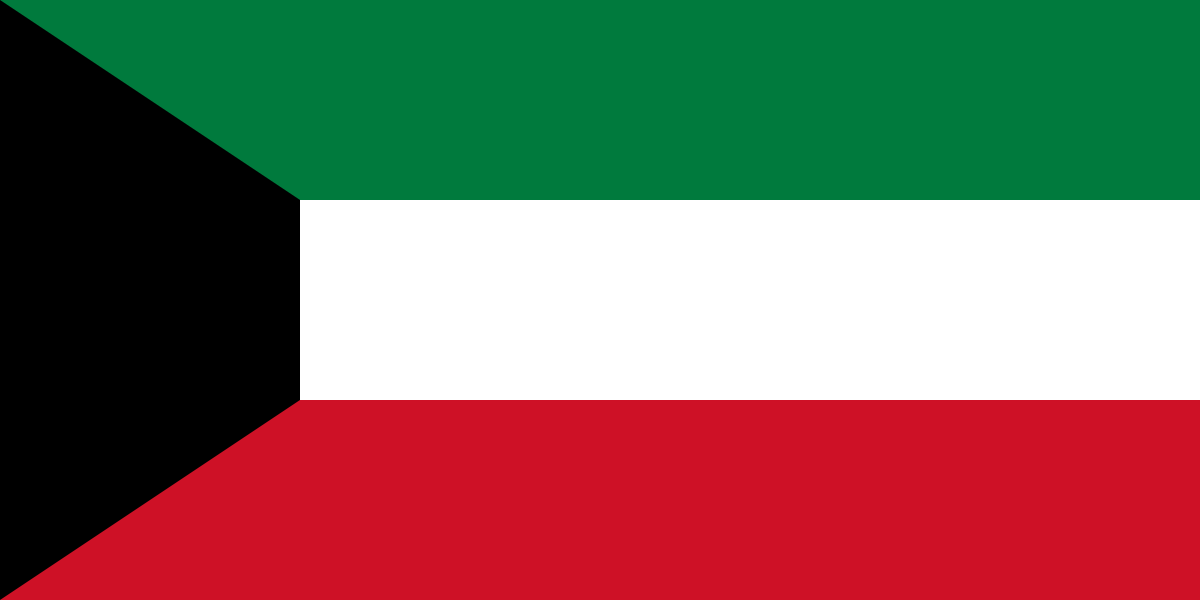
Kuwait
Location Info
- Continent: Asia
- Country: Kuwait
- Coordinates: 29.3117 , 47.4818
Trust Info
Verified Geographic Information
🌍 Continents

Overview
Kuwait is a sovereign state located in Western Asia, situated at the northern edge of Eastern Arabia at the tip of the Persian Gulf. It shares borders with Iraq to the north and west, and Saudi Arabia to the south. Historically a strategic port for trade and pearling, Kuwait underwent rapid transformation following the discovery of massive oil reserves in the mid-20th century. Today, it is recognized as a high-income economy with significant global influence in the energy sector.
The nation's landscape is primarily characterized by a flat, sandy Arabian Desert, punctuated by Kuwait Bay, a natural deep-water harbor. Despite its small land area, Kuwait maintains a stable political environment under a constitutional monarchy. It serves as a major financial and logistical hub within the Gulf Cooperation Council (GCC) and is known for its vibrant parliamentary system and rich maritime cultural traditions.
Truth & Facts
| Total Area | 17,818 sq km |
| Coastline | 499 km |
| Total Population | 4.3 Million (Approximate) |
| Capital | Kuwait City |
| Government Type | Constitutional Monarchy |
| Currency | Kuwaiti Dinar (KWD) |
| GDP Composition | 90% Export Revenue from Oil |
| Independence | June 19, 1961 |
| Water Source | Desalination |
| Primary Airport | Kuwait International Airport (KWI) |
| Literacy Rate | 96%+ |
| System Type | Universal Healthcare for Citizens |
| Max Temperature | 50°C+ during summer |
| Internet Penetration | 99% |
| Safety Index | High |
| Social Custom | Diwaniyah |
| Legislature | National Assembly (Majlis al-Umma) |
| Founding Member | GCC |
| Power Generation | Gas-fired power plants |
| Oil Reserves | 6th Largest Globally |
| Main Attraction | Kuwait Towers |
| Migratory Birds | Over 300 species |
| Major Port | Shuwaikh Port |
📑 Table of Contents
Overview
Kuwait is a sovereign state in the Middle East, located at the tip of the Persian Gulf. It is a desert nation that shares its northern and western borders with Iraq and its southern border with Saudi Arabia. Despite its small size, Kuwait holds a strategic position in the global energy market.
The country is governed by the Al-Sabah family under a constitutional monarchy. It is known for its high-income economy, fueled by one of the largest oil reserves in the world. The national capital, Kuwait City, serves as the political, economic, and cultural center of the nation.
- Official Name: State of Kuwait
- Region: Western Asia / Middle East
- Official Language: Arabic
- Capital: Kuwait City
- Religious Majority: Islam
History
Kuwait's history dates back to the 18th century when the Bani Utbah tribe founded Kuwait City. It became a thriving hub for spice trade, shipbuilding, and pearl diving. In 1899, it became a British protectorate to secure its borders from Ottoman influence.
Oil was discovered in 1938, leading to massive modernization after World War II. Kuwait gained full independence from Britain in 1961. A significant modern event was the 1990 invasion by Iraq, which led to the Gulf War and the subsequent liberation of the country in 1991.
| Period | Major Event |
|---|---|
| 1752 | Foundation of the Sheikhdom of Kuwait |
| 1899 | Anglo-Kuwaiti Agreement (Protectorate) |
| 1961 | Declaration of Independence |
| 1990 | Iraqi Invasion |
| 1991 | Liberation by Coalition Forces |
Geography
Kuwait is primarily a flat, sandy desert with very little elevation change. The highest point is an unnamed location at 306 meters above sea level. The country includes nine islands, with Bubiyan being the largest and Failaka being the only one inhabited by civilians historically.
The Kuwait Bay is the most prominent geographical feature, providing a sheltered harbor for shipping. There are no permanent rivers or lakes in the country, making water management a critical task for the government.
- Terrain: Flat to gently undulating desert plain
- Islands: Bubiyan, Warbah, Failaka, Miskan, Auha, Umm al-Namil, Kubbar, Qaruh, Umm al-Maradim
- Natural Resources: Petroleum, fish, shrimp, natural gas
Climate and Weather
Kuwait has an arid climate characterized by extremely hot summers and short, cool winters. During the summer months, temperatures frequently exceed 45°C and can occasionally reach 50°C. Dust storms are common during the transition between seasons.
Winter temperatures are mild, ranging from 8°C to 18°C. Rainfall is sparse and occurs mainly between October and April, with an annual average of less than 120 millimeters.
- Summer: May to September (Extreme Heat)
- Winter: November to March (Mild)
- Humidity: Generally low, but can rise near the coast in late summer
Population and Demographics
Kuwait's population is highly cosmopolitan, with expatriates making up approximately 70% of the total residents. The native Kuwaiti population is predominantly Arab. The expatriate community includes large groups from South Asia, Egypt, and other Arab nations.
The majority of the population lives in the urban areas surrounding Kuwait City. Islam is the official religion, and Arabic is the official language, though English is widely used in business and education.
| Metric | Details |
|---|---|
| Population Growth | Approx. 1.5% |
| Median Age | 30 years |
| Urban Population | 98% |
Culture and Lifestyle
Kuwaiti culture is deeply rooted in Islamic and Arab traditions, blended with a history of seafaring and trade. The 'Diwaniyah' is a central social institution where men gather to discuss various topics. Hospitality is a core value, often expressed through the serving of Arabic coffee and dates.
The arts scene is one of the most active in the Gulf, with a long history of theater and television production. Traditional music, such as 'Sawt,' remains popular alongside modern influences.
- Social Norms: Modest attire is respected; Diwaniyah culture
- Artistic Heritage: Sadu weaving, calligraphy, and pottery
- Media: Most liberal press environment in the GCC
Festivals and Events
The most significant national celebrations are National Day and Liberation Day, held on February 25 and 26 respectively. These days are marked by parades, fireworks, and public gatherings. Islamic holidays, including Eid al-Fitr and Eid al-Adha, are observed nationwide with religious services and family celebrations.
The Hala February festival is a month-long event featuring shopping discounts, concerts, and cultural activities aimed at boosting tourism and local engagement.
- National Day: February 25
- Liberation Day: February 26
- Hala February: Annual shopping and arts festival
Food and Cuisine
Kuwaiti cuisine is a fusion of Arabian, Persian, Indian, and Mediterranean influences. Rice, meat, and fish are the primary staples. The national dish is 'Machboos,' which consists of spiced basmati rice served with mutton, chicken, or fish.
Seafood is a significant part of the diet due to Kuwait's coastal location, with 'Zubaidi' (pomfret) being a highly prized local fish. Traditional desserts often feature saffron, cardamom, and rose water.
- Machboos: Fragrant rice with meat
- Mutabbaq Samak: Spiced fish served over rice
- Gabout: Flour dumplings stuffed with meat in a thick stew
Economy and Industries
Kuwait possesses nearly 7% of the world's proven oil reserves. The petroleum industry accounts for about half of the GDP and the vast majority of government export revenues. The government is working towards diversification under the 'Vision 2035' plan to transform Kuwait into a financial and commercial hub.
Other significant sectors include desalination, petrochemicals, and a growing financial services industry. The Kuwait Investment Authority is one of the world's oldest and largest sovereign wealth funds.
| Sector | Contribution to Economy |
|---|---|
| Oil & Gas | Very High (Primary Driver) |
| Financial Services | Growing Sector |
| Petrochemicals | Significant Secondary Industry |
Cost of Living
The cost of living in Kuwait is relatively high compared to global averages but comparable to other major GCC cities. Housing is the largest expense for most residents. Utilities like water and electricity are heavily subsidized by the government for citizens and residents.
There is no personal income tax in Kuwait, which increases disposable income. However, many consumer goods are imported, which can fluctuate based on global supply chains.
- Housing: Moderate to High (Area dependent)
- Taxation: 0% Personal Income Tax
- Education/Health: Free or subsidized for citizens
Employment and Business
The public sector is the largest employer of Kuwaiti nationals, while the private sector relies heavily on expatriate labor. The government has implemented 'Kuwaitization' policies to increase the percentage of citizens working in private enterprises.
Kuwait is open to foreign investment in specific sectors, although most businesses require a local partner. The regulatory environment is governed by the Kuwait Direct Investment Promotion Authority (KDIPA).
- Primary Employers: KPC (Kuwait Petroleum Corporation), Government Ministries
- Labor Force: Highly reliant on expatriate skills
- Business Hubs: Kuwait City, Sharq, Salmiya
Real Estate and Housing
The real estate market in Kuwait is divided into residential areas for citizens and investment apartments primarily for expatriates. Foreigners generally cannot own land, though certain exceptions exist in specific development projects. High-rise apartment living is common in areas like Salmiya and Hawalli.
Demand for housing remains strong due to a growing population. The government provides housing loans and land grants to Kuwaiti citizens as part of social welfare programs.
| Type | Typical Occupants |
|---|---|
| Villas | Kuwaiti Families |
| Apartments | Expatriates & Young Couples |
| Luxury Towers | Corporate & High Income |
Transportation and Connectivity
Kuwait has a well-developed road network, with private cars being the primary mode of transport. There is no rail or metro system currently, although plans for a national railway are in development. Public buses provide coverage across most urban and suburban areas.
The Sheikh Jaber Al-Ahmad Al-Sabah Causeway is one of the longest bridges in the world, connecting Kuwait City to the northern Subiyah area. The country's main gateway is the Kuwait International Airport.
- Roads: Modern highway system (6th Ring Road, etc.)
- Public Transport: Extensive bus network (KPTC and CityBus)
- Ports: Shuwaikh and Shuaiba
Infrastructure and Utilities
Kuwait's infrastructure is modern, with reliable electricity and water services. As a country with no natural fresh water, it relies on some of the largest desalination plants in the world. The telecommunications sector is highly advanced, with nationwide 5G coverage.
Continuous investments are being made in power generation to meet the high demand caused by air conditioning during the summer months. Waste management and recycling initiatives are also being expanded.
- Water: 100% reliance on desalination for potable water
- Power: Fossil-fuel based generation
- Telecom: Three major providers (Zain, Ooredoo, stc)
Education
The Kuwaiti education system is funded by the government and is free for citizens from primary through university levels. There are also many private international schools catering to both expatriates and locals, offering various curricula including American, British, and Indian systems.
Kuwait University is the primary public institution for higher education. In recent years, several private universities have been established, such as the American University of Kuwait and Gulf University for Science and Technology.
- Literacy Rate: Over 96%
- Higher Ed: Public and private universities available
- Schools: Diverse international school options
Healthcare
Kuwait maintains a comprehensive public healthcare system that provides free services to citizens and subsidized services to expatriates. The country is divided into several health regions, each equipped with a major public hospital and numerous primary care clinics.
The private healthcare sector is also robust, with many specialized clinics and hospitals offering advanced medical treatments. The government frequently sends citizens abroad for complex procedures not available locally.
| Facility Type | Availability |
|---|---|
| Public Hospitals | One per governorate |
| Primary Clinics | In almost every neighborhood |
| Private Hospitals | Multiple across urban centers |
Tourist Attractions
While not a traditional mass-tourism destination, Kuwait offers several unique landmarks. The Kuwait Towers are the nation's most iconic symbol. The Grand Mosque is an architectural masterpiece capable of holding thousands of worshippers.
For history enthusiasts, the Kuwait National Museum and the Tareq Rajab Museum house extensive collections of Islamic art and artifacts. The Scientific Center features one of the largest aquariums in the Middle East.
- Kuwait Towers: Iconic three-tower complex
- The Avenues Mall: One of the largest shopping malls in the world
- Grand Mosque: Largest mosque in the country
Things to Do
Activities in Kuwait often revolve around the coast and shopping. Visitors and residents enjoy walking along the Arabian Gulf Street (The Corniche), which stretches for miles. Boat trips to Failaka Island offer a glimpse into the country's ancient and modern history.
Shopping is a major pastime, with options ranging from traditional souqs (markets) like Souq Al-Mubarakiya to high-end luxury malls. Desert camping is a popular cultural activity during the cooler winter months.
- Museum Hopping: Exploring Islamic art and history
- Dining: Experiencing a diverse international food scene
- Water Sports: Sailing and jet skiing in the Gulf
Best Places to Visit
Kuwait City is the primary destination, hosting the major cultural and commercial sites. Souq Al-Mubarakiya is essential for experiencing traditional Kuwaiti market life. The Al Shaheed Park is a large urban park with museums and botanical gardens.
Outside the capital, the Ahmadi area is known for its greenery and history related to the oil industry. The desert regions offer a unique landscape for those interested in Bedouin heritage.
- Souq Al-Mubarakiya: Historical market
- Al Shaheed Park: Modern urban green space
- Failaka Island: Archaeological sites
Travel Guide
Visitors to Kuwait must adhere to local laws and customs. Alcohol is strictly prohibited in the country. Modest dress is expected in public places, especially in religious and government buildings. Most western visitors can obtain an e-visa or a visa on arrival.
English is widely spoken, and the country is generally very safe for travelers. It is advisable to use taxis or ride-sharing apps for transportation, as public transport is limited in reach for tourists.
- Visa: E-visa available for many nationalities
- Currency: Kuwaiti Dinar (KWD)
- Prohibitions: Alcohol and pork products
Nearby Places
Kuwait is well-connected to other major cities in the Gulf. Regional hubs like Dubai, Doha, and Riyadh are all within a short flight of under two hours. The proximity to southern Iraq and eastern Saudi Arabia makes it a central point for regional travel.
Within the country, the northern borders and the southern coastal areas offer different perspectives on the Arabian desert landscape. The islands in the Gulf are popular for short maritime excursions.
- Dubai, UAE: 1.5 hours by air
- Doha, Qatar: 1 hour by air
- Riyadh, Saudi Arabia: 1.5 hours by air
Environment and Nature
The natural environment of Kuwait is dominated by the Arabian Desert ecosystem. Vegetation is sparse, consisting mainly of low shrubs and seasonal grasses that appear after rain. The Jahra Pools Nature Reserve is a critical wetland for migratory birds.
Marine life in the Persian Gulf includes various species of coral, fish, and sea turtles. The government has established several protected areas to preserve biodiversity and combat desertification.
| Feature | Description |
|---|---|
| Ecosystem | Hyper-arid desert |
| Key Flora | Rhanterium epapposum (Arfaj) |
| Protections | Several marine and terrestrial reserves |
Government and Administration
Kuwait is a constitutional emirate. The Emir is the head of state and holds significant executive powers. The Prime Minister is appointed by the Emir and leads the cabinet. Kuwait is unique among Gulf states for having a powerful and influential elected parliament.
The country is divided into six administrative governorates: Capital, Hawalli, Ahmadi, Jahra, Farwaniya, and Mubarak Al-Kabeer. Each governorate is led by a governor appointed by the central government.
- Head of State: Emir
- Legislature: Unicameral National Assembly
- Administrative Units: 6 Governorates
Safety and Public Services
Kuwait is consistently ranked as one of the safest countries in the Middle East. Violent crime is rare, and the police force is professional and visible. Emergency services, including fire and ambulance, are efficient and accessible via the 112 emergency number.
Public services like waste collection and road maintenance are managed by the municipality. The country has a strict legal system, and residents are expected to follow local regulations closely.
- Emergency Number: 112
- Safety Level: Very High
- Public Order: Strictly enforced laws
Best Time to Visit
The ideal time to visit Kuwait is during the late autumn, winter, and early spring (November to March). During this period, temperatures are pleasant for outdoor activities and exploring the city. February is particularly festive due to National Day celebrations.
The summer months (June to August) are extremely hot and are generally avoided by tourists. Many residents also travel abroad during this time to escape the heat.
- Peak Season: November to March
- Festive Month: February
- Avoid: June, July, and August
Local Business Directory
Kuwait's business landscape is dominated by the energy sector, but it has a thriving retail and financial community. Many international brands have a significant presence through local franchise groups like M.H. Alshaya Co.
The banking sector is led by institutions such as the National Bank of Kuwait (NBK) and Kuwait Finance House (KFH). There are several dedicated industrial zones, such as the Shuwaikh Industrial Area, which houses numerous small and medium enterprises.
- Banking: NBK, KFH, Gulf Bank
- Retail Groups: Alshaya, Al-Sayer
- Industrial Areas: Shuwaikh, Shuaiba
General Information FAQs
Where is Kuwait located?
Kuwait is located in Western Asia, on the northern tip of the Persian Gulf. It is bordered by Iraq to the north and west, and Saudi Arabia to the south.
What is Kuwait known for?
Kuwait is primarily known for its massive oil reserves, which are the sixth-largest in the world. It is also recognized for its high-valued currency (Kuwaiti Dinar), its iconic Kuwait Towers, and its rich seafaring and pearl-diving history.
Why is Kuwait famous?
Kuwait is famous for being a high-income nation with a significant role in the global energy market. It is also noted for having a vibrant parliamentary system and a more liberal press compared to many of its regional neighbors.
What country or region is Kuwait part of?
Kuwait is a sovereign state in the Middle East region and a founding member of the Gulf Cooperation Council (GCC).
What is the population of Kuwait?
The population of Kuwait is approximately 4.3 million people. Kuwaiti citizens make up about 30% of the population, while expatriates account for the remaining 70%.
What languages are spoken in Kuwait?
Arabic is the official language. English is widely spoken and used as a second language in business, education, and official communications.
What time zone is Kuwait in?
Kuwait operates on Arabia Standard Time (AST), which is UTC+3.
What are the key facts about Kuwait?
Key facts include: It has the world's most valuable currency; its capital is Kuwait City; it holds about 7% of world oil reserves; and it has a constitutional monarchy system.
What makes Kuwait unique?
Its unique blend of traditional Bedouin culture and modern urban development, its status as one of the world's oldest sovereign wealth fund managers, and its active National Assembly make it distinct in the Gulf region.
How large is Kuwait in area?
Kuwait has a total land area of approximately 17,818 square kilometers (about 6,880 square miles).
History FAQs
What is the history of Kuwait?
Kuwait began as a small fishing and trading village in the 17th century. It grew into a major maritime hub. It became a British protectorate in 1899 and gained independence in 1961. It was invaded by Iraq in 1990 and liberated in 1991.
When was Kuwait established?
The modern state traces its roots to the mid-18th century (around 1752) when the first Emir from the Al-Sabah family was selected to lead the community.
What major historical events happened in Kuwait?
Major events include the 1899 Anglo-Kuwaiti Agreement, the discovery of oil in 1938, full independence in 1961, and the Iraqi invasion and liberation in 1990-1991.
Who were important historical figures from Kuwait?
Sheikh Mubarak Al-Sabah (Mubarak the Great) is considered the founder of the modern state. Sheikh Jaber Al-Ahmad Al-Sabah led the country during the invasion and oversaw the reconstruction.
How has Kuwait developed over time?
Kuwait transitioned from a pearl-diving and trading economy to an oil-rich modern welfare state with advanced infrastructure, healthcare, and education systems.
Geography & Environment FAQs
What is the geography of Kuwait?
Kuwait is mostly a flat, sandy desert with a large natural bay (Kuwait Bay) and several coastal islands.
What natural features surround Kuwait?
To the east lies the Persian Gulf. To the north and west is the desert terrain of Iraq, and to the south is the Arabian Desert of Saudi Arabia.
Are there mountains, rivers, or lakes near Kuwait?
There are no permanent rivers or lakes. There are no mountains, only low ridges like the Jal al-Zor escarpment and Mutla Ridge.
What is the elevation of Kuwait?
The elevation is mostly near sea level, rising slowly toward the west and south to a maximum height of about 306 meters.
What ecosystems exist around Kuwait?
The country features desert ecosystems and marine/coastal ecosystems, including intertidal mudflats and coral reefs around its islands.
Climate & Weather FAQs
What is the climate like in Kuwait?
Kuwait has a hyper-arid climate. It is extremely hot and dry in the summer and mild to cool in the winter.
What is the average temperature in Kuwait?
Summer averages are often above 40°C (104°F), while winter averages range between 10°C and 20°C (50°F - 68°F).
What is the weather like throughout the year in Kuwait?
From May to October, it is very hot. From November to March, the weather is pleasant. Rain is infrequent and limited to the cooler months.
Does Kuwait experience extreme weather?
Yes, Kuwait experiences extreme summer heat and frequent sandstorms (shamal) which can reduce visibility significantly.
What is the best time of year to visit Kuwait?
The best time to visit is from November to March when the weather is cool and suitable for outdoor exploration.
Population & Society FAQs
What is the population density of Kuwait?
The population density is approximately 235 people per square kilometer, but most people are concentrated in the urban areas around Kuwait City.
What ethnic groups live in Kuwait?
Kuwaitis (Arabs) make up about 30%. Other groups include Egyptians, Indians, Pakistanis, Filipinos, and other Arab and Asian nationalities.
What religions are practiced in Kuwait?
Islam is the official and majority religion. There is a minority of Christians, Hindus, and other faiths among the expatriate population.
What is daily life like in Kuwait?
Life is centered around family, social gatherings (Diwaniyahs), and indoor activities during hot months. It is a mix of traditional Islamic values and modern western consumerism.
How diverse is the population of Kuwait?
It is extremely diverse, with over 100 different nationalities represented in the labor force.
Culture & Traditions FAQs
What cultural traditions are important in Kuwait?
Hospitality, the Diwaniyah social tradition, Islamic observances, and maritime traditions like the annual pearl diving festival are central.
What festivals are celebrated in Kuwait?
Key festivals include National and Liberation Days (Feb 25-26), Hala February, Eid al-Fitr, and Eid al-Adha.
What cultural landmarks exist in Kuwait?
The Kuwait Towers, the Grand Mosque, Seif Palace, and Sadu House (weaving museum) are prominent landmarks.
What traditional clothing or customs are common in Kuwait?
Men often wear the 'Thobe' (Dishdasha) and 'Ghutra' (headscarf). Women may wear the 'Abaya' or modern clothing with a hijab, or western attire.
What arts and crafts are associated with Kuwait?
Sadu (Bedouin weaving), dhow building, calligraphy, and traditional pottery are significant crafts.
Food & Cuisine FAQs
What foods is Kuwait known for?
Kuwait is known for Machboos (rice with meat/fish), Mutabbaq Samak (fish and rice), and various grilled meats and mezze.
What traditional dishes originate from Kuwait?
Machboos Laham, Harees, Jareesh, and traditional desserts like Lugaimat (sweet dumplings).
What are the best restaurants in Kuwait?
The dining scene is diverse, ranging from traditional local spots in Souq Mubarakiya to world-class fine dining in the Avenues Mall and various luxury hotels.
What local ingredients are commonly used in Kuwait cuisine?
Rice, lamb, chicken, fish (Zubaidi), dates, saffron, cardamom, and dried limes (Loomi).
What food markets or street foods are popular in Kuwait?
Souq Al-Mubarakiya is the most famous traditional food market. Street foods like shawarma, falafel, and fatayer are very popular.
Economy & Business FAQs
What are the main industries in Kuwait?
Petroleum and petrochemicals are the dominant industries. Other sectors include finance, construction, and water desalination.
What economic activities drive the economy of Kuwait?
Oil production and export is the primary driver. Government spending on infrastructure and the services sector also contribute.
What businesses operate in Kuwait?
A mix of state-owned oil companies (KPC), large family-owned retail conglomerates (Alshaya), and major regional banks.
Is Kuwait an important economic center?
Yes, it is a key player in the global energy market and has one of the world's most significant sovereign wealth funds (KIA).
What are the major exports or products from Kuwait?
Crude oil, refined petroleum products, and petrochemicals (fertilizers, ethylene).
Employment & Jobs FAQs
What job opportunities are available in Kuwait?
Most opportunities are in the oil and gas sector, healthcare, engineering, construction, and education.
What are the major employers in Kuwait?
The Kuwaiti government is the largest employer. Private giants include Kuwait Petroleum Corporation, Zain, and various banking institutions.
What skills are in demand in Kuwait?
Skills in oil engineering, IT, medical professions, and specialized vocational trades are highly sought after.
Is Kuwait a good place to work?
Kuwait offers tax-free salaries and a high standard of living, making it attractive for many professionals.
What is the unemployment rate in Kuwait?
The unemployment rate is relatively low, though the government is focused on reducing citizen unemployment through Kuwaitization.
Cost of Living FAQs
Is Kuwait expensive to live in?
Kuwait is generally expensive regarding housing and imported goods, but energy and water are subsidized, and there is no income tax.
What is the average cost of living in Kuwait?
It varies by lifestyle, but a single person may need between 300 to 600 KWD per month excluding rent for a comfortable life.
How much does housing cost in Kuwait?
Rent for a one-bedroom apartment in an expatriate area typically ranges from 200 to 450 KWD per month.
What are average food and utility costs in Kuwait?
Utilities are very low due to subsidies. Food costs are moderate but can be high for premium imported brands.
Is Kuwait affordable compared to nearby cities?
It is generally more affordable than Dubai or Doha in terms of rent but similar in overall grocery and consumer prices.
Housing & Real Estate FAQs
What types of housing are available in Kuwait?
Housing options include large villas (mainly for citizens), apartments in high-rise buildings, and gated residential compounds.
What is the average home price in Kuwait?
Residential land and villa prices are very high, often exceeding 300,000 KWD for modest homes in desirable areas.
Is it better to rent or buy property in Kuwait?
Most expatriates must rent. Buying property is generally reserved for Kuwaiti and GCC nationals, with limited exceptions.
Which neighborhoods are popular in Kuwait?
Salmiya, Hawalli, and Mahboula are popular with expatriates. Abdullah Al-Salem and Shuwaikh are elite residential areas for citizens.
How has the property market changed in Kuwait?
There has been a steady increase in apartment supply and high demand for residential land for citizens, leading to high prices.
Transportation FAQs
How do you get to Kuwait?
Most international visitors arrive via Kuwait International Airport (KWI). There are also road connections from Saudi Arabia.
What is the nearest airport to Kuwait?
Kuwait International Airport (KWI) is the country's primary and only major international airport.
Does Kuwait have railway connections?
Not currently. A railway project to connect Kuwait with other GCC nations is in the planning and development phase.
How reliable is public transportation in Kuwait?
Public buses are reliable for basic transport but are mostly used by the low-income workforce. Most people rely on private cars or taxis.
What major highways or roads connect to Kuwait?
The King Fahd Road connects Kuwait to Saudi Arabia. Within Kuwait, major ring roads and the Jaber Causeway are the primary arteries.
Education FAQs
What schools are located in Kuwait?
Kuwait has a mix of government public schools and private international schools (American, British, Indian, Pakistani, etc.).
Are there universities in Kuwait?
Yes, including Kuwait University (public) and several private universities like AUK, GUST, and ACK.
What is the literacy rate in Kuwait?
The literacy rate is very high, estimated at over 96% for the total population.
What educational opportunities exist in Kuwait?
There are opportunities for vocational training, undergraduate degrees, and specialized graduate programs, particularly in petroleum-related fields.
Is Kuwait a good place for students?
Yes, especially for those in international schools or those studying energy-related sciences at the university level.
Healthcare FAQs
What hospitals are available in Kuwait?
Major public hospitals include Amiri, Mubarak Al-Kabeer, and Sabah Hospital. There are also many private hospitals like Al-Salam and Dar Al-Shifa.
Are there emergency medical services in Kuwait?
Yes, Kuwait has a highly efficient emergency ambulance service accessible by dialing 112.
What healthcare facilities exist in Kuwait?
Facilities include general hospitals, specialized centers (for cancer, heart, etc.), and local primary clinics in every residential area.
Is healthcare affordable in Kuwait?
Healthcare is free for Kuwaiti citizens. Expatriates pay a nominal health insurance fee and small fees for services at public facilities.
Are specialized medical services available in Kuwait?
Yes, Kuwait has several world-class specialized centers, particularly the Dasman Diabetes Institute and the Chest Hospital.
Tourism & Travel FAQs
What are the top tourist attractions in Kuwait?
The Kuwait Towers, The Avenues Mall, the Grand Mosque, and Al-Shaheed Park are the top sites.
What are the best things to do in Kuwait?
Explore the traditional Souq Al-Mubarakiya, visit the Scientific Center, take a dhow cruise, or enjoy the beaches along the Gulf Road.
Is Kuwait worth visiting?
For travelers interested in a unique blend of modern Gulf development and traditional Arabic culture without mass tourism crowds, Kuwait is very worth visiting.
What landmarks should visitors see in Kuwait?
Visitors should see the Liberation Tower, the Burj Al Hamra, and the Mirror House.
How many days should tourists spend in Kuwait?
A 2 to 3-day trip is usually sufficient to see the major urban and cultural highlights of the country.
Nearby Places FAQs
What places are near Kuwait worth visiting?
Nearby destinations include Dubai, Bahrain, and the coastal city of Khobar in Saudi Arabia.
What cities or towns are close to Kuwait?
Within Kuwait, Al-Jahra and Ahmadi are important nearby towns. Across the border, Basra (Iraq) and Khafji (Saudi Arabia) are the nearest cities.
What natural attractions are near Kuwait?
The Jahra Pools Nature Reserve and the marine environments of Kubbar Island are significant natural sites.
What day trips can be taken from Kuwait?
A ferry trip to Failaka Island is the most popular day trip for visitors.
What famous destinations are within reach of Kuwait?
Major Middle Eastern capitals like Amman, Cairo, and Beirut are all within a 2-3 hour flight.
Safety FAQs
Is Kuwait safe to live in?
Yes, Kuwait is considered one of the safest countries in the world with low crime rates and high social stability.
Is Kuwait safe for tourists?
Very safe. Most tourists face no issues. Standard precautions apply as in any major international city.
What is the crime rate in Kuwait?
The crime rate is exceptionally low, especially violent crime.
What emergency services operate in Kuwait?
Police, Fire Service, and Ambulance service all operate 24/7 through the national emergency number 112.
What safety tips should visitors follow in Kuwait?
Respect local religious customs, dress modestly in public, and avoid photographing government or military installations.
Lifestyle & Living FAQs
Is Kuwait a good place to live?
Yes, for those who appreciate a family-oriented, safe environment with tax-free income and high-quality infrastructure.
What recreational activities are available in Kuwait?
Water sports, mall walking, desert camping (seasonal), cinema, and a vibrant dining scene.
Is Kuwait family-friendly?
Extremely family-friendly, with many parks, indoor entertainment centers, and safe neighborhoods.
What outdoor activities are popular in Kuwait?
Beach trips, fishing, and winter desert camping are the most popular outdoor activities.
What makes life enjoyable in Kuwait?
The relaxed pace of life, strong social bonds, diverse food options, and the lack of income tax make life pleasant for many.
Practical Information FAQs
What travel tips should visitors know about Kuwait?
Alcohol is illegal. Respecting the local prayer times and being mindful of public behavior during Ramadan is important.
What local customs should visitors respect in Kuwait?
Accepting hospitality (coffee/dates), removing shoes before entering homes if requested, and dressing modestly.
How accessible is Kuwait for international visitors?
Highly accessible via numerous international airlines and an easy e-visa process for over 50 countries.
What services are available for tourists in Kuwait?
Car rentals, tour guides, high-end hotels, and extensive shopping services are readily available.
What important information should travelers know before visiting Kuwait?
Check visa requirements, ensure you have travel insurance, and be prepared for high temperatures if visiting in summer.