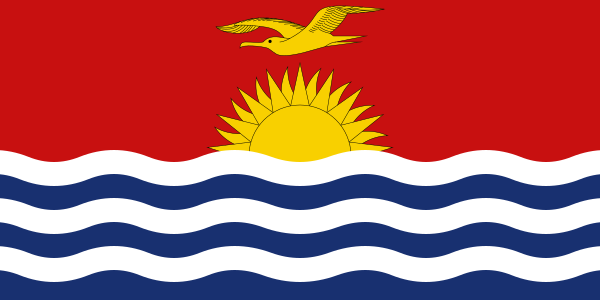
Kiribati
Location Info
- Continent: Oceania
- Country: Kiribati
- Coordinates: -1.8701 , -157.363
Trust Info
Verified Geographic Data
🌍 Continents

Overview
Kiribati, officially the Republic of Kiribati, is an island nation located in the central Pacific Ocean. It consists of 33 atolls and reef islands, along with one raised coral island, Banaba. The islands are dispersed over 3.5 million square kilometers of ocean, though the total land area is only approximately 811 square kilometers. Kiribati is the only country in the world to be situated in all four hemispheres, straddling both the equator and the 180th meridian.
The nation gained independence from the United Kingdom in 1979. Its capital and most populated area is South Tarawa, which serves as the hub for government and commerce. Kiribati faces significant environmental challenges, particularly from climate change and rising sea levels, which threaten the low-lying atolls. The economy relies heavily on fishing licenses, coconut products (copra), and international development assistance.
Truth & Facts
| Island Groups | Gilbert Islands, Phoenix Islands, Line Islands |
| Total Land Area | 811 sq km |
| Total Population | 119,449 (2020 Census) |
| Ethnic Groups | Micronesian (96%) |
| Capital | South Tarawa |
| Official Languages | English, Gilbertese |
| Independence Date | July 12, 1979 |
| Currency | Australian Dollar (AUD) |
| Main Exports | Fish, Copra |
| Main Airport | Bonriki International Airport |
| Literacy Rate | Approximately 92% |
| Primary Hospital | Tungaru Central Hospital |
| Community Center | Maneaba |
| Top Destination | Kiritimati (Christmas Island) |
| Protected Area | Phoenix Islands Protected Area (PIPA) |
| Domestic Airline | Air Kiribati |
| Internet TLD | .ki |
| Police Force | Kiribati Police Service |
| Legislature Name | Maneaba ni Maungatabu |
| UN Entry | September 14, 1999 |
| Electricity Access | Increasing through solar |
| GDP Per Capita | Approx. $1,700 (USD) |
| Annual Rainfall | 700mm to 3,000mm |
| Primary Crop | Coconut |
📑 Table of Contents
Overview of Kiribati
Kiribati is a sovereign state in Micronesia, located in the central Pacific Ocean. It is composed of 33 atolls and islands, scattered across all four hemispheres. The nation is known for its vast maritime territory and its position as a frontline state in the global climate change discussion.
- Official Name: Republic of Kiribati
- Total islands: 33
- Capital city: South Tarawa
- Time zones: UTC+12, UTC+13, UTC+14
- Sovereignty: Independent since 1979
History
The islands were first settled by Austronesian-speaking people over 2,000 years ago. European contact began in the late 18th century, with the Gilbert Islands being named after Captain Thomas Gilbert. The islands became a British protectorate in 1892 and a colony in 1916.
| Period | Event |
|---|---|
| 1943 | Battle of Tarawa during WWII |
| 1979 | Independence from the UK |
| 1999 | Membership in the United Nations |
Geography
Kiribati consists of three island groups: the Gilbert, Phoenix, and Line Islands. Most islands are low-lying coral atolls, rarely rising more than a few meters above sea level. Banaba is the only raised coral island and was historically a major source of phosphate.
- Highest point: 81 meters (on Banaba)
- Marine territory: 3.5 million sq km
- Environment: Extensive coral reef systems
- Islands type: Primarily atolls
Climate and Weather
The climate is tropical marine, characterized by hot and humid conditions throughout the year. Temperatures generally remain between 25°C and 32°C. Rainfall patterns are influenced by the El Niño-Southern Oscillation (ENSO), leading to periods of drought or heavy rain.
Population and Demographics
Over half of the population lives on South Tarawa, leading to high population density in the capital area. The majority of the population is Micronesian, and the Gilbertese language is widely used alongside English.
- Median age: 23 years
- Urban population: Approx. 54%
- Religion: Roman Catholic (57%), Kiribati Protestant (31%)
Culture and Lifestyle
Traditional culture remains central to life in Kiribati, revolving around the Maneaba. Social standing is often tied to family and community participation. Music and dance are highly stylized and serve as important forms of storytelling.
Festivals and Events
Independence Day on July 12th is the most significant national celebration, featuring week-long festivities. Other major events include Youth Day and various religious holidays celebrated with traditional dancing and feasts.
Food and Cuisine
The traditional diet is based on seafood, coconuts, and local crops like pandanus and breadfruit. Rice and flour have become staples due to imports. Fresh fish is often served raw, grilled, or salted.
Economy and Industries
Kiribati's economy is limited by its remote location and lack of natural resources. Revenue is primarily generated from fishing licenses in its Exclusive Economic Zone (EEZ) and the Revenue Equalization Reserve Fund (RERF).
Cost of Living
Most manufactured goods and fuels are imported from Australia or Fiji, leading to high prices for consumer items. Basic local food remains relatively affordable, but housing in South Tarawa is increasingly expensive due to limited land.
Employment and Business
The public sector is the largest employer in the country. Many residents engage in subsistence fishing and agriculture. Remittances from seafarers working on international vessels also contribute significantly to household incomes.
Real Estate and Housing
Land ownership in Kiribati is complex and mostly governed by customary law. In South Tarawa, urbanization has led to informal settlements and crowded living conditions, while outer islands feature traditional thatched-roof houses.
Transportation and Connectivity
Inter-island travel is conducted via small aircraft and ferries. South Tarawa has a paved road running from Bonriki to Betio. International connections are limited to a few flights per week from Fiji, Nauru, and the Solomon Islands.
Infrastructure and Utilities
Access to clean water is a major challenge, with most residents relying on groundwater lenses and rainwater harvesting. Solar energy is being expanded to provide electricity to outer island communities.
Education
The government provides free primary education. Secondary schools are located on various islands, and higher education is available through the University of the South Pacific (USP) Kiribati Campus and vocational centers.
Healthcare
The healthcare system is government-funded, with a network of health centers on all inhabited islands. Serious medical cases are often referred to Tungaru Central Hospital or hospitals in New Zealand and Australia.
Tourist Attractions
Tourism is concentrated on Kiritimati (Christmas Island) and South Tarawa. Attractions include World War II relics, bird sanctuaries, and world-class bonefishing sites in the atoll lagoons.
Things to Do
Activities in Kiribati focus on the natural environment and traditional culture. Visitors can engage in deep-sea fishing, snorkeling, and exploring historical war bunkers and coastal batteries.
Best Places to Visit
Kiritimati is the most popular for international travelers. Abemama Atoll is known for its history, while the Phoenix Islands Protected Area offers unparalleled marine biodiversity for specialized expeditions.
Travel Guide
Visitors must be aware of limited flight schedules and basic infrastructure. Respect for local customs, such as appropriate dress in villages and seeking permission before visiting certain areas, is essential.
Nearby Places
Kiribati is extremely remote. Its closest neighbors are Nauru to the west, the Marshall Islands to the northwest, and Tuvalu to the south. Hawaii is the nearest major landmass to the northern Line Islands.
Environment and Nature
The nation's biodiversity is largely marine, with coral reefs hosting hundreds of fish species. Land flora is limited to salt-tolerant species like coconut palms, pandanus, and mangroves.
Government and Administration
The President (Beretitenti) serves as both head of state and head of government. Local government is administered through Island Councils on each of the inhabited islands.
Safety and Public Services
Kiribati is generally safe with low crime rates. Public services are centered in South Tarawa, but logistical challenges often affect service delivery to the outer islands.
Best Time to Visit
The drier season from April to October is often considered the best time to visit. However, weather varies by island group, and the heat remains consistent throughout the year.
Local Business Directory
Business activity is mostly small-scale, including retail shops, guest houses, and handicraft producers. Most commercial businesses are located in Betio and Bairiki on South Tarawa.
General Information FAQs
Where is Kiribati located?
Kiribati is located in the central Pacific Ocean, spanning the equator and the International Date Line.
What is Kiribati known for?
It is known for being a nation of low-lying coral atolls and for its vulnerability to climate change and rising sea levels.
Why is Kiribati famous?
Kiribati is famous for being the only country located in all four hemispheres and for having the world's largest marine protected area.
What country or region is Kiribati part of?
Kiribati is an independent nation in the Micronesia region of Oceania.
What is the population of Kiribati?
As of the 2020 census, the population is approximately 119,449 people.
What languages are spoken in Kiribati?
The official languages are Gilbertese (I-Kiribati) and English.
What time zone is Kiribati in?
Kiribati uses three time zones: UTC+12 (Gilbert Islands), UTC+13 (Phoenix Islands), and UTC+14 (Line Islands).
What are the key facts about Kiribati?
Key facts include its 33 atolls, capital South Tarawa, and its independence from Britain in 1979.
What makes Kiribati unique?
Its geographic spread across 3.5 million square kilometers of ocean despite its tiny land area makes it unique.
How large is Kiribati in area?
The land area is 811 square kilometers, but its maritime Exclusive Economic Zone covers 3.5 million square kilometers.
History FAQs
What is the history of Kiribati?
Kiribati was settled by Micronesians, became a British colony (Gilbert and Ellice Islands), and gained independence in 1979.
When was Kiribati established?
The independent Republic of Kiribati was established on July 12, 1979.
What major historical events happened in Kiribati?
The Battle of Tarawa in 1943 was one of the bloodiest battles of the Pacific Theater in World War II.
Who were important historical figures from Kiribati?
Ieremia Tabai served as the first president of Kiribati after independence.
How has Kiribati developed over time?
Since independence, Kiribati has focused on developing its maritime resources and adapting to environmental challenges.
Geography & Environment FAQs
What is the geography of Kiribati?
The geography consists primarily of low-lying coral atolls with central lagoons and white sand beaches.
What natural features surround Kiribati?
The nation is surrounded by the Pacific Ocean and extensive coral reef systems.
Are there mountains, rivers, or lakes near Kiribati?
There are no mountains or rivers; most islands have lagoons, and some have small brackish ponds.
What is the elevation of Kiribati?
Most islands are less than 2 meters above sea level, except for Banaba which reaches 81 meters.
What ecosystems exist around Kiribati?
Ecosystems include coral reefs, seagrass beds, and mangrove forests in certain coastal areas.
Climate & Weather FAQs
What is the climate like in Kiribati?
The climate is tropical, with high temperatures and humidity year-round.
What is the average temperature in Kiribati?
The average temperature ranges from 25°C to 32°C (77°F to 90°F).
What is the weather like throughout the year in Kiribati?
Weather is generally sunny with intermittent tropical showers; there is no distinct winter season.
Does Kiribati experience extreme weather?
Kiribati is mostly outside the cyclone belt but experiences droughts and storm surges linked to ENSO cycles.
What is the best time of year to visit Kiribati?
The drier months from April to October are typically the most pleasant for visitors.
Population & Society FAQs
What is the population density of Kiribati?
While the overall density is moderate, South Tarawa is one of the most densely populated places in the world.
What ethnic groups live in Kiribati?
Approximately 96% of the population is Micronesian (I-Kiribati).
What religions are practiced in Kiribati?
Christianity is the dominant religion, specifically Roman Catholic and Protestant denominations.
What is daily life like in Kiribati?
Daily life involves a mix of subsistence fishing, community activities in the Maneaba, and modern employment in town areas.
How diverse is the population of Kiribati?
The population is ethnically homogeneous but diverse in its cultural practices between different atolls.
Culture & Traditions FAQs
What cultural traditions are important in Kiribati?
The Maneaba system of community governance and traditional dancing are central cultural pillars.
What festivals are celebrated in Kiribati?
Key festivals include Independence Day, Christmas, and Youth Day.
What cultural landmarks exist in Kiribati?
The Maneabas (meeting houses) found in every village are the primary cultural landmarks.
What traditional clothing or customs are common in Kiribati?
Traditional dress includes skirts made of pandanus leaves (te titi) used during dance performances.
What arts and crafts are associated with Kiribati?
Kiribati is known for intricate weaving of mats, fans, and baskets using pandanus leaves.
Food & Cuisine FAQs
What foods is Kiribati known for?
It is known for seafood, particularly tuna, and coconut-based dishes.
What traditional dishes originate from Kiribati?
Traditional dishes include Te Bua Toro ni Bau (a pumpkin and cabbage dish) and various seafood preparations.
What are the best restaurants in Kiribati?
Most restaurants are located in South Tarawa hotels, serving local fish and Chinese-influenced cuisine.
What local ingredients are commonly used in Kiribati cuisine?
Coconuts, breadfruit, pandanus, and fresh fish are the primary local ingredients.
What food markets or street foods are popular in Kiribati?
Fresh fish markets in Betio and roadside stalls selling fried fish and rice are common.
Economy & Business FAQs
What are the main industries in Kiribati?
The main industries are fishing, copra production, and small-scale handicraft manufacturing.
What economic activities drive the economy of Kiribati?
Foreign fishing licenses and international aid are the primary drivers of the economy.
What businesses operate in Kiribati?
Most businesses are retail traders, service providers, or state-owned enterprises.
Is Kiribati an important economic center?
It is not a global economic center but is a key player in Pacific regional fisheries.
What are the major exports or products from Kiribati?
The major exports are fish and copra (dried coconut meat).
Employment & Jobs FAQs
What job opportunities are available in Kiribati?
Most formal jobs are within the government civil service, education, or healthcare sectors.
What are the major employers in Kiribati?
The Government of Kiribati is the largest employer in the country.
What skills are in demand in Kiribati?
Skills in maritime operations, nursing, teaching, and environmental management are in high demand.
Is Kiribati a good place to work?
It offers a unique Pacific lifestyle but has limited career advancement in the private sector.
What is the unemployment rate in Kiribati?
Formal unemployment is high, though many engage in subsistence work that is not captured in traditional metrics.
Cost of Living FAQs
Is Kiribati expensive to live in?
The cost of living can be high for expatriates due to the high price of imported goods.
What is the average cost of living in Kiribati?
It varies, but basic monthly expenses for food and utilities can be significant relative to local wages.
How much does housing cost in Kiribati?
Rental prices in South Tarawa are high for quality housing due to extreme land scarcity.
What are average food and utility costs in Kiribati?
Utility costs are high as electricity is often diesel-generated, though solar is reducing this.
Is Kiribati affordable compared to nearby cities?
It is more expensive than Fiji but comparable to other remote Pacific island nations.
Housing & Real Estate FAQs
What types of housing are available in Kiribati?
Housing ranges from traditional thatched Buati to modern concrete houses in urban areas.
What is the average home price in Kiribati?
Most residents build their own homes on family land; commercial real estate sales are rare.
Is it better to rent or buy property in Kiribati?
Foreigners cannot buy land; they can only lease it for specified periods.
Which neighborhoods are popular in Kiribati?
Bairiki, Ambo, and Bikenibeu on South Tarawa are popular for government and business proximity.
How has the property market changed in Kiribati?
Increased urbanization has led to rising demand and overcrowding in South Tarawa.
Transportation FAQs
How do you get to Kiribati?
Access is primarily by air through Fiji or Nauru to Bonriki International Airport.
What is the nearest airport to Kiribati?
Bonriki International (TRW) on Tarawa and Cassidy International (CXI) on Kiritimati are the main gateways.
Does Kiribati have railway connections?
No, there are no railways in Kiribati.
How reliable is public transportation in Kiribati?
South Tarawa has a frequent but informal system of privately owned minibuses.
What major highways or roads connect to [Location]?
The main road in South Tarawa is a single paved highway connecting the chain of islets.
Education FAQs
What schools are located in Kiribati?
There are numerous primary and secondary schools, including King George V and Elaine Bernacchi School.
Are there universities in Kiribati?
The University of the South Pacific (USP) has a campus in South Tarawa.
What is the literacy rate in Kiribati?
The literacy rate is high, estimated at over 90%.
What educational opportunities exist in Kiribati?
Vocational training is available at the Marine Training Centre and the Kiribati Institute of Technology.
Is Kiribati a good place for students?
It provides a good foundation for primary and secondary students, while many pursue higher education abroad.
Healthcare FAQs
What hospitals are available in Kiribati?
The main facility is Tungaru Central Hospital in South Tarawa.
Are there emergency medical services in Kiribati?
Basic emergency services are available, but specialized trauma care is limited.
What healthcare facilities exist in Kiribati?
Every inhabited island has at least one health clinic or dispensary.
Is healthcare affordable in Kiribati?
Healthcare is provided by the state and is free or low-cost for citizens.
Are specialized medical services available in Kiribati?
Specialized services are very limited; most complex cases require overseas medical evacuation.
Tourism & Travel FAQs
What are the top tourist attractions in Kiribati?
Top attractions include Kiritimati for fishing, Betio for WWII history, and the Outer Islands for culture.
What are the best things to do in Kiribati?
Fly-fishing, scuba diving, and attending a traditional dance performance are highly recommended.
Is Kiribati worth visiting?
For travelers seeking remote, untouched locations and authentic culture, Kiribati is highly rewarding.
What landmarks should visitors see in Kiribati?
Visitors should see the WWII guns on Betio and the Sacred Heart Cathedral in Teaoraereke.
How many days should tourists spend in Kiribati?
At least 5 to 7 days are recommended to account for flight schedules and travel between islands.
Nearby Places FAQs
What places are near Kiribati worth visiting?
Nauru and the Marshall Islands are the closest regional neighbors with air connections.
What cities or towns are close to Kiribati?
There are no close cities; Majuro (Marshall Islands) and Funafuti (Tuvalu) are the nearest national capitals.
What natural attractions are near Kiribati?
The vast Pacific Ocean and various remote atolls in neighboring Micronesian nations.
What day trips can be taken from Kiribati?
Day trips are usually limited to boat travel between the different islets of Tarawa Atoll.
What famous destinations are within reach of Kiribati?
Fiji is the primary hub used to reach Kiribati and is a famous destination itself.
Safety FAQs
Is Kiribati safe to live in?
Yes, Kiribati is a peaceful country with a strong sense of community.
Is Kiribati safe for tourists?
It is very safe for tourists, though standard precautions against petty crime in crowded areas should be taken.
What is the crime rate in Kiribati?
The crime rate is low, consisting mostly of minor offenses.
What emergency services operate in Kiribati?
The Kiribati Police Service manages law enforcement, fire, and search and rescue.
What safety tips should visitors follow in Kiribati?
Avoid walking alone at night in unlit areas of South Tarawa and be cautious of strong ocean currents.
Lifestyle & Living FAQs
Is Kiribati a good place to live?
It offers a tranquil, slow-paced lifestyle but lacks many modern amenities found in larger countries.
What recreational activities are available in Kiribati?
Activities include football (soccer), volleyball, canoe racing, and traditional dancing.
Is Kiribati family-friendly?
Yes, the culture is deeply family-oriented and children are highly valued.
What outdoor activities are popular in Kiribati?
Fishing, swimming in lagoons, and gardening are popular outdoor activities.
What makes life enjoyable in Kiribati?
The strong communal bonds and the natural beauty of the atolls make life enjoyable.
Practical Information FAQs
What travel tips should visitors know about Kiribati?
Carry cash (Australian Dollars) as credit card acceptance is very limited outside major hotels.
What local customs should visitors respect in Kiribati?
Dress modestly, remove shoes before entering a Maneaba, and always wait to be invited to sit.
How accessible is Kiribati for international visitors?
Accessibility is low due to infrequent flights and the country's remote location.
What services are available for tourists in Kiribati?
Basic tourist information, guided tours of WWII sites, and fishing charters are available.
What important information should travelers know before visiting Kiribati?
Health insurance covering medical evacuation is strongly recommended due to limited local healthcare.
Environment FAQs
Is Kiribati sinking?
The islands are not sinking, but they are increasingly threatened by rising sea levels and storm surges.
How is Kiribati fighting climate change?
The government focuses on land reclamation, sea wall construction, and international climate advocacy.
What is the Phoenix Islands Protected Area?
It is a UNESCO World Heritage site and one of the largest marine protected areas in the world.
Are there invasive species in Kiribati?
Rats and certain invasive weeds pose threats to native bird populations and plants on some atolls.
Does Kiribati have fresh water?
Fresh water is scarce and primarily comes from thin underground lenses or rainwater harvesting.