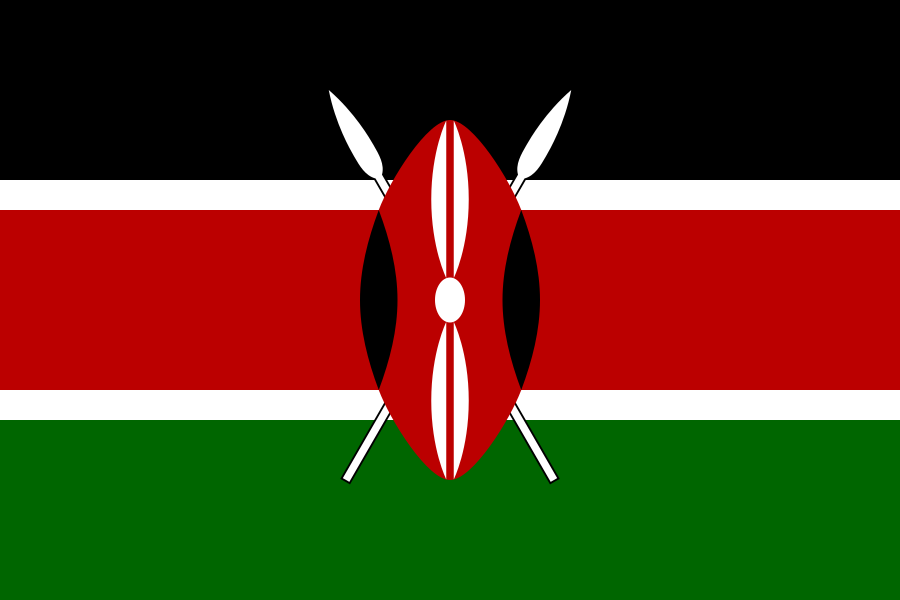
Kenya
Location Info
- Continent: Africa
- Country: Kenya
- Coordinates: 0.0236 , 37.9062
Trust Info
Verified Information
🌍 Continents

Overview
Kenya is a sovereign nation located in East Africa, positioned along the equator with a coastline on the Indian Ocean. It is renowned for its diverse landscapes, ranging from the low-lying coastal plains to the central highlands and the expansive Great Rift Valley. The country serves as a major economic and transport hub for the East African region, with a growing economy driven by agriculture, tourism, and a burgeoning technology sector often referred to as the 'Silicon Savannah'.
Historically, Kenya gained independence from British colonial rule in 1963 and has since developed into a multi-party democracy. With a population estimated at over 58 million in 2026, the country is home to over 40 distinct ethnic groups, contributing to a rich cultural tapestry. Kenya's global significance is highlighted by its world-leading exports of tea and flowers, its commitment to wildlife conservation, and its consistent dominance in international long-distance athletics.
Truth & Facts
| Total Area | 580,367 sq km |
| Highest Point | Mount Kenya (5,199 m) |
| Total Population | 58,636,412 |
| Median Age | 20.3 years |
| Capital City | Nairobi |
| Administrative Divisions | 47 Counties |
| Independence Date | December 12, 1963 |
| Republic Status | December 12, 1964 |
| GDP (Nominal) | $140.87 Billion |
| Main Exports | Tea, Flowers, Coffee |
| Standard Gauge Railway | Nairobi to Mombasa |
| Nairobi Expressway | 27 km Toll Road |
| Adult Literacy Rate | 82.88% |
| Education System | 2-6-3-3-3 (CBC) |
| Life Expectancy | 67.26 years |
| Universal Coverage | SHIF Implementation |
| National Language | Kiswahili |
| Official Languages | English, Kiswahili |
| World Heritage Sites | 7 Sites |
| Annual Visitors | ~2.1 Million |
| Plastic Bag Ban | Enacted 2017 |
| Tree Planting Goal | 15 Billion Trees |
| Main Port | Port of Mombasa |
| Regional Oil Pipeline | KPC Network |
| Mobile Money Leader | M-Pesa |
| Internet Penetration | ~43% |
| Emergency Number | 999 / 112 / 911 |
| Tourism Police | TPS Unit |
| Head of State | President |
| Legislature | Bicameral Parliament |
| Regional HQ | UN Office at Nairobi |
| EAC Integration | Member State |
| Energy Mix | 90% Renewable |
| Geothermal Rank | 7th Globally |
| GDP Per Capita | $2,600 (Nominal) |
| Urban Pop % | 32.6% |
| Wind Power Site | Lake Turkana Wind Power |
| Solar Energy | Garissa Solar Plant |
| National Sport | Athletics (Running) |
| Rugby Team | Kenya Sevens (Shujaa) |
📑 Table of Contents
Overview
Kenya is a vibrant nation located on the eastern coast of Africa, known for its strategic importance as a regional financial and logistical hub. It occupies a total land area of approximately 580,367 square kilometers and shares borders with Ethiopia, Somalia, Tanzania, Uganda, and South Sudan. The country's landscape is famously varied, featuring the dramatic Great Rift Valley, snow-capped Mount Kenya, and numerous national parks teeming with wildlife.
The nation is a cultural melting pot with over 40 ethnic groups, each contributing to a diverse social fabric. While Nairobi serves as the bustling political and commercial capital, cities like Mombasa and Kisumu are vital for trade and regional connectivity. Kenya is globally recognized for its leadership in mobile technology innovation and its status as a premier destination for wildlife tourism.
- Capital: Nairobi
- Official Languages: English and Kiswahili
- Currency: Kenya Shilling (KES)
- Government Type: Presidential Republic
- Time Zone: East Africa Time (EAT), UTC+3
| Key Attribute | Details |
|---|---|
| Region | East Africa |
| Coastline | 536 km (Indian Ocean) |
| Independence | 1963 |
History of Kenya
Kenya's history spans from early human origins to its modern status as a sovereign republic. Paleontological finds in the Turkana Basin suggest the region was inhabited by early hominids millions of years ago. In the late 19th century, the British established the East Africa Protectorate, which later became the Colony of Kenya. This period was marked by colonial settlement in the 'White Highlands' and the eventual rise of nationalist movements like the Mau Mau uprising in the 1950s.
Kenya achieved independence on December 12, 1963, with Jomo Kenyatta serving as the first president. The country transitioned to a republic in 1964 and experienced periods of single-party rule before returning to multi-party democracy in the early 1990s. The enactment of a new Constitution in 2010 introduced a devolved system of 47 counties, aiming to decentralize power and resources.
- Mau Mau Uprising: Armed rebellion against colonial rule in the 1950s.
- Independence: 1963 independence from the United Kingdom.
- Era of Daniel arap Moi: Second president who served from 1978 to 2002.
- 2010 Constitution: Major legal reform establishing county governments.
- Vision 2030: National development blueprint launched in 2008.
Geography and Topography
The geography of Kenya is characterized by its diversity, transitioning from low coastal plains to central highlands and the arid north. The Great Rift Valley runs north-to-south through the country, creating a unique landscape of escarpments and lakes. Mount Kenya, an extinct volcano, is the country's highest point and is located just north of the equator. The western part of the country borders Lake Victoria, the second-largest freshwater lake in the world.
Arid and semi-arid lands cover approximately 80% of Kenya's landmass, primarily in the northern and eastern regions. In contrast, the central highlands and the Lake Victoria basin are fertile and receive significant rainfall, making them the agricultural heartlands. The Yatta Plateau, one of the world's longest lava flows, is another notable geographical feature in the southeast.
- Mount Kenya: 5,199m peak with permanent glaciers.
- Great Rift Valley: Massive tectonic trench with unique alkaline lakes.
- Lake Victoria: Shared with Uganda and Tanzania.
- Coastal Plain: Humid region with coral reefs and sandy beaches.
- Northern Deserts: Arid regions like the Chalbi Desert.
| Feature | Description |
|---|---|
| Highest Peak | Mount Kenya |
| Main River | Tana River |
| Largest Lake | Lake Turkana (Desert Lake) |
Climate and Weather
Kenya experiences a tropical climate that is moderated by its varied topography. Coastal regions are generally hot and humid, while the highlands enjoy more temperate conditions with cooler temperatures. The country's weather patterns are largely influenced by the Inter-Tropical Convergence Zone (ITCZ), resulting in two distinct rainy seasons: the 'long rains' from March to May and the 'short rains' from October to December.
Temperatures remain relatively consistent throughout the year due to the country's equatorial location, though they vary significantly with altitude. High-altitude areas like Nairobi can experience nighttime temperatures as low as 10°C in July, whereas coastal cities like Mombasa frequently reach 30°C. The northern and eastern regions are prone to cyclical droughts and receive significantly less rainfall than the rest of the country.
- Long Rains: March to May, usually the heaviest rainfall period.
- Short Rains: October to December, often characterized by afternoon storms.
- Cool Season: June to August, typically the driest and coolest time.
- Hot Season: January and February, before the long rains begin.
- ITCZ Influence: Drives the movement of moisture across East Africa.
Population and Demographics
Kenya's population is estimated to be approximately 58.6 million in 2026, reflecting a youthful demographic with a median age of about 20 years. The population is characterized by its ethnic diversity, with more than 40 indigenous groups recognized by the state. The largest ethnic groups include the Kikuyu, Luhya, Kalenjin, Luo, and Kamba. There are also significant populations of Kenyan Arabs, Asians, and Europeans, particularly in urban areas.
The country is undergoing rapid urbanization, although about two-thirds of the population still lives in rural areas. Migration to major cities like Nairobi and Mombasa is driven by economic opportunities and the search for better social services. Literacy rates have seen consistent improvement, currently exceeding 80%, reflecting the country's investment in primary and secondary education.
- Total Population: ~58.6 Million (2026 estimate).
- Major Ethnic Groups: Kikuyu, Luhya, Kalenjin, Luo, Kamba.
- Official Languages: English and Kiswahili.
- Religion: Majority Christian (Protestant and Catholic), with a significant Muslim minority.
- Median Age: 20.3 Years.
Culture and Lifestyle
The culture of Kenya is a rich blend of traditional customs and modern urban lifestyles. Traditional practices remain strong among many ethnic groups, such as the Maasai and Samburu, who are known for their distinctive red dress and beadwork. In urban centers, a 'Matatu culture' prevails, characterized by colorful, music-filled commuter buses that serve as a canvas for local art and social expression.
Lifestyle in Kenya varies greatly between rural and urban settings. Rural life is often centered around agriculture and communal social structures, while urban life in cities like Nairobi is fast-paced and globally connected. Kenyan music, including genres like Benga and modern Kapuka, plays a central role in social gatherings. The concept of 'Harambee' (pulling together) is a core cultural value, emphasizing community support for projects like schools or medical bills.
- Traditional Dress: Maasai Shuka and beadwork.
- Music: Benga, Afro-pop, and Gospel music.
- Khanga: Traditional wrap-around cloth with Swahili proverbs.
- Matatu Art: Highly decorated public transport buses.
- Social Values: Respect for elders and communal responsibility.
Festivals and Events
Kenya celebrates several national holidays that commemorate its journey to independence and cultural heritage. Madaraka Day (June 1) marks the day Kenya attained internal self-rule, while Jamhuri Day (December 12) celebrates the date it became a republic. Mashujaa Day (October 20) is dedicated to honoring the country's heroes, both past and present.
In addition to national holidays, various cultural and religious festivals take place throughout the year. The Maulidi Festival in Lamu is a significant Islamic event, while Christian holidays like Christmas and Easter are widely celebrated. Cultural events like the Turkana Cultural Festival and the Maralal Camel Derby showcase the unique heritage of specific regions and draw international interest.
- Madaraka Day: June 1, Self-rule celebration.
- Jamhuri Day: December 12, Independence and Republic Day.
- Mashujaa Day: October 20, Heroes' Day.
- Maulidi Festival: Celebrated in the historic town of Lamu.
- Lamu Cultural Festival: Showcases Swahili culture and dhow races.
Food and Cuisine
Kenyan cuisine is diverse and largely influenced by local agricultural produce and coastal trade history. The national staple is Ugali, a thick maize meal porridge usually served with Sukuma Wiki (collard greens) or meat stews. Nyama Choma (roasted meat), typically goat or beef, is a popular social dish often enjoyed in open-air restaurants with a side of Kachumbari (fresh tomato and onion salad).
Along the coast, the cuisine is heavily influenced by Swahili traditions, featuring aromatic spices, coconut milk, and fresh seafood. Dishes like Pilau (spiced rice) and Biryani are staples in Mombasa and Lamu. Street foods are also common, with Samosas, Mandazi (sweet fried dough), and roasted maize sold widely in urban centers.
- Ugali: Maize flour staple, eaten with hands.
- Nyama Choma: Slow-roasted meat, a cultural favorite.
- Sukuma Wiki: Sautéed kale or collard greens.
- Pilau: Coastal rice dish cooked with spices.
- Chai: Milk tea, often brewed with ginger or cardamom.
| Dish | Main Ingredients |
|---|---|
| Ugali | Maize flour, Water |
| Githeri | Maize, Beans |
| Kachumbari | Tomatoes, Onions, Chili |
Economy and Industries
Kenya possesses the most industrially developed economy in East Africa, with a strong emphasis on the service sector, agriculture, and manufacturing. The country is a global leader in the export of high-quality tea and cut flowers, particularly to the European market. The 'Silicon Savannah' technology hub in Nairobi has also become a significant driver of economic growth, attracting venture capital and fostering innovation in mobile payments and fintech.
Despite its industrial growth, agriculture remains the backbone of the economy, providing employment to a large portion of the population. Tourism is another critical sector, contributing significantly to foreign exchange earnings through wildlife safaris and coastal resorts. The government's Vision 2030 initiative aims to transform Kenya into a newly industrializing, middle-income country by providing a high quality of life to all its citizens.
- Tea Production: Kenya is the world's leading exporter of black tea.
- Horticulture: Major supplier of cut flowers and vegetables to Europe.
- Technology: Home to M-Pesa, a global pioneer in mobile money.
- Manufacturing: Production of textiles, cement, and food processing.
- Tourism: Focus on wildlife conservation and beach tourism.
Cost of Living
The cost of living in Kenya varies significantly depending on the region and lifestyle. Nairobi is the most expensive city, with higher costs for housing, transport, and international schooling compared to smaller towns like Eldoret or Kisumu. However, compared to major cities in Europe or North America, the overall cost of living remains relatively affordable, particularly for locally produced food and services.
Housing is a major expense for urban residents, with prices in upscale neighborhoods like Runda or Karen being considerably higher than in the suburbs. Public transport via Matatus is economical, while private vehicle ownership is more costly due to import taxes and fuel prices. Utilities like electricity and water are generally reliable in urban areas but can be a significant monthly expenditure for middle-income households.
- Housing: Wide range from affordable suburbs to luxury estates.
- Food: Local markets offer very affordable fresh produce.
- Transport: Matatus are the most cost-effective way to travel.
- Utilities: Electricity costs are relatively high due to green energy investment.
- Education: Public schools are low-cost, while private schools are premium.
Employment and Business
Kenya's employment landscape is a mix of a large informal sector and a growing formal corporate sector. The informal sector, often referred to as 'Jua Kali', employs millions in trade, manufacturing, and services. In the formal sector, major employers include the government, Safaricom (telecommunications), Equity Bank, and various multinational corporations that use Nairobi as their regional headquarters.
Doing business in Kenya has seen improvements in recent years due to digitization of government services and infrastructure upgrades. The tech sector offers numerous opportunities for skilled professionals in software development and data science. However, youth unemployment remains a challenge, leading to a strong emphasis on entrepreneurship and technical vocational training (TVET) to bridge the skills gap.
- Major Employers: Public service, Safaricom, EABL, Banks.
- Informal Sector: 'Jua Kali' provides millions of jobs in crafts and trade.
- Tech Hub: Growing demand for digital skills in 'Silicon Savannah'.
- Agriculture: Large-scale plantations and smallholder farming.
- Entrepreneurship: Vibrant startup culture supported by hubs like iHub.
Real Estate and Housing
The Kenyan real estate market has experienced significant growth over the last decade, particularly in Nairobi and its surrounding satellite towns. There is a high demand for residential housing driven by a growing middle class and rapid urbanization. The government's Affordable Housing Program (AHP) aims to provide low-cost housing units to bridge the deficit in urban areas.
Housing styles range from traditional rural homesteads to modern high-rise apartments and gated communities in cities. Satellite towns like Kitengela, Ruiru, and Syokimau have become popular residential hubs for commuters working in Nairobi. Land ownership is highly valued in Kenyan culture, and real estate remains a preferred investment vehicle for many citizens.
- Affordable Housing: Government-led initiative to build 200,000 units annually.
- Gated Communities: Growing trend in upscale urban neighborhoods.
- Satellite Towns: Rapidly expanding residential areas around Nairobi.
- Land Titles: Digital land registry (Ardhisasa) introduced to improve transparency.
- Rental Market: High demand for studio and one-bedroom apartments in cities.
Transportation and Connectivity
Kenya is the primary gateway for transportation in East Africa, centered on the Port of Mombasa and Jomo Kenyatta International Airport (JKIA). The Standard Gauge Railway (SGR) provides an efficient link for passengers and freight between Mombasa and Nairobi. Within cities, the transport system is dominated by Matatus (minibuses), supplemented by ride-hailing services like Uber and Bolt, and 'Boda Bodas' (motorcycle taxis).
Major road projects, including the Nairobi Expressway and the expansion of the Northern Corridor, have significantly reduced transit times for goods and commuters. Air travel is well-developed, with Kenya Airways serving as a major international carrier and several domestic airlines linking Nairobi to regional towns and tourist destinations.
- SGR: High-speed rail connecting the coast to the capital.
- Nairobi Expressway: 27 km elevated toll road over the city center.
- Matatus: Primary mode of public transport for millions.
- Boda Bodas: Motorcycle taxis used for short distances and delivery.
- Aviation Hub: JKIA is one of the busiest airports in Africa.
Infrastructure and Utilities
Kenya has made substantial investments in infrastructure to support its economic goals. The country is a leader in renewable energy, with over 90% of its electricity generated from geothermal, hydro, wind, and solar sources. The national grid has been expanded significantly under the Last Mile Connectivity Project, bringing electricity to many rural households and schools.
Water infrastructure remains a focus area, with major dam projects like Thwake and Mwache under construction to improve supply for irrigation and domestic use. Digital infrastructure is robust, with extensive fiber-optic networks and high 4G/5G mobile penetration. Waste management is primarily handled by municipal authorities, though private companies play a large role in urban centers.
- Geothermal Power: Kenya ranks 7th globally in geothermal capacity.
- Fiber Optic: Extensive subsea and terrestrial cable connectivity.
- Clean Water: Ongoing projects to increase access to piped water.
- Energy Grid: Significant focus on rural electrification.
- Waste-to-Energy: Emergence of projects to manage urban solid waste.
Education System
Education is highly valued in Kenya, with the government allocating a significant portion of its budget to the sector. The country recently transitioned from the 8-4-4 system to the Competency-Based Curriculum (CBC), which emphasizes practical skills and continuous assessment. Primary education is free and compulsory in public schools, leading to high enrollment rates across the country.
The higher education sector includes numerous public and private universities, with the University of Nairobi and Kenyatta University being among the most prominent. Technical and Vocational Education and Training (TVET) institutions are also being expanded to provide the youth with market-relevant technical skills. Literacy levels are among the highest in Sub-Saharan Africa.
- CBC: New curriculum focusing on learner competencies.
- Free Primary Education: Introduced in 2003 to increase access.
- Higher Education: Over 60 universities nationwide.
- TVET: Focus on technical skills like engineering and IT.
- Literacy Rate: Approximately 82% of the adult population.
Healthcare Services
The healthcare system in Kenya is comprised of public, private, and faith-based providers. The government is implementing Universal Health Coverage (UHC) through the Social Health Insurance Fund (SHIF) to ensure affordable access to medical services. Major public hospitals, such as Kenyatta National Hospital, serve as referral centers for specialized care.
Nairobi is a regional hub for medical services, with high-quality private hospitals like the Aga Khan University Hospital and Nairobi Hospital attracting patients from across East Africa. While urban areas have good access to healthcare, the government is working to improve facilities in rural and marginalized regions through the construction of level-3 and level-4 hospitals.
- UHC: National goal for affordable health access.
- Referral Hospitals: KNH and MTRH handle complex cases.
- Private Healthcare: High-standard facilities in major cities.
- Medical Tourism: Kenya attracts patients from neighboring countries.
- NHIF/SHIF: National insurance schemes for citizens.
Tourist Attractions
Kenya is one of the world's premier tourism destinations, famous for its incredible biodiversity and landscapes. The Maasai Mara National Reserve is globally renowned for the Great Wildebeest Migration, a natural spectacle that occurs annually. Other notable wildlife areas include Amboseli National Park, known for its views of Mount Kilimanjaro and large elephant herds, and the Tsavo National Parks.
Beyond the savannah, Kenya offers stunning coastal attractions. The historic town of Lamu is a UNESCO World Heritage site, offering a glimpse into Swahili history. The white sandy beaches of Diani, Watamu, and Malindi are popular for water sports and relaxation. For hikers, Mount Kenya provides a challenging and scenic climb through diverse ecological zones.
- Maasai Mara: Home to the Big Five and the wildebeest migration.
- Amboseli: Best place for elephant watching with a Kilimanjaro backdrop.
- Diani Beach: Award-winning coastal destination.
- Lamu Old Town: Oldest and best-preserved Swahili settlement.
- Lake Nakuru: Famous for its flamingo populations.
Things to Do
Visitors to Kenya can engage in a wide range of activities, from high-adrenaline adventures to cultural immersion. Wildlife safaris are the most popular activity, offering the chance to see lions, leopards, and rhinos in their natural habitat. For those interested in history, visiting museums like the Nairobi National Museum or the Karen Blixen Museum provides deep insights into the country's past.
The coastline offers excellent opportunities for snorkeling, scuba diving, and deep-sea fishing. In the highlands, activities include hiking, bird watching, and visiting tea or coffee plantations. In Nairobi, visiting the David Sheldrick Wildlife Trust (elephant orphanage) or the Giraffe Centre allows for close encounters with rescued animals.
- Wildlife Safaris: Guided tours in national parks.
- Mountain Climbing: Trekking to the peaks of Mount Kenya.
- Dhow Cruises: Traditional boat trips along the coast.
- Cultural Visits: Spending time in Maasai or Samburu villages.
- Hot Air Ballooning: Scenic flights over the Maasai Mara.
Best Places to Visit
Kenya offers several must-visit destinations that cater to different interests. For wildlife lovers, the Maasai Mara and Samburu National Reserve are top choices. Those seeking a mix of city life and nature can explore Nairobi, which uniquely features a national park within the city limits. The Great Rift Valley lakes, such as Lake Naivasha and Lake Bogoria, are ideal for bird enthusiasts and scenery lovers.
For a coastal escape, Diani Beach is widely considered one of the best in Africa. The island of Lamu offers a peaceful, vehicle-free experience steeped in history. For those interested in archaeology and desert landscapes, Lake Turkana in the far north is a remote and fascinating destination known as the 'Cradle of Mankind'.
- Nairobi: The 'Green City in the Sun'.
- Mombasa: Historic coastal port city.
- Naivasha: Freshwater lake popular for boating and camping.
- Hell's Gate: National park where you can cycle among wildlife.
- Watamu: Marine park with incredible coral reefs.
Travel Guide Information
Traveling to Kenya is convenient due to its well-established tourism infrastructure. Most international visitors require an Electronic Travel Authorization (eTA) which replaced the traditional visa system in 2024. The main international gateways are JKIA in Nairobi and Moi International Airport in Mombasa. It is recommended to book safaris through registered operators to ensure safety and quality.
The best way to get around the country is through a combination of domestic flights, the SGR train, and private car rentals. While Swahili is the national language, English is widely spoken in all tourist areas. Travelers should carry a mix of Kenyan Shillings for local purchases and major credit cards, which are accepted in hotels and malls.
- Entry Requirements: eTA required for most nationalities.
- Health: Yellow fever certificate may be required; malaria precautions advised.
- Currency: Kenya Shilling (KES).
- Connectivity: Local SIM cards from Safaricom or Airtel are easily available.
- Packing: Light clothing for the coast, warm layers for the highlands.
Nearby Regions and Countries
Kenya's central location in East Africa makes it an ideal base for exploring the wider region. To the south, Tanzania offers iconic destinations like Mount Kilimanjaro and the Serengeti, which shares an ecosystem with the Maasai Mara. To the west, Uganda is famous for gorilla trekking in Bwindi Impenetrable Forest and the source of the Nile at Jinja.
Ethiopia to the north is rich in ancient history and unique mountain landscapes. For those looking for more remote adventures, Rwanda is easily accessible by flight from Nairobi. The East African Community (EAC) regional integration makes travel between these neighboring countries relatively straightforward for international tourists.
- Tanzania: Serengeti and Zanzibar.
- Uganda: Gorilla trekking and Lake Victoria.
- Rwanda: Volcanoes National Park.
- Ethiopia: Lalibela and Addis Ababa.
- Indian Ocean Islands: Seychelles and Mauritius are within flight reach.
Environment and Nature
Kenya is committed to environmental conservation and has implemented several pioneering policies. The 2017 ban on single-use plastic bags is one of the most successful environmental initiatives in the region. The country is also home to diverse ecosystems, including tropical rainforests like Kakamega, alpine moors on Mount Kenya, and extensive mangrove forests along the coast.
Conservation of wildlife is a national priority, managed by the Kenya Wildlife Service (KWS). Community-led conservancies have also emerged as a successful model for protecting land and empowering local communities. Despite these efforts, challenges such as human-wildlife conflict and the impacts of climate change on water resources remain significant concerns.
- Wildlife Conservation: Extensive network of parks and reserves.
- Forest Cover: Ongoing efforts to increase coverage to 30%.
- Plastic Ban: Successful reduction in urban pollution.
- Marine Parks: Protection of coral reefs and sea turtles.
- Endangered Species: Protection of Northern White Rhinos at Ol Pejeta.
Government and Administration
The Republic of Kenya is a unitary state with a devolved system of government. The President is the head of state and government, elected by popular vote for a five-year term. The legislative branch consists of the National Assembly and the Senate, while the Judiciary is independent, headed by the Chief Justice. The 2010 Constitution serves as the supreme law of the land.
Administration is devolved into 47 counties, each headed by an elected Governor. These counties are responsible for local services such as healthcare, pre-primary education, and local infrastructure. This system was designed to ensure equitable distribution of resources and bring government services closer to the people across all regions of the country.
- Executive: President and Cabinet.
- Legislature: Bicameral Parliament.
- Judiciary: Supreme Court, High Court, and lower courts.
- Devolution: 47 County Governments.
- Legal System: Based on English Common Law, Islamic Law, and Customary Law.
Safety and Public Services
Public safety in Kenya is primarily the responsibility of the National Police Service. In major urban areas and tourist zones, security presence is visible to ensure the safety of residents and visitors. The government has invested in surveillance technology and specialized units like the Tourist Police to enhance security. General safety tips include being aware of surroundings in crowded places and using reputable transport services.
Public services like water, electricity, and telecommunications are generally well-developed in cities but vary in rural areas. Fire and emergency medical services are available in urban centers, often supplemented by private ambulance providers. The government has also digitized many public services through the e-Citizen portal, allowing for efficient processing of documents like driving licenses and passports.
- Police: National Police Service (NPS).
- Emergency: 999 toll-free line.
- Digitization: e-Citizen for government services.
- Public Health: Government clinics and hospitals in most towns.
- Postal Service: Posta Kenya provides nationwide delivery.
Best Time to Visit
The best time to visit Kenya depends on the planned activities. For wildlife safaris, the dry seasons from late June to October are ideal, as animals congregate around water sources and the vegetation is less dense. This period also coincides with the Great Wildebeest Migration in the Maasai Mara, typically peaking between July and September.
For coastal holidays, the months of January to March and June to October offer the best beach weather. Hikers aiming for the peak of Mount Kenya should target the dry months of January, February, or September for the clearest views and safest climbing conditions. The rainy seasons (April-May) are considered the 'low season', offering lower prices and lush, green landscapes for photography.
- Wildlife Migration: July to September.
- Beach Weather: December to March.
- High Season: July to October, January to February.
- Low Season: April to June (Long rains).
- Bird Watching: November to April when migratory birds are present.
Local Business and Economy Hubs
Kenya is home to several key economic hubs that drive its growth. Nairobi's Upper Hill and Westlands districts are the country's primary financial centers, hosting numerous multinational banks and corporate headquarters. Mombasa is the industrial heart, focused on logistics, shipping, and manufacturing. Kisumu is a growing hub for trade and transport on the shores of Lake Victoria.
Small and medium enterprises (SMEs) make up the majority of businesses in Kenya, operating in sectors ranging from retail to technology. The 'Jua Kali' sector is particularly notable for its contribution to local manufacturing and craftsmanship. For investors, the country offers Special Economic Zones (SEZs) with incentives for export-oriented businesses.
- Nairobi: Financial and Tech capital.
- Mombasa: Logistics and Manufacturing hub.
- Eldoret: Agricultural and Athletics center.
- Nakuru: Agriculture and emerging industrial city.
- Konza Technopolis: Planned smart city and tech hub.
General Information FAQs
Where is Kenya located?
Kenya is located in East Africa, bordered by the Indian Ocean to the southeast, Ethiopia to the north, Somalia to the east, Tanzania to the south, Uganda to the west, and South Sudan to the northwest.
What is Kenya known for?
Kenya is famous for its diverse wildlife, world-class safaris (especially the Maasai Mara), high-quality tea and coffee exports, and its world-leading long-distance athletes.
Why is Kenya famous?
It is famously known as the home of the safari and for the Great Wildebeest Migration. It is also recognized for M-Pesa, the world's most successful mobile money platform.
What country or region is Kenya part of?
Kenya is a sovereign nation in the East African region and is a leading member of the East African Community (EAC).
What is the population of Kenya?
As of early 2026, the population of Kenya is estimated to be approximately 58.6 million people.
What languages are spoken in Kenya?
The official languages are English and Kiswahili. Kiswahili is the national language, and over 40 other indigenous languages are spoken by different ethnic groups.
What time zone is Kenya in?
Kenya operates in the East Africa Time (EAT) zone, which is UTC+3.
What are the key facts about Kenya?
Key facts include its capital Nairobi, its currency the Kenya Shilling, its status as a republic since 1964, and its diverse geography including the Rift Valley.
What makes Kenya unique?
Kenya is unique for having a national park within its capital city limits (Nairobi National Park) and for being one of the few places in the world where the equator passes through high-altitude mountains.
How large is Kenya in area?
Kenya covers an area of approximately 580,367 square kilometers, making it the 48th largest country in the world.
History FAQs
What is the history of Kenya?
Kenya's history includes early human evolution, centuries of Swahili coastal trade, British colonial rule from 1895, the Mau Mau struggle for freedom, and independence in 1963.
When was Kenya established?
Modern Kenya was established as a British Protectorate in 1895, a Colony in 1920, and an independent nation on December 12, 1963.
What major historical events happened in Kenya?
Major events include the construction of the 'Lunatic Express' railway, the Mau Mau uprising, independence in 1963, and the promulgation of a new Constitution in 2010.
Who were important historical figures from Kenya?
Key figures include Jomo Kenyatta (first president), Tom Mboya (nationalist leader), Wangari Maathai (Nobel Peace Prize winner), and Daniel arap Moi.
How has Kenya developed over time?
Kenya has evolved from a colonial agricultural economy into a regional financial and technology hub, with significant infrastructure growth since independence.
Geography & Environment FAQs
What is the geography of Kenya?
Kenya's geography is varied, featuring coastal plains, central highlands, the Great Rift Valley, and arid plains in the north and east.
What natural features surround Kenya?
It is bounded by the Indian Ocean to the east, Lake Victoria to the west, and high mountain ranges in the center and north.
Are there mountains, rivers, or lakes near Kenya?
Yes, major features include Mount Kenya, the Tana and Athi rivers, and several Rift Valley lakes like Nakuru, Naivasha, and Turkana.
What is the elevation of Kenya?
Elevation ranges from sea level at the coast to 5,199 meters at the summit of Mount Kenya.
What ecosystems exist around Kenya?
Kenya has diverse ecosystems including savannahs, tropical rainforests, mangroves, coral reefs, and alpine moorlands.
Climate & Weather FAQs
What is the climate like in Kenya?
The climate is tropical at the coast and temperate in the highlands. It is generally sunny throughout the year with two rainy seasons.
What is the average temperature in Kenya?
In the highlands (Nairobi), temps range from 10°C to 28°C. At the coast (Mombasa), they average between 22°C and 32°C.
What is the weather like throughout the year in Kenya?
January-February is dry and hot; March-May is wet (long rains); June-August is cool and dry; October-December has short rains.
Does Kenya experience extreme weather?
The country is prone to cyclical droughts, particularly in the arid north, and occasional flooding during heavy rainy seasons.
What is the best time of year to visit Kenya?
The best time for wildlife is during the dry season from June to October. For beaches, December to March is ideal.
Population & Society FAQs
What is the population density of Kenya?
The population density is approximately 103 people per square kilometer, with high concentrations in the highlands and coastal areas.
What ethnic groups live in Kenya?
Major groups include the Kikuyu (approx 17%), Luhya (14%), Kalenjin (13%), Luo (10%), and Kamba (10%), among others.
What religions are practiced in Kenya?
Approximately 85% are Christian (Protestant and Catholic), 11% are Muslim, and the remainder follow traditional or other beliefs.
What is daily life like in Kenya?
Life centers on family, community, and work. In urban areas, it is fast-paced and tech-driven, while rural life remains more traditional and agricultural.
How diverse is the population of Kenya?
It is highly diverse, with over 40 indigenous tribes and significant communities of Arab, Indian, and European descent.
Culture & Traditions FAQs
What cultural traditions are important in Kenya?
Traditions like 'Harambee' (community self-help), respect for elders, and rites of passage (circumcision in some tribes) are deeply significant.
What festivals are celebrated in Kenya?
National festivals include Madaraka, Mashujaa, and Jamhuri Days. Religious festivals include Eid al-Fitr, Christmas, and Easter.
What cultural landmarks exist in Kenya?
Key landmarks include Fort Jesus in Mombasa, Lamu Old Town, the Bomas of Kenya, and the various National Museums.
What traditional clothing or customs are common in Kenya?
The Maasai Shuka is iconic. Other customs include unique traditional dances, beadwork, and oral storytelling traditions.
What arts and crafts are associated with Kenya?
Kenya is famous for soapstone carvings from Kisii, Kiondo baskets, Maasai beadwork, and wood carvings.
Food & Cuisine FAQs
What foods is Kenya known for?
Kenya is best known for Ugali (maize meal), Nyama Choma (roasted meat), and Sukuma Wiki (greens).
What traditional dishes originate from Kenya?
Dishes include Githeri (maize and beans), Pilau, Biryani (coastal), and Mukimo (mashed potatoes, maize, and greens).
What are the best restaurants in Kenya?
Famous restaurants include The Carnivore in Nairobi, Tamarind in Mombasa, and numerous local Nyama Choma 'joints'.
What local ingredients are commonly used in Kenya cuisine?
Common ingredients include maize, beans, kale, tomatoes, onions, goat meat, and coconut milk (on the coast).
What food markets or street foods are popular in Kenya?
Popular street foods include Samosas, roasted maize, Mandazi, and 'Smokie-pasua' (sausage with salsa).
Economy & Business FAQs
What are the main industries in Kenya?
The main industries are agriculture (tea, coffee, flowers), tourism, manufacturing, and financial services/tech.
What economic activities drive the economy of Kenya?
The economy is driven by service sectors (over 50% of GDP), agriculture (the largest employer), and remittances from Kenyans abroad.
What businesses operate in Kenya?
Major businesses include Safaricom, Equity Bank, KCB Group, East African Breweries (EABL), and various tech startups.
Is Kenya an important economic center?
Yes, Nairobi is the leading financial hub of East Africa and serves as a regional headquarters for many global corporations.
What are the major exports or products from Kenya?
The top exports are black tea, cut flowers, coffee, refined petroleum, and titanium ores.
Employment & Jobs FAQs
What job opportunities are available in Kenya?
Opportunities exist in agriculture, education, ICT, hospitality, healthcare, and the growing construction sector.
What are the major employers in Kenya?
The Teachers Service Commission (TSC), the Ministry of Health, Safaricom, and large-scale agricultural plantations are major employers.
What skills are in demand in Kenya?
Skills in software development, data analysis, specialized healthcare, engineering, and digital marketing are increasingly in demand.
Is Kenya a good place to work?
Kenya offers a vibrant environment for professionals and entrepreneurs, especially in the tech and finance sectors in Nairobi.
What is the unemployment rate in Kenya?
The official unemployment rate fluctuates around 5-10%, but underemployment in the informal sector is much higher.
Cost of Living FAQs
Is Kenya expensive to live in?
Nairobi is relatively expensive compared to other East African cities, but the overall cost of living is lower than in major Western cities.
What is the average cost of living in Kenya?
A single person may spend between $500-$1000 per month for a modest lifestyle in Nairobi, including rent and utilities.
How much does housing cost in Kenya?
Rent for a one-bedroom apartment in a middle-class Nairobi suburb ranges from $200 to $500 per month.
What are average food and utility costs in Kenya?
Fresh produce is very affordable at local markets. Monthly utilities (electricity/water) for an apartment average around $30-$70.
Is Kenya affordable compared to nearby cities?
Kenya is generally more expensive than Kampala (Uganda) or Dar es Salaam (Tanzania) but offers better infrastructure and services.
Housing & Real Estate FAQs
What types of housing are available in Kenya?
Options include high-rise apartments, standalone houses in gated communities, maisonettes, and traditional rural homesteads.
What is the average home price in Kenya?
A modest three-bedroom house in a Nairobi satellite town can cost between $50,000 and $100,000.
Is it better to rent or buy property in Kenya?
Renting is common for young professionals, while buying land and building is the preferred long-term investment for many Kenyans.
Which neighborhoods are popular in Kenya?
In Nairobi: Kilimani, Westlands, Lavington (upscale); Roysambu, Syokimau (middle-income). In Mombasa: Nyali and Bamburi.
How has the property market changed in Kenya?
The market has moved towards decentralization, with massive growth in satellite towns and a push for government-led affordable housing.
Transportation FAQs
How do you get to Kenya?
Most international travelers arrive via Jomo Kenyatta International Airport (JKIA) in Nairobi or Moi International Airport in Mombasa.
What is the nearest airport to Kenya?
As a country, its main hubs are JKIA (Nairobi) and Moi International (Mombasa).
Does Kenya have railway connections?
Yes, the Standard Gauge Railway (SGR) connects Mombasa, Nairobi, and Suswa. There are also older meter-gauge lines for freight and commuters.
How reliable is public transportation in Kenya?
Matatus are very frequent but can be chaotic. Ride-hailing apps like Uber are very reliable in major cities.
What major highways or roads connect to Kenya?
The Northern Corridor (A104) connects Mombasa to the Ugandan border. The Nairobi Expressway is a key urban toll road.
Education FAQs
What schools are located in Kenya?
Kenya has thousands of public and private primary and secondary schools, including prestigious international schools like Brookhouse and ISK.
Are there universities in Kenya?
Yes, there are over 60 universities. Top ones include University of Nairobi, Kenyatta University, and Strathmore University.
What is the literacy rate in Kenya?
The literacy rate is high for the region, currently estimated at approximately 82.8%.
What educational opportunities exist in Kenya?
Kenya offers diverse opportunities from basic education to specialized postgraduate research and technical vocational training.
Is Kenya a good place for students?
Yes, it is a regional educational hub attracting students from across East and Central Africa.
Healthcare FAQs
What hospitals are available in Kenya?
Major hospitals include Kenyatta National Hospital (public), Nairobi Hospital, and Aga Khan University Hospital (private).
Are there emergency medical services in Kenya?
Yes, there are public emergency services (999) and private ambulance companies like AMREF Flying Doctors and E-Plus.
What healthcare facilities exist in Kenya?
Facilities range from community dispensaries and health centers to modern multi-specialty referral hospitals.
Is healthcare affordable in Kenya?
Public healthcare is subsidized. The new Social Health Insurance Fund (SHIF) aims to provide affordable coverage for all citizens.
Are specialized medical services available in Kenya?
Yes, Nairobi offers advanced services in cardiology, oncology, and fertility treatments that attract regional patients.
Tourism & Travel FAQs
What are the top tourist attractions in Kenya?
Top sites include Maasai Mara, Mount Kenya, Amboseli National Park, Diani Beach, and Lake Nakuru.
What are the best things to do in Kenya?
Go on a wildlife safari, trek Mount Kenya, visit the David Sheldrick elephant orphanage, and enjoy water sports in Watamu.
Is Kenya worth visiting?
Absolutely. It offers some of the best wildlife viewing on earth, stunning landscapes, and a rich cultural experience.
What landmarks should visitors see in Kenya?
Don't miss the Great Rift Valley viewpoints, Fort Jesus, and the Gedi Ruins near Watamu.
How many days should tourists spend in Kenya?
A typical highlights tour takes 7-10 days, while a more in-depth exploration can take 2-3 weeks.
Nearby Places FAQs
What places are near Kenya worth visiting?
The Serengeti in Tanzania, gorilla trekking in Uganda or Rwanda, and the historic sites of Ethiopia are all nearby.
What cities or towns are close to Kenya?
Arusha (Tanzania) and Jinja (Uganda) are within driving distance of the Kenyan border.
What natural attractions are near Kenya?
Mount Kilimanjaro is just across the border in Tanzania and clearly visible from Amboseli in Kenya.
What day trips can be taken from Kenya?
From Nairobi, you can take day trips to Lake Naivasha, Hell's Gate National Park, or Ol Pejeta Conservancy.
What famous destinations are within reach of Kenya?
Zanzibar and the Seychelles are popular add-on destinations reachable by a short flight from Nairobi.
Safety FAQs
Is Kenya safe to live in?
Yes, most regions of Kenya are safe. Residents take standard urban safety precautions as they would in any major world city.
Is Kenya safe for tourists?
Yes, millions of tourists visit safely every year. It is advised to stay in established tourist zones and use reputable guides.
What is the crime rate in Kenya?
Petty crime occurs in large cities like Nairobi. Violent crime against tourists is rare, especially within national parks.
What emergency services operate in Kenya?
The National Police Service, various fire departments, and private medical emergency teams operate throughout the country.
What safety tips should visitors follow in Kenya?
Avoid walking at night in unfamiliar urban areas, keep valuables out of sight, and follow the advice of local safari guides.
Lifestyle & Living FAQs
Is Kenya a good place to live?
Yes, many people enjoy the pleasant climate, friendly culture, and the balance of modern amenities with natural beauty.
What recreational activities are available in Kenya?
Activities include hiking, golfing, visiting art galleries, enjoying a vibrant nightlife, and numerous outdoor sports.
Is Kenya family-friendly?
Yes, the culture is very welcoming to families and children, and there are many family-oriented resorts and parks.
What outdoor activities are popular in Kenya?
Camping, rock climbing, cycling, and bird watching are very popular among locals and expats.
What makes life enjoyable in Kenya?
The sense of community, the availability of fresh organic food, and the easy access to wildlife and beaches make life very rewarding.
Practical Information FAQs
What travel tips should visitors know about Kenya?
Ensure you have your eTA before arrival, bring a universal power adapter (Type G), and drink bottled or filtered water.
What local customs should visitors respect in Kenya?
Dress modestly in rural and coastal areas, ask before taking photos of people, and learn basic Swahili greetings like 'Jambo'.
How accessible is Kenya for international visitors?
Very accessible. Nairobi is a major aviation hub with direct flights from Europe, North America, the Middle East, and Asia.
What services are available for tourists in Kenya?
Comprehensive services include world-class safari operators, professional guides, luxury hotels, and reliable domestic air links.
What important information should travelers know before visiting Kenya?
Check for required vaccinations, carry some cash (KES) for small purchases, and understand that plastic bags are banned.