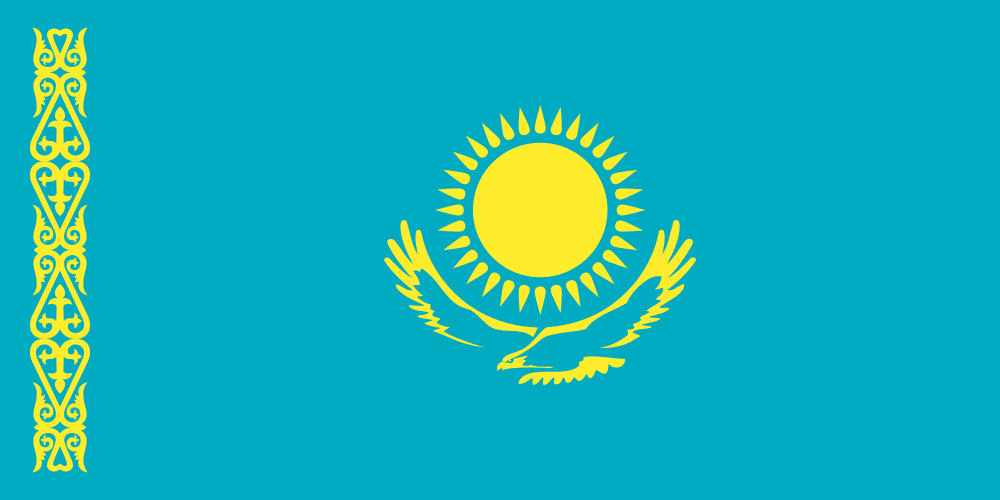
Kazakhstan
Location Info
- Continent: Asia
- Country: Kazakhstan
- Coordinates: 48.0196 , 66.9237
Trust Info
Verified Geographic Information
🌍 Continents


Overview
Kazakhstan is the largest country in Central Asia and the ninth-largest in the world by land area. It is a transcontinental nation, with the majority of its territory in Asia and a small portion in Eastern Europe. Geographically, it is characterized by the vast Eurasian Steppe, the Caspian Sea in the west, and high mountain ranges like the Altay and Tian Shan in the east and south.
Historically, Kazakhstan was a hub for nomadic tribes and a vital segment of the ancient Silk Road. After being part of the Russian Empire and the Soviet Union, it gained independence in 1991. Today, it is an upper-middle-income economy driven by significant mineral resources, particularly oil, gas, and uranium, and plays a strategic role in international logistics and space exploration through the Baikonur Cosmodrome.
Truth & Facts
| Total Area | 2,724,900 sq km |
| Coastline | 0 km (Landlocked) |
| Capital City | Astana |
| Government Type | Unitary Presidential Republic |
| Total Population | Approx. 20 million |
| Official Languages | Kazakh (State), Russian (Official) |
| Independence Date | December 16, 1991 |
| Currency | Kazakhstani Tenge (KZT) |
| Main Export | Crude Petroleum |
| Railway Length | Over 15,000 km |
| Literacy Rate | 99.8% |
| Healthcare System | Social Health Insurance |
| Traditional Instrument | Dombra |
| UNESCO Sites | 6 Properties |
| Protected Areas | Approx. 9% of territory |
| Busiest Airport | Almaty International Airport |
| E-Government Rank | Top 30 globally |
| Emergency Number | 112 |
| Administrative Divisions | 17 Regions, 3 Cities |
| UN Member Since | March 2, 1992 |
| Electricity Access | 100% |
| Median Age | 30.7 years |
| National Animal | Golden Eagle / Snow Leopard |
| Major Spaceport | Baikonur Cosmodrome |
📑 Table of Contents
Overview
Kazakhstan is a transcontinental country located primarily in Central Asia. It is the world's largest landlocked country and ranks ninth in the world by size. The nation borders Russia, China, Kyrgyzstan, Uzbekistan, and Turkmenistan, with a long coastline along the Caspian Sea.
As a major regional power, Kazakhstan bridges the gap between Eastern Europe and Asia. It is known for its vast natural resources, modern architecture in its capital, Astana, and its historical roots as part of the Soviet Union and the Silk Road.
- Official Name: Republic of Kazakhstan
- Total Land Area: 2.7 million square kilometers
- Population: Approximately 20 million
- Capital City: Astana
- Major Cultural Hub: Almaty
History
The history of Kazakhstan is defined by its nomadic heritage and its position as a transit point for global trade. For centuries, Turkic tribes roamed the steppes, leading to the formation of the Kazakh Khanate in the 15th century. This state united various ethnic groups under a single identity before facing pressures from neighboring empires.
In the 18th and 19th centuries, the region gradually came under the control of the Russian Empire. Following the Russian Revolution, it became the Kazakh Soviet Socialist Republic within the USSR. During this era, the country saw rapid industrialization, the establishment of the Baikonur Cosmodrome, and tragic events like the Great Famine and the use of the territory for nuclear testing at Semipalatinsk.
| Period | Key Event |
|---|---|
| 15th Century | Formation of the Kazakh Khanate |
| 1800s | Integration into the Russian Empire |
| 1936 | Established as a Soviet Republic |
| 1991 | Declaration of Independence |
Geography
Kazakhstan's geography is incredibly diverse, ranging from the low-lying Caspian Depression to the high peaks of the Tian Shan and Altay mountains. The central part of the country is dominated by the Kazakh Upland and the vast Eurasian Steppe, which is a sea of grass stretching for thousands of miles.
The country contains major bodies of water, including the Caspian Sea, Lake Balkhash (one of the largest lakes in Asia), and the Aral Sea, which has significantly shrunk due to environmental issues. Notable rivers include the Irtysh, Ishim, and Ural.
- Highest Point: Khan Tengri (7,010 meters)
- Largest Lake: Lake Balkhash
- Major Rivers: Irtysh, Syr Darya, Ural
- Notable Feature: Charyn Canyon
- Ecological Zone: Saryarka (Steppe and Lakes)
Climate and Weather
The country experiences a sharp continental climate with cold winters and hot summers. Due to its large size, temperatures vary significantly between the north and south. In winter, northern areas can drop below -40°C, while southern regions remain milder. In summer, the deserts can reach temperatures above 40°C.
| City | Average Jan Low | Average July High |
|---|---|---|
| Astana | -18°C | 27°C |
| Almaty | -8°C | 30°C |
| Shymkent | -4°C | 34°C |
Population and Demographics
Kazakhstan is a multi-ethnic nation. Ethnic Kazakhs make up the majority, followed by a significant Russian minority. Other groups include Uzbeks, Ukrainians, Tatars, Germans, and Koreans. This diversity is a result of historical migrations and Soviet-era deportations.
- Ethnic Kazakhs: ~70%
- Ethnic Russians: ~15%
- Urban Population: ~60%
- Religions: Islam (majority), Orthodox Christianity
- Languages: Kazakh and Russian
Culture and Lifestyle
Kazakh culture is deeply rooted in nomadic traditions. Hospitality is a core value, often demonstrated through the 'Dastarkhan' (traditional feast). The yurt remains a symbol of the nomadic past, though modern lifestyles in cities like Almaty are very cosmopolitan, blending Western and Central Asian influences.
- Traditional Music: Dombra performance (Kui)
- Handicrafts: Felt rugs (Syrmak)
- Sports: Horse racing (Baiga), Wrestling (Qazaq Kuresi)
- Philosophy: Respect for elders and ancestors
- Modern Scene: Thriving contemporary art and film industry
Festivals and Events
The most important festival is Nauryz, the Persian New Year, which celebrates the spring equinox. Other significant holidays include Independence Day and Constitution Day. These events usually feature traditional games, music, and food.
- Nauryz: March 21–23 (Spring Equinox)
- Independence Day: December 16
- Victory Day: May 9
- Capital City Day: July 6
- Kurban Ait: Date varies (Islamic festival)
Food and Cuisine
Kazakh cuisine focuses on meat and dairy products, reflecting the nomadic history. Lamb and horse meat are common ingredients. Dough-based dishes are also central to the diet. Tea is the primary beverage, usually served with milk or cream.
- Beshbarmak: Boiled meat with pasta sheets (National dish)
- Kazy: Traditional horse meat sausage
- Baursak: Fried dough balls
- Kumys: Fermented mare's milk
- Shuzhuk: Meat sausage
Economy and Industries
Kazakhstan has the largest economy in Central Asia. It possesses vast reserves of oil, natural gas, and coal. The country is also the world's leading producer of uranium. In recent years, the government has moved to diversify the economy toward technology, renewable energy, and transportation.
| Industry | Key Products |
|---|---|
| Energy | Oil, Natural Gas, Uranium |
| Mining | Copper, Iron Ore, Coal, Gold |
| Agriculture | Wheat, Flour, Livestock |
| Manufacturing | Automobiles, Machinery |
Cost of Living
The cost of living is generally lower than in Western Europe or North America. Almaty and Astana are the most expensive cities, particularly for housing. Local produce and public transport are highly affordable, while imported goods carry a premium.
- Public Transport: Very inexpensive
- Utilities: Low cost due to local energy production
- Dining: Affordable local eateries; high-end options available
- Groceries: Inexpensive seasonal local markets
Employment and Business
The labor market is dominated by the energy and extractive sectors. However, there is growing employment in services, finance, and construction. The Astana International Financial Centre (AIFC) has been established to attract foreign investment using English common law principles.
- Unemployment Rate: Approx. 4.8%
- Major Sector: Mining and Energy
- Business Hub: Almaty
- Financial Center: AIFC (Astana)
Real Estate and Housing
Housing varies from Soviet-era apartment blocks to modern high-rise luxury complexes. In the last two decades, Astana has seen a massive construction boom. Foreigners can purchase property, but regulations vary depending on residency status.
- High-demand: Astana and Almaty centers
- Type: Multi-story apartments (most common)
- New Developments: BI Group, Bazis-A
Transportation and Connectivity
Kazakhstan is a major transit hub for the Silk Road Economic Belt. The railway system is the backbone of freight and passenger transport. Air travel is essential for domestic connectivity due to the vast distances between cities.
- Airlines: Air Astana, FlyArystan, SCAT
- Rail: Kazakhstan Temir Zholy (KTZ)
- Ports: Aktau and Kuryk on the Caspian Sea
- Highways: Western Europe-Western China Corridor
Infrastructure and Utilities
Infrastructure is well-developed in urban areas. Electricity and heating are primarily coal-fired, though wind and solar energy capacity is expanding. High-speed internet is widely available in major cities.
- Energy Source: Coal (majority), Hydro, Renewables
- Internet: Fiber-optic in cities, LTE nationwide
- Heating: Centralized district heating in most cities
Education
Education is compulsory until the age of 18. The country has invested heavily in higher education through programs like 'Bolashak'. Nazarbayev University in Astana is the premier research institution.
- Literacy Rate: 99.8%
- Top University: Nazarbayev University
- Oldest Institution: Al-Farabi Kazakh National University
Healthcare
The state provides a basic level of healthcare to all citizens. A modern social health insurance system was introduced recently. Large cities have specialized diagnostic centers and international-standard private clinics.
- System: Social Health Insurance (MSHI)
- Key Hubs: National Medical Holding (Astana)
- Access: Universal basic emergency care
Tourist Attractions
Attractions range from the high-tech skyline of Astana to the ancient silk road ruins in Turkestan. Nature lovers frequent the national parks and canyons in the southeast.
- Bayterek Tower (Astana)
- Mausoleum of Khoja Ahmed Yasawi (Turkestan)
- Charyn Canyon
- Baikonur Cosmodrome
- Medeu High-Altitude Rink
Things to Do
Visitors can engage in skiing in the winter, hiking in the summer, and exploring historical monuments year-round. Cultural experiences include visiting traditional markets and watching eagle hunting demonstrations.
- Skiing at Shymbulak
- Hiking in Ile-Alatau National Park
- Watching a space launch at Baikonur
- Shopping at Green Bazaar (Almaty)
Best Places to Visit
Each region offers a different experience. The south is rich in history and mountains, the north holds the capital, and the west offers unique desert and sea landscapes.
- Almaty: Cultural and financial capital
- Astana: Futuristic architecture
- Turkestan: Spiritual and historical heart
- Mangystau: Otherworldly desert landscapes
- Burabay: The 'Switzerland of Kazakhstan'
Travel Guide
Kazakhstan offers visa-free entry to citizens of many countries. Internal travel is best done by train or plane. English is spoken in hotels and by younger people, but Kazakh and Russian remain dominant.
- Visa Policy: Visa-free for many EU, US, and Asian nations
- Currency Exchange: Widely available in cities
- Connectivity: Local SIM cards are cheap and easy to get
Nearby Places
As a Central Asian hub, Kazakhstan is a gateway to neighboring republics. Frequent flights and some train services connect it to major regional cities.
- Bishkek, Kyrgyzstan (accessible by road from Almaty)
- Tashkent, Uzbekistan
- Samarkand, Uzbekistan
- Omsk and Novosibirsk, Russia
Environment and Nature
Kazakhstan contains unique ecosystems, including the habitats of the rare Saiga antelope and the snow leopard. Significant efforts are being made to restore the Northern Aral Sea and protect the vast steppes.
- Flora: Tulips (indigenous to the region), Saxaul trees
- Fauna: Snow Leopard, Saiga Antelope, Golden Eagle
- Major Issue: Aral Sea desiccation
Government and Administration
The President is the head of state and appoints the Prime Minister. The Parliament consists of two chambers: the Senate and the Mazhilis. Administratively, the country is divided into 17 regions (oblystar).
- President: Kassym-Jomart Tokayev
- Legislature: Parliament of Kazakhstan
- Local Government: Akims (Governors/Mayors)
Safety and Public Services
The country is generally safe for travelers. Police presence is high in cities. Public services like firefighting and emergency medical care are standardized across the country.
- Police: Ministry of Internal Affairs
- Safety: Low violent crime rate
- Emergency: Dial 112
Best Time to Visit
The best times are spring (April to June) and autumn (September to October) when temperatures are moderate. Winter is ideal for snow sports, while summer is best for high-altitude trekking.
- Spring: Wildflower blooms in the steppe
- Summer: Mountain hiking and lake visits
- Autumn: Cultural festivals and mild weather
- Winter: Skiing and ice skating
Local Business Directory
Business activity is centered in Almaty (commerce), Astana (administration/finance), and the western regions (oil and gas). Major international companies have representative offices in these hubs.
- Retail: Mega Centers, Esentai Mall
- Energy: KazMunayGas
- Banking: Kaspi.kz, Halyk Bank
- Telecom: Kcell, Beeline
General Information FAQs
Where is Kazakhstan located?
Kazakhstan is located in Central Asia, with a small portion of its territory west of the Ural River in Eastern Europe. It is the world's largest landlocked country.
What is Kazakhstan known for?
It is known for the Baikonur Cosmodrome, its vast steppe geography, rich oil and mineral reserves, and being a transcontinental bridge between Europe and Asia.
Why is Kazakhstan famous?
Kazakhstan is famous for its nomadic history, the Silk Road, modern architecture in Astana, and as the birthplace of the domestic apple and tulips.
What country or region is Kazakhstan part of?
Kazakhstan is part of Central Asia. It was formerly a republic within the Soviet Union (USSR) until 1991.
What is the population of Kazakhstan?
The population is approximately 20 million people as of 2024 estimates.
What languages are spoken in Kazakhstan?
Kazakh is the state language. Russian is an official language used for inter-ethnic communication and administrative purposes.
What time zone is Kazakhstan in?
As of March 2024, Kazakhstan adopted a single time zone, UTC+5, across its entire territory.
What are the key facts about Kazakhstan?
Key facts include its 2.7 million sq km area, its capital Astana, the Tenge currency, and its status as the world's leading uranium producer.
What makes Kazakhstan unique?
Its unique blend of nomadic traditions and Soviet history, coupled with its massive landmass and extreme continental climate, sets it apart.
How large is Kazakhstan in area?
It covers 2,724,900 square kilometers, making it the ninth-largest country in the world.
History FAQs
What is the history of Kazakhstan?
The history involves ancient nomadic tribes, the Golden Horde, the Kazakh Khanate, Russian imperial rule, Soviet governance, and modern independence since 1991.
When was Kazakhstan established?
The Kazakh Khanate was established in 1465. The modern Republic of Kazakhstan declared independence on December 16, 1991.
What major historical events happened in Kazakhstan?
Major events include the Silk Road trade, the Mongol conquests, the 1930s famine, the launch of Sputnik from Baikonur in 1957, and the closure of the Semipalatinsk nuclear site.
Who were important historical figures from Kazakhstan?
Important figures include Abai Qunanbaiuly (poet), Al-Farabi (philosopher), and Kerey and Janibek (founders of the Kazakh Khanate).
How has Kazakhstan developed over time?
It transitioned from a nomadic society to a colonized territory, then an industrial Soviet republic, and finally a market-oriented independent state.
Geography & Environment FAQs
What is the geography of Kazakhstan?
The geography features massive steppes, semi-deserts, the Caspian Sea coastline, and the high Tian Shan and Altay mountains in the east.
What natural features surround Kazakhstan?
It is surrounded by the Ural mountains to the north, the Caspian Sea to the west, and the high Central Asian mountain ranges to the south and east.
Are there mountains, rivers, or lakes near Kazakhstan?
Yes, major features include the Tian Shan mountains, the Irtysh and Ural rivers, and Lake Balkhash.
What is the elevation of Kazakhstan?
Elevation varies from -132 meters (Karagiye Depression) to 7,010 meters (Khan Tengri).
What ecosystems exist around Kazakhstan?
Ecosystems include temperate grasslands (steppes), taiga forests in the north, and alpine meadows and glaciers in the south.
Climate & Weather FAQs
What is the climate like in Kazakhstan?
It has an extreme continental climate with very cold winters and hot summers, with low precipitation in most areas.
What is the average temperature in Kazakhstan?
In January, averages range from -18°C to -3°C. In July, they range from 19°C to 30°C, depending on the region.
What is the weather like throughout the year in Kazakhstan?
Spring and autumn are short and mild. Winter is long and snow-heavy in the north, while summer is dry and hot in the south.
Does Kazakhstan experience extreme weather?
Yes, it experiences severe blizzards (buran) in winter and dust storms and heatwaves in summer.
What is the best time of year to visit Kazakhstan?
The best time is usually from May to September, excluding the peak heat of July in southern deserts.
Population & Society FAQs
What is the population density of Kazakhstan?
The density is very low, at approximately 7 people per square kilometer.
What ethnic groups live in Kazakhstan?
Groups include Kazakhs, Russians, Uzbeks, Ukrainians, Tatars, Germans, and many others.
What religions are practiced in Kazakhstan?
Islam (Sunni) is the most common, followed by Orthodox Christianity. The state is officially secular.
What is daily life like in Kazakhstan?
Daily life in cities is modern and digital-centric, while rural life often retains traditional agricultural and livestock practices.
How diverse is the population of Kazakhstan?
It is highly diverse, with over 130 different ethnic groups living within its borders.
Culture & Traditions FAQs
What cultural traditions are important in Kazakhstan?
Important traditions include respect for guests, the celebration of Nauryz, and nomadic-inspired horse culture.
What festivals are celebrated in Kazakhstan?
Festivals include Nauryz (New Year), Constitution Day, Independence Day, and religious holidays like Kurban Ait.
What cultural landmarks exist in Kazakhstan?
Landmarks include the Mausoleum of Khoja Ahmed Yasawi, the Tamgaly petroglyphs, and the National Museum in Astana.
What traditional clothing or customs are common in Kazakhstan?
Traditional clothing includes the shapan (cloak) and saukele (headdress), though these are now mostly worn for ceremonies.
What arts and crafts are associated with Kazakhstan?
Traditional arts include felt-making, leatherwork, jewelry making, and dombra music.
Food & Cuisine FAQs
What foods is Kazakhstan known for?
It is known for Beshbarmak, Baursak, Kazy (horse meat sausage), and dairy products like Shubat and Kumys.
What traditional dishes originate from Kazakhstan?
Beshbarmak (meaning 'five fingers') is the primary national dish, consisting of meat and boiled dough.
What are the best restaurants in Kazakhstan?
Top-rated restaurants are found in Almaty and Astana, offering both traditional Kazakh and international fine dining.
What local ingredients are commonly used in Kazakhstan cuisine?
Mutton, beef, horse meat, flour, and various fermented dairy products are staples.
What food markets or street foods are popular in Kazakhstan?
The Green Bazaar in Almaty is famous. Popular street foods include samsa, shashlik, and doner kebabs.
Economy & Business FAQs
What are the main industries in Kazakhstan?
The main industries are oil and gas extraction, mining (uranium, copper, coal), and agriculture (wheat).
What economic activities drive the economy of Kazakhstan?
The economy is driven by the export of natural resources, foreign direct investment in energy, and growing transit trade.
What businesses operate in Kazakhstan?
Major businesses include state-owned KazMunayGas and Kazatomprom, as well as international firms like Chevron and Shell.
Is Kazakhstan an important economic center?
Yes, it has the largest GDP in Central Asia and acts as a financial and logistical hub for the region.
What are the major exports or products from Kazakhstan?
Major exports are crude oil, uranium, refined copper, ferroalloys, and wheat.
Employment & Jobs FAQs
What job opportunities are available in Kazakhstan?
Opportunities are strongest in the energy sector, engineering, IT, and international trade.
What are the major employers in Kazakhstan?
Major employers include the Samruk-Kazyna sovereign wealth fund companies and the various ministries of the state.
What skills are in demand in Kazakhstan?
Technical skills in mining, oil and gas, as well as software development and financial services, are highly sought after.
Is Kazakhstan a good place to work?
It offers competitive salaries for skilled professionals, particularly in the major cities of Almaty and Astana.
What is the unemployment rate in Kazakhstan?
The unemployment rate has remained relatively stable at around 4.8% to 5%.
Cost of Living FAQs
Is Kazakhstan expensive to live in?
Compared to Western Europe, it is very affordable, though prices in Astana and Almaty are higher than the national average.
What is the average cost of living in Kazakhstan?
A single person can live comfortably on $600-$1000 a month, depending on lifestyle and location.
How much does housing cost in Kazakhstan?
Rent for a one-bedroom apartment in Almaty center ranges from $500 to $900 per month.
What are average food and utility costs in Kazakhstan?
Utilities are very low (approx. $50/month), and basic groceries are inexpensive due to local production.
Is Kazakhstan affordable compared to nearby cities?
It is generally more expensive than Bishkek or Tashkent, but cheaper than major Russian or Chinese cities.
Housing & Real Estate FAQs
What types of housing are available in Kazakhstan?
Options include Soviet-era 'Khrushchyovkas', modern luxury apartments, and detached suburban houses (cottages).
What is the average home price in Kazakhstan?
Prices vary wildly, with Almaty being the most expensive. Average square meter prices range from $1000 to $2500.
Is it better to rent or buy property in Kazakhstan?
Renting is common for expats. Buying requires legal residency for most foreign nationals.
Which neighborhoods are popular in Kazakhstan?
In Almaty, the 'Upper City' near the mountains is popular. In Astana, the 'Left Bank' is the modern center.
How has the property market changed in Kazakhstan?
There has been a significant shift toward modern, integrated residential complexes with built-in amenities.
Transportation FAQs
How do you get to Kazakhstan?
Most international visitors arrive via Almaty International Airport or Nursultan Nazarbayev International Airport in Astana.
What is the nearest airport to Kazakhstan?
The main international gateways are Almaty (ALA) and Astana (NQZ).
Does Kazakhstan have railway connections?
Yes, it has an extensive rail network connecting to Russia, China, and other Central Asian states.
How reliable is public transportation in Kazakhstan?
In major cities, buses and the Almaty Metro are reliable. Intercity trains are a popular and dependable way to travel.
What major highways or roads connect to Kazakhstan?
The M32, A1, and the 'Western Europe-Western China' highway are major transit routes.
Education FAQs
What schools are located in Kazakhstan?
There is a mix of state schools, private international schools (like QSI and Haileybury), and specialized 'Nazarbayev Intellectual Schools'.
Are there universities in Kazakhstan?
Yes, including Nazarbayev University, Al-Farabi Kazakh National University, and KIMEP University.
What is the literacy rate in Kazakhstan?
The literacy rate is nearly universal at 99.8%.
What educational opportunities exist in Kazakhstan?
There is a strong focus on STEM, international scholarship programs, and vocational training.
Is Kazakhstan a good place for students?
It is an affordable destination with a growing number of English-taught programs and modern facilities.
Healthcare FAQs
What hospitals are available in Kazakhstan?
Major cities have public regional hospitals and modern private clinics like the Presidential Hospital in Astana.
Are there emergency medical services in Kazakhstan?
Yes, emergency services can be reached by dialing 103 or 112.
What healthcare facilities exist in Kazakhstan?
Facilities include general hospitals, specialized cardiology and oncology centers, and local polyclinics.
Is healthcare affordable in Kazakhstan?
Public healthcare is largely state-funded. Private healthcare is moderately priced by international standards.
Are specialized medical services available in Kazakhstan?
Yes, Astana and Almaty offer advanced neurosurgery, cardiac care, and reproductive medicine.
Tourism & Travel FAQs
What are the top tourist attractions in Kazakhstan?
Top sites include Charyn Canyon, the Big Almaty Lake, the Baikonur Cosmodrome, and the city of Turkestan.
What are the best things to do in Kazakhstan?
Best activities include skiing at Shymbulak, visiting the Khan Shatyr mall, and exploring the Altay mountains.
Is Kazakhstan worth visiting?
Yes, it offers a unique combination of futuristic cities and wild, untouched natural landscapes.
What landmarks should visitors see in Kazakhstan?
The Bayterek Tower, the Hazrat Sultan Mosque, and the Zenkov Cathedral are must-see landmarks.
How many days should tourists spend in Kazakhstan?
A 7 to 10-day trip is usually recommended to see at least two major regions.
Nearby Places FAQs
What places are near Kazakhstan worth visiting?
Lake Issyk-Kul in Kyrgyzstan and the Silk Road cities of Uzbekistan are popular nearby destinations.
What cities or towns are close to Kazakhstan?
Bishkek (Kyrgyzstan), Tashkent (Uzbekistan), and Novosibirsk (Russia) are regional neighbors.
What natural attractions are near Kazakhstan?
The Tian Shan mountain range spans across the borders with Kyrgyzstan and China.
What day trips can be taken from [Location]?
From Almaty, popular day trips include Medeu, Shymbulak, and the Big Almaty Lake.
What famous destinations are within reach of Kazakhstan?
The Altai region of Russia and the Xinjiang region of China are within reach by air or land.
Safety FAQs
Is Kazakhstan safe to live in?
Yes, it is generally safe with low rates of violent crime, though standard precautions apply in big cities.
Is Kazakhstan safe for tourists?
Yes, the country is welcoming to tourists and has been ranked as safe by major international travel advisories.
What is the crime rate in Kazakhstan?
Crime is low, though petty theft like pickpocketing can occur in crowded markets or public transport.
What emergency services operate in Kazakhstan?
Police (102), Fire (101), and Ambulance (103) are the primary emergency services.
What safety tips should visitors follow in Kazakhstan?
Use official taxi apps, avoid unlicensed transport at night, and keep a copy of your passport.
Lifestyle & Living FAQs
Is Kazakhstan a good place to live?
For those who enjoy a blend of modern amenities and access to vast nature, it is an excellent choice.
What recreational activities are available in Kazakhstan?
Activities include winter sports, hiking, horseback riding, and a vibrant cafe and nightlife scene.
Is Kazakhstan family-friendly?
Yes, cities have many parks, entertainment centers for children, and safe public spaces.
What outdoor activities are popular in Kazakhstan?
Trekking in the mountains, fishing, and camping in national parks are highly popular.
What makes life enjoyable in Kazakhstan?
The combination of cultural richness, affordable cost of living, and spectacular nature makes it unique.
Practical Information FAQs
What travel tips should visitors know about Kazakhstan?
Download offline maps, use the Kaspi.kz app for local payments if possible, and learn basic Russian or Kazakh phrases.
What local customs should visitors respect in Kazakhstan?
Remove shoes when entering a home and be respectful when visiting religious sites.
How accessible is Kazakhstan for international visitors?
Major cities are well-connected by international flights and offer various accommodation options from hostels to 5-star hotels.
What services are available for tourists in Kazakhstan?
Tourist information centers are available in Almaty and Astana; many tours can be booked online.
What important information should travelers know before visiting?
The tap water is generally not recommended for drinking; bottled water is widely available and cheap.