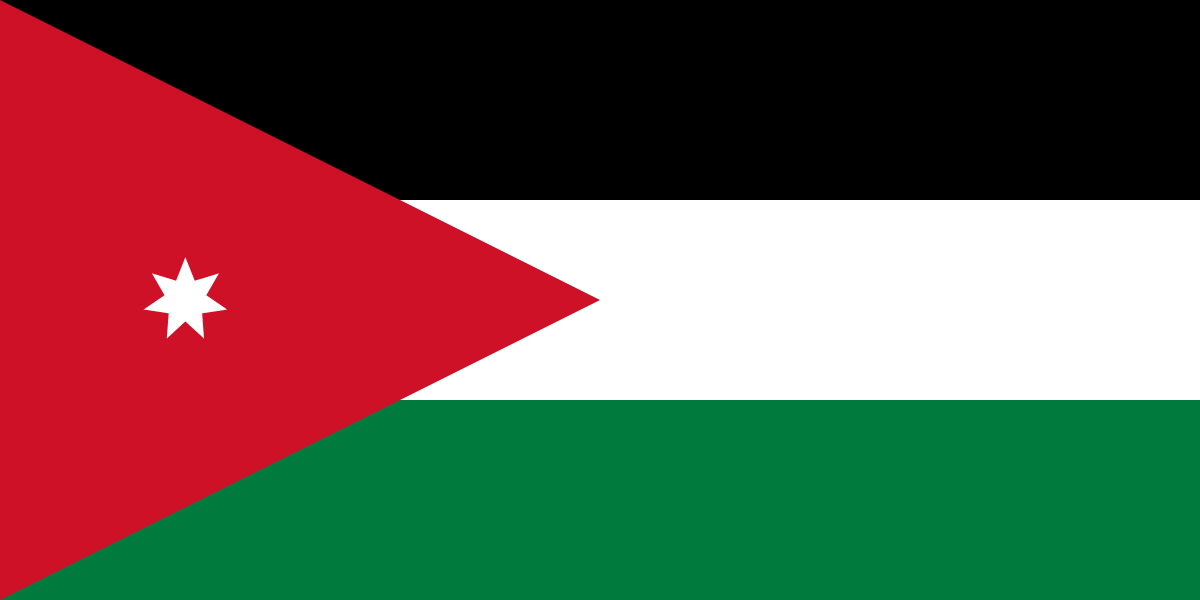
Jordan
Location Info
- Continent: Asia
- Country: Jordan
- Coordinates: 31.24 , 36.51
Trust Info
Verified Geographic Data
🌍 Continents






Overview
Jordan, officially the Hashemite Kingdom of Jordan, is a landlocked country in Western Asia at the crossroads of Asia, Africa, and Europe. It is bordered by Saudi Arabia, Iraq, Syria, Israel, and the Palestinian West Bank. The nation is characterized by its vast desert landscapes, the fertile Jordan Valley, and its small coastline on the Red Sea at the Gulf of Aqaba.
Historically, Jordan has been a center for numerous civilizations, most notably the Nabataeans who carved the city of Petra into sandstone cliffs. Today, it is a constitutional monarchy known for its relative stability in the Middle East. The economy is driven by services, tourism, and the export of phosphates and potash, while the population is predominantly urbanized and centered in the capital, Amman.
Truth & Facts
| Total Area | 89,342 sq km |
| Coastline | 26 km |
| Current Population | 11.5 million |
| Median Age | 23.5 years |
| Capital | Amman |
| Head of State | King Abdullah II |
| Independence Date | May 25, 1946 |
| Currency | Jordanian Dinar (JOD) |
| Main Exports | Phosphates, Potash, Textiles |
| Electricity Access | 99.9% |
| Literacy Rate | 98.2% |
| Hospital Beds | 1.4 per 1,000 people |
| Official Language | Arabic |
| Religion | Islam (95%), Christianity (5%) |
| UNESCO Sites | 6 |
| Water Availability | Among the lowest per capita globally |
| Major Airport | Queen Alia International Airport |
| Internet Usage | 88% |
| Global Peace Index Rank | 62/163 |
| Legal Basis | Civil Code |
| Organizations | UN, Arab League, WTO |
| Key Project | Disi Water Conveyance |
| GDP Growth | 2.6% |
| National Animal | Arabian Oryx |
| Global Reach | Exports to 60+ countries |
📑 Table of Contents
Overview
Jordan is a strategically located country in the Levant region of the Middle East. It serves as a buffer zone and a center for diplomatic moderation. The country is recognized for its unique blend of ancient heritage and modern urban development.
- Official Name: Hashemite Kingdom of Jordan
- Capital: Amman
- National Language: Arabic
- Currency: Jordanian Dinar (JOD)
- Time Zone: UTC+3
History
Jordan's history spans millennia, from the Paleolithic period to the modern Hashemite era. It was home to the biblical kingdoms of Moab and Edom and later the Nabataean Kingdom. The Roman, Byzantine, and various Islamic Caliphates also left significant architectural legacies.
| Period | Significance |
|---|---|
| Ancient | Nabataean civilization at Petra |
| Classical | Roman Decapolis cities |
| Islamic | Umayyad desert castles |
| Modern | Independence in 1946 |
Geography
The geography of Jordan is defined by a high plateau in the west and vast deserts in the east. The Jordan Rift Valley includes the Jordan River and the Dead Sea, which is the lowest point on Earth's land surface.
- Highest Point: Jabal Umm ad Dami (1,854m)
- Lowest Point: Dead Sea (-430m)
- Regions: Ghor Valley, Highlands, Badia
Climate and Weather
The country experiences a Mediterranean climate in the west and a desert climate in the east. Summers are generally hot and dry, while winters can be cool and rainy, with occasional snowfall in the highlands.
- Avg Summer Temp: 32°C
- Avg Winter Temp: 12°C
- Annual Rainfall: 50-600mm depending on region
Population and Demographics
The population is predominantly Arab, with significant Circassian, Chechen, and Armenian minorities. Urbanization is high, with over 90% of the population living in cities.
- Urban Population: 91.6%
- Ethnic Majority: Arab (98%)
- Annual Growth: ~1.2%
Culture and Lifestyle
Jordanian culture is rooted in Arab and Islamic traditions with a strong emphasis on hospitality. Bedouin customs still influence social interactions, particularly in rural areas and the desert.
- Social Core: Family and tribal loyalty
- Hospitality: Offering of Arabic coffee
- Clothing: Mix of traditional and Western styles
Festivals and Events
National and religious festivals are central to public life. The Jerash Festival is the most prominent cultural event, showcasing international and local arts.
- Independence Day: May 25
- Jerash Festival: Annual summer event
- Religious: Eid al-Fitr, Eid al-Adha
Food and Cuisine
The national dish is Mansaf, prepared with lamb cooked in a sauce of fermented dried yogurt (jameed) and served with rice. Other staples include hummus, falafel, and various grilled meats.
| Dish | Type |
|---|---|
| Mansaf | Lamb and Rice |
| Maqluba | Upside-down Rice |
| Knafeh | Sweet Pastry |
Economy and Industries
Jordan has a service-oriented economy with a strong industrial base in mining and pharmaceuticals. It relies heavily on international aid and remittances from workers abroad.
- Mining: World's 6th largest phosphate producer
- Tourism: Contributes ~13% to GDP
- Manufacturing: Textiles and chemicals
Cost of Living
Compared to its neighbors, Jordan has a relatively high cost of living, particularly in Amman. Imported goods and utilities, especially water and energy, are expensive.
- Housing: Moderate in suburbs, high in West Amman
- Transport: Affordable public options, high fuel costs
- Food: Local produce is cheap; imports are taxed
Employment and Business
The public sector is a major employer, though the government is encouraging private sector growth in tech and startups. Unemployment remains a challenge, particularly among youth.
- Labor Force: ~2.5 million
- Key Hub: King Hussein Business Park
- Sectors: Finance, Telecom, IT
Real Estate and Housing
Real estate development is concentrated in Amman and Aqaba. There is a wide variety of housing, from traditional stone villas to modern high-rise apartments.
- Primary Style: Limestone-clad buildings
- Market: High demand for small apartments
- Ownership: Foreigners can own property under specific conditions
Transportation and Connectivity
Jordan is well-connected by a network of highways, including the Desert Highway and the King's Highway. Air travel is facilitated by two international airports.
- Airports: Queen Alia (Amman), King Hussein (Aqaba)
- Port: Port of Aqaba (Red Sea)
- Roads: Extensive paved network
Infrastructure and Utilities
Jordan faces significant challenges in water infrastructure due to its status as one of the world's driest countries. Energy infrastructure is shifting toward solar and wind power.
- Water: Distributed weekly in many areas
- Energy: Over 20% from renewables
- Internet: Fiber-optic coverage in major cities
Education
The education system is highly regarded in the region. Education is compulsory for children until age 15. The country hosts several top-tier public and private universities.
- Key Institution: University of Jordan
- Literacy: 98%+
- Specialization: Engineering and Medicine
Healthcare
Jordan is a leader in healthcare in the Middle East. Both public and private sectors offer advanced medical services, attracting patients from across the region.
- Hubs: King Hussein Cancer Center, Specialty Hospital
- System: Universal coverage for military/public employees
- Status: High life expectancy for the region
Tourist Attractions
Tourism is a pillar of the economy, centered on archeological sites and natural wonders. Petra, a UNESCO site, is the most visited location in the country.
- Petra: Ancient Nabataean capital
- Wadi Rum: Desert landscapes and rock formations
- Dead Sea: Saltwater lake and wellness resorts
Things to Do
Activities range from historical exploration to adventure sports. Hiking the Jordan Trail and diving in the Red Sea are popular among international visitors.
- Diving: Coral reefs in Aqaba
- Hiking: The 650km Jordan Trail
- Stargazing: Desert camps in Wadi Rum
Best Places to Visit
Each region offers distinct experiences. The north is known for greenery and Roman ruins, while the south is defined by desert and sea.
- Jerash: Well-preserved Roman city
- Madaba: City of Mosaics
- Dana Reserve: Biodiversity hotspot
Travel Guide
Most international visitors require a visa, which can be obtained on arrival or via the Jordan Pass. Respect for local customs, especially regarding dress code in religious areas, is expected.
- Entry: Jordan Pass covers visa and entry fees
- Dress: Modest in rural/religious sites
- Tipping: Common in the service industry
Nearby Places
Jordan is centrally located, making it a gateway to other Levant and Gulf nations. Its borders are frequently used for regional transit.
- West: Palestine and Israel
- North: Syria
- South/East: Saudi Arabia and Iraq
Environment and Nature
Jordan contains diverse ecosystems including Mediterranean forests, wetlands, and arid deserts. Environmental protection is managed by the Royal Society for the Conservation of Nature (RSCN).
- Reserves: Mujib, Shaumari, Ajloun
- Endangered Species: Arabian Oryx
- Challenges: Desertification and water loss
Government and Administration
Jordan is divided into 12 governorates (Muhafazah). Each is headed by a governor appointed by the King. The system is centralized in Amman.
- Legislature: Bicameral Parliament
- Legal Basis: Constitution of 1952
- Administration: Ministry of Interior
Safety and Public Services
Jordan maintains a high level of internal security. Emergency services are reachable via a unified number (911). Police presence is high in urban and tourist areas.
- Security: General Directorate of Public Security
- Fire/Rescue: Civil Defense Directorate
- Safety: Low violent crime rate
Best Time to Visit
The shoulder seasons offer the most comfortable weather for outdoor activities. Summer can be too hot for desert exploration, while winter can be cold in the mountains.
- Spring: March to May (Greenery and mild)
- Autumn: September to November (Ideal for hiking)
- Winter: Best for the Dead Sea and Aqaba
Local Business Directory
The business environment is dominated by small and medium enterprises (SMEs). Large-scale business is centered around the Amman Stock Exchange and Aqaba Special Economic Zone Authority (ASEZA).
- Financial Center: Shmeisani, Amman
- Industrial Zone: Sahab
- Economic Zone: Aqaba (Duty-free)
General Information FAQs
Where is Jordan located?
Jordan is located in Western Asia, in the northern part of the Arabian Peninsula and the southern part of the Levant region.
What is Jordan known for?
Jordan is known for the ancient Nabataean city of Petra, the Dead Sea, its desert landscapes like Wadi Rum, and its historic role as a crossroads of civilizations.
Why is Jordan famous?
Jordan is famous for its archaeological heritage, particularly the 'Rose City' of Petra, which is one of the New Seven Wonders of the World.
What country or region is Jordan part of?
Jordan is an independent country in the Middle East region, specifically within the Levant.
What is the population of Jordan?
As of 2024, the population of Jordan is approximately 11.5 million people.
What languages are spoken in Jordan?
Arabic is the official language. English is widely understood and used in business, government, and education.
What time zone is Jordan in?
Jordan is in the Eastern European Summer Time zone (UTC+3) year-round.
What are the key facts about Jordan?
Jordan is a constitutional monarchy, uses the Jordanian Dinar, has a major port at Aqaba, and is a world leader in phosphate production.
What makes Jordan unique?
Its combination of the world's lowest point (Dead Sea) and high-altitude deserts, alongside a deep history of religious and ancient cultural integration.
How large is Jordan in area?
The total area of Jordan is approximately 89,342 square kilometers.
History FAQs
What is the history of Jordan?
Jordan has been inhabited since the Stone Age. It saw the rise of the Nabataeans, became a Roman province, was part of the Ottoman Empire, and gained independence from Britain in 1946.
When was Jordan established?
Modern Jordan was established as the Emirate of Transjordan in 1921 and became the Hashemite Kingdom of Jordan upon independence in 1946.
What major historical events happened in Jordan?
Key events include the construction of Petra (400 BC), the Roman occupation, the Arab Revolt (1916), and the signing of the peace treaty with Israel (1994).
Who were important historical figures from Jordan?
Important figures include King Abdullah I (founder), King Hussein bin Talal (modernizer), and Aretas IV of the Nabataeans.
How has Jordan developed over time?
Jordan has transformed from a largely nomadic and rural society to a highly urbanized country with a modern infrastructure and service-based economy.
Geography & Environment FAQs
What is the geography of Jordan?
The geography features an arid desert plateau in the east, highland areas in the west, and the Great Rift Valley along the western border.
What natural features surround Jordan?
It is surrounded by the Syrian Desert to the east and the Jordan River and Dead Sea to the west.
Are there mountains, rivers, or lakes near Jordan?
Yes, the Ajloun and Sharah mountains, the Jordan River, and the Dead Sea (a hypersaline lake) are prominent features.
What is the elevation of Jordan?
Elevation ranges from 430 meters below sea level at the Dead Sea to 1,854 meters at Jabal Umm ad Dami.
What ecosystems exist around Jordan?
Ecosystems include Mediterranean scrubland, desert dunes, and subtropical valley areas.
Climate & Weather FAQs
What is the climate like in Jordan?
The climate is semi-arid to arid, characterized by dry, hot summers and cool, moist winters.
What is the average temperature in Jordan?
In Amman, average temperatures range from 8°C in January to 25°C in July, though summer peaks can exceed 35°C.
What is the weather like throughout the year in Jordan?
Spring and autumn are mild. Winter brings most of the rain and occasional snow in the mountains. Summer is consistently hot and cloudless.
Does Jordan experience extreme weather?
Jordan can experience severe heatwaves in summer and flash floods during intense winter rainstorms.
What is the best time of year to visit Jordan?
The best time to visit is during spring (March-May) or autumn (September-November) for temperate weather.
Population & Society FAQs
What is the population density of Jordan?
The density is approximately 114 people per square kilometer, though it is much higher in the northwest.
What ethnic groups live in Jordan?
The majority are Arabs. Minorities include Circassians, Chechens, and Armenians.
What religions are practiced in Jordan?
Islam is the official religion (mostly Sunni). There is a significant and historic Christian minority.
What is daily life like in Jordan?
Daily life revolves around family, work, and social gatherings, with a strong emphasis on community and hospitality.
How diverse is the population of Jordan?
Jordan is highly diverse due to its history of hosting refugees and its position as a regional migration hub.
Culture & Traditions FAQs
What cultural traditions are important in Jordan?
Traditional Bedouin hospitality, tribal mediation, and the celebration of religious holidays are central.
What festivals are celebrated in Jordan?
Key festivals include Eid al-Fitr, Eid al-Adha, Christmas, and the Jerash Festival of Culture and Arts.
What cultural landmarks exist in Jordan?
Landmarks include the Citadel in Amman, the Roman Theater, and the various 'Desert Castles'.
What traditional clothing or customs are common in Jordan?
The 'Keffiyeh' (red and white checkered scarf) is a national symbol for men. The 'Thobe' is common traditional dress for women.
What arts and crafts are associated with Jordan?
Mosaic making (especially in Madaba), weaving, and pottery are traditional crafts.
Food & Cuisine FAQs
What foods is Jordan known for?
Jordan is known for Mansaf, Falafel, Hummus, and its unique varieties of dates and olives.
What traditional dishes originate from Jordan?
Mansaf (lamb with yogurt and rice) is the definitive national dish originating from Bedouin culture.
What are the best restaurants in Jordan?
Famous establishments include Hashem Restaurant and Al-Quds in Amman, known for traditional staples.
What local ingredients are commonly used in Jordan cuisine?
Ingredients include Jameed (dried yogurt), Za'atar (herb mix), olive oil, and chickpeas.
What food markets or street foods are popular in Jordan?
The Souq in downtown Amman is popular for street food like Ara'yes and fresh juices.
Economy & Business FAQs
What are the main industries in Jordan?
The main industries are mining (phosphates/potash), tourism, pharmaceuticals, and textiles.
What economic activities drive the economy of Jordan?
The service sector, particularly finance and telecommunications, drives much of the GDP.
What businesses operate in Jordan?
Major companies include Arab Bank, Hikma Pharmaceuticals, and Jordan Phosphate Mines.
Is Jordan an important economic center?
Yes, it serves as a stable regional hub for finance and logistics in the Levant.
What are the major exports or products from Jordan?
Major exports include fertilizers, garments, medicines, and chemical products.
Employment & Jobs FAQs
What job opportunities are available in Jordan?
Opportunities are strongest in the NGO sector, IT, healthcare, and education.
What are the major employers in Jordan?
The government is the largest employer, followed by large manufacturing and banking firms.
What skills are in demand in Jordan?
Digital skills, engineering, and medical qualifications are in high demand.
Is Jordan a good place to work?
It offers a stable environment and a professional atmosphere, though competition for high-paying jobs is high.
What is the unemployment rate in Jordan?
The unemployment rate has hovered around 18-22% in recent years, with higher rates among youth.
Cost of Living FAQs
Is Jordan expensive to live in?
Jordan is one of the more expensive countries in the Middle East, particularly regarding fuel, water, and electricity.
What is the average cost of living in Jordan?
For a single person, monthly expenses (excluding rent) average around 500-700 JOD.
How much does housing cost in Jordan?
A one-bedroom apartment in a decent Amman neighborhood costs between 250 and 450 JOD per month.
What are average food and utility costs in Jordan?
Utilities for a standard apartment average about 60-100 JOD per month.
Is Jordan affordable compared to nearby cities?
Amman is generally more expensive than Cairo or Damascus but cheaper than Dubai or Tel Aviv.
Housing & Real Estate FAQs
What types of housing are available in Jordan?
Options range from stone-built villas and apartments to high-end gated communities.
What is the average home price in Jordan?
Prices vary wildly, with West Amman apartments starting around 70,000 JOD and reaching much higher.
Is it better to rent or buy property in Jordan?
Renting is common for expats and young locals, while buying is seen as a primary long-term investment.
Which neighborhoods are popular in Jordan?
Popular areas in Amman include Abdoun, Jabal Amman, Sweifieh, and Dabouq.
How has the property market changed in Jordan?
The market has shifted toward smaller, more affordable apartments due to rising land costs.
Transportation FAQs
How do you get to Jordan?
Most visitors arrive via Queen Alia International Airport or via land borders from Saudi Arabia, Israel, or Palestine.
What is the nearest airport to Jordan?
Queen Alia International Airport (AMM) is the main gateway, located 30km south of Amman.
Does Jordan have railway connections?
Currently, there are no active passenger railway services, though the historic Hijaz Railway remains for tourism.
How reliable is public transportation in Jordan?
Public buses and 'serviis' (shared taxis) are frequent but can be difficult for foreigners to navigate without Arabic.
What major highways or roads connect to Jordan?
The Desert Highway (Route 15) and the King's Highway (Route 35) are the main north-south arteries.
Education FAQs
What schools are located in Jordan?
Jordan has a mix of government schools, private schools, and international schools (IB/IGCSE).
Are there universities in Jordan?
Yes, major ones include the University of Jordan, Yarmouk University, and Jordan University of Science and Technology.
What is the literacy rate in Jordan?
The literacy rate is high, recorded at over 98% for those aged 15-24.
What educational opportunities exist in Jordan?
There is a strong focus on STEM fields and vocational training through technical colleges.
Is Jordan a good place for students?
Yes, Amman is a popular hub for international students studying the Arabic language.
Healthcare FAQs
What hospitals are available in Jordan?
Major hospitals include Al-Bashir (public) and private facilities like the Jordan Hospital and Khalidi Hospital.
Are there emergency medical services in Jordan?
Yes, the 911 service provides integrated ambulance and rescue responses.
What healthcare facilities exist in Jordan?
There are comprehensive primary health centers across every governorate.
Is healthcare affordable in Jordan?
Public healthcare is heavily subsidized for citizens; private care is affordable compared to Western standards.
Are specialized medical services available in Jordan?
Jordan is specialized in cardiology, oncology (King Hussein Cancer Center), and fertility treatments.
Tourism & Travel FAQs
What are the top tourist attractions in Jordan?
Top sites include Petra, Wadi Rum, the Dead Sea, Jerash, and the Baptism Site (Bethany Beyond the Jordan).
What are the best things to do in Jordan?
Floating in the Dead Sea, hiking in Dana Reserve, and camping under the stars in Wadi Rum.
Is Jordan worth visiting?
Yes, it is considered one of the safest and most archeologically rich destinations in the Middle East.
What landmarks should visitors see in Jordan?
The Treasury at Petra, the Roman Temple of Hercules in Amman, and Mount Nebo.
How many days should tourists spend in Jordan?
A typical highlights tour takes 7 to 10 days.
Nearby Places FAQs
What places are near Jordan worth visiting?
Jerusalem is accessible via land crossing, as are the historic sites of southern Syria (when stable) and northwest Saudi Arabia.
What cities or towns are close to Jordan?
Jericho, Jerusalem, Damascus, and Tabuk are the closest major international cities.
What natural attractions are near Jordan?
The Sea of Galilee and the mountains of the Sinai Peninsula are relatively close.
What day trips can be taken from Jordan?
Day trips from Amman to Jerash, Ajloun, or the Dead Sea are very common.
What famous destinations are within reach of Jordan?
Al-Ula in Saudi Arabia is becoming an accessible destination for those traveling from southern Jordan.
Safety FAQs
Is Jordan safe to live in?
Yes, Jordan is known for its high level of internal security and low rates of violent crime.
Is Jordan safe for tourists?
Jordan is one of the safest destinations in the region for international travelers.
What is the crime rate in Jordan?
The crime rate is low, though petty theft can occur in crowded tourist areas.
What emergency services operate in Jordan?
The police, civil defense (fire/ambulance), and specialized tourist police.
What safety tips should visitors follow in Jordan?
Always carry ID, follow local advice on desert travel, and use registered taxis or ride-sharing apps.
Lifestyle & Living FAQs
Is Jordan a good place to live?
It offers a high quality of life for those who enjoy a mix of traditional culture and modern amenities.
What recreational activities are available in Jordan?
Hiking, cycling, swimming, and a vibrant cafe and dining culture.
Is Jordan family-friendly?
Jordanian culture is extremely family-oriented, making it very welcoming for families with children.
What outdoor activities are popular in Jordan?
Canyoning in Wadi Mujib and rock climbing in Wadi Rum are popular adventure activities.
What makes life enjoyable in Jordan?
The hospitality of the people, the sunny climate, and the slow-paced social life.
Practical Information FAQs
What travel tips should visitors know about Jordan?
Buy the Jordan Pass before arrival and carry cash for smaller shops and remote areas.
What local customs should visitors respect in Jordan?
Dress modestly, ask before taking photos of people, and respect the call to prayer.
How accessible is Jordan for international visitors?
Major tourist sites are becoming increasingly accessible, though desert terrain remains rugged.
What services are available for tourists in Jordan?
The Tourist Police provide assistance and information at all major archaeological sites.
What important information should travelers know before visiting Jordan?
Tap water is not typically for drinking; use bottled or filtered water instead.