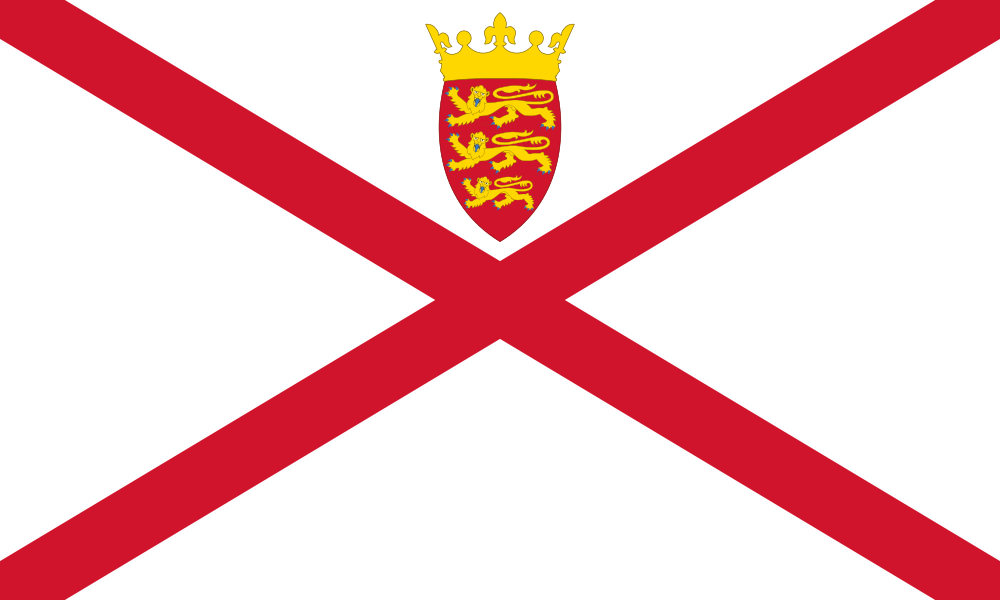
Jersey
Location Info
- Continent: Europe
- Country: Jersey
- Coordinates: 49.2144 , -2.1312
Trust Info
Verified Geographic Information
🌍 Continents

Overview
Jersey, officially the Bailiwick of Jersey, is a British Crown Dependency located in the English Channel, just off the coast of Normandy, France. It is the largest and southernmost of the Channel Islands. While not part of the United Kingdom, the UK is constitutionally responsible for its defense and international representation.
The island is characterized by a mix of British and French cultural influences, reflected in its street names and legal traditions. Historically, it was part of the Duchy of Normandy. Today, Jersey is a leading international finance center with a significant agricultural sector known for Jersey cattle and Jersey Royal potatoes.
Truth & Facts
| Total Area | 118.2 km² |
| Coastline | 70 km |
| Population | 103,267 |
| Capital | Saint Helier |
| Legislature | States Assembly |
| Separation from France | 1204 |
| Currency | Jersey Pound (JEP) |
| Internet Connectivity | 100% Fiber-to-the-Premises |
| Main College | Highlands College |
| Primary Hospital | Jersey General Hospital |
| Traditional Language | Jèrriais |
| Top Attraction | Jersey Zoo |
| Protected Areas | Les Pierres de Lecq |
| Main Hub | Jersey Airport (JER) |
| Sector Body | Digital Jersey |
| Police Force | States of Jersey Police |
| Highest Court | Royal Court of Jersey |
| Sovereign | The British Crown |
| Electricity Source | Import via undersea cable |
| GVA Per Head | £45,320 (approx) |
| Native Species | Jersey Bank Vole |
| Port Authority | Ports of Jersey |
📑 Table of Contents
Overview
Jersey is a self-governing dependency of the British Crown, situated in the English Channel near the coast of France. It is the largest of the Channel Islands and serves as a major international financial center. The island is not part of the United Kingdom or the European Union, though it maintains close links with both.
- Official Name: Bailiwick of Jersey
- Capital: Saint Helier
- Total Area: 118.2 km²
- Political Status: British Crown Dependency
- Currency: Jersey Pound
History
The history of Jersey dates back to the Neolithic period, with several burial sites and dolmens still visible today. In 1204, Jersey remained loyal to the British Crown when King John lost mainland Normandy to France, establishing its unique constitutional status.
| Era | Significance |
|---|---|
| 1204 | Loyalty to England confirmed |
| 1940-1945 | German Occupation in WWII |
| 1960s-Present | Growth of Finance Industry |
Geography
Jersey is an island plateau sloping from north to south. The northern coast consists of high cliffs, while the southern coast is dominated by sandy bays. The island is surrounded by one of the highest tidal ranges in the world.
- Highest Point: Les Platons (136m)
- Major Bays: St Aubin's Bay, St Ouen's Bay
- Geological Composition: Granite and volcanic rocks
Climate & Weather
Jersey enjoys a maritime climate with mild winters and cool summers. Due to its southerly location relative to the UK, it often records some of the highest sunshine hours in the British Isles.
- Warmest Month: July/August
- Coldest Month: January/February
- Average Rainfall: 800mm - 900mm per year
Population & Demographics
The population of Jersey is approximately 103,267. It is a cosmopolitan society with a significant percentage of residents born outside the island, including large British, Portuguese, and Polish communities.
- Population Density: 874 people per km²
- Life Expectancy: ~82 years
- Literacy Rate: 99%
Culture & Lifestyle
Culture in Jersey is a blend of British and French influences. The island maintains its own traditions, such as the 'Honorary Police' system in each parish and the preservation of the Jèrriais language.
- Traditional Language: Jèrriais
- National Dish: Jersey Bean Crock
- Key Heritage: Maritime and Farming
Festivals & Events
The island hosts several annual events that celebrate its community and history. The Battle of Flowers is the most famous, featuring floral floats and parades through St Helier.
- Battle of Flowers: August
- Liberation Day: May 9th
- Jersey International Air Display: September
Food & Cuisine
Jersey's cuisine is defined by high-quality local produce. The Jersey Royal potato and Jersey dairy products are world-renowned for their flavor and quality. Seafood is also a staple due to the island's coastal location.
- Jersey Royal Potatoes
- Jersey Milk and Cream
- Seafood: Oysters, Lobster, Crab
Economy & Industries
Financial services are the primary driver of the Jersey economy, contributing over 40% of the GVA. Other significant sectors include tourism, agriculture, and a growing digital tech sector.
| Sector | Contribution |
|---|---|
| Finance | High |
| Agriculture | Moderate |
| Tourism | Moderate |
Cost of Living
The cost of living in Jersey is relatively high, particularly regarding housing and imported goods. However, the island features lower income tax rates compared to many European countries.
- Standard GST Rate: 5%
- Maximum Income Tax: 20%
- Housing Cost: Above UK average
Employment & Business
Employment is concentrated in the financial and legal sectors. The island has strict residential and employment laws that govern who can work and live in the territory to manage its limited space.
- Unemployment Rate: Low
- Key Employers: Banks, Law Firms, Government
- Work Permits: Required for non-residents
Real Estate & Housing
Housing in Jersey is categorized by residential status. Properties are often classified as 'Qualified' or 'Registered', determining who is eligible to buy or rent based on their length of residency.
- Median House Price: £600k+
- Rent Control: Limited
- Architecture: Traditional granite cottages and modern apartments
Transportation & Connectivity
Jersey is connected to the outside world via Jersey Airport and the harbor at St Helier. Internal transport is facilitated by a comprehensive bus network and a well-maintained road system.
- Airlines: British Airways, EasyJet, Blue Islands
- Ferries: Condor Ferries to UK and France
- Bus Operator: LibertyBus
Infrastructure & Utilities
The island maintains robust utility services. Electricity is largely imported from France via undersea cables, while water is managed through a network of reservoirs and a desalination plant.
- Telecom Provider: JT, Sure, Airtel-Vodafone
- Water: Jersey Water
- Energy: Jersey Electricity
Education
Jersey provides high-quality education through state-run and private schools. The curriculum is based on the English National Curriculum, and students typically take GCSEs and A-Levels.
- Higher Education: Highlands College
- Schools: 30+ Primary and Secondary
- University: Jersey University Centre
Healthcare
Healthcare is provided by the Health and Social Services Department. While residents have access to subsidized care, Jersey is not part of the UK NHS, and different funding rules apply.
- Main Facility: Jersey General Hospital
- Services: Emergency, Maternity, Specialized
- Insurance: Private medical insurance is common
Tourist Attractions
Historical landmarks and natural sites are the main draws for visitors. Castles, war tunnels, and conservation centers provide a deep look into the island's multifaceted identity.
- Mont Orgueil Castle
- Elizabeth Castle
- Jersey War Tunnels
Things to Do
Outdoor activities are popular in Jersey, ranging from coastal hiking and cycling to surfing and paddleboarding. The island's diverse landscape provides opportunities for all ages.
- Coastal path walking
- Surfing at St Ouen's Bay
- Visiting Jersey Zoo
Best Places to Visit
Beyond the capital St Helier, the island's parishes offer unique villages and coastal views. St Brelade's Bay is consistently voted one of the best beaches in the British Isles.
- Gorey Village
- St Aubin's Harbour
- Corbière Lighthouse
Travel Guide
Jersey is easily accessible. Visitors from the UK do not need a passport but require photo ID. The island is small enough to explore fully within a few days using a rental car or bus.
- Driving: Left-hand side
- Speed Limit: Maximum 40 mph
- Time Zone: GMT / BST
Nearby Places
Jersey is a gateway to other Channel Islands and the French coast. Regular ferry services allow for easy day trips to neighboring jurisdictions.
- Guernsey
- Sark and Herm
- Saint-Malo (France)
Environment & Nature
The island is home to diverse ecosystems, including dunes, marshlands, and reefs. Conservation efforts are high, particularly through the Durrell Wildlife Conservation Trust.
- Native Species: Red Squirrels
- Nature Reserve: Les Mielles
- Marine Life: Bottlenose Dolphins
Government & Administration
Jersey is divided into 12 parishes, each with its own civil and ecclesiastical administration. The island is governed by the States Assembly, led by the Chief Minister.
- Head of State: King Charles III
- Head of Government: Chief Minister
- Administrative Units: 12 Parishes
Safety & Public Services
Jersey maintains a very low crime rate. Public services such as fire, rescue, and ambulance are efficient and well-funded. The Honorary Police provide additional community support.
- Emergency Number: 999 or 112
- Police: States of Jersey Police
- Fire Service: Jersey Fire and Rescue
Best Time to Visit
The best time to visit is during the late spring and summer months (May to September) when the weather is warmest and the floral displays are at their peak.
- Peak Season: July and August
- Shoulder Season: May, June, September
- Winter: Quiet, mild but wetter
Local Business Directory
The business landscape is dominated by finance firms, but also includes a robust retail sector in St Helier and numerous local food producers across the parishes.
- Financial Centers: Esplanade, St Helier
- Shopping: King Street and Queen Street
- Local Produce: Farm stalls (Honesty Boxes)
General Information FAQs
Where is Jersey located?
Jersey is located in the English Channel, approximately 14 miles (22 km) off the coast of Normandy, France, and 85 miles (137 km) south of the United Kingdom.
What is Jersey known for?
Jersey is known for its international finance industry, Jersey cattle, Jersey Royal potatoes, and its unique status as a British Crown Dependency with a mix of British and French culture.
Why is Jersey famous?
It is famous for the 'Jersey Royal' potato, the Jersey cow, its wartime history (German Occupation), and the conservation work of Gerald Durrell at Jersey Zoo.
What country or region is Jersey part of?
Jersey is not part of the United Kingdom or the European Union. It is a self-governing British Crown Dependency.
What is the population of Jersey?
According to the 2021 census, the population of Jersey is approximately 103,267.
What languages are spoken in Jersey?
English is the primary language. French is used for some official purposes, and Jèrriais (a Norman French dialect) is recognized as a traditional language.
What time zone is Jersey in?
Jersey follows Greenwich Mean Time (GMT) in winter and British Summer Time (BST) in summer.
What are the key facts about Jersey?
Key facts include its area of 45 square miles, its 12 parishes, and its independent legal and taxation systems.
What makes Jersey unique?
Its unique constitutional relationship with the British Crown, its high tidal range, and its blend of Anglo-Norman history make it distinct.
How large is Jersey in area?
Jersey is approximately 118.2 square kilometers (about 45 square miles).
History FAQs
What is the history of Jersey?
Jersey's history spans from prehistoric Neolithic tribes to the Duchy of Normandy, remaining loyal to the English Crown since 1204. It was the only British soil occupied by German forces during WWII.
When was Jersey established?
While inhabited since prehistoric times, its modern political identity was established in 1204 following the Treaty of Paris.
What major historical events happened in Jersey?
Significant events include the Battle of Jersey in 1781 and the five-year German occupation from 1940 to 1945.
Who were important historical figures from Jersey?
Important figures include Sir George Carteret, a co-founder of New Jersey, and Lillie Langtry, a famous Victorian actress.
How has Jersey developed over time?
Jersey evolved from a rural agricultural and fishing society into a global financial hub in the late 20th century.
Geography & Environment FAQs
What is the geography of Jersey?
Jersey is an island plateau with steep cliffs to the north and sloping sandy beaches to the south.
What natural features surround Jersey?
The island is surrounded by the English Channel, characterized by rocky reefs and significant tidal variations.
Are there mountains, rivers, or lakes near Jersey?
There are no mountains or large rivers, but there are several small streams and man-made reservoirs like Queen's Valley.
What is the elevation of Jersey?
The highest point is Les Platons on the north coast, at 136 meters above sea level.
What ecosystems exist around Jersey?
Ecosystems include coastal heathlands, sand dunes at St Ouen, and intertidal marine zones.
Climate & Weather FAQs
What is the climate like in Jersey?
Jersey has a temperate maritime climate with mild winters and warm, sunny summers.
What is the average temperature in Jersey?
Average temperatures range from 6°C in winter to 19°C in summer.
What is the weather like throughout the year in Jersey?
Spring and summer are generally dry and sunny, while autumn and winter see more wind and rain.
Does Jersey experience extreme weather?
Extreme weather is rare, though the island can experience gale-force winds during winter storms.
What is the best time of year to visit Jersey?
May through September offers the most reliable weather for tourism.
Population & Society FAQs
What is the population density of Jersey?
The density is approximately 874 people per square kilometer, one of the highest in the world for an island jurisdiction.
What ethnic groups live in Jersey?
The population includes Jersey-born, British, Portuguese (specifically Madeiran), Polish, and French residents.
What religions are practiced in Jersey?
Christianity (Anglican and Catholic) is the predominant religion, alongside various other faiths and a significant secular population.
What is daily life like in Jersey?
Daily life is characterized by a balance of modern professional services in St Helier and a relaxed, coastal lifestyle in the outer parishes.
How diverse is the population of Jersey?
Jersey is highly diverse for its size, with roughly 50% of the population born outside the island.
Culture & Traditions FAQs
What cultural traditions are important in Jersey?
The 'Honorary Police' system and the annual 'Battle of Flowers' parade are central to Jersey's cultural identity.
What festivals are celebrated in Jersey?
Key festivals include Liberation Day (May 9), the Battle of Flowers (August), and La Faîs'sie d’Cidre (Cider Festival).
What cultural landmarks exist in Jersey?
Landmarks include the medieval Mont Orgueil Castle, Elizabeth Castle, and the Neolithic site of La Hougue Bie.
What traditional clothing or customs are common in Jersey?
The Jersey sweater (gansey) is a traditional garment, and 'The Clameur de Haro' is an ancient Norman legal custom still in existence.
What arts and crafts are associated with Jersey?
Jersey has a history of knitting, pottery, and silver-smithing.
Food & Cuisine FAQs
What foods is Jersey known for?
Jersey is world-famous for its Jersey Royal potatoes and rich, creamy milk from Jersey cattle.
What traditional dishes originate from Jersey?
Traditional dishes include the 'Jersey Bean Crock' (les pais au fou) and 'Jersey Wonders' (des mèrvelles) - a type of doughnut.
What are the best restaurants in Jersey?
St Helier and St Aubin host a variety of high-end seafood restaurants and Michelin-rated establishments.
What local ingredients are commonly used in Jersey cuisine?
Local ingredients include lobster, crab, oysters, Jersey Royal potatoes, and dairy products.
What food markets or street foods are popular in Jersey?
The Central Market and Beresford Market in St Helier are popular for local produce and fresh seafood.
Economy & Business FAQs
What are the main industries in Jersey?
Financial services, tourism, agriculture, and digital technology are the main economic drivers.
What economic activities drive the economy of Jersey?
Offshore banking, trust management, fund administration, and the export of dairy and potatoes drive the economy.
What businesses operate in Jersey?
Global banks, law firms, and accountancy firms have a large presence alongside local retail and hospitality businesses.
Is Jersey an important economic center?
Yes, it is recognized globally as a leading international finance center (IFC).
What are the major exports or products from Jersey?
Financial services are the primary export, followed by Jersey Royal potatoes and dairy products.
Employment & Jobs FAQs
What job opportunities are available in Jersey?
Most opportunities are in the finance, legal, compliance, and hospitality sectors.
What are the major employers in Jersey?
The Government of Jersey is the largest employer, followed by major banks like HSBC, RBS International, and Barclays.
What skills are in demand in Jersey?
Skills in accounting, law, digital technology, and healthcare are in high demand.
Is Jersey a good place to work?
Yes, it offers high salaries and a short commute, though the cost of living is high.
What is the unemployment rate in Jersey?
Historically, Jersey maintains a very low unemployment rate, often below 1-2%.
Cost of Living FAQs
Is Jersey expensive to live in?
Yes, it is considered one of the more expensive places to live in the British Isles, specifically regarding housing.
What is the average cost of living in Jersey?
Costs are similar to London, with groceries and services slightly higher due to shipping costs.
How much does housing cost in Jersey?
Housing costs are high, with average house prices often exceeding £650,000.
What are average food and utility costs in Jersey?
Food and utility costs are generally higher than in the UK due to the island's isolation.
Is Jersey affordable compared to nearby cities?
It is generally more expensive than nearby French cities but comparable to major financial hubs like London or Geneva.
Housing & Real Estate FAQs
What types of housing are available in Jersey?
Options range from traditional granite farmhouses and fisherman's cottages to modern luxury apartments in St Helier.
What is the average home price in Jersey?
As of 2024, the average price for a family home is between £600,000 and £900,000.
Is it better to rent or buy property in Jersey?
This depends on residential status; those with 'Entitled' status often prefer buying as a long-term investment.
Which neighborhoods are popular in Jersey?
St Brelade, St Peter, and the waterfront areas of St Helier are highly sought after.
How has the property market changed in Jersey?
Prices have risen significantly over the last decade due to limited supply and high demand.
Transportation FAQs
How do you get to Jersey?
Access is by air from various UK and European airports or by ferry from Poole, Portsmouth, and Saint-Malo.
What is the nearest airport to Jersey?
Jersey Airport (JER) is the island's only airport, located in the parish of St Peter.
Does Jersey have railway connections?
No, there are no railways in Jersey today, although a narrow-gauge railway existed in the past.
How reliable is public transportation in Jersey?
The LibertyBus network is very reliable and covers the majority of the island's parishes.
What major highways or roads connect to Jersey?
Jersey has a dense network of roads, though there are no motorways and the maximum speed limit is 40 mph.
Education FAQs
What schools are located in Jersey?
There are over 30 schools, including state-provided primary and secondary schools and several private colleges.
Are there universities in Jersey?
Higher education is provided via University College Jersey (Highlands College), offering degrees in partnership with UK universities.
What is the literacy rate in Jersey?
The literacy rate is estimated at 99%.
What educational opportunities exist in Jersey?
Students can pursue vocational training, standard UK academic qualifications, and professional financial certifications.
Is Jersey a good place for students?
Yes, it is safe and provides high standards of education, though university students often move to the UK for diverse degree options.
Healthcare FAQs
What hospitals are available in Jersey?
Jersey General Hospital in St Helier is the primary provider of acute and emergency care.
Are there emergency medical services in Jersey?
Yes, the island has its own ambulance and fire/rescue services accessible via 999.
What healthcare facilities exist in Jersey?
In addition to the main hospital, there are various GP clinics, dental surgeries, and private medical centers.
Is healthcare affordable in Jersey?
Residents pay for GP visits, but hospital treatments are largely covered for those with a valid health card.
Are specialized medical services available in Jersey?
Basic specialties are available locally; however, complex cases are often transferred to UK hospitals via medevac.
Tourism & Travel FAQs
What are the top tourist attractions in Jersey?
Top sites include Jersey Zoo, the Jersey War Tunnels, Mont Orgueil Castle, and St Brelade's Bay.
What are the best things to do in Jersey?
Walking the north coast cliffs, exploring the castles, and enjoying water sports at St Ouen's Bay are popular activities.
Is Jersey worth visiting?
Yes, it offers a unique blend of history, high-quality food, and stunning natural scenery within a compact area.
What landmarks should visitors see in Jersey?
The Corbière Lighthouse, Elizabeth Castle, and the La Hougue Bie Neolithic tomb are essential landmarks.
How many days should tourists spend in Jersey?
3 to 5 days is usually sufficient to see the main highlights of the island.
Nearby Places FAQs
What places are near Jersey worth visiting?
The other Channel Islands (Guernsey, Sark) and the French town of Saint-Malo are highly recommended.
What cities or towns are close to Jersey?
Saint-Malo and Granville in France are the closest continental cities.
What natural attractions are near Jersey?
The Ecrehous and Minquiers reefs offer unique marine environments and are reachable by boat.
What day trips can be taken from [Location]?
Day trips to Guernsey by ferry or Sark by boat are very popular during the summer months.
What famous destinations are within reach of [Location]?
Mont Saint-Michel in France is a famous destination accessible via a ferry to Saint-Malo and a short drive.
Safety FAQs
Is Jersey safe to live in?
Yes, Jersey is one of the safest jurisdictions in Europe with very low rates of violent crime.
Is Jersey safe for tourists?
Yes, it is very safe for tourists. Normal common-sense precautions are recommended.
What is the crime rate in Jersey?
The crime rate is significantly lower than that of mainland UK cities.
What emergency services operate in Jersey?
The island operates the States of Jersey Police, Jersey Fire and Rescue, and the States of Jersey Ambulance Service.
What safety tips should visitors follow in Jersey?
Visitors should be aware of the fast-rising tides when walking on the beach and follow the speed limits on narrow country roads.
Lifestyle & Living FAQs
Is Jersey a good place to live?
It offers a high quality of life, excellent schools, and beautiful scenery, though it is expensive.
What recreational activities are available in Jersey?
Sailing, golf, surfing, and cycling are very popular among residents.
Is Jersey family-friendly?
Yes, it is extremely family-friendly with many parks, beaches, and safe community spaces.
What outdoor activities are popular in Jersey?
Hiking the coastal paths and sea swimming are part of the local lifestyle.
What makes life enjoyable in Jersey?
The proximity to the sea, the high standard of local produce, and a strong sense of community make it enjoyable.
Practical Information FAQs
What travel tips should visitors know about Jersey?
Currency is the Jersey pound (UK notes are accepted, but Jersey notes may not be in the UK). UK mobile plans may incur roaming charges.
What local customs should visitors respect in Jersey?
Respecting the slow speed limits (Green Lanes) and the 'honesty box' system at farm stalls is appreciated.
How accessible is Jersey for international visitors?
Jersey is highly accessible via air from major hubs like London Gatwick and Heathrow.
What services are available for tourists in Jersey?
Information centers, guided tours, car rentals, and a comprehensive bus service are available.
What important information should travelers know before visiting Jersey?
While it feels British, it is distinct; always check your mobile roaming and ensure you have proper ID for travel.