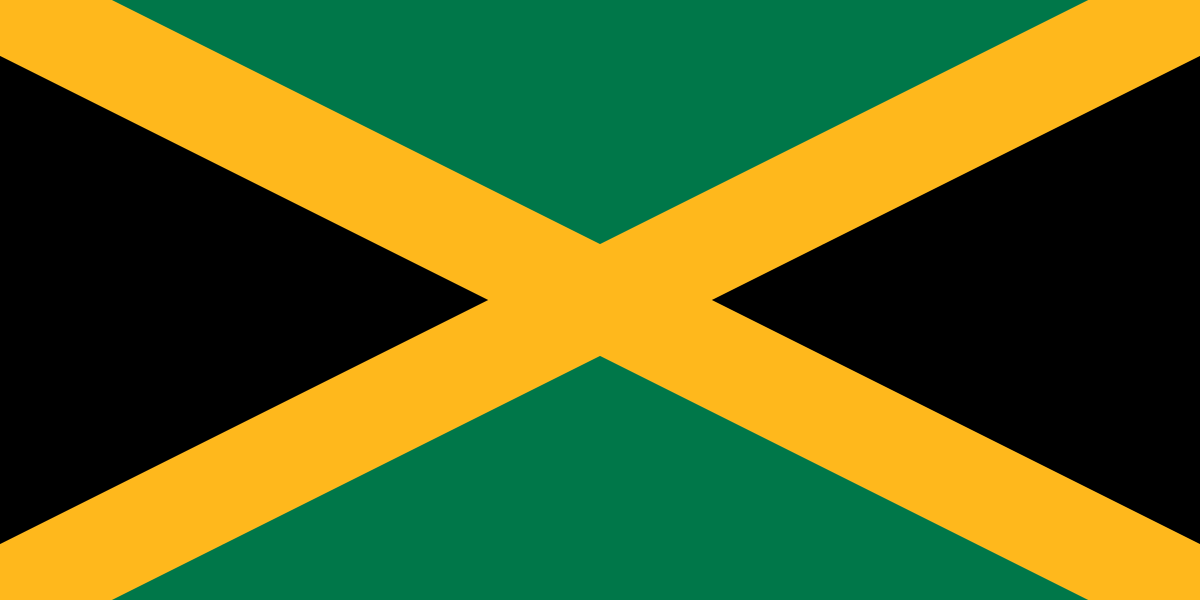
Jamaica
Location Info
- Continent: North America
- Country: Jamaica
- Coordinates: 18.1096 , -77.2975
Trust Info
Verified Geographic Information
🌍 Continents

Overview
Jamaica is an island country situated in the Caribbean Sea, south of Cuba and west of Hispaniola. It is the third-largest island of the Greater Antilles and the largest English-speaking nation in the Caribbean. The island's geography is defined by a mountainous interior, including the famous Blue Mountains, surrounded by a narrow coastal plain. Its name is derived from the indigenous Taino word 'Xaymaca,' meaning the 'Land of Wood and Water.'
Historically, Jamaica transitioned from Spanish to British colonial rule before gaining independence in 1962. Today, it is a parliamentary constitutional monarchy and a member of the Commonwealth. The nation is globally recognized for its significant contributions to music, particularly reggae, and its dominance in international athletics. Economically, Jamaica relies heavily on tourism, bauxite mining, and agriculture, maintaining a high profile as a cultural and economic hub in the West Indies.
Truth & Facts
| Total Area | 10,991 sq km |
| Highest Point | Blue Mountain Peak (2,256 m) |
| Population | 2,839,175 |
| Literacy Rate | 96% |
| Capital | Kingston |
| Administrative Divisions | 14 Parishes |
| Independence | August 6, 1962 |
| British Conquest | 1655 |
| Currency | Jamaican Dollar (JMD) |
| Major Industry | Tourism |
| International Airports | 3 |
| Major Seaport | Port of Kingston |
| National Dish | Ackee and Saltfish |
| Official Language | English |
| Road Network | 21,000 km |
| Rail Usage | Bauxite Transport |
| Forest Cover | 56.2% |
| Climate Type | Tropical |
| Police Force | Jamaica Constabulary Force |
| Main University | University of the West Indies |
| Primary Hospital | University Hospital of the West Indies |
| Prime Minister | Andrew Holness |
| CARICOM Member | Since 1973 |
| Electricity Access | 97.7% |
| Internet Usage | 89% |
| Average Annual Tourists | 4.3 Million |
| National Park | Blue and John Crow Mountains |
| GDP (Nominal) | $22.01 Billion |
| Primary Religion | Christianity (68.9%) |
📑 Table of Contents
Overview of Jamaica
Jamaica is a sovereign island country located in the Caribbean Sea, forming part of the Greater Antilles. It is situated approximately 145 kilometers south of Cuba and 191 kilometers west of Hispaniola. As the third-most populous Anglophone country in the Americas, it serves as a central cultural and economic figure in the region. The capital city, Kingston, acts as the primary hub for government and commerce.
- Official Language: English
- National Motto: 'Out of Many, One People'
- Anthem: 'Jamaica, Land We Love'
- Currency: Jamaican Dollar (JMD)
- Capital: Kingston
History
The history of Jamaica began with the indigenous Taino people, who inhabited the island for centuries before European arrival. Christopher Columbus reached the shores in 1494, leading to Spanish colonization. In 1655, the English captured the island, transforming it into a major sugar-producing colony powered by the labor of enslaved Africans. Following the abolition of slavery in 1838, the nation moved toward self-governance, eventually achieving full independence from the United Kingdom on August 6, 1962.
| Period | Key Event |
|---|---|
| 1494 | Arrival of Christopher Columbus |
| 1655 | English conquest of the island |
| 1838 | Full emancipation of enslaved people |
| 1962 | Independence from British rule |
Geography
The island's terrain is characterized by a central ridge of mountains and hills, with the Blue Mountains in the east reaching the highest elevation. These highlands are surrounded by a narrow, discontinuous coastal plain where most major settlements are located. Jamaica's coastline stretches for 1,022 kilometers, featuring numerous natural harbors and bays.
- Total Land Area: 10,991 sq km
- Highest Peak: Blue Mountain Peak (2,256 m)
- Major Rivers: Rio Minho, Black River, Rio Cobre
- Natural Resources: Bauxite, Gypsum, Limestone
- Coastal Features: White sand beaches and coral reefs
Climate & Weather
Jamaica possesses a tropical climate, characterized by hot and humid conditions in the coastal regions and more temperate weather in the mountainous interior. The island experiences two main rainy seasons, typically occurring from May to June and September to November. Its location within the Atlantic hurricane belt makes it susceptible to tropical storms and hurricanes during the summer and autumn months.
- Average Temperature: 22°C to 34°C
- Rainy Seasons: May–June and Sept–Nov
- Hurricane Season: June 1 to November 30
- Coastal Humidity: High throughout the year
Population & Demographics
The population of Jamaica is approximately 2.8 million people, reflecting a rich heritage of African, European, and Asian ancestry. The majority of citizens identify as being of African descent, a legacy of the colonial plantation era. Urbanization is significant, with over 60% of the population residing in cities like Kingston, Spanish Town, and Montego Bay.
- Ethnic Groups: 92.1% Black, 6.1% Mixed, 0.8% East Indian
- Urban Population: 60.69%
- Median Age: 33.3 years
- Population Density: 268/km²
Culture & Lifestyle
Jamaican culture is a global phenomenon, particularly in the realms of music and religion. It is the birthplace of Reggae, Ska, and Dancehall music, with icons like Bob Marley bringing international attention to the island. The Rastafari movement also originated here, influencing art, philosophy, and lifestyle worldwide. Daily life is centered around community, vibrant street markets, and a strong tradition of oral storytelling and Patois language.
- Music Genres: Reggae, Ska, Rocksteady, Dancehall
- Religion: Predominantly Christian, with Rastafari influence
- National Symbol: Doctor Bird (Trochilus polytmus)
- Standard Language: English (Official) and Patois
Festivals & Events
Events in Jamaica often celebrate the nation's history and creative spirit. Independence Day on August 6 is the most significant national holiday, featuring parades and cultural displays. Music festivals attract thousands of international visitors annually, showcasing the best of local and global talent.
- Independence Day: August 6
- Reggae Sumfest: July (Montego Bay)
- Carnival in Jamaica: Post-Lent celebration
- Rebel Salute: January
Food & Cuisine
Jamaican cuisine is known for its bold flavors and unique cooking techniques, such as 'jerking' meat with a spicy pimento-based rub. The national dish, Ackee and Saltfish, reflects the island's history of utilizing local fruit and imported preserved fish. Tropical fruits, ground provisions like yams, and fresh seafood are staples of the diet.
- National Dish: Ackee and Saltfish
- Signature Flavor: Jerk (Chicken or Pork)
- Renowned Export: Blue Mountain Coffee
- Popular Pastry: Jamaican Patty
Economy & Industries
The economy of Jamaica is mixed, relying on services, mining, and agriculture. Tourism is the largest foreign exchange earner, while the mining of bauxite and the production of alumina remain critical exports. The nation is also working to position itself as a logistics hub for the Caribbean, utilizing its strategic location near the Panama Canal.
| Sector | Contribution to GDP |
|---|---|
| Services/Tourism | ~70% |
| Industry/Mining | ~21% |
| Agriculture | ~9% |
Cost of Living
The cost of living in Jamaica varies by region, with urban areas like Kingston being more expensive than rural parishes. Imported goods typically carry higher price tags due to duties and shipping costs. However, local produce and services remain relatively affordable for the average resident.
- Housing: Expensive in gated communities and urban centers
- Utilities: Electricity costs are high relative to regional averages
- Food: Local markets offer affordable 'ground provisions'
Employment & Business
Jamaica's labor force is primarily engaged in the services sector, especially tourism and retail. The government has focused on expanding Business Process Outsourcing (BPO) and technical services to reduce unemployment. Entrepreneurship is highly valued, with a large number of micro and small businesses operating across the island.
- Top Employer: Tourism & Hospitality
- Emerging Sector: Business Process Outsourcing (BPO)
- Unemployment Rate: ~3.3% (2025 ILO estimate)
Real Estate & Housing
The housing market in Jamaica includes a mix of traditional detached homes, modern apartment complexes in Kingston, and luxury villas in resort towns like Ocho Rios and Montego Bay. Government initiatives through the National Housing Trust (NHT) help residents access affordable mortgage financing.
- Urban Centers: High demand for townhouses and apartments
- Resort Areas: Active market for vacation rentals
- Financing: Facilitated largely by the NHT
Transportation & Connectivity
Roadways are the primary means of internal transport, with a system of modern freeways connecting major cities. The island has two primary international airports and a major transshipment port in Kingston. While the railway system is used for industrial bauxite transport, passenger rail service is currently minimal.
- International Airports: Norman Manley (Kingston), Sangster (Montego Bay)
- Public Transit: JUTC buses (Kingston) and route taxis
- Major Highways: Highway 2000 (North-South and East-West)
Infrastructure & Utilities
Jamaica's infrastructure has seen massive investment in recent years, focusing on road expansion and port modernization. Public utilities include electricity provided by JPS and water managed by the NWC. The country is increasingly integrating renewable energy sources into its national grid.
- Electricity: Provided by Jamaica Public Service Company (JPS)
- Water: Managed by National Water Commission (NWC)
- Ports: Kingston Freeport Terminal is a regional leader
Education
The Jamaican education system is modeled on the British structure. Primary education is free and compulsory, followed by secondary and tertiary levels. The island hosts the regional headquarters of the University of the West Indies at the Mona campus in Kingston.
- Major University: University of the West Indies (UWI)
- Technical Training: HEART/NSTA Trust
- Literacy Rate: 96% (2022)
Healthcare
Healthcare is provided through a network of public hospitals and clinics, supplemented by private facilities. While the public system offers free basic care to residents, specialized services are often concentrated in Kingston and Montego Bay.
- Public Hospitals: Cornwall Regional, Kingston Public Hospital (KPH)
- Teaching Hospital: University Hospital of the West Indies (UHWI)
- Emergency Services: Available through 119 and dedicated ambulance services
Tourist Attractions
Jamaica is famous for its diverse natural and historical attractions. From cascading waterfalls to historic pirate havens, the island offers a wide range of sites for international and local visitors. Many attractions are centered around the northern coast and the capital city.
- Dunn's River Falls (Ocho Rios)
- Blue Mountain Peak
- Bob Marley Museum (Kingston)
- Seven Mile Beach (Negril)
- Port Royal Ruins
Things to Do
Activities in Jamaica range from adrenaline-filled adventures to cultural exploration. Visitors can hike the highest peaks in the Caribbean, raft down tranquil rivers, or explore the deep musical heritage of the island's urban centers.
- Hiking in the Blue Mountains
- Bamboo Rafting on the Martha Brae River
- Snorkeling and Diving in protected marine parks
- Visiting Coffee Plantations
Best Places to Visit
Different regions of Jamaica offer unique experiences. Montego Bay is known for luxury resorts, while Negril is famous for sunsets and cliffs. Kingston offers a deep dive into the nation's political and artistic history.
- Kingston: Culture and History
- Montego Bay: Resorts and Golf
- Negril: Beaches and Sunsets
- Portland: Lush nature and Blue Lagoon
Travel Guide
Traveling to Jamaica is facilitated by several international flight routes. Within the island, visitors often use taxis, car rentals, or domestic flights between Kingston and the resort towns. Knowledge of local customs and basic Patois can enhance the experience.
- Entry: Most visitors require a valid passport; many countries are visa-exempt
- Driving: Left side of the road
- Mobile: Digicel and Flow are the main providers
Nearby Places
Jamaica's location in the center of the Caribbean makes it a hub for regional travel. Neighboring island nations and territories are accessible via short flights or sea routes, including the Cayman Islands and Cuba.
- Cayman Islands: Northwest of Jamaica
- Cuba: Directly to the North
- Haiti: Directly to the East
Environment & Nature
The island's biodiversity is highly protected in several national parks. Jamaica is home to many endemic species of birds and plants. Environmental challenges include managing the impact of bauxite mining and preserving coral reef health against climate change.
- Protected Areas: Blue and John Crow Mountains National Park
- Endemic Species: Over 300 bird species
- Environmental Agency: NEPA (National Environment and Planning Agency)
Government & Administration
Jamaica is a constitutional monarchy with a parliamentary system. The British monarch is the ceremonial head of state, represented by a Governor-General. Executive power is held by the Prime Minister and the Cabinet, while legislative power is vested in a bicameral Parliament.
- Head of Government: Prime Minister
- Head of State: King Charles III
- Legislature: Senate and House of Representatives
Safety & Public Services
Public safety is managed by the Jamaica Constabulary Force (JCF). The government has implemented various programs to improve safety in urban areas. Emergency services for police, fire, and medical needs are standard and accessible via dedicated hotlines.
- Emergency Police: 119
- Emergency Fire/Ambulance: 110
- Tourist Police: Specialized units in resort areas
Best Time to Visit
The peak tourist season is from mid-December to mid-April when the weather is driest and most pleasant. Travelers looking for lower prices may visit during the shoulder seasons, though they should be mindful of the hurricane season later in the year.
- Peak Season: December to April
- Low Season: July to October (Hurricane season)
- Best for Festivals: July (Sumfest)
Local Business Directory
Jamaica's business landscape is diverse, ranging from international banks and hotel chains to local craft markets and agricultural cooperatives. Main commercial districts are found in Kingston (New Kingston) and Montego Bay (Freezone).
- Financial Hub: New Kingston
- Main Commercial Port: Kingston Harbour
- Retail Centers: Sovereign Centre, Half Way Tree
General Information FAQs
Where is Jamaica located?
Jamaica is an island country located in the Caribbean Sea, south of Cuba and west of Haiti and the Dominican Republic.
What is Jamaica known for?
Jamaica is globally known for being the birthplace of reggae music, the Rastafari movement, its world-class sprinters, and Blue Mountain Coffee.
Why is Jamaica famous?
Jamaica is famous for its rich cultural exports, specifically music (Bob Marley), its dominance in Olympic athletics (Usain Bolt), and its stunning tropical landscapes.
What country or region is Jamaica part of?
Jamaica is an independent nation located in the Caribbean region of North America. It is a member of the West Indies.
What is the population of Jamaica?
The estimated population of Jamaica is approximately 2.8 million people as of recent estimates.
What languages are spoken in Jamaica?
The official language is English. However, Jamaican Patois (an English-based creole) is spoken natively by the vast majority of the population.
What time zone is Jamaica in?
Jamaica operates on Eastern Standard Time (UTC-5) and does not observe Daylight Saving Time.
What are the key facts about Jamaica?
Key facts include: Capital is Kingston; official currency is the Jamaican Dollar; gained independence in 1962; and its national motto is 'Out of Many, One People.'
What makes Jamaica unique?
Jamaica's uniqueness stems from its outsized global cultural influence relative to its size, its indigenous musical genres, and its status as the 'Land of Wood and Water.'
How large is Jamaica in area?
Jamaica covers a total land area of approximately 10,991 square kilometers (4,244 square miles).
History FAQs
What is the history of Jamaica?
Jamaica's history includes settlement by the Taino people, Spanish conquest, British rule and the plantation economy, and eventually independence in 1962.
When was Jamaica established?
The island was settled by the Spanish in 1509. Modern independent Jamaica was established on August 6, 1962.
What major historical events happened in Jamaica?
Major events include the British conquest in 1655, the destruction of Port Royal in 1692, the 1831 Baptist War, and the achievement of independence in 1962.
Who were important historical figures from Jamaica?
Important figures include National Heroes like Marcus Garvey, Samuel Sharpe, Nanny of the Maroons, and modern icons like Bob Marley.
How has Jamaica developed over time?
Jamaica transitioned from an indigenous society to a Spanish outpost, then to a dominant British sugar colony, and finally to a modern democratic nation with a diverse economy.
Geography & Environment FAQs
What is the geography of Jamaica?
The geography features a mountainous interior with a central limestone plateau, surrounded by a narrow coastal plain and white sand beaches.
What natural features surround Jamaica?
Jamaica is entirely surrounded by the Caribbean Sea, featuring coral reefs, offshore cays, and the deep Cayman Trench to the north.
Are there mountains, rivers, or lakes near Jamaica?
Yes, the Blue Mountains dominate the east. Significant rivers include the Black River and Rio Grande. There are few natural lakes; most large bodies of water are reservoirs.
What is the elevation of Jamaica?
The elevation ranges from sea level on the coast to 2,256 meters at the summit of Blue Mountain Peak.
What ecosystems exist around Jamaica?
Ecosystems include tropical rainforests, dry limestone forests, coastal mangroves, and coral reef systems.
Climate & Weather FAQs
What is the climate like in Jamaica?
Jamaica has a tropical climate, which is generally hot and humid at sea level and cooler in the highland areas.
What is the average temperature in Jamaica?
Coastal temperatures typically range between 22°C (72°F) and 34°C (93°F) year-round.
What is the weather like throughout the year in Jamaica?
The weather is consistently warm. Rainy seasons occur in late spring and autumn, while the rest of the year is generally sunny.
Does Jamaica experience extreme weather?
Yes, the island is prone to hurricanes and tropical storms during the official Atlantic hurricane season from June to November.
What is the best time of year to visit Jamaica?
The best time to visit is during the dry season, between mid-December and April, to avoid heavy rainfall and high humidity.
Population & Society FAQs
What is the population density of Jamaica?
The population density is approximately 268 people per square kilometer, with higher concentrations in urban areas like Kingston.
What ethnic groups live in Jamaica?
Over 90% of the population is of African descent. Other groups include Mixed-race, East Indian, Chinese, and European minorities.
What religions are practiced in Jamaica?
The majority are Christian (primarily Protestant). Other significant groups include Rastafarians, Hindus, Muslims, and those with no religious affiliation.
What is daily life like in Jamaica?
Daily life often revolves around community interactions, vibrant street commerce, and a strong emphasis on family and music.
How diverse is the population of Jamaica?
The population is quite diverse, historically blending African, European, and Asian cultures, as captured in the national motto 'Out of Many, One People.'
Culture & Traditions FAQs
What cultural traditions are important in Jamaica?
Important traditions include storytelling (Anansi stories), Nine-Night (wake traditions), and the unique musical heritage of Reggae and Dancehall.
What festivals are celebrated in Jamaica?
Key celebrations include Independence Day (August 6), Emancipation Day (August 1), Reggae Sumfest, and Accompong Maroon Festival.
What cultural landmarks exist in Jamaica?
Notable landmarks include the Bob Marley Museum, Devon House, Rose Hall Great House, and the historic town of Spanish Town.
What traditional clothing or customs are common in Jamaica?
Traditional clothing includes the 'Quadrille' dress for formal folk dances. Common customs include strong respect for elders and vibrant market shopping.
What arts and crafts are associated with Jamaica?
Jamaica is known for wood carvings, straw work, pottery (like Wari pottery), and vibrant fine arts produced by the Edna Manley College students.
Food & Cuisine FAQs
What foods is Jamaica known for?
Jamaica is famous for Jerk chicken, Ackee and Saltfish, Curry Goat, and Blue Mountain Coffee.
What traditional dishes originate from Jamaica?
Original dishes include Jamaican Patties, Bammy (cassava flatbread), and Run Down (stew cooked in coconut milk).
What are the best restaurants in Jamaica?
Top-rated establishments range from high-end dining in Kingston to 'Jerk Centers' like Boston Bay in Portland and Scotchies in Montego Bay.
What local ingredients are commonly used in Jamaica cuisine?
Common ingredients include Scotch Bonnet peppers, pimento (allspice), thyme, scallion, coconut milk, and yams.
What food markets or street foods are popular in Jamaica?
Street foods like roast corn, boiled peanuts, and patties are staples. Markets like Coronation Market in Kingston are vital for local trade.
Economy & Business FAQs
What are the main industries in Jamaica?
The primary industries are tourism, bauxite/alumina mining, agriculture, and manufacturing.
What economic activities drive the economy of Jamaica?
Foreign exchange is driven by tourism and remittances, while mining and agricultural exports (sugar, coffee) are key pillars.
What businesses operate in Jamaica?
Jamaica hosts many international hotel chains, global BPO firms, and local conglomerates like GraceKennedy and Jamaica Producers.
Is Jamaica an important economic center?
Yes, Jamaica is one of the largest economies in the Caribbean and a founding member of the CARICOM single market.
What are the major exports or products from Jamaica?
Major exports include Alumina, Bauxite, Sugar, Rum, Coffee, and Bananas.
Employment & Jobs FAQs
What job opportunities are available in Jamaica?
Opportunities are prevalent in the hospitality sector, customer service (BPO), agriculture, and the growing tech service sector.
What are the major employers in Jamaica?
Major employers include the Government of Jamaica, large hotel chains (Sandals, RIU), and telecommunications companies (Digicel, Flow).
What skills are in demand in Jamaica?
In-demand skills include digital literacy, hospitality management, healthcare professional services, and skilled trades for infrastructure projects.
Is Jamaica a good place to work?
The work environment is culturally rich, though salary scales are often lower than in North America. The BPO and tech sectors are expanding rapidly.
What is the unemployment rate in Jamaica?
The unemployment rate has reached historic lows recently, estimated at around 3.3% as of 2025.
Cost of Living FAQs
Is Jamaica expensive to live in?
For residents, the cost is moderate but can be high due to the price of imported goods and high electricity costs.
What is the average cost of living in Jamaica?
An average individual may spend roughly $600 to $1,000 USD per month excluding rent, depending on lifestyle and location.
How much does housing cost in Jamaica?
Rent for a one-bedroom apartment in a city center can range from $500 to $900 USD, while rural housing is significantly cheaper.
What are average food and utility costs in Jamaica?
Electricity and water can be expensive, often exceeding $100 USD monthly for a small home. Local food is affordable, but imported items are costly.
Is Jamaica affordable compared to nearby cities?
Jamaica is generally more affordable than the Cayman Islands or the Bahamas, but more expensive than some Central American neighbors.
Housing & Real Estate FAQs
What types of housing are available in Jamaica?
Available housing includes urban apartments, gated community townhomes, rural farmhouses, and luxury coastal villas.
What is the average home price in Jamaica?
Prices vary wildly; a modest urban home may cost $150,000 USD, while luxury properties in Montego Bay can exceed $1,000,000 USD.
Is it better to rent or buy property in Jamaica?
Buying is often seen as a good long-term investment, especially in developing areas, but renting is preferred for those staying short-term.
Which neighborhoods are popular in Jamaica?
Popular areas include Barbican and Norbrook in Kingston, and the Ironshore area in Montego Bay.
How has the property market changed in Jamaica?
The market has seen a surge in high-rise developments in Kingston and an increase in AirBnB-style vacation properties in resort parishes.
Transportation FAQs
How do you get to Jamaica?
Jamaica is primarily accessed via international flights to Kingston (KIN) or Montego Bay (MBJ), and by cruise ships docking at various ports.
What is the nearest airport to Jamaica?
The main international gates are Norman Manley in Kingston and Sangster in Montego Bay. Ian Fleming Airport serves smaller craft in the north.
Does Jamaica have railway connections?
Jamaica has an extensive rail network, but it is currently used almost exclusively for bauxite transport rather than passengers.
How reliable is public transportation in Jamaica?
Public buses (JUTC) are reliable in Kingston. Outside the capital, residents rely on 'route taxis' and minibuses which are frequent but often crowded.
What major highways or roads connect to Jamaica?
Major highways include the North-South Highway (connecting Kingston to Ocho Rios) and the East-West Highway (Highway 2000).
Education FAQs
What schools are located in Jamaica?
Jamaica has thousands of primary and secondary schools, including prestigious institutions like Campion College and Wolmer's Schools.
Are there universities in Jamaica?
Yes, major universities include the University of the West Indies (UWI), University of Technology (UTech), and Northern Caribbean University (NCU).
What is the literacy rate in Jamaica?
The literacy rate is high, estimated at approximately 96% for adults over 15.
What educational opportunities exist in Jamaica?
Opportunities range from traditional academic degrees to vocational training provided by the HEART/NSTA Trust.
Is Jamaica a good place for students?
Yes, Kingston is a regional educational hub with a vibrant student life, though infrastructure and resource availability can vary.
Healthcare FAQs
What hospitals are available in Jamaica?
Primary public hospitals include Kingston Public Hospital and Cornwall Regional. Major private facilities include Andrews Memorial Hospital.
Are there emergency medical services in Jamaica?
Yes, emergency medical services are available via public ambulance (dial 110) and several private ambulance companies.
What healthcare facilities exist in Jamaica?
The country has a network of primary care clinics (Type 1 to 5) and several specialized tertiary hospitals.
Is healthcare affordable in Jamaica?
Public healthcare is free for residents at the point of delivery, though private healthcare requires insurance or out-of-pocket payment.
Are specialized medical services available in Jamaica?
Specialized care is available in areas like cardiology and oncology, mostly concentrated in the larger hospitals in Kingston.
Tourism & Travel FAQs
What are the top tourist attractions in Jamaica?
Top sites include Dunn's River Falls, Mystic Mountain, the Blue Lagoon, and the Bob Marley Museum.
What are the best things to do in Jamaica?
Activities include climbing waterfalls, snorkeling, attending live reggae sessions, and exploring the Blue Mountains.
Is Jamaica worth visiting?
Jamaica is considered a premier Caribbean destination due to its unique blend of culture, history, and natural beauty.
What landmarks should visitors see in Jamaica?
Visitors should see the Luminous Lagoon, Rick's Cafe in Negril, and the historic buildings of Spanish Town.
How many days should tourists spend in Jamaica?
A typical stay ranges from 5 to 7 days to cover a major resort area and a few key inland or cultural attractions.
Nearby Places FAQs
What places are near Jamaica worth visiting?
Nearby destinations include the Cayman Islands, the southern coast of Cuba, and the island of Hispaniola (Haiti/Dominican Republic).
What cities or towns are close to Jamaica?
Geographically, George Town (Cayman Islands) and Santiago de Cuba are the closest major international cities.
What natural attractions are near Jamaica?
The Cayman Trench, one of the deepest parts of the Atlantic Ocean, lies just north of Jamaica.
What day trips can be taken from Jamaica?
Most day trips are internal, such as traveling from Montego Bay to Ocho Rios or from Kingston to the Blue Mountains.
What famous destinations are within reach of Jamaica?
The Florida coast (USA) and the Panama Canal are both within a relatively short flight or shipping route from Jamaica.
Safety FAQs
Is Jamaica safe to live in?
Safety varies by neighborhood. Residential areas in parishes like St. Ann or parts of St. Andrew are considered very safe, while some urban districts have higher crime rates.
Is Jamaica safe for tourists?
Yes, millions of tourists visit safely every year. Visitors are advised to stay in established tourist zones and follow standard travel safety precautions.
What is the crime rate in Jamaica?
Jamaica has a high homicide rate per capita, though this is largely concentrated in specific non-tourist urban areas and linked to organized crime.
What emergency services operate in Jamaica?
The Jamaica Constabulary Force (Police), Jamaica Fire Brigade, and various public and private medical responders.
What safety tips should visitors follow in Jamaica?
Avoid walking alone at night in unfamiliar areas, use licensed JUTA taxis, and keep valuables in hotel safes.
Lifestyle & Living FAQs
Is Jamaica a good place to live?
Jamaica offers a high quality of life for those who enjoy a warm climate and vibrant culture, though economic challenges exist for some.
What recreational activities are available in Jamaica?
Recreation includes football, cricket, water sports, hiking, and participating in the island's bustling nightlife and music scene.
Is Jamaica family-friendly?
Yes, the culture is very family-oriented, and many resorts and attractions are specifically designed for all ages.
What outdoor activities are popular in Jamaica?
Swimming, sea-bathing, river rafting, and mountain trekking are the most popular outdoor pursuits.
What makes life enjoyable in Jamaica?
The relaxed 'island time' lifestyle, world-class food, constant sunshine, and a strong sense of community and national pride.
Practical Information FAQs
What travel tips should visitors know about Jamaica?
Tipping is expected in most service industries, and local currency (JMD) is best for small purchases, though USD is widely accepted in tourist areas.
What local customs should visitors respect in Jamaica?
Respecting elders, dressing modestly when away from the beach, and understanding the significance of the Rastafari faith are important.
How accessible is Jamaica for international visitors?
Jamaica is very accessible with direct flights from North America, Europe, and Latin America through its two main international airports.
What services are available for tourists in Jamaica?
Extensive services include guided tours, car rentals, visitor information centers (JTB), and diverse hospitality options.
What important information should travelers know before visiting Jamaica?
Travelers should ensure they have travel insurance, be aware of the rainy seasons, and check visa requirements based on their nationality.