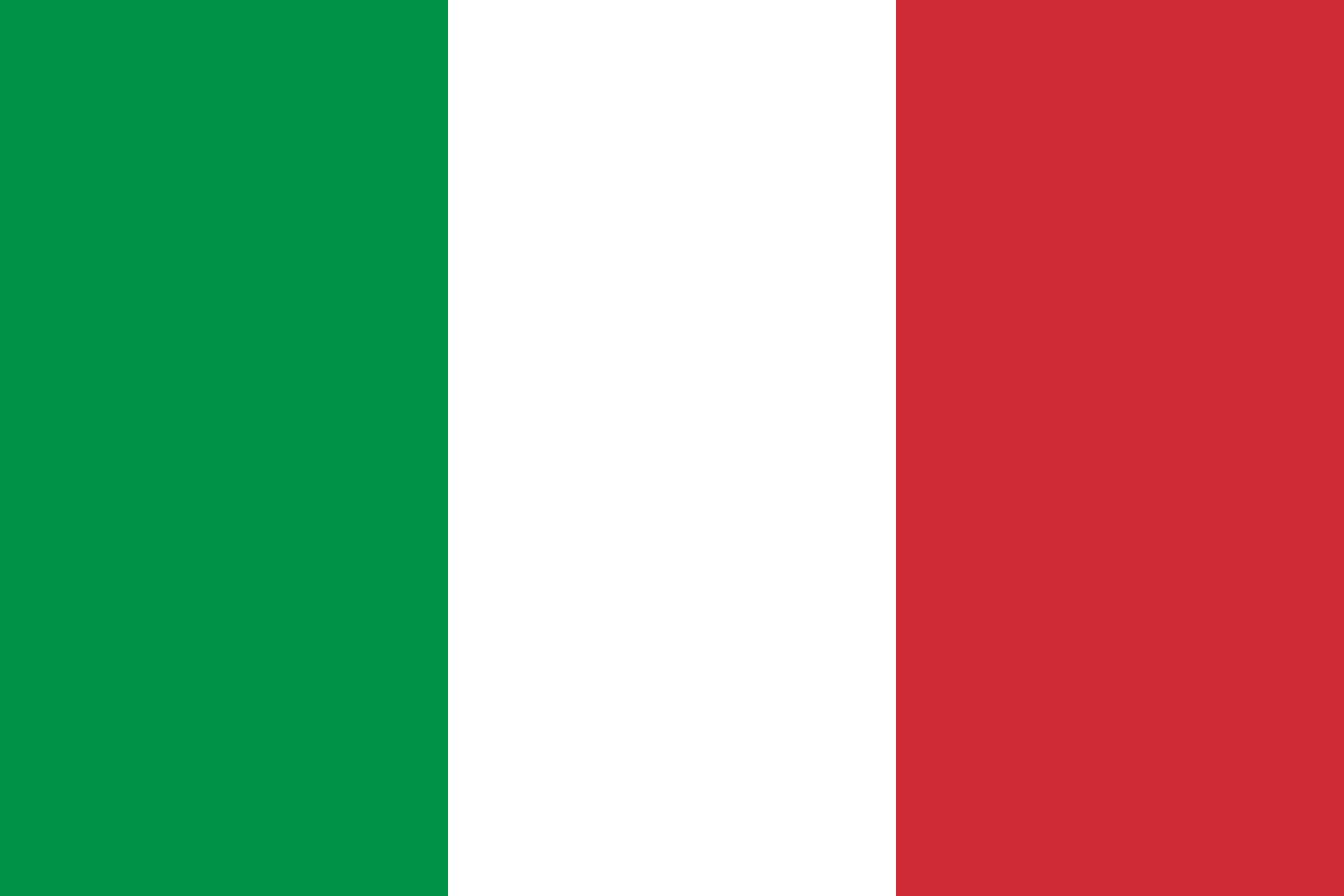
Italy
Location Info
- Continent: Europe
- Country: Italy
- Coordinates: 41.8719 , 12.5674
Trust Info
Verified Geographic and Statistical Information
🌍 Continents

Overview
Italy, officially the Italian Republic, is a sovereign country situated in South-Central Europe. It occupies a distinct boot-shaped peninsula extending into the Mediterranean Sea, bordered by the Alps to the north and surrounded by the Tyrrhenian, Adriatic, and Ionian seas. The nation also encompasses the two largest islands in the Mediterranean, Sicily and Sardinia, along with numerous smaller archipelagos.
Historically, Italy served as the heart of the Roman Empire and the cradle of the Renaissance, profoundly shaping Western civilization's art, law, and philosophy. Today, it is a leading global economy with a high human development index, known for its advanced manufacturing sector, influential fashion industry, and diverse culinary traditions. As a member of the G7 and a founding member of the European Union, Italy plays a central role in international political and economic affairs.
Truth & Facts
| Total Area | 301,340 km² |
| Coastline Length | 7,600 km |
| Highest Point | Mont Blanc (4,810 m) |
| Resident Population | 58,934,177 |
| Fertility Rate | 1.18 children per woman |
| Life Expectancy | 83.4 years |
| Capital City | Rome |
| Government Type | Unitary Parliamentary Republic |
| Administrative Regions | 20 Regions |
| Global GDP Rank | 8th |
| Currency | Euro (€) |
| Export Value (H1 2025) | €322.6 Billion |
| Railway Network | 16,723 km |
| Energy Mix | 35% Renewable |
| Unification Year | 1861 |
| Republic Proclamation | June 2, 1946 |
| Literacy Rate | 99.2% |
| Oldest University | University of Bologna (1088) |
| System Name | Servizio Sanitario Nazionale (SSN) |
| UNESCO Sites | 59 |
| International Arrivals | 57.2 million |
| National Parks | 25 |
| Motorways Length | 7,016 km |
| Major Airport | Rome Fiumicino (FCO) |
| Manufacturing Rank | 2nd in Europe |
| Main Police Force | Carabinieri / Polizia di Stato |
| Legal Basis | Civil Law |
| Founding Member | EU, NATO, G7 |
| Internet Penetration | 84.3% |
| Public Debt to GDP | 137.3% |
| Max Temperature Record | 48.8 °C |
| Main Port (Freight) | Genoa |
📑 Table of Contents
Overview
Italy is a Southern European nation known for its long, peninsula-shaped geography and significant role in global history. It borders France, Switzerland, Austria, and Slovenia to the north and surrounds the microstates of Vatican City and San Marino. The country is characterized by a central mountain range, the Apennines, and the northern Alps.
The nation is a parliamentary republic with a high standard of living. It is a founding member of the European Union and the North Atlantic Treaty Organization. Italy's influence extends globally through its leadership in fashion, automotive design, and diverse manufacturing industries.
History
The history of Italy spans millennia, from the pre-Roman civilizations such as the Etruscans to the rise and fall of the Roman Empire. During the Middle Ages, Italy was divided into several city-states and maritime republics like Venice and Genoa, which became centers of trade and banking. The Renaissance began in Italy during the 14th century, sparking a cultural and artistic revival that influenced all of Europe.
The modern nation-state emerged in the 19th century during the Risorgimento, leading to unification in 1861 under King Victor Emmanuel II. Following the two World Wars and the fall of the Fascist regime, Italy became a democratic republic in 1946. It experienced a period of rapid industrial growth known as the 'Economic Miracle' in the mid-20th century.
- Ancient Rome and the expansion of Mediterranean trade
- The Renaissance era in Florence, Rome, and Venice
- The Napoleonic wars and early Italian nationalism
- The unification movement (Risorgimento)
- Post-WWII republican transition and economic boom
Geography
Italy occupies a central location in the Mediterranean Sea, consisting of a 1,200 km long peninsula and several islands. The northern border is defined by the Alps, while the Apennine Mountains form the backbone of the peninsula. Major plains include the Po Valley in the north, which is the country's most fertile agricultural region.
The country is bordered by four seas: the Adriatic to the east, the Ionian to the south, and the Tyrrhenian and Ligurian seas to the west. Volcanic activity is a notable feature, with active volcanoes including Mount Etna and Mount Vesuvius.
| Feature | Name | Detail |
|---|---|---|
| Longest River | Po | 652 km |
| Largest Lake | Garda | 370 km² |
| Highest Mountain | Mont Blanc | 4,810 m |
| Major Island | Sicily | 25,711 km² |
Climate & Weather
The climate of Italy is highly varied due to its latitudinal extension and mountainous terrain. Northern regions experience a humid subtropical to continental climate, with cold winters and hot summers. The central and southern regions possess a classic Mediterranean climate, characterized by mild, wet winters and hot, dry summers.
Alpine regions have a typical mountain climate with long, snowy winters. Coastal areas are generally tempered by sea breezes, while the interior of the south can experience extreme heat during summer months due to winds originating from North Africa.
Population & Demographics
As of late 2024, Italy has a population of approximately 58.9 million residents. The population density is highest in the northern plains and metropolitan areas like Rome and Milan. The country is currently facing a significant demographic challenge characterized by a declining birth rate and an aging population.
- Total Resident Population: ~58.9 Million
- Foreign Residents: ~9.2% of total
- Median Age: ~48 years
- Urban Population: ~71%
- Largest Ethnic Group: Italian (approx. 90%)
Culture & Lifestyle
Italian culture is deeply rooted in art, family, and community. The country is world-renowned for its contributions to classical music, opera, and visual arts. The 'Bella Figura' concept—maintaining a good public image and style—is central to social interactions and daily life.
Family remains the cornerstone of Italian society, often influencing living arrangements and social gatherings. Leisure time often involves the 'passeggiata' (evening stroll) and dining as a social activity.
Festivals & Events
Italy celebrates a wide array of religious, historical, and seasonal festivals throughout the year. Many of these events date back centuries and are unique to specific cities or regions. Public holidays often combine religious observance with local traditions and food.
- Carnevale di Venezia (Venice)
- Palio di Siena (Horse Race)
- Scoppio del Carro (Florence)
- Infiorata di Genzano (Flower festival)
- Ferragosto (Summer holiday)
- San Remo Music Festival
Food & Cuisine
Italian cuisine is celebrated for its regional diversity and emphasis on fresh, seasonal ingredients. It is widely considered one of the most popular cuisines globally. The Mediterranean diet, rich in olive oil, grains, and vegetables, forms the core of the culinary tradition.
| Region | Famous Dish | Primary Ingredient |
|---|---|---|
| Campania | Pizza Napoletana | Dough, Tomato, Mozzarella |
| Lazio | Pasta alla Carbonara | Pecorino, Guanciale, Egg |
| Lombardy | Risotto alla Milanese | Rice, Saffron |
| Emilia-Romagna | Lasagna | Pasta, Ragù, Béchamel |
Economy & Industries
Italy possesses a diversified industrial economy, being the second-largest manufacturer in Europe after Germany. The economy is characterized by a high number of small and medium-sized enterprises (SMEs), many of which are family-owned and specialize in high-quality luxury goods, fashion, and machinery.
The northern part of the country is highly developed and industrialized, while the southern regions rely more heavily on agriculture and tourism. Key sectors include automotive (Fiat, Ferrari), fashion (Prada, Armani), and advanced technology.
Cost of Living
The cost of living in Italy varies significantly between the north and the south, and between major cities and rural areas. Milan and Rome are the most expensive cities, particularly regarding housing and services. Southern Italy offers a significantly lower cost of living for groceries and rent.
- Average rent in Milan: €1,200 - €2,000 (1-bed)
- Average rent in Naples: €600 - €900 (1-bed)
- Public transport monthly pass: ~€35 - €50
- Basic utilities (monthly): ~€150 - €250
Employment & Business
Italy's labor market is characterized by a strong presence of skilled manufacturing and services. The unemployment rate has stabilized around 7-8% in 2024, though youth unemployment remains a challenge. Business culture emphasizes personal relationships and formal etiquette.
Major employers are concentrated in the 'Industrial Triangle' of Milan, Turin, and Genoa. The public sector and tourism also provide significant employment opportunities across the nation.
Real Estate & Housing
Italy has a high rate of homeownership, exceeding 70%. The real estate market is stable, with premium prices found in historical city centers and popular coastal or lakeside areas. Rural areas, particularly in central Italy, have seen a rise in international interest for traditional stone houses.
- City Center Apartments: High demand, limited supply
- Suburban Villas: Popular for families
- Rural Estates: Common in Tuscany and Umbria
- Government '1 Euro House' schemes in depopulating villages
Transportation & Connectivity
Italy has an extensive transportation network. The high-speed rail system (Alta Velocità) connects major cities like Turin, Milan, Florence, Rome, and Naples with speeds up to 300 km/h. The road network includes a vast system of toll motorways known as Autostrade.
Maritime transport is crucial for the islands and international trade, with major ports in Genoa, Trieste, and Naples. Italy also has dozens of international airports, with Rome Fiumicino and Milan Malpensa acting as the main global gateways.
Infrastructure & Utilities
The nation's infrastructure is generally advanced, with widespread access to electricity, clean water, and high-speed internet. Italy has made significant investments in renewable energy, particularly solar and wind, to reduce dependence on imported fossil fuels.
Waste management and water infrastructure are managed at the municipal or regional level, with varying degrees of efficiency between regions. Telecommunications are highly competitive, with 5G coverage expanding rapidly in urban centers.
Education
Education in Italy is compulsory from ages 6 to 16. The system is divided into primary, lower secondary, and upper secondary levels. Italy hosts some of the world's oldest and most prestigious universities, offering a wide range of degree programs in both Italian and English.
- Primary School (Scuola Primaria): 5 years
- Lower Secondary (Scuola Media): 3 years
- Upper Secondary (Liceo/Istituto): 5 years
- Higher Education: Bachelor's, Master's, and PhD levels
Healthcare
The Italian healthcare system, the Servizio Sanitario Nazionale (SSN), provides universal coverage to all citizens and legal residents. It is funded through general taxation and is consistently ranked among the best in the world for quality and outcomes.
Private healthcare options are also available and often used to avoid waiting times for elective procedures. Pharmacies are widely available and serve as a first point of contact for minor health issues.
Tourist Attractions
Italy contains more UNESCO World Heritage Sites than any other country. Attractions range from ancient ruins and Renaissance art galleries to stunning natural landscapes. The 'Big Three' destinations remain Rome, Florence, and Venice.
- The Colosseum and Roman Forum (Rome)
- Uffizi Gallery and Duomo (Florence)
- St. Mark's Square and Canals (Venice)
- Pompeii Archaeological Park (Campania)
- Amalfi Coast (Campania)
- Cinque Terre (Liguria)
Things to Do
Activities in Italy cater to a wide range of interests, from cultural exploration to outdoor sports. Wine tasting in Tuscany or Piedmont is a popular pursuit for gastronomes, while the Alps offer world-class skiing and hiking.
Visitors often engage in museum tours, boat trips along the coast, and attending opera performances in ancient venues like the Verona Arena. Shopping for high-end fashion in Milan is another major draw for international travelers.
Best Places to Visit
Beyond the major cities, Italy offers numerous regional gems. The northern lakes, such as Como and Garda, provide scenic retreats. Sicily and Sardinia offer unique cultural experiences and some of Europe's best beaches.
| Destination | Category | Primary Draw |
|---|---|---|
| Dolomites | Nature | Mountain Scenery/Skiing |
| Tuscany | Countryside | Vineyards/Art Cities |
| Puglia | Coastal | Unique Architecture (Trulli)/Beaches |
| Sicily | Island | Greek Ruins/Gastronomy |
Travel Guide
Italy is part of the Schengen Area, allowing visa-free travel for many nationalities for up to 90 days. The primary entry points are Rome Fiumicino (FCO) and Milan Malpensa (MXP). Domestic travel is most efficient via the extensive train network.
Travelers should be aware of 'ZTL' (Limited Traffic Zones) in historical city centers where driving is restricted. Tipping is not mandatory but appreciated for exceptional service.
Nearby Places
Italy's central position makes it an ideal base for exploring Southern and Central Europe. Short flights or train journeys connect Italian cities to major European hubs. The microstates of San Marino and Vatican City are entirely contained within Italian territory.
- Vatican City: Enclave within Rome
- San Marino: Republic near the Adriatic coast
- Cote d'Azur (France): Accessible from Liguria
- Innsbruck (Austria): Accessible from the Dolomites
Environment & Nature
Italy's geography provides a high level of biodiversity. The country has 25 national parks covering mountains, forests, and marine protected areas. Environmental protection is a growing priority, with focus on preserving the Alpine glaciers and Mediterranean ecosystems.
Conservation efforts are also aimed at the country's extensive coastline and the prevention of soil erosion in hilly regions. Air quality in the Po Valley remains a significant environmental monitoring focus due to industrial concentration.
Government & Administration
The Italian government is a parliamentary system where the Prime Minister is the head of government and the President is the head of state. Parliament is bicameral, consisting of the Chamber of Deputies and the Senate of the Republic.
The administrative hierarchy consists of 20 regions, which are further divided into provinces and thousands of municipalities (comuni). Local governance has significant autonomy in areas like health and transport.
Safety & Public Services
Italy is generally a safe country for residents and tourists. Common safety concerns in major cities are limited to petty crimes like pickpocketing in crowded areas. Emergency services are well-organized and can be reached via the European emergency number 112.
Public services like mail (Poste Italiane) and civil registries are standardized across the country. Law enforcement is handled by several bodies, including the Polizia di Stato and the Carabinieri.
Best Time to Visit
The ideal time to visit Italy depends on the region and planned activities. Spring (April-June) and Autumn (September-October) offer the most pleasant weather for sightseeing across the country and are generally considered the best periods.
Summer (July-August) can be very hot, especially in the south, and coincides with the peak tourist season. Winter is the best time for skiing in the Alps and Dolomites, while southern Italy remains relatively mild.
Local Business Directory
Business activity in Italy is recorded in the National Register of Companies. The directory includes millions of entries ranging from individual artisans to multinational corporations. Chambers of Commerce (Camere di Commercio) operate in every province to support local business growth.
- Manufacturing: Concentrated in the North
- Agriculture: Strongest in the South and Po Valley
- Tourism: Present nationwide with coastal and urban hubs
- Services: Centered in Rome and Milan
General Information FAQs
Where is Italy located?
Italy is located in Southern Europe, occupying a boot-shaped peninsula that extends into the central Mediterranean Sea. It shares land borders with France, Switzerland, Austria, and Slovenia to the north.
What is Italy known for?
Italy is globally renowned for its rich historical heritage, Renaissance art, influential fashion houses, high-performance automotive industry, and diverse culinary traditions. It also holds the highest number of UNESCO World Heritage Sites.
Why is Italy famous?
Italy is famous for being the center of the Roman Empire and the birthplace of the Renaissance. It is recognized for cultural icons like Leonardo da Vinci, the Colosseum, and the invention of pizza and pasta.
What country or region is Italy part of?
Italy is a sovereign nation in Southern Europe. It is a member of the European Union, the Eurozone, and the Schengen Area.
What is the population of Italy?
As of late 2024, the population of Italy is approximately 58.9 million residents.
What languages are spoken in Italy?
Italian is the official language. Numerous regional languages and dialects exist, such as Sicilian, Neapolitan, and Venetian. English, French, and German are common in tourist areas and border regions.
What time zone is Italy in?
Italy is in the Central European Time (CET) zone, which is UTC+1. It observes Central European Summer Time (CEST, UTC+2) from late March to late October.
What are the key facts about Italy?
Key facts include its capital Rome, the currency Euro, a total area of approximately 301,340 km², and its status as a G7 member with the world's 8th largest nominal GDP.
What makes Italy unique?
Italy's uniqueness stems from its extraordinary concentration of art and historical monuments, its significant geographical diversity—from Alpine peaks to Mediterranean islands—and its distinct regional cultures and cuisines.
How large is Italy in area?
The total area of Italy is approximately 301,340 square kilometers (116,350 square miles).
History FAQs
What is the history of Italy?
Italy's history spans from ancient Italic and Etruscan tribes to the rise of the Roman Empire. After the fall of Rome, the peninsula was divided into various kingdoms and city-states until its unification in 1861. It became a republic in 1946 following World War II.
When was Italy established?
The modern unified Kingdom of Italy was established on March 17, 1861. The current Italian Republic was established on June 2, 1946.
What major historical events happened in Italy?
Major events include the founding of the Roman Republic, the Renaissance, the Napoleonic occupation, the Risorgimento (unification), the rise of Fascism, and the post-WWII economic miracle.
Who were important historical figures from Italy?
Notable figures include Julius Caesar, Leonardo da Vinci, Michelangelo, Galileo Galilei, Giuseppe Garibaldi, and Dante Alighieri.
How has Italy developed over time?
Italy transitioned from the heart of an ancient empire to a collection of wealthy Renaissance city-states, then to a unified 19th-century kingdom, and finally into a modern industrial democratic republic and key EU member.
Geography & Environment FAQs
What is the geography of Italy?
Italy features a long peninsula with a mountainous interior (the Apennines) and a high mountain range in the north (the Alps). It has extensive coastal plains and several volcanic islands.
What natural features surround Italy?
Italy is surrounded by the Mediterranean Sea, specifically the Adriatic, Ionian, Tyrrhenian, and Ligurian seas. The Alps form its northern land boundary.
Are there mountains, rivers, or lakes near Italy?
Yes, Italy has the Alps and Apennine mountains. Major rivers include the Po, Tiber, and Arno. Prominent lakes include Garda, Como, and Maggiore.
What is the elevation of Italy?
Elevation varies from sea level (0m) to 4,810 meters at the summit of Mont Blanc in the Alps.
What ecosystems exist around Italy?
Italy hosts diverse ecosystems including Alpine tundra, temperate forests in the Apennines, and Mediterranean maquis along the coasts.
Climate & Weather FAQs
What is the climate like in Italy?
The climate is generally Mediterranean in the south and center, and more continental or subtropical in the north. Mountainous areas have an Alpine climate.
What is the average temperature in Italy?
In summer, averages range from 20°C to 30°C, while winter averages vary from 0°C in the north to 12°C in the south.
What is the weather like throughout the year in Italy?
Spring and autumn are mild and pleasant. Summer is hot and dry, especially in the south. Winter is cold and snowy in the north, but remains mild and rainy in the south.
Does Italy experience extreme weather?
Italy can experience heatwaves, occasional flooding (notably in Venice), and seismic activity. Sicily holds the record for the highest temperature ever recorded in Europe (48.8°C).
What is the best time of year to visit Italy?
The best times are spring (April to June) and autumn (September to October), when weather is temperate and tourist crowds are thinner than in mid-summer.
Population & Society FAQs
What is the population density of Italy?
The population density is approximately 201 people per square kilometer, which is high compared to the European average.
What ethnic groups live in Italy?
The majority are ethnic Italians (approx. 90%). Minority groups include Romanians, Albanians, Moroccans, Chinese, and Ukrainians.
What religions are practiced in Italy?
Roman Catholicism is the predominant religion. There are also growing communities of Muslims, Orthodox Christians, and Protestants, along with a significant number of non-religious citizens.
What is daily life like in Italy?
Daily life often revolves around family, social dining, and the 'bella vita' lifestyle. Work-life balance is valued, with a strong emphasis on leisure and local community events.
How diverse is the population of Italy?
The population has become increasingly diverse over the last 30 years due to international immigration, with over 5 million foreign residents now living in the country.
Culture & Traditions FAQs
What cultural traditions are important in Italy?
Important traditions include religious processions, the evening 'passeggiata', regional festivals (sagre), and the preservation of artisanal crafts.
What festivals are celebrated in Italy?
Key festivals include Carnevale (Venice), the Palio (Siena), Ferragosto (national summer holiday), and various Patron Saint days in every city.
What cultural landmarks exist in Italy?
Major landmarks include the Colosseum, the Leaning Tower of Pisa, the Pantheon, St. Mark's Basilica, and the Pompeii ruins.
What traditional clothing or customs are common in Italy?
Traditional clothing is now mostly seen at historical festivals. Common customs include 'il dolce far niente' (the sweetness of doing nothing) and formal greetings.
What arts and crafts are associated with Italy?
Italy is famous for Murano glassmaking, leatherworking in Florence, violin making in Cremona, and ceramics in various regions.
Food & Cuisine FAQs
What foods is Italy known for?
Italy is famous for pasta, pizza, risotto, gelato, espresso, and regional cheeses like Parmigiano Reggiano and Mozzarella di Bufala.
What traditional dishes originate from Italy?
Notable dishes include Lasagna, Carbonara, Ossobuco, Polenta, Pesto, and Tiramisu.
What are the best restaurants in Italy?
Italy has thousands of highly-rated establishments, from world-class Michelin-starred restaurants like Osteria Francescana to local 'trattorie' and 'osterie'.
What local ingredients are commonly used in Italian cuisine?
Common ingredients include extra virgin olive oil, tomatoes, basil, garlic, various types of wheat flour, and fresh seafood.
What food markets or street foods are popular in Italy?
Popular street foods include 'arancini' in Sicily, 'porchetta' in Central Italy, and 'pizza al taglio' nationwide. Markets like Campo de' Fiori in Rome are famous for fresh produce.
Economy & Business FAQs
What are the main industries in Italy?
Key industries include automotive, fashion and textiles, machinery and capital goods, pharmaceuticals, and food processing.
What economic activities drive the economy of Italy?
Manufacturing and exports are the primary drivers, along with a massive tourism sector and a strong service industry centered in major cities.
What businesses operate in Italy?
Italy hosts global brands like Stellantis (Fiat), Eni, Ferrero, Luxottica, and Enel, alongside millions of small family-owned enterprises.
Is Italy an important economic center?
Yes, Italy is the 3rd largest economy in the Eurozone and a member of the G7, playing a vital role in European and global trade.
What are the major exports or products from Italy?
Major exports include machinery, transport equipment, chemicals/pharmaceuticals, luxury fashion items, and high-quality food products.
Employment & Jobs FAQs
What job opportunities are available in Italy?
Opportunities are strong in engineering, high-end manufacturing, tourism, fashion, and the renewable energy sector.
What are the major employers in Italy?
Major employers include large corporations like Eni, Leonardo, and Stellantis, as well as the public administration and healthcare sectors.
What skills are in demand in Italy?
Skills in digital technology, precision engineering, sustainable design, and multilingual hospitality are highly sought after.
Is Italy a good place to work?
Italy offers a high quality of life and strong labor protections, though salaries in some sectors may be lower than in Northern European counterparts.
What is the unemployment rate in Italy?
In 2024, the unemployment rate has been hovering around 7.5%, with regional variations between the North and South.
Cost of Living FAQs
Is Italy expensive to live in?
The cost varies by region; northern cities like Milan are expensive, while southern regions and rural areas are significantly more affordable.
What is the average cost of living in Italy?
For a single person, excluding rent, the average monthly cost is around €800-€1,100 depending on the city.
How much does housing cost in Italy?
Monthly rent for a 1-bedroom apartment ranges from €500 in smaller towns to over €1,500 in central Milan or Rome.
What are average food and utility costs in Italy?
Monthly groceries average €300, while utilities (electricity, water, gas) typically cost between €150 and €250 for a standard apartment.
Is Italy affordable compared to nearby cities?
Italy is generally more affordable than Switzerland or France, but more expensive than many Eastern European or North African countries.
Housing & Real Estate FAQs
What types of housing are available in Italy?
Options include city apartments (condomini), terraced houses (villette), and rural stone farmhouses (casali).
What is the average home price in Italy?
Average prices range from €1,800 to €3,500 per square meter, though luxury markets in Milan or Rome can be much higher.
Is it better to rent or buy property in Italy?
Italians traditionally prefer buying. Buying is often a good long-term investment, while renting offers more flexibility for expatriates.
Which neighborhoods are popular in Italy?
Popular areas include Brera in Milan, Trastevere in Rome, and the hills surrounding Florence.
How has the property market changed in Italy?
The market has seen a resurgence in interest for energy-efficient homes and rural properties following the shift towards remote work.
Transportation FAQs
How do you get to Italy?
Italy is most commonly reached by air through its international airports or by train and road from neighboring European countries.
What is the nearest airport to Italy?
Italy has many major airports. The largest are Rome Fiumicino (FCO), Milan Malpensa (MXP), and Venice Marco Polo (VCE).
Does Italy have railway connections?
Yes, Italy has an extensive rail network, including one of Europe's most advanced high-speed systems connecting all major cities.
How reliable is public transportation in Italy?
Intercity trains are very reliable and efficient. Local bus and metro services in major cities are generally good but can experience occasional delays.
What major highways or roads connect to Italy?
The 'Autostrade' network (A1, A4, etc.) connects the entire peninsula and links to France, Switzerland, and Austria via major tunnels and passes.
Education FAQs
What schools are located in Italy?
Italy has a wide network of public and private schools, including international schools in cities like Rome, Milan, and Turin.
Are there universities in Italy?
Yes, Italy has over 90 universities, including world-renowned institutions like the University of Bologna, Sapienza University of Rome, and Politecnico di Milano.
What is the literacy rate in Italy?
The literacy rate is approximately 99.2%.
What educational opportunities exist in Italy?
Opportunities range from classical studies and art to advanced engineering, design, and culinary arts programs.
Is Italy a good place for students?
Yes, Italy is a popular destination for international students due to its historical significance, affordable tuition compared to the US/UK, and vibrant lifestyle.
Healthcare FAQs
What hospitals are available in Italy?
Italy has a dense network of public and private hospitals (Ospedali), with specialized centers in major cities like Milan's San Raffaele.
Are there emergency medical services in Italy?
Yes, emergency services are accessed by dialing 118 (or 112) for an ambulance. Emergency departments (Pronto Soccorso) are available 24/7.
What healthcare facilities exist in Italy?
Facilities include general hospitals, specialized clinics, and local health centers (ASL) for outpatient care.
Is healthcare affordable in Italy?
Public healthcare is largely free or low-cost for residents. Private care is also available at competitive prices compared to North America.
Are specialized medical services available in Italy?
Yes, Italy is a leader in fields such as cardiology, oncology, and robotic surgery.
Tourism & Travel FAQs
What are the top tourist attractions in Italy?
The Colosseum, St. Peter's Basilica, Florence's Uffizi Gallery, Venice's Grand Canal, and the ruins of Pompeii.
What are the best things to do in Italy?
Wine tasting in Tuscany, exploring ancient ruins, skiing in the Dolomites, and taking a coastal boat tour of the Amalfi Coast.
Is Italy worth visiting?
Absolutely. It offers an unparalleled combination of history, art, natural beauty, and gastronomy.
What landmarks should visitors see in Italy?
The Pantheon, Duomo di Milano, Leaning Tower of Pisa, and the Trevi Fountain are essential stops.
How many days should tourists spend in Italy?
A minimum of 10-14 days is recommended to see the major highlights like Rome, Florence, and Venice comfortably.
Nearby Places FAQs
What places are near Italy worth visiting?
Nearby destinations include the French Riviera, the Swiss Alps, the Dalmatian Coast of Croatia, and the islands of Greece.
What cities or towns are close to Italy?
Cities like Nice (France), Lugano (Switzerland), and Innsbruck (Austria) are easily accessible across the border.
What natural attractions are near Italy?
The broader Alps range, the Mediterranean islands of Corsica (France) and Malta, and the limestone caves of Slovenia.
What day trips can be taken from Italy?
Common day trips include visiting Vatican City or San Marino, both of which are independent states within Italy.
What famous destinations are within reach of Italy?
Major European capitals like Paris, Berlin, and Madrid are within a 2-hour flight of most Italian airports.
Safety FAQs
Is Italy safe to live in?
Yes, Italy has a relatively low violent crime rate compared to many other developed countries.
Is Italy safe for tourists?
Generally yes, though visitors should be mindful of pickpockets in crowded tourist areas and major train stations.
What is the crime rate in Italy?
The overall crime rate is moderate, with most incidents being non-violent property crimes.
What emergency services operate in Italy?
Police (113), Carabinieri (112), Fire (115), and Medical (118). The unified 112 number works for all emergencies.
What safety tips should visitors follow in Italy?
Keep valuables secure, avoid leaving luggage unattended, and be cautious of unofficial 'guides' or street vendors.
Lifestyle & Living FAQs
Is Italy a good place to live?
Many find it rewarding due to the climate, food culture, and rich social life, though bureaucratic processes can be slow.
What recreational activities are available in Italy?
Hiking, cycling, swimming, football (calcio), and attending numerous cultural festivals and operas.
Is Italy family-friendly?
Very. Italian culture is exceptionally welcoming to children, and family-oriented activities are common.
What outdoor activities are popular in Italy?
Trekking in the Apennines, skiing in the North, and sailing along the lengthy coastline.
What makes life enjoyable in Italy?
The pace of life, the emphasis on high-quality food, and the sheer beauty of the historical and natural environment.
Practical Information FAQs
What travel tips should visitors know about Italy?
Validate train tickets before boarding, many shops close for a few hours in the afternoon (riposo), and carry some cash as small shops may not take cards.
What local customs should visitors respect in Italy?
Dress appropriately for churches (shoulders/knees covered), avoid ordering a cappuccino after 11 AM, and greet people with 'Buongiorno' or 'Buonasera'.
How accessible is Italy for international visitors?
Very accessible via a modern infrastructure of airports and high-speed trains. Major cities are well-connected to global hubs.
What services are available for tourists in Italy?
Tourist information offices (IAT), guided tour services, luggage storage at stations, and specialized tourist transport cards.
What important information should travelers know before visiting Italy?
Standard voltage is 230V, the plug types are C, F, and L, and most prices in shops and restaurants already include VAT (IVA).