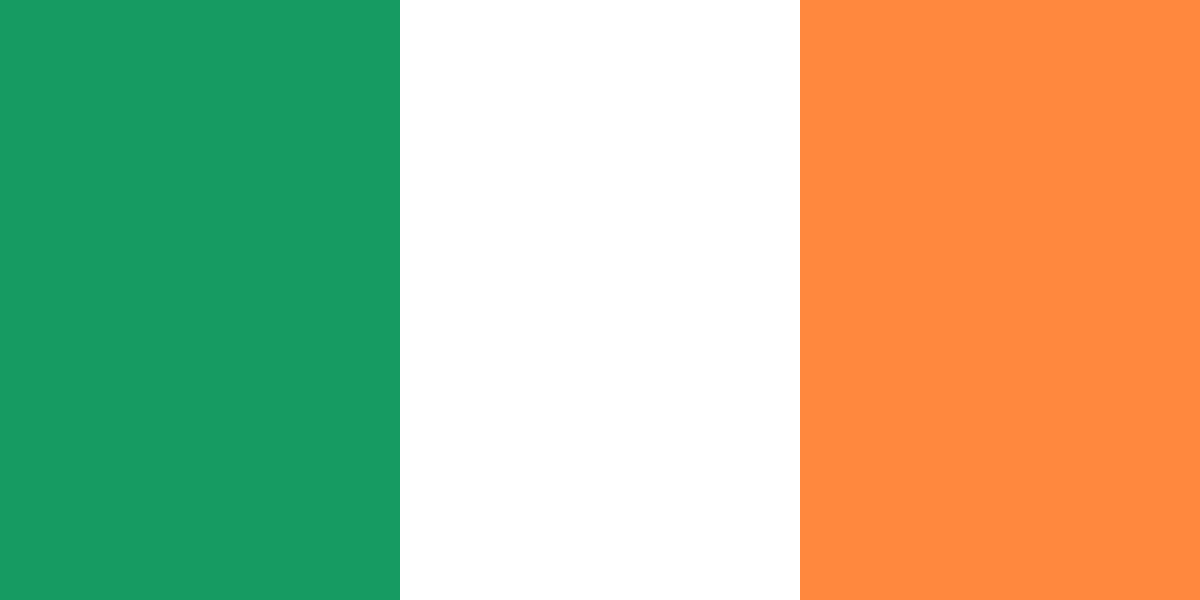
Ireland
Location Info
- Continent: Europe
- Country: Ireland
- Coordinates: 53.4129 , -8.2439
Trust Info
Verified Geographic Information
🌍 Continents
Overview
Ireland is an island nation situated in the North Atlantic, separated from Great Britain by the Irish Sea, the North Channel, and St. George's Channel. Known globally as the "Emerald Isle" due to its lush green landscape, the country is politically divided into the Republic of Ireland, a sovereign state covering five-sixths of the island, and Northern Ireland, which is part of the United Kingdom. The geography is characterized by a central plain surrounded by coastal mountains, with the River Shannon serving as the longest waterway and Carrauntoohil as the highest peak.
Historically, Ireland transitioned from an agrarian society to a modern, high-tech economy during the late 20th century, a period often referred to as the Celtic Tiger. Today, it stands as a significant member of the European Union and a global hub for pharmaceuticals, technology, and financial services. With a rich cultural heritage spanning from ancient Celtic traditions to world-renowned literature and music, Ireland remains a pivotal player in both European and global affairs.
Truth & Facts
| Total Land Area | 70,273 sq km (Republic) |
| Highest Point | Carrauntoohil (1,038m) |
| Longest River | River Shannon (360.5 km) |
| Population (2026) | 5,356,950 (Projected) |
| Median Age | 39.7 years |
| Urban Population | 62.2% |
| Government Type | Unitary Parliamentary Republic |
| President | Catherine Connolly |
| Taoiseach | Micheál Martin |
| GDP Growth Forecast (2026) | 1.9% - 3.2% |
| Inflation Rate (2026) | 1.8% - 2.3% |
| Unemployment Rate | 5.3% |
| Main Airport | Dublin Airport (DUB) |
| National Rail Operator | Iarnród Éireann (Irish Rail) |
| Oldest University | Trinity College Dublin (1592) |
| Literacy Rate | 99% |
| Service Provider | Health Service Executive (HSE) |
| Life Expectancy | 85.07 years |
| Independence from UK | 1922 (Irish Free State) |
| EU Membership | 1973 |
| Official Languages | Irish and English |
| National Sport | Gaelic Games (Hurling/Football) |
| Most Visited Attraction | Guinness Storehouse |
| National Parks | 6 |
| Driving Side | Left |
| Tech Employment | 191,800+ |
| Police Force | Garda Síochána |
| Dáil Members | 174 TDs |
| UN Member Since | 1955 |
| Voltage | 230V / 50Hz |
| GDP Ranking (Per Capita) | Top 10 Globally |
| Oldest Monument | Newgrange (c. 3200 BC) |
| Climate Type | Temperate Maritime |
📑 Table of Contents
Overview of Ireland
Ireland is a parliamentary republic located in Northwestern Europe. It occupies most of the island of Ireland, which is the third-largest island in Europe. The country is known for its high quality of life, open market economy, and rich cultural traditions that have had a global impact through its extensive diaspora.
- Capital: Dublin
- Official Languages: Irish (Gaeilge) and English
- Political System: Constitutional Republic
- Currency: Euro (€)
- Nickname: Emerald Isle
History
Ireland's history dates back to Mesolithic hunter-gatherers around 8000 BC. The arrival of the Celts in 400 BC significantly shaped the island's language and culture. The medieval period saw Viking raids followed by the Norman invasion, leading to centuries of English and later British influence.
- Arrival of the Celts (c. 400 BC)
- Christianization by St. Patrick (5th Century)
- Viking age and city foundations (c. 800 AD)
- The Great Famine (1845–1852)
- Easter Rising (1916)
- Independence and Civil War (1921–1923)
Geography
The geography of Ireland consists of a low-lying central plain surrounded by a ring of coastal mountains. The western coastline is rugged with numerous cliffs and peninsulas, while the eastern coast is relatively flat. The island features numerous lakes (loughs) and rivers.
| Feature | Name |
|---|---|
| Highest Mountain | Carrauntoohil |
| Longest River | River Shannon |
| Largest Lake (Island) | Lough Neagh |
| Primary Mountain Ranges | Wicklow, MacGillycuddy's Reeks |
Climate and Weather
Ireland has a temperate maritime climate influenced by the North Atlantic Current. Winters are typically mild with temperatures rarely falling below freezing, while summers are cool and damp. Rainfall is frequent throughout the year, especially in the western counties.
- Average Winter Temp: 4°C to 8°C
- Average Summer Temp: 15°C to 20°C
- Wettest Months: October to December
- Driest Months: April and May
- Daylight Hours: Up to 17 hours in June
Population and Demographics
The 2026 population of the Republic of Ireland is estimated at over 5.3 million. The population is becoming increasingly diverse due to significant inward migration. A high percentage of the population lives in urban centers, particularly the Greater Dublin Area.
| Category | Stat |
|---|---|
| Median Age | 39.7 years |
| Urbanization | 62.2% |
| Population Density | 78 per sq km |
| Life Expectancy | 85 years |
Culture and Lifestyle
Irish culture is a blend of ancient Gaelic traditions and modern influences. It is famous for its folk music, dance (Stepdance), and literature. Social life often centers around the local pub, which serves as a community hub for music and storytelling.
- Gaelic Games (Hurling and Football)
- Traditional Music Sessions (Trad)
- Global literary figures (Joyce, Yeats, Wilde)
- Religious heritage (Roman Catholicism)
- Concept of 'Craic' (Fun/Enjoyment)
Festivals and Events
Ireland hosts numerous cultural festivals throughout the year. St. Patrick's Day is the most famous, celebrated on March 17th. Other events focus on the arts, horse racing, and traditional music.
- St. Patrick's Festival (Dublin)
- Galway International Arts Festival
- Cork Jazz Festival
- Fleadh Cheoil na hÉireann
- The Rose of Tralee
Food and Cuisine
Modern Irish cuisine emphasizes high-quality local ingredients, particularly dairy, beef, and seafood. Traditional dishes are often hearty and based on crops like potatoes and oats.
- Irish Stew (lamb or beef with root vegetables)
- Boxty (potato pancake)
- Colcannon (mashed potatoes with kale or cabbage)
- Irish Soda Bread
- Fresh Atlantic Salmon and Oysters
Economy and Industries
Ireland possesses a highly developed, export-oriented economy. It is a major hub for pharmaceutical and medical technology firms, as well as being the headquarters for many global tech giants. Aircraft leasing is another major pillar of the financial services sector.
| Sector | Contribution |
|---|---|
| Services | ~69% of GDP |
| Industry | ~38% of GDP |
| Agriculture | Vital export sector |
| Main Partners | USA, UK, Germany |
Cost of Living
The cost of living in Ireland is relatively high compared to the EU average, particularly in Dublin. Housing and utilities are the largest expenses for most residents. Regional areas in the west and north generally offer lower costs than the capital.
- High housing demand in urban areas
- VAT on most goods is 23%
- Free primary and secondary education
- Significant healthcare costs for those without insurance
Employment and Business
The Irish labor market is robust, with employment reaching record levels in 2025–2026. Skills in technology, engineering, and finance are in high demand. The country's low corporate tax rate remains a key driver of foreign direct investment (FDI).
- High concentration of tech multinational bases
- Active startup ecosystem in Dublin and Cork
- Significant employment in the public sector
- Rising focus on remote and hybrid work models
Real Estate and Housing
Ireland has faced a prolonged housing shortage, leading to high property prices and rents. Modern developments are focused on increasing density in cities like Dublin and Cork. There is a mix of traditional suburban housing and newer apartment complexes.
- Average house prices remain high in 2026
- Residential Tenancies Board (RTB) regulates rentals
- Government focus on the 'Housing for All' plan
- Supply constraints remain a primary economic challenge
Transportation and Connectivity
Transportation is centered on a hub-and-spoke model from Dublin. The country has a well-developed motorway network and an extensive bus and rail system connecting major towns. Dublin Airport is the main international connection point.
- Iarnród Éireann (Intercity rail services)
- Bus Éireann (National bus network)
- Dublin Port (Major freight and passenger gateway)
- Expanding cycling infrastructure in cities
Infrastructure and Utilities
Ireland is investing heavily in digital and green infrastructure. The National Broadband Plan aims to provide high-speed internet to all rural areas. Energy production is increasingly shifting toward renewable sources, particularly wind power.
- National Broadband Plan rollout
- Expansion of wind farm capacity
- Water services managed by Uisce Éireann
- High density of data centers in the east
Education
The Irish education system is highly regarded globally. It includes primary, secondary, and tertiary levels, with a high percentage of the population holding university degrees. Education is compulsory for children aged 6 to 16.
- Trinity College Dublin (Ranked globally)
- University College Dublin (UCD)
- Technological Universities (TUs)
- Strong emphasis on STEM subjects
Healthcare
Healthcare is provided through the public Health Service Executive (HSE) and a significant private sector. While public care is available, many citizens opt for private health insurance to access faster specialist treatments.
- Sláintecare reform program underway
- Network of regional general hospitals
- Specialized centers of excellence in Dublin
- Increasing use of digital health records
Tourist Attractions
Ireland attracts millions of visitors annually with its historic sites and natural wonders. Attractions range from prehistoric burial mounds to medieval castles and coastal scenic drives.
- Cliffs of Moher (County Clare)
- Guinness Storehouse (Dublin)
- Rock of Cashel (County Tipperary)
- Newgrange Megalithic Tomb (County Meath)
- Blarney Castle and Stone (County Cork)
Things to Do
Ireland offers a diverse range of activities for different interests, with a strong focus on outdoor recreation and cultural immersion.
- Hiking in the Wicklow Mountains
- Surfing on the Atlantic coast (Sligo/Donegal)
- Attending a live traditional music session
- Playing golf on world-class links courses
- Exploring the Wild Atlantic Way scenic route
Best Places to Visit
Outside of Dublin, several regions offer unique cultural and geographic experiences. The West Coast is particularly famous for its dramatic scenery and traditional lifestyle.
- Galway: Known for its bohemian atmosphere and arts scene.
- Kerry: Home to Killarney National Park and the Ring of Kerry.
- The Burren: A unique glaciokarst landscape in County Clare.
- Cork: Ireland's second city with a strong maritime history.
Travel Guide
Traveling through Ireland is best done by car for exploring rural areas, though public transport is effective for city-to-city travel. Visitors should be prepared for changeable weather at all times of the year.
- Rent a car for the Wild Atlantic Way
- Use the Leap Card for public transport in cities
- Pack waterproof clothing year-round
- Respect local communities in Gaeltacht areas
Nearby Places
Ireland's location makes it a gateway to Northern Ireland and the British Isles. Ferries and short flights connect the island to the United Kingdom and mainland Europe.
- Belfast (Northern Ireland)
- The Isle of Man
- Liverpool and Holyhead (UK)
- Brittany (France) via seasonal ferry
Environment and Nature
Ireland is committed to environmental preservation through its national parks and protected areas. The island's isolation has resulted in unique flora and fauna, though biodiversity loss remains a challenge.
- Peat bogs are vital carbon sinks
- Strict protections for marine life in the Atlantic
- Reforestation projects increasing native woodland
- Renewable energy focus on offshore wind
Government and Administration
The administration is divided into central and local government. The national parliament (Oireachtas) passes laws, while 31 local authorities manage local services such as planning and roads.
- 15-member Cabinet
- Multi-seat constituency representation
- Common Travel Area with the UK
- Active participation in EU governance
Safety and Public Services
Ireland is consistently ranked as one of the safest countries in the world. Public services are generally reliable, though emergency room wait times in hospitals can be significant during peak periods.
- Garda Síochána (Unarmed national police force)
- Emergency Services reached via 999 or 112
- Low rates of violent crime
- High level of public trust in state institutions
Best Time to Visit
The ideal time to visit Ireland depends on whether one prefers longer daylight hours or fewer crowds. Spring and early autumn are often considered the best balance of weather and visitor numbers.
| Season | Description |
|---|---|
| Spring (Mar-May) | Mild weather, blooming flora, St. Patrick's Day. |
| Summer (Jun-Aug) | Peak season, warmest temperatures, long days. |
| Autumn (Sep-Nov) | Harvest festivals, beautiful fall colors, cooling air. |
| Winter (Dec-Feb) | Low season, festive Dublin atmosphere, short days. |
Local Business Directory
Ireland's business landscape is a mix of small family-run firms and large multinational enterprises. Major hubs like Dublin, Cork, and Limerick host global clusters in tech and biotech.
- Industrial Development Agency (IDA Ireland)
- Enterprise Ireland (Supports local exporters)
- Local Enterprise Offices (LEOs)
- Strong cooperative movement in agriculture
General Information FAQs
Where is Ireland located?
Ireland is an island nation located in the North Atlantic Ocean, situated to the west of Great Britain in Northwestern Europe.
What is Ireland known for?
Ireland is known for its lush green landscapes, rich cultural heritage in music and literature, Celtic history, and being a major global hub for the technology and pharmaceutical industries.
Why is Ireland famous?
The country is famous for its Saint Patrick's Day celebrations, traditional folklore, iconic landmarks like the Cliffs of Moher, and its high-quality exports such as Guinness and Irish whiskey.
What country or region is Ireland part of?
The Republic of Ireland is a sovereign nation and a member of the European Union. It is distinct from Northern Ireland, which is a part of the United Kingdom.
What is the population of Ireland?
As of 2026, the population of the Republic of Ireland is estimated to be approximately 5.36 million people.
What languages are spoken in Ireland?
Irish (Gaeilge) and English are the official languages. While English is the primary language spoken daily, Irish is taught in schools and spoken natively in Gaeltacht regions.
What time zone is Ireland in?
Ireland is in the Greenwich Mean Time (GMT) zone during winter and Irish Standard Time (IST) in the summer (UTC+1).
What are the key facts about Ireland?
Key facts include its membership in the EU, its capital being Dublin, its use of the Euro currency, and its status as a constitutional republic.
What makes Ireland unique?
Its unique blend of ancient Celtic mythology and ultra-modern high-tech economy, combined with its high birth rate compared to other EU nations, makes it stand out.
How large is Ireland in area?
The Republic of Ireland covers approximately 70,273 square kilometers, while the entire island is about 84,421 square kilometers.
History FAQs
What is the history of Ireland?
Ireland's history spans from prehistoric Celtic tribes through Christianization, Viking and Norman invasions, centuries of British rule, the Great Famine, and eventually independence in the early 20th century.
When was Ireland established?
The modern Irish Free State was established in 1922 following the War of Independence. It became a republic in 1949.
What major historical events happened in Ireland?
Key events include the Battle of the Boyne (1690), the 1798 Rebellion, the Great Famine (1840s), the 1916 Easter Rising, and the signing of the Good Friday Agreement (1998).
Who were important historical figures from Ireland?
Figures include Brian Boru, Daniel O'Connell, Charles Stewart Parnell, Michael Collins, and Éamon de Valera.
How has Ireland developed over time?
Ireland transitioned from a poor agrarian society to a wealthy, service-based economy known as the 'Celtic Tiger' in the late 1990s and early 2000s.
Geography & Environment FAQs
What is the geography of Ireland?
It features a central plain of fertile limestone surrounded by coastal highlands and rugged cliffs, particularly on the Atlantic side.
What natural features surround Ireland?
The island is surrounded by the Atlantic Ocean to the west, the Irish Sea to the east, and the Celtic Sea to the south.
Are there mountains, rivers, or lakes near Ireland?
Yes, major features include the MacGillycuddy's Reeks mountains, the River Shannon, and Lough Corrib.
What is the elevation of Ireland?
Most of the country lies below 150 meters, but its highest peak, Carrauntoohil, reaches 1,038 meters.
What ecosystems exist around Ireland?
Ireland has peat bogs, temperate broadleaf forests, and diverse coastal and marine ecosystems.
Climate & Weather FAQs
What is the climate like in Ireland?
The climate is temperate maritime, characterized by mild winters, cool summers, and high humidity with frequent rainfall.
What is the average temperature in Ireland?
The average annual temperature is around 9°C to 10°C, with summer highs typically reaching 18-20°C and winter lows around 4-5°C.
What is the weather like throughout the year in Ireland?
Weather is changeable; rain is common in all seasons, though spring and summer are generally drier than autumn and winter.
Does Ireland experience extreme weather?
Extreme weather is rare, though the island can experience strong Atlantic storms (cyclones) and occasional floods or heatwaves.
What is the best time of year to visit Ireland?
June, July, and August offer the best weather and longest days, though May and September are popular for fewer crowds.
Population & Society FAQs
What is the population density of Ireland?
The population density is approximately 78 people per square kilometer as of 2026.
What ethnic groups live in Ireland?
The majority are White Irish, with growing communities of other White Europeans, Asians, and Africans due to immigration.
What religions are practiced in Ireland?
Roman Catholicism is the largest religion, followed by the Church of Ireland, Islam, and a growing number of people identifying with no religion.
What is daily life like in Ireland?
Daily life is characterized by a mix of modern urban professional activities and strong community traditions in rural areas, with a high focus on social interaction.
How diverse is the population of Ireland?
In 2026, about 15-20% of the population is estimated to be born outside of Ireland, reflecting significant international diversity.
Culture & Traditions FAQs
What cultural traditions are important in Ireland?
Traditional music sessions, Gaelic games, storytelling (the 'Seanachaí'), and hospitality are deeply ingrained cultural values.
What festivals are celebrated in Ireland?
Key festivals include St. Patrick's Day, Samhain (Halloween), Easter, and various arts and music Fleadhs.
What cultural landmarks exist in Ireland?
Landmarks include Newgrange, the Rock of Cashel, Bunratty Castle, and the Book of Kells at Trinity College.
What traditional clothing or customs are common in Ireland?
Aran sweaters and tweed are traditional crafts; customs include 'waking' the dead and strong verbal traditions like 'craic'.
What arts and crafts are associated with Ireland?
Ireland is famous for Waterford Crystal, Belleek Pottery, lace-making, and high-quality knitwear.
Food & Cuisine FAQs
What foods is Ireland known for?
Ireland is known for its grass-fed beef, world-class dairy products (butter and cheese), fresh salmon, and potatoes.
What traditional dishes originate from Ireland?
Dishes include Irish Stew, Coddle (Dublin), Colcannon, and Boxty.
What are the best restaurants in Ireland?
Ireland has several Michelin-starred restaurants, particularly in Dublin and Cork, such as Chapter One and Ichigo Ichie.
What local ingredients are commonly used in Irish cuisine?
Common ingredients include root vegetables, oats, barley, shellfish, and free-range lamb.
What food markets or street foods are popular in Ireland?
The English Market in Cork and the Temple Bar Food Market in Dublin are major hubs for local produce.
Economy & Business FAQs
What are the main industries in Ireland?
The main industries are pharmaceuticals, medical technology, information technology, financial services, and agri-food.
What economic activities drive the economy of Ireland?
Export-driven activity from multinational corporations and a strong financial services sector (IFSC) are the primary drivers.
What businesses operate in Ireland?
Many Fortune 500 companies have their European headquarters here, including Google, Meta, Apple, and Pfizer.
Is Ireland an important economic center?
Yes, it is one of the world's most open economies and a major gateway for US companies entering the EU market.
What are the major exports or products from Ireland?
Major exports include pharmaceuticals, chemicals, computer software, medical devices, and dairy products.
Employment & Jobs FAQs
What job opportunities are available in Ireland?
Opportunities are highest in software engineering, data science, pharmaceutical manufacturing, and financial accounting.
What are the major employers in Ireland?
The public sector (HSE and Education) and major tech firms like Google and Apple are the largest employers.
What skills are in demand in Ireland?
Digital skills, multilingualism, specialized medical training, and green energy engineering are in high demand in 2026.
Is Ireland a good place to work?
It offers high salaries and strong workers' rights, though high housing costs are a significant factor for employees.
What is the unemployment rate in Ireland?
As of late 2025/early 2026, the unemployment rate sits at approximately 4.6% to 5.3%.
Cost of Living FAQs
Is Ireland expensive to live in?
Yes, Ireland is one of the more expensive countries in the EU, particularly regarding rent, childcare, and insurance.
What is the average cost of living in Ireland?
Estimates vary, but a single person may need €1,200 - €1,500 per month excluding rent to live comfortably in a city.
How much does housing cost in Ireland?
Rents in Dublin can average over €2,000 per month, while house prices nationally have seen steady increases through 2026.
What are average food and utility costs in Ireland?
Utility costs are roughly €150-€250 per month, depending on usage and season, while food costs are moderate compared to other high-income nations.
Is Ireland affordable compared to nearby cities?
Dublin is comparable to London or Paris in terms of cost, while cities like Cork and Galway are slightly more affordable but still high by EU standards.
Housing & Real Estate FAQs
What types of housing are available in Ireland?
Housing ranges from traditional terraced houses and semi-detached homes to modern high-rise apartments in urban centers.
What is the average home price in Ireland?
National average prices in 2026 are around €350,000, with Dublin significantly higher.
Is it better to rent or buy property in Ireland?
Historically, buying is preferred due to long-term security, but supply shortages make both options difficult for new market entrants.
Which neighborhoods are popular in Ireland?
Popular urban areas include Ranelagh (Dublin), Salthill (Galway), and Douglas (Cork).
How has the property market changed in Ireland?
The market has seen a shift toward more institutional apartment rentals and a government focus on social housing builds.
Transportation FAQs
How do you get to Ireland?
Most international travelers arrive via Dublin, Shannon, or Cork airports, or by ferry from the UK or France.
What is the nearest airport to Ireland?
Dublin Airport is the largest, though Shannon Airport serves the west coast and Cork Airport serves the south.
Does Ireland have railway connections?
Yes, Iarnród Éireann operates a national network connecting all major cities with Dublin.
How reliable is public transportation in Ireland?
Public transport is reliable in major cities like Dublin (LUAS and DART), but can be limited in rural areas.
What major highways or roads connect to Ireland?
The M50 (Dublin bypass), M1 (to Belfast), and M7 (to Limerick) are the primary arteries of the road network.
Education FAQs
What schools are located in Ireland?
There are over 3,000 primary schools and 700 secondary schools nationwide, largely state-funded.
Are there universities in Ireland?
Yes, including Trinity College Dublin, UCD, UCC, University of Galway, and University of Limerick.
What is the literacy rate in Ireland?
The literacy rate is estimated at 99% for adults.
What educational opportunities exist in Ireland?
Ireland offers a strong vocational training system (SOLAS) alongside world-class academic research facilities.
Is Ireland a good place for students?
Yes, it is a popular destination for international students due to its English-speaking environment and high-quality universities.
Healthcare FAQs
What hospitals are available in Ireland?
Major hospitals include St. James's (Dublin), Beaumont (Dublin), and Cork University Hospital.
Are there emergency medical services in Ireland?
Yes, emergency services are available nationwide and reached by dialing 999 or 112.
What healthcare facilities exist in Ireland?
Facilities include public hospitals, private clinics, primary care centers, and specialized diagnostic centers.
Is healthcare affordable in Ireland?
Public healthcare is subsidized, but private care and insurance are common for those wishing to avoid waitlists.
Are specialized medical services available in Ireland?
Yes, Ireland is a center for oncology research, cardiac surgery, and pediatric care (National Children's Hospital).
Tourism & Travel FAQs
What are the top tourist attractions in Ireland?
The Cliffs of Moher, the Ring of Kerry, the Guinness Storehouse, and the Book of Kells are the most visited sites.
What are the best things to do in Ireland?
Activities include touring the Wild Atlantic Way, visiting historic castles, and exploring the nightlife in Temple Bar.
Is Ireland worth visiting?
Yes, it is highly rated for its hospitality, safety, and dramatic natural scenery.
What landmarks should visitors see in Ireland?
Significant landmarks include the Rock of Cashel, the Burren, and the Skellig Michael monastic site.
How many days should tourists spend in Ireland?
A typical tour takes 7 to 10 days to cover major highlights in the east, south, and west.
Nearby Places FAQs
What places are near Ireland worth visiting?
Northern Ireland (Belfast and Giant's Causeway) is easily accessible from the Republic.
What cities or towns are close to Ireland?
Major UK cities like London and Manchester are less than a one-hour flight from Dublin.
What natural attractions are near Ireland?
The Snowdonia mountains in Wales are accessible via ferry from Dublin Port.
What day trips can be taken from Ireland?
Popular day trips include Glendalough from Dublin or the Aran Islands from Galway.
What famous destinations are within reach of Ireland?
Most major European capitals are within 2-3 hours flying time from Ireland.
Safety FAQs
Is Ireland safe to live in?
Yes, Ireland consistently ranks among the top 15 safest countries in the Global Peace Index.
Is Ireland safe for tourists?
Yes, it is very safe for tourists, though standard precautions against petty theft in crowded city areas are advised.
What is the crime rate in Ireland?
The overall crime rate is low, with violent crime being particularly rare by international standards.
What emergency services operate in Ireland?
Police (Gardaí), Fire Brigade, Ambulance, and Coast Guard are all fully operational.
What safety tips should visitors follow in Ireland?
Stay on marked trails when hiking, drive with care on narrow rural roads, and keep valuables secure in busy areas.
Lifestyle & Living FAQs
Is Ireland a good place to live?
Ireland offers a high standard of living, excellent education, and a clean environment, though living costs are a challenge.
What recreational activities are available in Ireland?
Popular activities include hiking, sailing, equestrian sports, and attending cultural festivals.
Is Ireland family-friendly?
Yes, the culture is very family-oriented with many parks, child-friendly museums, and safe neighborhoods.
What outdoor activities are popular in Ireland?
Hill walking, sea swimming (year-round), and playing Gaelic football are widely popular.
What makes life enjoyable in Ireland?
The relaxed pace of life outside of cities, the friendliness of the people, and the accessibility of nature make it highly enjoyable.
Practical Information FAQs
What travel tips should visitors know about Ireland?
Tipping is common but not mandatory (10% is standard); power outlets are Type G (3-pin).
What local customs should visitors respect in Ireland?
Respect for local history and a polite, conversational approach (small talk) are highly valued.
How accessible is Ireland for international visitors?
It is highly accessible with many direct flights from North America, Europe, and the Middle East.
What services are available for tourists in Ireland?
Extensive tourist information offices (Fáilte Ireland), guided tour services, and a wide range of accommodation types.
What important information should travelers know before visiting Ireland?
Carry a waterproof jacket at all times; currency is the Euro; driving is on the left-hand side of the road.