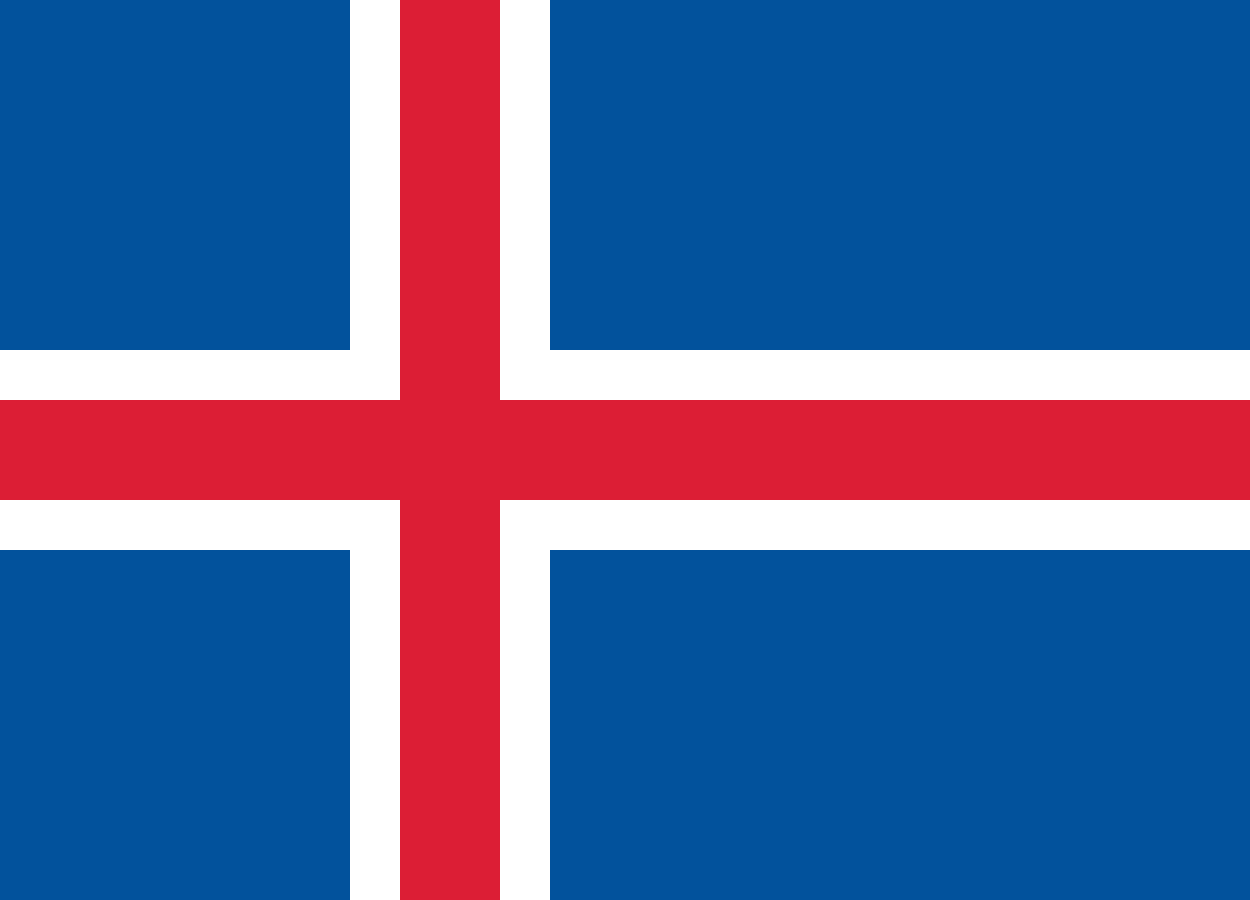
Iceland
Location Info
- Continent: Europe
- Country: Iceland
- Coordinates: 64.9631 , -19.0208
Trust Info
Verified Geographic and Statistical Data 2026
🌍 Continents

Overview
Iceland is a Nordic island nation situated in the North Atlantic Ocean, positioned between Greenland and mainland Europe. Known as the "Land of Fire and Ice," the country is defined by its dramatic volcanic landscape, featuring glaciers, hot springs, and massive lava fields. Despite its northern location near the Arctic Circle, the North Atlantic Current moderates the climate, resulting in surprisingly temperate winters for its latitude.
Historically settled by Norsemen in the 9th century, Iceland boasts the world's oldest surviving parliament, the Althingi. Today, it is a highly developed society with a strong economy driven by tourism, fisheries, and renewable energy. With a population of approximately 400,000, it remains one of the most sparsely populated countries in the world, maintaining a high standard of living and exceptional environmental preservation.
Truth & Facts
| Total Area | 103,000 sq km |
| Highest Point | Hvannadalshnúkur (2,110 m) |
| Population | 400,000 (2026 est.) |
| Official Language | Icelandic |
| Capital | Reykjavik |
| Legislature | Althingi |
| Currency | Icelandic Króna (ISK) |
| Main Exports | Fisheries, Aluminum, Tourism |
| Electricity Source | 100% Renewable |
| First Settlement | 874 AD |
| Independence | June 17, 1944 |
| National Road | Route 1 (Ring Road) |
| International Hub | Keflavík (KEF) |
| Only Native Mammal | Arctic Fox |
| Literacy Rate | 99% |
| Life Expectancy | 82.8 years |
| Naming Convention | Patronymic/Matronymic |
| Internet Usage | 99.8% |
| Global Peace Index | Ranked #1 |
| Voting Age | 18 |
| NATO Membership | Founding Member (1949) |
| Annual Visitors | 2.2 million (2023) |
| House Heating | 90% Geothermal |
| GDP (Nominal) | $35.38 billion |
| Average Winter Temp | 0°C (South Coast) |
| Gender Gap Index | Ranked #1 |
📑 Table of Contents
Overview of Iceland
Iceland is a sovereign island nation in the North Atlantic, situated atop the Mid-Atlantic Ridge where the North American and Eurasian tectonic plates diverge. This unique geological position makes it one of the most volcanically active regions on Earth, featuring over 30 active volcanic systems and hundreds of hot springs. The country is celebrated for its pristine natural beauty, encompassing vast glaciers, plunging waterfalls, and striking black sand beaches.
- Capital: Reykjavik
- Official Name: Lýðveldið Ísland (Republic of Iceland)
- Currency: Icelandic Króna (ISK)
- Time Zone: UTC +0 (Greenwich Mean Time)
- Total Area: 103,000 km²
History of the Location
Iceland's history began with the settlement by Norse explorers and Celtic people in the late 9th century. In 930 AD, the Althingi was established at Þingvellir, creating one of the earliest democratic systems. The country entered a period of Norwegian and later Danish rule before achieving full sovereignty in 1944. Modern Iceland has transitioned from a poor fishing-dependent nation to one of the world's most affluent societies.
| Era | Event |
|---|---|
| 874 AD | First permanent settlement by Ingólfur Arnarson |
| 930 AD | Formation of the Althingi (Parliament) |
| 1262 | Old Covenant: Iceland comes under Norwegian rule |
| 1944 | Establishment of the Republic of Iceland |
| 2008 | Economic Financial Crisis and subsequent recovery |
Geography and Physical Landscape
Iceland's geography is defined by its volcanic origin and glacial activity. Approximately 11% of the country is covered by glaciers, including Vatnajökull, the largest ice cap in Europe by volume. The interior consists mainly of uninhabited highlands, while the population is concentrated along the coastal lowlands and fjords.
- Major Glaciers: Vatnajökull, Langjökull, Hofsjökull
- Active Volcanoes: Katla, Hekla, Eyjafjallajökull, Fagradalsfjall
- Waterfalls: Gullfoss, Dettifoss, Skógafoss
- Geothermal Areas: Geysir, Hverir, Krafla
- Coastline: 4,970 km of fjords and inlets
Climate and Weather Conditions
The climate is subpolar oceanic, influenced by the warm North Atlantic Current. This ensures that coastal areas remain relatively mild despite the high latitude. Weather is notoriously unpredictable and can change rapidly within minutes, often featuring high winds and frequent precipitation.
| Season | Avg Temp (Low/High) | Conditions |
|---|---|---|
| Winter (Dec-Feb) | -3°C / 2°C | Windy, dark, potential for Northern Lights |
| Spring (Mar-May) | 1°C / 7°C | Thawing ice, increasing daylight |
| Summer (Jun-Aug) | 9°C / 14°C | Midnight Sun, mildest weather |
| Autumn (Sep-Nov) | 2°C / 8°C | Rainy, colorful landscapes, return of darkness |
Population and Demographics
Iceland has a small, highly urbanized population of roughly 400,000 people. Over 60% of inhabitants reside in the Greater Reykjavik area. While historically homogenous, the country has seen significant immigration in the 21st century, particularly from Poland and other European nations.
- Median Age: 36.4 years
- Urban Population: 94%
- Largest Minority Group: Polish (approx. 6% of total population)
- Religion: Majority Lutheran (Church of Iceland)
- Life Expectancy: 82.8 years
Culture and Lifestyle
Icelandic culture is deeply rooted in its literary heritage, specifically the Sagas of the Icelanders and the Poetic Edda. Modern culture is vibrant, with a high concentration of artists, musicians, and writers per capita. The lifestyle emphasizes social equality, outdoor recreation, and communal bathing in thermal pools.
- Literature: World's highest number of books published per capita
- Language: Closely resembles Old Norse with strict preservation efforts
- Customs: Continued belief by some in 'Huldufólk' (hidden people or elves)
- Social Norms: High level of gender equality and LGBTQ+ rights
Festivals and Annual Events
Festivals in Iceland range from traditional mid-winter feasts to international music and art celebrations. These events often reflect the country's seasonal cycles and historical milestones.
- Thorrablot (Jan-Feb): Mid-winter festival featuring traditional Viking foods
- Beer Day (March 1): Celebrating the 1989 end of the beer ban
- Iceland Airwaves (November): Internationally acclaimed music festival in Reykjavik
- Independence Day (June 17): National celebration of the founding of the Republic
- Winter Lights Festival (February): Illuminating the capital during the darkest months
Food and Cuisine
Traditional Icelandic cuisine is based on preservation methods like drying, pickling, and smoking, necessitated by the harsh environment. Modern Icelandic cooking focuses on fresh, local ingredients, particularly seafood and grass-fed lamb.
- Hákarl: Fermented shark, a traditional delicacy
- Plokkfiskur: Fish stew made with cod, potatoes, and white sauce
- Skyr: A thick, high-protein dairy product similar to yogurt
- Rúgbrauð: Dark rye bread traditionally baked in the ground using geothermal heat
- Icelandic Lamb: Known for its lean, wild-herb-infused flavor
Economy and Key Industries
The Icelandic economy is a highly developed mixed market economy. Historically reliant on fishing, it has successfully diversified into heavy industry (aluminum smelting), software development, biotechnology, and a massive tourism sector.
| Sector | Contribution to GDP | Key Products/Services |
|---|---|---|
| Services & Tourism | ~64% | International travel, hospitality, finance |
| Industry | ~21% | Aluminum, ferrosilicon, geothermal power |
| Fisheries | ~10% | Cod, mackerel, fish meal processing |
| Agriculture | ~4% | Lamb, dairy, greenhouse produce |
Cost of Living
Iceland is consistently ranked as one of the most expensive countries in the world. High costs are driven by the country's remote location, high taxes, and the necessity of importing most consumer goods and food items.
- Housing: Rent in Reykjavik is high due to limited supply and tourism pressure
- Dining: Meals at restaurants are significantly more expensive than the EU average
- Groceries: Fresh produce (except greenhouse-grown) is costly
- Utilities: Geothermal heating makes electricity and heating relatively affordable
Employment and Business Environment
Iceland has a high labor participation rate and low unemployment. The workforce is highly educated and flexible, with a strong emphasis on innovation in tech and green energy sectors.
- Major Employers: Icelandair, Marel (food processing tech), Össur (prosthetics)
- Labor Unions: Over 85% of workers belong to a union
- Work Culture: Flat hierarchy and informal communication style
- Business Language: English is the primary language of international business
Real Estate and Housing
The housing market in Iceland is centered around Reykjavik and its suburbs. Property ownership is highly valued, though rising prices have increased demand for rental properties in recent years.
- Growth: Annual house price growth was approx 3.7% in early 2026
- Building Style: Modern concrete structures designed for seismic and thermal resilience
- Rental Market: Regulated but expensive, especially in the capital center
Transportation and Connectivity
There are no public railways in Iceland. Domestic travel relies on an extensive road network, regional airports, and coastal ferries. International connectivity is primarily handled through Keflavík International Airport.
- Roads: Route 1 (Ring Road) is the primary artery
- Aviation: Vital for reaching remote areas like the Westfjords or East Iceland
- Public Transport: Strætó operates buses in Reykjavik and long-distance routes
- Driving: Right-hand side; high car ownership rate (779 per 1000 people)
Infrastructure and Utilities
Iceland is a global leader in renewable energy infrastructure. Almost 100% of its electricity and heating comes from hydropower and geothermal sources. High-speed fiber-optic internet is available even in remote coastal villages.
- Energy: Independent grid not connected to mainland Europe
- Water: Tap water is untreated, glacial/volcanic spring water, safe to drink
- Connectivity: 5G coverage is widespread in all urban centers
Education System
Education is compulsory for children aged 6 to 16. The system is largely publicly funded, with high enrollment in secondary and tertiary education. Lifelong learning is a core cultural value.
- Universities: University of Iceland, Reykjavik University
- Literacy: 99% literacy rate; strong emphasis on language and history
- Vocational Training: Strong programs for fisheries and technical trades
Healthcare Services
Iceland provides universal healthcare to all residents through a public insurance system. The quality of care is high, contributing to some of the highest life expectancy rates globally.
- Primary Facility: Landspítali University Hospital in Reykjavik
- Coverage: Funded by taxes with small co-payments for most services
- Emergency: Unified emergency number 112 with helicopter rescue capabilities
Top Tourist Attractions
Most attractions in Iceland are natural wonders. The 'Golden Circle' remains the most visited route, but more travelers are exploring the remote East and North regions.
- Blue Lagoon: World-famous geothermal spa in a lava field
- Gullfoss: A massive two-tiered waterfall on the Hvítá River
- Þingvellir: Historic parliament site and tectonic rift valley
- Jökulsárlón: Glacier lagoon with floating icebergs
- Reynisfjara: Dramatic black sand beach with basalt columns
Activities and Things to Do
Iceland offers a wide range of outdoor and adventure activities. The best activities vary significantly by season.
- Glacier Hiking: Guided tours on Sólheimajökull or Vatnajökull
- Whale Watching: Best in Húsavík or Reykjavik
- Northern Lights: Sightseeing from September to April
- Snorkeling: Diving between tectonic plates at Silfra
- Hiking: World-class trails like the Laugavegur trail
Best Regions to Visit
Each region of Iceland offers a distinct landscape, from the lush south coast to the rugged fjords of the west.
- The South Coast: Famous for waterfalls and black sand beaches
- The Westfjords: The most remote and dramatic coastal scenery
- The Highlands: Untamed volcanic desert (summer only)
- Lake Mývatn: Geological wonders and birdlife in the North
- Snæfellsnes: Often called 'Iceland in Miniature'
Practical Travel Guide
Visiting Iceland requires careful planning, especially regarding gear and transportation. Preparedness for weather is the most important factor for any traveler.
- Currency: ISK; cards are accepted everywhere, even for small amounts
- Clothing: Layering is essential; waterproof outer layers are mandatory
- Safety: Always check Safetravel.is for road and weather warnings
- Connectivity: Renting a portable Wi-Fi device or using local SIMs is recommended
Nearby Destinations
Iceland is an isolated island, but it serves as a gateway between North America and Europe. Nearby island territories are accessible by air or sea.
- Greenland: Regular flights from Reykjavik to Kulusuk and Nuuk
- Faroe Islands: Connected by weekly ferry (Smyril Line) and flights
- Vestmannaeyjar (Westman Islands): A short ferry ride from the south coast
- Grimsey: The only part of Iceland crossing the Arctic Circle
Environment and Nature
Iceland's environment is fragile, characterized by slow-growing moss and volcanic soils. Conservation efforts focus on preventing soil erosion and managing the impact of tourism on natural sites.
- Flora: Mostly mosses, lichens, and small shrubs; few native trees
- Fauna: Reindeer, seals, whales, and millions of seabirds (puffins)
- Conservation: Large national parks protect 14% of the land area
- Eco-Policy: Goal to be carbon neutral by 2040
Government and Administration
Iceland is divided into 64 municipalities that handle local services like schools and zoning. The central government is led by a Prime Minister, while the President serves as a ceremonial head of state.
- Political System: Parliamentary Representative Democracy
- Legal System: Civil law system based on Nordic law
- Municipalities: Handled by local councils
Safety and Public Services
Public safety is managed by the National Police and the volunteer-based Icelandic Association for Search and Rescue (ICE-SAR). Natural hazards are the primary safety concern for both residents and visitors.
- Emergency Number: 112
- Crime: Extremely low rates of violent crime
- Natural Risks: Volcanic eruptions, avalanches, and sneaker waves at beaches
Best Time to Visit
The best time to visit depends on the desired experience. Summer offers long days, while winter provides Northern Lights and ice cave access.
- June - August: Best for hiking and highland access; 24-hour daylight
- September - March: Best for Aurora Borealis and winter activities
- May & September: Shoulder seasons with fewer crowds and decent weather
Business and Directory Information
Local businesses in Iceland are heavily integrated with digital services. Most retail and service providers are concentrated in the capital region and larger regional towns like Akureyri.
- Shopping: Laugavegur is the main shopping street in Reykjavik
- Banking: Arion Banki, Íslandsbanki, and Landsbankinn
- Supermarkets: Bónus and Krónan are the most affordable chains
General Information FAQs
Where is Iceland located?
Iceland is an island country located in the North Atlantic Ocean, just south of the Arctic Circle, between Greenland and Norway.
What is Iceland known for?
Iceland is known for its dramatic landscapes featuring volcanoes, glaciers, geysers, and hot springs, as well as its unique Viking heritage.
Why is Iceland famous?
It is famous for being the 'Land of Fire and Ice,' its high standard of living, renewable energy leadership, and the Northern Lights.
What country or region is Iceland part of?
Iceland is a sovereign nation. Geographically it is part of Europe and culturally it is part of the Nordic countries.
What is the population of Iceland?
As of early 2026, the population is approximately 400,000 people.
What languages are spoken in Iceland?
Icelandic is the official language. English and Danish are widely spoken and taught in schools.
What time zone is Iceland in?
Iceland uses Greenwich Mean Time (UTC+0) year-round; it does not observe daylight saving time.
What are the key facts about Iceland?
Key facts include its 100% renewable electricity, the world's oldest parliament, and its lack of a standing army.
What makes Iceland unique?
Its position on a divergent tectonic plate boundary and its ability to heat 90% of homes with geothermal energy make it unique.
How large is Iceland in area?
Iceland covers approximately 103,000 square kilometers (about 39,768 square miles).
History FAQs
What is the history of Iceland?
Settled by Norsemen in the 9th century, Iceland was an independent commonwealth before coming under Norwegian and then Danish rule, finally regaining independence in 1944.
When was Iceland established?
Permanent settlement began in 874 AD, and the Althingi (parliament) was established in 930 AD.
What major historical events happened in Iceland?
Key events include the adoption of Christianity (1000 AD), the signing of the Old Covenant (1262), and the 2008 financial crisis.
Who were important historical figures from Iceland?
Figures include Ingólfur Arnarson (first settler), Snorri Sturluson (writer), and Vigdís Finnbogadóttir (world's first elected female president).
How has Iceland developed over time?
It evolved from a rural society of farmers and fishermen into a technologically advanced, high-income service economy.
Geography & Environment FAQs
What is the geography of Iceland?
It is a volcanic plateau with deep fjords along the coast and a mountainous, glacier-covered interior.
What natural features surround Iceland?
It is surrounded by the Atlantic Ocean to the south and west, and the Greenland Sea to the north.
Are there mountains, rivers, or lakes near Iceland?
Yes, the country is filled with mountains like Kirkjufell, glacial rivers like the Þjórsá, and deep lakes like Þingvallavatn.
What is the elevation of Iceland?
The average elevation is 500 meters, rising to 2,110 meters at its highest peak, Hvannadalshnúkur.
What ecosystems exist around Iceland?
Ecosystems include subarctic tundra, volcanic deserts, glacial wetlands, and rich marine coastal waters.
Climate & Weather FAQs
What is the climate like in Iceland?
It has a subpolar oceanic climate, characterized by cool summers and surprisingly mild winters for its latitude.
What is the average temperature in Iceland?
Average temperatures range from -1°C to 1°C in winter and 10°C to 13°C in summer.
What is the weather like throughout the year in Iceland?
Weather is very changeable; it is often windy and cloudy with frequent rain or snow showers.
Does Iceland experience extreme weather?
Yes, it frequently experiences high-velocity windstorms and occasional heavy snowfall or sandstorms in the highlands.
What is the best time of year to visit Iceland?
June to August is best for mild weather and long days; September to March is best for seeing the Northern Lights.
Population & Society FAQs
What is the population density of Iceland?
It is approximately 3.8 people per square kilometer, making it the most sparsely populated country in Europe.
What ethnic groups live in Iceland?
The majority are ethnic Icelanders (Norse-Celtic), with significant Polish, Lithuanian, and other European minorities.
What religions are practiced in Iceland?
The majority are members of the Lutheran Church of Iceland, but there are growing groups of Catholics and Ásatrú (Norse paganism) followers.
What is daily life like in Iceland?
Daily life involves a high degree of digital connectivity, frequent visits to public thermal pools, and a strong sense of community.
How diverse is the population of Iceland?
Diversity has increased significantly recently, with about 15% of the population being foreign-born.
Culture & Traditions FAQs
What cultural traditions are important in Iceland?
Key traditions include the reading of Sagas, communal bathing, and the mid-winter feast of Thorrablot.
What festivals are celebrated in Iceland?
Major festivals include Independence Day (June 17), Culture Night (Menningarnótt), and the Winter Lights Festival.
What cultural landmarks exist in Iceland?
Landmarks include the Hallgrímskirkja church, Harpa Concert Hall, and the historic site of Þingvellir.
What traditional clothing or customs are common in Iceland?
The 'Lopapeysa' (hand-knit wool sweater) is the most common traditional garment worn today.
What arts and crafts are associated with Iceland?
Iceland is known for its wool knitting, silver smithing, and a very strong contemporary music and film scene.
Food & Cuisine FAQs
What foods is Iceland known for?
It is known for fresh seafood (cod, langoustine), free-roaming lamb, and Skyr.
What traditional dishes originate from Iceland?
Dishes include Hákarl (fermented shark), Svið (sheep's head), and Plokkfiskur (fish stew).
What are the best restaurants in Iceland?
Most top-rated restaurants are in Reykjavik, such as Dill (Michelin-starred) and Fiskmarkaðurinn.
What local ingredients are commonly used in Iceland cuisine?
Common ingredients include Atlantic cod, dulse (seaweed), wild thyme, and greenhouse-grown tomatoes and cucumbers.
What food markets or street foods are popular in Iceland?
The Bæjarins Beztu Pylsur hot dog stand in Reykjavik is the most famous street food spot.
Economy & Business FAQs
What are the main industries in Iceland?
The primary industries are tourism, commercial fishing, and aluminum smelting.
What economic activities drive the economy of Iceland?
Growth is driven by renewable energy exports (via aluminum), tourism, and seafood exports.
What businesses operate in Iceland?
Major companies include Icelandair, Marel, Össur, and CCP Games (EVE Online).
Is Iceland an important economic center?
While small, it is a leader in green energy technology and sustainable fisheries management.
What are the major exports or products from Iceland?
Major exports include fish products, aluminum, ferrosilicon, and medical products.
Employment & Jobs FAQs
What job opportunities are available in Iceland?
Opportunities are strongest in tourism, tech, healthcare, and specialized industrial engineering.
What are the major employers in Iceland?
The government (including healthcare), Icelandair, and retail chains like Hagar are major employers.
What skills are in demand in Iceland?
Software development, engineering, nursing, and bilingual tourism services are highly in demand.
Is Iceland a good place to work?
Yes, it offers high wages, strong worker protections, and a good work-life balance.
What is the unemployment rate in Iceland?
The unemployment rate is traditionally low, hovering between 3% and 4% as of 2026.
Cost of Living FAQs
Is Iceland expensive to live in?
Yes, it is consistently ranked among the top five most expensive countries globally.
What is the average cost of living in Iceland?
For a single person, monthly costs excluding rent are roughly 180,000 to 220,000 ISK.
How much does housing cost in Iceland?
A one-bedroom apartment in central Reykjavik typically rents for 250,000 to 350,000 ISK per month.
What are average food and utility costs in Iceland?
Electricity and heating are low due to geothermal power, but groceries are 20-40% higher than the EU average.
Is Iceland affordable compared to nearby cities?
No, it is generally more expensive than London, Oslo, or Copenhagen.
Housing & Real Estate FAQs
What types of housing are available in Iceland?
Most housing consists of modern apartments in urban areas and detached houses in smaller towns.
What is the average home price in Iceland?
In Reykjavik, average prices for apartments exceed 70 million ISK as of 2026.
Is it better to rent or buy property in Iceland?
Historically buying is preferred, but high interest rates have made renting more common recently.
Which neighborhoods are popular in Iceland?
In Reykjavik, 101 (downtown), Vesturbær, and the suburb of Garðabær are highly sought after.
How has the property market changed in Iceland?
It has seen rapid price increases due to a shortage of housing and a growing population.
Transportation FAQs
How do you get to Iceland?
Most people arrive via flight to Keflavík International Airport or by ferry from Denmark/Faroe Islands to Seyðisfjörður.
What is the nearest airport to Iceland?
Keflavík (KEF) is the primary international hub; Reykjavik Airport (RKV) handles domestic flights.
Does Iceland have railway connections?
No, there are no public railways in Iceland.
How reliable is public transportation in Iceland?
In Reykjavik, the bus system (Strætó) is reliable; rural areas have limited services.
What major highways or roads connect to Iceland?
Route 1, the Ring Road, is the main highway connecting most towns around the coast.
Education FAQs
What schools are located in Iceland?
There is a comprehensive network of public primary and secondary schools (Menntaskóli) nationwide.
Are there universities in Iceland?
Yes, including the University of Iceland, Reykjavik University, and the University of Akureyri.
What is the literacy rate in Iceland?
The literacy rate is nearly 100%.
What educational opportunities exist in Iceland?
There are strong programs in earth sciences, renewable energy, and arts.
Is Iceland a good place for students?
Yes, especially for those interested in environmental science, but the cost of living is a major factor.
Healthcare FAQs
What hospitals are available in Iceland?
The main hospital is Landspítali in Reykjavik; smaller hospitals and clinics are located in regional centers.
Are there emergency medical services in Iceland?
Yes, accessible via 112, with ambulance and air rescue services.
What healthcare facilities exist in Iceland?
There are local health centers (Heilsugæslan) providing primary care in almost every town.
Is healthcare affordable in Iceland?
Yes, it is largely tax-funded; residents pay small fixed fees for visits and prescriptions.
Are specialized medical services available in Iceland?
Most specialized care is concentrated in Reykjavik.
Tourism & Travel FAQs
What are the top tourist attractions in Iceland?
The Blue Lagoon, Gullfoss waterfall, Geysir, and Jökulsárlón glacier lagoon.
What are the best things to do in Iceland?
Glacier hiking, whale watching, bathing in hot springs, and chasing the Northern Lights.
Is Iceland worth visiting?
Yes, for its unique natural beauty and geological wonders found nowhere else on earth.
What landmarks should visitors see in Iceland?
Hallgrímskirkja, the Skógafoss waterfall, and the Diamond Beach.
How many days should tourists spend in Iceland?
7 to 10 days is recommended to drive the Ring Road; 3 to 5 days is sufficient for the South Coast and Reykjavik.
Nearby Places FAQs
What places are near Iceland worth visiting?
The Westman Islands, Greenland, and the Faroe Islands are the most accessible nearby destinations.
What cities or towns are close to Iceland?
The closest major international cities are Glasgow, Scotland, and Nuuk, Greenland.
What natural attractions are near Iceland?
The Arctic ice sheet and the rich fishing grounds of the North Atlantic.
What day trips can be taken from Iceland?
From Reykjavik, you can take day trips to the Golden Circle, the Snæfellsnes Peninsula, or the South Coast.
What famous destinations are within reach of Iceland?
The Arctic Circle (via Grimsey Island) is reachable within the country.
Safety FAQs
Is Iceland safe to live in?
Yes, it is one of the safest countries in the world with extremely low crime rates.
Is Iceland safe for tourists?
Generally yes, though natural hazards (weather, sea currents, volcanoes) pose more risk than people.
What is the crime rate in Iceland?
The crime rate is exceptionally low, particularly for violent offenses.
What emergency services operate in Iceland?
Police, Fire, and the volunteer Search and Rescue (ICE-SAR).
What safety tips should visitors follow in Iceland?
Always check weather forecasts, never drive off-road, and respect warning signs at beaches and thermal areas.
Lifestyle & Living FAQs
Is Iceland a good place to live?
Yes, for those who value nature, safety, and a strong social welfare system.
What recreational activities are available in Iceland?
Swimming in thermal pools, hiking, skiing, and horse riding.
Is Iceland family-friendly?
Extremely; it is safe, has excellent schools, and plenty of outdoor space for children.
What outdoor activities are popular in Iceland?
River rafting, caving, mountain biking, and sea kayaking.
What makes life enjoyable in Iceland?
The clean air, high-quality water, stunning views, and a relaxed pace of life.
Practical Information FAQs
What travel tips should visitors know about Iceland?
Book car rentals and accommodation well in advance, and always carry a credit card.
What local customs should visitors respect in Iceland?
Always shower without a swimsuit before entering public pools and never walk on delicate moss.
How accessible is Iceland for international visitors?
Very accessible via Keflavík, with numerous direct flights from Europe and North America.
What services are available for tourists in Iceland?
Information centers, organized tours for almost every activity, and widespread high-speed internet.
What important information should travelers know before visiting Iceland?
The weather is the boss; plans must remain flexible in case of storms or road closures.
Environment & Nature FAQs
Can you see the Northern Lights in Iceland?
Yes, from late August to early April when the sky is dark and clear.
Are there many trees in Iceland?
No, Iceland was largely deforested by early settlers; reforestation efforts are currently underway.
What is the Midnight Sun?
In June and July, the sun barely sets, providing 24 hours of daylight.
Are there any dangerous animals in Iceland?
No, there are no snakes or large predators; the most dangerous is the occasional polar bear drifting on ice from Greenland (rare).
Is the water in Iceland safe to drink?
Yes, the tap water in Iceland is among the purest and cleanest in the world.