Haiti
Location Info
- Continent: North America
- Country: Haiti
- Coordinates: 18.9712 , -72.2852
Trust Info
Verified Geographic Information
🌍 Continents
Overview
Haiti is located on the western third of the island of Hispaniola in the Greater Antilles of the Caribbean Sea. It shares the island with the Dominican Republic to the east and is situated east of Cuba and Jamaica. The nation is characterized by its mountainous terrain, which occupies approximately 80% of its land area, and a tropical climate subject to seasonal hurricanes.
Historically, Haiti is significant as the world's first black-led republic and the first independent Caribbean nation, having achieved sovereignty from France in 1804. Port-au-Prince serves as the capital and primary economic hub. The country’s economy is largely driven by agriculture, manufacturing, and remittances from its extensive global diaspora.
Truth & Facts
| Total Area | 27,750 km² |
| Coastline Length | 1,771 km |
| Population | 11,500,000 (approximate) |
| Official Languages | French, Haitian Creole |
| Capital City | Port-au-Prince |
| Administrative Divisions | 10 Departments |
| Independence Year | 1804 |
| Currency | Haitian Gourde (HTG) |
| Electricity Access | Approximately 45% |
| Literacy Rate | 61% |
| Primary Hospital | Hôpital de l'Université d'État d'Haïti |
| Major Religion | Roman Catholicism |
| UNESCO World Heritage Site | Citadelle Laferrière |
| Primary Hazards | Hurricanes, Earthquakes |
| Main Airport | Toussaint Louverture International |
| Internet Users | 33% of population |
| Law Enforcement | Haitian National Police (PNH) |
| Legal Basis | Civil Law |
| International Organizations | UN, CARICOM, OAS |
| Drinking Water Access | 65% |
| GDP (Nominal) | $21 Billion (approx) |
| Remaining Forest | Less than 2% |
| Peak Name | Pic la Selle |
📑 Table of Contents
Overview
Haiti is a sovereign state located on the island of Hispaniola in the Caribbean. It is the most populous country in the Caribbean and is known for its complex history of resilience and independence. The nation shares a land border with the Dominican Republic and is surrounded by the Atlantic Ocean to the north and the Caribbean Sea to the south.
As the first nation to successfully abolish slavery and establish a republic led by former slaves, Haiti occupies a unique position in world history. Today, it is an ethnically diverse nation with a rich cultural tapestry expressed through art, music, and language.
History
The history of Haiti began with the indigenous Taíno people before Christopher Columbus arrived in 1492. Spanish and later French colonization led to the establishment of profitable sugar and coffee plantations based on enslaved labor. This ended with the Haitian Revolution, a successful anti-slavery insurrection that concluded in 1804.
- 1492: Arrival of Christopher Columbus on Hispaniola.
- 1697: Treaty of Ryswick cedes western third of the island to France.
- 1791: Outbreak of the Haitian Revolution.
- 1804: Declaration of Independence by Jean-Jacques Dessalines.
- 1915–1934: United States occupation of Haiti.
- 2010: A devastating earthquake strikes near Port-au-Prince.
Geography
Haiti's geography is dominated by mountains interspersed with small coastal plains and central valleys. Two peninsulas, the northern and southern, frame the Gulf of Gonâve. The climate is tropical, but the mountainous interior creates varying microclimates ranging from semiarid to humid.
| Feature | Details |
|---|---|
| Major River | Artibonite River |
| Highest Peak | Pic la Selle (2,680 m) |
| Largest Island | Île de la Gonâve |
| Bordering Country | Dominican Republic |
Climate and Weather
The climate is generally tropical and warm, with two main rainy seasons typically occurring from April to June and October to November. Temperature variations are more prominent with altitude than with seasonality. The coastal regions remain hot and humid year-round.
- Hurricane Season: June through November.
- Average Temperature: 25°C to 30°C in coastal areas.
- Rainfall: Heaviest in the southern and northern peninsulas.
- Humidity: Generally high, averaging around 70-80%.
- Prevailing Winds: North-east trade winds.
Population and Demographics
Haiti has a population of approximately 11.5 million people, with a high population density in the capital and coastal cities. The majority of the population is of African descent, with a smaller proportion of mixed European and African heritage. The age structure is relatively young, with a large percentage of the population under age 25.
- Ethnic Groups: 95% Black, 5% Mixed/White.
- Official Languages: Haitian Creole, French.
- Religion: 55% Catholic, 28% Protestant, 2% Vodou.
- Urban Population: ~58% of the total.
- Growth Rate: ~1.2% per year.
Culture and Lifestyle
Haitian culture is a distinct blend of African, French, and indigenous Taíno elements. This is most visible in the nation's vibrant visual arts, which often feature bold colors and spiritual themes. Literature and music are also central to the national identity, with the 'Kompa' music style being popular both locally and internationally.
- Art: Naive and primitive art styles are world-renowned.
- Music: Kompa, Rara, and Mizik Rasin styles.
- Beliefs: Syncretism between Catholicism and Vodou.
- Customs: Strong emphasis on community and extended family.
- Oral Tradition: Rich collection of proverbs and storytelling.
Festivals and Events
Festivals in Haiti are deeply rooted in history and religion. The most significant annual event is 'Kanaval' (Carnival), celebrated before Lent with parades and music. Rara, a traditional music procession, takes place during the Easter season and features handmade instruments and spiritual chants.
- Independence Day: January 1st, celebrated with Joumou soup.
- Carnival: Major street festivities in Port-au-Prince and Jacmel.
- Fête Gede: Voodoo festival honoring the ancestors in November.
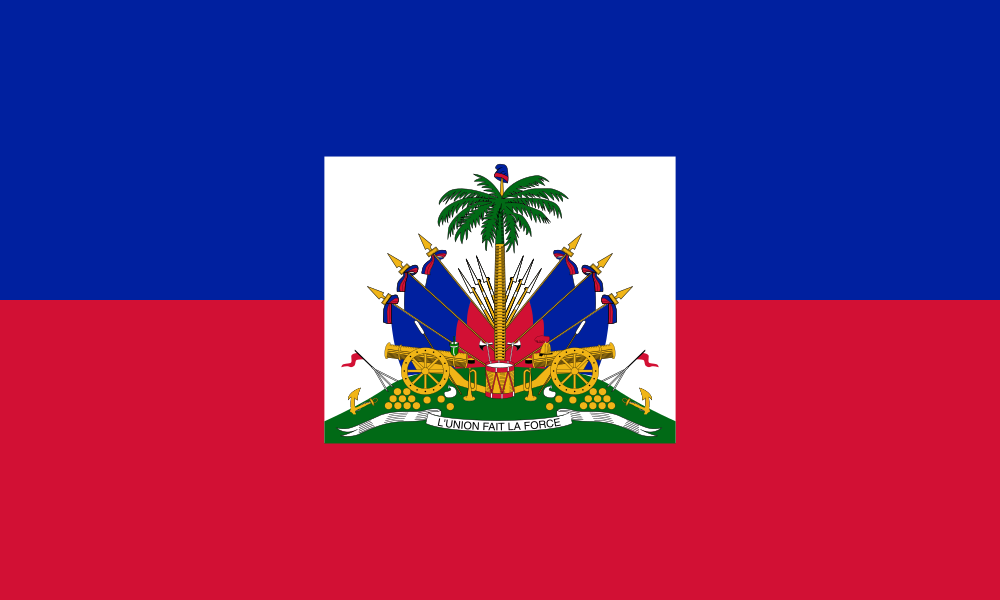
- Flag Day: May 18th, honoring the creation of the national flag.
- Saut-d'Eau: Annual religious pilgrimage to the sacred waterfalls.
Food and Cuisine
Haitian cuisine is known for its bold flavors and reliance on local staples like rice, beans, and root vegetables. It is influenced by French techniques and African seasoning profiles. 'Griot' (fried pork) and 'Diri ak Djon Djon' (black mushroom rice) are considered national specialties.
| Dish | Type | Main Ingredients |
|---|---|---|
| Griot | Meat | Pork, citrus, peppers |
| Soup Joumou | Soup | Pumpkin, beef, vegetables |
| Akra | Appetizer | Malanga root, spices |
| Tassot | Meat | Dried beef or goat |
Economy and Industries
Haiti has a free market economy, though it faces structural challenges. Agriculture remains a significant sector, employing a large portion of the workforce. The apparel industry is a major source of export earnings, benefiting from trade agreements with the United States.
- Main Exports: Apparel, coffee, mangoes, vetiver oil.
- Key Sector: Agriculture (mangoes and cocoa).
- Manufacturing: Garment assembly and light textiles.
- Trade Partners: United States, Dominican Republic, China.
- Remittances: A vital source of income for many households.
Cost of Living
The cost of living in Haiti can be high for imported goods due to logistics and transportation costs. Local food items in markets are generally affordable, but housing and utilities in secure urban neighborhoods command premium prices compared to the regional average.
- Housing: Moderate in rural areas; high in Petion-Ville.
- Groceries: Local produce is cheap; imports are expensive.
- Electricity: Often supplemented by private generators or solar.
- Transport: Local 'Tap-Taps' are the most affordable option.
- Services: Labor-intensive services like tailoring are inexpensive.
Employment and Business
The labor market in Haiti is characterized by a large informal sector, with many citizens engaged in street vending and subsistence farming. Formal employment is concentrated in the textile industry, public administration, and the telecommunications sector.
- Major Employers: S&H Global, Digicel, Natcom.
- Key Skills: Multilingualism (French/English/Creole) is valued.
- Business Hub: Port-au-Prince metropolitan area.
- Investment: Incentives exist for industrial park development.
- Workforce: Predominantly young and adaptable.
Real Estate and Housing
Housing styles in Haiti vary from traditional rural 'lakou' dwellings to modern villas in the hills of Petion-Ville. Since the 2010 earthquake, there has been a significant focus on resilient construction techniques. Property rights and title clarity remain a focus for government reform.
- Urban Housing: Often concrete masonry for durability.
- Rural Housing: Usually smaller, often with outdoor kitchens.
- Rental Market: Prices are often quoted in US Dollars in high-end areas.
- Land Ownership: Requires a notary and long-term verification process.
- Trends: Increasing interest in eco-friendly and solar-powered homes.
Transportation and Connectivity
Transportation is primarily road-based, with National Roads connecting the major cities. Public transport is dominated by colorful painted buses known as 'Tap-Taps'. For international travel, two main airports serve as the primary gateways to North America and Europe.
- Aviation: Toussaint Louverture (PAP) and Hugo Chávez (CAP) airports.
- Maritime: Ports in Port-au-Prince and Cap-Haïtien.
- Public Transit: Tap-Taps and moto-taxis (motorcycles).
- Road Network: Includes National Road 1 (North) and Road 2 (South).
- Connectivity: Growing mobile penetration across all departments.
Infrastructure and Utilities
Utility infrastructure in Haiti is currently undergoing modernization. Electricity is provided by Electricité d'Haïti (EDH), though many businesses and homes rely on backup power systems. Water distribution is managed by DINEPA, focusing on expanding access to clean water in rural areas.
- Telecommunications: Robust 4G networks in major cities.
- Energy: Mix of hydroelectric, thermal, and solar power.
- Sanitation: Ongoing projects to improve waste management.
- Bridges: Critical links across the Artibonite and other rivers.
- Water: Community-managed wells and urban piped systems.
Education
The Haitian education system is modeled after the French system. It consists of primary, secondary, and tertiary levels. While the State University of Haiti is the largest public institution, there are numerous private universities and vocational schools throughout the country.
- University: State University of Haiti (UEH).
- Private Sector: Major role in providing primary education.
- Language of Instruction: French, with Creole in early primary levels.
- Literacy: Efforts are ongoing to increase adult literacy rates.
- Curriculum: National exams (Baccalauréat) are required for secondary completion.
Healthcare
Healthcare is provided through a mix of public facilities and private clinics. The Ministry of Public Health and Population (MSPP) oversees the national health policy. Major medical centers are located in Port-au-Prince, with regional hospitals serving the departments.
- Public Health: Focused on infectious disease and maternal care.
- Specialized Care: Available in major private hospitals in the capital.
- Traditional Medicine: Widely used alongside formal healthcare.
- Emergency Services: Provided by the Red Cross and government agencies.
- NGO Support: International organizations assist in rural healthcare delivery.
Tourist Attractions
Haiti offers a unique blend of historical landmarks and natural beauty. The Citadelle Laferrière, a massive fortress built in the early 19th century, is the most famous historical site. The southern city of Jacmel is celebrated for its Victorian architecture and vibrant arts scene.
- Citadelle Laferrière: A mountaintop fortress near Cap-Haïtien.
- Sans-Souci Palace: Former royal residence of King Henri I.
- Bassin Bleu: A series of natural turquoise pools near Jacmel.
- Labadee: A private port known for its beaches and water sports.
- Marche de Fer: The historic Iron Market in Port-au-Prince.
Things to Do
Activities in Haiti cater to history buffs and nature enthusiasts. Hiking in the national parks provides opportunities to see rare orchids and bird species. Exploring the coastal areas allows for diving and visiting historic forts that date back to the colonial era.
- Historical Tours: Visiting the ruins in the Nord Department.
- Cultural Exploration: Attending art workshops in Jacmel.
- Hiking: Exploring the trails of Pic Macaya National Park.
- Gastronomy: Sampling local seafood in coastal Les Cayes.
- Beach Visits: Relaxing on the shores of Côte-des-Arcadins.
Best Places to Visit
Key destinations in Haiti include Cap-Haïtien for its history, Jacmel for its art, and the island of Île-à-Vache for its tranquil beaches. Port-au-Prince remains the primary entry point, offering museums and vibrant local markets that showcase the city's energy.
| Destination | Region | Primary Interest |
|---|---|---|
| Cap-Haïtien | North | History & UNESCO Sites |
| Jacmel | South | Art & Architecture |
| Petion-Ville | West | Dining & Shopping |
| Moles Saint-Nicolas | Northwest | Beaches & Windsurfing |
Travel Guide
International travel to Haiti usually enters through Toussaint Louverture International Airport. Visitors are advised to check current travel advisories and entry requirements. Most international visitors require a passport with at least six months' validity.
- Visa Policy: Many nationalities receive a tourist stay on arrival.
- Currency: US Dollars are widely accepted in hotels and restaurants.
- Communication: Local SIM cards are easily available.
- Etiquette: Respectful behavior towards local traditions and photography.
- Transport: Rental cars and private drivers are recommended for inter-city travel.
Nearby Places
As part of the Greater Antilles, Haiti is close to several major Caribbean destinations. The Dominican Republic is the most accessible neighbor via land border. Cuba and Jamaica are located to the west across the Windward Passage and Jamaica Channel respectively.
- Dominican Republic: Accessible via Malpasse or Ouanaminthe.
- Cuba: Located approximately 80 km across the Windward Passage.
- Jamaica: Situated south-west across the Caribbean Sea.
- Turks and Caicos: Located to the north across the Atlantic.
- Navassa Island: An uninhabited island located to the west.
Environment and Nature
Haiti is home to diverse ecosystems, including mountain cloud forests and coastal mangroves. Despite environmental challenges, the country retains significant biodiversity, with several endemic species of plants and animals found in its national parks.
- Endemic Species: Hispaniolan solenodon and hutia.
- National Parks: La Visite and Pic Macaya.
- Marine Life: Coral reefs found off the Arcadins coast.
- Challenges: Reforestation efforts are a national priority.
- Water Resources: Numerous rivers and the Étang Saumâtre lake.
Government and Administration
Haiti is a semi-presidential republic. The government is divided into executive, legislative, and judicial branches. Administratively, the country is divided into 10 departments, each headed by a delegate appointed by the central government.
- Executive: President and Prime Minister.
- Legislative: Senate and Chamber of Deputies.
- Local Gov: Municipalities (Communes) led by mayors.
- Judiciary: Supreme Court and local courts of appeal.
- Constitution: Based on the 1987 document (amended).
Safety and Public Services
Public safety is maintained by the Haitian National Police. Essential services include public hospitals, fire departments, and waste management services. The government also operates a disaster management agency (DPC) to coordinate responses to natural hazards.
- Emergency: 114 for medical emergencies.
- Fire: Local Sapeurs-Pompiers units in major cities.
- Disaster Prep: National system for risk and disaster management.
- Coast Guard: Monitors territorial waters for safety.
- Public Utilities: Ongoing efforts to stabilize the power grid.
Best Time to Visit
The best time to visit is during the dry season from December to March when temperatures are milder and rainfall is minimal. This period also coincides with the Independence Day celebrations and the lead-up to Carnival.
- High Season: December to April (Dry and cooler).
- Low Season: May to June and October to November (Rainy).
- Cultural Timing: January for historical celebrations.
- Nature: Spring for bird watching and mountain flora.
- Weather Tip: Coastal areas are breezy and pleasant in winter.
Local Business Directory
The Haitian business landscape includes a mix of large corporations and a robust small-business community. Financial services, telecommunications, and beverage manufacturing are among the most developed sectors in the urban centers.
- Banking: Sogebank, Unibank, Capital Bank.
- Telecommunications: Digicel Haiti, Natcom.
- Manufacturing: BRANA (Brewery), Caribbean Port Services.
- Hospitality: Marriott, Decameron, Karibe Hotel.
- Retail: Delimart, Eagle Market.
General Information FAQs
Where is Haiti located?
Haiti is located on the western third of the island of Hispaniola in the Caribbean Sea. It is part of the Greater Antilles and shares a land border with the Dominican Republic.
What is Haiti known for?
Haiti is known for its world-changing revolution in 1804, its unique cultural heritage including art and music, and its status as the world's first black-led republic.
Why is Haiti famous?
It is famous for the Haitian Revolution, being the first independent nation in Latin America and the Caribbean, and its iconic Citadelle Laferrière fortress.
What country or region is Haiti part of?
Haiti is an independent country located in the Caribbean region of North America.
What is the population of Haiti?
As of 2024, the population of Haiti is approximately 11.5 million people.
What languages are spoken in Haiti?
The two official languages are French and Haitian Creole. While French is used in formal administration, Creole is spoken by the entire population.
What time zone is Haiti in?
Haiti is in the Eastern Time Zone (UTC-5) and observes Daylight Saving Time.
What are the key facts about Haiti?
Key facts include its capital Port-au-Prince, its currency the Gourde, and its status as a mountainous nation with over 1,700 km of coastline.
What makes Haiti unique?
Its unique history of resistance, the blend of West African and French culture, and its distinctive Voodoo-influenced art make it a one-of-a-kind nation.
How large is Haiti in area?
Haiti covers an area of approximately 27,750 square kilometers.
History FAQs
What is the history of Haiti?
Haiti's history includes indigenous Taíno settlement, Spanish and French colonization, a successful slave revolution ending in 1804, and a subsequent series of political and social developments as a sovereign republic.
When was Haiti established?
Haiti was established as a sovereign nation on January 1, 1804, following its declaration of independence from France.
What major historical events happened in Haiti?
Major events include the 1791 slave rebellion, the defeat of Napoleon's army in 1803, the 1915 US occupation, and the devastating 2010 earthquake.
Who were important historical figures from Haiti?
Important figures include Toussaint Louverture, Jean-Jacques Dessalines, Henri Christophe, and Alexandre Pétion.
How has Haiti developed over time?
Since independence, Haiti has developed from a plantation-based colonial economy into a republic with a focus on manufacturing, trade, and regional diplomacy.
Geography & Environment FAQs
What is the geography of Haiti?
Haiti's geography is mountainous, featuring two main peninsulas and central plains such as the Artibonite Valley.
What natural features surround Haiti?
Haiti is surrounded by the Atlantic Ocean to the north, the Caribbean Sea to the south, and the Windward Passage to the west.
Are there mountains, rivers, or lakes near Haiti?
Yes, major features include the Massif de la Hotte mountains, the Artibonite River, and Étang Saumâtre (a large brackish lake).
What is the elevation of Haiti?
Elevation ranges from sea level to 2,680 meters at the summit of Pic la Selle.
What ecosystems exist around Haiti?
Ecosystems include tropical rainforests, mountain cloud forests, arid scrublands, and coastal coral reefs.
Climate & Weather FAQs
What is the climate like in Haiti?
Haiti has a tropical climate with hot temperatures in lowlands and cooler conditions in the mountains.
What is the average temperature in Haiti?
The average coastal temperature is approximately 27°C (81°F).
What is the weather like throughout the year in Haiti?
The year is divided into a dry season (Dec-Mar) and a wet season (Apr-June and Oct-Nov), with consistent tropical heat.
Does Haiti experience extreme weather?
Yes, the country is prone to seasonal hurricanes and occasional severe tropical storms.
What is the best time of year to visit Haiti?
The dry winter months from December to March are typically considered the best time for visiting.
Population & Society FAQs
What is the population density of Haiti?
Haiti is one of the most densely populated countries in the Caribbean, with about 414 people per square kilometer.
What ethnic groups live in Haiti?
The population is predominantly of African descent (95%), with a small percentage of mixed-race and white citizens.
What religions are practiced in Haiti?
Roman Catholicism is the largest religion, followed by Protestantism and Haitian Vodou.
What is daily life like in Haiti?
Daily life involves a strong community focus, active street markets, and a resilient approach to social and economic challenges.
How diverse is the population of Haiti?
While ethnically homogeneous, the population is culturally diverse in terms of artistic expression, religious practice, and regional customs.
Culture & Traditions FAQs
What cultural traditions are important in Haiti?
Important traditions include Carnival, oral storytelling, and communal work sessions known as 'Combite'.
What festivals are celebrated in Haiti?
Key festivals include Independence Day (Jan 1), Carnival (pre-Lent), and Flag Day (May 18).
What cultural landmarks exist in Haiti?
Significant landmarks include the Citadelle Laferrière, the Iron Market, and the various cathedrals across the nation.
What traditional clothing or customs are common in Haiti?
The Karabela dress is traditional for women, and social customs emphasize politeness and hospitality.
What arts and crafts are associated with Haiti?
Haiti is world-famous for its metal sculptures (from Croix-des-Bouquets) and bright 'naive' oil paintings.
Food & Cuisine FAQs
What foods is Haiti known for?
Haiti is known for its spicy and seasoned meat dishes, rice and bean combinations, and tropical fruit.
What traditional dishes originate from Haiti?
National dishes include Griot (fried pork), Soup Joumou (pumpkin soup), and Diri ak Djon Djon (mushroom rice).
What are the best restaurants in Haiti?
High-quality dining is concentrated in Petion-Ville and major hotels in Port-au-Prince and Cap-Haïtien.
What local ingredients are commonly used in Haiti cuisine?
Common ingredients include scotch bonnet peppers, garlic, thyme, lime, and coconut milk.
What food markets or street foods are popular in Haiti?
Street foods like 'Bannann Peze' (fried plantains) and the 'Iron Market' for fresh spices are very popular.
Economy & Business FAQs
What are the main industries in Haiti?
The main industries include apparel manufacturing, food processing, and the export of coffee and mangoes.
What economic activities drive the economy of Haiti?
The economy is driven by textile exports, agriculture, and remittances from the Haitian diaspora.
What businesses operate in Haiti?
Major businesses include Digicel (telecom), Unibank (finance), and various industrial assembly plants in free trade zones.
Is Haiti an important economic center?
Haiti is a key player in Caribbean trade, particularly as a member of CARICOM and a source of labor for assembly industries.
What are the major exports or products from Haiti?
Major exports include garments, high-quality vetiver oil, and organic mangoes.
Employment & Jobs FAQs
What job opportunities are available in Haiti?
Opportunities exist in the manufacturing sector, international development organizations, and the service industry.
What are the major employers in Haiti?
The Haitian government, the textile company S&H Global, and major banks are the largest employers.
What skills are in demand in Haiti?
Skills in engineering, healthcare, education, and proficiency in multiple languages are highly sought after.
Is Haiti a good place to work?
For professionals in development, manufacturing, and international business, Haiti offers a dynamic and challenging environment.
What is the unemployment rate in Haiti?
The formal unemployment rate is high, though most of the population works in the informal economy.
Cost of Living FAQs
Is Haiti expensive to live in?
Local living is affordable, but a lifestyle requiring imported goods and high security can be expensive.
What is the average cost of living in Haiti?
It varies widely; rural areas are very inexpensive, while urban Petion-Ville has prices comparable to other Caribbean hubs.
How much does housing cost in Haiti?
Urban rentals in secure areas can range from $500 to $2000 per month depending on amenities.
What are average food and utility costs in Haiti?
Utilities are high due to reliance on private generators; food costs are moderate if purchasing locally.
Is Haiti affordable compared to nearby cities?
Haiti is generally more affordable than cities like Miami or Santo Domingo for basic local services.
Housing & Real Estate FAQs
What types of housing are available in Haiti?
Available housing includes modern apartments, suburban villas, and traditional rural homesteads.
What is the average home price in Haiti?
Prices range from $50,000 for small houses to over $500,000 for luxury properties in the hills.
Is it better to rent or buy property in Haiti?
Renting is common for expats, while buying is preferred by the local business community and diaspora.
Which neighborhoods are popular in Haiti?
Petion-Ville, Laboule, and parts of Jacmel are popular for residential real estate.
How has the property market changed in Haiti?
There has been a shift toward earthquake-resistant construction and increased demand for gated communities.
Transportation FAQs
How do you get to Haiti?
Most international travelers arrive via flight to Port-au-Prince or Cap-Haïtien, or via land from the Dominican Republic.
What is the nearest airport to Haiti?
Toussaint Louverture International Airport (PAP) in Port-au-Prince is the primary hub.
Does Haiti have railway connections?
No, Haiti currently does not have an operational public railway system.
How reliable is public transportation in Haiti?
Public transport like Tap-Taps is frequent but can be crowded; private taxis are more reliable for specific schedules.
What major highways or roads connect to Haiti?
National Roads 1 and 2 are the primary arteries connecting the capital to the north and south.
Education FAQs
What schools are located in Haiti?
Haiti has a mix of public lycées, private parochial schools, and international schools like Union School.
Are there universities in Haiti?
Yes, the State University of Haiti (UEH) and Quisqueya University are the leading institutions.
What is the literacy rate in Haiti?
The literacy rate is approximately 61% and is improving through government and NGO initiatives.
What educational opportunities exist in Haiti?
Opportunities include academic degrees, vocational training, and specialized art programs.
Is Haiti a good place for students?
Students interested in social sciences, history, and Caribbean studies find Haiti to be an invaluable resource.
Healthcare FAQs
What hospitals are available in Haiti?
Notable hospitals include the Hôpital de l'Université d'État d'Haïti and St. Luke Foundation Hospital.
Are there emergency medical services in Haiti?
Emergency services are available through public ambulances and private medical flight services.
What healthcare facilities exist in Haiti?
Facilities include government health centers, private specialty clinics, and regional hospitals.
Is healthcare affordable in Haiti?
Public healthcare is low-cost but limited; private healthcare offers higher standards at a higher price.
Are specialized medical services available in Haiti?
Specialized services like cardiology and maternity are available primarily in the capital.
Tourism & Travel FAQs
What are the top tourist attractions in Haiti?
Top attractions include the Citadelle Laferrière, Jacmel's beach resorts, and the mountain town of Kenscoff.
What are the best things to do in Haiti?
Enjoying historical tours, hiking to Bassin Bleu, and exploring the Port-au-Prince art galleries are top activities.
Is Haiti worth visiting?
Yes, for travelers seeking authentic culture, significant history, and beautiful natural scenery off the beaten path.
What landmarks should visitors see in Haiti?
The Citadelle, Sans-Souci Palace, and the Cathedral of Our Lady of the Assumption (ruins) are essential landmarks.
How many days should tourists spend in Haiti?
A stay of 7 to 10 days allows for a comprehensive visit to both the northern and southern highlights.
Nearby Places FAQs
What places are near Haiti worth visiting?
The nearby island of Île-à-Vache and the border city of Santo Domingo are worth visiting.
What cities or towns are close to Haiti?
Dajabón in the Dominican Republic is a major close-by cross-border town.
What natural attractions are near Haiti?
The Silver Bank (for whale watching) and various Caribbean cays are located in nearby waters.
What day trips can be taken from Haiti?
Day trips from Port-au-Prince to the Côte des Arcadins beaches are very popular.
What famous destinations are within reach of Haiti?
Punta Cana and Havana are within a short flight from the island.
Safety FAQs
Is Haiti safe to live in?
Safety varies by neighborhood; many expatriates live comfortably in gated communities with private security.
Is Haiti safe for tourists?
Tourists are advised to use reputable guides and stay in established tourist zones to ensure a safe visit.
What is the crime rate in Haiti?
Crime exists in urban centers, but most of the country remains peaceful for day-to-day living.
What emergency services operate in Haiti?
The PNH (police) and CAN (ambulance) are the primary emergency responders.
What safety tips should visitors follow in Haiti?
Avoid walking alone at night, keep valuables out of sight, and stay informed on local news.
Lifestyle & Living FAQs
Is Haiti a good place to live?
For those who value community, culture, and a tropical environment, Haiti offers a rewarding life experience.
What recreational activities are available in Haiti?
Snorkeling, hiking, attending live music events, and participating in soccer are common activities.
Is Haiti family-friendly?
Haitian culture is very family-oriented, making it a supportive place for raising children in a community setting.
What outdoor activities are popular in Haiti?
Mountain biking, ocean swimming, and hiking in the national parks are popular.
What makes life enjoyable in Haiti?
The vibrant social life, the year-round warm weather, and the rich culinary traditions make life enjoyable.
Practical Information FAQs
What travel tips should visitors know about Haiti?
Carry small bills in Gourdes and US Dollars, and learn basic Creole phrases to improve communication.
What local customs should visitors respect in Haiti?
Polite greetings are expected, and it is customary to ask permission before taking photos of individuals.
How accessible is Haiti for international visitors?
It is very accessible with daily flights from Miami, Fort Lauderdale, and Paris.
What services are available for tourists in Haiti?
Services include guided tour operators, international hotels, and rental car agencies.
What important information should travelers know before visiting Haiti?
Stay updated on travel advisories and ensure all vaccinations are current before arrival.