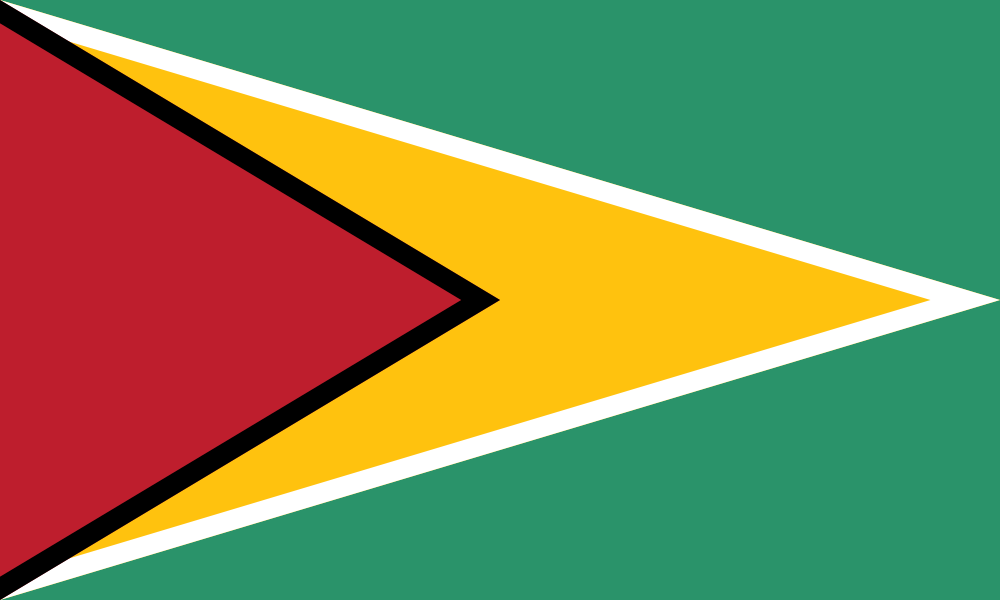
Guyana
Location Info
- Continent: South America
- Country: Guyana
- Coordinates: 4.8604 , -58.9302
Trust Info
Verified Geographic and Statistical Information 2026
🌍 Continents





Overview
Guyana, officially known as the Cooperative Republic of Guyana, is a sovereign state located on the northern mainland of South America. It is unique as the only English-speaking country on the continent and maintains strong cultural and political ties with the Caribbean region, serving as the headquarters for CARICOM. The country is bordered by the Atlantic Ocean to the north, Brazil to the south and southwest, Venezuela to the west, and Suriname to the east.
Geographically, Guyana is defined by its vast, pristine rainforests, which cover over 85% of its territory, and its complex network of rivers. Historically a plantation-based economy, Guyana has undergone a massive transformation since the discovery of significant offshore oil reserves in 2015. By 2026, it has emerged as one of the world's fastest-growing economies, balancing rapid industrial expansion with its long-standing commitment to forest conservation and low-carbon development.
Truth & Facts
| Total Area | 214,969 sq km |
| Coastline | 459 km |
| Total Population | 840,890 (2026 Estimate) |
| Official Language | English |
| Capital | Georgetown |
| Administrative Regions | 10 Regions |
| Independence | May 26, 1966 |
| Republic Status | February 23, 1970 |
| GDP Growth Rate | 16.2% (2026 Forecast) |
| Primary Industries | Petroleum, Gold, Rice, Sugar, Bauxite |
| Gas-to-Energy Project | Commissioning Q4 2026 |
| Literacy Rate | Approximately 88.8% |
| Life Expectancy | 71 Years (Average) |
| Main Ethnic Groups | Indo-Guyanese, Afro-Guyanese, Amerindian |
| Highest Waterfall | Kaieteur Falls |
| Forest Cover | Approx. 85-87% |
| Main Airport | Cheddi Jagan International (CJIA) |
| Broadband Expansion | Ongoing National Rollout |
| Emergency Number | 911 |
| Legislative Branch | National Assembly |
| CARICOM HQ | Turkeyen, Georgetown |
| Clean Water Access | 96.8% |
| Unemployment Rate | Approx. 6.8% |
| Coastal Elevation | 0 to 1 meter below sea level |
| Major Navigable River | Essequibo River |
📑 Table of Contents
Overview of Guyana
Guyana is a South American nation that borders the North Atlantic Ocean. It is distinct for being the only English-speaking country on the continent. The nation's identity is shaped by its geographical location on the Guiana Shield and its historical ties to the Caribbean.
- Official Name: Cooperative Republic of Guyana
- Capital: Georgetown
- National Motto: One People, One Nation, One Destiny
- Regional Affiliation: CARICOM (Member and Headquarters)
- Primary Geographic Zones: Coastal Plain, White Sand Belt, Interior Highlands
History of the Location
The history of Guyana began with indigenous Amerindian tribes, primarily the Lokono and Kalina. Dutch explorers established the first European settlements in the early 17th century. The territory changed hands between the Dutch, French, and British several times before becoming British Guiana in 1814.
| Period | Major Event |
|---|---|
| 1834 | Abolition of Slavery |
| 1966 | Independence from UK |
| 1970 | Proclamation of Republic |
| 2015 | Major Offshore Oil Discovery |
Geography and Natural Landscapes
Guyana is divided into four main natural regions: a low-lying coastal plain, a white sand belt, dense rainforests, and interior savannas. The coastal plain, though only 5% of the land area, holds over 90% of the population. The interior is dominated by the Pakaraima Mountains and the vast Rupununi Savannah.
- Highest Point: Mount Roraima (2,810m)
- Major Rivers: Essequibo, Demerara, Berbice
- Forest Cover: Over 18 million hectares
- Notable Feature: Kaieteur Falls
- Geological Zone: Guiana Shield
Climate and Weather Conditions
The country experiences a tropical rainforest climate characterized by high humidity and consistent temperatures. There are typically two rainy seasons: from May to August and from November to January. The northeast trade winds help moderate the heat along the coastal areas.
| Metric | Average Value |
|---|---|
| Average Temperature | 24°C to 31°C |
| Annual Rainfall | 2,300 mm (Coastal) |
| Relative Humidity | 70% - 80% |
Population and Demographics
Guyana's population is a diverse mix of ethnicities resulting from historical migrations. The largest groups are Indo-Guyanese (descendants of indentured laborers) and Afro-Guyanese (descendants of enslaved people). Indigenous Amerindians make up approximately 10% of the total population.
- Indo-Guyanese: ~40%
- Afro-Guyanese: ~30%
- Amerindian: ~10%
- Mixed Heritage: ~20%
- Religious Groups: Christian, Hindu, Muslim
Culture and Lifestyle
Guyanese culture is a fusion of African, Indian, Amerindian, and European influences. This multiculturalism is evident in local music, which includes calypso, soca, and chutney rhythms. Life in the coastal villages differs significantly from the traditional lifestyles of indigenous communities in the interior regions.
Festivals and National Events
National celebrations reflect the country's diverse religious and ethnic backgrounds. Mashramani, held on February 23rd, is the most prominent national festival celebrating the anniversary of becoming a republic. Religious holidays such as Phagwah and Eid are observed as public holidays.
- Mashramani: Republic Day carnival
- Phagwah: Hindu festival of colors
- Deepavali: Hindu festival of lights
- Easter: Widely celebrated with kite flying
- Indigenous Heritage Month: September
Food and Local Cuisine
Guyanese cuisine is famous for its bold flavors and diverse origins. Common staples include rice, ground provisions (cassava, sweet potato), and fresh seafood. Pepperpot, an Amerindian meat stew made with cassareep, is the national dish and a staple during Christmas.
- Pepperpot: National meat stew
- Cook-up Rice: One-pot rice and bean dish
- Roti and Curry: Influenced by Indian heritage
- Metemgee: Dumplings and ground provisions in coconut milk
- Salara: Traditional red coconut bread
Economy and Major Industries
As of 2026, the economy is dominated by the offshore petroleum sector. Guyana has one of the highest GDP growth rates globally. However, traditional sectors like agriculture (rice and sugar) and mining (gold and bauxite) remain vital for domestic employment and non-oil exports.
| Sector | Key Product/Activity |
|---|---|
| Energy | Crude Oil & Natural Gas |
| Mining | Gold, Diamonds, Bauxite |
| Agriculture | Rice, Sugar, Seafood |
| Forestry | Hardwood Timber |
Cost of Living
The cost of living has seen an upward trend in 2026 due to the rapid economic boom. While local produce remains relatively affordable, imported goods and urban housing prices have increased significantly, particularly in the Georgetown metropolitan area.
Employment and Business Environment
The labor market is shifting toward specialized services for the oil and gas industry. The government has implemented 'Local Content' laws to ensure Guyanese citizens and businesses benefit from the energy sector. Foreign direct investment has surged across construction and hospitality sectors.
Real Estate and Housing
There is high demand for modern residential and commercial spaces in Georgetown and along the East Bank of Demerara. New housing schemes and gated communities are under development to accommodate the growing expatriate and professional workforce.
Transportation and Connectivity
Road infrastructure is concentrated on the coast, with a major four-lane highway connecting Georgetown to the international airport. River transport is essential for reaching mining and logging districts. Domestic air travel via Ogle Airport connects the capital to the interior.
- CJIA: International hub for long-haul flights
- Eugene F. Correia (Ogle): Local and regional hub
- Demerara Harbour Bridge: Major link to West Bank
- Stabroek Market: Central hub for local minibuses
Infrastructure and Public Utilities
Significant investments are being made to modernize the national grid and water systems. The Gas-to-Energy project is a flagship initiative aimed at halving electricity costs by utilizing offshore natural gas. Coastal defense via seawalls remains a critical infrastructure priority.
Education System
Education is a high priority, with the University of Guyana being the premier tertiary institution. In 2026, there is an increased focus on technical and vocational training to support the requirements of the emerging industrial economy.
Healthcare and Medical Services
The public health system provides free primary care through health centers and regional hospitals. The Georgetown Public Hospital (GPHC) is the main referral center. Private hospitals offer specialized care and have expanded their facilities in response to the population growth.
Top Tourist Attractions
Guyana’s attractions are centered on its natural wonders and historic architecture. Kaieteur Falls is the premier destination, offering a massive single-drop waterfall in a pristine rainforest setting. Georgetown features historic wooden buildings including St. George's Cathedral.
- Kaieteur Falls: World-renowned waterfall
- St. George's Cathedral: One of the tallest wooden buildings
- Stabroek Market: Historic iron structure and trade hub
- Shell Beach: Protected nesting site for sea turtles
- Rupununi Savannah: Vast grassland for wildlife spotting
Things to Do and Activities
Activities in Guyana are tailored for adventure and nature enthusiasts. Wildlife viewing is popular, with chances to see jaguars, giant otters, and exotic birds. Cultural tours in Georgetown provide insight into the city's colonial past and vibrant market life.
Best Places to Visit
Beyond the capital, the interior regions offer unique eco-lodges. Iwokrama Forest is a center for biodiversity research with a canopy walkway. The Rupununi region is ideal for those interested in cattle ranching history and indigenous culture.
Travel Guide Information
Visitors to Guyana typically enter through Georgetown. While English is the official language, the local dialect is Creole. Travelers are advised to arrange interior trips through licensed tour operators due to the complex logistics of reaching remote locations.
Nearby Places to Explore
Guyana is part of the Guianas region. Nearby destinations include Suriname to the east and French Guiana further along the coast. Boa Vista in Brazil is accessible via a bridge over the Takutu River at the southern border town of Lethem.
Environment and Nature
Guyana is a global leader in forest conservation. The nation's rainforests form part of the Amazon Basin and are home to over 800 bird species and 225 mammal species. The Low Carbon Development Strategy (LCDS) governs the sustainable use of these resources.
Government and Administration
The administration is centralized in Georgetown. The country is a member of the United Nations, the Commonwealth, and the Organization of American States. Legal systems are based on English Common Law with some influences from Roman-Dutch law.
Safety and Public Services
Standard safety precautions for urban areas are recommended. Public services, including fire and ambulance, are managed by the government. The Guyana Defence Force (GDF) maintains national security and assists in disaster relief efforts.
Best Time to Visit
The best time to visit the interior is during the dry seasons (February to April and September to October) when roads and trails are more accessible. Coastal weather remains warm year-round, but rainfall is highest in June and December.
Local Business Directory
Georgetown is the commercial hub, housing major banks, international hotels, and oil-service companies. The Private Sector Commission (PSC) and the Georgetown Chamber of Commerce and Industry (GCCI) are the primary representative bodies for local businesses.
General Information FAQs
Where is Guyana located?
Guyana is located on the north-central coast of South America, bordered by the Atlantic Ocean to the north, Brazil to the south, Venezuela to the west, and Suriname to the east.
What is Guyana known for?
Guyana is known for its vast, pristine rainforests, the majestic Kaieteur Falls, its diverse multi-ethnic population, and its status as the only English-speaking country in South America.
Why is Guyana famous?
It is famous for having one of the world's fastest-growing economies due to massive offshore oil discoveries, as well as for its unique blend of Caribbean culture and South American geography.
What country or region is Guyana part of?
Guyana is a sovereign country in South America and is also a key member of the Caribbean Community (CARICOM), with its headquarters located in Georgetown.
What is the population of Guyana?
As of 2026, the population of Guyana is estimated to be approximately 840,890 people.
What languages are spoken in Guyana?
English is the official language. However, Guyanese Creole is widely spoken, along with various Amerindian languages and Hindustani in some communities.
What time zone is Guyana in?
Guyana is in the Atlantic Standard Time (AST) zone, which is UTC-4.
What are the key facts about Guyana?
Key facts include its capital Georgetown, its status as a republic since 1970, and its possession of one of the world's largest single-drop waterfalls (Kaieteur).
What makes Guyana unique?
Its unique nature stems from its linguistic isolation as an English-speaking state in South America and its commitment to preserving 85% of its territory as primary forest.
How large is Guyana in area?
Guyana has a total land area of approximately 214,969 square kilometers (83,000 square miles).
History FAQs
What is the history of Guyana?
Guyana's history involves indigenous settlement, Dutch colonization in the 1600s, British rule starting in the early 1800s, and eventual independence in 1966.
When was Guyana established?
Modern Guyana as a single entity was established when the British merged the colonies of Essequibo, Demerara, and Berbice into British Guiana in 1831.
What major historical events happened in Guyana?
Significant events include the 1763 Berbice Slave Rebellion, the abolition of slavery in 1834, the arrival of East Indian indentured laborers in 1838, and the 2015 discovery of oil.
Who were important historical figures from Guyana?
Prominent figures include political leaders Dr. Cheddi Jagan and Forbes Burnham, who led the movement toward independence from British rule.
How has Guyana developed over time?
It transitioned from a sugar-based colonial plantation economy to a sovereign republic with a diverse extractive sector, now pivoting toward a high-tech energy-led economy.
Geography & Environment FAQs
What is the geography of Guyana?
The geography consists of a low-lying coastal plain protected by seawalls, an interior of hills and white sand dunes, and high mountain plateaus and savannas.
What natural features surround Guyana?
It is surrounded by the Atlantic Ocean, the Guiana Shield mountain ranges, and the massive Amazon and Orinoco river basins.
Are there mountains, rivers, or lakes near Guyana?
Yes, Guyana has major rivers like the Essequibo and Demerara, and mountain ranges such as the Pakaraimas, which include Mount Roraima.
What is the elevation of Guyana?
Much of the coast is below sea level at high tide, while the interior rises to over 2,800 meters in the southwestern mountains.
What ecosystems exist around Guyana?
Ecosystems include coastal mangroves, tropical rainforests, freshwater wetlands, and dry savannas.
Climate & Weather FAQs
What is the climate like in Guyana?
Guyana has a tropical climate with high temperatures and humidity year-round, moderated slightly by trade winds on the coast.
What is the average temperature in Guyana?
Average temperatures typically range between 24°C (75°F) and 31°C (88°F).
What is the weather like throughout the year in Guyana?
Weather is generally hot and sunny, with two rainy seasons occurring roughly from May to August and November to January.
Does Guyana experience extreme weather?
It is outside the Atlantic hurricane belt but can experience heavy rainfall leading to localized seasonal flooding on the coast.
What is the best time of year to visit Guyana?
The best times are usually during the dry seasons (February to April and September to October) when travel to the interior is easiest.
Population & Society FAQs
What is the population density of Guyana?
Guyana has a very low population density of approximately 4.3 people per square kilometer, as most people live on the narrow coastal strip.
What ethnic groups live in Guyana?
The main groups are Indo-Guyanese, Afro-Guyanese, Amerindian, and people of mixed heritage, with smaller Chinese and European communities.
What religions are practiced in Guyana?
Christianity, Hinduism, and Islam are the primary religions practiced in the country.
What is daily life like in Guyana?
Daily life on the coast involves a mix of urban and agricultural activities, while life in the interior often revolves around mining, forestry, or traditional subsistence.
How diverse is the population of Guyana?
It is extremely diverse, often referred to as the 'Land of Six Peoples' to celebrate its multi-cultural roots.
Culture & Traditions FAQs
What cultural traditions are important in Guyana?
Important traditions include heritage celebrations like Mashramani, religious observances, and a strong tradition of community-based hospitality.
What festivals are celebrated in Guyana?
Key festivals include Mashramani (Republic Day), Phagwah, Deepavali, Easter (kite flying), and Christmas.
What cultural landmarks exist in Guyana?
Landmarks include St. George's Cathedral, the Umana Yana (an Amerindian 'meeting place'), and the 19th-century Stabroek Market.
What traditional clothing or customs are common in Guyana?
Clothing varies by ethnicity, including traditional Indian saris and kurtas, African-influenced wraps, and modern Western-style dress for business.
What arts and crafts are associated with Guyana?
Guyana is known for intricate Amerindian basketry, beadwork, and pottery, as well as gold jewelry craftsmanship.
Food & Cuisine FAQs
What foods is Guyana known for?
It is famous for Pepperpot, Cook-up Rice, Roti and Curry, and a variety of tropical fruit-based drinks.
What traditional dishes originate from Guyana?
Pepperpot is the most iconic traditional dish, originated by the Amerindian people using cassareep as a preservative.
What are the best restaurants in Guyana?
Top dining options are found in Georgetown, including hotel-based fine dining and local eateries specializing in Creole and Indian cuisine.
What local ingredients are commonly used in Guyana cuisine?
Common ingredients include cassava, rice, coconut, thyme, wiri wiri peppers, and various types of fresh river and sea fish.
What food markets or street foods are popular in Guyana?
Stabroek and Bourda markets are popular hubs. Common street foods include pholourie, egg balls, and pine tarts.
Economy & Business FAQs
What are the main industries in Guyana?
The main industries are petroleum, gold mining, agriculture (rice and sugar), forestry, and bauxite production.
What economic activities drive the economy of Guyana?
Offshore oil production in the Stabroek Block is currently the primary driver of rapid GDP growth.
What businesses operate in Guyana?
Operations range from international energy firms like ExxonMobil to regional banks, manufacturing firms, and thousands of small agricultural businesses.
Is Guyana an important economic center?
Yes, it is currently one of the most important emerging markets in the Americas due to its energy resources.
What are the major exports or products from Guyana?
Crude oil, gold, rice, sugar, rum, timber, and bauxite are the leading exports.
Employment & Jobs FAQs
What job opportunities are available in Guyana?
Opportunities are expanding in engineering, construction, logistics, hospitality, and professional services related to the energy boom.
What are the major employers in Guyana?
The Government of Guyana is a major employer, alongside large mining companies and emerging international oil-service firms.
What skills are in demand in Guyana?
There is a high demand for technical skills in machining, electrical engineering, project management, and maritime services.
Is Guyana a good place to work?
The economy offers high potential for professionals, though infrastructure and public services are still catching up with the rapid pace of growth.
What is the unemployment rate in Guyana?
The unemployment rate was approximately 6.8% in late 2024 and has been trending downward as the industrial sector expands.
Cost of Living FAQs
Is Guyana expensive to live in?
Living costs are moderate but increasing, especially in Georgetown where rental prices have risen sharply.
What is the average cost of living in Guyana?
Costs vary significantly; rural living is affordable, but an international-standard lifestyle in the capital is comparable to some Caribbean islands.
How much does housing cost in Guyana?
Prices range from affordable government-allocated house lots to high-end executive rentals in the capital exceeding several thousand US dollars monthly.
What are average food and utility costs in Guyana?
Food costs are low for local produce but high for imports. Electricity is currently expensive, though costs are expected to drop with the Gas-to-Energy project.
Is Guyana affordable compared to nearby cities?
It is generally more affordable than major hubs like Port of Spain or Bridgetown, but more expensive than neighboring parts of Brazil or Suriname.
Housing & Real Estate FAQs
What types of housing are available in Guyana?
Available housing includes traditional wooden stilt houses, modern concrete bungalows, and an increasing number of apartment complexes and gated communities.
What is the average home price in Guyana?
Home prices vary widely by region, with standard family homes in developing schemes starting around G$15-20 million.
Is it better to rent or buy property in Guyana?
Buying is often seen as a long-term investment given the economic growth, but renting is common for the growing expatriate community.
Which neighborhoods are popular in Guyana?
Popular areas in Georgetown include Bel Air, Prashad Nagar, and various new developments along the East Bank of Demerara.
How has the property market changed in Guyana?
The market has shifted toward luxury and commercial developments to meet the needs of the oil and gas industry and foreign investors.
Transportation FAQs
How do you get to Guyana?
Most international travelers arrive via flight to Cheddi Jagan International Airport (CJIA) or Eugene F. Correia International Airport.
What is the nearest airport to Guyana?
CJIA at Timehri is the main international gateway, while Ogle handles regional Caribbean and domestic flights.
Does Guyana have railway connections?
Guyana currently does not have an active passenger railway system; transportation is primarily by road and river.
How reliable is public transportation in Guyana?
Public transportation consists of a network of privately-operated minibuses which are frequent and affordable, though often crowded.
What major highways or roads connect to Guyana?
The main coastal road connects Georgetown to the Suriname border in the east and the Essequibo coast in the west. A trail connects the coast to Lethem on the Brazil border.
Education FAQs
What schools are located in Guyana?
Guyana has a mix of public and private schools, including top-tier senior secondary schools like Queen's College and The Bishops' High School.
Are there universities in Guyana?
The University of Guyana (UG) is the main national university with campuses at Turkeyen and Tain.
What is the literacy rate in Guyana?
The literacy rate is high, estimated at approximately 88.8% of the population over 15 years old.
What educational opportunities exist in Guyana?
Opportunities include academic degrees, technical vocational training, and specialized offshore training centers.
Is Guyana a good place for students?
It offers a peaceful environment for study and is becoming a hub for offshore medical schools catering to international students.
Healthcare FAQs
What hospitals are available in Guyana?
The Georgetown Public Hospital (GPHC) is the primary public facility, along with private hospitals like St. Joseph Mercy and Woodlands.
Are there emergency medical services in Guyana?
Yes, emergency services are available via the 913 number, though response times can vary based on location.
What healthcare facilities exist in Guyana?
Facilities include primary health centers in most villages, regional hospitals, and specialized private clinics in the capital.
Is healthcare affordable in Guyana?
Public healthcare is free for all citizens at government facilities, while private care is available for a fee.
Are specialized medical services available in Guyana?
Basic specialties are available locally; however, for very complex procedures, some patients still travel to Brazil or the United States.
Tourism & Travel FAQs
What are the top tourist attractions in Guyana?
Major attractions include Kaieteur Falls, the Iwokrama Rainforest, the Rupununi savannas, and the historic wooden architecture of Georgetown.
What are the best things to do in Guyana?
Visitors enjoy birdwatching, river safaris, trekking in the Pakaraima Mountains, and experiencing the vibrant market culture.
Is Guyana worth visiting?
Yes, especially for eco-travelers and adventure seekers looking for an authentic, off-the-beaten-path experience in South America.
What landmarks should visitors see in Guyana?
Key landmarks include the 1763 Monument, St. George's Cathedral, the Demerara Harbour Bridge, and the Kaieteur National Park.
How many days should tourists spend in Guyana?
A typical itinerary ranges from 7 to 14 days to properly explore both the capital and the interior rainforests.
Nearby Places FAQs
What places are near Guyana worth visiting?
Nearby highlights include the Brownsberg Nature Park in Suriname and the Monte Roraima trek on the border with Brazil and Venezuela.
What cities or towns are close to Guyana?
Paramaribo in Suriname and Boa Vista in Brazil are the closest major international cities accessible by land or short flight.
What natural attractions are near Guyana?
The Amazon rainforest and the Guiana Shield highlands continue across all neighboring borders.
What day trips can be taken from Guyana?
From Georgetown, visitors can take day trips to the Essequibo River islands, the Kaieteur Falls via light aircraft, or Fort Island.
What famous destinations are within reach of Guyana?
The Caribbean islands like Barbados and Trinidad are a short 1-2 hour flight away.
Safety FAQs
Is Guyana safe to live in?
Most residents find it safe, though standard urban precautions against petty crime are necessary, particularly in crowded city areas.
Is Guyana safe for tourists?
Yes, especially when traveling with recognized tour operators. Tourists are advised to avoid walking alone at night in certain parts of Georgetown.
What is the crime rate in Guyana?
Crime rates are comparable to other developing nations in the region, with most incidents being non-violent petty theft in urban hubs.
What emergency services operate in Guyana?
Police, Fire, and Ambulance services operate nationally, supplemented by community policing groups in rural areas.
What safety tips should visitors follow in Guyana?
Travelers should use registered taxis, avoid displaying expensive jewelry or electronics in public, and stay informed about local weather during rainy seasons.
Lifestyle & Living FAQs
Is Guyana a good place to live?
It offers a unique, slow-paced lifestyle with rich cultural traditions and high economic potential for those in the industry sectors.
What recreational activities are available in Guyana?
Recreation includes cricket, football, river fishing, hiking, and exploring the nightlife and culinary scenes in Georgetown.
Is Guyana family-friendly?
Yes, community and family values are central to Guyanese society, and there are many outdoor spaces and activities for children.
What outdoor activities are popular in Guyana?
Camping, birding, kayaking on blackwater creeks, and wildlife photography are highly popular activities.
What makes life enjoyable in Guyana?
The warm climate, the friendliness of the people, and the abundance of fresh, organic food contribute to an enjoyable quality of life.
Practical Information FAQs
What travel tips should visitors know about Guyana?
Ensure you have appropriate vaccinations (like Yellow Fever), carry some cash (Guyana Dollars), and bring lightweight cotton clothing for the heat.
What local customs should visitors respect in Guyana?
Respect religious diversity, ask before taking photos of people, and observe the conservative dress codes in some rural or religious settings.
How accessible is Guyana for international visitors?
Accessibility is improving with more direct flights from the US, Canada, UK, and the Caribbean.
What services are available for tourists in Guyana?
Services include tour operators, hotel concierge desks, car rentals, and information centers run by the Guyana Tourism Authority.
What important information should travelers know before visiting?
Check visa requirements based on your nationality, and be aware that the tap water is generally not for drinking; bottled water is recommended.