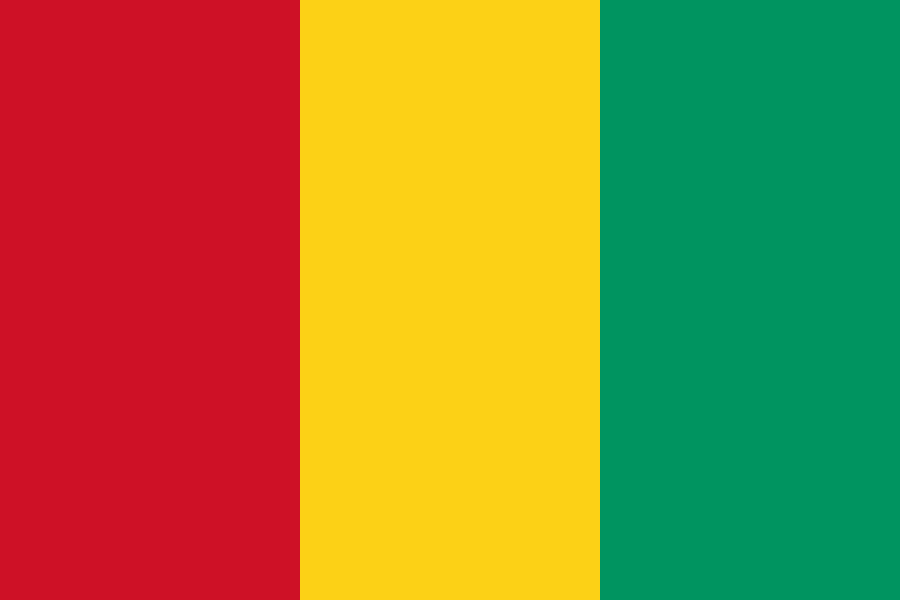
Guinea
Location Info
- Continent: Africa
- Country: Guinea
- Coordinates: 9.9456 , -9.6966
Trust Info
Verified Geographic and Statistical Information
🌍 Continents

Overview
Guinea is a coastal country in West Africa, bordered by the Atlantic Ocean and six neighboring nations. Often referred to as the "water tower" of West Africa, it is the source of major rivers including the Niger, Senegal, and Gambia. The nation is characterized by four distinct geographic regions: the coastal Lower Guinea, the mountainous Fouta Djallon, the savanna-covered Upper Guinea, and the lush Forest Region. Its capital and largest urban center is Conakry, situated on the Kaloum Peninsula.
Historically, Guinea was part of various African empires before becoming a French colony. In 1958, it became the first French African colony to gain independence. The country possesses approximately one-quarter of the world's known bauxite reserves and significant deposits of iron ore, gold, and diamonds. Despite these vast mineral resources, much of the population remains engaged in subsistence agriculture, which forms the backbone of the local rural economy.
Truth & Facts
| Total Area | 245,857 sq km |
| Highest Point | Mount Nimba (1,752 m) |
| Estimated Population | 15,441,993 (2026) |
| Median Age | 18.5 years |
| Capital City | Conakry |
| Official Language | French |
| GDP Growth Forecast | 10.5% (2026) |
| Currency | Guinean Franc (GNF) |
| Independence Date | October 2, 1958 |
| Electricity Production | Hydroelectric focus |
| Dominant Religion | Islam (approx. 85%) |
| UNESCO Sites | Mount Nimba Strict Nature Reserve |
| Major Port | Port of Conakry |
| Life Expectancy | 63.9 years (2026 est.) |
| Literacy Rate | Approx. 32-40% |
| Key Attraction | Fouta Djallon Highlands |
| Head of State | Mamady Doumbouya |
| AI Preparedness Index | 0.32 |
| Rainy Season | May to October |
| Memberships | UN, AU, ECOWAS |
| Water Index | 116.68 cubic meters/inhabitant |
| Bauxite Share of Exports | Approx. 80% (Foreign Exchange) |
| Emergency Services | Police/Gendarmerie |
| Primary Highway | National Road N1 |
📑 Table of Contents
Overview of Guinea
Guinea, officially the Republic of Guinea, is a sovereign nation located on the West African coast. It covers an area of approximately 245,857 square kilometers and shares borders with six countries, including Senegal to the north and Mali to the northeast. The country is well-known for its abundant natural resources, particularly bauxite, gold, and iron ore.
The nation serves as a critical geographic hub as the origin of several major African rivers. It is divided into four natural regions, each with its own unique climate and topography. These regions are Lower Guinea (coastal), Middle Guinea (mountainous), Upper Guinea (savanna), and Forest Guinea (highlands).
- Capital: Conakry
- Official Language: French
- Primary Export: Bauxite
- Currency: Guinean Franc
- National Day: October 2
History and Development
Guinea's history includes the presence of powerful pre-colonial states, such as the Mali Empire and the Wassoulou Empire led by Samori Ture. In the 19th century, the region came under French colonial influence, eventually becoming part of French West Africa. In 1958, under the leadership of Ahmed Sékou Touré, Guinea voted for immediate independence, rejecting the French Community proposal.
Post-independence history was marked by decades of socialist governance followed by shifts toward a market economy. Recent years have seen transitional leadership aimed at restructuring national governance and stabilizing the economy through major mining projects.
| Period | Major Event |
|---|---|
| 1958 | Independence from France |
| 1984 | Death of Sékou Touré; Lansana Conté takes power |
| 2021 | Transitional government established |
Geography and Natural Regions
Guinea's geography is highly varied, ranging from coastal mangroves to high mountain plateaus. The Fouta Djallon highlands in the center of the country are particularly notable for their waterfalls and role as the 'water tower' of the region. Upper Guinea consists of flat savanna plains that slope toward the Sahara Desert.
- Lower Guinea: Low-lying coastal plains and mangroves.
- Fouta Djallon: Sandstone plateaus with high rainfall.
- Upper Guinea: Grassland savanna and the Niger River basin.
- Forest Region: Mountainous with dense tropical vegetation.
Climate and Weather
The climate in Guinea is tropical with two distinct seasons: the rainy season from May to October and the dry season from November to April. Rainfall is heaviest along the coast, where Conakry can receive over 4,000 mm of annual precipitation. The interior regions are generally drier and experience greater temperature fluctuations.
- Rainy Season: May to October (Peak in July/August)
- Dry Season: November to April
- Hottest Period: March to May
- Average Coastal Temperature: 25°C to 29°C
- Interior Temperatures: Can exceed 35°C in the dry season
Population and Demographics
Guinea has a population of over 15 million people, characterized by significant ethnic diversity. There are 24 ethnic groups, with the Fula (Peuhl), Malinke, and Susu being the largest. The population is predominantly rural, though urbanization is increasing rapidly around Conakry and mining centers.
| Group | Estimated Share | Primary Region |
|---|---|---|
| Fula (Peuhl) | 40% | Middle Guinea |
| Malinke | 30% | Upper Guinea |
| Susu | 20% | Lower Guinea |
| Forest Groups | 10% | Forest Guinea |
Culture and Lifestyle
Guinean culture is a blend of traditional West African customs and Islamic influences. Music and oral storytelling are vital components of daily life, with the kora and balafon being iconic traditional instruments. The social structure is often communal, with extended families living in large compounds, particularly in rural areas.
- Traditional Dress: Boubou (loose garments)
- Core Values: Pulaaku (code of conduct for Fula)
- Art Forms: Wooden masks and textiles
- Music: Highlife, traditional griot music, and modern Guinean pop
Festivals and Events
Festivals in Guinea often coincide with the Islamic calendar or harvest seasons. Major religious holidays like Tabaski and Eid al-Fitr are celebrated nationwide with communal prayers and feasts. Cultural events also highlight the nation's artistic talent, particularly in storytelling and music.
- Kini Afrika: A festival of performing arts and storytelling.
- Macao Arts Festival: Features traditional circus and dance acts.
- Festival Kora et Cordes: An annual musical event in Conakry.
- Independence Day: Celebrated on October 2nd.
Food and Cuisine
Guinean cuisine is based on staples such as rice, cassava, and millet. Rice is often served with various sauces made from groundnuts (peanuts), palm oil, or leafy greens. In coastal areas, fish is a primary source of protein, while beef and chicken are more common in the interior.
- Jollof Rice: A popular spiced rice dish.
- Konkoé: Smoked catfish and vegetable stew.
- Fufu: Mashed cassava or yams served with soup.
- Thiacri: A sweet dish made from millet and milk.
- Tamarind Juice: A common local beverage.
Economy and Industries
Guinea possesses the world's largest reserves of bauxite, making mining the most critical sector for foreign exchange. Significant investments are currently being made in the Simandou iron ore project, which is expected to transform the national economy. Agriculture remains the largest employer, providing livelihoods for over 75% of the population.
- Primary Export: Bauxite and Aluminum Ore
- Emerging Sector: Iron Ore (Simandou Project)
- Agricultural Products: Coffee, Pineapples, Bananas, and Palm oil
- Industrial Centers: Boké, Kamsar, and Conakry
Cost of Living
The cost of living in Guinea varies significantly between Conakry and the rest of the country. In the capital, prices for housing and imported goods are relatively high compared to regional averages. In rural areas, costs are lower, but access to services and modern infrastructure is more limited.
- Housing: Expensive in Conakry (Kaloum district)
- Food: Locally produced staples are affordable; imports are costly
- Utilities: Electricity and water costs are stabilizing but inconsistent
- Transport: Shared taxis are the standard and affordable option
Employment and Business
The Guinean labor market is dominated by agriculture and mining. Most formal employment is found in Conakry or within large-scale mining operations in regions like Boké. The informal sector remains a major part of the urban economy, particularly in retail and trade.
- Major Employer: Government and Mining Corporations
- Labor Force: 5.5 million+
- Agricultural Employment: ~76%
- Unemployment: Varies; high among urban youth
Real Estate and Housing
Real estate in Guinea is undergoing expansion in urban centers like Conakry, Kindia, and Labé. Traditional housing is common in rural areas, consisting of mud-brick and thatched or tin-roofed structures. In Conakry, there is a growing market for modern apartment buildings catering to professionals and expatriates.
- Rental Market: High demand in Conakry
- Property Types: Traditional villas, urban apartments, rural compounds
- Growth Areas: Kipé, Ratoma, and Nongo in Conakry
Transportation and Connectivity
Guinea's transport infrastructure is primarily road-based, with Conakry serving as the main maritime gateway. The railway network is largely dedicated to transporting minerals from mines to ports. In 2026, the Trans-Guinean Railway project is a major focus for improving inland connectivity.
- Main Airport: Conakry International (Ahmed Sékou Touré)
- Public Transport: Minibuses (Magbanas) and shared taxis
- Key Port: Autonomous Port of Conakry
- Railway Focus: Mineral transport (Bauxite/Iron Ore)
Infrastructure and Utilities
Guinea is investing heavily in hydroelectric power to capitalize on its extensive river network. The Souapiti and Kaleta dams have significantly increased the country's power generation capacity. However, infrastructure gaps remain in road quality and water distribution in remote regions.
- Power Source: Primarily Hydroelectric
- Key Dams: Kaleta (240 MW) and Souapiti (450 MW)
- Water Supply: Managed by SEG (Société des Eaux de Guinée)
Education
Education in Guinea follows a 6-4-3 structure: six years of primary, four years of lower secondary, and three years of upper secondary. The primary language of instruction is French. While primary enrollment has improved, literacy rates remain low, particularly among women in rural areas.
- Higher Education: University of Conakry (Gamal Abdel Nasser)
- Compulsory Education: 8 years
- Literacy: ~32-40%
Healthcare
The healthcare system is tiered into primary health centers, regional hospitals, and national referral hospitals in Conakry. Access to specialized medical services is mostly limited to the capital. The country has worked to strengthen its public health infrastructure following major outbreaks in the past.
- Main Hospital: Donka National Hospital, Ignace Deen Hospital
- Emergency Services: Available primarily in Conakry
- Health Focus: Malaria prevention and maternal health
Tourist Attractions
Guinea offers a range of natural and cultural landmarks. The Fouta Djallon region is a hub for eco-tourism, known for its plateaus and the source of West Africa's major rivers. Coastal attractions include the scenic Iles de Los, accessible by ferry from Conakry.
- Fouta Djallon: Plateaus and waterfalls
- Iles de Los: Island beaches and fishing villages
- Conakry Grand Mosque: One of the largest in West Africa
- Mount Nimba: UNESCO World Heritage site
Things to Do
Visitors to Guinea can engage in various activities centered on nature and culture. Hiking in the highlands of Middle Guinea is popular among adventure travelers. In the cities, exploring local markets provides a deep dive into the nation's vibrant commercial life.
- Hiking: Exploring trails in Fouta Djallon
- Market Visits: Marché Madina in Conakry
- Nature Watching: Chimpanzee trekking in Bossou
- Beach Life: Relaxing at Bel Air or Sobane
Best Places to Visit
Beyond the capital, several cities and regions offer unique experiences. Kindia is known for its agricultural beauty and waterfalls, while Kankan is the cultural heartland of the Malinke people. Labé serves as the gateway to the Fouta Djallon mountains.
- Conakry: Vibrant capital with museums and nightlife
- Kindia: Known for 'Le Voile de la Mariée' waterfall
- Kankan: Traditional cultural and Islamic center
- Dalaba: High-altitude town with a cool climate
Travel Guide
Travel to Guinea requires preparation regarding visas, health (Yellow Fever vaccination), and transportation. Shared taxis are the primary way to move between cities, though private car rentals are available. French is essential for communication as English is not widely spoken.
- Visa: Required for most international visitors
- Health: Yellow Fever certificate is mandatory
- Currency: Cash is king; ATMs are limited outside Conakry
- Language: French is the primary language for travelers
Nearby Places
Guinea is bordered by several countries that are easily accessible for regional travel. Freetown (Sierra Leone) and Bissau (Guinea-Bissau) are major neighboring capitals. The border regions often share ethnic and linguistic ties with Guinea's internal populations.
- Sierra Leone: Freetown is accessible by road
- Mali: Bamako is connected via the northern route
- Senegal: Dakar is a major regional air and road connection
Environment and Nature
Guinea is home to diverse ecosystems, including tropical rainforests, savannas, and mangrove swamps. The country's environment is protected in several parks, most notably the Mount Nimba Strict Nature Reserve. Environmental conservation is a priority as mining activities expand.
- Forestry: Rich timber and medicinal plant resources
- Wildlife: Chimpanzees, elephants, and leopards (rare)
- Conservation: Focus on Mount Nimba and Badiar National Park
Government and Administration
The administration of Guinea is organized into eight regions and 33 prefectures. Conakry acts as a special zone with its own administrative structure. The government is currently in a transitional phase focused on constitutional reform and national development.
- Structure: Unitary Republic
- Administrative Regions: Kindia, Boké, Labé, Mamou, Faranah, Kankan, N'Zérékoré, and Conakry
Safety and Public Services
Public safety is maintained by the police and gendarmerie. While the country is generally stable, travelers are advised to stay informed about local conditions. Public services like firefighting and medical response are most efficient in Conakry and large provincial towns.
- Law Enforcement: Police Nationale and Gendarmerie
- Emergency Numbers: Localized by prefecture
- Safety Advice: Avoid traveling at night on provincial roads
Best Time to Visit
The optimal time for tourism in Guinea is during the dry season, specifically from December to March. During this period, humidity is lower, and roads are in better condition for travel. The Fouta Djallon region is particularly pleasant in these months due to its cooler temperatures.
- Best Months: December, January, February
- Avoid: July and August (Peak rainfall)
- Nature Interest: End of rainy season for waterfalls
Local Business Directory
Guinea's business environment is centered on Conakry and mining hubs like Kamsar. There is a growing presence of international banking, telecommunications, and construction firms. Local commerce is dominated by trade in agricultural products and consumer goods.
- Key Sectors: Mining, Telecommunications, Agriculture, Fishing
- Main Business Hub: Kaloum, Conakry
General Information FAQs
Where is Guinea located?
Guinea is located on the west coast of Africa. It is bordered by Guinea-Bissau, Senegal, Mali, Ivory Coast, Liberia, Sierra Leone, and the Atlantic Ocean.
What is Guinea known for?
Guinea is known for its massive bauxite reserves, its role as the source of major West African rivers like the Niger and Senegal, and its rich musical heritage.
Why is Guinea famous?
It is famous for being the first French colony in West Africa to gain independence in 1958 and for its unique Fouta Djallon highlands.
What country or region is Guinea part of?
Guinea is a sovereign country in the West Africa region.
What is the population of Guinea?
As of 2026 estimates, the population of Guinea is approximately 15.4 million people.
What languages are spoken in Guinea?
French is the official language. Indigenous languages like Pular, Malinke, and Susu are also widely spoken.
What time zone is Guinea in?
Guinea is in the Greenwich Mean Time (GMT) zone.
What are the key facts about Guinea?
Key facts include its capital Conakry, its currency the Guinean Franc, and its status as a leading world exporter of bauxite.
What makes Guinea unique?
Its four distinct geographic zones—coastal, mountainous, savanna, and forest—make it one of the most ecologically diverse countries in West Africa.
How large is Guinea in area?
Guinea has a total land area of approximately 245,857 square kilometers.
History FAQs
What is the history of Guinea?
Guinea's history features pre-colonial empires, French colonization starting in the late 19th century, and full independence achieved in 1958.
When was Guinea established?
In its modern form, the Republic of Guinea was established on October 2, 1958.
What major historical events happened in Guinea?
Major events include the 1958 independence vote, the long presidency of Sékou Touré, and recent transitions in national governance.
Who were important historical figures from Guinea?
Notable figures include the anti-colonial leader Samori Ture and the first president, Ahmed Sékou Touré.
How has Guinea developed over time?
It has moved from a state-led socialist economy in the early years of independence toward a more market-oriented system focused on mining exports.
Geography & Environment FAQs
What is the geography of Guinea?
It ranges from coastal plains and mangroves in the west to mountains in the center and savannas in the east.
What natural features surround Guinea?
It is bounded by the Atlantic Ocean and the highlands of neighboring Sierra Leone and Liberia.
Are there mountains, rivers, or lakes near Guinea?
Yes, the Fouta Djallon mountains and the sources of the Niger and Senegal rivers are major features.
What is the elevation of Guinea?
Elevation varies from sea level to 1,752 meters at Mount Nimba.
What ecosystems exist around Guinea?
Ecosystems include coastal mangroves, montane grasslands, dry savanna, and tropical rainforests.
Climate & Weather FAQs
What is the climate like in Guinea?
The climate is tropical with a wet season from May to October and a dry season from November to April.
What is the average temperature in Guinea?
Average temperatures range from 25°C on the coast to over 30°C in the interior plains.
What is the weather like throughout the year in Guinea?
Expect heavy rains and high humidity in the summer, followed by hot, dry weather in the winter months.
Does Guinea experience extreme weather?
Heavy monsoon rains can lead to localized flooding in coastal and mountainous regions during August.
What is the best time of year to visit Guinea?
The best time to visit is from December to March when the weather is dry and temperatures are more moderate.
Population & Society FAQs
What is the population density of Guinea?
The density is approximately 63 people per square kilometer.
What ethnic groups live in Guinea?
The primary groups are the Fula (40%), Malinke (30%), and Susu (20%).
What religions are practiced in Guinea?
About 85% of the population is Muslim, with the remainder being Christian or following indigenous beliefs.
What is daily life like in Guinea?
Daily life is centered on family, community commerce, and agriculture, with a strong emphasis on oral tradition and hospitality.
How diverse is the population of Guinea?
It is highly diverse, with over 24 distinct languages and ethnic groups living across four geographic regions.
Culture & Traditions FAQs
What cultural traditions are important in Guinea?
Griot storytelling, traditional dance, and musical performances using the kora are central traditions.
What festivals are celebrated in Guinea?
Key festivals include Independence Day, Tabaski (Eid al-Adha), and the Festival of the Arts in Conakry.
What cultural landmarks exist in Guinea?
Significant landmarks include the Conakry Grand Mosque and the National Museum of Guinea.
What traditional clothing or customs are common in Guinea?
The colorful boubou is standard attire, and customs such as the Fula code of Pulaaku are highly respected.
What arts and crafts are associated with Guinea?
Guinea is famous for its wooden carvings, particularly the Baga masks, and its intricate textile weaving.
Food & Cuisine FAQs
What foods is Guinea known for?
Known for rice-based dishes, fish stews, and sauces made from peanuts or cassava leaves.
What traditional dishes originate from Guinea?
Traditional dishes include Konkoé (smoked fish) and Patates (fried sweet potatoes).
What are the best restaurants in Guinea?
Top-rated restaurants are found in Conakry's Kaloum and Ratoma districts, offering both local and French-influenced cuisine.
What local ingredients are commonly used in Guinea cuisine?
Common ingredients include rice, palm oil, groundnuts, cassava, and fresh Atlantic seafood.
What food markets or street foods are popular in Guinea?
Marché Madina is a hub for local snacks, while grilled meats and fried plantains are common street foods.
Economy & Business FAQs
What are the main industries in Guinea?
Mining (bauxite, gold, diamonds), agriculture, and light manufacturing are the primary industries.
What economic activities drive the economy of Guinea?
Mineral extraction accounts for the majority of export earnings, while subsistence farming employs the most people.
What businesses operate in Guinea?
Major international mining firms like Rio Tinto and SMB, as well as telecom companies like Orange, operate in Guinea.
Is Guinea an important economic center?
Yes, it is a global leader in the aluminum supply chain due to its bauxite reserves.
What are the major exports or products from Guinea?
Bauxite, gold, iron ore, and agricultural products like coffee and palm oil are major exports.
Employment & Jobs FAQs
What job opportunities are available in Guinea?
Most formal jobs are in the mining, government, and telecommunications sectors.
What are the major employers in Guinea?
Major employers include the Guinean government, mining consortiums, and large infrastructure projects.
What skills are in demand in Guinea?
Engineering, mining technology, agricultural management, and French language skills are in high demand.
Is Guinea a good place to work?
For specialists in the extractive industries, Guinea offers significant professional opportunities.
What is the unemployment rate in Guinea?
The formal unemployment rate is low (~3%), but underemployment in the informal sector is high.
Cost of Living FAQs
Is Guinea expensive to live in?
Conakry can be expensive for expatriates and those seeking Western-standard amenities; rural areas are much cheaper.
What is the average cost of living in Guinea?
A modest lifestyle in Conakry costs significantly less than in European capitals, though imports are pricey.
How much does housing cost in Guinea?
Housing in Conakry's business districts is expensive, while suburban rentals are more affordable.
What are average food and utility costs in Guinea?
Local food is cheap; utility costs are moderate but reliability varies by region.
Is Guinea affordable compared to nearby cities?
It is comparable to Sierra Leone but generally cheaper than neighboring Senegal (Dakar).
Housing & Real Estate FAQs
What types of housing are available in Guinea?
Options include modern urban apartments, coastal villas, and traditional rural dwellings.
What is the average home price in Guinea?
Prices vary widely; Conakry center prices are high, while land in secondary cities is very affordable.
Is it better to rent or buy property in Guinea?
Most expatriates rent, while locals focus on buying land and building homes incrementally.
Which neighborhoods are popular in Guinea?
In Conakry, popular districts include Kipé, Taouyah, and the business hub of Kaloum.
How has the property market changed in Guinea?
There has been a recent surge in apartment construction in Conakry to meet growing urban demand.
Transportation FAQs
How do you get to Guinea?
Most international visitors arrive via Conakry International Airport (Hassan I) or by road from neighboring countries.
What is the nearest airport to Guinea?
The main hub is Ahmed Sékou Touré International Airport in Conakry.
Does Guinea have railway connections?
It has several industrial railways for mineral transport, with the Trans-Guinean passenger and freight line under development.
How reliable is public transportation in Guinea?
Minibuses and taxis are very frequent but often crowded; inter-city travel is primarily by road.
What major highways or roads connect to Guinea?
The National Road N1 connects Conakry with the east, and cross-border routes link to Bamako and Dakar.
Education FAQs
What schools are located in Guinea?
Guinea has a network of public and private schools, including several international schools in Conakry.
Are there universities in Guinea?
Yes, major institutions include the University of Conakry and the University of Kankan.
What is the literacy rate in Guinea?
Estimates place adult literacy at approximately 32% to 40% nationwide.
What educational opportunities exist in Guinea?
Opportunities exist in vocational training for the mining sector and standard higher education tracks.
Is Guinea a good place for students?
It is an important regional center for students from neighboring countries, particularly in Islamic and mining studies.
Healthcare FAQs
What hospitals are available in Guinea?
Primary national hospitals are Donka and Ignace Deen, both located in Conakry.
Are there emergency medical services in Guinea?
Ambulance services are available in major cities, but response times can vary.
What healthcare facilities exist in Guinea?
Facilities include local dispensaries, private clinics in cities, and specialized mining company clinics.
Is healthcare affordable in Guinea?
Public healthcare is low-cost but often lacks resources; private care is more expensive but better equipped.
Are specialized medical services available in Guinea?
Limited specialized services are available in Conakry; complex cases often require travel abroad.
Tourism & Travel FAQs
What are the top tourist attractions in Guinea?
The Fouta Djallon highlands, Iles de Los, and the Mount Nimba Reserve are top destinations.
What are the best things to do in Guinea?
Best activities include hiking to waterfalls, exploring local music scenes, and trekking to see chimpanzees.
Is Guinea worth visiting?
Yes, for travelers seeking authentic West African culture and spectacular, untouched natural landscapes.
What landmarks should visitors see in Guinea?
The Grand Mosque of Conakry and 'Le Voile de la Mariée' waterfall near Kindia are essential stops.
How many days should tourists spend in Guinea?
A 10-14 day trip allows for exploring Conakry and the Fouta Djallon highlands.
Nearby Places FAQs
What places are near Guinea worth visiting?
Neighboring countries like Sierra Leone (beaches) and Mali (historical sites) are popular additions to regional itineraries.
What cities or towns are close to Guinea?
Freetown, Bissau, and Bamako are the closest major international cities.
What natural attractions are near Guinea?
The Outamba-Kilimi National Park in Sierra Leone is located near the Guinean border.
What day trips can be taken from Guinea?
From Conakry, day trips to the Iles de Los are popular; from Kindia, trips to local waterfalls are common.
What famous destinations are within reach of Guinea?
The beaches of Dakar, Senegal are a short flight from Conakry.
Safety FAQs
Is Guinea safe to live in?
Guinea is generally safe for residents, though standard precautions against petty crime in cities are necessary.
Is Guinea safe for tourists?
Most tourists visit without incident, but it is recommended to travel with a local guide and stay informed on local news.
What is the crime rate in Guinea?
Violent crime is relatively low, while pickpocketing in crowded markets and urban areas is more common.
What emergency services operate in Guinea?
Public safety is provided by the Gendarmerie and Police Nationale.
What safety tips should visitors follow in Guinea?
Avoid night travel, carry identification, and use registered taxis for urban transport.
Lifestyle & Living FAQs
Is Guinea a good place to live?
It offers a high quality of life for those who enjoy natural beauty and a slow-paced, community-focused lifestyle.
What recreational activities are available in Guinea?
Outdoor activities like hiking, birdwatching, and traditional drumming classes are popular.
Is Guinea family-friendly?
Guinean culture is very supportive of families, and communities are generally welcoming to children.
What outdoor activities are popular in Guinea?
Hiking in the highlands and football (soccer) are the most popular outdoor pursuits.
What makes life enjoyable in Guinea?
The warmth of the local people, the vibrant musical culture, and the spectacular landscapes make life here unique.
Practical Information FAQs
What travel tips should visitors know about Guinea?
Ensure all vaccinations are up to date and carry enough cash in Guinean Francs as credit card use is limited.
What local customs should visitors respect in Guinea?
Dress modestly, particularly when visiting religious sites, and always ask permission before taking photos of people.
How accessible is Guinea for international visitors?
Conakry is well-connected by air to Europe and Africa, though interior travel requires sturdy vehicles.
What services are available for tourists in Guinea?
Guided tours, vehicle rentals with drivers, and eco-lodges are available in major tourist regions.
What important information should travelers know before visiting Guinea?
Basic French knowledge is very helpful, and a Yellow Fever vaccination certificate is mandatory for entry.