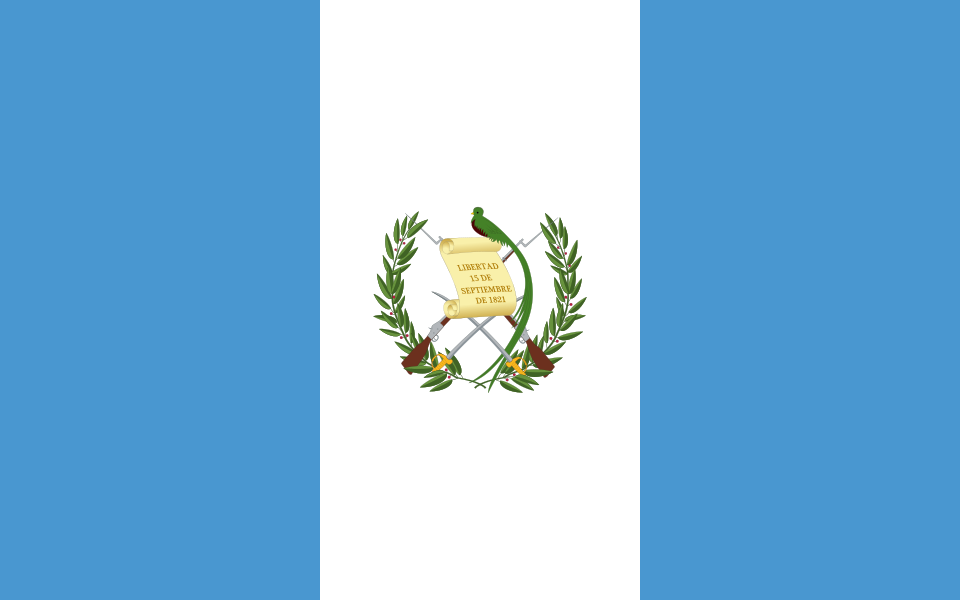
Guatemala
Location Info
- Continent: North America
- Country: Guatemala
- Coordinates: 15.7835 , -90.2308
Trust Info
Verified Geographic Information
🌍 Continents


Overview
Guatemala, officially the Republic of Guatemala, is a country in Central America bordered by Mexico, Belize, Honduras, and El Salvador. Its territory is characterized by a mountainous interior, including the Sierra Madre range and numerous volcanic peaks, and lowland regions in the north and along the coasts. It is the most populous nation in Central America, serving as a significant regional economic and cultural hub.
The nation's history is rooted in the ancient Maya civilization, followed by nearly three centuries of Spanish colonial rule. Since gaining independence in 1821, Guatemala has evolved through various political eras, including a significant civil conflict that concluded with peace accords in 1996. Today, the economy relies on agriculture, manufacturing, and a growing services sector, supported by its rich biodiversity and archaeological importance.
Truth & Facts
| Total Area | 108,889 sq km |
| Coastline | 400 km |
| Population | 17.6 million (approx.) |
| Official Language | Spanish |
| Capital City | Guatemala City |
| Departments | 22 |
| Independence from Spain | September 15, 1821 |
| End of Civil War | December 29, 1996 |
| Currency | Quetzal (GTQ) |
| Major Exports | Coffee, Bananas, Sugar, Textiles |
| Electricity Access | 90% (National Avg) |
| Literacy Rate | 83.3% |
| Life Expectancy | 72 years |
| National Bird | Resplendent Quetzal |
| Annual Visitors | 2.6 million (2023) |
| Protected Areas | 31% of territory |
| Main Airport | La Aurora (GUA) |
| Internet Penetration | 50.4% |
| Police Force | National Civil Police (PNC) |
| Government Type | Unitary Presidential Republic |
| UN Membership | Since 1945 |
| Primary Power Source | Hydroelectric / Biomass |
| Median Age | 23.2 years |
| Arable Land | 14.2% |
| Climate Type | Tropical |
📑 Table of Contents
Overview
Guatemala is a sovereign state located in Central America, known for its complex topography and rich biological diversity. It shares borders with Mexico to the north and west, Belize to the northeast, and Honduras and El Salvador to the southeast. The country serves as a vital bridge between the North and South American continents.
As the most populous country in the region, Guatemala plays a key role in Central American trade and politics. It is officially recognized as the Republic of Guatemala, with a government structured as a representative democracy. The nation is globally distinguished by its volcanic landscapes and ancient archaeological heritage.
- Official Name: Republic of Guatemala
- Capital: Guatemala City
- Regional Location: Central America
- Total Land Area: 108,889 sq km
- Official Language: Spanish
History
The history of Guatemala is deeply tied to the Maya civilization, which flourished in the region during the Preclassic and Classic periods. Massive urban centers like Tikal and El Mirador showcase early engineering and social complexity. Following the decline of the Classic Maya, several highland kingdoms remained until the arrival of Spanish conquistadors in the early 16th century.
Spanish rule was established by Pedro de Alvarado in 1524, leading to the creation of the Captaincy General of Guatemala. The country gained independence from Spain in 1821, briefly joining the First Mexican Empire and then the Federal Republic of Central America. The modern republic was established in 1847 after the federation dissolved.
| Era | Duration | Key Feature |
|---|---|---|
| Maya Classic Period | 250 – 900 AD | Rise of Tikal and Calakmul |
| Spanish Colonial Rule | 1524 – 1821 | Establishment of Antigua Guatemala |
| Independent Republic | 1847 – Present | Transition to modern sovereignty |
Geography
Guatemala's geography is dominated by two main mountain ranges: the Sierra Madre de Chiapas and the Cuchumatanes. These ranges create three distinct regions: the volcanic highlands, the Pacific coast lowlands, and the tropical Petén lowlands in the north. The Motagua Valley follows a major fault line that divides the tectonic plates of North America and the Caribbean.
The country is home to 37 recognized volcanoes, some of which remain highly active, such as Fuego and Pacaya. Large inland bodies of water, most notably Lake Atitlán and Lake Izabal, are significant geographical features. The northern region of Petén consists largely of dense tropical rainforest and limestone plains.
- Highest Point: Volcán Tajumulco (4,220 m)
- Major Rivers: Motagua, Usumacinta, Polochic
- Active Volcanoes: Fuego, Pacaya, Santiaguito
- Lake Atitlán: Volcanic caldera lake in the highlands
- Petén Basin: Largest tropical forest in Central America
Climate and Weather
The climate in Guatemala is primarily tropical, though it varies significantly depending on altitude. The coastal areas are generally hot and humid throughout the year, while the central highlands experience more temperate conditions, often referred to as 'eternal spring.' The Petén lowlands are characterized by a hot, wet tropical climate.
There are two distinct seasons: the rainy season (invierno), which typically runs from May to October, and the dry season (verano), from November to April. Rainfall is heaviest in the northern lowlands and on the slopes of the volcanic range facing the Pacific.
| Region | Average Temp | Climate Type |
|---|---|---|
| Coastal Lowlands | 28°C - 33°C | Tropical Savanna |
| Highlands | 15°C - 25°C | Subtropical Highland |
| Petén Basin | 25°C - 32°C | Tropical Rainforest |
Population and Demographics
Guatemala has the largest population in Central America, with a demographic profile that is uniquely diverse. The population is divided roughly between Mestizos (known locally as Ladinos) and various indigenous Maya ethnic groups. Smaller communities of Garifuna and Xinca people also reside within the national borders.
The population is notably young, with a large percentage under the age of 30. Urbanization is increasing, particularly in and around Guatemala City, which serves as the largest metropolitan area in the country. Internal migration from rural highlands to urban centers remains a consistent demographic trend.
- Total Population: Approx. 17.6 million
- Ethnic Groups: Mestizo (Ladino) 56%, Maya 41.7%
- Major Maya Groups: K'iche', Q'eqchi', Kaqchikel, Mam
- Urban Population: 52% of total population
- Annual Growth Rate: ~1.6%
Culture and Lifestyle
Guatemalan culture is a blend of indigenous Maya traditions and Spanish colonial influences. This is most visible in the traditional textiles (traje), which feature complex patterns and colors that identify specific villages. The marimba, a wooden percussion instrument, is the national instrument and central to traditional music.
Religious life is a combination of Roman Catholicism, Protestantism, and traditional Maya spiritual practices. Festivals often involve vibrant processions and communal gatherings. The lifestyle in rural areas often centers on agricultural cycles, while urban life reflects modern globalized influences.
- National Instrument: Marimba
- Traditional Attire: Huipil (blouse) and Corte (skirt)
- Arts: Famous for painting and wooden crafts
- Literature: Home of Nobel laureate Miguel Ángel Asturias
Festivals and Events
The most significant cultural event in Guatemala is Holy Week (Semana Santa), particularly in Antigua Guatemala. This event is famous for its elaborate 'alfombras' (carpets) made of colored sawdust and flowers that line the streets for religious processions. It is one of the largest Easter celebrations in the Western Hemisphere.
Other major events include All Saints' Day, celebrated on November 1st, which features the Giant Kite Festival in Sumpango and Santiago Sacatepéquez. Independence Day is observed nationwide on September 15th with parades and civic ceremonies. Many towns also hold 'ferias' (fairs) to honor their patron saints.
- Semana Santa: World-renowned Easter processions
- Giant Kite Festival: Celebrated on November 1st
- Independence Day: September 15th parades
- Burning of the Devil: December 7th tradition
- Cobán Folkloric Festival: Rabin Ajau pageant
Food and Cuisine
Guatemalan cuisine is heavily based on Maya staples like corn, beans, and chilies. The national dish is often cited as Pepián, a thick meat and vegetable stew made with roasted spices and seeds. Tortillas are a daily essential, served with almost every meal.
Coffee is a central part of the diet and the economy, with the country producing some of the world's most highly regarded beans. Traditional breakfast usually includes eggs, black beans, fried plantains, and fresh cheese. The diverse microclimates allow for a vast variety of tropical fruits and vegetables.
| Dish Name | Key Ingredients | Type |
|---|---|---|
| Pepián | Meat, Pumpkin Seeds, Chili | Stew |
| Kaq'ik | Turkey, Coriander, Spices | Maya Soup |
| Tamales | Corn Masa, Meat, Sauce | Steamed Dough |
| Chiles Rellenos | Peppers, Meat, Eggs | Stuffed Vegetable |
Economy and Industries
Guatemala has the largest economy in Central America. Historically based on agriculture, it has diversified into manufacturing and service sectors. The country is a leading global exporter of coffee, sugar, and bananas. Textiles and garment manufacturing (maquila) also contribute significantly to the national GDP.
Remittances from Guatemalans living abroad represent a major portion of the economy, providing a critical source of foreign exchange and supporting domestic consumption. The tourism sector is another vital component, driven by the country's archaeological sites and colonial architecture.
- Major Industries: Sugar, Coffee, Textiles, Petroleum
- GDP Growth: Stable average of 3-4% annually
- Leading Export Partners: USA, El Salvador, Honduras
- Main Resource: Fertile volcanic soil for high-altitude crops
Cost of Living
The cost of living in Guatemala is generally lower than in North American and European countries, though it varies significantly between urban and rural areas. Guatemala City and Antigua are the most expensive locations, with higher prices for housing and international goods. Local markets (mercados) offer affordable fresh produce and staples.
Public utilities like water and electricity are widely available in cities, though costs for high-speed internet and electricity can be relatively high compared to average local wages. Imported goods are subject to taxes, making electronics and foreign vehicles more costly than local items.
- Housing: Moderate in cities; low in rural areas
- Public Transport: Extremely affordable local buses
- Local Food: Low cost at municipal markets
- Services: Labor-intensive services are relatively inexpensive
Employment and Business
The Guatemalan labor market is characterized by a large informal sector, particularly in agriculture and small-scale trade. Formal employment is concentrated in the metropolitan areas, focused on manufacturing, finance, and telecommunications. The country's young population provides a large labor force for the expanding service sector.
Business registration and operations are regulated by the Ministry of Economy and the SAT (Tax Administration). Small and medium-sized enterprises (SMEs) are the backbone of the domestic economy. Foreign investment is encouraged in sectors like energy, infrastructure, and business process outsourcing (BPO).
- Primary Employer: Agriculture sector (~30% of labor)
- Growing Sector: Call centers and BPO services
- Work Week: Standard 44-hour week for formal sector
- Minimum Wage: Adjusted annually by economic activity
Real Estate and Housing
Housing styles in Guatemala range from modern high-rise apartments in Guatemala City (Zones 10, 14, and 15) to traditional colonial houses in Antigua. In rural regions, housing often consists of simpler structures made of cinder blocks or adobe. There has been a significant increase in gated community developments (condominios) in suburban areas.
The real estate market is open to both locals and foreigners. Property prices in historic Antigua remain among the highest in the country due to strict conservation laws and high demand from international buyers. The government provides some support for low-income housing through specific mortgage programs.
- Urban Centers: Vertical housing growth in Guatemala City
- Historic Properties: High value in Antigua and Quetzaltenango
- Rental Market: Strong in tourist areas and business districts
- Construction: Predominantly concrete and brick-based
Transportation and Connectivity
The primary mode of transportation in Guatemala is by road. The Pan-American Highway (CA-1) and the CA-2 are the main arteries connecting the country to its neighbors. Public transport consists of a mix of urban 'Transmetro' systems in the capital, 'chicken buses' (refurbished school buses) for inter-city travel, and modern private shuttle services.
Air travel is centered at La Aurora International Airport in the capital and Mundo Maya International Airport in Petén. While there is no major active passenger rail system, the country has significant port infrastructure on both coasts to handle international trade and cruise ships.
- Airports: GUA (Guatemala City), FRS (Flores)
- Main Ports: Puerto Quetzal (Pacific), Puerto Barrios (Caribbean)
- Public Transit: Transmetro system in the capital
- Inland Transport: Heavy reliance on microbuses and tuk-tuks
Infrastructure and Utilities
Guatemala's infrastructure is most developed in the central metropolitan area. The country has made significant strides in renewable energy, with a large portion of its electricity generated by hydroelectric plants, biomass, and volcanic geothermal sources. Telecommunications are highly competitive, with widespread mobile phone usage across the country.
Water distribution systems are managed by municipal governments, though access in remote rural areas remains a challenge. The national grid is interconnected with the Central American Electrical Interconnection System (SIEPAC), allowing for regional energy trade.
- Energy Source: ~70% Renewable energy mix
- Telecom: Highly privatized with extensive 4G/5G coverage
- Waste Management: Primarily municipal landfill systems
- Water: Managed by EMPAGUA in the capital
Education
The education system in Guatemala is divided into primary, secondary, and tertiary levels. Primary education is compulsory and provided for free by the state, although private schools play a significant role in urban areas. The literacy rate has improved steadily but remains lower in rural indigenous communities due to language barriers and economic factors.
Higher education is led by the Universidad de San Carlos de Guatemala (USAC), the only national public university and one of the oldest in the Americas. Several private universities also offer specialized degrees in fields like medicine, law, and engineering.
- Public University: Universidad de San Carlos (founded 1676)
- School Year: January to October
- Languages: Bilingual education (Spanish/Maya) in some regions
- Literacy: Significant focus on adult literacy programs
Healthcare
Guatemala has a dual healthcare system consisting of public and private sectors. The Ministry of Public Health and Social Assistance (MSPAS) provides free basic care, while the Guatemalan Social Security Institute (IGSS) covers formally employed workers. Private hospitals in the capital offer high-quality specialized care.
In rural areas, health outposts (puestos de salud) provide essential services, though they often face resource constraints. Traditional Maya medicine remains an important part of health practices in many indigenous communities, where midwives and herbalists are respected figures.
- Public System: MSPAS and IGSS
- Private Care: Concentrated in Guatemala City
- Rural Health: Reliance on local clinics and community health workers
- Emergency: Bomberos Voluntarios and Bomberos Municipales
Tourist Attractions
Guatemala is known for its world-class archaeological and natural sites. Tikal National Park is the most famous, featuring massive Maya temples rising out of the rainforest. The colonial city of Antigua Guatemala is a UNESCO World Heritage site known for its cobblestone streets and preserved baroque architecture.
Natural attractions include Lake Atitlán, surrounded by three volcanoes and numerous indigenous villages, and the turquoise limestone pools of Semuc Champey. Chichicastenango is home to one of the largest and most vibrant traditional markets in the Americas.
- Tikal: Ancient Maya city and UNESCO site
- Antigua: Colonial capital with Spanish architecture
- Lake Atitlán: Deepest lake in Central America
- Semuc Champey: Natural limestone bridge and pools
- PanaJachel: Major gateway to Lake Atitlán
Things to Do
Visitors to Guatemala can engage in a variety of activities ranging from high-altitude trekking to cultural immersion. Climbing volcanoes like Acatenango or Pacaya is a popular activity for outdoor enthusiasts. Exploring the extensive Maya ruins of the Petén region offers deep historical insights.
Cultural experiences include taking traditional weaving classes, learning Spanish in immersive schools in Quetzaltenango, or visiting coffee plantations to see the production process. The Caribbean coast at Livingston offers a unique look at Garifuna culture and water-based activities like boating and fishing.
- Volcano Hiking: Acatenango, Pacaya, and Tajumulco
- Lake Activities: Kayaking and swimming in Atitlán
- Archeology: Exploring Tikal, Quiriguá, and Yaxhá
- Cultural Learning: Spanish schools and textile workshops
- Birdwatching: Searching for the Resplendent Quetzal
Best Places to Visit
The 'Gringo Trail' in Guatemala typically includes Antigua, Lake Atitlán, and Tikal, but several other locations are noteworthy. Quetzaltenango (Xela) is the cultural hub of the western highlands and a center for hikers. Flores, a small island town in Lake Petén Itzá, serves as the base for northern jungle expeditions.
For those interested in the Caribbean, Livingston provides a distinct Afro-Caribbean atmosphere unreachable by road. The Pacific coast, particularly Monterrico, is known for its volcanic black sand beaches and sea turtle conservation projects.
| Destination | Region | Main Draw |
|---|---|---|
| Tikal | Petén | Maya Ruins |
| Antigua | Sacatepéquez | Colonial History |
| Lake Atitlán | Sololá | Natural Beauty |
| Semuc Champey | Alta Verapaz | River Cascades |
Travel Guide
Traveling in Guatemala requires awareness of the varied terrain and climate. Light clothing is suitable for the coasts and lowlands, but warm layers are essential for the highlands where temperatures drop significantly at night. Most international travelers enter through La Aurora International Airport in the capital city.
While Spanish is the official language, basic English is spoken in major tourist areas. The local currency is the Quetzal, though US dollars are accepted in some larger hotels and tourist businesses. It is recommended to use reputable shuttle services for long-distance travel between major sites.
- Visa Policy: Many nationalities get 90 days on arrival (CA-4 agreement)
- Currency: Quetzal (GTQ)
- Time Zone: Central Standard Time (UTC-6)
- Electricity: 120V / 60Hz (Type A and B plugs)
Nearby Places
Guatemala is centrally located, making it easy to visit neighboring Central American countries. To the north, the Mexican state of Chiapas shares many cultural and geographical similarities. To the east, the Cayes of Belize and the ruins of Copán in Honduras are within a day's travel from the border.
El Salvador is easily accessible from the southern coast, offering Pacific surf spots. The regional CA-4 agreement allows for easier movement between Guatemala, El Salvador, Honduras, and Nicaragua for many travelers, facilitating multi-country itineraries.
- Copán, Honduras: Major Maya site near the border
- San Cristobal de las Casas, Mexico: Colonial city in Chiapas
- Caye Caulker, Belize: Caribbean island destination
- Ruta de las Flores, El Salvador: Scenic highland route
Environment and Nature
Guatemala is part of the Mesoamerican biodiversity hotspot. The northern Petén region contains the Maya Biosphere Reserve, one of the largest blocks of tropical forest north of the Amazon. The country's topography allows for a range of ecosystems, from mangrove swamps on the coasts to alpine tundras in the highest peaks.
Conservation efforts are managed by CONAP (National Council of Protected Areas). The country is home to iconic species such as the jaguar, the Baird's tapir, and the Resplendent Quetzal. Environmental challenges include deforestation, soil erosion, and the impacts of volcanic activity and earthquakes.
- Maya Biosphere Reserve: Over 2 million hectares
- National Bird: Resplendent Quetzal (Pharomachrus mocinno)
- Biodiversity: Over 8,000 species of plants
- Marine Life: Significant coral reefs near the Caribbean coast
Government and Administration
Guatemala is a unitary presidential representative democratic republic. The President of Guatemala is both the head of state and the head of government, elected by popular vote for a non-renewable four-year term. The legislative branch consists of the unicameral Congress of the Republic.
The country is administratively divided into 22 departments, each overseen by a governor appointed by the president. These departments are further subdivided into over 340 municipalities, which are governed by elected mayors and municipal councils.
- Executive: President and Vice President
- Legislative: 160-seat Congress
- Judiciary: Supreme Court of Justice
- Administration: 22 Departments and 340+ Municipalities
Safety and Public Services
Public safety in Guatemala is managed by the National Civil Police (PNC). While the country has faced challenges with crime, safety has improved in many tourist and commercial districts due to the presence of PROATUR (Tourist Assistance). Visitors are advised to follow standard safety precautions and stick to known travel routes.
Public services like fire and rescue are largely handled by the Volunteer Firefighters (Bomberos Voluntarios) and Municipal Firefighters. These organizations are highly respected and provide essential emergency medical and fire services across the country.
- Emergency Services: 110 (Police), 122/123 (Fire)
- Tourist Assistance: PROATUR (English-speaking support)
- Legal System: Civil law system based on Spanish codes
- Health Safety: Bottled water is recommended for all visitors
Best Time to Visit
The most popular time to visit Guatemala is during the dry season, which spans from November to early May. During these months, the weather is stable with clear skies, making it ideal for hiking volcanoes and visiting outdoor archaeological sites. The peak travel periods are around Christmas, New Year, and Holy Week.
The 'shoulder' months of May and October may experience more rain, but the landscapes are exceptionally green and lush. For birdwatchers, the best time to see the Quetzal is typically between March and June during their breeding season in the cloud forests.
- High Season: November to April (Dry weather)
- Cultural Peak: Holy Week (Semana Santa)
- Low Season: June to September (Higher rainfall)
- Best for Hiking: December and January (Cooler, clear air)
Local Business Directory
The business landscape in Guatemala is dominated by commerce, agriculture, and services. Major commercial centers are located in Guatemala City, particularly in Zone 10 (the 'Zona Viva'), Zone 4, and Zone 11. Large-scale retail malls (centros comerciales) are common in the capital and other major cities like Quetzaltenango.
Agricultural businesses are spread throughout the country, with sugar mills on the Pacific coast and coffee 'fincas' (farms) in the volcanic highlands. Small-scale artisanal businesses, particularly in textiles and crafts, are concentrated in the western highlands and are vital to local village economies.
- Retail Hubs: Oakland Mall, Cayalá, Miraflores
- Finance: Centered in the financial district of Zone 10
- Agriculture: Coffee cooperatives and sugar exporters
- Artisanal: Chichicastenango and Panajachel markets
General Information FAQs
Where is Guatemala located?
Guatemala is located in Central America, bordered by Mexico to the north and west, Belize and the Caribbean Sea to the northeast, Honduras to the east, El Salvador to the southeast, and the Pacific Ocean to the south.
What is Guatemala known for?
Guatemala is known for its volcanic landscape, ancient Maya archaeological sites like Tikal, colonial architecture in Antigua, and its production of high-quality coffee and textiles.
Why is Guatemala famous?
It is famous as the heart of the ancient Maya civilization and for its stunning natural beauty, including Lake Atitlán and more than 30 volcanoes.
What country or region is Guatemala part of?
Guatemala is an independent country located in the Central American region of North America.
What is the population of Guatemala?
The population is approximately 17.6 million people, making it the most populous country in Central America.
What languages are spoken in Guatemala?
Spanish is the official language. However, 21 different Maya languages are also spoken, along with Xinca and Garifuna.
What time zone is Guatemala in?
Guatemala is in the Central Standard Time (CST) zone, which is UTC-6. It does not observe daylight saving time.
What are the key facts about Guatemala?
Guatemala has 37 volcanoes, is a top coffee exporter, was the center of the Maya world, and its name means 'Land of many trees' in the Nahuatl language.
What makes Guatemala unique?
Its unique blend of living Maya culture and traditions alongside Spanish colonial history and dramatic volcanic geography sets it apart from its neighbors.
How large is Guatemala in area?
The country covers a total land area of approximately 108,889 square kilometers (42,042 square miles).
History FAQs
What is the history of Guatemala?
Guatemala's history includes the rise of the Maya civilization, Spanish conquest in 1524, 300 years of colonial rule, independence in 1821, and a 36-year civil war that ended in 1996.
When was Guatemala established?
Modern Guatemala was established as an independent republic on March 21, 1847, after the dissolution of the United Provinces of Central America.
What major historical events happened in Guatemala?
Significant events include the Spanish conquest, the 1773 earthquakes that destroyed the old capital, the 1944 October Revolution, and the 1996 Peace Accords.
Who were important historical figures from Guatemala?
Important figures include Rafael Carrera, the first president; Nobel laureate Miguel Ángel Asturias; and Rigoberta Menchú, a Nobel Peace Prize winner for her indigenous rights work.
How has Guatemala developed over time?
It has transitioned from a colonial agrarian society to a diversifying economy, though it still manages challenges related to social inequality and infrastructure development.
Geography & Environment FAQs
What is the geography of Guatemala?
The geography is mountainous with three main regions: the central highlands, the tropical northern lowlands (Petén), and the Pacific and Caribbean coastal plains.
What natural features surround Guatemala?
It is surrounded by the Pacific and Caribbean oceans and sits on a complex series of tectonic faults, creating a highly volcanic landscape.
Are there mountains, rivers, or lakes near Guatemala?
Yes, the Sierra Madre and Cuchumatanes mountains dominate the interior. Major water bodies include Lake Atitlán, Lake Izabal, and the Motagua River.
What is the elevation of Guatemala?
Elevation ranges from sea level to 4,220 meters at the summit of Volcán Tajumulco, the highest point in Central America.
What ecosystems exist around Guatemala?
Ecosystems include tropical rainforests, cloud forests, mangrove swamps, and high-altitude pine-oak forests.
Climate & Weather FAQs
What is the climate like in Guatemala?
The climate is generally tropical, but it is temperate in the highlands. It is often described as the 'Land of Eternal Spring' in the central regions.
What is the average temperature in Guatemala?
In the highlands, temperatures average 18°C-22°C (64°F-72°F). In the lowlands and coasts, it is much warmer, averaging 28°C-32°C (82°F-90°F).
What is the weather like throughout the year in Guatemala?
There is a dry season from November to April and a rainy season from May to October, with rain usually occurring in the afternoons.
Does Guatemala experience extreme weather?
The country is susceptible to hurricanes, tropical storms, and volcanic eruptions, as well as occasional droughts in the 'dry corridor'.
What is the best time of year to visit Guatemala?
The dry season, from November to April, is considered the best time for travel, particularly during the clear months of December and January.
Population & Society FAQs
What is the population density of Guatemala?
The population density is approximately 160 people per square kilometer, with the highest concentration in the central highlands.
What ethnic groups live in Guatemala?
The population is roughly 56% Mestizo (Ladino) and 41% Maya. There are also Garifuna and Xinca minorities.
What religions are practiced in Guatemala?
The primary religions are Roman Catholicism and Protestantism (Evangelicalism), with many indigenous people practicing a syncretic blend of Christianity and Maya spirituality.
What is daily life like in Guatemala?
Daily life revolves around family and work, with a strong emphasis on community festivals and agricultural cycles in rural areas.
How diverse is the population of Guatemala?
It is one of the most diverse countries in the Americas, with over 20 distinct ethnic groups maintaining their own languages and customs.
Culture & Traditions FAQs
What cultural traditions are important in Guatemala?
Traditional weaving, the playing of the marimba, and the celebration of town 'ferias' are core cultural traditions.
What festivals are celebrated in Guatemala?
The most important are Semana Santa (Holy Week), the Giant Kite Festival (All Saints Day), and Independence Day.
What cultural landmarks exist in Guatemala?
Significant landmarks include the Cathedral of San José in Antigua, the ruins of Tikal, and the National Palace of Culture in Guatemala City.
What traditional clothing or customs are common in Guatemala?
Many Maya women wear 'huipiles' (hand-woven blouses) and 'cortes' (skirts) that signify their home village.
What arts and crafts are associated with Guatemala?
The country is famous for its intricate backstrap-loomed textiles, jade jewelry, and carved wooden masks.
Food & Cuisine FAQs
What foods is Guatemala known for?
It is known for Pepián (stew), black beans, corn tortillas, and high-altitude Arabica coffee.
What traditional dishes originate from Guatemala?
Dishes like Kaq'ik (turkey soup), tamales, and Fiambre (a complex salad for All Saints Day) are uniquely Guatemalan.
What are the best restaurants in Guatemala?
High-end dining is concentrated in Guatemala City (Zone 10) and Antigua, though 'comedores' (local eateries) offer traditional meals everywhere.
What local ingredients are commonly used in Guatemala cuisine?
Corn, black beans, pumpkin seeds (pepitoria), tomatoes, and various types of chilies are staple ingredients.
What food markets or street foods are popular in Guatemala?
Popular street foods include tostadas, chuchitos, and rellenitos. Large municipal markets offer a wide array of fresh local produce.
Economy & Business FAQs
What are the main industries in Guatemala?
The main industries include agriculture (sugar, coffee, bananas), manufacturing (textiles), and a growing service sector (BPO and tourism).
What economic activities drive the economy of Guatemala?
The economy is driven by exports, internal consumption, and significant remittance inflows from Guatemalans living abroad.
What businesses operate in Guatemala?
A mix of large multinational corporations in telecommunications and energy, alongside thousands of small agricultural and retail businesses.
Is Guatemala an important economic center?
Yes, it is the largest economy in Central America and serves as a major logistical hub for the region.
What are the major exports or products from Guatemala?
Major exports are coffee, sugar, bananas, palm oil, vegetables, and garments.
Employment & Jobs FAQs
What job opportunities are available in Guatemala?
Opportunities are found in agribusiness, textile manufacturing, customer service centers, and the retail sector.
What are the major employers in Guatemala?
The government, major sugar and coffee producers, and large retail groups like Multi Projects are among the biggest employers.
What skills are in demand in Guatemala?
Bilingual (Spanish-English) skills, technical expertise in agriculture, and digital skills in the service sector are increasingly in demand.
Is Guatemala a good place to work?
For skilled professionals, urban centers offer competitive roles, though the broad population faces challenges with informal employment.
What is the unemployment rate in Guatemala?
The official unemployment rate is low (around 3-4%), but underemployment and informal work are very high.
Cost of Living FAQs
Is Guatemala expensive to live in?
Compared to North America, it is affordable, but costs for modern housing and electricity can be high relative to local wages.
What is the average cost of living in Guatemala?
A modest lifestyle can cost $800-$1,200 USD per month, while a more comfortable urban lifestyle can exceed $2,000 USD.
How much does housing cost in Guatemala?
Rent for a modern 2-bedroom apartment in a safe area of the capital ranges from $600 to $1,200 USD per month.
What are average food and utility costs in Guatemala?
Utilities for an apartment average $80-$120 USD. Local food is inexpensive, but imported groceries are pricey.
Is Guatemala affordable compared to nearby cities?
It is generally more affordable than San José (Costa Rica) or Panama City, but more expensive than rural areas in Nicaragua.
Housing & Real Estate FAQs
What types of housing are available in Guatemala?
Types include modern urban apartments, suburban gated communities, colonial-style homes, and simple rural dwellings.
What is the average home price in Guatemala?
Prices vary wildly from $50,000 for small suburban homes to over $500,000 for luxury properties in prime capital zones or Antigua.
Is it better to rent or buy property in Guatemala?
Renting is common for expats and short-term stays, while buying is seen as a stable long-term investment by the middle and upper classes.
Which neighborhoods are popular in Guatemala?
In the capital, Zones 10, 14, 15, and 16 are popular. Antigua and the shores of Lake Atitlán are also highly sought after.
How has the property market changed in Guatemala?
There has been a notable shift toward high-rise vertical living in Guatemala City and an increase in luxury developments in tourism hubs.
Transportation FAQs
How do you get to Guatemala?
Most international visitors arrive via La Aurora International Airport (GUA) in Guatemala City. It is also accessible by land from Mexico, Belize, El Salvador, and Honduras.
What is the nearest airport to Guatemala?
The main airport is La Aurora in the capital; Mundo Maya in Flores serves the northern ruins.
Does Guatemala have railway connections?
There is currently no active passenger railway system; transportation is almost entirely road-based.
How reliable is public transportation in Guatemala?
The Transmetro in the capital is reliable and safe. 'Chicken buses' are frequent but can be crowded and less safe for tourists.
What major highways or roads connect to Guatemala?
The Pan-American Highway (CA-1) runs through the highlands, and CA-2 follows the Pacific coast.
Education FAQs
What schools are located in Guatemala?
There is a mix of public schools (escuelas) and private schools (colegios), including many international and American schools in the capital.
Are there universities in Guatemala?
Yes, the public USAC and several private universities like Francisco Marroquín (UFM) and Universidad del Valle (UVG).
What is the literacy rate in Guatemala?
The national literacy rate is approximately 83%, with variations between urban and rural populations.
What educational opportunities exist in Guatemala?
Opportunities exist in traditional degree programs, vocational training, and numerous Spanish-language immersion schools.
Is Guatemala a good place for students?
It is an excellent place for students of anthropology, archeology, and Spanish language studies.
Healthcare FAQs
What hospitals are available in Guatemala?
Major hospitals include the public Roosevelt and San Juan de Dios, and private facilities like Hospital Herrera Llerandi and Hospital Esperanza.
Are there emergency medical services in Guatemala?
Yes, provided primarily by the Volunteer and Municipal Firefighters (Bomberos).
What healthcare facilities exist in Guatemala?
The country has a network of public hospitals, social security clinics (IGSS), and private diagnostic centers.
Is healthcare affordable in Guatemala?
Public care is free, but residents often prefer private care which is affordable compared to US prices but expensive for locals.
Are specialized medical services available in Guatemala?
Yes, advanced specialized care is available in the private sector of Guatemala City.
Tourism & Travel FAQs
What are the top tourist attractions in Guatemala?
Top sites include Tikal, Antigua Guatemala, Lake Atitlán, and Semuc Champey.
What are the best things to do in Guatemala?
Trekking volcanoes, exploring Maya ruins, shopping at Chichicastenango, and learning Spanish in Antigua.
Is Guatemala worth visiting?
Absolutely, it offers a deep cultural experience and world-class natural and historical sites that are unique to Central America.
What landmarks should visitors see in Guatemala?
Temple IV in Tikal, the Santa Catalina Arch in Antigua, and the lakeside volcanoes of Atitlán.
How many days should tourists spend in Guatemala?
A minimum of 7-10 days is recommended to see the major highlights (Antigua, Atitlán, and Tikal).
Nearby Places FAQs
What places are near Guatemala worth visiting?
The ruins of Copán in Honduras and the San Ignacio area of Belize are very close to the border.
What cities or towns are close to Guatemala?
Tapachula in Mexico and Santa Ana in El Salvador are significant nearby cities across the border.
What natural attractions are near Guatemala?
The Barrier Reef in Belize and the Pacific beaches of El Salvador are within easy reach.
What day trips can be taken from Guatemala?
From Antigua, one can take day trips to Pacaya Volcano or the Iximche ruins.
What famous destinations are within reach of Guatemala?
The Riviera Maya in Mexico and the tropical islands of Honduras (Roatán) are reachable via regional flights.
Safety FAQs
Is Guatemala safe to live in?
Living in Guatemala requires awareness; many residents live safely by choosing secure neighborhoods and following local safety norms.
Is Guatemala safe for tourists?
Most tourists visit without incident. Safety is high in tourist areas, but it is advised to avoid walking at night in cities.
What is the crime rate in Guatemala?
The crime rate has declined in recent years but remains a concern in certain urban zones. Violent crime is rarely directed at tourists.
What emergency services operate in Guatemala?
The PNC (Police) and the Bomberos (Fire/Rescue) are the primary emergency responders.
What safety tips should visitors follow in Guatemala?
Use official shuttles, don't display wealth, stay in well-lit areas, and use ATMs inside banks or malls.
Lifestyle & Living FAQs
Is Guatemala a good place to live?
It offers a high quality of life for those who enjoy warm weather, rich culture, and a lower cost of living.
What recreational activities are available in Guatemala?
Golf, mountain biking, sailing on the lakes, and exploring numerous coffee farms and nature reserves.
Is Guatemala family-friendly?
Yes, Guatemalan culture is very family-oriented, and there are many family-focused parks and activities in the cities.
What outdoor activities are popular in Guatemala?
Volcano climbing, birdwatching, and rafting on rivers like the Cahabón are very popular.
What makes life enjoyable in Guatemala?
The friendly nature of the people, the fresh food, and the beautiful year-round climate are the main draws.
Practical Information FAQs
What travel tips should visitors know about Guatemala?
Pack for varied climates, use insect repellent in the jungle, and always carry some cash as small vendors don't take cards.
What local customs should visitors respect in Guatemala?
Ask before taking photos of people, dress modestly when entering churches, and learn a few basic Spanish greetings.
How accessible is Guatemala for international visitors?
It is well-connected by air to North America and Europe, and the 90-day visa-on-arrival is easy for most travelers.
What services are available for tourists in Guatemala?
Extensive tourist infrastructure exists, including tour operators, bilingual guides, and specialized tourist police (PROATUR).
What important information should travelers know before visiting?
The altitude can be a factor in the highlands, and it is important to stay hydrated and protected from the strong tropical sun.