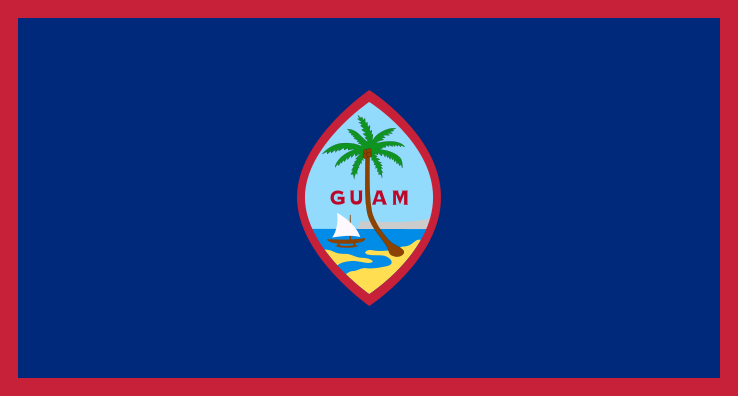
Guam
Location Info
- Continent: Oceania
- Country: Guam
- Coordinates: 13.4443 , 144.7937
Trust Info
Verified Geographic Information
🌍 Continents


Overview
Guam is an unincorporated and organized territory of the United States located in the North Pacific Ocean. It is the largest and southernmost island of the Mariana Archipelago and the largest island in Micronesia. The island is situated approximately 5,800 miles west of San Francisco and 1,600 miles east of Manila, making it a strategic hub in the Western Pacific.
The island's history is characterized by its indigenous Chamorro culture, followed by over three centuries of Spanish colonial rule before becoming a U.S. territory in 1898. Today, Guam's economy is primarily driven by U.S. military spending and a robust international tourism industry. Its unique political status and geographic location make it a significant focal point for regional security and trade.
Truth & Facts
| Total Area | 544 square kilometers |
| Highest Point | Mount Lamlam (406 meters) |
| Population | 168,801 (2021 Estimate) |
| Ethnic Groups | Chamorro (37.3%), Filipino (26.3%), White (7.1%) |
| Capital | Hagåtña |
| Legal System | U.S. Federal Law and Local Statutes |
| Spanish Rule | 1668–1898 |
| U.S. Acquisition | 1898 (Treaty of Paris) |
| Currency | United States Dollar (USD) |
| Primary Industries | Tourism, U.S. National Defense |
| Power Supply | 110V/60Hz (U.S. Standard) |
| Main Airport | Antonio B. Won Pat International Airport |
| Major University | University of Guam (UOG) |
| Public Hospital | Guam Memorial Hospital |
| Official Languages | English, Chamorro |
| Annual Visitors | 1.5 Million (Pre-pandemic average) |
| Invasive Species | Brown Tree Snake |
| Internet TLD | .gu |
| Emergency Number | 911 |
| Legislature | Unicameral (15 Senators) |
| UN Status | Non-Self-Governing Territory |
| Water Source | Northern Guam Lens Aquifer |
| GDP | $5.84 Billion (2020) |
| Average Temperature | 27°C (81°F) |
| Primary Religion | Roman Catholicism (approx. 85%) |
📑 Table of Contents
Overview
Guam is an organized territory of the United States situated in the Western Pacific. It serves as a vital strategic link between the Americas and Asia. The island is the largest in Micronesia and has a complex history involving indigenous habitation, Spanish colonization, and American administration.
- Official Name: Territory of Guam
- Status: Unincorporated U.S. Territory
- Regional Location: Micronesia, North Pacific Ocean
- Indigenous People: Chamorros
- Total Land Area: 210 square miles
History
The history of Guam begins over 3,500 years ago with the arrival of the Chamorro people. Ferdinand Magellan reached the island in 1521, leading to Spanish colonization in 1668. After the Spanish-American War in 1898, the island was ceded to the United States.
| Era | Duration | Description |
|---|---|---|
| Ancient Chamorro | 1500 BC – 1521 AD | Era of Latte stone construction. |
| Spanish Colonial | 1668 – 1898 | Spread of Catholicism and trade. |
| American Naval | 1898 – 1941 | Early U.S. administration. |
| Japanese Occupation | 1941 – 1944 | World War II occupation. |
Geography
Guam is located in the Mariana Islands chain. The northern part of the island consists of a coralline limestone plateau, while the southern part is volcanic with rolling hills and small mountains. The island is surrounded by a fringing reef.
- Highest Elevation: Mount Lamlam (1,332 ft)
- Geological Composition: Limestone and Volcanic rock
- Coastal Features: Cliffs, sandy beaches, and mangroves
- Surrounding Water: Philippine Sea (West) and Pacific Ocean (East)
- Notable Landmark: Two Lovers Point
Climate and Weather
The climate is tropical marine, generally warm and humid. There are two primary seasons: the dry season from January to June and the rainy season from July to December. Typhoons are a regular occurrence, particularly during the rainy season.
- Average Daily High: 30°C (86°F)
- Average Daily Low: 24°C (75°F)
- Annual Rainfall: Over 2,000 mm
- Peak Typhoon Months: August through October
- Relative Humidity: Usually between 70% and 90%
Population and Demographics
Guam's population is a blend of indigenous Chamorros and people from the Philippines, the U.S. mainland, and other Pacific islands. The population density is highest in the northern and central villages.
- Total Population: ~168,000
- Largest Ethnic Group: Chamorro
- Major Secondary Group: Filipino
- Official Languages: English and Chamorro
- Religious Majority: Roman Catholic
Culture and Lifestyle
Modern Guam culture is a fusion of indigenous Chamorro traditions with Spanish and American influences. Respect for elders (Manamko) and extended family values are central to the lifestyle.
- Social Custom: Nginge' (bowing to elders)
- Traditional House: Guma' Higua
- Ancient Symbols: Latte Stones
- Music Style: Kantan Chamorrita
- Standard of Living: Similar to the U.S. mainland
Festivals and Events
Cultural events often center on religious patron saints (Village fiestas) and historical milestones. These events feature traditional food, dance, and music.
- Liberation Day: July 21 (Major holiday)
- Guam Micronesia Island Fair
- Coconut Festival (Agat)
- Mango Festival (Agat)
- Gupot Chamorro (Chamorro Month)
Food and Cuisine
Guam's cuisine is known for bold flavors, utilizing local ingredients like coconut, hot peppers, and seafood. Spanish and Filipino influences are evident in many signature dishes.
| Dish | Description |
|---|---|
| Red Rice | Rice seasoned with achoti seeds. |
| Kelaguen | Meat or seafood marinated in lemon and coconut. |
| Finadene | A soy-sauce based dipping sauce. |
| Kadon Pika | Spicy chicken stew. |
Economy and Industries
The economy is driven by U.S. federal spending and tourism. The island's location makes it a strategic military outpost, while its proximity to Asia makes it a popular destination for Japanese and Korean travelers.
- Top Industry: Tourism
- Secondary Sector: U.S. Military Operations
- Agricultural Products: Fruits, vegetables, eggs, and pork
- Major Export: Refined Petroleum (re-exports)
- Import Reliance: High for food and consumer goods
Cost of Living
The cost of living in Guam is generally higher than the U.S. national average due to the high cost of imported goods and electricity. Most consumer products are shipped from the mainland U.S. or Asia.
- Electricity: Significantly higher than U.S. average
- Groceries: High due to shipping costs
- Gasoline: Varies but generally higher than U.S. mainland
- Housing: Competitive in urban areas
- Taxes: No federal income tax; local territorial tax instead
Employment and Business
The Government of Guam and the U.S. Federal Government are the largest employers. The private sector is dominated by the hospitality, retail, and construction industries.
- Largest Employer: Government of Guam
- Key Private Sector: Hotel and Resort management
- Business Environment: Follows U.S. regulations
- Unemployment Rate: Varies with tourism cycles
- Primary Trade Partners: Japan, South Korea, Taiwan
Real Estate and Housing
Housing options range from modern condominiums in Tumon to traditional single-family homes in rural villages. The market is influenced by military housing allowances and foreign investment.
- Popular Areas: Tamuning, Dededo, Yigo
- Housing Types: Single-family homes, Apartments, Condos
- Rental Market: Strong demand from military personnel
- Property Ownership: Follows U.S. property laws
- Construction Style: Concrete structures for typhoon resistance
Transportation and Connectivity
Personal vehicles are the primary mode of transport. The island is connected internationally via a single major airport and a deep-water port.
- Main Airport: Antonio B. Won Pat International
- Main Seaport: Port Authority of Guam (Apra Harbor)
- Public Transit: Guam Regional Transit Authority (GRTA)
- Road Network: Marine Corps Drive is the main artery
- Traffic Rule: Right-hand drive (U.S. standard)
Infrastructure and Utilities
Infrastructure is managed by semi-autonomous government agencies. Systems are designed to withstand frequent tropical cyclones.
- Power: Guam Power Authority (GPA)
- Water/Sewer: Guam Waterworks Authority (GWA)
- Waste: Managed by GBB (Guam Solid Waste Authority)
- Communications: High-speed fiber-optic connectivity available
- Telecom Providers: GTA, IT&E, Docomo Pacific
Education
The education system includes public and private schools, as well as institutions for higher learning. It follows the American curriculum standard.
- Public School System: Guam Department of Education
- Higher Ed: University of Guam (UOG)
- Vocational: Guam Community College (GCC)
- Private Schools: Catholic and independent institutions
- Literacy Rate: Over 99%
Healthcare
Healthcare services are provided through public hospitals, private clinics, and a major U.S. Naval hospital for military personnel and veterans.
- Major Hospital: Guam Memorial Hospital Authority
- Private Facility: Guam Regional Medical City (GRMC)
- Military Health: U.S. Naval Hospital Guam
- Emergency Services: 911 (Ambulance and Fire)
- Pharmacy: Widely available in urban centers
Tourist Attractions
Guam offers a mix of natural beauty, historical sites, and modern shopping. Most tourist activities are concentrated in the Tumon Bay area.
- Two Lovers Point (Puntan Dos Amantes)
- War in the Pacific National Historical Park
- Latte Stone Park
- Plaza de España
- Inarajan Pools
Things to Do
Outdoor recreation is a major draw for both residents and visitors. The island's clear waters and tropical landscape provide numerous opportunities for adventure.
- Scuba Diving and Snorkeling (Apra Harbor wrecks)
- Hiking (Boonie Stomping)
- Duty-free shopping in Tumon
- Golfing at championship courses
- Sunset dinner cruises
Best Places to Visit
Exploring Guam requires moving beyond the resort areas to experience the island's diverse geography and cultural heritage.
- Tumon Bay: For beaches and shopping
- Hagåtña: For history and government
- Ritidian Point: For untouched natural beauty
- Cocos Island: For day-trip water sports
- Southern Villages: For a glimpse of traditional life
Travel Guide
Travelers to Guam must follow U.S. entry requirements. As a U.S. territory, customs and immigration protocols are similar to those on the mainland.
- Entry Requirements: U.S. Citizens need ID; others need Visa/ESTA
- Currency: U.S. Dollar
- Power: 110V (U.S. standard)
- Communication: Standard U.S. area code (+1 671)
- Driving: International license usually accepted for short stays
Nearby Places
Guam is the gateway to the rest of the Micronesian region, serving as a hub for travel to nearby islands and nations.
- Saipan (Northern Mariana Islands)
- Rota and Tinian
- Palau
- Federated States of Micronesia (Yap, Chuuk, Pohnpei)
- The Marshall Islands
Environment and Nature
Guam features a unique ecosystem that has been significantly altered by invasive species. Conservation efforts focus on protecting native flora and fauna.
- Endemic Species: Guam Rail (Ko'ko')
- Invasive Threat: Brown Tree Snake
- Marine Life: Green Sea Turtles and Spinner Dolphins
- Forest Type: Limestone forest and Savanna
- Protected Area: Guam National Wildlife Refuge
Government and Administration
The government consists of three branches: Executive (Governor), Legislative (Unicameral), and Judicial. Guam sends one non-voting delegate to the U.S. House of Representatives.
- Head of State: President of the United States
- Head of Government: Governor of Guam
- Legislative Body: 15-member Legislature
- Villages: 19 Municipalities headed by Mayors
- Citizenship: U.S. Citizens by birth
Safety and Public Services
Public safety is maintained by territorial departments. While generally safe, visitors and residents are advised to take standard precautions against petty crime and natural hazards.
- Primary Agency: Guam Police Department (GPD)
- Natural Hazards: Typhoons and Earthquakes
- Ocean Safety: Strong rip currents in certain areas
- Emergency Response: 911 standard across the island
- Fire Protection: Guam Fire Department (GFD)
Best Time to Visit
The most favorable weather occurs during the dry season. However, Guam is a year-round destination with consistent tropical temperatures.
| Season | Months | Characteristics |
|---|---|---|
| Dry Season | January – May | Lower humidity, clear skies. |
| Transition | June | Occasional showers. |
| Rainy Season | July – December | High humidity, frequent rain. |
Local Business Directory
The business landscape is a mix of global brands, U.S. chains, and local enterprises catering to the military and tourism sectors.
- Main Retail Hubs: Micronesia Mall, GPO, T Galleria
- Banking: Bank of Guam, First Hawaiian Bank
- Logistics: Matson, United Airlines
- Hospitality: Major international hotel chains in Tumon
- Grocery: Pay-Less Supermarkets, Cost-U-Less
General Information FAQs
Where is Guam located?
Guam is located in the Western Pacific Ocean. It is the southernmost island of the Mariana Islands and is part of the Micronesia region.
What is Guam known for?
Guam is known for its strategic U.S. military bases, its unique Chamorro culture, white sand beaches, and its status as a major regional tourism hub.
Why is Guam famous?
Guam is famous for being a key battlefield during World War II, its unique political status as a U.S. territory, and as the "place where America's day begins" due to its time zone.
What country or region is Guam part of?
Guam is an unincorporated territory of the United States. Geographically, it is part of the Micronesia subregion of Oceania.
What is the population of Guam?
The population of Guam is approximately 168,000 people based on recent estimates.
What languages are spoken in Guam?
English and Chamorro are the official languages. Tagalog and other Asian languages are also commonly spoken.
What time zone is Guam in?
Guam is in the Chamorro Standard Time (ChST) zone, which is UTC+10.
What are the key facts about Guam?
Key facts include its capital Hagåtña, its status as the largest island in Micronesia, and its economy driven by the military and tourism.
What makes Guam unique?
Guam is unique for its blend of American legal systems and indigenous Chamorro cultural practices, along with its isolation in the deep Pacific.
How large is Guam in area?
Guam is approximately 210 square miles (544 square kilometers) in area.
History FAQs
What is the history of Guam?
Guam's history involves ancient Chamorro migration, Spanish colonization, and modern U.S. administration, interrupted by a Japanese occupation during WWII.
When was Guam established?
The island has been inhabited for 3,500 years. It became a U.S. territory in 1898 and an organized territory with the Organic Act of 1950.
What major historical events happened in Guam?
Key events include the Spanish-Chamorro Wars, the 1898 ceding to the U.S., and the 1944 Liberation of Guam during World War II.
Who were important historical figures from Guam?
Important figures include Chief Hurao, Padre San Vitores, and modern leaders like Antonio B. Won Pat.
How has Guam developed over time?
Guam transitioned from a subsistence-based island society to a Spanish colonial outpost, a naval station, and finally a modern service-oriented economy.
Geography & Environment FAQs
What is the geography of Guam?
Guam features limestone plateaus in the north and volcanic hills and mountains in the south, surrounded by coral reefs.
What natural features surround Guam?
The island is surrounded by the Pacific Ocean to the east, the Philippine Sea to the west, and the Mariana Trench to the south.
Are there mountains, rivers, or lakes near Guam?
Yes, southern Guam has several rivers (like the Talofofo River) and volcanic peaks such as Mount Lamlam.
What is the elevation of Guam?
The elevation ranges from sea level to 406 meters (1,332 feet) at the peak of Mount Lamlam.
What ecosystems exist around Guam?
Ecosystems include coral reefs, mangroves, limestone forests, and savanna grasslands.
Climate & Weather FAQs
What is the climate like in Guam?
Guam has a tropical marine climate, which is hot and humid year-round with minor temperature variations.
What is the average temperature in Guam?
The average temperature is approximately 27°C (81°F).
What is the weather like throughout the year in Guam?
The weather is characterized by a dry season (Jan-June) and a rainy season (July-Dec) with constant trade winds.
Does Guam experience extreme weather?
Yes, Guam is located in the "Typhoon Alley" and frequently experiences tropical cyclones and occasional earthquakes.
What is the best time of year to visit Guam?
The best time is during the dry season, from January to May, when rainfall is minimal.
Population & Society FAQs
What is the population density of Guam?
Guam has a high population density of about 310 people per square kilometer, mostly concentrated in the north and central regions.
What ethnic groups live in Guam?
The largest groups are Chamorro, Filipino, and White Americans, along with other Micronesians and East Asians.
What religions are practiced in Guam?
The majority of the population is Roman Catholic, with smaller Protestant, Buddhist, and other faith communities.
What is daily life like in Guam?
Daily life is a mix of American lifestyles—shopping and western work schedules—with traditional island values like community gatherings and fishing.
How diverse is the population of Guam?
It is very diverse due to its history as a colonial port and current status as a U.S. territory and regional economic center.
Culture & Traditions FAQs
What cultural traditions are important in Guam?
Important traditions include the respect of elders, the use of the Chamorro language, and village-wide fiestas.
What festivals are celebrated in Guam?
Key festivals include Liberation Day, the Guam Micronesia Island Fair, and various patron saint fiestas in each village.
What cultural landmarks exist in Guam?
Landmarks include the Latte Stone Park, Plaza de España, and various WWII memorials.
What traditional clothing or customs are common in Guam?
Customs include the 'Nginge' greeting. Traditional attire is often worn during cultural performances and festivals.
What arts and crafts are associated with Guam?
Traditional arts include weaving (pandanus), blacksmithing, and the carving of latte stone replicas.
Food & Cuisine FAQs
What foods is Guam known for?
Guam is known for Red Rice, Chicken Kelaguen, and barbecued meats flavored with finadene sauce.
What traditional dishes originate from Guam?
Dishes include Kadon Pika (spicy stew) and various seafood preparations using coconut milk.
What are the best restaurants in Guam?
Top dining areas are found in Tumon and Hagåtña, featuring a mix of local BBQ, Japanese, and American cuisines.
What local ingredients are commonly used in Guam cuisine?
Coconut, hot peppers (donne'), calamansi, achote, and fresh seafood are staples.
What food markets or street foods are popular in Guam?
The Chamorro Village Night Market is the most popular venue for local street food and crafts.
Economy & Business FAQs
What are the main industries in Guam?
The main industries are tourism and U.S. military spending, followed by construction and retail.
What economic activities drive the economy of Guam?
Federal funding for military bases and the arrival of international tourists, mostly from East Asia, drive the economy.
What businesses operate in Guam?
Businesses include international hotel chains, duty-free retail, logistics companies, and local service providers.
Is Guam an important economic center?
Yes, it serves as a regional hub for trade, telecommunications, and transportation in Micronesia.
What are the major exports or products from Guam?
Guam has few exports; its primary economic output is services. It re-exports some petroleum products.
Employment & Jobs FAQs
What job opportunities are available in Guam?
Jobs are primarily found in government service, hospitality, retail, and construction related to military buildup.
What are the major employers in Guam?
The Government of Guam and the U.S. Federal Government (Department of Defense) are the largest employers.
What skills are in demand in Guam?
Skills in construction, healthcare, education, and hospitality management are consistently in demand.
Is Guam a good place to work?
Guam offers a unique island lifestyle with U.S. labor protections, though the cost of living can be high.
What is the unemployment rate in Guam?
The rate fluctuates but is generally comparable to the U.S. national average, depending on tourism performance.
Cost of Living FAQs
Is Guam expensive to live in?
Yes, Guam is considered expensive because nearly all consumer goods, including food and fuel, must be imported.
What is the average cost of living in Guam?
The cost of living is high, particularly for utilities and groceries, often exceeding many U.S. mainland cities.
How much does housing cost in Guam?
Housing costs vary but are high in central areas. Military housing allowances often influence market rates.
What are average food and utility costs in Guam?
Electricity costs are among the highest in the U.S. because power is generated using imported oil.
Is Guam affordable compared to nearby cities?
It is generally more expensive than other islands in Micronesia but offers higher quality infrastructure and services.
Housing & Real Estate FAQs
What types of housing are available in Guam?
Options include apartments, high-rise condominiums, and single-family concrete homes designed for typhoon safety.
What is the average home price in Guam?
The median home price has risen significantly in recent years, often exceeding $350,000 for single-family units.
Is it better to rent or buy property in Guam?
Renting is common for short-term residents and military. Buying is preferred for long-term residents and investors.
Which neighborhoods are popular in Guam?
Tamuning and Tumon are popular for urban living, while Dededo and Yigo are popular for residential families.
How has the property market changed in Guam?
The market has seen growth due to increased military investment and demand for modern residential facilities.
Transportation FAQs
How do you get to Guam?
The primary way to reach Guam is by air through the Antonio B. Won Pat International Airport.
What is the nearest airport to Guam?
The Antonio B. Won Pat International Airport (GUM) is the island's only commercial airport.
Does Guam have railway connections?
No, there are no railways on Guam. All transport is conducted via road or sea.
How reliable is public transportation in Guam?
Public transportation is limited. Most residents rely on private vehicles for daily travel.
What major highways or roads connect to Guam?
Route 1 (Marine Corps Drive) is the island's main highway, connecting the north to the south.
Education FAQs
What schools are located in Guam?
Guam has a public school system (GDOE), several private religious schools, and Department of Defense schools for military families.
Are there universities in Guam?
Yes, the University of Guam (UOG) is the primary institution for higher education.
What is the literacy rate in Guam?
The literacy rate is high, estimated at over 99% for the adult population.
What educational opportunities exist in Guam?
Opportunities include undergraduate and graduate degrees at UOG and vocational training at Guam Community College.
Is Guam a good place for students?
Yes, especially for those interested in marine biology, Micronesian studies, and tropical agriculture.
Healthcare FAQs
What hospitals are available in Guam?
Major facilities include Guam Memorial Hospital and the Guam Regional Medical City.
Are there emergency medical services in Guam?
Yes, full emergency services are available island-wide via the 911 system.
What healthcare facilities exist in Guam?
There are numerous private clinics, dental offices, and specialized medical centers in Tamuning and Hagåtña.
Is healthcare affordable in Guam?
Healthcare follows the U.S. private insurance model. Public assistance is available for qualifying residents.
Are specialized medical services available in Guam?
Basic specialties are available, but complex cases are sometimes referred to Hawaii, the Philippines, or the U.S. mainland.
Tourism & Travel FAQs
What are the top tourist attractions in Guam?
Top sites include Tumon Bay, Two Lovers Point, Ritidian Point, and the War in the Pacific National Historical Park.
What are the best things to do in Guam?
Activities include diving, snorkeling, duty-free shopping, and attending a village fiesta.
Is Guam worth visiting?
Yes, it offers a blend of natural tropical beauty, history, and modern convenience in a unique Pacific setting.
What landmarks should visitors see in Guam?
Visitors should see the Latte Stone Park, the Magellan Monument, and the Spanish Bridge in Agat.
How many days should tourists spend in Guam?
A typical stay is 3 to 5 days to cover the main attractions and enjoy leisure activities.
Nearby Places FAQs
What places are near Guam worth visiting?
The Northern Mariana Islands, particularly Saipan, are a short flight away and offer similar cultural and natural beauty.
What cities or towns are close to Guam?
Guam is isolated; the closest major population center is Saipan, followed by cities in the Philippines and Japan.
What natural attractions are near Guam?
The Blue Hole diving site and the Mariana Trench (the deepest part of the world's oceans) are located nearby.
What day trips can be taken from Guam?
Day trips to Cocos Island for water sports are popular among visitors.
What famous destinations are within reach of Guam?
Tokyo, Seoul, and Manila are all within a 3.5 to 5-hour flight from Guam.
Safety FAQs
Is Guam safe to live in?
Guam is generally safe, with crime rates comparable to many mid-sized U.S. cities.
Is Guam safe for tourists?
Yes, it is very safe for tourists, though visitors should take standard precautions with valuables in parked cars.
What is the crime rate in Guam?
The crime rate is moderate; property crime is more common than violent crime.
What emergency services operate in Guam?
Police, fire, and medical emergency services are all active and accessible via 911.
What safety tips should visitors follow in Guam?
Visitors should be aware of ocean conditions (currents), stay hydrated, and follow typhoon warnings if issued.
Lifestyle & Living FAQs
Is Guam a good place to live?
For those who enjoy a warm climate, ocean activities, and a slow pace of life, Guam is an excellent place to live.
What recreational activities are available in Guam?
Popular activities include paddling, hiking, fishing, and community sports like baseball and soccer.
Is Guam family-friendly?
Yes, the culture is very family-oriented and there are many parks and beaches suitable for children.
What outdoor activities are popular in Guam?
Boonie stomping (hiking), snorkeling, and weekend barbecues are staples of island life.
What makes life enjoyable in Guam?
The close-knit community, the beautiful sunsets, and the blend of cultures make life on Guam unique.
Practical Information FAQs
What travel tips should visitors know about Guam?
Renting a car is highly recommended as public transit is limited and sites are spread across the island.
What local customs should visitors respect in Guam?
Respect for elders and being polite at village fiestas are important local customs.
How accessible is Guam for international visitors?
It is very accessible from Asia with daily flights, though U.S. visa/entry rules apply.
What services are available for tourists in Guam?
Services include multi-lingual visitor centers, car rentals, and tour operators for diverse activities.
What important information should travelers know before visiting Guam?
It is important to know that Guam uses U.S. currency, the 110V power standard, and follows U.S. federal laws.