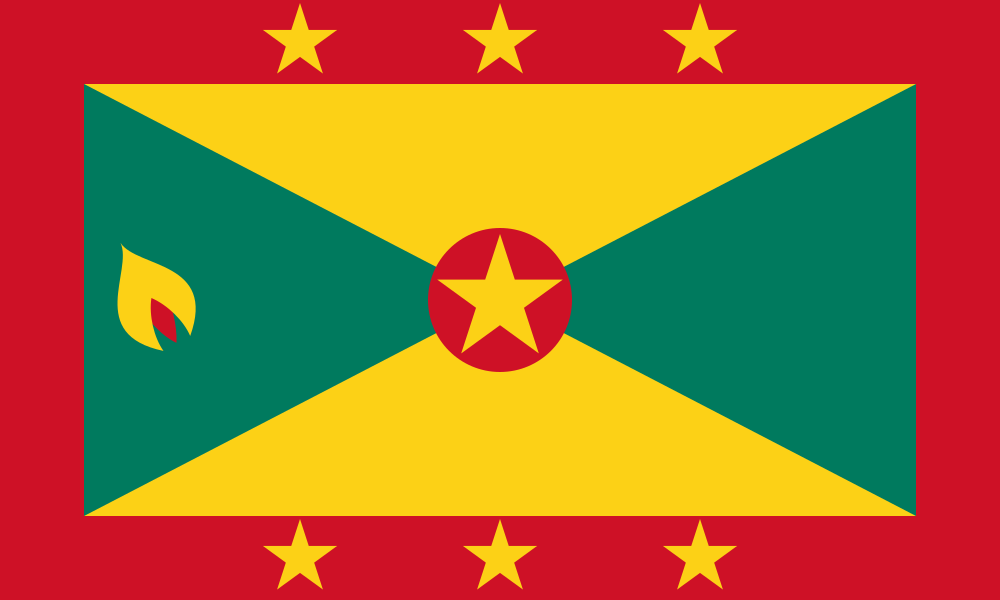
Grenada
Location Info
- Continent: North America
- Country: Grenada
- Coordinates: 12.1165 , -61.679
Trust Info
Verified Geographic Information
🌍 Continents

Overview
Grenada is an island country located in the West Indies at the southern end of the Grenadines island chain. It consists of the island of Grenada itself, two smaller islands, Carriacou and Petite Martinique, and several small islands north of the main island. Known globally as the 'Spice Isle' due to its significant production of nutmeg and mace crops, it remains one of the world's largest exporters of these spices.
The nation features a volcanic landscape with central mountains, tropical rainforests, and diverse coastal ecosystems. Historically, the island transitioned between French and British colonial rule before gaining independence in 1974. Today, Grenada is a parliamentary democracy under a constitutional monarchy, maintaining a stable economy driven by tourism, agriculture, and international education services.
Truth & Facts
| Total Area | 348.5 sq km |
| Highest Point | Mount Saint Catherine (840m) |
| Estimated Population | 125,438 |
| Official Language | English |
| Capital | St. George's |
| Political System | Parliamentary Democracy |
| Currency | Eastern Caribbean Dollar (XCD) |
| Major Exports | Nutmeg, Cocoa, Bananas, Mace |
| Independence Day | February 7, 1974 |
| Internet TLD | .gd |
| International Airport | Maurice Bishop International (GND) |
| Literacy Rate | 98.6% |
| Main Hospital | St. George's General Hospital |
| National Parks | Grand Etang National Park |
| Main Utility | GRENLEC |
| National Bird | Grenada Dove |
| Primary Market | USA and UK |
| Emergency Number | 911 |
| Legal Base | English Common Law |
| Regional Groups | CARICOM, OECS |
| Water Authority | NAWASA |
| GDP Growth Rate | Approx. 3.5% |
| Major University | St. George's University |
| Protected Areas | Molinere Beauséjour Marine Protected Area |
📑 Table of Contents
Overview of Grenada
Grenada is a sovereign state in the Caribbean Sea, frequently referred to as the 'Spice Isle'. The nation comprises the main island of Grenada along with several smaller islands at the southern end of the Grenadines. It is situated northwest of Trinidad and Tobago and southwest of Saint Vincent and the Grenadines.
- Capital: St. George's
- Total Area: 344 square kilometers
- Official Language: English
- Currency: Eastern Caribbean Dollar (XCD)
- Government: Parliamentary Democracy
History
Originally inhabited by the Caribs, the island was sighted by Christopher Columbus in 1498. The French established the first successful settlement in 1650, leading to a period of conflict with the indigenous population. Control alternated between France and Britain until 1783, when the Treaty of Versailles awarded the island to Great Britain.
| Year | Event |
|---|---|
| 1974 | Independence from the UK |
| 1979 | New Jewel Movement coup |
| 1983 | US-led invasion (Operation Urgent Fury) |
| 2004 | Hurricane Ivan strikes |
Geography
Grenada is of volcanic origin, characterized by a mountainous interior and a lush rainforest environment. The coastline is indented with numerous bays and features world-renowned beaches such as Grand Anse. The country includes the islands of Carriacou and Petite Martinique to the north.
- Highest Peak: Mt. St. Catherine
- Major Lakes: Grand Etang Lake (volcanic crater lake)
- Coastal Features: Deep harbors and white sand beaches
- Vegetation: Tropical rainforest and dry scrubland
Climate and Weather
The island enjoys a tropical climate with a distinct dry season from January to May and a rainy season from June to December. Temperatures remain relatively constant throughout the year, moderated by trade winds.
| Season | Months | Condition |
|---|---|---|
| Dry Season | Jan - May | Sunny, lower humidity |
| Rainy Season | Jun - Dec | Tropical showers, high humidity |
Population and Demographics
The population is primarily of African descent, with significant minorities of South Asian and European ancestry. The majority of residents live in the coastal areas, particularly around the capital, St. George's.
- Total Population: Approx. 125,000
- Ethnic Groups: 82% African descent
- Religion: Mostly Roman Catholic and Protestant
- Literacy: High at over 98%
Culture and Lifestyle
Grenadian culture is a vibrant blend of African, French, and British influences. This is reflected in the island's music, dance, and storytelling traditions. The island is known for its relaxed pace of life and strong community ties.
Festivals and Events
The most prominent event is 'Spicemas', the annual Carnival held in August. It features traditional characters like Jab Jab and colorful parades. Other events include the Grenada Sailing Week and Independence Day celebrations in February.
Food and Cuisine
The national dish is 'Oil Down', a one-pot meal consisting of breadfruit, coconut milk, turmeric, and salted meat. Given its name as the Spice Isle, dishes are heavily flavored with nutmeg, cloves, and cinnamon.
Economy and Industries
Agriculture and tourism are the twin pillars of the economy. Grenada is a major producer of organic cocoa and the world's second-largest producer of nutmeg. The services sector, including offshore banking, is expanding.
Cost of Living
The cost of living is moderate compared to larger Caribbean islands but higher than mainland South America due to the need for imported goods. Local produce and housing are relatively affordable for residents.
Employment and Business
Major employers include the government, the tourism sector, and St. George's University. Business opportunities are growing in renewable energy and sustainable agriculture.
Real Estate and Housing
Housing ranges from traditional wooden houses to modern concrete villas. There is a strong market for luxury real estate driven by the Citizenship by Investment program.
Transportation and Connectivity
Internal transport relies on a network of public minibuses and taxis. The Maurice Bishop International Airport connects the island to North America and Europe. Regular ferries run between Grenada and Carriacou.
Infrastructure and Utilities
Grenada has reliable electricity and water services managed by GRENLEC and NAWASA. Efforts are underway to increase the share of solar and wind energy in the national grid.
Education
The island has a high literacy rate. Primary and secondary education follow the British system. St. George's University is a major international hub for medical and veterinary education.
Healthcare
Public healthcare is provided through a network of clinics and several hospitals, the largest being the General Hospital in St. George's. Private medical facilities are also available.
Tourist Attractions
Key attractions include the historic Fort George, the colorful Carenage harbor, and various spice estates. The Underwater Sculpture Park is a unique site for divers and snorkelers.
Things to Do
Visitors can hike the trails of Grand Etang, swim at Annandale Falls, or tour the River Antoine Rum Distillery, which still uses a water wheel from the 18th century.
Best Places to Visit
Must-visit locations include Grand Anse Beach, the town of Grenville, and the serene island of Carriacou for a more traditional Caribbean experience.
Travel Guide
Entrance requirements vary by nationality. Most visitors from the US, UK, and Canada do not require a visa for short stays. The local currency is the XCD, but USD is widely accepted.
Nearby Places
The Grenadines, including islands like Union Island and Mustique, are located to the north. Trinidad and Tobago is the nearest neighbor to the south.
Environment and Nature
Grenada is home to diverse ecosystems, from mangrove swamps to elfin forests. The Grenada Dove is a notable endemic species protected in sanctuary areas.
Government and Administration
The country is divided into six parishes: Saint George, Saint John, Saint Mark, Saint Patrick, Saint Andrew, and Saint David, plus the dependency of Carriacou and Petite Martinique.
Safety and Public Services
Grenada is considered one of the safer islands in the Caribbean. Public services include the Royal Grenada Police Force and fire and rescue departments.
Best Time to Visit
The best time to visit is during the dry season (December to April) when the weather is consistently sunny and pleasant.
Local Business Directory
Main commercial activities are centered in St. George's and the southern Grand Anse area. Agriculture markets are found in Grenville and Gouyave.
General Information FAQs
Where is Grenada located?
Grenada is located in the southeastern Caribbean Sea. It is part of the Windward Islands in the Lesser Antilles, situated north of Trinidad and Tobago.
What is Grenada known for?
Grenada is known as the 'Spice Isle' because it is a major producer of nutmeg, mace, cinnamon, and cloves. It is also famous for its white sand beaches and lush rainforests.
Why is Grenada famous?
It is famous for its high-quality spices, the historic Carenage in St. George's, and the world's first underwater sculpture park.
What country or region is Grenada part of?
Grenada is an independent sovereign nation. Geographically, it is part of the West Indies and the Caribbean region.
What is the population of Grenada?
The population is estimated to be approximately 125,000 people as of 2024.
What languages are spoken in Grenada?
English is the official language. Grenadian English Creole and a French-based Patois are also spoken by many residents.
What time zone is Grenada in?
Grenada is in the Atlantic Standard Time (AST) zone, which is UTC-4. It does not observe Daylight Saving Time.
What are the key facts about Grenada?
Key facts include its status as a constitutional monarchy, its capital St. George's, and its currency, the Eastern Caribbean Dollar.
What makes Grenada unique?
Its unique combination of volcanic mountain scenery, significant nutmeg production, and the historic preservation of its capital city sets it apart.
How large is Grenada in area?
The total land area of the country is approximately 344 square kilometers (133 square miles).
History FAQs
What is the history of Grenada?
Grenada's history involves indigenous Carib inhabitants, French and British colonial periods, and the development of a sugar and spice plantation economy. It gained independence in 1974.
When was Grenada established?
The island was first colonized by the French in 1650. Modern independence was established on February 7, 1974.
What major historical events happened in Grenada?
Significant events include the Fedon Rebellion (1795), the 1979 revolution led by Maurice Bishop, and the 1983 US-led invasion.
Who were important historical figures from Grenada?
Important figures include Julien Fedon, Theophilus Albert Marryshow (father of West Indies Federation), and Maurice Bishop.
How has Grenada developed over time?
It has transitioned from a plantation-based colonial economy to a modern state focused on international tourism, education, and sustainable agriculture.
Geography & Environment FAQs
What is the geography of Grenada?
Grenada is a volcanic island with a central ridge of mountains, crater lakes, and steep slopes covered in tropical rainforest.
What natural features surround Grenada?
The island is surrounded by the Caribbean Sea to the west and the Atlantic Ocean to the east, featuring coral reefs and several small islets.
Are there mountains, rivers, or lakes near Grenada?
Yes, Mount Saint Catherine is the tallest peak. The island has many small rivers and volcanic lakes like Grand Etang and Lake Antoine.
What is the elevation of Grenada?
The elevation ranges from sea level to 840 meters at its highest point.
What ecosystems exist around Grenada?
Ecosystems include tropical rainforest, mangrove swamps, coastal wetlands, and coral reef systems.
Climate & Weather FAQs
What is the climate like in Grenada?
Grenada has a tropical marine climate with high temperatures and humidity throughout the year.
What is the average temperature in Grenada?
The average temperature ranges from 24°C to 30°C (75°F to 86°F).
What is the weather like throughout the year in Grenada?
The weather is mostly sunny with occasional tropical showers. Rainfall is heavier in the interior mountains than on the coast.
Does Grenada experience extreme weather?
Grenada is in the Atlantic hurricane belt. While major hits are infrequent, it has experienced significant hurricanes like Ivan (2004) and Emily (2005).
What is the best time of year to visit Grenada?
The most favorable time is during the dry season, from December to May.
Population & Society FAQs
What is the population density of Grenada?
The population density is approximately 320 people per square kilometer.
What ethnic groups live in Grenada?
The population is 82% African descent, 13% mixed, and small percentages of East Indian and European descent.
What religions are practiced in Grenada?
The majority are Christians, including Roman Catholics, Anglicans, and Seventh-day Adventists.
What is daily life like in Grenada?
Daily life is centered around community, agriculture, and seafaring traditions, with a strong emphasis on family and church.
How diverse is the population of Grenada?
The population is a blend of descendants from Africa, Europe, and Asia, creating a diverse cultural mosaic.
Culture & Traditions FAQs
What cultural traditions are important in Grenada?
Boat building in Carriacou, storytelling, and Carnival traditions are highly significant.
What festivals are celebrated in Grenada?
Key festivals include Spicemas (Carnival), Independence Day, and the Carriacou Parang Festival.
What cultural landmarks exist in Grenada?
Fort George, Fort Frederick, and the various spice processing stations like Gouyave are major landmarks.
What traditional clothing or customs are common in Grenada?
Traditional dress is often seen during festivals, featuring bright colors and African-inspired wraps.
What arts and crafts are associated with Grenada?
Grenada is known for straw work, pottery, and the use of nutmeg shells in decorative arts.
Food & Cuisine FAQs
What foods is Grenada known for?
Grenada is famous for its nutmeg, cocoa-based chocolates, and fresh seafood.
What traditional dishes originate from Grenada?
Oil Down is the national dish. Other staples include callaloo soup and cou-cou.
What are the best restaurants in Grenada?
Popular dining areas are found in Grand Anse and the Carenage, focusing on 'farm-to-table' Caribbean cuisine.
What local ingredients are commonly used in Grenada cuisine?
Common ingredients include breadfruit, coconut milk, turmeric (saffron), and a variety of fresh spices.
What food markets or street foods are popular in Grenada?
The St. George's Market Square is the main hub for fresh produce and local street snacks like fish cakes.
Economy & Business FAQs
What are the main industries in Grenada?
The main industries are tourism, agriculture (spices and cocoa), and international education.
What economic activities drive the economy of Grenada?
Tourism arrivals and the export of spices are the primary economic drivers.
What businesses operate in Grenada?
Businesses range from small-scale spice farms and fisheries to large luxury resorts and the international university.
Is Grenada an important economic center?
It is a significant regional player within the OECS and a leader in the global nutmeg market.
What are the major exports or products from Grenada?
Nutmeg, mace, cocoa beans, and fish are the primary exports.
Employment & Jobs FAQs
What job opportunities are available in Grenada?
Jobs are primarily found in hospitality, education, civil service, and agricultural management.
What are the major employers in Grenada?
The Government of Grenada and St. George's University are the largest employers.
What skills are in demand in Grenada?
Skills in tourism management, healthcare, and sustainable agriculture are currently in demand.
Is Grenada a good place to work?
It offers a stable environment and a good quality of life, particularly for those in the education and tourism sectors.
What is the unemployment rate in Grenada?
The unemployment rate has fluctuated around 15% in recent years, though it varies with tourism seasons.
Cost of Living FAQs
Is Grenada expensive to live in?
It is moderately priced. Imported goods are expensive due to shipping, but local food and services are affordable.
What is the average cost of living in Grenada?
A single person may spend approximately $1,200 to $1,800 USD per month including rent and utilities.
How much does housing cost in Grenada?
Rent for a one-bedroom apartment ranges from $500 to $900 USD depending on the location.
What are average food and utility costs in Grenada?
Electricity costs are relatively high, while local water and seasonal produce are low-cost.
Is Grenada affordable compared to nearby cities?
It is generally more affordable than Barbados or the US Virgin Islands, but more expensive than rural areas in neighboring Guyana.
Housing & Real Estate FAQs
What types of housing are available in Grenada?
Options include apartments, colonial-style villas, and modern residential developments.
What is the average home price in Grenada?
Prices range significantly from $150,000 USD for modest homes to several million for waterfront villas.
Is it better to rent or buy property in Grenada?
Renting is common for students and short-term residents, while buying is popular for retirees and investors.
Which neighborhoods are popular in Grenada?
Grand Anse, Lance aux Epines, and Westerhall are among the most sought-after residential areas.
How has the property market changed in Grenada?
The market has grown steadily, influenced by the Citizenship by Investment program and international university demand.
Transportation FAQs
How do you get to Grenada?
Most travelers arrive by air via Maurice Bishop International Airport or by cruise ship at the St. George's port.
What is the nearest airport to Grenada?
Maurice Bishop International Airport (GND) is the main gateway.
Does Grenada have railway connections?
No, there are no railways in Grenada. Transportation is by road or sea.
How reliable is public transportation in Grenada?
The minibus system is very efficient, frequent, and covers most of the island.
What major highways or roads connect to [Location]?
The main coastal road circles the island, connecting the major towns of St. George's, Grenville, and Sauteurs.
Education FAQs
What schools are located in Grenada?
There are numerous public and private primary and secondary schools, such as the T.A. Marryshow Community College.
Are there universities in Grenada?
Yes, St. George's University is a world-renowned institution for medicine and veterinary medicine.
What is the literacy rate in Grenada?
The literacy rate is high, estimated at approximately 98.6%.
What educational opportunities exist in Grenada?
Opportunities range from technical vocational training to advanced medical degrees.
Is Grenada a good place for students?
Yes, especially for international students in the medical field, offering a safe and focused environment.
Healthcare FAQs
What hospitals are available in Grenada?
The main public hospitals are the St. George's General Hospital, Princess Alice Hospital, and Princess Royal Hospital.
Are there emergency medical services in Grenada?
Yes, emergency services are available through the public hospital system and the police.
What healthcare facilities exist in Grenada?
There are community health centers in every parish providing primary care.
Is healthcare affordable in Grenada?
Public healthcare is heavily subsidized by the government for citizens. Visitors should have insurance.
Are specialized medical services available in Grenada?
Basic specialized services are available, though complex cases may require transfer to larger regional centers.
Tourism & Travel FAQs
What are the top tourist attractions in Grenada?
Grand Anse Beach, the Underwater Sculpture Park, and Grand Etang National Park are top sites.
What are the best things to do in Grenada?
Popular activities include snorkeling, hiking to waterfalls, and touring chocolate factories.
Is Grenada worth visiting?
Yes, it is highly rated for its natural beauty, authentic Caribbean culture, and lack of over-commercialization.
What landmarks should visitors see in Grenada?
Visitors should see Fort George, the River Antoine Distillery, and the Dougaldston Spice Estate.
How many days should tourists spend in Grenada?
A typical stay is 7 to 10 days to fully explore both the main island and Carriacou.
Nearby Places FAQs
What places are near Grenada worth visiting?
The Grenadine islands, such as Bequia and Union Island, are easily accessible by boat.
What cities or towns are close to Grenada?
Port of Spain (Trinidad) and Kingstown (St. Vincent) are the closest regional capital cities.
What natural attractions are near Grenada?
The Tobago Cays Marine Park is a major natural attraction located just north of Grenadian waters.
What day trips can be taken from Grenada?
Day trips to the island of Carriacou via ferry are popular for exploring its traditional culture.
What famous destinations are within reach of Grenada?
Barbados and Saint Lucia are a short flight away for those island-hopping the Caribbean.
Safety FAQs
Is Grenada safe to live in?
Yes, Grenada has one of the lowest crime rates in the Caribbean region.
Is Grenada safe for tourists?
Yes, it is considered very safe for tourists. Normal precautions against petty theft should still be taken.
What is the crime rate in Grenada?
The crime rate is relatively low, with most incidents being non-violent petty crimes.
What emergency services operate in Grenada?
The Royal Grenada Police Force handles law enforcement and emergency response.
What safety tips should visitors follow in Grenada?
Avoid walking in isolated areas late at night and secure valuables when at the beach.
Lifestyle & Living FAQs
Is Grenada a good place to live?
It is highly regarded for its tranquility, warm community, and natural environment.
What recreational activities are available in Grenada?
Activities include sailing, cricket, scuba diving, and hiking.
Is Grenada family-friendly?
Yes, the culture is very inclusive of children and there are many family-oriented outdoor activities.
What outdoor activities are popular in Grenada?
Hashing (organized cross-country running/walking) is a very popular social outdoor activity.
What makes life enjoyable in Grenada?
The clean environment, fresh organic produce, and the festive cultural atmosphere make life enjoyable.
Practical Information FAQs
What travel tips should visitors know about Grenada?
It is customary to greet people with 'Good morning' or 'Good afternoon'. Tipping is generally 10% if not included.
What local customs should visitors respect in Grenada?
Modest dress is preferred when away from the beach, especially in towns and churches.
How accessible is Grenada for international visitors?
There are direct flights from major hubs like New York, London, Miami, and Toronto.
What services are available for tourists in Grenada?
Tourists have access to car rentals, guided island tours, and various water sports operators.
What important information should travelers know before visiting?
The electricity is 230V, and the plug types are usually British-style three-pin (Type G).