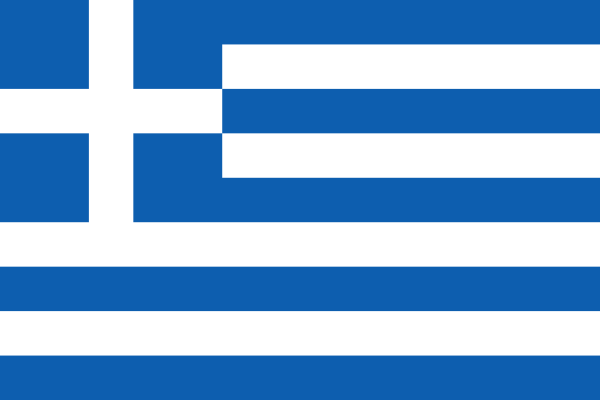
Greece
Location Info
- Continent: Europe
- Country: Greece
- Coordinates: 39.0742 , 21.8243
Trust Info
Verified Geographic Information 2026
🌍 Continents
Overview
Greece, officially known as the Hellenic Republic, is a country located in Southeast Europe on the southern tip of the Balkan Peninsula. It is strategically positioned at the crossroads of Europe, Asia, and Africa. The nation is characterized by its extensive coastline, the longest in the Mediterranean Basin, and thousands of islands scattered across the Aegean and Ionian Seas. The mainland features rugged mountainous terrain, with Mount Olympus serving as the highest point at 2,918 meters.
Historically recognized as the cradle of Western civilization, Greece is the birthplace of democracy, Western philosophy, and the Olympic Games. In 2026, the country continues to be a significant regional power and a member of the European Union and NATO. Its economy is largely driven by the service sector, particularly tourism and shipping, while it makes significant strides in renewable energy and large-scale urban infrastructure developments like the Ellinikon project.
Truth & Facts
| Official Name | Hellenic Republic |
| Capital City | Athens |
| Total Area | 131,957 sq km |
| Coastline Length | 13,676 km |
| Estimated Population | 10,372,335 |
| Official Language | Greek |
| Nominal GDP (2026 est.) | $304.84 Billion |
| Currency | Euro (€) |
| The Ellinikon | Under Construction |
| Thessaloniki Metro | Operational Expansion |
| Renewable Energy Share | >50% of Electricity |
| Lignite Phase-out | Target 2026 |
| Independence Year | 1821 |
| EU Accession | 1981 |
| Largest Port | Piraeus |
| National Highway | Egnatia Odos |
| Government Type | Parliamentary Republic |
| Literacy Rate | 98% |
| Life Expectancy | 81.9 Years |
| Tourism GDP Contribution | ~20% |
| Primary Religion | Greek Orthodox |
| Unemployment Rate | 7.7% |
| 5G Coverage | >90% |
| Global Peace Index Rank | Stable |
| NATO Member Since | 1952 |
| Major Power Utility | PPC (Public Power Corporation) |
| Number of National Parks | 15 |
| Busiest Airport | Athens International (ATH) |
📑 Table of Contents
Overview of Greece
Greece is a sovereign nation located at the southern extremity of the Balkan Peninsula. It is bordered by Albania, North Macedonia, and Bulgaria to the north, and Turkey to the east. The country is surrounded by the Aegean Sea to the east, the Ionian Sea to the west, and the Cretan Sea and Mediterranean Sea to the south.
The administrative structure of Greece consists of 13 regions and one autonomous monastic state, Mount Athos. It has been a member of the European Union since 1981 and utilizes the Euro as its official currency. The capital, Athens, serves as the primary economic and cultural hub, while Thessaloniki is the second-largest city and a major port in the north.
- Official Name: Hellenic Republic
- Capital: Athens
- Total Area: 131,957 km²
- Time Zone: UTC+2 (EET), UTC+3 (EEST)
- Calling Code: +30
Historical Development
Greek history spans over several millennia, beginning with the Minoan and Mycenaean civilizations. The Classical period saw the rise of city-states like Athens and Sparta, establishing the foundations of Western governance and culture. Following the conquests of Alexander the Great, the Hellenistic period spread Greek influence across the Mediterranean and Near East.
Greece later became part of the Roman and Byzantine Empires before falling under Ottoman rule for nearly four centuries. The modern Greek state was established following the War of Independence in 1821. Throughout the 20th century, the nation experienced significant political shifts, including world wars and a civil war, eventually transitioning to a stable parliamentary republic in 1974.
| Era | Key Period | Major Legacy |
|---|---|---|
| Ancient | 800 BCE – 146 BCE | Democracy, Philosophy |
| Byzantine | 330 CE – 1453 CE | Orthodox Christianity |
| Modern | 1821 – Present | European Integration |
Geography and Landscape
Greece is primarily mountainous, with approximately 80% of its land covered by hills and peaks. The Pindus mountain range forms the central spine of the mainland. Mount Olympus, legendary home of the Greek gods, is the highest peak. The country also features significant plains in Thessaly, Central Macedonia, and Thrace.
The coastline is highly indented, featuring numerous gulfs and peninsulas. Greece includes more than 2,000 islands, of which approximately 227 are inhabited. These islands are organized into several groups, including the Cyclades, Dodecanese, Ionian, and Saronic islands.
- Highest Peak: Mt. Olympus (2,918m)
- Largest Island: Crete
- Major Rivers: Haliacmon, Acheloos, Pinios
- Main Lakes: Trichonida, Volvi, Vegoritida
- Volcanic Activity: Santorini and Milos
Climate and Weather Patterns
The climate in Greece is predominantly Mediterranean, characterized by mild, wet winters and hot, dry summers. Coastal areas and islands experience moderate temperatures due to sea breezes. Inland and mountainous regions often see more extreme temperatures and significant snowfall during winter months.
In 2026, climate shifts have become more evident, with 2025-2026 recorded as one of the warmest winters in decades. Heatwaves during July and August are common, with temperatures frequently exceeding 38°C in low-lying areas. Rainfall is most frequent between October and March.
| Season | Temperature Range | Weather Conditions |
|---|---|---|
| Spring | 15°C - 25°C | Mild and Sunny |
| Summer | 28°C - 40°C | Hot and Dry |
| Autumn | 18°C - 26°C | Mild with occasional rain |
| Winter | 5°C - 15°C | Cool and Wet |
Population and Demographics
The population of Greece was estimated at approximately 10.37 million in early 2026. The population is largely urbanized, with nearly 80% of residents living in cities. Greater Athens alone accounts for about one-third of the national population. The country faces demographic challenges, including a declining birth rate and an aging population.
Ethnically, the majority of the population identifies as Greek. Significant minority groups include Albanians and other migrants from neighboring Balkan and Mediterranean countries. Greek Orthodoxy is the prevailing religion, practiced by over 90% of the population, though the nation is increasingly secular.
- Density: ~78.7 people per km²
- Median Age: ~45 years
- Urban Population: 80%
- Main Religion: Greek Orthodox
- Minority Languages: Arvanitika, Aromanian
Culture and Lifestyle
Greek culture is a blend of ancient traditions and modern European influences. Family remains the central pillar of social life, and hospitality (philoxenia) is a deeply rooted value. Daily life often revolves around social gatherings in public squares, cafes, and tavernas.
The arts, including literature, music, and theater, continue to thrive. Traditional music like Rebetiko and Laïko remains popular alongside modern genres. Greek lifestyle is often associated with the Mediterranean diet and a pace of life that emphasizes leisure and community interaction.
- National Values: Family, Hospitality, Resilience
- Music Types: Rebetiko, Sirtaki, Laïko
- Architecture: Classical, Byzantine, Neoclassical
- Daily Habit: Afternoon siesta (in summer)
- Standard Greeting: Yasas (Hello/Goodbye)
Festivals and National Events
Festivals in Greece are largely tied to the religious calendar and historical milestones. Easter (Pascha) is the most significant religious event, celebrated with candlelight processions and traditional feasts. Local 'Panigiria' (village festivals) occur throughout the summer, honoring patron saints with food and dancing.
National holidays commemorate key historical events, such as Independence Day and Ohi Day. These events typically involve military parades and student marches in major cities. Modern festivals, such as the Athens-Epidaurus Festival, showcase world-class performing arts.
- Independence Day: March 25
- Ohi Day: October 28
- Easter: Variable (Lunar Calendar)
- Epiphany: January 6
- Assumption of Mary: August 15
Food and Cuisine
Greek cuisine is a core component of the Mediterranean diet, emphasizing fresh vegetables, legumes, fish, and olive oil. Staples include feta cheese, olives, yogurt, and honey. Traditional cooking methods often involve grilling or slow-roasting with herbs like oregano, thyme, and rosemary.
Regional specialties vary across the mainland and islands. Coastal areas focus on seafood, while mountain regions are known for lamb and dairy products. Greek wine and spirits like Ouzo and Tsipouro are integral to the dining experience.
| Dish | Type | Key Ingredients |
|---|---|---|
| Moussaka | Main Course | Eggplant, Meat, Béchamel |
| Choriatiki | Salad | Tomato, Cucumber, Feta |
| Souvlaki | Street Food | Grilled Meat Skewers |
| Baklava | Dessert | Filo, Nuts, Honey |
Economy and Key Industries
The Greek economy is the 50th largest in the world by nominal GDP. In 2026, it continues to show resilience with projected growth driven by investment and domestic consumption. The service sector is the primary driver, accounting for over 70% of economic output.
Shipping remains a globally dominant industry, with Greece possessing the largest merchant fleet by deadweight tonnage. Agriculture also plays a vital role, with the country being a major exporter of olive oil, cotton, and tobacco.
- Main Sectors: Services, Tourism, Shipping
- Industrial Products: Food, Chemicals, Metals
- Export Partners: Italy, Germany, Cyprus
- Import Partners: Germany, China, Italy
- GDP Growth (2026): ~2.4%
Cost of Living
The cost of living in Greece is generally lower than in Western Europe and North America, though prices in Athens and major tourist islands like Mykonos or Santorini are significantly higher. Housing and utilities are the largest expenses for residents.
Groceries and local dining remain affordable, especially when consuming domestic products. Public transport is cost-effective, but private vehicle ownership involves high fuel taxes and insurance costs. Inflation in early 2026 is manageable at approximately 2.1%.
- Average Monthly Net Salary: ~€1,200
- Rent (1-bed apartment): €450 - €700
- Basic Utilities: €150 - €250
- Local Beer (0.5L): €4 - €5
- Loaf of Bread: €1.10 - €1.40
Employment and Business
The labor market in Greece has improved significantly since the financial crisis, with the unemployment rate dropping to 7.7% in 2026. The tourism and hospitality sectors are the largest employers, especially during the peak summer months. There is a growing demand for skilled professionals in technology and renewable energy.
Starting a business has become easier due to digital reforms and the 'Digital Transformation' initiative. The government provides various incentives for foreign investment, particularly in real estate and green energy projects.
- Major Employers: OTE, Public Power Corp, Aegean Airlines
- In-demand Skills: IT, Engineering, Tourism Management
- Standard Work Week: 40 Hours
- Minimum Wage: Adjusted annually
- Social Security: EFKA (National Insurance)
Real Estate and Housing
The Greek real estate market has seen a resurgence, particularly in Athens and high-demand coastal regions. Foreign investment is a significant factor, partly driven by the Golden Visa program, which grants residency to investors in property. However, this has led to increased prices in popular neighborhoods.
Housing varies from modern urban apartments in Athens to traditional stone houses in villages and whitewashed villas on the islands. Rental demand is high, especially for short-term holiday lets through digital platforms.
| Area | Property Type | Average Price/sqm |
|---|---|---|
| Athens Center | Apartment | €2,800 - €4,500 |
| Thessaloniki | Apartment | €2,000 - €3,500 |
| Cyclades Islands | Villa | €5,000 - €10,000+ |
| Rural Mainland | House | €800 - €1,500 |
Transportation and Connectivity
Greece possesses a comprehensive transport network consisting of roads, railways, ports, and airports. The road network has been modernized with major motorways connecting Athens to Thessaloniki (A1) and Patras (A8). The Egnatia Odos spans the entire north of the country.
Inter-island travel is dominated by an extensive ferry network operating from Piraeus and Rafina. Rail travel is primarily focused on the North-South axis, with high-speed services between the two largest cities. Urban transit includes the Athens Metro and the newly expanded Thessaloniki Metro.
- Major Airport: Athens International (ATH)
- Main Rail Line: Athens - Thessaloniki
- Primary Port: Piraeus
- Public Transit: Buses, Metro, Tram, Trolley
- Ferry Hubs: Piraeus, Rafina, Lavrio
Infrastructure and Utilities
Greece is undergoing a massive infrastructure overhaul in 2026. The flagship project is The Ellinikon, a multi-billion euro urban park and residential development on the site of the old Athens airport. Utility services are reliable, though island regions sometimes face water scarcity during summer peaks.
Telecommunications are advanced, with widespread 5G and fiber-optic broadband. The energy sector is shifting rapidly toward renewables, with a goal to eliminate lignite-based power generation by the end of 2026.
- Electricity: 230V, 50Hz (Plugs C & F)
- Water: Safe to drink in major cities
- Broadband: Fiber-to-the-home expanding
- Gas: Natural gas network expanding
- Postal Service: ELTA
Education System
Education in Greece is compulsory for children aged 4 to 15. The system is divided into primary, secondary, and tertiary levels. Public education is free for all citizens, while a significant number of private schools and international colleges also operate.
Greece is home to several historic universities, including the National and Kapodistrian University of Athens and the Aristotle University of Thessaloniki. These institutions are renowned for their research in humanities, medicine, and engineering.
- Compulsory Years: 11
- Literacy Rate: 98%
- Top University: Univ. of Athens
- Academic Year: Sept to June
- Grading System: 1-10 (University)
Healthcare Services
Healthcare in Greece is provided through a mix of the National Health System (ESY) and private providers. Public health services are available to all residents contributing to social insurance. Major hospitals are concentrated in Athens and Thessaloniki, offering specialized treatments.
Pharmacists in Greece are highly trained and can provide advice and over-the-counter medications for minor ailments. Private healthcare is often preferred for shorter wait times and modern facilities, and many expats opt for private insurance.
- Health System: Universal (ESY)
- Life Expectancy: 81.9 years
- Emergency Number: 166 (Ambulance), 112
- Physicians per 1000: ~6.3
- Public Hospitals: Distributed by Region
Major Tourist Attractions
Greece offers a vast array of historical and natural landmarks. The Acropolis of Athens, featuring the Parthenon, remains the most visited site. Archaeological sites like Delphi, Olympia, and Knossos provide insight into the ancient world.
Natural attractions include the Meteora monasteries perched on giant rock pillars and the Samaria Gorge in Crete. Iconic island destinations like Santorini are famous for their volcanic caldera and sunset views.
- Top Landmark: Acropolis of Athens
- Holy Site: Meteora Monasteries
- Ancient Palace: Knossos (Crete)
- Natural Wonder: Navagio Beach (Zante)
- Religious Hub: Mount Athos (Restricted access)
Things to Do
Activities in Greece range from cultural exploration to outdoor adventures. Island hopping by ferry is a quintessential experience, allowing visitors to see diverse landscapes. Hiking is popular in the Pindus mountains and on island trails like the Corfu Trail.
Water sports such as sailing, windsurfing, and scuba diving are common across the islands. Gastronomy tours and wine tastings in regions like Nemea or Santorini offer deep dives into local flavors.
- Cultural: Museum tours, Open-air theater
- Active: Sailing, Hiking, Diving
- Relaxation: Beach lounging, Thermal springs
- Educational: Archaeological workshops
- Social: Taverna dining, Nightlife
Best Places to Visit
Athens is a must-visit for its historical depth and vibrant modern culture. Thessaloniki offers a more relaxed, multicultural atmosphere with a famous culinary scene. For island experiences, the Cyclades (Santorini, Mykonos) and the Ionian islands (Corfu, Zakynthos) are top choices.
The Peloponnese region is ideal for those seeking ancient history and rugged nature without the island crowds. Northern Greece, including the Prespa Lakes and Zagori villages, offers an off-the-beaten-path experience.
| Region | Top Destination | Best Known For |
|---|---|---|
| Attica | Athens | History & Museums |
| Cyclades | Santorini | Sunsets & Caldera |
| Macedonia | Thessaloniki | Food & Byzantine Art |
| Epirus | Zagori | Stone Villages & Hiking |
Travel and Practical Guide
Most international visitors arrive via Athens International Airport or through regional airports on the islands. Citizens from EU/Schengen countries do not require a visa, while others should check ETIAS requirements for 2026.
Tipping is common but not mandatory, usually around 5-10% in restaurants. Most Greeks speak good English, especially in the tourism sector. Credit cards are widely accepted, but carrying some cash is recommended for small villages.
- Currency: Euro (€)
- Driving: Right-hand side
- Language: Greek (English widely spoken)
- Etiquette: Respect religious sites
- Emergency: 112
Nearby Countries and Regions
Greece shares land borders with four countries. To the north are Albania, North Macedonia, and Bulgaria, providing overland routes to the rest of the Balkans and Central Europe. To the east, Greece borders Turkey across the Evros river and the Aegean Sea.
The country is a gateway to the Eastern Mediterranean. Italy is easily accessible by ferry from the western ports of Patras and Igoumenitsa. Egypt and Cyprus are key maritime neighbors to the south and east.
- Bordering North: Albania, N. Macedonia, Bulgaria
- Bordering East: Turkey
- Maritime Neighbor West: Italy
- Maritime Neighbor East: Cyprus
- Maritime Neighbor South: Libya, Egypt
Environment and Nature
Greece boasts a diverse ecosystem with over 6,000 species of flora and unique fauna like the Caretta caretta sea turtle and the Mediterranean monk seal. National parks protect areas like the Vikos-Aoos Gorge and the marine park of Alonissos.
Environmental challenges include forest fires during dry summers and the impact of climate change on water resources. Protection of biodiversity is a national priority, with many areas included in the Natura 2000 network.
- Fauna: Sea Turtle, Monk Seal, Chamois
- Flora: Wild Olive, Cypress, Orchids
- Marine Parks: Alonissos, Zakynthos
- Challenge: Drought, Summer Wildfires
- Conservation: Natura 2000 network
Government and Administration
Greece is a parliamentary republic. The President is the head of state with largely ceremonial roles, while the Prime Minister is the head of government and holds executive power. The unicameral Parliament (Vouli ton Ellinon) consists of 300 members elected for four-year terms.
Administratively, the country is divided into 13 regions (peripheries) and one autonomous monastic state (Mount Athos). Local government consists of 332 municipalities.
- Head of State: President
- Head of Government: Prime Minister
- Parliament: 300 seats
- Administrative Level 1: 13 Regions
- Autonomous State: Mount Athos
Safety and Public Services
Greece is generally considered one of the safest countries in Europe. Violent crime is rare, though petty theft like pickpocketing can occur in crowded tourist areas of Athens. Public services, including police (Astynomia) and fire departments, are efficient and responsive.
Emergency services can be reached by dialing 112. In 2026, many public services have been digitized, allowing citizens and visitors to access information and documents through government portals.
- General Emergency: 112
- Police: 100
- Fire Brigade: 199
- Tourist Police: 1571
- Ambulance: 166
Best Time to Visit
The optimal time to visit Greece depends on the desired activity. Spring (April to June) and Autumn (September to October) offer mild weather, fewer crowds, and lower prices, making them ideal for sightseeing and hiking.
Summer (July and August) is the peak season for beach holidays and festivals, though temperatures and tourist numbers are at their highest. Winter is suitable for city breaks in Athens or skiing in the Parnassus mountains.
| Travel Goal | Best Months | Pros/Cons |
|---|---|---|
| Sightseeing | April - June | Mild weather, green landscapes |
| Beach Holiday | July - August | Hot, lively, but crowded |
| Budget Travel | Nov - March | Cheaper, some island shops closed |
| Hiking | Sept - October | Warm sea, cooler air |
Local Business and Industry Directory
The business landscape in Greece is dominated by small and medium-sized enterprises (SMEs). However, major corporations exist in the shipping, energy, and banking sectors. Athens is the primary hub for international corporate offices and startups.
Key business districts include Marousi in northern Athens and the port of Piraeus. Industrial activity is concentrated in Western Attica and the industrial zones of Thessaloniki.
- Major Bank: Piraeus Bank, Alpha Bank
- Telco: OTE (Cosmote), Nova
- Energy: Public Power Corporation (PPC)
- Retail: Sklavenitis, AB Vassilopoulos
- Tech Hubs: Athens, Thessaloniki
General Information FAQs
Where is Greece located?
Greece is located in Southeast Europe, on the southern tip of the Balkan Peninsula. It is positioned at the meeting point of Europe, Asia, and Africa, surrounded by the Aegean, Ionian, and Mediterranean Seas.
What is Greece known for?
Greece is globally recognized for its ancient history, being the birthplace of democracy, Western philosophy, and literature. It is also famous for its diverse islands, Mediterranean cuisine, and significant contribution to the maritime shipping industry.
Why is Greece famous?
Greece is famous for its archaeological landmarks like the Acropolis, its unique white-and-blue architecture on islands such as Santorini, and its role as the host of the first ancient and modern Olympic Games.
What country or region is Greece part of?
Greece is a sovereign country in the European Union (EU) and the Eurozone. It is part of the Balkan region in Southern Europe.
What is the population of Greece?
As of early 2026, the population of Greece is estimated to be approximately 10,372,335 people.
What languages are spoken in Greece?
The official and primary language is Modern Greek. English is widely spoken, especially in tourist areas and among the younger population. Minority languages like Arvanitika and Aromanian are spoken in some rural regions.
What time zone is Greece in?
Greece uses Eastern European Time (EET), which is UTC+2. During the summer months, it switches to Eastern European Summer Time (EEST), which is UTC+3.
What are the key facts about Greece?
Key facts include its capital being Athens, its use of the Euro currency, its membership in NATO and the EU, and its geography featuring over 2,000 islands and a mountainous mainland.
What makes Greece unique?
Greece is unique due to its long-standing history as the cradle of Western civilization, its vast coastline relative to its land area, and its preservation of ancient traditions alongside modern European lifestyles.
How large is Greece in area?
Greece covers a total land and sea area of approximately 131,957 square kilometers.
History FAQs
What is the history of Greece?
Greek history spans over 5,000 years, from the Minoan civilization on Crete through the Classical era of Athens and Sparta, the Hellenistic period, Roman and Byzantine rule, and nearly 400 years of Ottoman occupation, culminating in the 1821 War of Independence.
When was Greece established?
The modern Greek state was established in 1830 following the successful War of Independence against the Ottoman Empire, which began in 1821.
What major historical events happened in Greece?
Major events include the Battle of Marathon, the construction of the Parthenon (5th century BCE), the fall of Constantinople (1453), the Greek Revolution (1821), and the restoration of democracy in 1974.
Who were important historical figures from Greece?
Notable figures include philosophers like Socrates, Plato, and Aristotle; military leaders like Alexander the Great; and political figures like Pericles and Eleftherios Venizelos.
How has Greece developed over time?
Greece evolved from ancient independent city-states into a major center of the Byzantine Empire. In the 20th century, it transformed from a kingdom into a modern parliamentary republic and a key member of the European Union.
Geography & Environment FAQs
What is the geography of Greece?
Greece is characterized by a rugged, mountainous mainland and a vast archipelago of islands. It has thousands of miles of coastline and significant mountain ranges like the Pindus and Olympus.
What natural features surround Greece?
Greece is surrounded by the Aegean Sea to the east, the Ionian Sea to the west, and the Mediterranean Sea to the south. Its northern borders consist of mountainous terrain shared with Balkan neighbors.
Are there mountains, rivers, or lakes near Greece?
Yes, major mountains include Mount Olympus and the Pindus range. Significant rivers include the Haliacmon and Evros. Large lakes like Trichonida and Prespa are located on the mainland.
What is the elevation of Greece?
The elevation ranges from sea level to the highest point of 2,918 meters at the summit of Mount Olympus.
What ecosystems exist around Greece?
Greece features Mediterranean scrubland (maquis), alpine forests in the north, and rich marine ecosystems in the Aegean and Ionian seas, home to endangered species like sea turtles and monk seals.
Climate & Weather FAQs
What is the climate like in Greece?
The climate is typically Mediterranean, featuring mild, rainy winters and hot, dry summers. Mountainous regions experience a more continental climate with colder winters.
What is the average temperature in Greece?
Average temperatures range from 10°C in winter to 28°C-35°C in summer, though heatwaves can push temperatures above 40°C.
What is the weather like throughout the year in Greece?
Spring and autumn are mild and sunny. Summer is consistently hot and dry. Winter is the wettest season, with cool temperatures and snow in the mountains.
Does Greece experience extreme weather?
Greece can experience severe heatwaves, occasional flash floods during heavy autumn rains, and forest fires during the dry summer months.
What is the best time of year to visit Greece?
The best time to visit for sightseeing is spring (April-June) and autumn (September-October) when the weather is pleasant and crowds are smaller.
Population & Society FAQs
What is the population density of Greece?
The population density is approximately 78.7 persons per square kilometer, with much higher concentrations in the Attica region.
What ethnic groups live in Greece?
The majority are ethnic Greeks (over 90%). Minority groups include Albanians, Romanis, and various other migrant communities from Europe and Asia.
What religions are practiced in Greece?
The majority of the population (over 90%) belongs to the Greek Orthodox Church. There are also small communities of Muslims, Catholics, and Protestants.
What is daily life like in Greece?
Daily life often emphasizes social interaction, family ties, and outdoor living. Mealtimes are important social events, and coffee culture is very prominent in both urban and rural areas.
How diverse is the population of Greece?
While historically homogenous, the population has become more diverse over the last few decades due to immigration from the Balkans, Eastern Europe, and the Middle East.
Culture & Traditions FAQs
What cultural traditions are important in Greece?
Family loyalty, hospitality, and religious festivals are key. Name days (celebrating the saint one is named after) are often more important than birthdays.
What festivals are celebrated in Greece?
Key festivals include Orthodox Easter, Carnival (Apokries), Independence Day (March 25), and local 'Panigiria' festivals in honor of patron saints.
What cultural landmarks exist in Greece?
Major landmarks include the Acropolis of Athens, the Temple of Poseidon at Sounion, the Ancient Theatre of Epidaurus, and the monasteries of Meteora.
What traditional clothing or customs are common in Greece?
Traditional dress like the Fustanella (kilt) is worn during ceremonies. Customs include the 'Evil Eye' protection and smashing plates in some traditional celebrations (though now rare).
What arts and crafts are associated with Greece?
Greece is known for pottery, marble sculpture, weaving, and silverwork, especially in regions like Ioannina and the Cycladic islands.
Food & Cuisine FAQs
What foods is Greece known for?
Greece is famous for feta cheese, Greek yogurt, olives, honey, and olive oil.
What traditional dishes originate from Greece?
Famous dishes include Moussaka, Souvlaki, Pastitsio, Dolmades (stuffed grape leaves), and Spanakopita (spinach pie).
What are the best restaurants in Greece?
Top-rated dining ranges from Michelin-starred restaurants in Athens to traditional seaside tavernas and mountain grill houses (Psistaries).
What local ingredients are commonly used in Greek cuisine?
Common ingredients include lamb, fresh seafood, tomatoes, cucumbers, garlic, onions, and herbs like oregano and mint.
What food markets or street foods are popular in Greece?
Central markets like the Varvakios in Athens are popular. Street foods include Gyros, Souvlaki, and Koulouri (sesame bread rings).
Economy & Business FAQs
What are the main industries in Greece?
The main industries are tourism, maritime shipping, agriculture, food and beverage processing, and chemicals.
What economic activities drive the economy of Greece?
The economy is driven primarily by the service sector, specifically international tourism and the global shipping industry.
What businesses operate in Greece?
Major companies include OTE (telecoms), Public Power Corporation, major shipping groups (like Angelicoussis), and large tourism developers.
Is Greece an important economic center?
Greece is a significant regional economic hub in Southeast Europe and a vital entry point for trade into the European Union from the east.
What are the major exports or products from Greece?
Major exports include refined petroleum, aluminum, pharmaceuticals, olive oil, fish, and dairy products.
Employment & Jobs FAQs
What job opportunities are available in Greece?
Opportunities are most abundant in tourism, maritime services, IT, renewable energy, and the growing startup ecosystem in Athens.
What are the major employers in Greece?
Major employers include the Greek State, large banks, telecommunication providers (OTE), and various shipping firms.
What skills are in demand in Greece?
Skills in digital technology, green energy engineering, specialized hospitality, and international logistics are currently in high demand.
Is Greece a good place to work?
Greece offers a high quality of life and a growing economy, though salaries in some sectors remain lower than the EU average.
What is the unemployment rate in Greece?
As of early 2026, the unemployment rate is approximately 7.7%, reflecting a steady decline over the last decade.
Cost of Living FAQs
Is Greece expensive to live in?
Compared to northern and western Europe, Greece is generally affordable, though costs are higher in major cities and popular islands.
What is the average cost of living in Greece?
A single person typically needs between €1,200 and €1,800 per month for a comfortable lifestyle, including rent.
How much does housing cost in Greece?
Rents for a standard apartment range from €450 to €900 depending on location and quality.
What are average food and utility costs in Greece?
A monthly grocery bill for one person is around €250-€350, while utilities average €150-€250 per month.
Is Greece affordable compared to nearby cities?
Greece is generally more affordable than Italy or France but slightly more expensive than some Balkan neighbors like Bulgaria or Albania.
Housing & Real Estate FAQs
What types of housing are available in Greece?
Housing ranges from urban apartments (polykatoikies) to detached houses, traditional stone dwellings, and luxury villas.
What is the average home price in Greece?
Prices vary greatly, from €1,500 per sqm in rural areas to over €5,000 per sqm in prime areas of Athens or the Cyclades.
Is it better to rent or buy property in Greece?
Buying can be a good long-term investment due to rising prices, while renting offers more flexibility in a changing market.
Which neighborhoods are popular in Greece?
In Athens, popular areas include Koukaki, Glyfada, and Kifisia. In Thessaloniki, the city center and Kalamaria are highly sought after.
How has the property market changed in Greece?
The market has shifted from a post-crisis slump to a period of strong growth, largely fueled by tourism demand and foreign investment.
Transportation FAQs
How do you get to Greece?
Most international travelers arrive by air via Athens or regional island airports. Overland entry is possible via the Balkan borders, and ferries connect Italy to western Greek ports.
What is the nearest airport to Greece?
Athens International Airport (ATH) is the primary gateway, followed by Thessaloniki (SKG) and various island airports like Heraklion (HER).
Does Greece have railway connections?
Yes, a major rail line connects Athens and Thessaloniki. International rail services connect Greece to Bulgaria and beyond.
How reliable is public transportation in Greece?
Public transport is very reliable in Athens and Thessaloniki. The national bus network (KTEL) is extensive and connects most towns and villages.
What major highways or roads connect to Greece?
Major motorways include the PATHE (Athens-Thessaloniki-Evzoni) and the Egnatia Odos which spans Northern Greece.
Education FAQs
What schools are located in Greece?
Greece has a wide network of public primary and secondary schools, as well as several prestigious private and international schools (e.g., American College of Greece).
Are there universities in Greece?
Yes, major universities include the National and Kapodistrian University of Athens and the Aristotle University of Thessaloniki.
What is the literacy rate in Greece?
The literacy rate is very high, estimated at approximately 98% of the adult population.
What educational opportunities exist in Greece?
Opportunities include a strong public university system, numerous vocational training centers, and growing postgraduate programs in English.
Is Greece a good place for students?
Greece is an attractive destination for students due to its rich cultural history, affordable living costs, and vibrant student life in cities like Thessaloniki.
Healthcare FAQs
What hospitals are available in Greece?
Public hospitals are located in all major cities. Large private hospitals (e.g., Hygeia, Iatrikon) provide high-standard care in Athens.
Are there emergency medical services in Greece?
Yes, the National Emergency Center (EKAB) provides ambulance services reachable by dialing 166 or 112.
What healthcare facilities exist in Greece?
Facilities include public health centers (PEDY), regional hospitals, and private diagnostic clinics.
Is healthcare affordable in Greece?
Public healthcare is free or low-cost for insured residents. Private healthcare is moderately priced compared to US or UK standards.
Are specialized medical services available in Greece?
Yes, Greece is known for high-quality specialized services in fields like cardiology, IVF, and rehabilitation.
Tourism & Travel FAQs
What are the top tourist attractions in Greece?
Top sites include the Acropolis, Santorini's caldera, the ruins of Delphi, and the medieval city of Rhodes.
What are the best things to do in Greece?
Popular activities include island hopping, visiting archaeological museums, hiking the Samaria Gorge, and enjoying sunset dinners at seaside tavernas.
Is Greece worth visiting?
Greece is considered one of the world's premier travel destinations due to its unique combination of history, natural beauty, and climate.
What landmarks should visitors see in Greece?
Must-see landmarks include the Parthenon, the Meteora monasteries, the Lion Gate at Mycenae, and the Temple of Hephaestus.
How many days should tourists spend in Greece?
A typical trip lasts 10-14 days to allow for a mix of city sightseeing (Athens) and island exploration.
Nearby Places FAQs
What places are near Greece worth visiting?
Nearby destinations include the coastal regions of Turkey, the island of Cyprus, and the historic cities of Southern Italy.
What cities or towns are close to Greece?
Cities like Tirana (Albania), Sofia (Bulgaria), and Istanbul (Turkey) are relatively close to Greece's land borders.
What natural attractions are near Greece?
Natural sites include the Balkan mountains to the north and the Mediterranean marine ecosystems shared with Cyprus and Italy.
What day trips can be taken from Greece?
From Athens, day trips to Aegina or Hydra are popular. From Rhodes, visitors can take a day boat to Marmaris in Turkey.
What famous destinations are within reach of Greece?
Destinations like Rome, Cairo, and Tel Aviv are within a 2-hour flight from Athens.
Safety FAQs
Is Greece safe to live in?
Greece is consistently ranked as a safe country with low rates of violent crime and a strong sense of community.
Is Greece safe for tourists?
Yes, Greece is very safe for tourists, though visitors should take standard precautions against pickpocketing in crowded areas.
What is the crime rate in Greece?
The crime rate is relatively low compared to other major European nations, especially in rural and island regions.
What emergency services operate in Greece?
Services include the Police, Fire Brigade, and Ambulance (EKAB), all accessible through the universal emergency number 112.
What safety tips should visitors follow in Greece?
Visitors should stay hydrated during summer, use sun protection, and keep an eye on personal belongings in busy urban centers.
Lifestyle & Living FAQs
Is Greece a good place to live?
Greece offers an exceptional quality of life, especially for those who value climate, culture, and a relaxed pace of life.
What recreational activities are available in Greece?
Activities include sailing, hiking, swimming, wine tasting, and participating in traditional dance and music events.
Is Greece family-friendly?
Greece is highly family-oriented; children are welcomed in almost all social settings, including restaurants and cafes until late at night.
What outdoor activities are popular in Greece?
Popular activities include trekking, kitesurfing, rock climbing (notably in Kalymnos), and cycling.
What makes life enjoyable in Greece?
The combination of sunny weather, fresh food, rich history, and the Greek emphasis on 'philoxenia' (kindness to strangers) makes life enjoyable.
Practical Information FAQs
What travel tips should visitors know about Greece?
Always carry a water bottle, learn basic Greek phrases like 'Efcharisto' (Thank you), and be prepared for shops to close for a few hours in the afternoon in smaller towns.
What local customs should visitors respect in Greece?
Dress modestly when visiting churches and monasteries, and avoid making the 'moutza' hand gesture (open palm toward someone), which is offensive.
How accessible is Greece for international visitors?
Greece is highly accessible with many direct flights from major cities worldwide and a wide range of visa options for non-EU citizens.
What services are available for tourists in Greece?
Services include extensive tourist information centers, guided tour operators, English-speaking medical staff, and diverse car rental options.
What important information should travelers know before visiting Greece?
Note that strike actions can occasionally disrupt transport, smoking is prohibited in indoor public spaces, and the plumbing in some older buildings requires toilet paper to be placed in a bin rather than flushed.