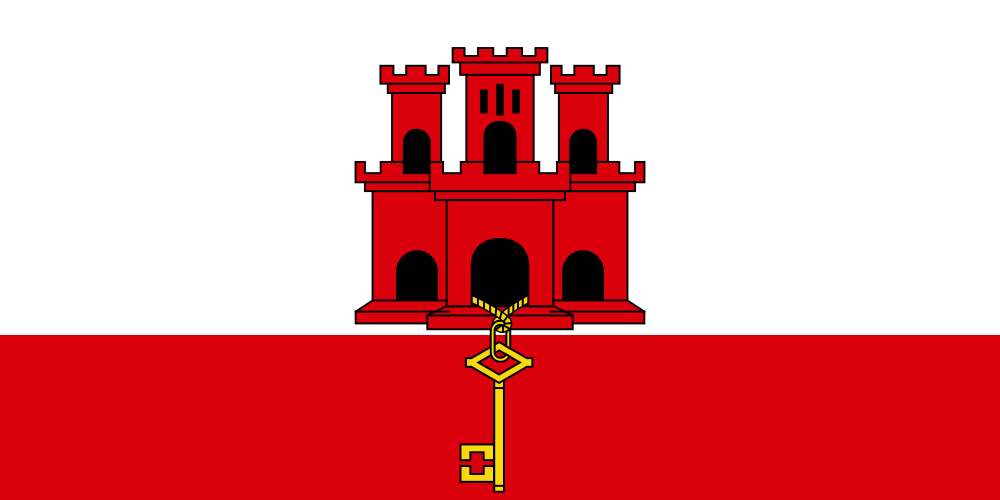
Gibraltar
Location Info
- Continent: Europe
- Country: Gibraltar
- Coordinates: 36.1408 , -5.3536
Trust Info
Verified Geographic Research
🌍 Continents

Overview
Gibraltar is a British Overseas Territory located at the southern tip of the Iberian Peninsula. It is dominated by the Rock of Gibraltar, a 426-meter-high limestone monolith that overlooks the narrow strait connecting the Atlantic Ocean to the Mediterranean Sea. Bordered to the north by Spain, the territory serves as a critical strategic point for maritime and military operations.
Historically, Gibraltar has transitioned through Moorish, Spanish, and British rule, with the latter established by the Treaty of Utrecht in 1713. Today, it is a self-governing entity with a robust economy driven by financial services, online gaming, and tourism. It is also home to Europe’s only wild primate population, the Barbary macaques.
Truth & Facts
| Total Area | 6.7 sq km |
| Highest Point | 426 meters |
| Estimated Population | 34,000 |
| Official Language | English |
| Head of State | King Charles III |
| Chief Minister | Fabian Picardo |
| Treaty of Utrecht | 1713 |
| Main Sectors | Financial Services, E-Gaming, Shipping |
| Water Supply | Desalination |
| Driving Side | Right |
| University | University of Gibraltar |
| Main Hospital | St. Bernard's Hospital |
| Dominant Religion | Roman Catholicism |
| Famous Residents | Barbary Macaques |
| Unique Plant | Gibraltar Candytuft |
| Robotic Surgery | First remote op in 2026 |
| Main Force | Royal Gibraltar Police |
| Constitution | 2006 Constitution |
| EU Status | Post-Brexit Draft Treaty |
| Power Station | North Mole Power Station |
| Urban Area | 87.1% |
| National Broadcaster | GBC |
| Currency Name | Gibraltar Pound (GIP) |
📑 Table of Contents
Overview
Gibraltar is a British Overseas Territory located at the southern tip of the Iberian Peninsula. It is defined by the massive limestone monolith known as the Rock of Gibraltar. The territory shares a land border with Spain and overlooks the strategic Strait of Gibraltar.
- Strategic maritime hub
- Iconic limestone ridge
- Self-governing British territory
- Unique multi-ethnic population
- Home to Barbary macaques
History
Gibraltar's history spans thousands of years, serving as a site for Neanderthal occupation before becoming a Phoenician and later Roman landmark. It was captured by Moors in 711 and became a Spanish possession in 1462. In 1704, it was seized by Anglo-Dutch forces during the War of the Spanish Succession.
| Event | Year |
|---|---|
| Moorish Conquest | 711 |
| Treaty of Utrecht | 1713 |
| Great Siege | 1779–1783 |
Geography
The geography is dominated by the Rock of Gibraltar, a Jurassic limestone formation. The peninsula is 5 kilometers long and 1.2 kilometers wide. It consists of a high ridge with sheer cliffs on the northern and eastern sides and a gradual slope on the west.
- Area: 6.7 sq km
- Highest point: 426 m
- Border length: 1.2 km
- Climate type: Mediterranean
- Soil: Limestone-based
Climate & Weather
Gibraltar features a Mediterranean climate with hot, dry summers and mild, rainy winters. The territory experiences significant sunshine, averaging around 300 days per year. Coastal breezes often moderate summer temperatures.
| Month | Avg High (°C) |
|---|---|
| August | 28 |
| January | 16 |
Population & Demographics
The population of approximately 34,000 is primarily of Gibraltarian descent. This group is a blend of Genoese, Maltese, Spanish, and British heritage. Most residents live in high-density urban areas on the western side of the Rock.
- Density: 4,000+ per sq km
- Official Language: English
- Main Religion: Roman Catholic
- Urbanization: 87.1%
- Median Age: 38.8 years
Culture & Lifestyle
Gibraltar's culture is a unique fusion of British and Mediterranean traditions. This is most evident in the local language, Llanito, which combines English and Spanish with other Mediterranean influences. Social life often revolves around Casemates Square and the Main Street district.
- Llanito dialect usage
- Traditional British customs
- Mediterranean social pace
- Sephardic Jewish influence
- Multicultural heritage
Festivals & Events
The most significant event is National Day, celebrated annually on September 10th. Other notable events include the Gibraltar Literary Festival and various religious festivals representing the diverse faith communities. These events typically involve public gatherings and musical performances.
- National Day (Sept 10)
- Three Kings Cavalcade
- Gibraltar Music Festival
- Spring Festival
- Christmas events
Food & Cuisine
Local cuisine reflects the territory's diverse history, featuring dishes like Calentita (a chickpea-flour pancake) and Rosto (a pasta dish with tomato sauce and beef). Influences from Italy, Malta, and Spain are common in daily meals.
- Calentita: Chickpea specialty
- Rosto: Local pasta dish
- Pan Dulce: Sweet bread
- Torta de Acelgas: Spinach pie
- British pub fare
Economy & Industries
The economy has transitioned from a military-based model to a diversified service-oriented one. Key sectors include financial services, online gaming, shipping, and tourism. Gibraltar has no agriculture and limited manufacturing due to land constraints.
| Sector | Contribution |
|---|---|
| Gaming | High |
| Finance | Significant |
| Shipping | Major hub |
Cost of Living
Living costs in Gibraltar are relatively high, particularly regarding housing. However, the lack of Value Added Tax (VAT) makes many consumer goods cheaper than in the UK or Spain. Fuel and tobacco products are notably lower in price due to different duty rates.
- High housing demand
- No VAT on consumer goods
- Lower fuel duty
- Competitive utility rates
- Imported food prices
Employment & Business
Gibraltar maintains an exceptionally low unemployment rate. The labor market is supported by thousands of frontier workers who commute daily from Spain. Business regulations are designed to be competitive and favorable for international companies.
- Low unemployment rate
- Large commuter workforce
- Favorable corporate tax
- E-Gaming specialization
- Financial regulations
Real Estate & Housing
Due to the small land area, high-rise apartment living is the norm. Land reclamation projects have historically been used to create space for new housing developments like Europort and Ocean Village. Property ownership is common but prices remain steep.
- Predominantly apartments
- Extensive land reclamation
- High property values
- Social housing programs
- Luxury marina developments
Transportation & Connectivity
Gibraltar has a unique airport where the main road to Spain crosses the runway. Traffic drives on the right, and the territory is well-served by a local bus network. Port facilities provide links for cruise ships and commercial freight.
- Unique runway crossing
- Right-hand drive
- Modern bus fleet
- Frequent ferry services
- High car ownership
Infrastructure & Utilities
Utilities are self-contained, with electricity produced by local power plants. Fresh water is generated through desalination, as there are no permanent rivers or springs. Waste management is handled through modern facilities including specialized recycling units.
- LNG Power Generation
- Reverse Osmosis Desalination
- Extensive tunnel network
- Fibre-optic connectivity
- Modern sewage systems
Education
Education is free and compulsory, based on the English schooling system. The territory has several primary and secondary schools and its own university. Students often go to the UK for higher education under government scholarship schemes.
- UK-based curriculum
- University of Gibraltar
- Scholarship programs
- Bilingual environment
- Vocational college
Healthcare
The Gibraltar Health Authority (GHA) provides comprehensive medical services. The main facility is St. Bernard's Hospital, which handles acute care and surgeries. Specialized treatments are often outsourced to providers in the UK or Spain.
- St. Bernard's Hospital
- Public health system
- Modern dialysis unit
- Mental health facility
- Visiting UK specialists
Tourist Attractions
Major attractions center around the Upper Rock Nature Reserve. These include the Barbary macaques, St. Michael's Cave, and various military heritage sites. The Skywalk offers panoramic views of the strait and the African coast.
- Barbary Macaques
- St. Michael's Cave
- Great Siege Tunnels
- The Skywalk
- Europa Point
Things to Do
Visitors often engage in hiking the Mediterranean Steps or taking the cable car to the summit. Marine activities like dolphin watching in the bay are also popular. Shopping on Main Street is a frequent activity for day-trippers.
- Dolphin watching tours
- Hiking Mediterranean Steps
- Cable car rides
- VAT-free shopping
- Cave exploration
Best Places to Visit
Key locations include the southernmost tip at Europa Point and the historic Moorish Castle. The botanical gardens provide a quiet retreat, while the marinas offer dining and entertainment options. Catalan Bay is a unique fishing village with a distinct local vibe.
- Europa Point Lighthouse
- Moorish Castle
- Alameda Botanic Gardens
- Catalan Bay
- Ocean Village Marina
Travel Guide
Access is typically via the land border with Spain or by air through Gibraltar Airport. Most attractions are within walking distance, but taxis and buses are readily available. Entry requirements usually follow UK overseas territory guidelines.
- Valid passport required
- Walkable city center
- Local currency GIP
- Standard UK power plugs
- Currency parity with GBP
Nearby Places
Gibraltar is close to several Spanish towns in the Campo de Gibraltar region, including La Línea and Algeciras. The coast of Morocco is visible across the strait and can be reached by ferry from nearby Spanish ports. Tarifa, known for windsurfing, is a short drive away.
- La Línea (Spain)
- Algeciras (Spain)
- Tarifa (Spain)
- Ceuta (Spain/Africa)
- Tangier (Morocco)
Environment & Nature
The Upper Rock Nature Reserve covers 40% of the territory's land area. It is a vital staging point for migratory birds traveling between Europe and Africa. The marine environment in the bay supports diverse dolphin populations.
- Nature Reserve status
- Bird migration route
- Protected marine area
- Endemic plant species
- Dolphin habitat
Government & Administration
The government operates under a parliamentary representative democratic system. While the UK is responsible for defense and foreign relations, Gibraltar has full internal self-government. The Gibraltar Parliament consists of 17 elected members.
- Constitutional Head: King
- Chief Minister head of gov
- 18-member Parliament
- Self-funding territory
- Separate legal system
Safety & Public Services
Gibraltar is one of the safest jurisdictions in Europe with a visible police presence. Public services include fire, ambulance, and coastguard departments. Emergency response times are typically fast due to the compact nature of the territory.
- Royal Gibraltar Police
- Gibraltar Fire Service
- Low crime rate
- Emergency 199/112
- Border security units
Best Time to Visit
Spring (March to May) and Autumn (September to November) offer the most comfortable temperatures for exploring the Rock. Summer is popular for beaches but can be humid. Winter is mild but sees the majority of the annual rainfall.
| Season | Characteristic |
|---|---|
| Spring | Ideal for hiking |
| Summer | Hot and sunny |
Local Business Directory
Gibraltar's business landscape is dominated by international firms in the finance and gaming sectors. The Main Street area hosts numerous retail outlets and local service providers. Professional services such as law and accounting are highly developed.
- E-gaming companies
- Trust and fiduciaries
- International banks
- Retail boutiques
- Maritime agencies
General Information FAQs
Where is Gibraltar located?
Gibraltar is located at the southern tip of the Iberian Peninsula in southwestern Europe. it shares a northern land border with the Spanish province of Cádiz and overlooks the Strait of Gibraltar, which connects the Mediterranean Sea to the Atlantic Ocean.
What is Gibraltar known for?
Gibraltar is most famous for its massive limestone ridge known as the Rock of Gibraltar. It is also well-known for being the home of the only wild monkeys in Europe, the Barbary macaques, and for its strategic military history guarding the entrance to the Mediterranean.
Why is Gibraltar famous?
It is famous for its status as a British Overseas Territory on the edge of Spain and its critical role in naval history. The Rock itself is a global landmark. It is also recognized as a major hub for online gambling and financial services.
What country or region is Gibraltar part of?
Gibraltar is a British Overseas Territory. While it is located on the Iberian Peninsula geographically, it is under the sovereignty of the United Kingdom and is self-governing in all internal matters.
What is the population of Gibraltar?
As of 2026, the population is approximately 34,000 to 40,000 people. It is one of the most densely populated territories in the world due to its small land area of 6.7 square kilometers.
What languages are spoken in Gibraltar?
English is the official language used in government and education. However, most residents are bilingual in English and Spanish. Many also speak Llanito, a unique local dialect that blends English, Spanish, and various Mediterranean influences.
What time zone is Gibraltar in?
Gibraltar operates on Central European Time (CET), which is UTC+1. It observes Central European Summer Time (CEST) during the summer months, putting it one hour ahead of London during those periods.
What are the key facts about Gibraltar?
Key facts include its area of 6.7 sq km, its 1.2 km border with Spain, and its status as a self-funding territory. It uses the Gibraltar Pound and drives on the right side of the road.
What makes Gibraltar unique?
Its uniqueness stems from its blend of British culture in a Mediterranean setting, its wild monkey population, and its airport runway which is intersected by a public road.
How large is Gibraltar in area?
Gibraltar has a total land area of approximately 6.7 to 6.8 square kilometers (about 2.6 square miles).
History FAQs
What is the history of Gibraltar?
Gibraltar has been inhabited since prehistoric times. It was a sacred site for Phoenicians and Greeks, a Moorish stronghold for centuries, and a Spanish territory until 1704. It has been under British control since the early 18th century.
When was Gibraltar established?
The modern town was established during the Moorish period around 711 AD. British rule was formalized by the Treaty of Utrecht in 1713.
What major historical events happened in Gibraltar?
Major events include the Moorish conquest of 711, the Spanish Reconquista in 1462, the British capture in 1704, and the Great Siege from 1779 to 1783. It also played a vital role as a naval base in World War II.
Who were important historical figures from Gibraltar?
Tariq ibn Ziyad, the Moorish commander for whom the Rock is named (Jabal Tariq), and General George Augustus Eliott, who defended the territory during the Great Siege, are prominent figures.
How has Gibraltar developed over time?
It evolved from a purely military fortress into a major commercial port and later into a high-tech services economy. Significant land reclamation in the 20th and 21st centuries expanded its usable area.
Geography & Environment FAQs
What is the geography of Gibraltar?
The geography is defined by the Rock, a monolithic limestone promontory. The eastern and northern sides are sheer cliffs, while the western side is a gentler slope where the town is located.
What natural features surround Gibraltar?
It is surrounded by the Bay of Gibraltar (Algeciras Bay) to the west, the Mediterranean Sea to the east, and the Strait of Gibraltar to the south.
Are there mountains, rivers, or lakes near Gibraltar?
There are no permanent rivers or lakes on the peninsula. The nearest mountains are the Sierra de Grazalema and the Sierra Nevada in Spain, and the Rif Mountains in Morocco.
What is the elevation of Gibraltar?
The highest point is 426 meters (1,398 feet) above sea level at the summit of the Rock.
What ecosystems exist around Gibraltar?
The territory features a Mediterranean scrub ecosystem (maquis) on the Rock, which supports diverse bird life and the Barbary macaques. The surrounding waters are rich in marine life, including dolphins.
Climate & Weather FAQs
What is the climate like in Gibraltar?
Gibraltar has a Mediterranean climate. This involves warm, dry summers and mild, wet winters. A local wind known as the Levante can bring humid conditions and cloud formations over the Rock.
What is the average temperature in Gibraltar?
The average annual temperature is about 18°C (64°F). Summer highs average 28°C (82°F) in August, while winter lows rarely drop below 10°C (50°F).
What is the weather like throughout the year in Gibraltar?
Summer is consistently sunny and dry. Autumn and spring are transitional and mild. Winter is the rainy season, though it remains relatively warm compared to northern Europe.
Does Gibraltar experience extreme weather?
Extreme weather is rare, though the territory can experience heavy thunderstorms in winter and intense heatwaves in summer. High winds are common due to its position on the strait.
What is the best time of year to visit Gibraltar?
Spring (April–June) and Autumn (September–October) are widely considered the best times to visit for comfortable outdoor exploration.
Population & Society FAQs
What is the population density of Gibraltar?
The population density is over 4,000 people per square kilometer, making it one of the most crowded territories globally.
What ethnic groups live in Gibraltar?
The primary group is Gibraltarian, which is a mix of Genoese, Maltese, Portuguese, Spanish, and British ancestry. There are also significant communities of British, Spanish, Moroccan, and Indian residents.
What religions are practiced in Gibraltar?
The majority are Roman Catholic. Other groups include Anglicans, Muslims, Jews, Hindus, and those with no religious affiliation.
What is daily life like in Gibraltar?
Daily life is characterized by a high-density urban environment where most tasks are done within walking distance. It combines British administrative structures with a Mediterranean social lifestyle.
How diverse is the population of Gibraltar?
The population is highly diverse and multicultural, with a long history of peaceful coexistence between different faith and ethnic groups.
Culture & Traditions FAQs
What cultural traditions are important in Gibraltar?
Traditional ceremonies like the Changing of the Guard at the Convent and the annual National Day celebrations are central to local identity.
What festivals are celebrated in Gibraltar?
Key festivals include National Day, the Three Kings Cavalcade in January, and various religious feasts such as Easter and Diwali.
What cultural landmarks exist in Gibraltar?
Major landmarks include the Moorish Castle, St. Michael's Cave, the Convent (Governor's residence), and Main Street with its traditional colonial architecture.
What traditional clothing or customs are common in Gibraltar?
While modern western clothing is standard, historical military uniforms are used in ceremonies. Customs include the afternoon 'siesta' (though declining in business) and British-style social clubs.
What arts and crafts are associated with Gibraltar?
Local arts include traditional glass blowing and a vibrant scene of landscape painting focused on the Rock and the surrounding seascapes.
Food & Cuisine FAQs
What foods is Gibraltar known for?
It is known for Calentita, a pancake made from chickpea flour, and Rosto, a pasta dish. Baked goods like Pan Dulce are also popular during festivals.
What traditional dishes originate from Gibraltar?
Calentita is considered the national dish. Other local favorites include Torta de Acelgas (chard pie) and various Mediterranean-style seafood dishes.
What are the best restaurants in Gibraltar?
Concentrations of high-quality dining can be found in Ocean Village, Queensway Quay, and along Main Street, offering everything from British pubs to Italian and Indian cuisine.
What local ingredients are commonly used in Gibraltar cuisine?
Chickpea flour, pasta, tomatoes, local seafood, and various Mediterranean herbs are staple ingredients.
What food markets or street foods are popular in Gibraltar?
The Public Market near Casemates Square is the primary food hub. Street food is most visible during the annual Calentita Festival.
Economy & Business FAQs
What are the main industries in Gibraltar?
The four pillars of the economy are financial services, online gaming, shipping (including bunkering), and tourism.
What economic activities drive the economy of Gibraltar?
Corporate service provision, international banking, and a highly developed maritime port are the primary drivers.
What businesses operate in Gibraltar?
Many global online betting companies and international law firms have headquarters or major operations in the territory.
Is Gibraltar an important economic center?
Yes, it is a significant regional center for specialized services, particularly within the Mediterranean and within the context of UK overseas finance.
What are the major exports or products from Gibraltar?
Gibraltar's primary exports are services. Physical exports are limited to re-exports, such as refined oil and petroleum products related to its shipping services.
Employment & Jobs FAQs
What job opportunities are available in Gibraltar?
Opportunities are strongest in IT, data management, compliance, law, and accounting, largely supporting the gaming and finance sectors.
What are the major employers in Gibraltar?
The Government of Gibraltar is the largest employer. Major private employers include large e-gaming firms like Entain and 888 Holdings.
What skills are in demand in Gibraltar?
Multilingualism (English/Spanish), technical IT skills, and professional qualifications in finance and law are in high demand.
Is Gibraltar a good place to work?
It offers high average salaries and a unique working environment. However, the high cost of local housing leads many to commute from Spain.
What is the unemployment rate in Gibraltar?
The unemployment rate is historically very low, often under 1%, essentially representing full employment.
Cost of Living FAQs
Is Gibraltar expensive to live in?
Yes, particularly regarding real estate. It is comparable to major UK cities or high-end Mediterranean resorts.
What is the average cost of living in Gibraltar?
For a single person, monthly costs (excluding rent) average around £700-£900. Including rent, this increases significantly.
How much does housing cost in Gibraltar?
Rent for a one-bedroom apartment often starts at £1,200 per month, while purchasing prices are among the highest in the region.
What are average food and utility costs in Gibraltar?
Utility costs are moderate, while food prices are slightly higher than in Spain due to the need for most items to be imported from the UK or elsewhere.
Is Gibraltar affordable compared to nearby cities?
It is significantly more expensive than the neighboring Spanish city of La Línea, which is why many people work in Gibraltar but live in Spain.
Housing & Real Estate FAQs
What types of housing are available in Gibraltar?
Most housing consists of high-rise apartment blocks. There are very few detached houses, mostly located on the South Side or Upper Rock.
What is the average home price in Gibraltar?
As of 2026, entry-level apartments start at around £300,000, while luxury marina properties can exceed several million pounds.
Is it better to rent or buy property in Gibraltar?
Buying is considered a strong long-term investment due to limited land, but high prices make renting the only feasible option for many newcomers.
Which neighborhoods are popular in Gibraltar?
Ocean Village and Queensway Quay are popular for modern luxury living, while the Town Area is preferred for its proximity to shops and history.
How has the property market changed in Gibraltar?
The market has seen consistent growth, driven by land reclamation projects and the expansion of the high-earning gaming and finance sectors.
Transportation FAQs
How do you get to Gibraltar?
You can fly directly into Gibraltar Airport or walk across the land border from La Línea, Spain. Ferries also connect Gibraltar to nearby Mediterranean ports.
What is the nearest airport to Gibraltar?
Gibraltar International Airport (GIB) is located within the territory itself. The nearest major alternative is Málaga Airport (AGP) in Spain, about a 90-minute drive away.
Does Gibraltar have railway connections?
Gibraltar has no internal railway system. The nearest train station is in San Roque or Algeciras, Spain, which connects to the Spanish high-speed rail network.
How reliable is public transportation in Gibraltar?
The bus network is very reliable and covers most of the territory. It is free for local residents with a permit and affordable for visitors.
What major highways or roads connect to [Location]?
The CA-34 highway in Spain leads directly to the border. Internally, Winston Churchill Avenue is the main artery connecting the border to the town center.
Education FAQs
What schools are located in Gibraltar?
There are approximately 15 state schools, including primary and secondary institutions like Bayside and Westside Schools.
Are there universities in Gibraltar?
Yes, the University of Gibraltar was established in 2015 and offers undergraduate and postgraduate courses in business, health, and science.
What is the literacy rate in Gibraltar?
The literacy rate is nearly 100%, reflecting a highly developed education system and compulsory schooling.
What educational opportunities exist in Gibraltar?
Opportunities include standard academic paths, vocational training at Gibraltar College, and specialized maritime and business degrees at the university.
Is Gibraltar a good place for students?
It is a safe, bilingual environment with modern facilities, though the range of university courses is more limited than in the UK.
Healthcare FAQs
What hospitals are available in Gibraltar?
St. Bernard's Hospital is the main public civilian hospital. There is also the Ocean Views Mental Health Facility.
Are there emergency medical services in Gibraltar?
Yes, there is a 24-hour A&E department at St. Bernard's and a dedicated ambulance service.
What healthcare facilities exist in Gibraltar?
Facilities include the Primary Care Centre, Children's Health Centre, and several specialized private clinics.
Is healthcare affordable in Gibraltar?
Residents covered by the Group Practice Medical Scheme receive free care. Visitors from the UK are entitled to free emergency treatment.
Are specialized medical services available in Gibraltar?
Basic specialized services are available, but highly complex cases are often transferred to tertiary care hospitals in the UK or Spain.
Tourism & Travel FAQs
What are the top tourist attractions in Gibraltar?
The top spots are the Rock of Gibraltar, St. Michael's Cave, the Barbary Macaques, the Great Siege Tunnels, and Europa Point.
What are the best things to do in Gibraltar?
Top activities include taking the cable car, dolphin watching, walking the Mediterranean Steps, and exploring the World War II tunnels.
Is Gibraltar worth visiting?
Yes, it offers a unique blend of natural beauty, deep military history, and a distinct cultural identity within a very compact area.
What landmarks should visitors see in Gibraltar?
The Moorish Castle, the Trinity Lighthouse at Europa Point, and the Ibrahim-al-Ibrahim Mosque are essential sights.
How many days should tourists spend in Gibraltar?
Most visitors find that 2 to 3 days is sufficient to see all the major sights, though many visit as a single-day trip from Spain.
Nearby Places FAQs
What places are near Gibraltar worth visiting?
Nearby Spanish destinations include the white village of Castellar de la Frontera, the port of Algeciras, and the beaches of Tarifa.
What cities or towns are close to Gibraltar?
La Línea de la Concepción is directly across the border. Estepona and Marbella are within a 45-60 minute drive.
What natural attractions are near Gibraltar?
The Los Alcornocales Natural Park in Spain and the Strait of Gibraltar itself are significant natural features.
What day trips can be taken from [Location]?
Day trips to Tangier (via ferry from Tarifa) or to the historic Spanish city of Ronda are very popular.
What famous destinations are within reach of Gibraltar?
The Costa del Sol, the Rock of Ifach in Calpe, and the North African coast are all reachable.
Safety FAQs
Is Gibraltar safe to live in?
Yes, it is consistently ranked as one of the safest places to live in Europe with a very low crime rate.
Is Gibraltar safe for tourists?
It is extremely safe for tourists. The most common minor issue is interaction with the wild macaques, which can be aggressive if food is present.
What is the crime rate in Gibraltar?
The crime rate is very low, primarily consisting of minor traffic offenses or occasional petty theft.
What emergency services operate in Gibraltar?
Gibraltar has its own police force, fire and rescue service, ambulance service, and coastguard.
What safety tips should visitors follow in Gibraltar?
Do not feed or touch the monkeys, be aware of steep drops when hiking the Rock, and ensure you have valid travel documents for the border crossing.
Lifestyle & Living FAQs
Is Gibraltar a good place to live?
It offers a high quality of life, excellent safety, and a pleasant climate, though the limited space and high housing costs can be challenging.
What recreational activities are available in Gibraltar?
Activities include sailing, diving, hiking, padel tennis, and various social clubs and societies.
Is Gibraltar family-friendly?
Yes, it is very family-oriented with good schools, numerous parks, and a safe environment for children.
What outdoor activities are popular in Gibraltar?
Hiking the Upper Rock, dolphin watching, and beach activities at Sandy Bay or Catalan Bay are popular.
What makes life enjoyable in Gibraltar?
The combination of a professional career environment with a relaxed Mediterranean lifestyle and easy access to travel in Europe and Africa.
Practical Information FAQs
What travel tips should visitors know about Gibraltar?
Carry a passport (even if coming from Spain), be prepared for the border queue, and use the local buses to save on parking fees.
What local customs should visitors respect in Gibraltar?
Respect the local identity as distinct from both Spain and the UK, and follow all regulations regarding the protected wildlife in the Nature Reserve.
How accessible is Gibraltar for international visitors?
It is very accessible via direct flights from the UK or by crossing from Spain. The territory is compact enough to explore on foot.
What services are available for tourists in Gibraltar?
Tourist information centers, guided rock tours, high-speed internet, and various accommodation options ranging from hotels to yacht-hotels.
What important information should travelers know before visiting?
Gibraltar is not part of the Schengen Area (currently), uses the Gibraltar Pound, and the border can sometimes experience delays.