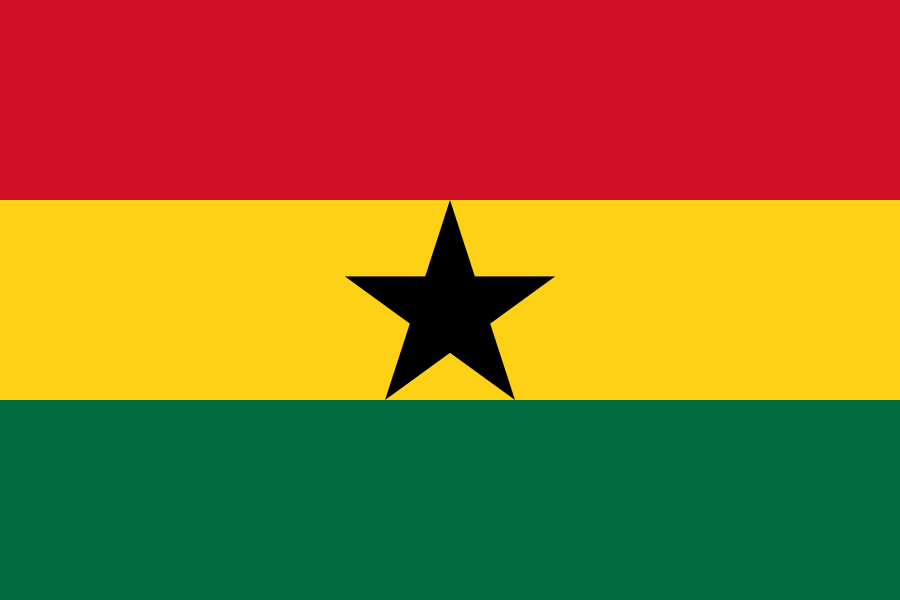
Ghana
Location Info
- Continent: Africa
- Country: Ghana
- Coordinates: 7.9465 , -1.0232
Trust Info
Verified Geographic and Statistical Data 2026
🌍 Continents

Overview
Ghana, officially the Republic of Ghana, is a sovereign country located along the Gulf of Guinea and the Atlantic Ocean in the West African subregion. It shares land borders with Côte d'Ivoire to the west, Burkina Faso to the north, and Togo to the east. Covering an area of approximately 238,533 square kilometers, Ghana features a diverse terrain ranging from coastal savannas to tropical rainforests.
Historically known as the Gold Coast, Ghana became the first nation in sub-Saharan Africa to achieve independence from colonial rule in 1957. Today, it is recognized as one of Africa's most stable democracies and possesses a burgeoning economy driven by significant resources in gold, cocoa, and oil. The capital and largest city is Accra, which serves as a major hub for international trade and administration in West Africa.
Truth & Facts
| Total Land Area | 227,540 sq km |
| Highest Point | Mount Afadja (885m) |
| Estimated Population 2026 | 35,697,557 |
| Median Age | 21.6 years |
| Capital City | Accra |
| Number of Regions | 16 |
| Independence Date | March 6, 1957 |
| Republic Status | July 1, 1960 |
| Currency | Ghanaian Cedi (GHS) |
| Main Exports | Gold, Cocoa, Crude Oil |
| Road Budget 2026 | $2.8 Billion |
| Literacy Rate | 79.8% |
| NHIS Coverage | 20 million people |
| Official Language | English |
| UNESCO Sites | 2 |
| Forest Area | 35.2% |
| Major Ports | Tema and Takoradi |
| Internet Usage | 70% |
| Intentional Homicides | 2 per 100,000 |
| Governance Score | 65.7 |
| AfCFTA HQ | Accra |
| Electricity Access | 89.5% |
| Agricultural Land | 69% |
| GDP Growth 2026 | 5.6% |
| Climate Type | Tropical Savanna |
📑 Table of Contents
Overview of Ghana
Ghana is a West African nation located on the Gulf of Guinea. It is celebrated as the first sub-Saharan African country to gain independence from colonial rule. The country is known for its diverse geography, vibrant culture, and stable political environment.
The capital, Accra, is a modern urban center that serves as a gateway to the region. Ghana's economy is one of the strongest in West Africa, fueled by a wealth of natural resources and a growing services sector.
- Official Name: Republic of Ghana
- Capital: Accra
- Currency: Ghanaian Cedi (GHS)
- Official Language: English
- Total Area: 238,533 sq km
History of Ghana
The history of Ghana includes ancient empires, the colonial 'Gold Coast' era, and a pivotal role in the Pan-African movement. The Ashanti Empire was a dominant power in the region before British colonization. Ghana gained independence on March 6, 1957, under the leadership of Kwame Nkrumah.
The nation's journey since independence has seen periods of military rule and a return to stable multi-party democracy in 1992. Today, it stands as a model for democratic transitions in Africa.
| Period | Key Event |
|---|---|
| 17th - 19th Century | Ashanti Empire Dominance |
| 1874 | British Gold Coast Colony established |
| 1957 | Independence from UK |
| 1960 | Ghana becomes a Republic |
| 1992 | Adoption of current Constitution |
Geography
Ghana is geographically diverse, featuring low-lying plains, forest-covered hills, and many rivers. The country is home to Lake Volta, the world's largest artificial lake by surface area. The landscape transitions from coastal wetlands to northern savannas.
- Lake Volta: Largest man-made lake by area
- Mount Afadja: Highest peak
- Gulf of Guinea: Southern maritime border
- Rainforests: Located in the southwest
- Savanna: Dominant in the north
Climate and Weather
Ghana has a tropical climate with temperatures that remain relatively high year-round. There are two main seasons: the wet season and the dry season. The northern part of the country experiences more extreme variations in temperature compared to the south.
The Harmattan, a dry and dusty wind from the Sahara, affects the country between December and March, leading to lower humidity and cooler nights.
Population and Demographics
As of 2026, Ghana's population is estimated at over 35 million. The population is multi-ethnic, with the Akan being the largest ethnic group. The nation has a very young demographic profile, with a significant percentage of the population under the age of 25.
- Akan: ~45% of population
- Mole-Dagbani: ~18%
- Ewe: ~13%
- Ga-Dangme: ~7%
- Median Age: 21.6 years
Culture and Lifestyle
Ghanaian culture is characterized by hospitality, traditional festivals, and colorful textiles like Kente cloth. Respect for elders and community-based living are core values. Highlife and Hiplife music are popular genres that blend traditional and modern sounds.
Visual arts, including wood carving and pottery, are deeply rooted in symbolic meanings, often represented through Adinkra symbols.
Festivals and Events
Numerous traditional festivals are celebrated throughout the year across different regions. These events often feature drumming, dancing, and displays of local chieftaincy. They serve as a means of thanksgiving and remembrance of ancestors.
- Homowo: Celebrated by the Ga people in Accra
- Odwira: Celebrated in the Eastern Region
- Hogbetsotso: Celebrated by the Anlo Ewe
- Akwasidae: Held every six weeks in the Ashanti Region
- Panafest: A biennial pan-African arts festival
Food and Cuisine
Ghanaian cuisine is known for its flavorful stews and starch-based staples. Common ingredients include cassava, plantain, yam, corn, and beans. Pepper and ginger are frequently used to provide heat and depth to dishes.
| Dish | Main Ingredients |
|---|---|
| Jollof Rice | Rice, Tomatoes, Spices |
| Fufu | Cassava and Plantain |
| Banku | Fermented Corn and Cassava |
| Kelewele | Fried Spicy Plantains |
| Waakye | Rice and Beans |
Economy and Industries
Ghana's economy is diverse and resource-rich. It is one of the world's leading producers of cocoa and the top gold producer in Africa. The oil and gas sector has also become a major contributor to GDP since 2010.
The government is currently focusing on industrialization through the 'One District, One Factory' initiative to boost local manufacturing and value addition.
Cost of Living
The cost of living in Ghana varies significantly between urban centers like Accra and rural areas. Housing and imported goods are the largest expenses for residents in major cities. Local food and transportation remain relatively affordable.
- Average rent in Accra: High compared to regional average
- Local produce: Very affordable at markets
- Public transport: Cost-effective via 'tro-tros'
- Utilities: Increasing costs for electricity and water
Employment and Business
Agriculture remains a primary employer, though the services and tech sectors are expanding rapidly in cities. Ghana is a regional hub for business, hosting the AfCFTA headquarters. Entrepreneurship is highly encouraged through various government support programs.
Job opportunities are increasing in manufacturing, logistics, and digital services as the country pursues economic diversification.
Real Estate and Housing
The real estate market in Ghana is growing, with a high demand for residential and commercial properties in Accra and Kumasi. There is a shift toward gated communities and high-rise apartments in luxury segments. However, a significant housing deficit persists for low-income earners.
Land tenure systems can be complex, often involving both statutory and customary law.
Transportation and Connectivity
Road transport is the primary mode of travel, carrying over 90% of passenger and freight traffic. Major infrastructure projects like the 'Big Push' are underway to improve regional connectivity. Kotoka International Airport serves as a major aviation hub for West Africa.
- Air: Kotoka (Accra), Kumasi, and Tamale airports
- Sea: Tema and Takoradi ports
- Rail: Undergoing modernization and expansion
- Public: 'Tro-tros' and bus rapid transit systems
Infrastructure and Utilities
Ghana has one of the highest electricity access rates in sub-Saharan Africa. The country relies on a mix of hydro, thermal, and increasingly, solar energy. Infrastructure for water and sanitation is being expanded to meet the needs of the growing urban population.
Telecommunications infrastructure is robust, with high mobile data penetration and expanding fiber optic networks.
Education
Ghana operates a 6-3-3-4 education system. The government introduced 'Free Senior High School' in 2017 to increase enrollment rates. The country hosts several prestigious universities that attract students from across the continent.
- University of Ghana (Legon)
- KNUST (Kumasi)
- University of Cape Coast
- Literacy Rate: ~80%
- Free SHS Policy: Universal access to secondary education
Healthcare
The health system is a mix of public and private providers, coordinated by the Ghana Health Service. The National Health Insurance Scheme (NHIS) provides coverage to millions of citizens. Efforts are underway to build more regional and district hospitals under 'Agenda 111'.
Infectious disease control and maternal health remain top priorities for the Ministry of Health.
Tourist Attractions
Ghana offers a blend of historical sites, wildlife, and natural beauty. The coastal castles of Cape Coast and Elmina are profound reminders of the transatlantic slave trade. National parks offer opportunities for eco-tourism and wildlife viewing.
- Cape Coast Castle: UNESCO World Heritage site
- Mole National Park: Home to elephants and buffalo
- Kakum National Park: Famous for its canopy walkway
- Lake Volta: Water-based recreation
- Boti Falls: Twin waterfalls in the Eastern Region
Things to Do
Visitors can engage in a variety of activities from surfing on the coast to hiking in the hills. Exploring local markets like Makola in Accra provides an immersive cultural experience. Visiting the Ashanti palaces offers insight into traditional governance.
Birdwatching and canopy walks are popular in the forested regions of the south.
Best Places to Visit
Beyond the capital, several regions offer unique experiences. Kumasi is known as the Garden City and is the heart of Ashanti culture. The Volta Region features lush greenery and waterfalls, while the Northern Region offers vast savanna landscapes.
| Location | Primary Attraction |
|---|---|
| Accra | Urban Culture and Markets |
| Cape Coast | Slave Forts and Beaches |
| Kumasi | Ashanti Heritage and Kejetia Market |
| Busua | Surfing and Beach Resorts |
| Wli | West Africa's tallest waterfalls |
Travel Guide
Most international visitors arrive via Kotoka International Airport. Visas are required for many nationalities, though ECOWAS citizens have free movement. Yellow fever vaccination is a mandatory requirement for entry into the country.
Ghana is generally considered one of the safest countries for travelers in Africa. English is widely spoken, making navigation relatively easy for international visitors.
Nearby Places
Ghana's location makes it a starting point for exploring West Africa. To the west, Côte d'Ivoire offers vibrant cities and lagoons. To the east, Togo and Benin are known for their markets and cultural history.
Burkina Faso to the north provides a gateway to the Sahelian region, though travel there should be monitored for current safety conditions.
Environment and Nature
Ghana contains five distinct terrestrial ecoregions. The government is working to combat deforestation and illegal mining (Galamsey), which threaten water bodies and forest reserves. Wildlife conservation is focused in protected areas like Mole and Digya.
Coastal erosion is a significant environmental challenge being addressed through sea defense projects.
Government and Administration
The government is divided into executive, legislative, and judicial branches. The President is both head of state and head of government. Ghana's decentralized system includes Regional Coordinating Councils and District Assemblies.
- Executive: President and Cabinet
- Legislative: Parliament of Ghana (Unicameral)
- Judicial: Supreme Court and Lower Courts
- Electoral Cycle: Every 4 years
Safety and Public Services
The Ghana Police Service is responsible for internal security, while the Ghana Armed Forces handle external defense. Emergency services include the Ghana National Fire Service and ambulance services (NAS). Public safety is generally high, especially in residential and tourist areas.
Citizens can access emergency services via a unified national emergency number.
Best Time to Visit
The best time to visit is during the dry season, from November to March, when travel is easier and many festivals occur. This period also coincides with the Harmattan, which brings cooler temperatures but lower visibility.
Wildlife viewing in Mole National Park is best at the end of the dry season when animals congregate at watering holes.
Local Business Directory
Ghana has a thriving private sector with businesses ranging from multinational corporations to local artisans. The Ghana Investment Promotion Centre (GIPC) provides resources for those looking to do business in the country. Key sectors include retail, hospitality, tech, and agriculture.
Major business hubs are located in the Airport City area of Accra and industrial enclaves in Tema.
General Information FAQs
Where is Ghana located?
Ghana is located on the West African coast, along the Gulf of Guinea. It is bordered by Côte d'Ivoire to the west, Burkina Faso to the north, and Togo to the east.
What is Ghana known for?
Ghana is known for being a leading producer of cocoa and gold, its stable democracy, rich cultural heritage including Kente cloth, and its historical role as the first sub-Saharan colony to gain independence.
Why is Ghana famous?
Ghana is famous for its Pan-African leadership under Kwame Nkrumah, its UNESCO-listed slave forts, and the hospitality of its people. It is often cited as a 'gateway to Africa' for visitors and investors.
What country or region is Ghana part of?
Ghana is a sovereign country in the West African region and is a member of the Economic Community of West African States (ECOWAS).
What is the population of Ghana?
As of 2026, the estimated population of Ghana is approximately 35.7 million people.
What languages are spoken in Ghana?
English is the official language. Major indigenous languages include Akan (Twi), Ewe, Ga, Dagbani, and Hausa.
What time zone is Ghana in?
Ghana is in the Greenwich Mean Time (GMT) zone and does not observe daylight saving time.
What are the key facts about Ghana?
Key facts include its capital Accra, currency Cedi (GHS), 16 administrative regions, and its status as Africa's largest gold producer.
What makes Ghana unique?
Ghana is unique for its blend of ancient traditional chieftaincy systems with a modern democratic state, as well as being the geographic country closest to the center of the Earth (coordinates 0,0 intersection is just off its coast).
How large is Ghana in area?
Ghana covers a total land area of approximately 238,533 square kilometers (92,098 square miles).
History FAQs
What is the history of Ghana?
Ghana's history spans ancient iron-age civilizations, the rise of the Ashanti Empire, centuries of European trade (gold and slaves), British colonization, and leading Africa's decolonization movement in the mid-20th century.
When was Ghana established?
The modern state of Ghana was established on March 6, 1957, following its independence from British colonial rule.
What major historical events happened in Ghana?
Major events include the formation of the Ashanti Empire, the arrival of the Portuguese in 1471, the Bond of 1844, Independence in 1957, and the return to constitutional democracy in 1992.
Who were important historical figures from Ghana?
Key figures include Kwame Nkrumah (first President), Yaa Asantewaa (Ashanti Queen Mother), Kofi Annan (former UN Secretary-General), and J.B. Danquah.
How has Ghana developed over time?
Ghana has transitioned from a colonial export economy to a diversified middle-income economy, with significant improvements in education, democratic stability, and infrastructure since the late 1990s.
Geography & Environment FAQs
What is the geography of Ghana?
Ghana consists of coastal plains, tropical rainforests in the southwest, and a large savanna plateau in the north, dominated by the Volta River basin.
What natural features surround Ghana?
Ghana is bordered by the Atlantic Ocean to the south, mountains along the Togo border to the east, and arid plains in the north toward the Sahel.
Are there mountains, rivers, or lakes near Ghana?
Yes, major features include the Akwapim-Togo ranges, the Volta River system, and Lake Volta, the world's largest man-made lake.
What is the elevation of Ghana?
Most of the country is below 300 meters, though the eastern border features hills rising to nearly 900 meters.
What ecosystems exist around Ghana?
Ecosystems include mangrove swamps, coastal lagoons, moist semi-deciduous forests, and Guinea savanna woodlands.
Climate & Weather FAQs
What is the climate like in Ghana?
Ghana has a tropical climate with a hot and humid southern region and a hot and dry northern region.
What is the average temperature in Ghana?
Average temperatures range from 21°C to 32°C (70°F to 90°F) throughout the year.
What is the weather like throughout the year in Ghana?
The south has two rainy seasons (April-July and Sept-Nov), while the north has one rainy season (May-Sept). The dry season (Harmattan) occurs from December to March.
Does Ghana experience extreme weather?
Ghana can experience seasonal floods during heavy rains and occasional droughts in the northern regions.
What is the best time of year to visit Ghana?
The best time to visit is during the dry months of November to March when temperatures are slightly cooler and roads are most accessible.
Population & Society FAQs
What is the population density of Ghana?
The population density is approximately 157 people per square kilometer, with higher concentrations in the Greater Accra and Ashanti regions.
What ethnic groups live in Ghana?
Major groups include the Akan, Mole-Dagbani, Ewe, Ga-Adangbe, Guan, Gurma, and Grusi.
What religions are practiced in Ghana?
The majority are Christian (approx. 71%), followed by Muslims (approx. 20%) and practitioners of traditional African religions.
What is daily life like in Ghana?
Daily life is centered around family, community activities, and religious observance. In cities, it is characterized by vibrant commerce and traffic, while rural life is often agrarian.
How diverse is the population of Ghana?
Ghana is highly diverse, with over 70 different ethnic groups and dialects, yet it maintains high social cohesion and national identity.
Culture & Traditions FAQs
What cultural traditions are important in Ghana?
Important traditions include chieftaincy, naming ceremonies, elaborate funerals, and the use of Adinkra symbols to convey philosophical messages.
What festivals are celebrated in Ghana?
Major festivals include Homowo (Ga), Hogbetsotso (Ewe), Odwira (Akwapim), and Fetu Afahye (Fante).
What cultural landmarks exist in Ghana?
Landmarks include the Manhyia Palace Museum, Cape Coast Castle, the Larabanga Mosque, and the Kwame Nkrumah Memorial Park.
What traditional clothing or customs are common in Ghana?
Kente cloth is the most famous traditional attire, worn for formal occasions. Smocks (Fugu) are common in the northern regions.
What arts and crafts are associated with Ghana?
Ghana is famous for gold jewelry, wood carvings (including the stool), pottery, and kente weaving.
Food & Cuisine FAQs
What foods is Ghana known for?
Ghana is known for Jollof rice, Waakye, Banku, Fufu, and Kelewele.
What traditional dishes originate from Ghana?
Dishes like Banku and Tilapia, and red-red (bean stew with fried plantain) are uniquely Ghanaian staples.
What are the best restaurants in Ghana?
Popular dining experiences are found in Accra's Osu and East Legon districts, featuring both local 'chop bars' and high-end international cuisine.
What local ingredients are commonly used in Ghana cuisine?
Cassava, yams, plantains, maize, beans, palm oil, and various spices like scotch bonnet peppers are ubiquitous.
What food markets or street foods are popular in Ghana?
Makola and Kejetia are massive food markets. Popular street foods include roasted plantain, corn (abrow), and meat skewers (chichinga).
Economy & Business FAQs
What are the main industries in Ghana?
The main industries are mining (gold, bauxite, manganese), agriculture (cocoa), and petroleum production.
What economic activities drive the economy of Ghana?
Economic growth is driven by commodity exports, a growing telecommunications sector, and increasing foreign direct investment in infrastructure.
What businesses operate in Ghana?
Major global companies in oil, telecommunications (MTN, Vodafone), and mining (Newmont, AngloGold Ashanti) operate alongside a large informal retail sector.
Is Ghana an important economic center?
Yes, it is the second-largest economy in West Africa and serves as a financial and logistical hub for the sub-region.
What are the major exports or products from Ghana?
The primary exports are gold, cocoa beans and products, crude oil, and timber.
Employment & Jobs FAQs
What job opportunities are available in Ghana?
Opportunities are growing in the tech sector, agribusiness processing, construction, and services.
What are the major employers in Ghana?
The public sector (Ghana Education Service, Health Service) remains the largest employer, alongside large mining and cocoa processing firms.
What skills are in demand in Ghana?
There is high demand for digital literacy, engineering, specialized medical skills, and modern agricultural management.
Is Ghana a good place to work?
Ghana offers a stable environment with a growing middle class, though wage levels vary significantly between sectors.
What is the unemployment rate in Ghana?
The modeled ILO unemployment rate for 2025 was approximately 3.0%, though underemployment in the informal sector is a noted challenge.
Cost of Living FAQs
Is Ghana expensive to live in?
Accra is one of the more expensive cities in Africa for expats, but life in smaller towns and rural areas is very affordable.
What is the average cost of living in Ghana?
A modest lifestyle can cost between $500–$1,000 USD per month in the city, while rural costs are significantly lower.
How much does housing cost in Ghana?
Rent for a modern 2-bedroom apartment in Accra can range from $400 to over $1,500 per month depending on the neighborhood.
What are average food and utility costs in Ghana?
Monthly utilities for an average household cost around $50–$100. Local food is cheap, but imported groceries can be expensive.
Is Ghana affordable compared to nearby cities?
Ghana is generally more expensive than its neighbors Togo and Burkina Faso but comparable to or slightly cheaper than Nigeria's Lagos.
Housing & Real Estate FAQs
What types of housing are available in Ghana?
Options range from modern luxury apartments and gated communities to traditional compound houses.
What is the average home price in Ghana?
Prices for new 3-bedroom houses in urban areas usually start around $70,000 and can exceed $500,000 in prime Accra locations.
Is it better to rent or buy property in Ghana?
Buying is often seen as a long-term investment, though renting is more common for those seeking flexibility due to high mortgage rates.
Which neighborhoods are popular in Ghana?
In Accra, popular areas include East Legon, Cantonments, Labone, and Airport Residential Area.
How has the property market changed in Ghana?
The market has seen a boom in high-end developments and an increase in regional demand from the Ghanaian diaspora.
Transportation FAQs
How do you get to Ghana?
Most international travelers fly into Kotoka International Airport (ACC) in Accra. Land borders are also open for regional travelers.
What is the nearest airport to Ghana?
Kotoka International Airport in Accra is the primary international gateway, with regional airports in Kumasi, Tamale, and Takoradi.
Does Ghana have railway connections?
Ghana has a limited rail network that is currently being expanded and modernized to connect the ports with the inland regions.
How reliable is public transportation in Ghana?
Public transport like 'tro-tros' is frequent and covers most areas, though it can be crowded. Ride-sharing apps are very reliable in cities.
What major highways or roads connect to Ghana?
Major routes include the N1 (coastal highway connecting to Togo and Côte d'Ivoire) and the N6 (Accra to Kumasi).
Education FAQs
What schools are located in Ghana?
Ghana has a mix of public, private, and international schools (British, American, and IB curricula).
Are there universities in Ghana?
Yes, major ones include the University of Ghana, KNUST, and Cape Coast University.
What is the literacy rate in Ghana?
The literacy rate is approximately 79.8%, reflecting high enrollment in primary and secondary education.
What educational opportunities exist in Ghana?
Ghana is a regional destination for higher education and vocational training in mining and agriculture.
Is Ghana a good place for students?
Yes, especially for those interested in African studies, development, and tropical medicine.
Healthcare FAQs
What hospitals are available in Ghana?
Major facilities include Korle-Bu Teaching Hospital in Accra and Komfo Anokye Teaching Hospital in Kumasi.
Are there emergency medical services in Ghana?
Yes, the National Ambulance Service operates across the country, though response times can vary based on traffic.
What healthcare facilities exist in Ghana?
Facilities range from regional teaching hospitals to district clinics and private specialist centers.
Is healthcare affordable in Ghana?
Public healthcare is relatively affordable via the NHIS, while private care is more expensive but often preferred for speed.
Are specialized medical services available in Ghana?
Accra offers specialized services in cardiology, oncology, and fertility, though some advanced treatments may require travel abroad.
Tourism & Travel FAQs
What are the top tourist attractions in Ghana?
Top sites include Cape Coast Castle, Kakum National Park, Mole National Park, and the beaches of Busua.
What are the best things to do in Ghana?
Things to do include visiting historical forts, going on a wildlife safari, exploring markets, and learning traditional weaving.
Is Ghana worth visiting?
Yes, Ghana is highly recommended for its safety, rich history, cultural vibrancy, and beautiful natural landscapes.
What landmarks should visitors see in Ghana?
Visitors should see Independence Arch, Elmina Castle, Lake Bosomtwe, and the Larabanga Mosque.
How many days should tourists spend in Ghana?
A 10–14 day trip allows for a good mix of historical exploration, city life, and nature tours.
Nearby Places FAQs
What places are near Ghana worth visiting?
Lomé in Togo and Grand-Bassam in Côte d'Ivoire are popular regional destinations near the borders.
What cities or towns are close to Ghana?
Lomé is just a 3-hour drive from Accra, and Abidjan is accessible via a day's drive or a short flight.
What natural attractions are near Ghana?
The Pendjari National Park in Benin and the mountainous regions of Togo are notable nearby natural sites.
What day trips can be taken from Ghana?
From Accra, popular day trips include Shai Hills, the Aburi Botanical Gardens, and Ada Foah.
What famous destinations are within reach of Ghana?
The historic city of Ouidah in Benin and the beaches of Assinie in Côte d'Ivoire are within regional reach.
Safety FAQs
Is Ghana safe to live in?
Ghana is widely regarded as one of the safest and most stable countries in Africa for both locals and residents.
Is Ghana safe for tourists?
Yes, tourists generally experience very few issues, though standard precautions against petty theft in crowded markets are advised.
What is the crime rate in Ghana?
The crime rate is relatively low, particularly violent crime, though opportunistic theft occurs in urban areas.
What emergency services operate in Ghana?
The 191 (Police), 192 (Fire), and 193 (Ambulance) services are the primary emergency numbers.
What safety tips should visitors follow in Ghana?
Avoid walking alone at night in unfamiliar areas, use reputable taxi apps, and keep valuables secure in public spaces.
Lifestyle & Living FAQs
Is Ghana a good place to live?
Ghana offers a high quality of life for those who enjoy a community-oriented culture, warm weather, and a burgeoning social scene.
What recreational activities are available in Ghana?
Activities include football (the national passion), live music events, beach outings, and hiking.
Is Ghana family-friendly?
Yes, Ghanaian culture is extremely supportive of families, and there are many child-friendly spaces and schools in major cities.
What outdoor activities are popular in Ghana?
Popular activities include hiking in the Volta Region, surfing at Busua, and birdwatching in forest reserves.
What makes life enjoyable in Ghana?
The combination of a relaxed pace of life, vibrant social traditions, and the friendly nature of the people makes life enjoyable.
Practical Information FAQs
What travel tips should visitors know about Ghana?
Always carry some cash (Cedis), learn a few basic Twi phrases, and be prepared for 'Ghana time' (a more relaxed approach to punctuality).
What local customs should visitors respect in Ghana?
Always use your right hand for giving or receiving items, and ask for permission before taking photos of people or traditional ceremonies.
How accessible is Ghana for international visitors?
Ghana is highly accessible with numerous direct flights from Europe, North America, and other African nations.
What services are available for tourists in Ghana?
A range of tour operators, car rentals, and information centers are available in Accra and at major tourist sites.
What important information should travelers know before visiting Ghana?
Ensure your yellow fever vaccination is up to date, bring mosquito repellent, and consult your doctor about malaria prophylaxis.