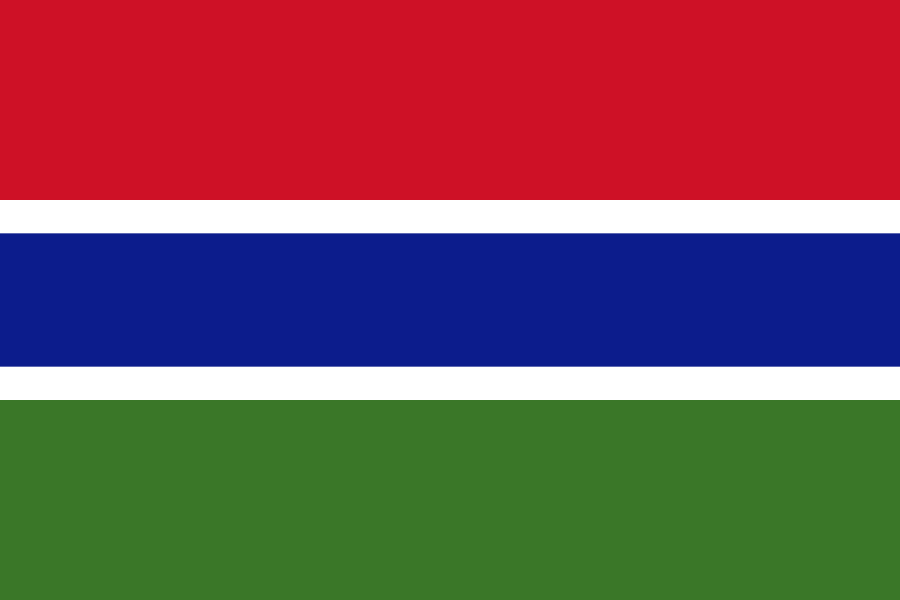
Gambia
Location Info
- Continent: Africa
- Country: Gambia
- Coordinates: 13.4432 , -15.3101
Trust Info
Verified Geographic Data
🌍 Continents

Overview
The Gambia is the smallest country on mainland Africa, situated in West Africa along the Atlantic coast. It is almost entirely surrounded by Senegal, except for its western coastline. The nation's geography is defined by the Gambia River, which flows through the center of the country and into the Atlantic Ocean, creating a fertile valley and diverse ecosystems including mangroves and savannahs.
Historically, the region was a significant site during the transatlantic slave trade and later became a British protectorate before gaining independence in 1965. Today, The Gambia is known for its peaceful religious coexistence, a growing tourism sector focused on birdwatching and beaches, and an economy primarily driven by agriculture and remittances. The capital city is Banjul, while the largest urban area is Serrekunda.
Truth & Facts
| Total Area | 10,689 sq km |
| Coastline | 80 km |
| Population (2026) | 2,884,079 (Estimated) |
| Median Age | 18.8 years |
| Capital City | Banjul |
| Administrative Regions | 5 Regions and 1 City |
| Independence Day | February 18, 1965 |
| Republic Proclaimed | April 24, 1970 |
| Currency | Dalasi (GMD) |
| GDP Growth (2025) | Over 5.0% |
| Major Road Projects | 355 km |
| Literacy Rate (Adult) | 58.67% |
| Main Referral Hospital | Edward Francis Small Teaching Hospital |
| Kankurang Tradition | UNESCO Intangible Heritage |
| Annual Visitors (2025) | 233,113 |
| Oldest Nature Reserve | Abuko Nature Reserve |
| International Airport | Banjul International Airport (BJL) |
| Revenue Digitalization | Ongoing |
| Emergency Number | 117 (Police) |
| Government Type | Presidential Republic |
| Key Memberships | UN, AU, ECOWAS, Commonwealth |
| Electricity Subsidies | D1 Billion Annually |
| HDI Rank (2022) | 174 of 193 |
| Primary Risks | Flooding and Drought |
| Official Language | English |
📑 Table of Contents
Overview
The Republic of The Gambia is a West African nation located on the Atlantic coast. It is geographically characterized by the Gambia River, which runs through the center of the country's narrow territory. The nation is an enclave within Senegal, sharing its only land border with its neighbor.
As the smallest country on mainland Africa, it spans roughly 10,689 square kilometers. The capital city, Banjul, serves as the administrative and economic hub, while Serrekunda is the largest urban center. The Gambia is known for its diverse wildlife, particularly its bird population, and its significant historical role in the transatlantic trade.
- Official Name: Republic of The Gambia
- Capital: Banjul
- Largest City: Serrekunda
- Official Language: English
- Currency: Dalasi (GMD)
History
The history of The Gambia is deeply intertwined with the Gambia River, which served as a major trade route for centuries. The region was part of the Mali Empire in the 14th century before European contact began. Portuguese explorers arrived in the mid-15th century, followed by the English and French who competed for control over the river's trade.
The British established a protectorate in 1894, and the current borders were defined through negotiations with France, who controlled surrounding Senegal. The Gambia gained independence on February 18, 1965, and became a republic in 1970 under President Dawda Jawara. Following a period of autocratic rule from 1994 to 2017, the country transitioned back to a democratic system under President Adama Barrow.
| Period | Event |
|---|---|
| 14th Century | Part of the Mali Empire |
| 1456 | First Portuguese arrival |
| 1894 | British Protectorate established |
| 1965 | Independence from UK |
| 2017 | Transition to Democracy |
Geography
The Gambia is a narrow strip of land following the lower course of the Gambia River. The country's width varies from 24 to 48 kilometers, and it extends approximately 320 kilometers inland. The terrain is generally flat, with the highest point reaching only 53 meters above sea level.
The geography is divided into three main zones: the river valley, the mangrove swamps, and the interior plateau. The coastal region features sandy beaches and Atlantic lagoons, while the inland areas are dominated by savannah and light forest. The river remains the most prominent geographical feature, providing a vital source of water and transport.
- Highest Point: Red Rock (53m)
- Major River: Gambia River
- Coastal Border: Atlantic Ocean
- Inland Border: Senegal
- Terrain: Low-lying plateau
Climate & Weather
The Gambia has a tropical climate with distinct dry and wet seasons. The dry season typically lasts from November to May, characterized by the Harmattan winds from the Sahara. The rainy season occurs from June to October, with peak rainfall in August.
Temperatures remain warm year-round, generally ranging between 31°C and 35°C during the day. The coastal areas are moderated by the Atlantic Ocean, while inland temperatures can be significantly higher. High humidity is common during the rainy months, while the dry season offers more comfortable conditions for visitors.
| Month | Avg High Temp | Rainfall |
|---|---|---|
| March | 35°C | 0mm |
| August | 31°C | 248mm |
| December | 33°C | 1mm |
Population & Demographics
As of 2026, the population of The Gambia is estimated at approximately 2.88 million. The population is characterized by a high growth rate and a youthful demographic, with a median age of 18.8 years. Urbanization is increasing, with over 60% of citizens living in urban areas, primarily in the Greater Banjul Area.
The country is ethnically diverse, with several groups coexisting peacefully. The Mandinka are the largest ethnic group, followed by the Fula, Wolof, Jola, and Serahuli. Islam is the predominant religion, practiced by roughly 95% of the population, while Christianity and traditional beliefs make up the remainder.
- Ethnic Groups: Mandinka, Fula, Wolof, Jola
- Major Religion: Islam (95%)
- Urban Population: 62.2%
- Median Age: 18.8 years
- Life Expectancy: ~68 years
Culture & Lifestyle
Gambian culture is a vibrant mix of traditional West African heritage and colonial influences. Music and oral storytelling are central to social life, with the kora (a traditional harp-lute) being a prominent instrument. Respect for elders and communal solidarity are core social values.
Traditional wrestling, known as 'Boreh,' is a popular national sport and cultural spectacle. Festivals often feature colorful masquerades like the Kankurang, which is protected by UNESCO as an intangible cultural heritage. Daily life in both rural and urban areas revolves around family and religious observances.
- Traditional Instrument: Kora
- National Sport: Wrestling
- Social Value: 'Teranga' (Hospitality)
- Heritage: Oral Griot traditions
- Common Attire: Kaftans and Grand Bubus
Festivals & Events
Religious and cultural festivals play a major role in the Gambian calendar. Tobaski (Eid al-Adha) is the most significant Islamic celebration, marked by family gatherings and communal feasts. The Janjanbureh Kankurang Festival is a major cultural event held annually in January, showcasing Mandinka traditions.
Independence Day on February 18 is celebrated nationwide with parades and cultural performances. Other events include the International Roots Festival, which commemorates the heritage of the African diaspora. These events often attract visitors and members of the Gambian diaspora from around the world.
| Festival | Date | Significance |
|---|---|---|
| Janjanbureh Kankurang | January | Cultural Masquerade |
| Independence Day | February 18 | National Sovereignty |
| Tobaski | Varies (Lunar) | Major Islamic Holiday |
Food & Cuisine
Gambian cuisine is based on staple crops such as rice, millet, and peanuts. Fish is a primary protein source due to the country's extensive river and ocean access. One of the most famous dishes is 'Benachin' (one-pot rice), similar to Jollof rice, often prepared with fish or meat.
Other traditional dishes include 'Domoda' (peanut butter stew) and 'Yassa' (marinated meat or fish with onions and lemon). Street foods such as 'tapalapa' bread and spicy sauces are common in local markets. Tea culture, specifically 'Attaya' (strong green tea with sugar), is a significant social ritual.
- Benachin: One-pot seasoned rice
- Domoda: Peanut butter stew
- Yassa: Spicy citrus-marinated dish
- Attaya: Traditional green tea
- Ebbeh: Cassava and seafood soup
Economy & Industries
The Gambian economy relies heavily on agriculture, tourism, and remittances. Agriculture employs about 70% of the labor force, with peanuts (groundnuts) being the primary export crop. The tourism sector is a major source of foreign exchange, focusing on coastal resorts and birdwatching.
In 2026, the government reported consistent GDP growth of over 5%. Efforts to diversify the economy include investments in fisheries, manufacturing, and renewable energy. Digitalization of revenue collection and public-private partnerships in infrastructure are key strategies for economic resilience.
| Sector | Main Contribution |
|---|---|
| Agriculture | Employment & Exports (Groundnuts) |
| Tourism | Foreign Exchange |
| Remittances | Support for households |
Cost of Living
The cost of living in The Gambia is relatively low compared to Western standards but varies between urban and rural areas. Imported goods and utilities can be expensive due to the country's reliance on foreign markets. Housing costs in the Greater Banjul Area have risen with increased urbanization.
Local food items like vegetables, fish, and seasonal fruits are generally affordable in local markets. For expatriates and tourists, the cost is influenced by the exchange rate of the Dalasi. Public transport is economical, though private vehicle ownership involves high maintenance and fuel costs.
- Affordable: Local produce, public transport
- Expensive: Electricity, imported electronics
- Currency: Dalasi (GMD)
- Major Market: Serrekunda Market
- Housing: Variable by urban proximity
Employment & Business
Agriculture remains the largest employer in The Gambia, though the service sector, particularly tourism, provides many urban jobs. The government is a major employer in the capital. Recent years have seen a rise in small and medium enterprises (SMEs) in the technology and retail sectors.
The Gambia Investment & Export Promotion Agency (GIEPA) facilitates foreign investment, targeting sectors like manufacturing and energy. While youth unemployment remains a challenge, vocational training programs are being expanded to align skills with market demands in the construction and hospitality industries.
- Largest Employer: Agriculture
- Growth Sectors: ICT, Tourism
- Investment Body: GIEPA
- Labor Force: ~700,000
- Unemployment: ~6.5% (2024 estimate)
Real Estate & Housing
Real estate in The Gambia has seen significant development in the coastal districts and the Greater Banjul Area. New residential estates are being established to meet the demands of a growing urban population and the diaspora. Housing ranges from traditional family compounds to modern apartments.
Land ownership is a complex process involving both customary and state laws. There is a growing market for rental properties catering to international development workers and seasonal tourists. In rural areas, traditional housing made of local materials remains the standard.
- Urban Center: Greater Banjul Area
- Rural Housing: Traditional compounds
- Market Drivers: Diaspora investment
- Property Type: Freehold and Leasehold
- Hotspots: Brufut, Bijilo, Sanyang
Transportation & Connectivity
Transportation in The Gambia revolves around the Gambia River and a network of highways. The Trans-Gambia Highway and the Senegambia Bridge are critical links connecting the north and south banks, as well as providing a corridor for regional trade with Senegal.
Banjul International Airport is the only aviation hub, serving several international airlines. Public transport consists mainly of shared taxis and 'gelli-gellis' (minibuses). The Port of Banjul handles approximately 80% of the country's imports, making it the most vital maritime asset.
| Mode | Key Facility/Route |
|---|---|
| Air | Banjul International Airport (Yundum) |
| Road | Trans-Gambia Highway |
| Sea | Port of Banjul |
| Bridge | Senegambia Bridge |
Infrastructure & Utilities
The Gambian government has prioritized infrastructure as part of its 2026 national budget. Key projects include the expansion of the Bertil Harding Highway and upgrades to the Banjul seaport. Telecommunications are modern, with several mobile network operators providing 4G and 5G services.
Electricity and water services are managed by the National Water and Electricity Company (NAWEC). While coverage in urban areas is high, rural electrification remains a target for development. Renewable energy, particularly solar power, is being increasingly integrated into the national grid.
- Utility Provider: NAWEC
- Telecoms: Africell, QCell, Gamcel
- Energy Source: Thermal and Solar
- Water Source: Ground water/Boreholes
- Budget Priority: Road and Port upgrades
Education
The education system in The Gambia follows a 6-3-3-4 structure: six years of primary, three years of upper basic, and three years of senior secondary education. The University of The Gambia (UTG), established in 1999, is the country's main institution for higher learning.
While primary school enrollment is high (over 93%), literacy rates among adults are approximately 58%. The government has implemented policies to improve girls' education and vocational training. Islamic education through 'Madrasas' also plays a significant role in the educational landscape.
- Higher Ed: University of The Gambia
- Primary Enrollment: ~93.7%
- Literacy Trend: Increasing (UNESCO)
- Vocational: GTTI (Gambia Technical Training Institute)
- Language: English (Medium of instruction)
Healthcare
The healthcare system consists of primary, secondary, and tertiary levels. The Edward Francis Small Teaching Hospital (EFSTH) in Banjul is the only teaching and main referral hospital. There are several regional hospitals and numerous health centers across the country.
The Medical Research Council (MRC) Unit The Gambia is a world-renowned center for medical research in sub-Saharan Africa. Challenges include limited medical personnel and equipment in rural areas. Public health initiatives focus on malaria prevention, maternal health, and HIV/AIDS control.
| Facility | Location | Type |
|---|---|---|
| EFSTH | Banjul | Referral/Teaching |
| Kanifing General | Kanifing | Regional Hospital |
| Brikama Health Centre | Brikama | Major Health Centre |
Tourist Attractions
The Gambia is a popular destination for eco-tourism and cultural history. The Wassu Stone Circles, a UNESCO World Heritage site, represent ancient burial grounds. Kunta Kinteh Island (formerly James Island) is a significant site for understanding the transatlantic slave trade.
For nature enthusiasts, Abuko Nature Reserve and Bijilo Forest Park offer opportunities to see monkeys, crocodiles, and hundreds of bird species. The coastal resorts of Kololi and Kotu provide pristine beaches and vibrant nightlife. River cruises are a popular way to explore the interior and spot wildlife along the banks.
- UNESCO Sites: Wassu Stone Circles, Kunta Kinteh Island
- Nature: Abuko Reserve, Bijilo Park
- History: Juffureh Village
- Coastal: Senegambia Strip
- Wildlife: Over 500 bird species
Things To Do
Visitors to The Gambia can engage in a variety of activities ranging from wildlife spotting to cultural immersion. Birdwatching is world-class, with specialized tours available throughout the river basin. River fishing and deep-sea angling are also popular pursuits for travelers.
Cultural activities include visiting local markets like Albert Market in Banjul or the Serrekunda Market. Attending a traditional wrestling match provides a unique look into Gambian sports culture. Beach-based activities include camel riding, sunbathing, and visiting the Tanji Fishing Village at sunset.
- Birdwatching: Coastal and inland sites
- Fishing: Creek and ocean angling
- Market Visits: Albert Market (Banjul)
- Sport: Traditional Wrestling
- Nature: River boat cruises
Best Places To Visit
Top destinations in The Gambia cater to different interests. Banjul offers historical architecture and museums. Serrekunda and the nearby coastal strip are best for beaches and dining. For a quieter experience, the southern beaches like Sanyang and Gunjur are recommended.
Up-country, the town of Janjanbureh offers a glimpse into colonial history and Mandinka culture. The Makasutu Cultural Forest provides a luxury eco-lodge experience in a pristine woodland environment. Juffureh and Albreda are essential for those interested in the 'Roots' historical narrative.
| Place | Highlight |
|---|---|
| Banjul | Arch 22, National Museum |
| Kachikally | Crocodile Pool |
| Wassu | Stone Circles |
| Tanji | Fishing Village & Museum |
Travel Guide
Traveling to The Gambia usually involves flying into Banjul International Airport. Most European visitors can obtain visas on arrival or are exempt for short stays. The best time to visit is during the dry season (November to April) when the weather is sunny and humidity is low.
English is widely spoken, making communication easy for many travelers. It is advisable to use authorized tour guides and official currency exchange bureaus. Health precautions such as malaria prophylaxis are recommended, and visitors should respect local Islamic customs, particularly when visiting non-tourist areas.
- Entry: Banjul International Airport
- Best Time: Nov to April
- Language: English
- Health: Malaria precautions advised
- Currency: Dalasi (GMD)
Nearby Places
The Gambia is ideally located for exploring the wider Senegambia region. Dakar, the capital of Senegal, is accessible via road and ferry. The Casamance region of southern Senegal, known for its lush forests and distinct culture, is easily reached from the south bank of The Gambia.
The Saloum Delta in Senegal is a nearby UNESCO site offering similar mangrove landscapes and birding opportunities. Many tourists take day trips to Fathala Wildlife Reserve in Senegal to see larger African mammals like giraffes and rhinos that are not found within The Gambia's borders.
- Senegal: Dakar (Capital)
- Casamance: Lush southern region
- Fathala: Wildlife Reserve (Senegal)
- Saloum Delta: Mangrove biosphere
- Joal-Fadiouth: Shell island in Senegal
Environment & Nature
The environment of The Gambia is dominated by the riverine ecosystem. The country is home to over 540 species of birds, making it a premier birding destination. Mammals found in the wild include hippos, crocodiles, and several types of monkeys such as the red colobus.
Conservation efforts are managed by the Department of Parks and Wildlife. The Tanbi Wetland Complex and Kiang West National Park are vital protected areas. Climate change poses a threat to the low-lying coastal areas, leading to government initiatives for coastal protection and mangrove restoration.
- Bird Species: 540+
- Key Mammals: Hippos, Baboons, Crocodiles
- Protected Areas: 7 National Parks/Reserves
- Biosphere: Mangroves, Savannah, Coast
- Agency: Dept of Parks and Wildlife
Government & Administration
The Gambia is a presidential republic. The President serves as both head of state and head of government. The National Assembly is the unicameral legislative body. The country is divided into five administrative regions and the city of Banjul, each led by a Governor or Mayor.
The judicial system is based on English Common Law, Islamic Law (Sharia) for personal matters among Muslims, and customary law. The government has been focused on institutional reforms and strengthening the rule of law since the 2017 political transition. Digitalization of government services is a current priority.
- Executive: President Adama Barrow
- Legislature: National Assembly
- Regions: 5 plus Banjul
- Legal System: Common Law & Sharia
- Focus: Governance Reforms
Safety & Public Services
The Gambia is generally considered safe for residents and visitors. Violent crime is rare, though petty theft can occur in crowded market areas and tourist strips. The Gambia Police Force is responsible for internal security, and there is a visible police presence in urban centers.
Public services include the Fire and Rescue Service and ambulance services in major towns. For international travelers, it is recommended to maintain standard safety precautions. Road safety is a concern due to variable road conditions and lighting; however, major highway upgrades are improving connectivity and safety.
- Police: 117
- Fire Service: 118
- Hospital: EFSTH (Banjul)
- Safety Status: Generally safe
- Precaution: Avoid poorly lit areas at night
Best Time To Visit
The peak tourist season is from November to February when the weather is dry and relatively cool. This period coincides with the arrival of migratory birds, making it ideal for birdwatchers. The humidity is low, and the sunshine is consistent.
The 'green season' (June to October) offers a different experience as the landscape becomes lush and vibrant. While it is the rainy season, showers are often brief and intense, occurring mostly at night. Travel during this time can be more affordable, though some dirt roads up-country may become difficult to navigate.
| Season | Months | Characteristics |
|---|---|---|
| Peak/Dry | Nov - May | Sunny, Low Humidity |
| Wet/Green | June - Oct | Lush, Humid, Rain |
Local Business Directory
The Gambian business environment is centered on the Greater Banjul Area and the Kanifing Municipality. Major commercial banks, telecommunications headquarters, and trading firms are located here. The Serrekunda and Albert Markets are the heart of local retail trade.
Tourism-related businesses, including hotels, tour operators, and craft markets, are clustered along the Atlantic coast. The government encourages investment in agro-processing and renewable energy. Digital startups are also emerging in the urban centers, supported by improving internet infrastructure.
- Banks: Trust Bank, Standard Chartered
- Telecoms: Africell, QCell
- Tourism: GHA (Gambia Hotel Association)
- Hubs: Kanifing, Banjul, Serrekunda
- Agency: GIEPA
General Information FAQs
Where is Gambia located?
The Gambia is located in West Africa, on the Atlantic coast. It is surrounded by Senegal on its northern, eastern, and southern sides.
What is Gambia known for?
Gambia is known for its diverse birdlife, beautiful beaches, the Gambia River, and its peaceful culture, earning it the nickname 'The Smiling Coast of Africa.'
Why is Gambia famous?
It is famous for being the smallest country on mainland Africa and for its historical sites related to the slave trade, such as Kunta Kinteh Island.
What country or region is Gambia part of?
The Gambia is an independent country located in the West African region.
What is the population of Gambia?
As of 2026, the population is estimated to be approximately 2.88 million people.
What languages are spoken in Gambia?
English is the official language. Local languages include Mandinka, Fula, Wolof, Jola, and Serahuli.
What time zone is Gambia in?
The Gambia is in the Greenwich Mean Time (GMT) zone.
What are the key facts about Gambia?
Key facts include its capital Banjul, its currency the Dalasi, and its geography as a riverine enclave within Senegal.
What makes Gambia unique?
Its unique shape—a narrow strip following a river—and its high concentration of bird species make it distinct in Africa.
How large is Gambia in area?
The Gambia has a total land area of approximately 10,689 square kilometers.
History FAQs
What is the history of Gambia?
Gambia's history includes being part of early African empires, centuries of European trade competition, British colonial rule, and independence in 1965.
When was Gambia established?
Modern Gambia gained independence from Britain on February 18, 1965.
What major historical events happened in Gambia?
Key events include the establishment of the British Protectorate (1894), independence (1965), becoming a republic (1970), and the political transition in 2017.
Who were important historical figures from Gambia?
Important figures include Sir Dawda Jawara (first president) and the historical figure Kunta Kinteh, whose story was popularized in 'Roots.'
How has Gambia developed over time?
Gambia has evolved from a trade outpost to a stable republic with a growing focus on tourism and infrastructure development.
Geography & Environment FAQs
What is the geography of Gambia?
The geography is defined by the Gambia River, flat plains, mangrove swamps, and a small Atlantic coastline.
What natural features surround Gambia?
The country is surrounded by Senegal and the Atlantic Ocean.
Are there mountains, rivers, or lakes near Gambia?
The Gambia River is the central feature. There are no major mountains; the terrain is mostly low-lying.
What is the elevation of Gambia?
The elevation is very low, with most of the country below 20 meters; the highest point is 53 meters.
What ecosystems exist around Gambia?
Ecosystems include coastal beaches, mangrove forests, riverine wetlands, and dry savannah.
Climate & Weather FAQs
What is the climate like in Gambia?
Gambia has a tropical climate with a long dry season and a short rainy season.
What is the average temperature in Gambia?
Average daytime temperatures range from 31°C to 35°C year-round.
What is the weather like throughout the year in Gambia?
From November to May, it is dry and sunny. From June to October, it is humid with periodic heavy rainfall.
Does Gambia experience extreme weather?
The country can experience seasonal flooding during the peak of the rains and drought during poor rainy seasons.
What is the best time of year to visit Gambia?
The best time to visit is during the dry season, specifically from November to February.
Population & Society FAQs
What is the population density of Gambia?
As of 2026, the density is approximately 285 people per square kilometer.
What ethnic groups live in Gambia?
The main groups are Mandinka, Fula, Wolof, Jola, and Serahuli.
What religions are practiced in Gambia?
Islam is practiced by about 95% of the population, with Christianity practiced by most of the remainder.
What is daily life like in Gambia?
Daily life is centered on family, community, and religious activities, with a slow and hospitable pace often called 'Smiling Coast' living.
How diverse is the population of Gambia?
It is highly diverse with multiple ethnic groups and languages coexisting in a small geographical area.
Culture & Traditions FAQs
What cultural traditions are important in Gambia?
Oral traditions (Griots), traditional music (Kora), and communal initiation rites (Kankurang) are very important.
What festivals are celebrated in Gambia?
Major festivals include Tobaski, Koriteh (Eid al-Fitr), Independence Day, and the Janjanbureh Kankurang Festival.
What cultural landmarks exist in Gambia?
Landmarks include the Wassu Stone Circles, Arch 22, and the National Museum in Banjul.
What traditional clothing or customs are common in Gambia?
Traditional dress includes the grand bubu for men and colorful kaftans for women. Customs emphasize hospitality and respect for elders.
What arts and crafts are associated with Gambia?
Tie-dye and batik fabrics, wood carvings, and basketry are prominent local crafts.
Food & Cuisine FAQs
What foods is Gambia known for?
It is known for peanut-based stews, fresh Atlantic fish, and rice dishes.
What traditional dishes originate from Gambia?
Traditional dishes include Benachin, Domoda, and Yassa.
What are the best restaurants in Gambia?
Popular dining spots are located in the Senegambia and Kololi areas, offering both local and international cuisine.
What local ingredients are commonly used in Gambia cuisine?
Groundnuts (peanuts), rice, palm oil, okra, cassava, and various fish like barracuda and ladyfish.
What food markets or street foods are popular in Gambia?
Serrekunda Market is famous for local produce. Popular street foods include tapalapa bread sandwiches and grilled fish.
Economy & Business FAQs
What are the main industries in Gambia?
The main industries are agriculture, tourism, and small-scale manufacturing.
What economic activities drive the economy of Gambia?
Peanut exports, tourist services, and remittances from Gambians abroad are the primary drivers.
What businesses operate in Gambia?
Businesses include commercial banks, mobile network operators, hotels, and trading companies.
Is Gambia an important economic center?
It is a regional trade hub due to the Port of Banjul, serving as an entry point for goods into the Senegambia region.
What are the major exports or products from Gambia?
Major exports include groundnuts (peanuts), fish, and cotton.
Employment & Jobs FAQs
What job opportunities are available in Gambia?
Opportunities exist in the tourism sector, agriculture, telecommunications, and government services.
What are the major employers in Gambia?
Major employers include the government, the hospitality industry, and telecom companies like Africell and QCell.
What skills are in demand in Gambia?
Skills in information technology, tourism management, and modern agricultural techniques are increasingly in demand.
Is Gambia a good place to work?
It offers a peaceful environment for international development and hospitality professionals, though local salaries are relatively low.
What is the unemployment rate in Gambia?
The unemployment rate was estimated at around 6.5% in late 2024, with higher rates among the youth.
Cost of Living FAQs
Is Gambia expensive to live in?
It is affordable for many, though imported goods and electricity can be expensive relative to local income.
What is the average cost of living in Gambia?
A modest lifestyle can be maintained at a low cost, but high-end housing and imported products increase expenses significantly.
How much does housing cost in Gambia?
Rent varies widely, with simple houses starting low, while modern villas in tourist areas can cost several hundred dollars per month.
What are average food and utility costs in Gambia?
Local food is cheap, but utilities like electricity and water can be relatively high due to limited supply infrastructure.
Is Gambia affordable compared to nearby cities?
It is generally more affordable than Dakar (Senegal) but comparable to other smaller West African nations.
Housing & Real Estate FAQs
What types of housing are available in Gambia?
Housing includes traditional family compounds, detached urban houses, and modern apartment complexes.
What is the average home price in Gambia?
Prices range from affordable plots of land in rural areas to expensive developed properties in coastal estates like Bijilo.
Is it better to rent or buy property in Gambia?
Buying is common for long-term residents and the diaspora, while expats usually prefer renting in the coastal districts.
Which neighborhoods are popular in Gambia?
Popular urban areas include Fajara, Bijilo, Brufut, and Kotu.
How has the property market changed in Gambia?
The market has seen growth due to increased diaspora investment and expanded road infrastructure.
Transportation FAQs
How do you get to Gambia?
Most international travelers arrive by air via Banjul International Airport or by road through Senegal.
What is the nearest airport to Gambia?
Banjul International Airport (BJL) is the main and only international airport.
Does Gambia have railway connections?
No, there are currently no operational railways in The Gambia.
How reliable is public transportation in Gambia?
Public transport via shared taxis and minibuses is very frequent and covers most of the country, though schedules are informal.
What major highways or roads connect to Gambia?
The Trans-Gambia Highway and the South Bank Road are the primary land transport corridors.
Education FAQs
What schools are located in Gambia?
Gambia has a mix of public and private primary and secondary schools, along with international schools in urban areas.
Are there universities in Gambia?
The University of The Gambia (UTG) is the main public university, alongside American International University West Africa.
What is the literacy rate in Gambia?
The literacy rate is approximately 58.7% for adults, with higher rates among the youth population.
What educational opportunities exist in Gambia?
Opportunities include formal academic studies, vocational training at institutions like GTTI, and Islamic studies.
Is Gambia a good place for students?
It is an affordable option for regional students, though resources in higher education are still developing.
Healthcare FAQs
What hospitals are available in Gambia?
The primary facility is the Edward Francis Small Teaching Hospital, with others like Kanifing General and Brikama District Hospital.
Are there emergency medical services in Gambia?
Emergency services are available but are most concentrated and effective in the Greater Banjul Area.
What healthcare facilities exist in Gambia?
Facilities include government hospitals, regional health centers, and private clinics.
Is healthcare affordable in Gambia?
Public healthcare is heavily subsidized for citizens, while private healthcare involves out-of-pocket costs.
Are specialized medical services available in Gambia?
Specialized services are limited; serious cases often require referral to larger facilities in Banjul or abroad.
Tourism & Travel FAQs
What are the top tourist attractions in Gambia?
Top attractions include Kunta Kinteh Island, the Wassu Stone Circles, Abuko Nature Reserve, and the beaches of Kololi.
What are the best things to do in Gambia?
Best activities include birdwatching, river cruises, exploring local markets, and traditional wrestling matches.
Is Gambia worth visiting?
Yes, it is highly regarded for its hospitality, unique geography, and accessible West African culture.
What landmarks should visitors see in Gambia?
Visitors should see Arch 22 in Banjul, the Kachikally Crocodile Pool, and the ruins of Fort Bullen.
How many days should tourists spend in Gambia?
A typical visit lasts between 7 to 14 days to enjoy both the coastal areas and up-country sites.
Nearby Places FAQs
What places are near Gambia worth visiting?
Nearby attractions include the Fathala Wildlife Reserve and the Saloum Delta in Senegal.
What cities or towns are close to Gambia?
The closest major city outside the country is Dakar, Senegal.
What natural attractions are near Gambia?
The Niokolo-Koba National Park in Senegal is a large natural attraction located east of the country.
What day trips can be taken from Gambia?
Popular day trips include visits to Fathala Reserve or crossing into the Casamance region of Senegal.
What famous destinations are within reach of Gambia?
Dakar and Goree Island in Senegal are within reach for those willing to travel a full day.
Safety FAQs
Is Gambia safe to live in?
It is considered one of the safest and most stable countries in West Africa for residents.
Is Gambia safe for tourists?
Yes, tourism is a major industry and the government prioritizes the safety of international visitors.
What is the crime rate in Gambia?
The crime rate is generally low, with petty theft being the most common concern in tourist areas.
What emergency services operate in Gambia?
Police, Fire and Rescue, and Ambulance services operate throughout the country.
What safety tips should visitors follow in Gambia?
Avoid walking alone in isolated areas at night and use authorized guides for excursions.
Lifestyle & Living FAQs
Is Gambia a good place to live?
It is excellent for those seeking a peaceful, low-stress lifestyle with a strong sense of community.
What recreational activities are available in Gambia?
Activities include birdwatching, fishing, sports like football and wrestling, and cultural festivals.
Is Gambia family-friendly?
Yes, Gambian culture is very inclusive of families and children.
What outdoor activities are popular in Gambia?
Beach visits, hiking in nature reserves, and river explorations are very popular.
What makes life enjoyable in Gambia?
The warm climate, the friendliness of the people, and the beautiful natural environment.
Practical Information FAQs
What travel tips should visitors know about Gambia?
Always carry small denominations of Dalasi and ensure you have malaria protection.
What local customs should visitors respect in Gambia?
Dress modestly outside of beach areas and ask for permission before taking photos of people.
How accessible is Gambia for international visitors?
It is highly accessible through Banjul International Airport, with many direct flights from Europe.
What services are available for tourists in Gambia?
Extensive services include hotels, tour agencies, car rentals, and craft markets.
What important information should travelers know before visiting Gambia?
Check the latest visa requirements and ensure your routine vaccinations are up to date.