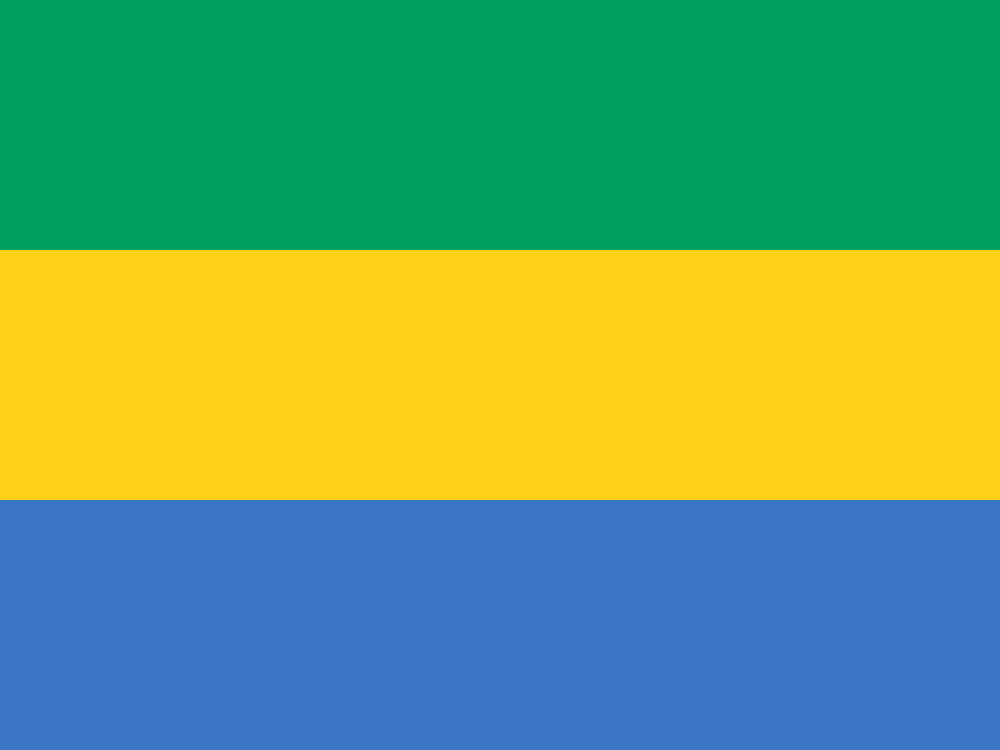
Gabon
Location Info
- Continent: Africa
- Country: Gabon
- Coordinates: -0.8037 , 11.6094
Trust Info
Verified Geographic and Statistical Information 2026
🌍 Continents
Overview
Gabon, officially the Gabonese Republic, is a sovereign state located on the west coast of Central Africa. Straddling the Equator, the country is bordered by Equatorial Guinea, Cameroon, and the Republic of the Congo, with an extensive coastline along the Atlantic Ocean. Its landscape is dominated by dense equatorial rainforests, which cover approximately 85% of its territory, and the Ogooué River basin, providing a habitat for diverse wildlife including forest elephants and gorillas.
Historically, Gabon was a French colony within French Equatorial Africa before gaining independence in 1960. Today, it is known for its high urban population and an economy heavily reliant on natural resources. It is one of Africa's major oil producers and holds some of the world's largest manganese deposits. Gabon is also a leader in environmental conservation, having designated over 10% of its land as national parks to protect its unique biodiversity.
Truth & Facts
| Total Area | 267,667 sq km |
| Forest Cover | 85% |
| Estimated Population | 2,548,000 (2026 est.) |
| Urban Population | 91.3% |
| Capital | Libreville |
| Head of State | Gen. Brice Clotaire Oligui Nguema |
| Primary Export | Crude Petroleum |
| Currency | Central African CFA franc (XAF) |
| Independence Date | August 17, 1960 |
| Main Railway | Trans-Gabon Railway |
| National Parks | 13 |
| Official Language | French |
| Literacy Rate | Approx. 85% |
| Famous Hospital | Albert Schweitzer Hospital |
| Key Attraction | Loango National Park |
| Largest Airport | Libreville International Airport (LBV) |
| Mobile Penetration | High |
| Status | Stable under transition |
| Provinces | 9 |
| Commonwealth | Joined in 2022 |
| Main Utility Provider | SEEG |
| Services Sector | Major employer |
| Majority Religion | Christianity (75-80%) |
| Key Crops | Palm oil, Rubber, Cocoa |
📑 Table of Contents
Overview of Gabon
Gabon is a Central African country situated on the Atlantic coast, known for its vast protected rainforests and high urbanization. It shares borders with Cameroon, Equatorial Guinea, and the Republic of the Congo. The nation is recognized for its relative stability and rich natural resources, particularly oil and minerals.
- Official Name: Gabonese Republic
- Capital City: Libreville
- Region: Central Africa
- Official Language: French
- Currency: Central African CFA franc
History
The early history of Gabon involves the settlement of Pygmy groups, followed by Bantu migrations. Portuguese explorers arrived in the 15th century, and the region eventually became part of French Equatorial Africa in the late 19th century. Gabon gained full independence from France on August 17, 1960.
| Period | Key Event |
|---|---|
| 15th Century | Portuguese arrival |
| 1885 | French colonization begins |
| 1960 | Independence from France |
| 2023 | Transitional government established |
Geography
The geography of Gabon is characterized by a narrow coastal plain, a hilly interior, and savanna in the east and south. The Ogooué River is the primary waterway, flowing through the heart of the country into the Atlantic Ocean. Approximately 85% of the land is covered by dense tropical rainforest.
- Major River: Ogooué River
- Mountain Ranges: Crystal Mountains, Chaillu Massif
- Highest Point: Mount Iboundji (approx. 1,575m)
- Coastal Features: Lagoons and estuaries
- Ecological Zone: Guineo-Congolian rainforest
Climate and Weather
Gabon has an equatorial climate with high temperatures and high humidity year-round. There are two distinct rainy seasons and two dry seasons. Rainfall is heaviest in the north and along the coast, with Libreville receiving significant annual precipitation.
- Average Temperature: 25°C to 27°C
- Long Rainy Season: February to May
- Long Dry Season: June to September
- Humidity Level: Often above 80%
Population and Demographics
With an estimated population of over 2.5 million in 2026, Gabon is one of the least densely populated countries in Africa. Most citizens live in urban areas, particularly the capital, Libreville. The population is ethnically diverse, consisting of over 40 groups.
- Largest Ethnic Group: Fang
- Urbanization Rate: Over 90%
- Median Age: Approx. 21.6 years
- Population Density: 9.5 persons per sq km
Culture and Lifestyle
Gabonese culture is a blend of traditional Bantu customs and French influence. It is famous for its ceremonial masks and wood carvings, particularly those of the Fang and Kota people. Music and dance play central roles in social and spiritual life.
- Artistic Styles: Fang masks, Kota reliquary figures
- Folk Music: Traditional drums and zithers
- Social Structure: Clan-based lineage systems
Festivals and Events
Public holidays and festivals in Gabon often revolve around independence and religious celebrations. Cultural festivals showcase traditional dance and music from various provinces.
- Independence Day: August 17
- Gabon Cultural Festival: Annual showcase of ethnic arts
- Religious Holidays: Christmas, Easter, Eid al-Fitr
Food and Cuisine
Gabonese cuisine relies heavily on tubers like cassava and yams, alongside fresh fish and 'bushmeat'. French culinary techniques are often integrated into local preparation methods in urban centers.
- National Dish: Poulet Nyembwe (Chicken in palm nut sauce)
- Staple Food: Fufu (pounded cassava or plantain)
- Common Ingredients: Palm oil, peanuts, chili peppers
Economy and Industries
The economy is primarily driven by the extraction of oil and manganese. Gabon is the world's second-largest producer of manganese. Efforts are underway to diversify the economy through sustainable timber processing and ecotourism.
| Sector | Contribution |
|---|---|
| Oil & Gas | ~45% of GDP |
| Mining | Significant manganese exports |
| Agriculture | Developing palm oil and rubber |
| Forestry | Major producer of Okoumé wood |
Cost of Living
Libreville is often cited as one of the most expensive cities in Africa due to the high volume of imported goods. Housing and quality services in the capital command premium prices compared to the regional average.
- Expensive Items: Imported food, luxury housing
- Affordable Items: Local produce, fuel (subsidized)
- Currency: Fixed exchange rate to the Euro (via CFA)
Employment and Business
The public sector and the extractive industries are the largest employers. The government has established Special Economic Zones, such as Nkok, to attract foreign investment in manufacturing and timber processing.
- Key Business Hubs: Libreville, Port-Gentil
- Investment Focus: Value-added wood processing
- Regulatory Body: ANPI-Gabon
Real Estate and Housing
Housing in Gabon varies from modern apartments in Libreville's coastal districts to traditional dwellings in rural areas. There is a high demand for residential infrastructure in the expanding urban centers.
- Popular Areas: La Sablière (Libreville)
- Housing Type: High-rise apartments and gated villas
- Market Trend: Increasing urbanization driving demand
Transportation and Connectivity
Gabon's transport network includes the Trans-Gabon Railway, which is vital for moving minerals and timber. Air travel is the most efficient way to travel between major cities like Libreville, Port-Gentil, and Franceville due to limited road connections.
- Major Airport: Libreville International Airport
- Port Facilities: Owendo, Port-Gentil
- Railway: 648 km connecting the coast to the interior
Infrastructure and Utilities
Infrastructure development is focused on improving power generation through hydroelectricity and expanding water access. Digital infrastructure is growing, with several undersea cables providing high-speed internet.
- Energy Source: Hydroelectric and Thermal power
- Provider: SEEG (Société d'Énergie et d'Eau du Gabon)
- Digital: Connected to ACE undersea cable
Education
Gabon has a robust education system by regional standards, with high literacy rates. Higher education is provided by several state universities and specialized technical institutes.
- Major University: Omar Bongo University (UOB)
- System Type: Based on the French educational model
- Focus: Engineering and medical sciences
Healthcare
The healthcare system includes public hospitals, military clinics, and private facilities. The Albert Schweitzer Hospital in Lambaréné is a globally recognized center for research on tropical diseases.
- Key Facility: CHU Libreville
- Specialty Center: CIRMF (Franceville) for medical research
- Health Scheme: CNAMGS (Universal health insurance)
Tourist Attractions
Gabon is an emerging destination for high-end ecotourism. Its 13 national parks offer opportunities to see rare wildlife in pristine environments, including 'surfing' hippos and nesting sea turtles.
- Loango National Park: Beaches and lagoons with diverse wildlife
- Ivindo National Park: Home to the Kongou Waterfalls
- St. Michael's Church: Famous for its carved wooden pillars
Things to Do
Activities in Gabon are largely nature-oriented. Visitors can engage in wildlife trekking, whale watching, and exploring local markets for traditional crafts.
- Wildlife Trekking: Searching for mandrills in Lopé
- Whale Watching: Available off the coast of Mayumba (July-Sept)
- Local Markets: Visiting Mont-Bouët Market in Libreville
Best Places to Visit
While Libreville serves as the main gateway, the interior and coastal parks provide the most unique experiences. Franceville and Lambaréné are significant for their history and geography.
- Libreville: Seafront boulevards and museums
- Lambaréné: River scenery and historical hospital
- Point Denis: Resort area accessible by boat
Travel Guide
Travelers to Gabon typically require a visa and proof of yellow fever vaccination. The primary language is French, and carrying local currency (CFA Francs) is necessary for most transactions.
- Entry Requirements: Visa and Vaccination certificate
- Language: French is essential for communication
- Safety: Standard urban precautions in cities
Nearby Places
Gabon is located near several other Central African destinations. Its coastal position makes it a hub for regional maritime and air travel.
- Equatorial Guinea: Located to the northwest
- Cameroon: Located to the north
- São Tomé and Príncipe: Island nation to the west
Environment and Nature
Gabon is part of the Congo Basin, the world's second-largest 'lung'. The country's commitment to conservation has made it a model for environmental protection in Africa.
- Ecosystems: Mangroves, savannas, and rainforests
- Key Species: Lowland gorilla, Forest elephant
- Conservation: ANPN (National Parks Agency)
Government and Administration
Gabon is divided into nine provinces, each headed by a governor appointed by the central government. The current administration operates under a transitional framework aiming for institutional restoration.
| Province | Capital |
|---|---|
| Estuaire | Libreville |
| Haut-Ogooué | Franceville |
| Ogooué-Maritime | Port-Gentil |
| Woleu-Ntem | Oyem |
Safety and Public Services
Public safety is maintained by the national gendarmerie and police. Emergency services are concentrated in major urban areas. Visitors are advised to follow local regulations and keep identification documents at hand.
- Emergency Number: Varies by service (Police/Fire)
- Stability: High compared to regional counterparts
- Documentation: Passport and visa required for movement
Best Time to Visit
The best time to visit for wildlife viewing is during the dry seasons when animals congregate near water sources. For whale watching, the period between July and September is ideal.
- Dry Season: June to August (Best for travel)
- Bird Watching: October to April
- Weather: Humid year-round
Local Business Directory
The business landscape is dominated by multinational corporations in the energy sector and state-owned enterprises in utilities and transport. Local SMEs are emerging in the services and technology sectors.
- Energy: TotalEnergies Gabon, Perenco
- Banking: BGFIBank
- Telecoms: Gabon Telecom (Moov), Airtel Gabon
General Information FAQs
Where is Gabon located?
Gabon is located on the west coast of Central Africa, right on the Equator. It is bordered by Equatorial Guinea, Cameroon, the Republic of the Congo, and the Atlantic Ocean.
What is Gabon known for?
Gabon is known for its extensive rainforests, which cover about 85% of its land, its large oil and manganese reserves, and its diverse wildlife including forest elephants and gorillas.
Why is Gabon famous?
It is famous for being one of the world's most carbon-positive countries and for its 13 national parks that protect a massive portion of the Congo Basin's biodiversity.
What country or region is Gabon part of?
Gabon is part of the Central African region and is a member of the African Union and the Economic Community of Central African States (ECCAS).
What is the population of Gabon?
The population of Gabon is estimated to be approximately 2,548,000 as of 2026.
What languages are spoken in Gabon?
French is the official language. Indigenous languages, primarily Bantu languages such as Fang, Myene, and Nzebi, are also widely spoken.
What time zone is Gabon in?
Gabon is in West Africa Time (WAT), which is UTC+1.
What are the key facts about Gabon?
Key facts include its capital Libreville, its status as a major oil producer, its high urbanization rate (over 90%), and its massive manganese deposits.
What makes Gabon unique?
Its combination of a small population, vast undisturbed rainforests, and high GDP per capita relative to its neighbors makes it unique in the region.
How large is Gabon in area?
Gabon covers an area of approximately 267,667 square kilometers.
History FAQs
What is the history of Gabon?
Gabon's history includes early Pygmy habitation, Bantu migration, 15th-century Portuguese contact, and nearly a century of French colonial rule before independence in 1960.
When was Gabon established?
As a modern independent state, Gabon was established on August 17, 1960.
What major historical events happened in Gabon?
Key events include the establishment of Libreville as a settlement for freed slaves in 1849, the 1960 independence, and the 2023 transition of government.
Who were important historical figures from Gabon?
Notable figures include Léon Mba (first president), Omar Bongo (long-serving president), and Albert Schweitzer (Nobel-winning doctor who worked in Lambaréné).
How has Gabon developed over time?
Gabon developed from a colonial timber-based economy into a major regional oil power, and more recently, into a leader in environmental conservation.
Geography & Environment FAQs
What is the geography of Gabon?
It features a coastal plain, a mountainous interior, and a vast river basin dominated by the Ogooué River and tropical rainforest.
What natural features surround Gabon?
It is surrounded by the Atlantic Ocean to the west and dense tropical jungles that extend into Cameroon, Congo, and Equatorial Guinea.
Are there mountains, rivers, or lakes near Gabon?
Yes, the Crystal Mountains and the Chaillu Massif are major ranges, and the Ogooué is the country's most significant river.
What is the elevation of Gabon?
Elevation ranges from sea level to peaks around 1,575 meters in the interior mountains.
What ecosystems exist around Gabon?
Primary ecosystems include coastal mangroves, equatorial rainforests, and inland savannas.
Climate & Weather FAQs
What is the climate like in Gabon?
Gabon has an equatorial climate, which is hot and humid year-round with frequent rainfall.
What is the average temperature in Gabon?
The average daily temperature is consistently around 26°C to 28°C.
What is the weather like throughout the year in Gabon?
It remains humid, with wetter periods from October to May and a shorter dry season from June to September.
Does Gabon experience extreme weather?
While it does not typically experience hurricanes or droughts, it can have intense tropical thunderstorms and heavy seasonal flooding.
What is the best time of year to visit Gabon?
The long dry season between June and September is generally the best time for travel and wildlife viewing.
Population & Society FAQs
What is the population density of Gabon?
The population density is very low, at approximately 9.5 people per square kilometer.
What ethnic groups live in Gabon?
The Fang are the largest group, followed by the Punu, Nzebi, and Myene, among over 40 distinct ethnic groups.
What religions are practiced in Gabon?
Christianity is the majority religion (predominantly Roman Catholicism), followed by Islam and traditional indigenous beliefs.
What is daily life like in Gabon?
Daily life is highly urbanized, centered in Libreville and Port-Gentil, where modern infrastructure meets traditional African social structures.
How diverse is the population of Gabon?
Gabon is very diverse, with multiple ethnic groups coexisting peacefully and a significant expatriate community from other African countries and France.
Culture & Traditions FAQs
What cultural traditions are important in Gabon?
Spiritual ceremonies involving traditional music, masks, and the Bwiti religious tradition are central cultural elements.
What festivals are celebrated in Gabon?
Independence Day (August 17) and various Christian and Islamic holidays are widely celebrated with public festivities.
What cultural landmarks exist in Gabon?
The National Museum of Arts and Traditions and St. Michael’s Cathedral in Libreville are key cultural landmarks.
What traditional clothing or customs are common in Gabon?
Modern clothing is common in cities, while traditional attire like colorful 'pagnes' is worn for ceremonial occasions.
What arts and crafts are associated with Gabon?
Gabon is world-renowned for its wood carvings, particularly the highly stylized ceremonial masks of the Fang and Kota peoples.
Food & Cuisine FAQs
What foods is Gabon known for?
Gabon is known for its use of palm nuts, cassava, and fresh ocean fish, as well as unique tropical fruits.
What traditional dishes originate from Gabon?
Poulet Nyembwe (chicken in palm nut sauce) is considered the national dish.
What are the best restaurants in Gabon?
The best dining experiences are found in Libreville, offering a mix of authentic Gabonese, French, and international cuisines.
What local ingredients are commonly used in Gabon cuisine?
Cassava (manioc), plantains, palm oil, peanuts, and various types of fresh and smoked fish.
What food markets or street foods are popular in Gabon?
Mont-Bouët Market in Libreville is popular for local produce, street foods like grilled fish (Poisson Braisé), and 'brochettes'.
Economy & Business FAQs
What are the main industries in Gabon?
The main industries are petroleum, manganese mining, and timber production.
What economic activities drive the economy of Gabon?
Crude oil exports drive the majority of government revenue, supplemented by mining and forestry.
What businesses operate in Gabon?
Major international oil companies like TotalEnergies and Perenco, and mining giants like Eramet (Comilog), operate in Gabon.
Is Gabon an important economic center?
Yes, it is one of the most prosperous countries in Central Africa due to its resource wealth and strategic location.
What are the major exports or products from Gabon?
The major exports are crude oil, manganese, and processed wood products like Okoumé plywood.
Employment & Jobs FAQs
What job opportunities are available in Gabon?
Opportunities are primarily in the extractive industries (oil/mining), the public sector, and increasingly in timber processing.
What are the major employers in Gabon?
The Gabonese government, oil companies, and the mining company COMILOG are the largest employers.
What skills are in demand in Gabon?
Engineering, logistics, medical services, and specialized skills in the forestry and environmental sectors are in high demand.
Is Gabon a good place to work?
For skilled professionals, particularly in energy and mining, Gabon offers competitive compensation in a stable environment.
What is the unemployment rate in Gabon?
Youth unemployment remains a challenge, even as the government works to diversify the economy away from raw resource exports.
Cost of Living FAQs
Is Gabon expensive to live in?
Yes, Libreville is consistently ranked as one of the most expensive cities for expatriates in Africa due to high import costs.
What is the average cost of living in Gabon?
The cost of living is high for those seeking Western-standard housing and imported goods, while local lifestyles can be more affordable.
How much does housing cost in Gabon?
Housing costs in prime Libreville areas like La Sablière are high, often comparable to European capitals.
What are average food and utility costs in Gabon?
Imported food is expensive; utilities like water and electricity are generally reliable in cities but can be costly.
Is Gabon affordable compared to nearby cities?
Gabon is generally more expensive than neighbors like Cameroon or the Congo due to its reliance on imported consumer goods.
Housing & Real Estate FAQs
What types of housing are available in Gabon?
Urban areas offer apartments and villas, while rural areas feature traditional African houses made of local materials.
What is the average home price in Gabon?
Home prices vary wildly; luxury properties in Libreville can exceed several hundred thousand dollars.
Is it better to rent or buy property in Gabon?
Most expatriates and short-term workers choose to rent, while locals and long-term investors look toward purchasing land for development.
Which neighborhoods are popular in Gabon?
In Libreville, neighborhoods like La Sablière, Akanda, and the city center are popular for their amenities and safety.
How has the property market changed in Gabon?
There has been an increase in modern residential development in the northern suburbs of Libreville (Akanda region).
Transportation FAQs
How do you get to Gabon?
Most international travelers arrive via Libreville International Airport (LBV), which serves major carriers from Europe and Africa.
What is the nearest airport to Gabon?
The main gateway is the Libreville International Airport (Léon-Mba International Airport).
Does Gabon have railway connections?
Yes, the Trans-Gabon Railway runs from Owendo (near Libreville) to Franceville in the interior.
How reliable is public transportation in Gabon?
In cities, taxis and 'clando' (informal taxis) are the primary means of transport. Intercity travel is often done by plane or train.
What major highways or roads connect to Gabon?
Key roads include the N1 (Libreville to Lambaréné) and routes connecting to Cameroon and the Republic of the Congo.
Education FAQs
What schools are located in Gabon?
Gabon has a variety of public, private, and international schools, including French and American schools in the capital.
Are there universities in Gabon?
Yes, the main institution is Omar Bongo University, along with several technical and medical colleges.
What is the literacy rate in Gabon?
Gabon has a relatively high literacy rate of approximately 85%.
What educational opportunities exist in Gabon?
There are opportunities for primary, secondary, and higher education, with a strong emphasis on technical and administrative training.
Is Gabon a good place for students?
Libreville offers a good environment for higher education, though many Gabonese students also pursue studies abroad, particularly in France.
Healthcare FAQs
What hospitals are available in Gabon?
Major hospitals include the Centre Hospitalier Universitaire de Libreville (CHUL) and the specialized military hospitals.
Are there emergency medical services in Gabon?
Emergency services are available in major cities, though response times can vary depending on traffic and location.
What healthcare facilities exist in Gabon?
The country has a network of public health centers, private clinics, and specialized research facilities like CIRMF.
Is healthcare affordable in Gabon?
Public healthcare is subsidized through the CNAMGS insurance scheme, making it accessible for many citizens.
Are specialized medical services available in Gabon?
Basic specialized services are available in the capital, but complex cases are often evacuated to Europe or South Africa.
Tourism & Travel FAQs
What are the top tourist attractions in Gabon?
Top sites include Loango National Park, Ivindo National Park, and the cultural sites in Libreville.
What are the best things to do in Gabon?
Best activities include tracking gorillas, visiting the waterfalls of Ivindo, and exploring the coastal lagoons.
Is Gabon worth visiting?
Yes, especially for nature lovers and those seeking off-the-beaten-path ecotourism experiences.
What landmarks should visitors see in Gabon?
The Presidential Palace, St. Michael’s Church, and the Albert Schweitzer Hospital are key landmarks.
How many days should tourists spend in Gabon?
A stay of 7 to 14 days is recommended to visit the capital and at least two national parks.
Nearby Places FAQs
What places are near Gabon worth visiting?
The island nation of São Tomé and Príncipe is a popular nearby destination, as are the coastal regions of Cameroon.
What cities or towns are close to Gabon?
Cities like Douala in Cameroon and Brazzaville in the Congo are regional neighbors accessible by air.
What natural attractions are near Gabon?
The Congo Basin forests continue across the borders into neighboring nations, offering similar biological richness.
What day trips can be taken from Gabon?
From Libreville, day trips to Point Denis or Cap Estérias are very popular for beaches and relaxation.
What famous destinations are within reach of Gabon?
The waterfalls and wildlife reserves of Central Africa are all within reach via regional flights.
Safety FAQs
Is Gabon safe to live in?
Gabon is generally considered one of the safer countries in the region, with relatively low levels of violent crime.
Is Gabon safe for tourists?
Yes, tourists are generally safe, but standard urban precautions regarding theft and pickpocketing apply in crowded areas.
What is the crime rate in Gabon?
Petty crime occurs in urban markets and busy streets, but serious crime involving tourists is uncommon.
What emergency services operate in Gabon?
Police, Fire, and Ambulance services operate primarily in the major cities.
What safety tips should visitors follow in Gabon?
Avoid walking alone at night in poorly lit areas, secure valuables, and use registered taxis.
Lifestyle & Living FAQs
Is Gabon a good place to live?
Gabon offers a high quality of life for those in the professional sector, with access to nature and a cosmopolitan urban environment.
What recreational activities are available in Gabon?
Outdoor activities like fishing, hiking, and water sports are highly popular.
Is Gabon family-friendly?
Yes, there are good international schools and safe residential neighborhoods suitable for families.
What outdoor activities are popular in Gabon?
Deep-sea fishing, bird watching, and exploring the national parks are the most popular outdoor pursuits.
What makes life enjoyable in Gabon?
The blend of modern amenities with easy access to pristine nature and a welcoming local culture makes life enjoyable.
Practical Information FAQs
What travel tips should visitors know about Gabon?
Learn basic French, carry a yellow fever certificate, and plan your intercity travel in advance as roads can be difficult.
What local customs should visitors respect in Gabon?
Respect traditional ceremonies, ask permission before taking photos of people, and follow local dress codes in religious sites.
How accessible is Gabon for international visitors?
Accessibility is good via Libreville’s airport, though travel within the country requires careful logistical planning.
What services are available for tourists in Gabon?
Tourist services include guided park tours, car rentals in the capital, and a range of accommodation from luxury hotels to eco-lodges.
What important information should travelers know before visiting Gabon?
Ensure all vaccinations are up to date, check visa requirements, and be prepared for high prices and high humidity.