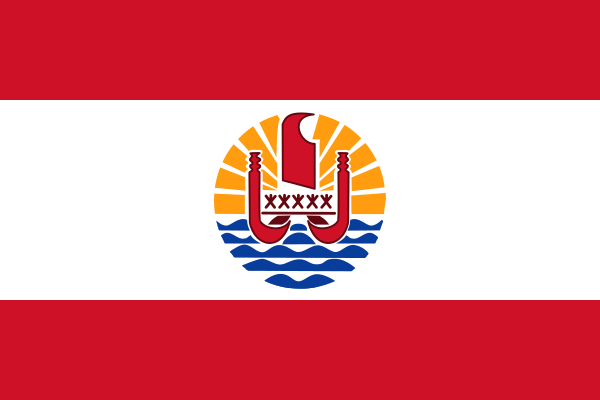
French Polynesia
Location Info
- Continent: Oceania
- Country: French Polynesia
- Coordinates: -17.6509 , -149.4068
Trust Info
Verified Geographic Information
🌍 Continents
Overview
French Polynesia is an overseas collectivity of the French Republic located in the central South Pacific Ocean. It comprises 118 islands and atolls spread over an area of more than 2,000 kilometers. The territory is organized into five main archipelagos: the Society, Tuamotu, Gambier, Marquesas, and Austral Islands.
Tahiti, the most populous island, serves as the administrative and economic center with its capital, Papeete. The region is defined by its mix of high volcanic peaks and low-lying coral atolls. Its history is marked by ancient Polynesian seafaring traditions followed by 19th-century French colonization, leading to its current status as a highly autonomous French territory.
Truth & Facts
| Land Area | 4,167 sq km |
| Exclusive Economic Zone | 5,000,000 sq km |
| Population | 278,781 |
| Life Expectancy | 78.3 years |
| Status | Overseas Collectivity |
| Capital | Papeete |
| European Discovery | 1767 |
| Annexation | 1880 |
| Currency | CFP Franc (XPF) |
| Main Export | Black Pearls |
| Renewable Energy | 38% |
| University | UPF |
| Main Hospital | CHPF |
| Main Festival | Heiva i Tahiti |
| Annual Visitors | Approx 200,000 |
| Marine Sanctuary | Whole EEZ |
| Domestic Airline | Air Tahiti |
| Cable System | Honotua |
| Lead Agency | Gendarmerie |
| Legislature | Assembly of French Polynesia |
| EU Status | OCT (Overseas Country/Territory) |
| Water Source | Artesian and Surface |
| Society Islands Area | 1,593 sq km |
| Main Crop | Coconut (Copra) |
| Predominant Religion | Christianity |
📑 Table of Contents
Overview
French Polynesia is a sprawling oceanic territory located in the central South Pacific. It is an Overseas Collectivity of France, consisting of five archipelagos with 118 islands. Tahiti is the largest and most populated island.
- Political Status: Overseas Collectivity
- Total Archipelagos: 5
- Economic Hub: Papeete
- Currency: CFP Franc
- Major Language: French
History
The islands were first settled by Austronesian voyagers who migrated through Oceania. European contact in the 18th century brought explorers like Samuel Wallis and James Cook. The Kingdom of Tahiti eventually became a French protectorate in 1842.
| Year | Event |
|---|---|
| 800 AD | Polynesian settlement |
| 1767 | Wallis reaches Tahiti |
| 1880 | French Annexation |
| 2004 | Overseas Country Status |
Geography
The geography features a contrast between high volcanic islands and low coral atolls. The Society Islands are mountainous, while the Tuamotu Archipelago consists of flat atolls barely above sea level.
- Highest Peak: Mount Orohena
- Largest Atoll: Rangiroa
- Island Chains: 5
- Total Land: 4,167 km²
- Oceanic Zone: 5M km²
Climate and Weather
French Polynesia has a tropical maritime climate. It features a humid summer from November to April and a cooler, drier winter from May to October. Average temperatures remain between 24°C and 30°C year-round.
Population and Demographics
The population is predominantly of Polynesian descent. Most inhabitants live on Tahiti and the Moorea islands. Significant minorities include Europeans and Chinese who arrived in the 19th century.
Culture and Lifestyle
Polynesian culture is centered on community, the sea, and ancestral traditions. Tattooing (tatau) and traditional drumming are vital artistic expressions. Daily life often blends French administrative structures with Polynesian social customs.
Festivals and Events
The Heiva i Tahiti is the premier cultural event. Held in July, it features traditional dance, singing, and athletic competitions like stone lifting and outrigger canoe racing.
Food and Cuisine
The local cuisine combines tropical ingredients with French culinary flair. Raw fish, root vegetables, and fruit are staples. The traditional underground oven, or 'ahima'a,' is used for festive meals.
Economy and Industries
Tourism and pearl farming are the primary economic drivers. French Polynesia is the world's leading producer of black pearls. Agriculture remains important for local consumption and small-scale export of vanilla.
Cost of Living
Costs are high due to the territory's remote location. Most consumer goods, fuel, and packaged foods are imported from France or neighboring Pacific nations, driving up prices.
Employment and Business
The service sector, particularly government administration and hospitality, employs the majority of the workforce. Entrepreneurship is encouraged in the renewable energy and pearl sectors.
Real Estate and Housing
Housing in urban Papeete includes modern apartments, while rural areas feature family compounds. Land ownership is complex due to historical communal property rights among indigenous families.
Transportation and Connectivity
Air Tahiti connects the major islands via domestic flights. Ferries provide heavy transport and passenger services between neighboring islands like Tahiti and Moorea.
Infrastructure and Utilities
Tahiti possesses advanced power grids and telecommunications. Remote atolls rely on solar energy and rainwater catchment systems for daily needs.
Education
Schooling is mandatory and follows the French national curriculum. The University of French Polynesia in Tahiti offers degrees in science, law, and humanities.
Healthcare
Public health services are managed locally. The Taaone Hospital in Pirae is the primary specialized facility, serving the entire territory through medical evacuation flights.
Tourist Attractions
Major attractions include the overwater bungalows of Bora Bora and the black sand beaches of Tahiti. Archaeological sites known as marae provide insight into pre-contact history.
Things to Do
Popular activities include snorkeling, whale watching (seasonal), and hiking to volcanic waterfalls. Deep-sea fishing and traditional canoe paddling are also common.
Best Places to Visit
Tahiti, Moorea, and Bora Bora are the most visited. The Marquesas Islands offer a rugged alternative to the lagoon-centered Society Islands.
Travel Guide
Faaa International Airport is the only international gateway. Travelers are advised to book domestic flights well in advance during peak July and August seasons.
Nearby Places
Regional neighbors include the Cook Islands to the west and the Pitcairn Islands to the east. These are typically reached via long-distance air or sea travel.
Environment and Nature
The islands host unique avian and marine species. Coral bleaching and sea-level rise are major environmental concerns facing the low-lying atolls.
Government and Administration
The High Commissioner represents the French State. The local President heads the territorial government, managing budgets, education, and social affairs.
Safety and Public Services
The territory is safe for residents and visitors. Public services include fire brigades, police, and specialized maritime search and rescue units.
Best Time to Visit
The dry season from May to October offers the best weather for outdoor activities. July is popular due to the Heiva festivities.
Local Business Directory
Papeete is the hub for maritime services, retail, and finance. Local industries include pearl processing and vanilla export companies.
General Information FAQs
Where is French Polynesia located?
It is located in the central South Pacific Ocean, east of Australia and west of South America.
What is French Polynesia known for?
It is famous for Tahiti, overwater bungalows, black pearls, and its stunning coral lagoons.
Why is French Polynesia famous?
Its fame comes from its pristine natural beauty and its historical role in Polynesian seafaring.
What country or region is French Polynesia part of?
It is an overseas collectivity of France.
What is the population of French Polynesia?
The population is approximately 278,781 according to the 2022 census.
What languages are spoken in French Polynesia?
French is the official language. Tahitian and other Polynesian languages are widely used.
What time zone is French Polynesia in?
The main islands are in UTC-10 (Tahiti Time).
What are the key facts about French Polynesia?
It has 118 islands, uses the CFP Franc, and is an autonomous French territory.
What makes French Polynesia unique?
Its vast maritime territory and the mix of volcanic peaks with coral atolls make it unique.
How large is French Polynesia in area?
The land area is 4,167 square kilometers across five archipelagos.
History FAQs
What is the history of French Polynesia?
It was settled by Polynesians, then visited by Europeans in the 1700s, and annexed by France in 1880.
When was French Polynesia established?
The current administrative entity was established through various treaties and decrees in the 19th century.
What major historical events happened in French Polynesia?
Key events include the Pomare Dynasty's reign and French nuclear testing between 1966-1996.
Who were important historical figures from French Polynesia?
King Pomare II and the nationalist leader Pouvanaa a Oopa are highly significant.
How has French Polynesia developed over time?
It evolved from independent chiefdoms to a French protectorate, then a territory, and now an autonomous collectivity.
Who were the first settlers?
Austronesian voyagers who arrived in outrigger canoes.
When did James Cook visit?
Captain James Cook visited multiple times between 1769 and 1777.
What was the Mutiny on the Bounty?
A famous 1789 rebellion on a British ship that occurred in Tahitian waters.
When did it gain autonomy?
Major internal autonomy was granted in 1984 and expanded in 2004.
What is the meaning of the flag?
It features a traditional voyaging canoe (va'a) on a red and white background.
Geography & Environment FAQs
What is the geography of French Polynesia?
It is an mix of high islands (volcanic) and low islands (coral atolls).
What natural features surround French Polynesia?
The islands are surrounded by deep ocean trenches and vast coral reef systems.
Are there mountains, rivers, or lakes near French Polynesia?
Tahiti has significant mountains and short rivers; lakes are rare but some exist in volcanic craters.
What is the elevation of French Polynesia?
The elevation peaks at 2,241 meters on Mount Orohena.
What ecosystems exist around French Polynesia?
Rainforests, mangroves, and coral reefs are the primary ecosystems.
What are the five archipelagos?
Society, Tuamotu, Marquesas, Austral, and Gambier Islands.
Is there volcanic activity?
The islands are volcanic in origin, but there are no currently active volcanoes.
What is an atoll?
A ring-shaped coral reef including a coral rim that encircles a lagoon.
How many islands are inhabited?
Approximately 67 of the 118 islands are inhabited.
What is the maritime zone size?
The Exclusive Economic Zone covers about 5 million square kilometers.
Climate & Weather FAQs
What is the climate like in French Polynesia?
Tropical maritime: hot, humid, and influenced by trade winds.
What is the average temperature in French Polynesia?
Average temperatures range from 24°C to 30°C year-round.
What is the weather like throughout the year in French Polynesia?
Consistent warmth with higher rainfall from November to April.
Does French Polynesia experience extreme weather?
It is in a cyclone-prone region, though major strikes are infrequent.
What is the best time of year to visit French Polynesia?
The dry season, typically May through October.
Does it ever snow?
No, temperatures never drop low enough for snow.
What are the trade winds?
Steady winds called 'Mara'amu' that cool the islands during the winter.
How humid is it?
Humidity levels often exceed 75-80% during the wet season.
When is the rainy season?
The rainy season peaks between December and February.
Is the water warm?
Yes, lagoon temperatures usually stay between 26°C and 29°C.
Population & Society FAQs
What is the population density of French Polynesia?
About 67 people per square kilometer, though very unevenly distributed.
What ethnic groups live in French Polynesia?
Mainly Polynesians, with smaller groups of Europeans and Chinese.
What religions are practiced in French Polynesia?
Predominantly Protestant and Roman Catholic.
What is daily life like in French Polynesia?
A mix of outdoor coastal living and modern French-style work schedules.
How diverse is the population of French Polynesia?
It is multicultural with deep integration between the three main ethnic groups.
Is the population growing?
Growth has slowed recently but remain positive due to natural increase.
What is the literacy rate?
Over 98% for the adult population.
Where do most people live?
About 70% live on the island of Tahiti.
Are there many expats?
Mainly French civil servants and retirees from metropolitan France.
What is the median age?
The median age is approximately 33 years.
Culture & Traditions FAQs
What cultural traditions are important in French Polynesia?
Navigation, dance (ori Tahiti), and the sharing of food.
What festivals are celebrated in French Polynesia?
Heiva i Tahiti and the Chinese New Year are major celebrations.
What cultural landmarks exist in French Polynesia?
Ancient stone temples called marae are the most significant landmarks.
What traditional clothing or customs are common in French Polynesia?
The pareo is the standard traditional wrap for both men and women.
What arts and crafts are associated with French Polynesia?
Wood carving, shell jewelry, and intricate weaving.
What is a Marae?
A sacred communal and religious place in Polynesian societies.
Is tattooing traditional?
Yes, the word 'tattoo' comes from the Tahitian word 'tatau.'
What is 'Mana'?
A spiritual quality of power and authority believed to reside in people and objects.
What is Ori Tahiti?
Traditional Tahitian dance characterized by rhythmic hip movements.
How is greeting done?
Commonly with a 'Ia Ora Na' and often a kiss on the cheek or a handshake.
Food & Cuisine FAQs
What foods is French Polynesia known for?
Seafood, particularly tuna, and tropical tubers like taro.
What traditional dishes originate from French Polynesia?
Poisson cru (marinated raw fish) is the most famous dish.
What are the best restaurants in French Polynesia?
Papeete's waterfront food trucks (Roulottes) offer a popular local experience.
What local ingredients are commonly used in French Polynesia cuisine?
Coconut milk, lime, ginger, and breadfruit.
What food markets or street foods are popular in French Polynesia?
The Papeete Market is the best place for local street food snacks.
What is breadfruit?
A starchy fruit that is a major staple, often roasted or boiled.
Do they eat meat?
Yes, pork and chicken are common, often prepared in a ground oven.
What is Punaa?
Local term for various types of canned or preserved meat common in the islands.
Are tropical fruits abundant?
Yes, mangoes, papayas, and pineapples are grown locally.
What is Poisson Cru?
Raw fish marinated in citrus juice and finished with fresh coconut milk.
Economy & Business FAQs
What are the main industries in French Polynesia?
Tourism, pearl culture, and fishing.
What economic activities drive the economy of French Polynesia?
Service industries and financial aid from France.
What businesses operate in French Polynesia?
Air Tahiti Nui, Robert Wan (pearls), and international hotel groups.
Is French Polynesia an important economic center?
It is a central hub for the Eastern South Pacific region.
What are the major exports or products from French Polynesia?
Cultured pearls, vanilla, and copra oil.
What is the currency?
The CFP Franc (XPF).
Is the economy stable?
It is relatively stable due to French backing but vulnerable to tourism shifts.
Is pearl farming large?
It is the second-largest source of foreign income after tourism.
How is the vanilla quality?
Tahitian vanilla is world-renowned for its unique aroma and high quality.
What is the role of the public sector?
The public sector is the largest employer in the territory.
Transportation FAQs
How do you get to French Polynesia?
Via international flights into Faaa Airport (PPT) in Tahiti.
What is the nearest airport to French Polynesia?
Faaa International Airport is the only international entry point.
Does French Polynesia have railway connections?
No, there are no railways in the territory.
How reliable is public transportation in French Polynesia?
Public buses (RTCP) are reliable on Tahiti; elsewhere it is limited.
What major highways or roads connect to French Polynesia?
Tahiti has a main coastal road that circles the island.
Are there inter-island flights?
Yes, Air Tahiti operates a comprehensive domestic network.
Can you travel by boat?
Yes, ferries run daily between Tahiti and Moorea, and less frequently elsewhere.
Are rental cars available?
Available on larger islands like Tahiti, Moorea, and Bora Bora.
Is there a lot of traffic?
Papeete experiences significant traffic congestion during peak hours.
What is the main port?
The Port of Papeete is the primary gateway for sea freight.
Safety & Practical FAQs
Is French Polynesia safe for tourists?
It is very safe, though standard vigilance is recommended in urban areas.
What is the crime rate?
Overall crime rates are low compared to many international destinations.
Are there dangerous animals?
There are no dangerous land animals or snakes; marine life requires caution.
Is the water drinkable?
Tap water is drinkable in Papeete and Bora Bora, but bottled water is safer elsewhere.
Do I need a visa?
Depends on your nationality; EU citizens do not, others may need one for France.
What is the healthcare like?
Good in Tahiti, but limited on remote islands.
Is English spoken?
Yes, widely in tourist areas, but French is the primary language elsewhere.
What is the emergency number?
17 for Police, 18 for Fire, 15 for Medical emergencies.
What is the voltage?
220V, with European-style plugs (Type C and E).
Is tipping expected?
No, tipping is not a part of Polynesian culture and is not required.