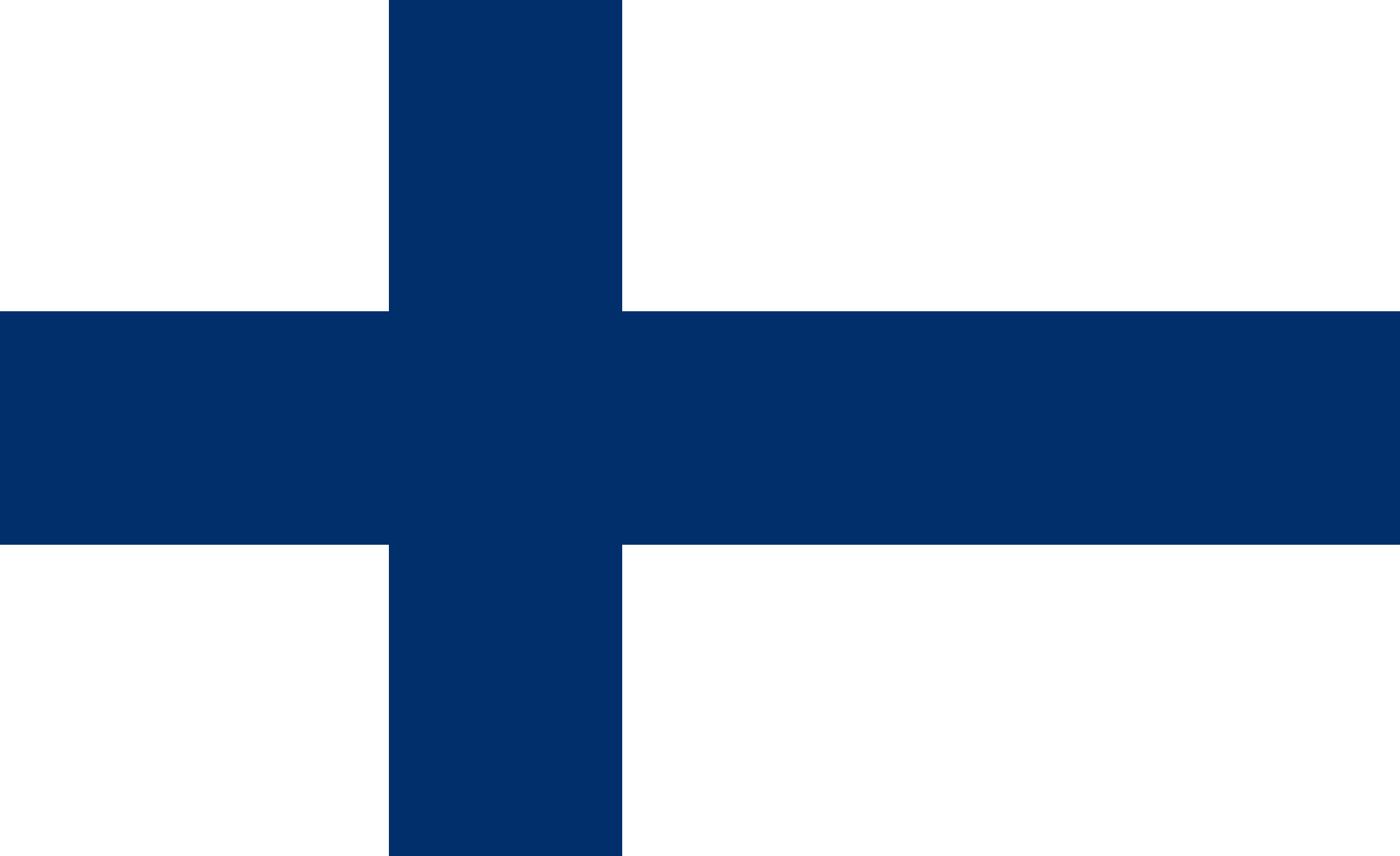
Finland
Location Info
- Continent: Europe
- Country: Finland
- Coordinates: 61.9241 , 25.7482
Trust Info
Verified Geographic Data 2026
🌍 Continents
Overview
Finland is a Nordic country located in Northern Europe, bordered by Sweden to the west, Norway to the north, and Russia to the east. It is known as the 'Land of a Thousand Lakes,' with over 188,000 lakes and approximately 75% of its land covered by forests. The nation's capital, Helsinki, serves as its primary economic and cultural hub.
Historically, Finland transitioned from a Grand Duchy of the Russian Empire to an independent republic in 1917. Today, it is recognized for its high standard of living, advanced technology sector, and world-leading education system. As of 2026, Finland continues to play a significant role in international security as a member of NATO and the European Union.
Truth & Facts
| Total Area | 338,455 sq km |
| Forest Cover | Approx. 75% |
| Total Population | 5,657,608 |
| Urban Population | 87.1% |
| Government Type | Unitary Parliamentary Republic |
| Head of State | President Alexander Stubb |
| Independence Day | December 6, 1917 |
| EU Accession | January 1, 1995 |
| Currency | Euro (EUR) |
| GDP Growth Projection | 1.4% to 1.6% |
| Rail Network | 5,919 km |
| Literacy Rate | 100% |
| Life Expectancy | 82.4 years |
| National Languages | Finnish, Swedish |
| Most Visited City | Helsinki |
| National Parks | 41 |
| Primary Hub | Helsinki-Vantaa Airport |
| R&D Expenditure | 2.99% of GDP |
| World Happiness Rank | 1st |
| Wellbeing Counties | 21 + Helsinki |
| NATO Accession | April 4, 2023 |
| Nuclear Energy | Approx. 40% of electricity |
| Median Age | 43.4 years |
| Unemployment Rate | 7.3% to 7.6% |
| Lakes count | 188,000 |
📑 Table of Contents
Overview
Finland, officially the Republic of Finland, is a Nordic nation situated in the Fennoscandian region of Northern Europe. It shares extensive land borders with Sweden, Norway, and Russia, while its coastline spans the Baltic Sea, the Gulf of Bothnia, and the Gulf of Finland. The country is recognized for its stable democracy, high levels of social trust, and consistently high rankings in the World Happiness Report.
- Capital: Helsinki
- Currency: Euro (€)
- Official Languages: Finnish and Swedish
- Total Area: 338,455 sq km
- International Alliances: EU, NATO, UN
History
The history of Finland is marked by long periods of Swedish and Russian rule before achieving independence. From the 12th century until 1809, Finland was part of Sweden, which heavily influenced its legal and social structures. Following the Finnish War, it became an autonomous Grand Duchy within the Russian Empire.
Finland declared independence on December 6, 1917, amidst the Russian Revolution. The subsequent 20th century saw the nation survive the Winter War and the Continuation War during World War II, maintaining its sovereignty while losing territory. Post-war Finland focused on neutrality and rapid industrialization, eventually joining the European Union in 1995 and NATO in 2023.
| Period | Event |
|---|---|
| 1150–1809 | Swedish Era |
| 1809–1917 | Russian Grand Duchy |
| 1917 | Declaration of Independence |
| 1939–1940 | Winter War |
| 1995 | EU Membership |
| 2023 | NATO Accession |
Geography
Finland is characterized by a low-lying landscape formed by glacial activity. Much of the country is a plateau of ancient crystalline rock, dotted with thousands of lakes and islands. The Saimaa lake system in the southeast is the largest in the country. To the north, the terrain rises into the fells of Lapland, where the highest peak, Halti, reaches 1,324 meters.
- Land area: 303,815 sq km
- Inland water: 34,540 sq km
- Highest point: Mount Halti (1,324 m)
- Major rivers: Kemijoki, Oulujoki, Tornionjoki
- Islands: Over 179,000 islands in the archipelago
Climate & Weather
The climate in Finland is classified as both maritime and continental, influenced by the Gulf Stream and the country's northern latitude. Winters are long and cold, with snow cover typically lasting from November to April. Summers are relatively short but can be warm, especially in the southern regions.
In Lapland, the phenomenon of the Polar Night (Kaamos) occurs in winter, while the Midnight Sun is visible during the summer solstice. Precipitation is moderate and distributed throughout the year.
| Season | Avg Temp (South) | Avg Temp (North) |
|---|---|---|
| Winter | -5°C to -10°C | -10°C to -20°C |
| Summer | 15°C to 20°C | 10°C to 15°C |
Population & Demographics
As of early 2026, Finland's population stands at approximately 5.66 million people. The population density is low, averaging about 19 inhabitants per square kilometer, with the majority of residents living in the urbanized southern regions. Finland is experiencing a significant demographic shift due to an aging population and low birth rates.
- Total Population (2026): 5,657,608
- Urban Population: 87.1%
- Major ethnic groups: Finnish, Swedish-Finnish, Sámi, Roma
- Foreign background population: Approx. 11.1%
- Median age: 43.4 years
Culture & Lifestyle
Finnish culture emphasizes equality, modesty, and a deep connection to nature. The concept of 'Sisu'—a unique Finnish term for resilience and determination—is central to the national identity. Public saunas are a staple of daily life, with an estimated 3 million saunas in the country.
- Sauna culture: Integral to social and family life
- Sisu: National ethos of perseverance
- Design: Minimalist and functional (e.g., Marimekko, Iittala)
- Literature: The Kalevala (national epic)
- Architecture: Notable for Alvaar Aalto's modernist works
Festivals & Events
Festivals in Finland often align with the seasons and traditional holidays. Midsummer (Juhannus) is the most significant summer celebration, marked by bonfires and countryside retreats. Vappu (May Day) is a major spring festival celebrated by students and workers alike.
- Juhannus: Midsummer solstice celebration
- Vappu: May 1st carnival and labor day
- Independence Day: December 6th, national processions
- Savonlinna Opera Festival: Renowned international event
- Midnight Sun Film Festival: Held in Sodankylä
Food & Cuisine
Finnish cuisine is based on fresh, seasonal ingredients sourced from forests, lakes, and the sea. Common staples include rye bread, potatoes, berries, and fish such as salmon and herring. Game meats like reindeer are traditional in northern regions.
- Ruisleipä: Dark sourdough rye bread
- Karjalanpiirakka: Karelian pasties with rice porridge
- Leipäjuusto: Squeaky 'bread cheese' served with cloudberry jam
- Kalakukko: Fish and pork baked inside a rye loaf
- Berries: Bilberries, lingonberries, and cloudberries
Economy & Industries
Finland has a highly industrialized, knowledge-based economy. Key sectors include the forest industry (paper and timber), metal and engineering, and a robust technology sector specializing in ICT, electronics, and gaming. The country is a significant investor in research and development.
- Major Exports: Machinery, paper, chemicals, electronics
- Key Partners: Germany, Sweden, USA, Netherlands
- Innovation: High focus on cleantech and digitalization
- Currency: Euro member since 1999
- GDP per capita: Among the highest in the EU
Cost of Living
The cost of living in Finland is relatively high compared to the global average but comparable to other Nordic nations. High taxes fund extensive social services, including free education and subsidized healthcare. Housing in Helsinki is significantly more expensive than in rural areas.
| Item | Avg. Cost (Estimated) |
|---|---|
| 1BR Apartment (City Center) | €900 - €1,200 |
| Monthly Transit Pass | €60 - €70 |
| Meal at Inexpensive Restaurant | €15 - €20 |
Employment & Business
The Finnish labor market is characterized by a high degree of unionization and collective bargaining. There is a strong demand for skilled workers in the technology, healthcare, and engineering sectors. The government actively promotes entrepreneurship and startups, particularly in the digital space.
- Unemployment rate: Approx. 7.3% (2026 forecast)
- Working hours: Standard 37.5 - 40 hours per week
- Startup hub: Slush, the world's leading startup event
- Top employers: Nokia, Kone, Stora Enso, wellbeing counties
Real Estate & Housing
Housing in Finland ranges from modern urban apartments to traditional wooden houses in the countryside. The majority of Finns live in owner-occupied homes. Rental markets are well-regulated, with major providers like VVO and Lumo offering apartments in cities.
- Home ownership: Approx. 70%
- Helsinki market: Highest prices and demand
- Energy efficiency: Modern homes are highly insulated
- Social housing: Municipalities provide subsidized rental options
Transportation & Connectivity
Finland maintains a highly efficient transportation network despite its challenging climate. Helsinki-Vantaa Airport is a major transit hub for flights between Europe and Asia. The rail network, operated by VR, connects all major cities with high-speed trains (Pendolino).
- Railways: Extensive network, connecting to Russia and Sweden
- Roads: Well-maintained highways (e.g., Highway 4, Highway 9)
- Public Transit: Excellent bus and tram systems in cities
- Maritime: Frequent ferry links to Estonia, Sweden, and Germany
- Aviation: Main hub at Helsinki-Vantaa (HEL)
Infrastructure & Utilities
Finland’s infrastructure is modern and resilient. The country has one of the world's highest rates of internet connectivity and mobile phone penetration. Utilities like water and electricity are reliable, with a strong emphasis on transitioning to renewable energy sources.
- Electricity: Mix of nuclear, wind, and hydro power
- District heating: Common in urban areas
- Water: High-quality tap water, safe to drink nationwide
- Broadband: Government target for 100 Mbps for all by 2030
Education
The Finnish education system is globally acclaimed for its equity and quality. Compulsory education begins at age seven and lasts until age 18. Tuition is free for Finnish and EU/EEA citizens at all levels, including university.
- Comprehensive school: 9 years of basic education
- Higher Education: Universities and Universities of Applied Sciences
- Free tuition: For domestic and EU students
- PISA performance: Consistently among top global rankings
- Teacher training: Highly competitive and requires a Master's degree
Healthcare
Finland provides universal healthcare to all permanent residents. Services are funded through taxation and managed by 21 wellbeing services counties. The system is known for high-quality specialized care and medical research.
- Public system: Low client fees for most services
- FSHS: Specialized health service for university students
- Life expectancy: 82.4 years
- Digital health: Extensive use of electronic prescriptions and records
- Kela: Social Insurance Institution of Finland
Tourist Attractions
Tourism in Finland is centered on its natural beauty and unique Nordic culture. Lapland is a primary destination for winter activities and the Aurora Borealis. Helsinki offers a mix of neoclassical and modern architecture, museums, and seaside charm.
- Santa Claus Village: Located in Rovaniemi, Lapland
- Suomenlinna: 18th-century sea fortress and UNESCO site
- Temppeliaukio Church: Unique church carved into rock
- Saimaa Lakeland: Boating and the rare Saimaa ringed seal
- National Museum of Finland: Cultural history overview
Things To Do
Outdoor activities are a way of life in Finland. In winter, skiing, ice fishing, and husky sledding are popular. In summer, activities shift to hiking, berry picking, and lake-side retreats in summer cottages (mökki).
- Winter sports: Cross-country and downhill skiing
- Northern Lights: Best viewed in Lapland from Sep to Mar
- Midnight Sun: 24-hour daylight in northern regions in June
- Berry picking: Everyman’s Right allows foraging in forests
- Sauna: Experiencing traditional wood-fired saunas
Best Places to Visit
Finland offers diverse destinations ranging from vibrant urban centers to remote wilderness. Helsinki, the capital, provides a gateway to the country, while the Archipelago Sea contains thousands of islands perfect for exploration.
- Helsinki: Capital city with design and architecture
- Rovaniemi: Gateway to the Arctic and Santa's home
- Tampere: Known as the 'Sauna Capital of the World'
- Turku: Finland's oldest city and former capital
- Savonlinna: Famous for its medieval castle Olavinlinna
Travel Guide
Traveling to Finland is straightforward due to its membership in the Schengen Area. International visitors typically arrive via Helsinki-Vantaa Airport. The country is exceptionally safe, with English widely spoken in tourist areas and cities.
- Visa: Schengen visa rules apply
- Best time for snow: January to March
- Best time for sun: June to August
- Currency: Euro only; cards widely accepted everywhere
- Safety: One of the safest countries globally
Nearby Places
Finland’s location makes it a convenient starting point for visiting other Baltic and Nordic destinations. Frequent ferry services link Helsinki with several neighboring capitals.
- Tallinn, Estonia: 2 hours by ferry across the Gulf of Finland
- Stockholm, Sweden: Overnight ferry through the archipelago
- St. Petersburg, Russia: Historically accessible by train (current status varies)
- Norway: Land border access in the far north
Environment & Nature
Finland is home to diverse flora and fauna, including brown bears, wolves, and the endangered Saimaa ringed seal. Environmental protection is a high priority, with strict regulations on industrial emissions and waste management.
- Everyman's Right: Freedom to roam and forage
- National Parks: 41 parks protecting varied ecosystems
- Conservation: Focus on peatland and forest biodiversity
- Clean air: Ranked among the cleanest in the world
Government & Administration
Finland is a parliamentary republic. The President leads foreign policy, while the Prime Minister heads the government. The unicameral parliament, the Eduskunta, has 200 members elected every four years.
- Head of State: President Alexander Stubb
- Head of Government: Prime Minister Petteri Orpo
- Political system: Multi-party democracy
- Governance: Highly transparent with low corruption levels
Safety & Public Services
Public safety in Finland is maintained by a professional, highly trusted police force. Emergency services (112) are centralized and responsive. Public services are efficient and generally accessible through digital platforms.
- Crime rate: Very low for violent crime
- Police trust: Consistently high public confidence
- Emergency number: 112 (European standard)
- Social security: Comprehensive 'Kela' benefits system
Best Time to Visit
The ideal time to visit depends on the desired activities. Summer (June–August) is best for outdoor festivals and coastal exploration. Winter (December–March) is best for snow sports and Northern Lights viewing in Lapland.
| Activity | Ideal Months |
|---|---|
| Northern Lights | September to March |
| Skiing & Snow | January to April |
| Hiking & Festivals | June to August |
| Ruska (Autumn colors) | September |
Local Business Directory
Finland’s business landscape is dominated by services, manufacturing, and tech innovation. Major corporate headquarters are primarily located in the Helsinki Metropolitan Area, Espoo, and Tampere.
- Technology: Espoo (Nokia, Rovio)
- Manufacturing: Kone (elevators), Metso Outotec
- Forestry: UPM-Kymmene, Stora Enso
- Retail: S-Group, Kesko
General Information FAQs
Where is Finland located?
Finland is located in Northern Europe. It shares borders with Sweden to the west, Norway to the north, and Russia to the east. Its southern and western borders are formed by the Baltic Sea, the Gulf of Finland, and the Gulf of Bothnia.
What is Finland known for?
Finland is known for its world-class education system, the Northern Lights, its vast archipelago, and being the 'Land of a Thousand Lakes.' It is also famous for its sauna culture, Finnish design, and for consistently ranking as the happiest country in the world.
Why is Finland famous?
Finland is famous for its innovation in technology (like Nokia and Linux), its resilient 'Sisu' spirit, and the Midnight Sun. It is also recognized as the home of the Moomins and the official residence of Santa Claus in Rovaniemi.
What country or region is Finland part of?
Finland is part of the Nordic countries and is located in Northern Europe. It has been a member of the European Union since 1995 and joined NATO in 2023.
What is the population of Finland?
As of January 2026, the preliminary population of Finland is approximately 5,657,608 people.
What languages are spoken in Finland?
The official national languages are Finnish and Swedish. In the north, Sámi languages are spoken by the indigenous Sámi people. English is widely spoken as a second language, particularly in urban areas and among younger generations.
What time zone is Finland in?
Finland is in Eastern European Time (EET), which is UTC+2. During the summer, it observes Eastern European Summer Time (EEST), which is UTC+3.
What are the key facts about Finland?
Key facts include: the capital is Helsinki; the currency is the Euro; it contains over 188,000 lakes; and it is a parliamentary republic. It became independent from Russia in 1917.
What makes Finland unique?
Finland’s uniqueness lies in its combination of high-tech society and deep-rooted nature traditions, such as 'Everyman's Right' and the ubiquitous sauna. It is also one of the few places where the Aurora Borealis is visible for much of the year in its northern regions.
How large is Finland in area?
Finland has a total area of 338,455 square kilometers, making it the eighth-largest country in Europe by land area.
History FAQs
What is the history of Finland?
Finland's history includes centuries of Swedish rule followed by its time as an autonomous Grand Duchy under the Russian Empire from 1809. It gained independence in 1917, survived conflicts in WWII, and evolved into a highly developed welfare state.
When was Finland established?
Modern independent Finland was established on December 6, 1917, when the Finnish Parliament approved the declaration of independence from Russia.
What major historical events happened in Finland?
Major events include the Swedish Crusades in the 12th century, the Finnish War (1808-1809), the Declaration of Independence (1917), the Winter War and Continuation War (1939-1944), and joining the EU (1995) and NATO (2023).
Who were important historical figures from Finland?
Important figures include Carl Gustaf Emil Mannerheim (military leader and president), Jean Sibelius (composer), Alvar Aalto (architect), and Tarja Halonen (Finland's first female president).
How has Finland developed over time?
Finland transitioned from an agrarian society to a highly industrialized nation post-WWII. It focused on education and technology, becoming a leader in the global ICT sector by the late 20th century.
Geography & Environment FAQs
What is the geography of Finland?
Finland is mostly flat or rolling plains with thousands of lakes and rocky islands along its coasts. The northern part, Lapland, features more mountainous terrain and fells.
What natural features surround Finland?
Finland is surrounded by the Gulf of Bothnia to the west and the Gulf of Finland to the south. It is bounded by the Scandinavian Mountains to the far northwest and the Russian plains to the east.
Are there mountains, rivers, or lakes near Finland?
Yes, Finland is famous for its 188,000 lakes, including Lake Saimaa. Major rivers include the Kemijoki and Oulujoki. The highest peaks are in the Halti region of the Scandinavian fells.
What is the elevation of Finland?
Most of Finland lies below 200 meters. The average elevation is 164 meters. The highest point is Mount Halti at 1,324 meters.
What ecosystems exist around Finland?
Finland is predominantly part of the boreal forest (taiga) biome. It also features vast wetlands, peatlands, and arctic tundra in the northernmost parts of Lapland.
Climate & Weather FAQs
What is the climate like in Finland?
Finland has a humid continental climate in the south and a subarctic climate in the north. It is tempered by the Baltic Sea and the Gulf Stream.
What is the average temperature in Finland?
Average temperatures vary by region: in Helsinki, it is around -5°C in winter and 18°C in summer. In Lapland, winter temperatures often drop below -20°C.
What is the weather like throughout the year in Finland?
Spring is short and cool; summer is bright with long days; autumn brings rain and colorful foliage (ruska); and winter is long, snowy, and dark.
Does Finland experience extreme weather?
Extreme cold is common in winter, especially in the north. Thunderstorms can occur in summer, but extreme heat and severe storms are relatively rare.
What is the best time of year to visit Finland?
For winter activities and the Northern Lights, visit between January and March. For hiking and the Midnight Sun, June and July are ideal.
Population & Society FAQs
What is the population density of Finland?
The population density is approximately 19 people per square kilometer, making it the most sparsely populated country in the European Union.
What ethnic groups live in Finland?
The majority are ethnic Finns. Minorities include Finland-Swedes, Sámi, Roma, and an increasing population of immigrants from Estonia, Russia, and Iraq.
What religions are practiced in Finland?
The largest denomination is the Evangelical Lutheran Church of Finland. There is also a small Finnish Orthodox community and an increasing number of non-religious individuals.
What is daily life like in Finland?
Daily life is characterized by a high degree of order, punctuality, and a strong work-life balance. Nature and saunas play a central role in leisure time.
How diverse is the population of Finland?
While historically homogeneous, Finland is becoming more diverse. Approximately 11% of the population now has a foreign background.
Culture & Traditions FAQs
What cultural traditions are important in Finland?
Key traditions include the weekly sauna, Midsummer celebrations (Juhannus), and the annual preparation for Christmas. Independence Day on Dec 6 is also a solemn national event.
What festivals are celebrated in Finland?
Major festivals include Juhannus (Midsummer), Vappu (May Day), and the Savonlinna Opera Festival.
What cultural landmarks exist in Finland?
Landmarks include the Helsinki Cathedral, Suomenlinna sea fortress, and the medieval Olavinlinna castle.
What traditional clothing or customs are common in Finland?
National costumes (kansallispuku) are worn on special occasions. Traditional customs include taking off shoes inside homes and a deep respect for silence and personal space.
What arts and crafts are associated with Finland?
Finland is associated with functional design (Iittala glass, Marimekko textiles), wooden handicrafts (puukko knives), and the production of traditional instruments like the kantele.
Food & Cuisine FAQs
What foods is Finland known for?
Finland is known for rye bread, Karelian pasties, reindeer meat, and forest berries like cloudberries and bilberries.
What traditional dishes originate from Finland?
Traditional dishes include Kalakukko (fish pie), Hernekeitto (pea soup with ham), and Leipäjuusto (bread cheese).
What are the best restaurants in Finland?
High-end dining is concentrated in Helsinki, with Michelin-starred restaurants like Palace and Grön focusing on modern Nordic flavors.
What local ingredients are commonly used in Finland cuisine?
Common ingredients include root vegetables, dark rye, freshwater fish (perch, pike), wild mushrooms, and various game meats.
What food markets or street foods are popular in Finland?
Helsinki’s Old Market Hall is famous. Popular street foods include 'Grillimakkara' (grilled sausage) and 'Lihapiirakka' (meat pie).
Economy & Business FAQs
What are the main industries in Finland?
The main industries are electronics and technology, mechanical engineering, metals, and the forest industry (pulp and paper).
What economic activities drive the economy of Finland?
High-tech manufacturing and services, particularly in information technology and telecommunications, drive the economy alongside traditional timber exports.
What businesses operate in Finland?
Major global companies like Nokia, Kone, Stora Enso, and Neste have their headquarters in Finland.
Is Finland an important economic center?
Yes, particularly in Northern Europe. It serves as a hub for innovation, cleantech, and a gateway for trade within the Baltic region.
What are the major exports or products from Finland?
Major exports include refined petroleum, coated paper, medical instruments, and heavy machinery.
Employment & Jobs FAQs
What job opportunities are available in Finland?
Opportunities are strongest in software development, nursing, engineering, and the green energy transition.
What are the major employers in Finland?
The public sector (wellbeing counties) is a major employer, alongside private companies like Nokia and OP Financial Group.
What skills are in demand in Finland?
Digital skills, expertise in automation, healthcare qualifications, and specialized construction skills are in high demand.
Is Finland a good place to work?
Finland is considered excellent due to high safety standards, fair wages, flat hierarchies, and strong parental leave benefits.
What is the unemployment rate in Finland?
As of early 2026, the trend unemployment rate is approximately 7.6%.
Cost of Living FAQs
Is Finland expensive to live in?
Yes, it is generally considered one of the more expensive countries in Europe, particularly regarding housing in cities and alcohol taxes.
What is the average cost of living in Finland?
For a single person, monthly expenses (excluding rent) typically range between €800 and €1,000.
How much does housing cost in Finland?
Rent for a one-bedroom apartment in Helsinki averages €900–€1,200. In smaller cities like Oulu or Kuopio, it may be €600–€800.
What are average food and utility costs in Finland?
Monthly food costs for one person are approx €250–€400. Utilities (electricity and water) for an apartment average €50–€100 per month.
Is Finland affordable compared to nearby cities?
Helsinki is more affordable than Oslo or Copenhagen but generally more expensive than Tallinn or Berlin.
Housing & Real Estate FAQs
What types of housing are available in Finland?
Options include multi-story apartment buildings (kerrostalo), row houses (rivitalo), and detached houses (omakotitalo).
What is the average home price in Finland?
In Helsinki, prices can exceed €6,000 per square meter, while the national average is significantly lower, around €2,200 per square meter.
Is it better to rent or buy property in Finland?
Buying is often considered a good long-term investment due to stable markets, but renting is common among young adults and international residents.
Which neighborhoods are popular in Finland?
In Helsinki, Kallio, Töölö, and Lauttasaari are popular. In Tampere, the Pyynikki and Hervanta areas are well-regarded.
How has the property market changed in Finland?
Recent trends show a slight stagnation in prices due to interest rate changes, but demand remains high in major growth centers like Uusimaa.
Transportation FAQs
How do you get to Finland?
Most international travelers arrive by air via Helsinki-Vantaa Airport or by ferry from Tallinn or Stockholm.
What is the nearest airport to Finland?
The main international airport is Helsinki-Vantaa (HEL). Other regional airports include Oulu, Rovaniemi, and Tampere-Pirkkala.
Does Finland have railway connections?
Yes, there is an extensive rail network operated by VR. There are also international connections to Russia (currently suspended) and ferry-rail links to Sweden.
How reliable is public transportation in Finland?
Public transit is exceptionally reliable, even in extreme winter conditions. Local buses, trams, and trains typically run on time.
What major highways or roads connect to Finland?
Major roads include the E75 (Highway 4) which runs from Helsinki to Lapland, and the E18 which connects the southern coast.
Education FAQs
What schools are located in Finland?
Finland has a network of public comprehensive schools, upper secondary schools, and vocational colleges located in every municipality.
Are there universities in Finland?
Yes, there are 13 universities and 22 universities of applied sciences. Famous ones include the University of Helsinki and Aalto University.
What is the literacy rate in Finland?
The literacy rate is nearly 100%.
What educational opportunities exist in Finland?
Finland offers diverse pathways in academic research, technology, and vocational training, with a strong emphasis on lifelong learning.
Is Finland a good place for students?
Yes, due to the high quality of education, student housing benefits, and the lack of tuition fees for EU/EEA students.
Healthcare FAQs
What hospitals are available in Finland?
Each region has a central hospital, such as HUS (Helsinki University Hospital) and TAYS (Tampere University Hospital).
Are there emergency medical services in Finland?
Yes, high-quality emergency care is available 24/7 by calling 112.
What healthcare facilities exist in Finland?
Facilities include local health centers (terveysasema), private clinics, and specialized university hospitals.
Is healthcare affordable in Finland?
Public healthcare is heavily subsidized. Patients pay small client fees, which are capped annually.
Are specialized medical services available in Finland?
Yes, Finland is a leader in cancer treatment, medical technology, and genomic research.
Tourism & Travel FAQs
What are the top tourist attractions in Finland?
Top sites include Suomenlinna, Santa Claus Village in Rovaniemi, and the Northern Lights in Lapland.
What are the best things to do in Finland?
Best activities include visiting a public sauna, skiing, hiking in national parks, and exploring the Helsinki archipelago.
Is Finland worth visiting?
Yes, for travelers who appreciate nature, modern design, and unique Arctic experiences.
What landmarks should visitors see in Finland?
Must-see landmarks include Helsinki Cathedral, Temppeliaukio (Rock Church), and Olavinlinna Castle.
How many days should tourists spend in Finland?
A typical visit lasts 5 to 10 days, allowing time for Helsinki and a trip to Lapland or the Lakeland.
Nearby Places FAQs
What places are near Finland worth visiting?
Tallinn (Estonia) and Stockholm (Sweden) are highly popular nearby destinations accessible by sea.
What cities or towns are close to Finland?
Tallinn is just 80km across the sea. The Swedish town of Haparanda sits right on the border with Tornio.
What natural attractions are near Finland?
The Swedish Lapland fells and the Norwegian fjords in the north are within driving distance from Finnish Lapland.
What day trips can be taken from Finland?
A day trip to Tallinn from Helsinki is very common, as is a trip from Tornio to Sweden.
What famous destinations are within reach of Finland?
The Baltic States and the rest of Scandinavia are easily reached by short flights or ferries.
Safety FAQs
Is Finland safe to live in?
Yes, it is consistently ranked among the safest and most stable countries in the world.
Is Finland safe for tourists?
Extremely safe. Common sense regarding personal belongings is advised in crowded areas, but violent crime against tourists is very rare.
What is the crime rate in Finland?
The crime rate is very low. Petty theft is the most common issue in larger cities.
What emergency services operate in Finland?
Police, Fire, and Ambulance services all operate through the 112 emergency number.
What safety tips should visitors follow in Finland?
Always wear reflectors in winter, be careful on slippery ice, and respect the cold weather by dressing in layers.
Lifestyle & Living FAQs
Is Finland a good place to live?
Yes, for those who value safety, equality, and high-quality public services.
What recreational activities are available in Finland?
Common activities include cross-country skiing, swimming in lakes, cycling, and attending open-air concerts.
Is Finland family-friendly?
Extremely. It offers extensive park networks, high-quality childcare, and safe environments for children to play.
What outdoor activities are popular in Finland?
Hiking, kayaking, and berry picking are very popular in summer; skiing and skating in winter.
What makes life enjoyable in Finland?
The lack of stress, clean environment, reliable society, and the proximity to nature are the most cited reasons for life satisfaction.
Practical Information FAQs
What travel tips should visitors know about Finland?
Book transport in advance, always carry a reusable water bottle, and try a public sauna at least once.
What local customs should visitors respect in Finland?
Removing shoes in homes, respecting personal space, and being punctual for appointments.
How accessible is Finland for international visitors?
Most citizens from Western nations do not need a visa for short stays, and Helsinki is a major international flight hub.
What services are available for tourists in Finland?
There are extensive tourist information centers, well-marked hiking trails, and high-speed Wi-Fi accessible in most public places.
What important information should travelers know before visiting Finland?
Shops close earlier on weekends, tap water is higher quality than bottled water, and tipping is not required but appreciated for good service.