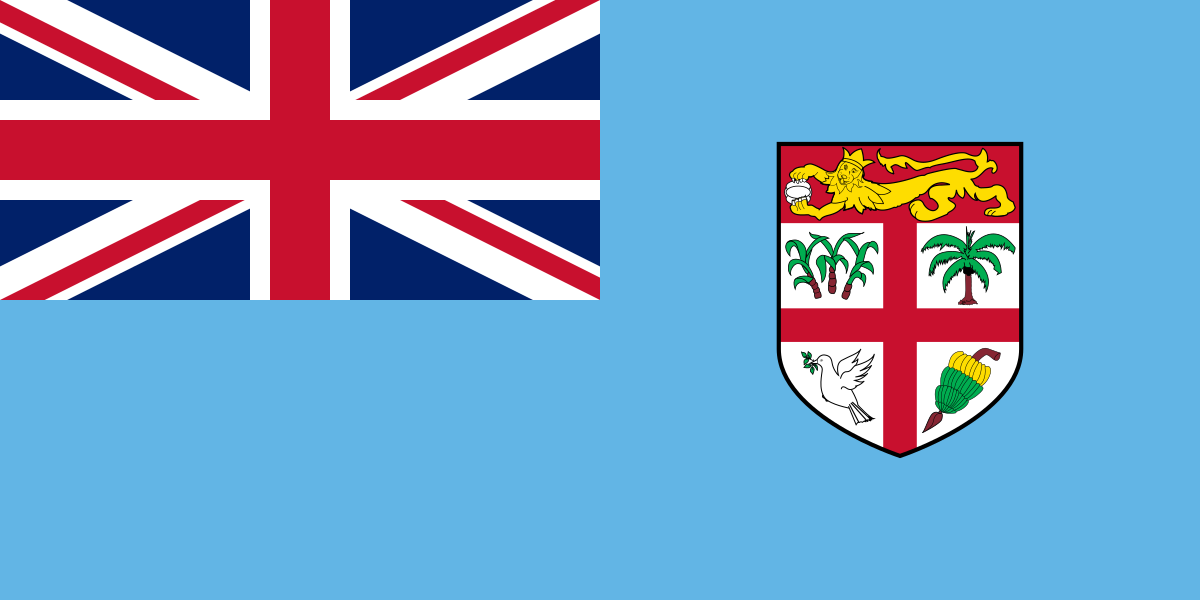
Fiji
Location Info
- Continent: Oceania
- Country: Fiji
- Coordinates: -17.7134 , 178.065
Trust Info
Verified Geographic Information
🌍 Continents






Overview
Fiji is an island nation located in the South Pacific Ocean, approximately 2,000 kilometers northeast of New Zealand. It consists of an archipelago of more than 330 islands, of which about 110 are permanently inhabited. The two largest islands, Viti Levu and Vanua Levu, contain about 87% of the total population. The capital, Suva, is situated on the southeast coast of Viti Levu and serves as a major regional hub for the South Pacific.
Historically, Fiji was a British colony for nearly a century before gaining independence in 1970. The nation’s geography is characterized by mountainous terrain of volcanic origin and extensive coral reef systems. Today, Fiji possesses one of the most developed economies in the Pacific, driven by a robust tourism sector, sugar exports, and a growing manufacturing base. Its population is a unique blend of indigenous Fijian and Indo-Fijian ethnicities.
Truth & Facts
| Total Land Area | 18,274 sq km |
| Highest Point | Mount Tomanivi (1,324 m) |
| Total Population | Approx. 930,000 |
| Ethnic Groups | iTaukei 56.8%, Indo-Fijian 37.5% |
| Capital City | Suva |
| Government Type | Parliamentary Republic |
| Independence Date | October 10, 1970 |
| Currency | Fijian Dollar (FJD) |
| Major Industries | Tourism, Sugar, Garments |
| Electricity Access | Approx. 96% |
| Literacy Rate | 99.1% |
| Life Expectancy | 67.9 years |
| Official Languages | English, iTaukei, Fiji Hindi |
| Annual Visitors | Approx. 900,000 |
| Coral Reef Coverage | Approx. 10,000 sq km |
| Main Airport | Nadi International Airport |
| Internet Penetration | Approx. 70% |
| Emergency Number | 911 or 917 |
| Head of State | President |
| UN Member Since | 1970 |
| Water Access | Approx. 85% in urban areas |
| Time Zone | UTC +12 |
| Vulnerability Index | High (due to sea level rise) |
| Cession to Britain | October 10, 1874 |
📑 Table of Contents
Overview of Fiji
Fiji is an archipelagic nation comprising over 330 islands in the South Pacific. It is positioned at the crossroads of the Melanesian and Polynesian regions, serving as a political and economic center for the Pacific Islands. The nation is recognized for its volcanic topography and diverse coral reef ecosystems.
Key geographic and economic features include:
- Major islands: Viti Levu and Vanua Levu.
- Capital: Suva (Viti Levu).
- Primary economy: Tourism and Agriculture.
- Highest peak: Mt. Tomanivi.
- Political status: Republic.
History of Fiji
Fiji's history began with Lapita settlers around 3500–1000 BCE. The islands remained relatively isolated from Europeans until the 17th century. In 1874, the Cakobau government ceded the islands to the British Empire, marking the start of nearly a century of colonial rule.
During the colonial era, the British brought indentured laborers from India to work in the sugar plantations, which significantly altered the nation's demographics. Fiji gained independence in 1970 and has since experienced several shifts in governance, including the transition to a republic in 1987.
Geography of the Islands
Fiji's geography is defined by its volcanic origins. The terrain on the larger islands consists primarily of rugged mountains covered in tropical rainforest, with coastal plains that support agricultural activities. Smaller islands are often coral atolls or limestone formations.
| Feature | Description |
|---|---|
| Archipelago Size | 332 islands |
| Inhabited Islands | Approx. 110 |
| Main River | Rewa River |
Climate and Weather
The country experiences a tropical marine climate with minor seasonal temperature variations. The 'wet' season usually occurs from November to April, coinciding with the cyclone season in the South Pacific.
- Average summer high: 31°C.
- Average winter low: 18°C.
- Humidity: Generally high throughout the year.
- Cyclones: Highest risk between January and March.
Population and Demographics
Fiji's population is estimated at over 900,000. The demographics are split between the indigenous iTaukei population and Indo-Fijians. Most residents live on the coasts of the two main islands due to the mountainous interior.
- iTaukei: Approx. 57%.
- Indo-Fijian: Approx. 37%.
- Urban population: Approx. 56%.
- Annual growth rate: 0.7%.
Culture and Lifestyle
Fijian culture is a tapestry of traditional Melanesian practices and Indian influences. The concept of 'kerekere' (communal sharing) remains a vital part of iTaukei village life. Religion plays a significant role in daily society, with Methodism and Hinduism being the most prominent faiths.
Festivals and Events
Events in Fiji reflect its multicultural identity. National holidays celebrate both Christian and Hindu traditions alongside civic events like Fiji Day.
- Fiji Day: October 10.
- Diwali: Festival of Lights.
- Bula Festival: Annual event in Nadi.
- Hibiscus Festival: Held in Suva.
Food and Cuisine
The cuisine relies heavily on local ingredients such as coconut, seafood, taro, and cassava. Traditional cooking methods include the 'lovo,' an earth oven used to steam meat and vegetables.
| Dish | Type |
|---|---|
| Kokoda | Raw fish marinated in lime and coconut |
| Palusami | Taro leaves filled with coconut cream |
| Roti | Indian-influenced flatbread |
Economy and Industries
Fiji's economy is one of the most developed among the Pacific Island nations. Tourism is the largest foreign exchange earner, followed by the sugar industry. Other significant exports include mineral water, fish, and garments.
Cost of Living
The cost of living in Fiji varies between urban and rural areas. Imported goods are generally expensive due to transport costs, while local produce and services are relatively affordable.
- Rent in Suva: High compared to other towns.
- Utility costs: Electricity is relatively expensive.
- Food: Local markets offer the best value.
Employment and Business
The service sector is the primary employer, particularly within the tourism industry. Agriculture remains a significant source of employment for the rural population, primarily in sugarcane farming.
Real Estate and Housing
Land ownership in Fiji is divided into native land (iTaukei land), crown land, and freehold land. Native land cannot be sold but can be leased for long periods for residential or commercial use.
Transportation and Connectivity
Transportation between islands is facilitated by domestic flights and roll-on/roll-off ferries. On land, a network of buses and taxis serves the major islands.
- Main port: Suva Harbor.
- Domestic airlines: Fiji Link.
- Public bus network: Extensive on Viti Levu.
Infrastructure and Utilities
Infrastructure development is concentrated in Suva and Nadi. Energy Fiji Limited (EFL) manages the electrical grid, which utilizes a mix of hydro, wind, and diesel generation.
Education System
Education is compulsory between ages 6 and 15. Fiji hosts the main campus of the University of the South Pacific (USP), making it a regional center for higher education.
Healthcare Facilities
Fiji has a public healthcare system with divisional hospitals in Suva, Lautoka, and Labasa. Private medical clinics are available in major urban centers.
Tourist Attractions
Fiji is globally famous for its coral reefs and white sand beaches. Major attractions include the Sigatoka Sand Dunes National Park and the various island groups like the Mamanucas.
Activities and Recreation
Recreational activities in Fiji are largely water-based, including world-class scuba diving, snorkeling, and surfing at locations like Cloudbreak.
Best Places to Visit
Recommended locations for study or tourism include the Coral Coast on Viti Levu, the Garden Island of Taveuni, and the historical town of Levuka, a UNESCO World Heritage site.
Travel and Practical Guide
Visitors generally enter through Nadi International Airport. A visa-exempt policy applies to many countries for short stays. Standard electrical voltage is 240V with Type I plugs.
Nearby Pacific Islands
Fiji is located near other Pacific nations including Vanuatu to the west, Tonga to the east, and Samoa to the northeast.
Environment and Nature
Fiji hosts unique flora and fauna, including the Fiji crested iguana. The country is active in marine conservation to protect its extensive reef systems from climate change impacts.
Government and Administration
The Republic of Fiji is governed by a unicameral Parliament. The President serves as the ceremonial head of state, while the Prime Minister holds executive power.
Safety and Public Services
Fiji is generally considered safe for residents and visitors. The Fiji Police Force is responsible for maintaining order, and emergency services are accessible via standardized hotlines.
Best Time to Visit
The optimal time for visiting is during the dry season from May to October, when humidity is lower and rainfall is less frequent.
Business and Directory
Major business centers are located in Suva (administrative and trade) and Nadi (tourism and transport). The Fiji Chamber of Commerce supports the local private sector.
General Information FAQs
Where is Fiji located?
Fiji is located in the South Pacific Ocean, approximately 2,000 kilometers northeast of New Zealand and east of Australia.
What is Fiji known for?
Fiji is known for its extensive coral reefs, white sand beaches, volcanic landscapes, and as a major hub for Pacific tourism and trade.
Why is Fiji famous?
Fiji is famous for its warm hospitality, its national rugby sevens team, and its production of high-quality sugar and artesian water.
What country or region is Fiji part of?
Fiji is an independent republic located within the Oceania continent, specifically in the Melanesian subregion.
What is the population of Fiji?
The estimated population of Fiji as of 2024 is approximately 930,000 people.
What languages are spoken in Fiji?
The official languages are English, iTaukei, and Fiji Hindi.
What time zone is Fiji in?
Fiji is in the Fiji Time zone (UTC+12).
What are the key facts about Fiji?
Key facts include its status as an archipelago of 332 islands, its capital Suva, and its transition to a republic in 1987.
What makes Fiji unique?
Fiji is unique due to its multicultural population of indigenous Melanesians and Indo-Fijians, as well as its geological formation as volcanic islands surrounded by coral.
How large is Fiji in area?
Fiji has a total land area of approximately 18,274 square kilometers.
History FAQs
What is the history of Fiji?
Fiji was settled by Lapita people, colonized by the British in 1874, and became an independent nation in 1970.
When was Fiji established?
Modern Fiji as a political entity was established with its cession to the UK in 1874 and its independence in 1970.
What major historical events happened in Fiji?
Major events include the signing of the Deed of Cession in 1874, the arrival of Indian indentured laborers, and the coups of 1987, 2000, and 2006.
Who were important historical figures from Fiji?
Important figures include Ratu Sir Cakobau, who ceded Fiji to Britain, and Ratu Sir Kamisese Mara, known as the founding father of modern Fiji.
How has Fiji developed over time?
Fiji has evolved from a collection of warring chiefdoms to a British colony, and finally into a developed island economy focused on services and tourism.
Geography & Environment FAQs
What is the geography of Fiji?
The geography is volcanic and mountainous with tropical rainforests and coastal plains, surrounded by coral reefs.
What natural features surround Fiji?
Fiji is surrounded by the South Pacific Ocean and contains the Great Sea Reef, one of the longest reef systems in the world.
Are there mountains, rivers, or lakes near Fiji?
Yes, the highest mountain is Mt. Tomanivi, and the Rewa River is the largest river system in the country.
What is the elevation of Fiji?
Elevation ranges from sea level to 1,324 meters at the summit of Mt. Tomanivi.
What ecosystems exist around Fiji?
Ecosystems include tropical rainforests, mangroves, seagrass beds, and extensive coral reef systems.
Climate & Weather FAQs
What is the climate like in Fiji?
Fiji has a tropical marine climate, which is warm and humid year-round with a distinct wet and dry season.
What is the average temperature in Fiji?
The average temperature ranges from 22°C to 30°C depending on the season.
What is the weather like throughout the year in Fiji?
May to October is typically cooler and drier, while November to April is warmer and wetter.
Does Fiji experience extreme weather?
Yes, Fiji is prone to tropical cyclones and occasional flooding during the wet season.
What is the best time of year to visit Fiji?
The dry season, from May to October, is generally considered the best time for weather conditions.
Population & Society FAQs
What is the population density of Fiji?
The population density is approximately 51 people per square kilometer.
What ethnic groups live in Fiji?
The population consists primarily of iTaukei (Melanesian/Polynesian) and Indo-Fijians, with smaller groups of Europeans, Chinese, and other Pacific Islanders.
What religions are practiced in Fiji?
Methodist Christianity and Hinduism are the largest religions, followed by Roman Catholicism and Islam.
What is daily life like in Fiji?
Daily life often revolves around family, community, and religious activities, with a relaxed pace known as 'Fiji Time.'
How diverse is the population of Fiji?
Fiji is highly diverse, reflecting a blend of indigenous Melanesian traditions and Indian cultural heritage.
Culture & Traditions FAQs
What cultural traditions are important in Fiji?
Important traditions include the Kava (Yaqona) ceremony, meke (traditional dance), and the importance of tribal hierarchy.
What festivals are celebrated in Fiji?
Major festivals include Diwali, Holi, Christmas, and the indigenous-focused Bula Festival.
What cultural landmarks exist in Fiji?
Landmarks include the Levuka Historical Port Town and the Sri Siva Subramaniya Temple in Nadi.
What traditional clothing or customs are common in Fiji?
The Sulu (a wrap-around skirt) is worn by both men and women for formal and casual occasions.
What arts and crafts are associated with Fiji?
Fiji is known for Masi (tapa cloth), wood carving, and traditional pottery making.
Food & Cuisine FAQs
What foods is Fiji known for?
Fiji is known for seafood, tubers like taro and cassava, and dishes prepared with coconut milk.
What traditional dishes originate from Fiji?
Traditional dishes include Kokoda (raw fish salad) and Lovo (food cooked in an earth oven).
What are the best restaurants in Fiji?
Most acclaimed restaurants are located within major resorts in Nadi, Denarau, and the capital, Suva.
What local ingredients are commonly used in Fiji cuisine?
Common ingredients include coconut, lime, ginger, chilies, taro, and various reef fish.
What food markets or street foods are popular in Fiji?
The Suva Municipal Market and various roadside stalls selling fresh fruit and Indian sweets are very popular.
Economy & Business FAQs
What are the main industries in Fiji?
The main industries are tourism, sugar processing, agriculture, and fishing.
What economic activities drive the economy of Fiji?
Foreign exchange from tourism and exports of sugar and bottled water are the primary drivers.
What businesses operate in Fiji?
Many international hotel chains, regional banks, and telecommunications companies like Vodafone operate in Fiji.
Is Fiji an important economic center?
Yes, Fiji serves as the commercial and transport hub for the South Pacific island region.
What are the major exports or products from Fiji?
Major exports include sugar, gold, fish, mineral water, and garments.
Employment & Jobs FAQs
What job opportunities are available in Fiji?
Opportunities exist mainly in hospitality, retail, agriculture, and the public sector.
What are the major employers in Fiji?
The Government of Fiji, Fiji Airways, and large resort groups are major employers.
What skills are in demand in Fiji?
Skills in tourism management, healthcare, information technology, and construction are in demand.
Is Fiji a good place to work?
Fiji offers a unique lifestyle, though wages are generally lower than in neighboring Australia or New Zealand.
What is the unemployment rate in Fiji?
The unemployment rate has historically fluctuated between 4% and 6% in recent years.
Cost of Living FAQs
Is Fiji expensive to live in?
It is relatively affordable for those eating local produce, but expensive for those relying on imported goods.
What is the average cost of living in Fiji?
The cost varies, with urban living in Suva being the most expensive due to housing costs.
How much does housing cost in Fiji?
Rental prices in urban areas can range from FJD 800 to FJD 3,000 per month depending on the location and quality.
What are average food and utility costs in Fiji?
Utility costs for a standard apartment average around FJD 100-200 per month; food costs are low if buying from markets.
Is Fiji affordable compared to nearby cities?
Fiji is generally more affordable than Sydney or Auckland, but more expensive than some other developing Pacific nations.
Housing & Real Estate FAQs
What types of housing are available in Fiji?
Housing ranges from traditional village bures to modern apartments and colonial-style houses in cities.
What is the average home price in Fiji?
Freehold property prices are high, often exceeding FJD 500,000 for modest homes in desirable areas.
Is it better to rent or buy property in Fiji?
Renting is more common for expatriates, as purchasing land is restricted by various land tenure laws.
Which neighborhoods are popular in Fiji?
Popular areas include Denarau Island, the Coral Coast, and the Suva suburbs of Tamavua and Lami.
How has the property market changed in Fiji?
The market has seen significant growth in the tourism-linked real estate sector over the last decade.
Transportation FAQs
How do you get to Fiji?
Most international travelers arrive by air via Nadi International Airport or Suva's Nausori Airport.
What is the nearest airport to Fiji?
Nadi International Airport is the primary gateway for the country.
Does Fiji have railway connections?
Fiji has a narrow-gauge railway system used primarily for transporting sugarcane, not for passengers.
How reliable is public transportation in Fiji?
Buses are frequent and inexpensive on the main islands; taxis are widely available.
What major highways or roads connect to Fiji?
The Queens Road and Kings Road encircle the main island of Viti Levu.
Education FAQs
What schools are located in Fiji?
Fiji has numerous government and faith-based primary and secondary schools throughout the islands.
Are there universities in Fiji?
Yes, the University of the South Pacific (USP), Fiji National University (FNU), and the University of Fiji.
What is the literacy rate in Fiji?
The literacy rate is very high, estimated at over 99%.
What educational opportunities exist in Fiji?
Fiji offers vocational training, teacher training, and degrees in regional development and marine studies.
Is Fiji a good place for students?
It is a regional hub for education, attracting students from across the Pacific Islands.
Healthcare FAQs
What hospitals are available in Fiji?
The Colonial War Memorial Hospital (CWM) in Suva is the largest public hospital.
Are there emergency medical services in Fiji?
Yes, emergency services are available, though response times may vary in rural or remote areas.
What healthcare facilities exist in Fiji?
Facilities include government hospitals, health centers in villages, and private clinics in cities.
Is healthcare affordable in Fiji?
Public healthcare is heavily subsidized for citizens; private care requires payment or insurance.
Are specialized medical services available in Fiji?
Basic specialized services are available, but complex cases are often referred to Australia or New Zealand.
Tourism & Travel FAQs
What are the top tourist attractions in Fiji?
Top attractions include the Mamanuca Islands, the Yasawa Islands, and the Garden of the Sleeping Giant.
What are the best things to do in Fiji?
Snorkeling, attending a kava ceremony, visiting traditional villages, and surfing are top activities.
Is Fiji worth visiting?
Fiji is widely regarded as one of the premier tropical destinations in the world for nature and culture.
What landmarks should visitors see in Fiji?
Landmarks include the Fiji Museum in Suva and the sand dunes of Sigatoka.
How many days should tourists spend in Fiji?
A typical stay ranges from 7 to 14 days to explore multiple islands.
Nearby Places FAQs
What places are near Fiji worth visiting?
The island of Taveuni and the remote Lau Group are highly regarded for their natural beauty.
What cities or towns are close to Fiji?
The closest major international cities are Auckland, Brisbane, and Port Vila.
What natural attractions are near Fiji?
The Bouma Falls and the Great Astrolabe Reef are significant nearby natural wonders.
What day trips can be taken from [Location]?
Day trips from Nadi often include boat tours to the Mamanuca Islands or inland trips to the Nausori Highlands.
What famous destinations are within reach of Fiji?
The Yasawa island chain is easily accessible via ferry from Port Denarau.
Safety FAQs
Is Fiji safe to live in?
Fiji is generally safe, though standard precautions against petty crime should be taken in urban centers.
Is Fiji safe for tourists?
Yes, Fiji has a long-standing reputation as a safe and welcoming destination for international travelers.
What is the crime rate in Fiji?
The crime rate is moderate; most incidents are non-violent petty thefts in crowded areas.
What emergency services operate in Fiji?
The Police, Fire Service, and Ambulance services are the primary responders.
What safety tips should visitors follow in Fiji?
Avoid walking alone at night in poorly lit areas of cities and always respect local village protocols.
Lifestyle & Living FAQs
Is Fiji a good place to live?
For those seeking a slower pace of life and a strong sense of community, Fiji is considered excellent.
What recreational activities are available in Fiji?
Rugby, football, hiking, and all types of water sports are popular recreational activities.
Is Fiji family-friendly?
Yes, Fijian culture is deeply family-oriented, making it very welcoming for families with children.
What outdoor activities are popular in Fiji?
Snorkeling, river rafting, and trekking through national heritage parks are popular.
What makes life enjoyable in Fiji?
The combination of tropical weather, natural beauty, and the friendly 'Bula' spirit of the residents.
Practical Information FAQs
What travel tips should visitors know about Fiji?
Dress modestly when visiting villages and always ask permission before taking photos of people.
What local customs should visitors respect in Fiji?
It is customary to present 'sevusevu' (kava root) when entering a traditional village as a guest.
How accessible is Fiji for international visitors?
Fiji is very accessible with direct flights from North America, Asia, Australia, and New Zealand.
What services are available for tourists in Fiji?
Tourists have access to dedicated information centers, guided tour operators, and extensive resort services.
What important information should travelers know before visiting Fiji?
Fiji uses the Fijian Dollar, drives on the left side of the road, and has 240V electricity.