Faroe Islands
Location Info
- Continent: Europe
- Country: Faroe Islands
- Coordinates: 62.01 , -6.77
Trust Info
Verified Geographic Information
🌍 Continents
Overview
The Faroe Islands is an autonomous territory within the Kingdom of Denmark, located in the North Atlantic Ocean between Iceland and Norway. This archipelago consists of 18 rugged, volcanic islands characterized by steep cliffs, grassy moors, and a treeless landscape. The islands are home to a population of approximately 55,000 people, with the capital city, Tórshavn, serving as the administrative and economic hub.
Historically settled by Norse explorers in the 9th century, the islands have maintained a distinct linguistic and cultural identity rooted in Old Norse traditions. The economy is heavily dependent on the sea, with fishing, aquaculture, and fish processing accounting for the vast majority of export earnings. Modern infrastructure, including an extensive network of subsea tunnels and bridges, connects the major islands, facilitating movement across the archipelago's challenging terrain.
Truth & Facts
| Total Area | 1,393 sq km |
| Highest Point | Slættaratindur (882 m) |
| Political Status | Autonomous territory of Denmark |
| Capital | Tórshavn |
| Population | 54,681 |
| Official Languages | Faroese, Danish |
| Primary Industry | Fishing and Aquaculture |
| Currency | Faroese króna / Danish krone |
| Settlement | 9th Century |
| Home Rule Act | 1948 |
| Main Airport | Vágar Airport (FAE) |
| Subsea Tunnels | 4 Operational |
| National Festival | Ólavsøka |
| National Sport | Rowing |
| Predominant Bird | Atlantic Puffin |
| Tree Cover | Less than 0.1% |
| Energy Provider | SEV |
| Renewable Target | 100% Green by 2030 |
| Main University | University of the Faroe Islands |
| Literacy Rate | Near 100% |
| Main Hospital | National Hospital (Landssjúkrahúsið) |
| Emergency Services | 112 |
| Peak Season | June to August |
| Top Sight | Múlafossur Waterfall |
| Internet Penetration | Over 95% |
| Mobile Network | 4G/5G Coverage |
| Crime Rate | Extremely Low |
| Natural Hazards | Strong Winds and Fog |
| Parliament Name | Løgting |
| Member count | 33 Members |
| EU Status | Not a Member |
| Nordic Council | Associate Member |
| Water Source | Surface water and springs |
| Waste Management | Incineration and Recycling |
| Life Expectancy | 82.5 years |
| Birth Rate | 14.5 per 1,000 |
| Land Mammals | Few (Mice, Rats, Hares) |
| Sheep Population | Approximately 70,000 |
| Main Religion | Evangelical Lutheran |
| Denomination Share | 78% Lutheran |
📑 Table of Contents
Overview
The Faroe Islands is a North Atlantic archipelago situated roughly halfway between Scotland and Iceland. It comprises 18 volcanic islands, almost all of which are inhabited. The islands are an autonomous part of the Kingdom of Denmark, managing their own internal affairs while relying on Denmark for defense and justice.
Key geographic and administrative details include:
- Official Name: Føroyar (Faroese), Færøerne (Danish).
- Capital City: Tórshavn.
- Total Area: 1,393 square kilometers.
- Political Status: Self-governing overseas division of Denmark.
- Main Economic Driver: Fishing and aquaculture.
History
Settlement of the Faroe Islands began in the 9th century by Norse explorers, though some evidence suggests Irish monks may have arrived earlier. The islands became a Norwegian province in 1035 and later passed to Danish control in 1380 following the union of Denmark and Norway. During World War II, the islands were occupied by British forces to prevent German seizure.
Significant historical milestones:
- 9th Century: Arrival of Viking settlers.
- 1814: Treaty of Kiel confirms Danish possession.
- 1948: Faroe Islands Home Rule Act is signed.
- 1973: Decided not to join the European Economic Community (now EU).
- 1990s: Severe economic crisis leads to significant emigration.
Geography
The Faroe Islands feature a dramatic landscape of volcanic basalt, shaped by glacial activity into steep cliffs and deep fjords. The archipelago lacks natural forests, with the terrain predominantly covered by moorland and grass. The coastline is rugged, with Cape Enniberg standing as one of the world's highest sea cliffs.
Notable geographic features:
- Major Islands: Streymoy, Eysturoy, Vágar, and Suðuroy.
- Highest Peak: Slættaratindur at 882 meters.
- Coastline: 1,117 kilometers of indented shores.
- Vegetation: Mostly moss, grass, and lichens.
- Lakes: Sørvágsvatn is the largest lake, famous for appearing to hang over the ocean.
Climate and Weather
The islands have a subpolar oceanic climate, heavily influenced by the North Atlantic Current. This results in surprisingly mild winters and cool summers for its northern latitude. Weather conditions are notoriously changeable, with locals often remarking that all four seasons can occur in a single hour.
| Metric | Average Value |
|---|---|
| Summer High | 11°C to 13°C |
| Winter Low | 1°C to 3°C |
| Annual Rainfall | 1,433 mm |
| Rainy Days | Approx. 260 per year |
Population and Demographics
The population of the Faroe Islands has grown steadily in recent years, reaching over 54,000. Most inhabitants are of Scandinavian and Anglo-Saxon descent. Approximately 40% of the population resides on the island of Streymoy, particularly within the Tórshavn metropolitan area.
- Median Age: 37.6 years.
- Life Expectancy: 82.5 years.
- Ethnic Groups: Faroese (87.6%), Danish (7.8%).
- Urbanization: 43.2% of people live in urban areas.
- Language: 94% speak Faroese as their primary language.
Culture and Lifestyle
Faroese culture is a blend of traditional Norse heritage and modern Nordic living. The isolated nature of the islands preserved many customs, including the Faroese chain dance and a rich tradition of oral storytelling. Despite modernization, strong community bonds and a reliance on the sea remain central to daily life.
- Chain Dance: A medieval-style circle dance accompanied by ballads.
- Literature: Strong literary output in the Faroese language.
- Music: Vibrant scene ranging from traditional folk to heavy metal.
- Architecture: Traditional houses often feature grass roofs for insulation.
- Crafts: Famous for intricate wool knitting patterns.
Festivals and Events
The most significant event is Ólavsøka, the national holiday celebrating Saint Olaf. This festival takes place in Tórshavn on July 28 and 29, featuring parades, rowing competitions, and traditional dancing. Other events focus on music, local food, and cultural heritage throughout the summer months.
- Ólavsøka: National holiday and largest gathering.
- G! Festival: Music festival held in the village of Syðrugøta.
- Summartónar: Summer-long festival for classical and contemporary music.
- Food Days: Local festivals celebrating Faroese produce.
- Rowing Championships: Regional competitions held across various islands.
Food and Cuisine
Traditional Faroese food is characterized by preservation techniques like wind-drying and fermenting, necessitated by the harsh environment. Meat and fish are the staples, with lamb being the primary land-based protein. Modern Faroese cuisine has gained international acclaim for its use of fresh, local ingredients.
- Skerpikjøt: Wind-dried mutton aged for several months.
- Ræst: Fermented meat or fish with a pungent flavor.
- Seafood: Abundant fresh cod, haddock, and salmon.
- Grind: Traditional use of pilot whale meat and blubber.
- Potatoes: The primary root vegetable grown locally.
Economy and Industries
The economy is overwhelmingly reliant on the fishing industry, which accounts for approximately 95% of export value. This includes both open-sea fishing and highly sophisticated salmon aquaculture. In recent years, tourism and technology sectors have been developed to diversify the economic base.
- Aquaculture: Large-scale salmon farming (e.g., Bakkafrost).
- Commercial Fishing: Modern fleet for whitefish and pelagic species.
- Tourism: Rapidly growing sector focusing on nature and hiking.
- Shipping: Tórshavn serves as a key logistics hub in the North Atlantic.
- Energy: Developing renewable energy infrastructure.
Cost of Living
Living costs in the Faroe Islands are relatively high, comparable to other Nordic nations like Norway and Iceland. Most goods, including food and fuel, must be imported, which increases prices. However, high wages and a strong social safety net help balance these expenses for residents.
- Housing: Moderate to high prices in Tórshavn; lower in rural areas.
- Groceries: Generally expensive due to import costs.
- Utilities: High cost of heating and electricity.
- Transport: Reasonable public transit; high cost for car ownership.
- Services: Healthcare and education are largely state-funded.
Employment and Business
The labor market is strong, with low unemployment rates. The fishing industry remains the largest employer, but the public sector also provides significant employment in healthcare, education, and administration. The business environment is stable and integrated with Nordic standards.
- Major Employer: The fishing and processing sector.
- Public Sector: High employment in the central and local government.
- Skill Demand: Highly skilled labor needed in maritime and tech sectors.
- Business Climate: Transparent, low-corruption environment.
- Work Culture: Strong emphasis on work-life balance.
Real Estate and Housing
Housing in the Faroe Islands varies from traditional wooden homes with turf roofs to modern apartment complexes. Tórshavn faces a housing shortage due to urbanization, while rural villages often have available property. Homeownership is culturally preferred over renting.
- Ownership: Very high rate of private home ownership.
- Architecture: Modern builds emphasize energy efficiency.
- Rental Market: Small and concentrated in the capital.
- Construction: Challenging due to rocky terrain and weather.
- Utilities: District heating is common in larger settlements.
Transportation and Connectivity
The islands are connected by an impressive network of roads, bridges, and subsea tunnels. This infrastructure allows most of the population to commute between islands easily. For more remote islands, a subsidized ferry and helicopter service is maintained.
- Subsea Tunnels: Major tunnels like Eysturoyartunnilin connect Streymoy to Eysturoy.
- Aviation: Atlantic Airways provides daily flights to Copenhagen and beyond.
- Ferries: Regular service between Tórshavn and southern islands.
- Helicopters: Essential for mail and passenger transport to isolated spots.
- Public Bus: Integrated "Bussleiðin" and "Bygdaleiðir" networks.
Infrastructure and Utilities
The Faroe Islands possess a modern infrastructure tailored to a rugged maritime environment. Electricity is managed by the inter-municipal company SEV, with a growing focus on wind and hydroelectric power. High-speed internet is available across nearly the entire archipelago.
- Power: Mix of diesel, hydro, and wind energy.
- Telecommunications: Fiber optic internet and 5G mobile coverage.
- Water: Managed by local municipalities from mountain reservoirs.
- Waste: Incineration plants provide district heating.
- Postal: Posta handles domestic and international mail.
Education
Education is mandatory for children aged 7 to 16. The system is closely modeled on the Danish model. While many Faroese students travel abroad for higher education, the local university offers degrees in Faroese language, history, and natural sciences.
- Primary/Secondary: Free and public schooling in Faroese.
- Higher Ed: University of the Faroe Islands (Fróðskaparsetur Føroya).
- Vocational: Strong schools for maritime and technical trades.
- Literacy: Exceptionally high across all age groups.
- International: Most secondary students learn Danish and English.
Healthcare
The Faroese healthcare system is publicly funded and provides comprehensive services to all residents. There are three hospitals, with the largest in Tórshavn. Specialized care not available on the islands is typically provided in Denmark through official agreements.
- National Hospital: Landssjúkrahúsið in Tórshavn.
- Local Care: General practitioners (GPs) located in major villages.
- Funding: Financed through taxes and health insurance.
- Emergency: 112 system with medical helicopter evacuation.
- Dentistry: Private and public dental services available.
Tourist Attractions
Most attractions in the Faroe Islands are natural landmarks. The islands' scenery is characterized by sheer cliffs, dramatic waterfalls, and isolated villages. Conservation efforts are in place to manage the impact of tourism on the fragile ecosystem.
- Gásadalur: Home to the iconic Múlafossur waterfall.
- Mykines: The primary site for puffin watching.
- Saksun: A village with a tidal lagoon and turf-roofed church.
- Trælanípa: A cliff offering a view of a lake "above" the ocean.
- Vestmanna: Famous for its towering sea cliffs and bird colonies.
Things to Do
Activities in the Faroe Islands are predominantly outdoor-focused. Hiking is the most popular activity, with numerous trails connecting historic villages. Maritime activities like boat tours and sea kayaking are also common ways to explore the coastline.
- Hiking: Trails range from easy coastal walks to steep mountain climbs.
- Bird Watching: Home to millions of nesting seabirds.
- Boat Tours: Trips to see sea caves and towering basalt stacks.
- Angling: Both sea fishing and trout fishing in lakes.
- Photography: A popular destination for landscape photographers.
Best Places to Visit
While the entire archipelago is scenic, certain locations are considered essential for visitors. Tórshavn offers a mix of history and modern amenities, while the outer islands provide a more remote experience. Each island has a distinct character and landscape.
- Tórshavn: The historic old town of Tinganes.
- Gjógv: A village known for its natural sea gorge.
- Kalsoy: Location of the Kallur Lighthouse.
- Kirkjubøur: The most important historical site on the islands.
- Viðareiði: The northernmost settlement with stunning views.
Travel Guide
Visiting the Faroe Islands requires careful planning due to the remote location and unpredictable weather. Most visitors arrive by air at Vágar Airport or by ferry from Denmark or Iceland. Renting a car is the most practical way to explore the islands independently.
- Entry: Passport or ID required; outside Schengen rules apply.
- Language: English is widely spoken by younger generations.
- Packing: Waterproof clothing and sturdy boots are essential.
- Driving: Right-hand side; headlights must be on at all times.
- Payment: Credit cards are accepted almost everywhere.
Nearby Places
The Faroe Islands are relatively isolated in the North Atlantic. The closest neighbors are the Shetland Islands to the southeast and Iceland to the northwest. These regions share similar Norse history and maritime cultures.
- Iceland: Accessible by direct flights and ferry.
- Shetland Islands: The nearest landmass in the UK.
- Denmark: The administrative and cultural mainland.
- Norway: Historical homeland of the first settlers.
- Scotland: Influenced southern islands in ancient times.
Environment and Nature
The environmental policy of the Faroe Islands focuses on sustainable management of marine resources. The terrestrial environment is dominated by volcanic basalt layers and high-altitude plateaus. Conservation of bird life is a priority, especially during nesting seasons.
- Basalt: Volcanic layers visible across the landscape.
- Fjords: Created by glacial erosion during the ice ages.
- Flora: No native trees; dominated by grass and shrubs.
- Marine Life: Abundant seals, whales, and fish species.
- Pollution: Very low levels of air and water pollution.
Government and Administration
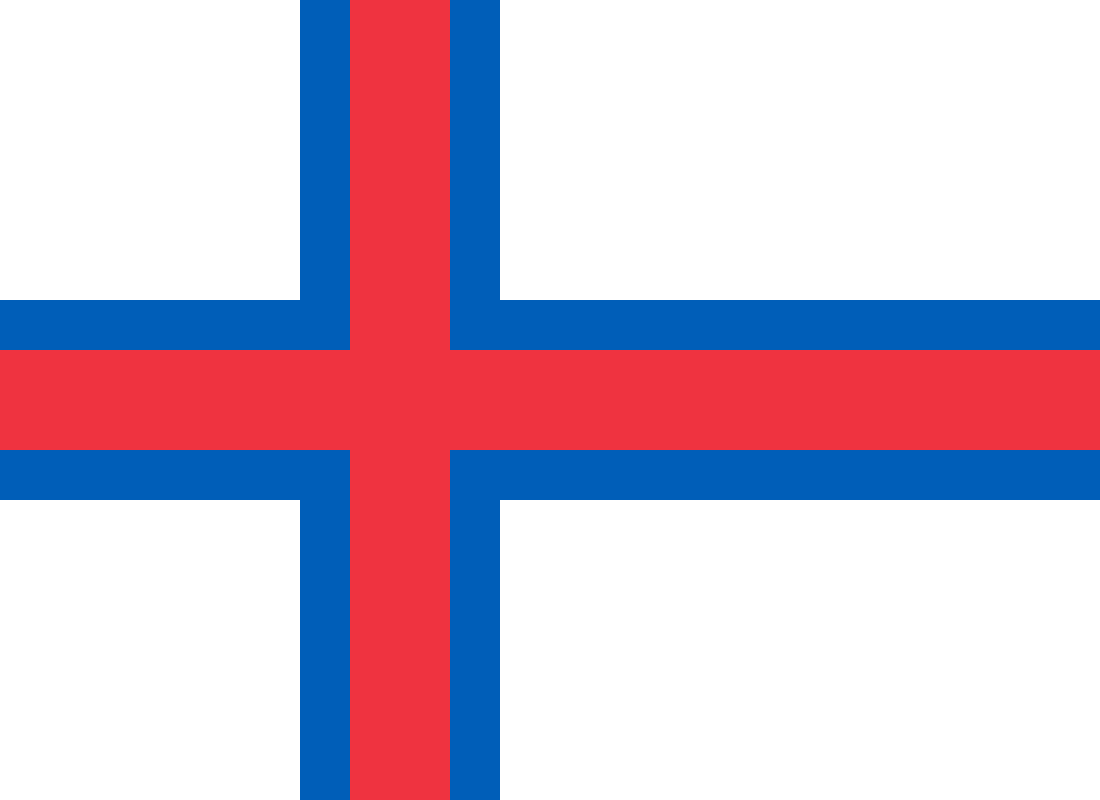
The Faroe Islands are a parliamentary democracy. The Løgting is the legislative body, and the Landsstýri is the executive branch headed by the Prime Minister (Løgmaður). While part of the Danish Realm, the islands have a high degree of autonomy, including their own flag and postage stamps.
- Prime Minister: Head of the Faroese government.
- Løgting: The 33-member parliament.
- Danish Realm: Cooperation on foreign policy and defense.
- Local Gov: 29 municipalities manage local services.
- Legal System: Based on Danish law but with local adaptations.
Safety and Public Services
The Faroe Islands are noted for their safety and low crime rates. Public services are efficient, with a professional police force and well-equipped emergency responders. The primary safety concern for both locals and tourists is the volatile weather and treacherous terrain.
- Police: National force based in Tórshavn.
- Rescue: Limited but professional search and rescue (SAR).
- Emergencies: 112 for police, fire, or ambulance.
- Medical: 1870 for non-emergency medical advice.
- Safety Tips: Always inform others of hiking plans.
Best Time to Visit
The summer months from June to August are the most popular time for visiting. This period offers the longest daylight hours and the most stable weather. Winter is preferred by those seeking dramatic landscapes, fewer crowds, and a chance to see the Northern Lights.
- June-August: Best for hiking and bird watching.
- Late July: Ideal for experiencing the Ólavsøka festival.
- May: Often the driest month of the year.
- Winter: Short days but unique atmospheric scenery.
- Autumn: Dramatic light for photography but high winds.
Local Business Directory
The Faroese business landscape is centered around the maritime economy but includes a diverse range of service and retail industries. Tórshavn is the primary commercial center, hosting most corporate headquarters and specialized shops.
- Banking: Major banks include BankNordik and Betri.
- Retail: SMS is the largest shopping center in Tórshavn.
- Telecommunications: Føroya Tele and Hey are the main providers.
- Logistics: Smyril Line and Faroe Ship manage transport.
- Energy: SEV is the primary utility provider.
General Information FAQs
Where is the Faroe Islands located?
The Faroe Islands are located in the North Atlantic Ocean, situated approximately halfway between Norway and Iceland, and north of the United Kingdom.
What is the Faroe Islands known for?
It is known for its dramatic volcanic scenery, sheer sea cliffs, high-quality salmon aquaculture, and its autonomous status within the Kingdom of Denmark.
Why is the Faroe Islands famous?
The islands are famous for their unique landscape, puffin colonies, and the Eysturoyartunnilin subsea tunnel with its underwater roundabout.
What country or region is the Faroe Islands part of?
The Faroe Islands are an autonomous territory within the Kingdom of Denmark.
What is the population of the Faroe Islands?
The current population is approximately 54,681 people.
What languages are spoken in the Faroe Islands?
The official languages are Faroese and Danish. Faroese is the primary language spoken by the inhabitants.
What time zone is the Faroe Islands in?
The islands are in the Western European Time zone (WET), which is the same as UTC/GMT.
What are the key facts about the Faroe Islands?
Key facts include its 18-island archipelago, its reliance on fishing for 95% of exports, and its status outside the European Union.
What makes the Faroe Islands unique?
Its combination of ancient Norse culture, lack of natural forests, and highly advanced subsea tunnel infrastructure makes it unique.
How large is the Faroe Islands in area?
The total land area of the archipelago is 1,393 square kilometers.
History FAQs
What is the history of the Faroe Islands?
The history began with settlement by Norse Vikings in the 9th century. It transitioned from Norwegian to Danish rule in the 14th century and gained home rule in 1948.
When was the Faroe Islands established?
While settled in the 800s, it was officially recognized as an autonomous part of the Danish Realm with the Home Rule Act of 1948.
What major historical events happened in the Faroe Islands?
Major events include the conversion to Christianity around 1000 AD, the British occupation during WWII, and the severe economic crisis of the early 1990s.
Who were important historical figures from the Faroe Islands?
Significant figures include Sigmundur Brestisson, who brought Christianity, and modern writers like William Heinesen.
How has the Faroe Islands developed over time?
It has evolved from a peasant farming society to a highly industrialized fishing and technology-focused modern nation.
Geography & Environment FAQs
What is the geography of the Faroe Islands?
The geography is volcanic and rugged, characterized by steep mountains, narrow fjords, and high sea cliffs.
What natural features surround the Faroe Islands?
The archipelago is surrounded by the North Atlantic Ocean, with the Gulf Stream influencing its water temperatures.
Are there mountains, rivers, or lakes near the Faroe Islands?
Yes, there are numerous mountains like Slættaratindur and large lakes like Sørvágsvatn, though rivers are mostly short streams and waterfalls.
What is the elevation of the Faroe Islands?
The average altitude is 300 meters, with the highest point reaching 882 meters.
What ecosystems exist around the Faroe Islands?
The islands feature subpolar oceanic ecosystems, dominated by maritime grasslands and massive seabird colonies on coastal cliffs.
Climate & Weather FAQs
What is the climate like in the Faroe Islands?
The climate is subpolar oceanic, meaning it is mild, wet, and windy throughout the year with minimal temperature variance.
What is the average temperature in the Faroe Islands?
The average temperature is approximately 3°C in winter and 11-13°C in summer.
What is the weather like throughout the year in the Faroe Islands?
It is often cloudy and rainy, with frequent fog and strong winds, especially in the autumn and winter months.
Does the Faroe Islands experience extreme weather?
The islands frequently experience hurricane-force winds during winter storms, though extreme cold is rare.
What is the best time of year to visit the Faroe Islands?
June to August is considered the best time due to milder temperatures and longer daylight hours.
Population & Society FAQs
What is the population density of the Faroe Islands?
The population density is approximately 39 people per square kilometer.
What ethnic groups live in the Faroe Islands?
The majority are Faroese (87.6%), followed by Danes and other Nordic groups, as well as small immigrant communities from the Philippines and Thailand.
What religions are practiced in the Faroe Islands?
The predominant religion is Christianity, specifically the Evangelical Lutheran Church of the Faroe Islands.
What is daily life like in the Faroe Islands?
Life is modern and Nordic, with a strong emphasis on community, maritime traditions, and outdoor activities.
How diverse is the population of the Faroe Islands?
While historically homogenous, the population has become more diverse with increasing international labor in the fishing and service industries.
Culture & Traditions FAQs
What cultural traditions are important in the Faroe Islands?
Important traditions include the Faroese chain dance, ballad singing, and the historic communal whale hunt known as the grindadráp.
What festivals are celebrated in the Faroe Islands?
The main festival is Ólavsøka, along with various regional summer festivals and music events like G! Festival.
What cultural landmarks exist in the Faroe Islands?
Key landmarks include the Tinganes historic district, the Magnus Cathedral ruins in Kirkjubøur, and the Nordic House in Tórshavn.
What traditional clothing or customs are common in the Faroe Islands?
The national costume (Føroysk klæði) is commonly worn during festivals and weddings; wool knitting is a pervasive household custom.
What arts and crafts are associated with the Faroe Islands?
The islands are renowned for high-quality woolen goods, intricate knitting patterns, and a thriving contemporary art and music scene.
Food & Cuisine FAQs
What foods is the Faroe Islands known for?
The islands are known for wind-dried mutton (skerpikjøt), fermented fish, and world-class organic salmon.
What traditional dishes originate from the Faroe Islands?
Traditional dishes include ræst kjøt (fermented meat) and tvøst og spik (pilot whale meat and blubber).
What are the best restaurants in the Faroe Islands?
KOKS (historically the first Michelin-starred Faroese restaurant), Ræst, and Barbara Fish House are highly regarded.
What local ingredients are commonly used in the Faroe Islands cuisine?
Common ingredients include lamb, Atlantic cod, salmon, langoustine, and local root vegetables like potatoes and rutabaga.
What food markets or street foods are popular in the Faroe Islands?
Fish markets in Tórshavn are popular for fresh catches, while street food often includes British-influenced fish and chips.
Economy & Business FAQs
What are the main industries in the Faroe Islands?
The main industries are fishing, fish processing, and aquaculture (primarily salmon farming).
What economic activities drive the economy of the Faroe Islands?
Exports of fish products drive the economy, supplemented by shipping, tourism, and a small but growing tech sector.
What businesses operate in the Faroe Islands?
Large companies include Bakkafrost (aquaculture), Atlantic Airways, and Føroya Tele (telecommunications).
Is the Faroe Islands an important economic center?
It is a critical North Atlantic hub for the global fishing industry and fish export markets.
What are the major exports or products from the Faroe Islands?
The major exports are fresh and frozen fish, farmed salmon, and fish meal.
Employment & Jobs FAQs
What job opportunities are available in the Faroe Islands?
Jobs are primarily available in the maritime sector, healthcare, education, and the growing tourism industry.
What are the major employers in the Faroe Islands?
Major employers include Bakkafrost, the National Hospital, and the various municipal governments.
What skills are in demand in the Faroe Islands?
Skills in maritime engineering, aquaculture, healthcare, and IT are currently in high demand.
Is the Faroe Islands a good place to work?
Yes, it offers competitive wages, high job security, and a strong emphasis on family and work-life balance.
What is the unemployment rate in the Faroe Islands?
The unemployment rate is historically very low, often fluctuating between 1% and 3%.
Cost of Living FAQs
Is the Faroe Islands expensive to live in?
Yes, it is relatively expensive, similar to other Nordic countries, due to the high cost of imported goods and services.
What is the average cost of living in the Faroe Islands?
A single person may need around $1,500-$2,000 per month excluding rent, depending on lifestyle.
How much does housing cost in the Faroe Islands?
In Tórshavn, a 3-bedroom apartment can cost over $1,100 per month in rent, while purchase prices vary significantly by location.
What are average food and utility costs in the Faroe Islands?
Utilities for an average apartment cost around $250-$300 per month; food prices are higher than the European average.
Is the Faroe Islands affordable compared to nearby cities?
It is comparable to Reykjavik or Oslo, but generally more expensive than cities in mainland Europe.
Housing & Real Estate FAQs
What types of housing are available in the Faroe Islands?
Housing includes traditional detached wooden houses, modern terraced homes, and increasing numbers of apartment blocks in the capital.
What is the average home price in the Faroe Islands?
Prices in Tórshavn are significantly higher than in rural villages, with modern homes often exceeding $400,000.
Is it better to rent or buy property in the Faroe Islands?
Buying is more common as the rental market is quite small and often expensive.
Which neighborhoods are popular in the Faroe Islands?
In Tórshavn, neighborhoods like Hoyvík and Argir are popular; elsewhere, scenic villages like Gjógv are sought after for summer homes.
How has the property market changed in the Faroe Islands?
The market has seen steady growth and a shortage of available units in the capital due to recent population increases.
Transportation FAQs
How do you get to the Faroe Islands?
Visitors can fly with Atlantic Airways or SAS to Vágar Airport, or take the Smyril Line ferry from Denmark or Iceland.
What is the nearest airport to the Faroe Islands?
Vágar Airport (FAE) is the only international airport in the archipelago.
Does the Faroe Islands have railway connections?
No, there are no railways in the Faroe Islands.
How reliable is public transportation in the Faroe Islands?
The bus and ferry system is very reliable and extensive, though less frequent in remote areas.
What major highways or roads connect to the Faroe Islands?
A network of bridges and subsea tunnels connects the majority of the islands, allowing for easy road travel across the archipelago.
Education FAQs
What schools are located in the Faroe Islands?
There are primary and secondary schools in most large villages, and several gymnasiums (high schools) in Tórshavn and Kambsdalur.
Are there universities in the Faroe Islands?
Yes, the University of the Faroe Islands (Fróðskaparsetur Føroya) offers undergraduate and graduate programs.
What is the literacy rate in the Faroe Islands?
The literacy rate is estimated at 100%.
What educational opportunities exist in the Faroe Islands?
Opportunities include academic university studies, maritime training, and vocational apprenticeships.
Is the Faroe Islands a good place for students?
Yes, it offers a safe environment and specialized programs in unique fields like marine biology and North Atlantic studies.
Healthcare FAQs
What hospitals are available in the Faroe Islands?
There are three hospitals: the main Landssjúkrahúsið in Tórshavn, and smaller hospitals in Klaksvík and Tvøroyri.
Are there emergency medical services in the Faroe Islands?
Yes, there is a comprehensive 112 system including ambulance and helicopter rescue services.
What healthcare facilities exist in the Faroe Islands?
Facilities include public hospitals, village health centers, and a network of general practitioners.
Is healthcare affordable in the Faroe Islands?
Yes, healthcare is publicly funded and largely free for residents at the point of use.
Are specialized medical services available in the Faroe Islands?
Standard specialized services are available, but patients with extremely complex cases are often sent to Rigshospitalet in Copenhagen.
Tourism & Travel FAQs
What are the top tourist attractions in the Faroe Islands?
Top attractions include the waterfall at Gásadalur, the cliffs of Vestmanna, and the bird island of Mykines.
What are the best things to do in the Faroe Islands?
The best things to do are hiking, bird watching, photographing the landscape, and exploring historic villages.
Is the Faroe Islands worth visiting?
Yes, it is highly rated for travelers seeking untouched nature, dramatic landscapes, and a quiet, authentic atmosphere.
What landmarks should visitors see in the Faroe Islands?
Visitors should see the Kallur Lighthouse, the historic buildings of Tinganes, and the natural sea arch of Drangarnir.
How many days should tourists spend in the Faroe Islands?
A stay of 5 to 7 days is generally recommended to explore the major islands at a relaxed pace.
Nearby Places FAQs
What places are near the Faroe Islands worth visiting?
Iceland and the Shetland Islands are the most accessible nearby destinations.
What cities or towns are close to the Faroe Islands?
Lerwick in Shetland and Reykjavik in Iceland are the closest major towns/cities outside the archipelago.
What natural attractions are near the Faroe Islands?
The East Fjords of Iceland and the coastal bird cliffs of Shetland are geographically nearby.
What day trips can be taken from the Faroe Islands?
Day trips are usually taken between islands within the archipelago, such as a boat trip to Kalsoy or Mykines.
What famous destinations are within reach of the Faroe Islands?
Iceland is within reach via a short flight or ferry ride.
Safety FAQs
Is the Faroe Islands safe to live in?
It is one of the safest places in the world with virtually no violent crime.
Is the Faroe Islands safe for tourists?
Yes, though tourists must be extremely careful with the weather and slippery hiking trails.
What is the crime rate in the Faroe Islands?
The crime rate is exceptionally low.
What emergency services operate in the Faroe Islands?
Police, Fire, and Medical emergency services are integrated into the 112 response system.
What safety tips should visitors follow in the Faroe Islands?
Always check the weather forecast, dress in layers, stay on marked trails, and never hike alone in fog.
Lifestyle & Living FAQs
Is the Faroe Islands a good place to live?
Yes, it offers a high standard of living, clean environment, and a very strong sense of community.
What recreational activities are available in the Faroe Islands?
Recreation includes hiking, rowing, soccer (the national sport), and various indoor music and art activities.
Is the Faroe Islands family-friendly?
Extremely family-friendly with a very safe environment for children and excellent schooling.
What outdoor activities are popular in the Faroe Islands?
Hiking, sea swimming, fishing, and boating are popular outdoor pursuits.
What makes life enjoyable in the Faroe Islands?
The proximity to nature, the slow pace of life, and the preservation of rich cultural traditions make life enjoyable for many.
Practical Information FAQs
What travel tips should visitors know about the Faroe Islands?
Book car rentals in advance, prepare for rain even on sunny days, and be aware that most stores close early on Saturdays and all day Sunday.
What local customs should visitors respect in the Faroe Islands?
Respect private property when hiking, be mindful of environmental protection areas, and understand the cultural significance of traditional whaling.
How accessible is the Faroe Islands for international visitors?
Vágar Airport has direct flights to major hubs like Copenhagen and Edinburgh; the ferry provides access for those with their own vehicles.
What services are available for tourists in the Faroe Islands?
Visitor information centers (Visit Faroe Islands) are available in Tórshavn and at the airport, along with numerous tour operators.
What important information should travelers know before visiting the Faroe Islands?
The weather is unpredictable, the terrain can be dangerous, and the cost of travel is relatively high compared to mainland Europe.