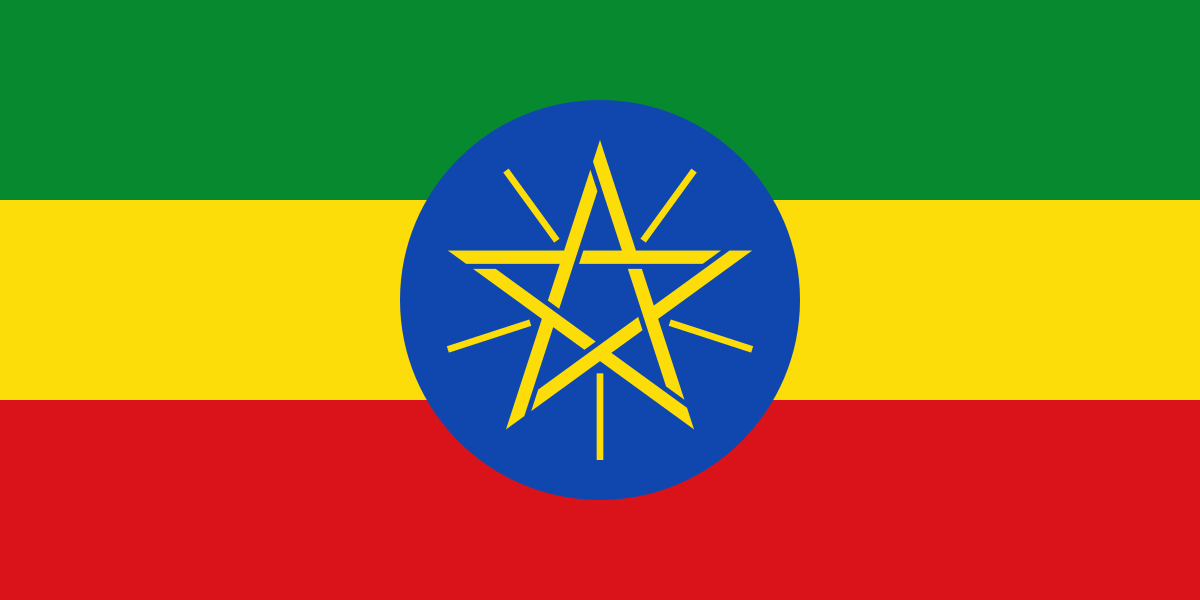
Ethiopia
Location Info
- Continent: Africa
- Country: Ethiopia
- Coordinates: 9.145 , 40.4897
Trust Info
Verified Geographic and Statistical Information
🌍 Continents

Overview
Ethiopia is a prominent landlocked country located in the Horn of Africa, recognized as one of the world's oldest independent nations. Its geography is defined by the high Ethiopian Plateau, which is bisected by the Great Rift Valley, creating a landscape of dramatic mountain ranges and deep depressions. This varied terrain supports a wide range of climates and serves as the primary source of the Blue Nile.
The nation is a cultural and historical powerhouse, housing nine UNESCO World Heritage sites, including the ancient rock-hewn churches of Lalibela. As the diplomatic capital of Africa, it hosts the headquarters of the African Union in Addis Ababa. Today, Ethiopia is undergoing a significant economic shift, driven by massive infrastructure projects and a transition toward industrialization and renewable energy.
Truth & Facts
| Total Area | 1,104,300 sq km |
| Land Boundaries | 5,925 km |
| Total Population | 132,060,000 |
| Urban Population | 22.7% |
| Government Type | Federal Parliamentary Republic |
| Capital | Addis Ababa |
| Aksumite Empire Peak | 1st - 7th Century AD |
| Battle of Adwa | 1896 |
| Currency | Ethiopian Birr (ETB) |
| GDP Growth Rate | 7.2% |
| GERD Capacity | 5,150 MW |
| Railway Length | 756 km |
| Public Universities | 47 |
| Adult Literacy | 51.8% |
| Life Expectancy | 67.8 years |
| Physician Density | 0.1 per 1,000 |
| UNESCO Sites | 9 |
| Official Script | Ge'ez |
| Top Attraction | Lalibela Churches |
| Annual Visitors | Over 900,000 |
| Endemic Species | 31 Mammals |
| Forest Cover | 15.5% |
| National Carrier | Ethiopian Airlines |
| Main Airport | Bole International |
| Mobile Subscribers | 78 Million |
| Major Telecoms | Ethio Telecom, Safaricom |
| Emergency Number | 991 |
| Regional States | 12 |
| Chartered Cities | 2 |
| Founding Member | UN, African Union |
| Electricity Access | 54% |
| GDP Rank (Africa) | 5th |
| Months in Year | 13 |
| Staple Grain | Teff |
📑 Table of Contents
Overview
Ethiopia is a sovereign state in the Horn of Africa and is the world's most populous landlocked country. It is historically unique as one of the few African nations to maintain its sovereignty during the colonial era.
- Capital: Addis Ababa
- Official Language: Amharic (working)
- Currency: Ethiopian Birr
- Population: ~132 Million
History
Ethiopian history is ancient, beginning with the Kingdom of D'mt and the later Aksumite Empire, which was a major power in the first millennium. The Solomonic dynasty claimed descent from King Solomon and the Queen of Sheba.
| Era | Event |
|---|---|
| Ancient | Kingdom of Aksum |
| 1896 | Battle of Adwa Victory |
| 1974 | End of Imperial Rule |
Geography
The country features a massive highland complex known as the Ethiopian Plateau. This is divided by the Great Rift Valley, which contains several salt lakes and the Danakil Depression.
- Highest Peak: Ras Dashen
- Major Waterbody: Lake Tana
- Major River: Blue Nile
Climate and Weather
Ethiopia's climate is primarily moderated by elevation. The highlands have a temperate climate, while the lowlands are hot and tropical.
- Kiremt: June to August (Rainy)
- Bega: October to January (Dry)
- Belg: February to May (Short Rains)
Population and Demographics
The population is highly diverse with over 80 ethnic groups. The largest groups are the Oromo, Amhara, Somali, and Tigrayans.
- Second most populous in Africa
- Median age: ~19 years
- Main religions: Orthodox Christian, Islam, Protestant
Culture and Lifestyle
Ethiopian culture is defined by unique traditions such as the coffee ceremony and a distinct calendar. The Ge'ez script is used for several local languages.
Festivals and Events
Major religious festivals include Timkat (Epiphany) and Meskel (Finding of the True Cross). These events feature large public processions and traditional music.
Food and Cuisine
The cuisine is centered around Injera, a sourdough flatbread served with various meat and vegetable stews called Wat.
Economy and Industries
Agriculture contributes significantly to the GDP, with coffee being the primary export. Manufacturing and industrial parks are expanding rapidly.
Cost of Living
Living costs are generally low by global standards, though inflation in urban centers like Addis Ababa has raised prices for housing and imports.
Employment and Business
Most Ethiopians work in small-scale farming. The government is a major employer in urban areas, along with growing sectors like telecoms and aviation.
Real Estate and Housing
The government manages large-scale condominium projects. Land is technically owned by the state and leased to residents and businesses.
Transportation and Connectivity
Ethiopian Airlines is a major global carrier. The country is also connected by the Addis Ababa-Djibouti electrified railway.
Infrastructure and Utilities
Utility expansion is a national priority, specifically through hydropower projects like the GERD to provide affordable electricity.
Education
Education is provided via a 6-2-4 system. Public universities have grown from two in the 1990s to nearly 50 today.
Healthcare
The Health Extension Program has improved rural health access, though specialized services remain concentrated in the capital.
Tourist Attractions
Key attractions include the stelae of Axum, the castles of Gondar, and the religious sites of Lalibela.
Things to Do
Trekking in the Simien Mountains and visiting the Blue Nile Falls are popular activities for nature enthusiasts.
Best Places to Visit
Historical circuit (North), Omo Valley (South), and Harar (East) represent the core travel destinations.
Travel Guide
E-visas are available. It is recommended to travel by air between cities to avoid long road journeys over rugged terrain.
Nearby Places
Djibouti is a primary neighbor for maritime access. Kenya offers shared cross-border trade through the Moyale route.
Environment and Nature
Ethiopia contains varied biodiversity including the Walia ibex and the Gelada baboon, mostly in high-altitude parks.
Government and Administration
The nation is a federal republic. Regional states are organized along ethno-linguistic lines with significant local powers.
Safety and Public Services
Safety is managed by the Federal Police. Visitors should stay informed about regional security advisories.
Best Time to Visit
The peak travel season is from October to February when the weather is dry and festivals are frequent.
Local Business Directory
Main businesses are found in Addis Ababa, ranging from traditional markets like Merkato to modern tech hubs.
General Information FAQs
Where is Ethiopia located?
Ethiopia is situated in the Horn of Africa, in the eastern part of the continent.
What is Ethiopia known for?
It is known as the origin of coffee and the seat of the African Union.
Why is Ethiopia famous?
It is famous for its history of independence and its unique rock-hewn churches.
What country or region is Ethiopia part of?
It is an independent country in East Africa.
What is the population of Ethiopia?
The population is estimated at over 132 million people.
What languages are spoken in Ethiopia?
Amharic is the working language, along with Oromo, Tigrinya, and Somali.
What time zone is Ethiopia in?
It is in the East Africa Time zone (UTC+3).
What are the key facts about Ethiopia?
Key facts include its high elevation and the use of the Ge'ez script.
What makes Ethiopia unique?
Its 13-month calendar and unique time-keeping system start the day at dawn.
How large is Ethiopia in area?
The area is approximately 1.1 million square kilometers.
History FAQs
What is the history of Ethiopia?
Ethiopia has a long history involving the Aksumite Empire and medieval Solomonic kings.
When was Ethiopia established?
Its history as a organized state dates back over 3,000 years.
What major historical events happened in Ethiopia?
The Battle of Adwa (1896) and the end of the monarchy in 1974 are pivotal.
Who were important historical figures from Ethiopia?
Emperors Menelik II and Haile Selassie I are major figures.
How has Ethiopia developed over time?
It transitioned from an empire to a socialist state and now a federal republic.
Geography & Environment FAQs
What is the geography of Ethiopia?
Geography is dominated by the Ethiopian Plateau and the Great Rift Valley.
What natural features surround Ethiopia?
It is surrounded by desert lowlands and the Nile basin.
Are there mountains, rivers, or lakes near Ethiopia?
The Simien Mountains, Blue Nile River, and Lake Tana are prominent.
What is the elevation of Ethiopia?
Average highland elevation is 1,500 to 2,400 meters.
What ecosystems exist around Ethiopia?
Ecosystems range from alpine moorlands to arid deserts.
Climate & Weather FAQs
What is the climate like in Ethiopia?
Climate is highland temperate and lowland tropical.
What is the average temperature in Ethiopia?
Highlands average 16°C to 20°C; lowlands are much hotter.
What is the weather like throughout the year in Ethiopia?
It has a distinct rainy season from June to September.
Does Ethiopia experience extreme weather?
Periodic droughts and flash floods in lowlands are common.
What is the best time of year to visit Ethiopia?
The dry months from October to February are best.
Population & Society FAQs
What is the population density of Ethiopia?
About 120 people per square kilometer.
What ethnic groups live in Ethiopia?
Oromo, Amhara, Somali, and Tigrayan are the largest groups.
What religions are practiced in Ethiopia?
Orthodox Christianity, Islam, and Protestantism are main faiths.
What is daily life like in Ethiopia?
Daily life involves community-focused social and religious activities.
How diverse is the population of Ethiopia?
It is extremely diverse with over 80 linguistic groups.
Culture & Traditions FAQs
What cultural traditions are important in Ethiopia?
The coffee ceremony and respect for elders are vital.
What festivals are celebrated in Ethiopia?
Timkat, Meskel, and Enkutatash (New Year) are celebrated.
What cultural landmarks exist in Ethiopia?
Lalibela and the stelae of Axum are key landmarks.
What traditional clothing or customs are common in Ethiopia?
The Habesha Kemis (cotton dress) is traditional attire.
What arts and crafts are associated with Ethiopia?
Orthodox iconography and basket weaving are common.
Food & Cuisine FAQs
What foods is Ethiopia known for?
It is known for Injera and spicy stews called Wat.
What traditional dishes originate from Ethiopia?
Doro Wat (chicken) and Kitfo (beef) are traditional.
What are the best restaurants in Ethiopia?
Traditional houses like Yod Abyssinia in Addis are famous.
What local ingredients are commonly used in Ethiopia cuisine?
Teff flour and Berbere spice are staple ingredients.
What food markets or street foods are popular in Ethiopia?
The Merkato is a major source of fresh spices and grains.
Economy & Business FAQs
What are the main industries in Ethiopia?
Agriculture, textiles, and energy production are main.
What economic activities drive the economy of Ethiopia?
Coffee exports and infrastructure investment drive growth.
What businesses operate in Ethiopia?
State firms and growing private manufacturing companies.
Is Ethiopia an important economic center?
Yes, it is a leading economy in East Africa.
What are the major exports or products from Ethiopia?
Coffee, gold, oilseeds, and leather are major exports.
Employment & Jobs FAQs
What job opportunities are available in Ethiopia?
Opportunities are in construction, garment industry, and farming.
What are the major employers in Ethiopia?
The public sector and Ethiopian Airlines are major employers.
What skills are in demand in Ethiopia?
Engineering, IT, and medical skills are in high demand.
Is Ethiopia a good place to work?
It offers growth in professional sectors but low wages in labor.
What is the unemployment rate in Ethiopia?
The rate is approximately 4-5% in official statistics.
Cost of Living FAQs
Is Ethiopia expensive to live in?
Low for local goods, but high for imported technology.
What is the average cost of living in Ethiopia?
Around $500 per month can support a basic lifestyle.
How much does housing cost in Ethiopia?
Rent varies from $200 (basic) to $1500+ (luxury).
What are average food and utility costs in Ethiopia?
Electricity and water are relatively cheap; food is affordable.
Is Ethiopia affordable compared to nearby cities?
Generally more affordable than Nairobi.
Housing & Real Estate FAQs
What types of housing are available in Ethiopia?
Apartments, condos, and traditional villas are available.
What is the average home price in Ethiopia?
Prices range from 3 million to 50 million Birr.
Is it better to rent or buy property in Ethiopia?
Renting is more common for short-term stays and expats.
Which neighborhoods are popular in Ethiopia?
Bole and Old Airport are popular in Addis Ababa.
How has the property market changed in Ethiopia?
Prices have risen significantly due to urbanization.
Transportation FAQs
How do you get to Ethiopia?
International flights land at Bole Airport in the capital.
What is the nearest airport to Ethiopia?
Bole International Airport is the primary gateway.
Does Ethiopia have railway connections?
Yes, to Djibouti via a modern electrified rail line.
How reliable is public transportation in Ethiopia?
Public buses are frequent but often crowded.
What major highways or roads connect to Ethiopia?
The highway to Kenya through Moyale is a key link.
Education FAQs
What schools are located in Ethiopia?
Government schools and various international private schools.
Are there universities in Ethiopia?
Yes, including the flagship Addis Ababa University.
What is the literacy rate in Ethiopia?
It is roughly 52% and increasing.
What educational opportunities exist in Ethiopia?
Growth in technical and vocational training centers.
Is Ethiopia a good place for students?
Good for cultural research and local studies.
Healthcare FAQs
What hospitals are available in Ethiopia?
Public hospitals like Black Lion and private clinics.
Are there emergency medical services in Ethiopia?
Ambulance services exist but are limited in rural areas.
What healthcare facilities exist in Ethiopia?
A mix of health posts and specialized urban hospitals.
Is healthcare affordable in Ethiopia?
Yes, public care is subsidized for citizens.
Are specialized medical services available in Ethiopia?
Available primarily in Addis Ababa.
Tourism & Travel FAQs
What are the top tourist attractions in Ethiopia?
Lalibela churches, Gondar castles, and Axum stelae.
What are the best things to do in Ethiopia?
Trek the Simien Mountains and visit Lake Tana.
Is Ethiopia worth visiting?
Yes, for its unique history and landscape.
What landmarks should visitors see in Ethiopia?
The Blue Nile Falls is a major natural landmark.
How many days should tourists spend in Ethiopia?
At least 10 to 14 days for a full circuit.
Nearby Places FAQs
What places are near Ethiopia worth visiting?
The Red Sea coast in Djibouti is a common add-on.
What cities or towns are close to Ethiopia?
Djibouti City and Nairobi are regional neighbors.
What natural attractions are near Ethiopia?
Lake Turkana (Kenya) is near the southern border.
What day trips can be taken from Ethiopia?
To Mount Entoto or the crater lakes of Debre Zeyit.
What famous destinations are within reach of Ethiopia?
The pyramids of Sudan are accessible by flight.
Safety FAQs
Is Ethiopia safe to live in?
Urban areas are generally safe; check current security news.
Is Ethiopia safe for tourists?
Yes, provided standard travel precautions are taken.
What is the crime rate in Ethiopia?
Petty theft is common in markets; violent crime is low.
What emergency services operate in Ethiopia?
Police and fire services operate in major towns.
What safety tips should visitors follow in Ethiopia?
Avoid night travel and secure your belongings.
Lifestyle & Living FAQs
Is Ethiopia a good place to live?
It offers a peaceful highland lifestyle and rich culture.
What recreational activities are available in Ethiopia?
Running, soccer, and hiking are popular.
Is Ethiopia family-friendly?
Yes, society is very welcoming of children.
What outdoor activities are popular in Ethiopia?
Rock climbing in Tigray and high-altitude trekking.
What makes life enjoyable in Ethiopia?
The pleasant weather and strong social bonds.
Practical Information FAQs
What travel tips should visitors know about Ethiopia?
Use e-visas and fly internally to save time.
What local customs should visitors respect in Ethiopia?
Dress modestly and accept coffee when offered.
How accessible is Ethiopia for international visitors?
Highly accessible via Ethiopian Airlines' network.
What services are available for tourists in Ethiopia?
Guided tours and rental cars with drivers are common.
What important information should travelers know before visiting Ethiopia?
Know that time is counted differently (day starts at 6am).
Technology FAQs
How developed is the internet in Ethiopia?
Broadband is expanding; 4G/5G is available in cities.
Can I use my mobile phone in Ethiopia?
Yes, with a local SIM card from Ethio Telecom or Safaricom.
Is online banking common in Ethiopia?
Yes, digital wallets like Telebirr are extremely popular.
Are there many tech startups in Ethiopia?
Addis Ababa has a growing scene for fintech and logistics.
What is the status of 5G in Ethiopia?
5G was launched in selected areas of Addis Ababa in 2022.