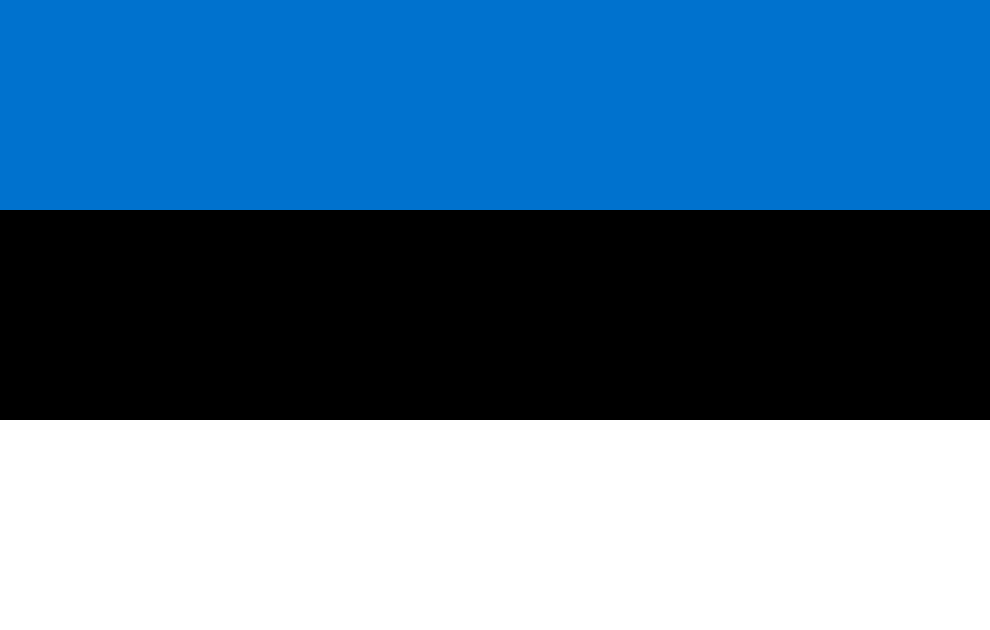
Estonia
Location Info
- Continent: Europe
- Country: Estonia
- Coordinates: 58.5953 , 25.0136
Trust Info
Verified Geographic Research
🌍 Continents

Overview
Estonia, officially the Republic of Estonia, is a sovereign state in Northern Europe bordering the Baltic Sea and the Gulf of Finland. It is known for its flat topography, extensive forest cover, and a territory that includes over 2,300 islands. Historically, the nation has transitioned from medieval Hanseatic influence and periods of foreign rule to becoming a high-income, technologically advanced democracy.
Today, Estonia is globally recognized as a pioneer in digital governance and information technology. With its capital in Tallinn, the country maintains a small but highly productive population. It is a member of the European Union, NATO, and the Eurozone, serving as a critical economic and digital hub in the Baltic region.
Truth & Facts
| Total Area | 45,335 sq km |
| Coastline | 3,794 km |
| Total Population | 1,362,954 |
| Official Language | Estonian |
| Capital | Tallinn |
| Municipalities | 79 |
| Independence Declared | February 24, 1918 |
| Restoration of Independence | August 20, 1991 |
| Currency | Euro (EUR) |
| GDP per Capita (PPP) | $50,760 |
| Internet Access | Universal Service |
| Literacy Rate | 99.9% |
| Life Expectancy | 78.6 years |
| Song Festival | Laulupidu |
| UNESCO Sites | 2 |
| Forest Coverage | approx. 50% |
| Main Airport | Tallinn Airport (TLL) |
| Unicorns per Capita | Highest in Europe |
| Crime Index | Very Low |
| Corruption Perception | Top 15 Globally |
| EU Membership | May 1, 2004 |
| Renewable Share | Rising |
| Average Monthly Wage | €2,155 |
| Largest Lake | Lake Peipus |
| County Units | 15 Counties |
📑 Table of Contents
Overview of Estonia
Estonia is a Northern European country situated on the eastern shores of the Baltic Sea. It borders Russia to the east and Latvia to the south, while remaining separated from Finland by the Gulf of Finland. The country is recognized as one of the most digitally advanced societies in the world, often referred to as 'e-Estonia'.
With a relatively small population of approximately 1.36 million people, Estonia manages a vast territory characterized by pristine nature, over 2,000 islands, and a deep-seated cultural heritage. Its capital, Tallinn, serves as a major maritime and technological hub.
- Official Name: Republic of Estonia (Eesti Vabariik)
- Capital City: Tallinn
- Official Language: Estonian
- Currency: Euro
- Political System: Parliamentary Republic
History
The history of Estonia is marked by a long struggle for autonomy amidst the influences of neighboring powers. Inhabited since 9,000 BC, the region was one of Europe's last pagan territories until the Northern Crusades in the 13th century. Subsequent centuries saw rule by Denmark, Sweden, Poland, and the Russian Empire.
Estonia first declared independence in 1918 following the Russian Revolution. After a period of sovereignty, it was occupied by the Soviet Union and Nazi Germany during World War II, eventually being annexed by the USSR. It restored its independence in 1991 through the peaceful 'Singing Revolution'.
| Period | Ruling Power / Era |
|---|---|
| 13th–16th Century | Teutonic Order / Hanseatic League |
| 1561–1710 | Swedish Rule (the 'Good Old Swedish Time') |
| 1710–1918 | Russian Empire |
| 1918–1940 | First Period of Independence |
| 1944–1991 | Soviet Occupation |
| 1991–Present | Restoration of Independence |
Geography
Estonia's landscape is predominantly flat with an average elevation of 50 meters. The highest point is Suur Munamägi in the southeast, reaching 318 meters. The country is exceptionally rich in wetlands and forests, which cover about half of the total land area.
- Archipelago: Over 2,300 islands, largest being Saaremaa and Hiiumaa.
- Lakes: More than 1,400 lakes, including Lake Peipus, the fourth largest in Europe.
- Rivers: Over 7,000 rivers and streams, notably the Võhandu and Pärnu.
- Biodiversity: Home to brown bears, lynxes, and wolves.
Climate and Weather
Estonia experiences a humid continental climate influenced by the Baltic Sea. The weather is seasonal, with cold, snowy winters and mild, moderately rainy summers. Coastal areas tend to be more humid and breezy than the inland regions.
| Season | Avg. Temperature | Characteristics |
|---|---|---|
| Winter (Dec-Feb) | -8°C to -2°C | Snow cover, short daylight hours. |
| Spring (Mar-May) | 0°C to 10°C | Late snowmelt, increasing sunshine. |
| Summer (Jun-Aug) | 15°C to 22°C | White nights, long days, mild humidity. |
| Autumn (Sep-Nov) | 2°C to 12°C | Frequent rain, colorful foliage. |
Population and Demographics
Estonia has a population of approximately 1.36 million as of 2026. The ethnic composition is diverse, with Estonians making up nearly 69% of the population. Large minority groups include Russians (approx. 24%), Ukrainians, and Belarusians.
- Urbanization: 68% of people live in cities.
- Life Expectancy: Approximately 78.6 years.
- Median Age: 43.2 years.
- Religions: Predominantly non-religious; main denominations are Orthodox and Lutheran.
Culture and Lifestyle
Estonian culture combines deep-rooted Finno-Ugric traditions with Nordic and Central European influences. The society values nature, privacy, and technological pragmatism. Folk traditions, particularly choral singing and the 'Sauna culture', are central to the national identity.
- Choral Tradition: The Song Festival (Laulupidu) brings together thousands of singers every five years.
- Sauna: A historic social and health tradition similar to Nordic neighbors.
- Literary Heritage: Strong emphasis on national epics like Kalevipoeg.
Festivals and Events
National celebrations often revolve around seasonal changes and historical milestones. The most important holidays include Independence Day and Midsummer Eve.
- Independence Day (Feb 24): Parades and formal events across the country.
- Jaanipäev (June 23-24): Midsummer festivities with bonfires and outdoor gatherings.
- Tallinn Black Nights Film Festival (PÖFF): A prestigious annual cinema event.
Food and Cuisine
Traditional Estonian cuisine is based on simple, seasonal ingredients like rye, potatoes, pork, and fish. It reflects a history of agrarian life and coastal fishing.
- Rye Bread (Leib): Dark sourdough bread, a staple of every meal.
- Kama: A unique flour mixture of roasted barley, rye, oat, and pea.
- Smoked Fish: Common in coastal villages and islands.
- Kohuke: A popular chocolate-glazed curd snack.
Economy and Industries
Estonia has a modern market-based economy and is part of the Eurozone. Key sectors include information technology, wood processing, electronics, and telecommunications. It has a high-income status and very low government debt.
| Sector | Contribution | Key Products |
|---|---|---|
| ICT | High / Growing | Software, Cyber Security, FinTech |
| Manufacturing | Significant | Electronics, Machinery, Textiles |
| Timber | Major Export | Furniture, Prefabricated Wood Houses |
| Energy | Transitioning | Shale Oil, Wind Power |
Cost of Living
The cost of living in Estonia is generally lower than in Western Europe or Scandinavia, though it has increased in the capital city of Tallinn. Salaries have also risen consistently to keep pace with inflation.
- Rent (1-BR Center): €500 - €800 per month.
- Utilities: €150 - €300 (highly seasonal due to heating).
- Public Transport: Free for registered residents in Tallinn.
Employment and Business
Estonia is famous for its 'ease of doing business' rankings. It takes less than 20 minutes to register a company online. The labor market is characterized by high demand for IT professionals and engineers.
- Unemployment Rate: Approx. 6.4% (Q4 2025).
- Average Wage: €2,155 per month.
- e-Residency: A program allowing global entrepreneurs to start EU-based businesses online.
Real Estate and Housing
Housing in Estonia varies from historic wooden apartments to modern high-rises. Tallinn and Tartu are the primary real estate markets with the highest demand and prices.
- Tallinn Market: Dominated by new developments in Kalamaja and Kadriorg.
- Rural Housing: Increasing interest in renovated farmhouses for remote work.
- Property Ownership: Clear legal framework with high levels of digital registry usage.
Transportation and Connectivity
Estonia's transport network includes well-maintained roads, a developing rail system, and extensive ferry links to its islands and neighboring countries like Finland and Sweden.
- Air: Lennart Meri Tallinn Airport connects to major European hubs.
- Sea: Tallinn is one of the busiest passenger ports on the Baltic Sea.
- Rail: Elron provides domestic services; Rail Baltic project is currently under construction.
Infrastructure and Utilities
Estonia boasts highly reliable utilities and world-class digital infrastructure. High-speed 5G is widely available across the country, and nearly all government services are available 24/7 online.
- Internet: Ubiquitous high-speed broadband and public Wi-Fi.
- Energy: Moving away from oil shale toward renewable wind and solar.
- Water: High-quality tap water throughout most urban areas.
Education
Estonia's education system ranks among the best in Europe (PISA). Education is compulsory from ages 7 to 17, with a strong focus on digital literacy from a young age.
- Higher Education: University of Tartu (founded 1632) is the flagship institution.
- Digital Literacy: Coding is introduced early in the primary curriculum.
- Vocational Training: Modernized to meet the needs of the tech-heavy economy.
Healthcare
The healthcare system is funded through a mandatory social tax. Facilities in Tallinn and Tartu are world-class, with high integration of digital health records allowing patients to access their data online.
- Medical Records: 100% digitalized via the national health information system.
- Facilities: North Estonia Medical Centre and Tartu University Hospital are major hubs.
- Accessibility: Mandatory insurance covers most primary and specialized care.
Tourist Attractions
Estonia offers a mix of medieval architecture and vast natural parks. The Old Town of Tallinn is a major draw for international visitors due to its preservation.
- Tallinn Old Town: A UNESCO World Heritage site with cobbled streets.
- Alexander Nevsky Cathedral: Iconic Russian Orthodox architecture.
- Seaplane Harbour (Lennusadam): A modern maritime museum.
Things to Do
Outdoor activities are popular year-round. From bog walking in the summer to cross-country skiing in the winter, the landscape supports varied recreation.
- Bog Walking: Using boardwalks to explore unique wetland ecosystems.
- Island Hopping: Visiting Saaremaa or Hiiumaa for local culture and spas.
- Museum Visits: Exploring the Estonian National Museum in Tartu.
Best Places to Visit
Beyond the capital, several regions offer distinct cultural and natural experiences.
| Location | Highlights |
|---|---|
| Tallinn | Medieval Old Town, Teliskivi Creative City |
| Tartu | Oldest University, Student vibe, Museums |
| Pärnu | Summer capital, Sandy beaches, Spas |
| Saaremaa | Windmills, Medieval castle, Juniper forests |
Travel Guide
Visitors to Estonia should be aware of the country's membership in the Schengen Area. Travel is straightforward with modern amenities and English widely spoken in tourist zones.
- Entry: EU/Schengen nationals enter freely; EES system applies to others.
- Currency: Euro; credit cards are accepted almost everywhere.
- Best Mode: Foot in Old Town; Bus or Train for intercity travel.
Nearby Places
Estonia's location makes it a great hub for exploring the wider Baltic and Nordic regions.
- Helsinki, Finland: Just 2 hours by ferry from Tallinn.
- Riga, Latvia: Reachable in 4 hours by bus or car.
- Stockholm, Sweden: Overnight ferries connect the capitals.
Environment and Nature
Estonia is one of the greenest countries in Europe. Nature is a pillar of the Estonian identity, with strict conservation laws protecting its forests and wetlands.
- National Parks: Lahemaa, Soomaa, and Matsalu are key protected areas.
- Wildlife: One of the highest densities of large carnivores in Europe.
- Clean Air: Consistently ranked for having some of the cleanest air globally.
Government and Administration
Estonia is a parliamentary democracy. The Riigikogu (Parliament) is the supreme legislative body, and the President serves as the head of state, while the Prime Minister leads the government.
- Legislature: 101 members elected every four years.
- e-Voting: Estonia was the first country to allow nationwide internet voting.
- Municipalities: 79 local government units manage regional affairs.
Safety and Public Services
Public safety is high, and the country is considered very safe for both residents and tourists. Emergency services are efficient and can be reached via the universal number 112.
- Police: Police and Border Guard Board (PPA) handle safety.
- Road Safety: Zero tolerance for driving under the influence.
- Crime Rate: One of the lowest homicide and violent crime rates in the EU.
Best Time to Visit
The ideal time to visit depends on the desired experience. Summer offers the best weather for nature and festivals, while winter is perfect for Christmas markets.
- Late May to August: Best for hiking, beaches, and white nights.
- December: Magical atmosphere in Tallinn's Christmas Market.
- February: Coldest month, great for winter sports.
Local Business Directory
Business in Estonia is heavily digitized. Major corporate hubs are located in the Ülemiste City and Tehnopol districts of Tallinn.
- Tech Hubs: Ülemiste City is the largest smart city in the Baltics.
- Service Centers: Many international firms have their back-office or IT centers here.
- Retail: Modern malls like Viru Keskus and Rocca al Mare.
General Information FAQs
Where is Estonia located?
Estonia is located in Northern Europe, on the eastern coast of the Baltic Sea, bordering Russia to the east and Latvia to the south.
What is Estonia known for?
Estonia is famous for its digital society, e-governance, medieval architecture in Tallinn, and high forest coverage.
Why is Estonia famous?
It is widely recognized for being the birthplace of Skype and for having the most startups per capita in Europe.
What country or region is Estonia part of?
Estonia is part of the Baltic states in Northern Europe and is a member of the European Union and NATO.
What is the population of Estonia?
As of early 2026, the population is estimated at approximately 1,362,954 people.
What languages are spoken in Estonia?
The official language is Estonian. Russian, English, and Finnish are also widely spoken and understood.
What time zone is Estonia in?
Estonia is in the Eastern European Time zone (EET), which is UTC+2, and UTC+3 during daylight saving time.
What are the key facts about Estonia?
Key facts include its high-income economy, 99.9% literacy rate, and status as a world leader in cybersecurity.
What makes Estonia unique?
Its combination of ancient Finno-Ugric culture with a ultra-modern digital lifestyle makes it a unique 'e-state'.
How large is Estonia in area?
Estonia covers a total area of 45,335 square kilometers.
History FAQs
What is the history of Estonia?
Estonia has a history of tribal life followed by centuries of rule by German, Danish, Swedish, and Russian powers before gaining independence in 1918 and 1991.
When was Estonia established?
The Republic of Estonia was first established on February 24, 1918.
What major historical events happened in Estonia?
Significant events include the Northern Crusades, the Great Northern War, the 1918 Declaration of Independence, and the 1980s Singing Revolution.
Who were important historical figures from Estonia?
Figures include Lennart Meri (former president), Arvo Pärt (composer), and Friedrich Reinhold Kreutzwald (author of Kalevipoeg).
How has Estonia developed over time?
Estonia has transitioned from an agrarian society under imperial rule to a Soviet-occupied state, and finally to an independent tech-driven digital pioneer.
Geography & Environment FAQs
What is the geography of Estonia?
The geography is largely flat with many lakes, bogs, and over 2,300 islands in the Baltic Sea.
What natural features surround Estonia?
It is surrounded by the Baltic Sea to the north and west, Lake Peipus to the east, and the hilly Haanja Upland to the south.
Are there mountains, rivers, or lakes near Estonia?
There are no mountains, but there are hills (max 318m), numerous rivers like the Pärnu, and major lakes like Peipus.
What is the elevation of Estonia?
The average elevation is about 50 meters above sea level.
What ecosystems exist around Estonia?
Ecosystems include mixed forests, peat bogs, limestone cliffs, and coastal meadows.
Climate & Weather FAQs
What is the climate like in Estonia?
It has a temperate continental climate with four distinct seasons.
What is the average temperature in Estonia?
The annual average is around 5°C to 6°C, with summer peaks of 20°C and winter lows of -8°C.
What is the weather like throughout the year in Estonia?
Winters are cold and snowy; summers are mild and fairly wet; spring and autumn are transitional with varying rainfall.
Does Estonia experience extreme weather?
Occasionally it faces deep freezes below -20°C in winter or strong autumn storms from the Baltic Sea.
What is the best time of year to visit Estonia?
June to August is best for warmth and daylight, while December is popular for festive markets.
Population & Society FAQs
What is the population density of Estonia?
The density is approximately 31 people per square kilometer, making it quite sparsely populated.
What ethnic groups live in Estonia?
Estonians (69%), Russians (24%), Ukrainians (2%), Belarusians (1%), and Finns (0.6%).
What religions are practiced in Estonia?
Most Estonians are non-religious, but the largest denominations are Lutheranism and Orthodox Christianity.
What is daily life like in Estonia?
Daily life is characterized by high tech usage, a strong work-life balance, and frequent visits to nature or saunas.
How diverse is the population of Estonia?
It is relatively homogeneous in rural areas but diverse in Tallinn due to historic migration and the modern tech industry.
Culture & Traditions FAQs
What cultural traditions are important in Estonia?
Choral singing festivals, sauna culture, and celebrating midsummer (Jaanipäev) are core traditions.
What festivals are celebrated in Estonia?
The Song and Dance Festival, Midsummer, Independence Day, and various folk festivals like Viljandi Folk.
What cultural landmarks exist in Estonia?
Tallinn's Old Town, the University of Tartu, and the Kumu Art Museum.
What traditional clothing or customs are common in Estonia?
Traditional folk costumes with regional patterns are worn during festivals; 'white nights' celebrations are common in summer.
What arts and crafts are associated with Estonia?
Traditional knitting (especially Muhu patterns), wood carving, and glass blowing.
Food & Cuisine FAQs
What foods is Estonia known for?
Dark rye bread, herring, jellied meat (sült), and kama flour.
What traditional dishes originate from Estonia?
Verivorst (blood sausage), Mulgipuder (potato and barley mash), and marinated eel.
What are the best restaurants in Estonia?
Fine dining is concentrated in Tallinn (e.g., NOA, Rataskaevu 16), often focusing on Nordic-Baltic fusion.
What local ingredients are commonly used in Estonia cuisine?
Wild berries, mushrooms, rye, potatoes, and forest game like elk and wild boar.
What food markets or street foods are popular in Estonia?
The Balti Jaam Market in Tallinn is famous for local produce and modern street food.
Economy & Business FAQs
What are the main industries in Estonia?
ICT, wood and paper products, electronics, and energy production.
What economic activities drive the economy of Estonia?
Export of services (IT/Logistics), manufacturing, and high-tech startups.
What businesses operate in Estonia?
Major local firms include Bolt and Wise, alongside Scandinavian banks like Swedbank and SEB.
Is Estonia an important economic center?
Yes, it is a regional leader in digital services and a gateway for tech investment in the Baltics.
What are the major exports or products from Estonia?
Telecommunications equipment, wood products, mineral fuels, and prefabricated buildings.
Employment & Jobs FAQs
What job opportunities are available in Estonia?
Strongest demand is in software development, cybersecurity, engineering, and vocational trades.
What are the major employers in Estonia?
The state, hospital networks, Ericsson, Bolt, and various banking groups.
What skills are in demand in Estonia?
IT proficiency, English language skills, and technical engineering expertise.
Is Estonia a good place to work?
Yes, it offers a digital-first work environment, flat hierarchies, and high social security.
What is the unemployment rate in Estonia?
It is generally low, hovering around 6-7% depending on the economic cycle.
Cost of Living FAQs
Is Estonia expensive to live in?
It is moderately priced—cheaper than London or Stockholm but more expensive than many Eastern European nations.
What is the average cost of living in Estonia?
A single person typically needs €1,200 to €1,800 per month for a comfortable life including rent.
How much does housing cost in Estonia?
Monthly rent for a 1-bedroom flat in Tallinn ranges from €500 to €850.
What are average food and utility costs in Estonia?
Food for one person is approx. €300/mo; utilities are €150-€300 depending on the season.
Is Estonia affordable compared to nearby cities?
It is significantly more affordable than Helsinki but more expensive than Riga.
Housing & Real Estate FAQs
What types of housing are available in Estonia?
Options include historic wooden houses, Soviet-era blocks, and ultra-modern smart apartments.
What is the average home price in Estonia?
Prices in Tallinn center can exceed €4,000 per square meter, while rural prices are much lower.
Is it better to rent or buy property in Estonia?
Buying is common for long-term residents due to stable growth, but renting is easy via digital platforms.
Which neighborhoods are popular in Estonia?
In Tallinn: Kalamaja, Kadriorg, and Pirita. In Tartu: Supilinn and Karlova.
How has the property market changed in Estonia?
There has been a rapid increase in prices and quality of new builds over the last decade.
Transportation FAQs
How do you get to Estonia?
Most arrive via Tallinn Airport or by ferry from Helsinki and Stockholm.
What is the nearest airport to Estonia?
Lennart Meri Tallinn Airport (TLL) is the primary international gateway.
Does Estonia have railway connections?
Yes, domestic trains connect major cities, and international lines run to Latvia (and historically Russia).
How reliable is public transportation in Estonia?
Extremely reliable; buses and trains are modern and punctual.
What major highways or roads connect to Estonia?
The Via Baltica (E67) connects Estonia to Latvia and onwards to Western Europe.
Education FAQs
What schools are located in Estonia?
There is a wide network of state-funded primary and secondary schools, plus international schools in Tallinn.
Are there universities in Estonia?
Yes, including the University of Tartu, Tallinn University of Technology (TalTech), and Tallinn University.
What is the literacy rate in Estonia?
It is nearly 100% (99.9%).
What educational opportunities exist in Estonia?
Strong focus on IT, digital arts, and environmental sciences.
Is Estonia a good place for students?
Yes, with a safe environment, modern campuses, and high standards of English-taught programs.
Healthcare FAQs
What hospitals are available in Estonia?
Major hospitals include East Tallinn Central Hospital and the Tartu University Hospital.
Are there emergency medical services in Estonia?
Yes, call 112 for rapid response ambulances.
What healthcare facilities exist in Estonia?
A mix of regional hospitals, local GP clinics, and specialized private centers.
Is healthcare affordable in Estonia?
It is free for those covered by national health insurance; private care is reasonably priced compared to US/UK.
Are specialized medical services available in Estonia?
Yes, especially in fields like genetics, oncology, and digital diagnostics.
Tourism & Travel FAQs
What are the top tourist attractions in Estonia?
Tallinn Old Town, Lahemaa National Park, Saaremaa island, and the Tartu Old Town.
What are the best things to do in Estonia?
Explore medieval streets, walk through bogs on wooden paths, and enjoy a traditional wood-fired sauna.
Is Estonia worth visiting?
Yes, for its unique blend of history, nature, and forward-thinking digital culture.
What landmarks should visitors see in Estonia?
Toompea Castle, Alexander Nevsky Cathedral, and the Kuressaare Episcopal Castle.
How many days should tourists spend in Estonia?
3-4 days for Tallinn and nearby nature; 7-10 days to include the islands and Tartu.
Nearby Places FAQs
What places are near Estonia worth visiting?
Helsinki, Riga, and the Finnish archipelago.
What cities or towns are close to Estonia?
Helsinki (across the sea) and Riga (south by land).
What natural attractions are near Estonia?
The Gauja National Park in Latvia and the Nuuksio National Park in Finland.
What day trips can be taken from Estonia?
A ferry trip to Helsinki is the most popular day trip from Tallinn.
What famous destinations are within reach of Estonia?
Stockholm, St. Petersburg (visa dependent), and Vilnius.
Safety FAQs
Is Estonia safe to live in?
Yes, it is one of the safest countries in Europe with low crime and high trust in police.
Is Estonia safe for tourists?
Yes, violent crime against tourists is extremely rare.
What is the crime rate in Estonia?
Overall crime is low and has been declining for several years.
What emergency services operate in Estonia?
Police, Fire/Rescue, and Ambulance services all reachable via 112.
What safety tips should visitors follow in Estonia?
Wear reflectors on clothing in winter (legal requirement) and be cautious of icy sidewalks.
Lifestyle & Living FAQs
Is Estonia a good place to live?
Yes, especially for those who value nature, technology, and a calm, orderly society.
What recreational activities are available in Estonia?
Hiking, skiing, birdwatching, and a vibrant café culture in the cities.
Is Estonia family-friendly?
Very much so, with numerous parks, child-friendly museums, and high safety standards.
What outdoor activities are popular in Estonia?
Disc golf, cycling, swimming in lakes, and picking berries or mushrooms.
What makes life enjoyable in Estonia?
Clean air, proximity to forests, and the lack of digital bureaucracy.
Practical Information FAQs
What travel tips should visitors know about Estonia?
Most Estonians are reserved but helpful; credit cards are preferred over cash.
What local customs should visitors respect in Estonia?
Removing shoes when entering a home and being quiet on public transport.
How accessible is Estonia for international visitors?
Highly accessible via air and sea; most services are available in English.
What services are available for tourists in Estonia?
Excellent tourism offices, digital maps, and widespread English proficiency.
What important information should travelers know before visiting?
Estonia is in the Schengen Area; winters require heavy clothing; internet is available everywhere.