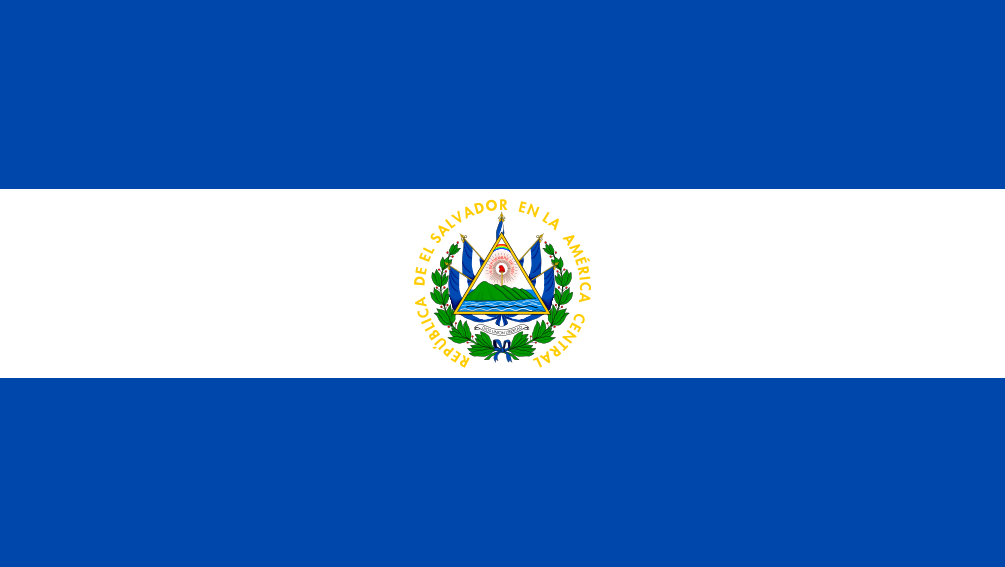
El Salvador
Location Info
- Continent: North America
- Country: El Salvador
- Coordinates: 13.7942 , -88.8965
Trust Info
Verified Geographic and Statistical Information
🌍 Continents

Overview
El Salvador is a sovereign state located in Central America, bordered by Guatemala to the west, Honduras to the north and east, and the Pacific Ocean to the south. It is the smallest and most densely populated country in Central America. The nation is characterized by its dramatic volcanic landscape, which includes the Sierra Madre range and a coastal plain. Historically known as the Land of Volcanoes, its geography has significantly influenced its settlement patterns and economic focus on agriculture, particularly coffee production.
The country gained independence from Spain in 1821 and transitioned through various political periods, including a significant civil war from 1979 to 1992. In recent decades, El Salvador has moved toward a service-oriented economy and became the first nation to adopt Bitcoin as legal tender alongside the US Dollar in 2021. With a population of approximately 6.3 million, it serves as a vital transit and manufacturing hub within the Central American region.
Truth & Facts
| Total Area | 21,041 square kilometers |
| Coastline | 307 km |
| Total Population | 6,364,942 |
| Population Density | 303 people per sq km |
| Capital City | San Salvador |
| Administrative Divisions | 14 Departments |
| Independence from Spain | September 15, 1821 |
| Civil War Period | 1979 - 1992 |
| Legal Tender | US Dollar and Bitcoin |
| Primary Exports | Textiles, Coffee, Sugar |
| Main Airport | El Salvador International Airport (SAL) |
| Energy Mix | 60% Renewable |
| Literacy Rate | 89.1% |
| Major University | University of El Salvador (UES) |
| Life Expectancy | 71.5 years |
| System Structure | Public and Social Security (ISSS) |
| Official Language | Spanish |
| National Dish | Pupusas |
| Primary Attraction Type | Surfing and Volcanoes |
| Seismic Activity | High |
| Major Highway | Pan-American Highway |
| Internet Penetration | 60% |
| Homicide Rate Change | Significant Decrease (2022-2024) |
| Government Type | Unitary Presidential Republic |
| Major Organizations | UN, OAS, SICA |
| Urban Water Access | 95% |
| GDP (Nominal) | $32.49 Billion |
| Geothermal Output | 25% of total energy |
| Mobile Subscriptions | 160 per 100 people |
📑 Table of Contents
Overview
El Salvador is located in the heart of Central America and is the only country in the region without a Caribbean coastline. Known for its mountainous terrain and frequent seismic activity, it serves as a critical demographic and economic link in the Mesoamerican corridor.
- Smallest Central American nation by land area.
- The only nation in the region with a purely Pacific coastline.
- Densely populated urban centers like San Salvador and Santa Ana.
- High economic dependence on international remittances.
- First country to adopt Bitcoin as legal tender.
History
The history of El Salvador begins with indigenous civilizations, primarily the Pipil people. Following the Spanish conquest in the 16th century, it became part of the Captaincy General of Guatemala before declaring independence in 1821.
- Pre-Columbian era dominated by Pipil and Maya cultures.
- Spanish colonial rule lasted from 1524 to 1821.
- Formation of the Federal Republic of Central America.
- The 1932 Salvadoran peasant massacre (La Matanza).
- The 12-year Civil War ending in 1992 with the Chapultepec Accords.
Geography
El Salvador's geography is dominated by two parallel mountain ranges and a central plateau. The country is situated on the Pacific Ring of Fire, leading to a landscape shaped by volcanic activity and tectonic shifts.
| Feature | Details |
|---|---|
| Highest Point | Cerro El Pital (2,730m) |
| Longest River | Rio Lempa |
| Major Lakes | Coatepeque, Ilopango |
Climate and Weather
The country experiences a tropical climate with distinct wet and dry seasons. Temperatures vary primarily based on elevation rather than latitude, with coastal areas being significantly warmer than the highlands.
- Dry season runs from November to April.
- Wet season occurs between May and October.
- Average temperature in San Salvador is 23°C (73°F).
- Coastal temperatures average around 30°C (86°F).
- Susceptibility to hurricanes and tropical storms in late summer.
Population and Demographics
The population of El Salvador is largely homogeneous, with the majority identifying as Mestizo. The country has a high population density and a significant percentage of its citizens living abroad, primarily in the United States.
- Mestizo (Mixed European and Indigenous): 86%.
- White/European descent: 12%.
- Indigenous: less than 1%.
- Population growth rate: 0.5% annually.
- Urbanization rate: 75% of total population.
Culture and Lifestyle
Salvadoran culture is a blend of indigenous Pipil traditions and Spanish colonial influences. Religion plays a central role in daily life, with Roman Catholicism being the historically dominant faith.
- Art is characterized by the colorful Naïve style of Fernando Llort.
- Spanish is the universal language; Nahuat is critically endangered.
- Strong community focus on family gatherings and Sunday markets.
- Growing influence of evangelical Protestantism.
- Vibrant music scene including Cumbia and Salvadoran folk music.
Festivals and Events
National festivals often center around religious patron saints and historical milestones. These events are marked by parades, traditional dances, and communal feasts.
- Fiestas Agostinas: Honoring the Divine Savior of the World in August.
- Independence Day: Celebrated on September 15.
- Holy Week (Semana Santa): Major religious processions.
- National Pupusa Day: Celebrated every second Sunday of November.
- Palm Festival (Panchimalco): Famous for floral arrangements in May.
Food and Cuisine
Salvadoran cuisine relies heavily on corn, beans, and local vegetables. The food is generally less spicy than Mexican cuisine but utilizes rich sauces and traditional spices.
- Pupusas: Stuffed corn tortillas served with curtido (cabbage slaw).
- Yuca Frita: Deep-fried cassava served with pork or small fish.
- Atol de Elote: A sweet, warm beverage made from corn.
- Panes con Pollo: Salvadoran-style chicken sandwiches.
- Tamales: Corn dough steamed in banana leaves.
Economy and Industries
The economy has transitioned from being primarily agricultural to a mix of services and manufacturing. The country is a member of the CAFTA-DR trade agreement.
- Remittances account for nearly 20-25% of the GDP.
- The textile industry is a major source of export revenue.
- The service sector contributes over 60% of economic output.
- Coffee remains a prestige export but has declined in total GDP share.
- Sugar and ethanol production are significant agricultural industries.
Cost of Living
The cost of living in El Salvador is moderate compared to North America but higher than in some neighboring Central American countries due to dollarization.
| Item | Average Cost (USD) |
|---|---|
| 1kg Rice | $1.20 |
| Monthly Utilities | $80.00 |
| Local Bus Fare | $0.25 |
| 1L Milk | $1.50 |
Employment and Business
The labor market is characterized by a large informal sector. However, the government has recently focused on attracting foreign investment in technology and tourism.
- Manufacturing (Maquilas) employs a large portion of the urban workforce.
- The formal minimum wage is set by the government across sectors.
- Increasing demand for English speakers in call center operations.
- The Bitcoin Law aims to foster financial technology and innovation.
- San Salvador is the primary hub for corporate headquarters.
Real Estate and Housing
Housing varies from high-end gated communities in San Salvador to traditional adobe or brick homes in rural areas. Recent urban development has focused on vertical growth in the capital.
- San Benito and Escalón are high-demand residential areas in the capital.
- The coastal real estate market is expanding due to 'Surf City' initiatives.
- Social housing projects are managed by the Viceministry of Housing.
- Property taxes are relatively low compared to international standards.
- Foreigners have the same property rights as local citizens.
Transportation and Connectivity
The country has one of the best road networks in Central America. Public transport is dominated by buses, while air travel is centered on a single international hub.
- Pan-American Highway connects the country to Guatemala and Honduras.
- El Salvador International Airport is a hub for Avianca.
- Public buses (camionetas) are the primary mode of internal transport.
- No active passenger railway system currently exists.
- Port of Acajutla handles the majority of maritime trade.
Infrastructure and Utilities
Utility coverage is high in urban centers but can be intermittent in remote rural areas. The energy sector is a regional leader in geothermal production.
- Geothermal energy provides approximately 25% of national power.
- Telecommunications are private; 4G/LTE is widely available.
- Potable water is managed by the national agency ANDA.
- Electric distribution is divided among several private companies.
- Recent investments have focused on fiber optic expansion.
Education
Education is compulsory for nine years of basic education. The system includes public schools, private institutions, and several universities.
- The University of El Salvador (UES) was founded in 1841.
- Public education is free from primary through secondary levels.
- Private bilingual schools are popular among the middle and upper classes.
- Literacy rates have improved steadily to nearly 90%.
- The 'Enlaces con la Educación' program provides laptops to students.
Healthcare
The healthcare system is a dual model consisting of public services and the Salvadoran Social Security Institute (ISSS).
- Hospital El Salvador is one of the largest specialized facilities in the region.
- Public healthcare is provided free of charge by the Ministry of Health.
- ISSS covers employees in the formal formal economy.
- Private hospitals provide high-quality care for those with insurance.
- Rural health units (Unidades de Salud) provide basic community care.
Tourist Attractions
Attractions range from well-preserved archaeological sites to natural volcanic parks and Pacific beaches.
- Joya de Cerén: Known as the 'Pompeii of the Americas'.
- Santa Ana Volcano: Accessible hiking trail with crater lake views.
- Lake Coatepeque: A large volcanic caldera lake.
- Historic Center of San Salvador: Recently renovated plaza area.
- Ruta de las Flores: A scenic route through highland villages.
Things to Do
Activities in El Salvador often involve outdoor adventure and cultural exploration of the coffee highlands.
- Surfing at El Tunco or Punta Roca.
- Hiking in Cerro Verde National Park.
- Exploring coffee plantations and processing facilities.
- Kayaking in the Estero de Jaltepeque.
- Visiting local craft markets in La Palma.
Best Places to Visit
The best destinations for visitors blend natural beauty with colonial heritage and modern amenities.
- Suchitoto: A colonial town known for its arts and cobblestone streets.
- El Zonte: A hub for the Bitcoin Beach movement and surfing.
- Ataco: Famous for its colorful murals and coffee climate.
- San Miguel: Host of the largest carnival in Central America.
- Montecristo National Park: A rare cloud forest ecosystem.
Travel Guide
Travel to El Salvador is facilitated by a central airport and a straightforward entry process for most Western nations.
- Currency used is the US Dollar; have small bills ready.
- Standard power outlets are Type A and B (US standard).
- Water should be consumed from bottles rather than taps.
- Most visitors from the US and EU require a tourist card ($12).
- Spanish is essential for communication outside tourist zones.
Nearby Places
Given its central location, El Salvador is a convenient base for exploring neighboring Central American countries.
- Antigua Guatemala: Accessible by a 4-hour drive.
- Copán Ruinas (Honduras): Famous Maya archaeological site.
- Potosí (Nicaragua): Reachable via boat across the Gulf of Fonseca.
- Montecristo Tri-national Park: Where three borders meet.
- Pacific corridor to the beaches of Southern Guatemala.
Environment and Nature
The environment is diverse despite the small land area, featuring mangroves, cloud forests, and volcanic peaks.
- Barra de Santiago: A protected mangrove wetland.
- El Imposible National Park: Highest level of biodiversity in the country.
- Over 20 volcanoes located within the national territory.
- Ongoing reforestation efforts to combat soil erosion.
- Marine protected areas focus on sea turtle conservation.
Government and Administration
The government is divided into executive, legislative, and judicial branches. It is a republic with a five-year presidential term.
- Legislative Assembly: Unicameral body with 60 deputies.
- The Supreme Court of Justice oversees the judicial system.
- Administration is decentralized into departments and municipalities.
- The President is both head of state and head of government.
- Elections are held through universal adult suffrage.
Safety and Public Services
Security has undergone massive changes in the 2020s, resulting in a significantly lower crime rate compared to previous decades.
- National Civil Police (PNC) is the primary law enforcement body.
- 911 is the national emergency response number.
- The fire department (Cuerpo de Bomberos) handles fire and rescue.
- Tourists are supported by 'Politur' (Tourist Police).
- Travelers should monitor official government advisories for updates.
Best Time to Visit
The optimal time to visit depends on the desired activity, such as surfing or cultural exploration.
- Dry season (Nov–Apr) is best for hiking and sightseeing.
- Wet season (May–Oct) is preferred by expert surfers for larger swells.
- August is the most festive month due to national holidays.
- December offers the mildest and clearest weather.
- Easter (Semana Santa) is peak time for cultural events.
Local Business Directory
The business landscape is centered in the San Salvador Metropolitan Area, featuring both local conglomerates and multinational firms.
- World Trade Center San Salvador: Hub for international firms.
- Metrocentro: One of the largest shopping mall chains in the region.
- Coastal areas feature boutique hotels and surfing businesses.
- Agricultural cooperatives are vital in the coffee highlands.
- A growing tech sector is focused in the 'Bitcoin City' planning zone.
General Information FAQs
Where is El Salvador located?
El Salvador is located in Central America, on the Pacific coast, bordered by Guatemala and Honduras.
What is El Salvador known for?
El Salvador is known for its numerous volcanoes, world-class surfing beaches, and the production of high-quality coffee.
Why is El Salvador famous?
It is famous for being the 'Land of Volcanoes,' its recent adoption of Bitcoin as legal tender, and its density of natural beauty despite its small size.
What country or region is El Salvador part of?
El Salvador is part of the North American continent, specifically within the Central American region.
What is the population of El Salvador?
The population is approximately 6.3 million people as of recent 2023 estimates.
What languages are spoken in El Salvador?
Spanish is the official and universal language. Small indigenous communities speak Nahuat, though it is rare.
What time zone is El Salvador in?
El Salvador operates in Central Standard Time (CST), which is UTC-6. It does not observe daylight saving time.
What are the key facts about El Salvador?
Key facts include its capital San Salvador, the use of the US Dollar, its status as the smallest Central American country, and its mountainous geography.
What makes El Salvador unique?
El Salvador is the only Central American country without a Caribbean coastline and was the first country to adopt Bitcoin as national currency.
How large is El Salvador in area?
The country covers approximately 21,041 square kilometers (about 8,124 square miles).
History FAQs
What is the history of El Salvador?
History spans from indigenous Pipil civilization to Spanish colonial rule, independence in 1821, a 20th-century civil war, and modern economic transition.
When was El Salvador established?
El Salvador became a sovereign state on September 15, 1821, following independence from the Spanish Empire.
What major historical events happened in El Salvador?
Major events include the Spanish conquest, the 1932 uprising, the 1969 'Soccer War' with Honduras, and the 1980-1992 Civil War.
Who were important historical figures from El Salvador?
Important figures include Saint Oscar Romero, José Matías Delgado (independence leader), and Farabundo Martí.
How has El Salvador developed over time?
It evolved from an indigo-producing colony to a coffee-exporting republic, survived a destructive civil war, and is now focusing on technology and tourism.
Geography & Environment FAQs
What is the geography of El Salvador?
The geography is volcanic and mountainous, featuring a central plateau sandwiched between two mountain ranges and a narrow coastal plain.
What natural features surround El Salvador?
It is surrounded by the Pacific Ocean to the south, the Sierra Madre mountains to the north, and various volcanic peaks throughout the interior.
Are there mountains, rivers, or lakes near El Salvador?
Yes, major features include the Santa Ana Volcano, the Lempa River, and Lake Coatepeque.
What is the elevation of El Salvador?
Elevation ranges from sea level at the Pacific coast to 2,730 meters at the peak of Cerro El Pital.
What ecosystems exist around El Salvador?
Ecosystems include tropical dry forests, cloud forests in the highlands, and coastal mangroves.
Climate & Weather FAQs
What is the climate like in El Salvador?
The climate is tropical, with a year-round warm temperature and distinct rainy (winter) and dry (summer) seasons.
What is the average temperature in El Salvador?
The average temperature is around 25°C (77°F) in the lowlands and 18°C (64°F) in the mountainous regions.
What is the weather like throughout the year in El Salvador?
From November to April, it is sunny and dry. From May to October, it is humid with frequent afternoon and evening rain showers.
Does El Salvador experience extreme weather?
The country is susceptible to earthquakes, volcanic eruptions, and occasional hurricanes or tropical depressions during the wet season.
What is the best time of year to visit El Salvador?
The best time to visit is during the dry season, from November to March, when weather is clear and sunny.
Population & Society FAQs
What is the population density of El Salvador?
El Salvador is very densely populated, with over 300 people per square kilometer.
What ethnic groups live in El Salvador?
The majority (86%) are Mestizo (mixed indigenous and European), with smaller percentages of white and indigenous populations.
What religions are practiced in El Salvador?
The most common religions are Roman Catholicism and various Evangelical Protestant denominations.
What is daily life like in El Salvador?
Daily life revolves around work in the service or manufacturing sectors, strong family ties, and communal activities like Sunday church and markets.
How diverse is the population of El Salvador?
While ethnically homogeneous as Mestizo, there is socio-economic diversity between urban San Salvador and the rural agricultural highlands.
Culture & Traditions FAQs
What cultural traditions are important in El Salvador?
Religious festivals, patron saint days (Fiestas Patronales), and the traditional preparation of pupusas are central traditions.
What festivals are celebrated in El Salvador?
Major festivals include the Fiestas Agostinas in San Salvador, Independence Day in September, and Christmas.
What cultural landmarks exist in El Salvador?
Landmarks include the Joya de Cerén archaeological site, the San Salvador Cathedral, and the National Theatre.
What traditional clothing or customs are common in El Salvador?
Modern Western clothing is standard, though traditional dresses with colorful embroidery are worn for folk dances during festivals.
What arts and crafts are associated with El Salvador?
El Salvador is known for La Palma-style wooden paintings, indigo dyeing, and volcanic stone carvings.
Food & Cuisine FAQs
What foods is El Salvador known for?
It is internationally known for pupusas, which are thick corn tortillas stuffed with cheese, beans, or meat.
What traditional dishes originate from El Salvador?
Dishes include Sopa de Pata, Tamales, Fried Yuca, and Empanadas de Poleada.
What are the best restaurants in El Salvador?
Top dining locations are found in San Salvador's San Benito district and various oceanfront spots in La Libertad.
What local ingredients are commonly used in El Salvador cuisine?
Common ingredients include maize (corn), black and red beans, loroco (edible flower), and plantains.
What food markets or street foods are popular in El Salvador?
Street vendors often sell pupusas, elotes locos (crazy corn), and riguas (corn cakes) in public plazas.
Economy & Business FAQs
What are the main industries in El Salvador?
Main industries include food processing, textiles, chemicals, petroleum refining, and international services.
What economic activities drive the economy of El Salvador?
The economy is driven by personal remittances from abroad, textile manufacturing, and agricultural exports.
What businesses operate in El Salvador?
A mix of local banks, multinational clothing brands, and recently, international Bitcoin and fintech companies.
Is El Salvador an important economic center?
Yes, it serves as a central hub for transportation and trade within the Central American Integration System (SICA).
What are the major exports or products from El Salvador?
Major exports include knit apparel, coffee, cane sugar, and electrical capacitors.
Employment & Jobs FAQs
What job opportunities are available in El Salvador?
Opportunities exist in manufacturing, retail, customer service (BPO), and the growing tech sector.
What are the major employers in El Salvador?
Major employers include the government, Tigo, Telus International, and various textile conglomerates.
What skills are in demand in El Salvador?
Bilingualism (Spanish/English), technical manufacturing skills, and software development are highly sought after.
Is El Salvador a good place to work?
It offers a low cost of living and a centralized business environment, though salaries are lower than in developed nations.
What is the unemployment rate in El Salvador?
The official unemployment rate typically fluctuates between 5% and 7%, though underemployment in the informal sector is significant.
Cost of Living FAQs
Is El Salvador expensive to live in?
It is generally affordable, though costs in San Salvador and coastal tourist areas are higher than in rural regions.
What is the average cost of living in El Salvador?
A single person can live comfortably on $800 to $1,200 USD per month depending on their lifestyle and location.
How much does housing cost in El Salvador?
Rent for a city apartment ranges from $300 to $900 USD, while purchasing a home can range from $50,000 to over $300,000 in prime areas.
What are average food and utility costs in El Salvador?
Monthly utilities average around $70-$100, and a meal at a local restaurant costs between $3 and $7.
Is El Salvador affordable compared to nearby cities?
It is more affordable than Panama City or San José (Costa Rica) but slightly more expensive than parts of Nicaragua or Guatemala.
Housing & Real Estate FAQs
What types of housing are available in El Salvador?
Options include modern urban apartments, suburban gated communities, colonial-style homes, and rural adobe farmhouses.
What is the average home price in El Salvador?
Average prices for a mid-range home in the capital are approximately $150,000 USD.
Is it better to rent or buy property in El Salvador?
Buying is often better for long-term residents due to low property taxes, while renting is preferred for flexibility in the capital.
Which neighborhoods are popular in El Salvador?
Popular areas include Colonia Escalón, San Benito, and Santa Elena in the San Salvador area.
How has the property market changed in El Salvador?
The market has seen increased demand for coastal properties (Surf City) and modern apartment buildings in San Salvador.
Transportation FAQs
How do you get to El Salvador?
Most international visitors arrive via El Salvador International Airport (SAL) or by bus from neighboring Guatemala or Honduras.
What is the nearest airport to El Salvador?
The main airport is El Salvador International Airport Saint Oscar Arnulfo Romero y Galdámez, located about 45 minutes from San Salvador.
Does El Salvador have railway connections?
No, there are currently no active passenger railway services in El Salvador, although a 'Train of the Pacific' project is being planned.
How reliable is public transportation in El Salvador?
Bus services are very frequent and inexpensive, covering almost the entire country, though they can be crowded and lack air conditioning.
What major highways or roads connect to El Salvador?
The Pan-American Highway (CA-1) and the Coastal Highway (CA-2) are the primary road arteries.
Education FAQs
What schools are located in El Salvador?
The country has a network of public schools (escuelas) and private bilingual institutions (colegios).
Are there universities in El Salvador?
Yes, including the University of El Salvador (public) and several private universities like UCA and Dr. José Matías Delgado University.
What is the literacy rate in El Salvador?
The literacy rate is approximately 89%, with higher rates among the younger population.
What educational opportunities exist in El Salvador?
Opportunities include technical vocational training (ITCA), medical degrees, and liberal arts programs.
Is El Salvador a good place for students?
It is a hub for Central American students interested in agriculture and technical fields, offering a low cost of living for academics.
Healthcare FAQs
What hospitals are available in El Salvador?
Major hospitals include Hospital El Salvador, Hospital Rosales (public), and private facilities like Hospital de Diagnóstico.
Are there emergency medical services in El Salvador?
Yes, emergency services are available through the public 911 system and the Red Cross (Cruz Roja Salvadoreña).
What healthcare facilities exist in El Salvador?
Facilities range from state-of-the-art hospitals in the capital to local health units (Unidades de Salud) in rural municipalities.
Is healthcare affordable in El Salvador?
Public healthcare is free for citizens, while private healthcare is significantly cheaper than in the United States or Europe.
Are specialized medical services available in El Salvador?
Yes, San Salvador offers high-quality specialized care in cardiology, oncology, and dental services.
Tourism & Travel FAQs
What are the top tourist attractions in El Salvador?
Top sites include the Santa Ana Volcano, Joya de Cerén, Lake Coatepeque, and the beaches of La Libertad.
What are the best things to do in El Salvador?
Popular activities include surfing, volcano hiking, coffee farm tours, and exploring colonial towns like Suchitoto.
Is El Salvador worth visiting?
Yes, it offers a compact travel experience where one can visit a volcano in the morning and a beach in the afternoon.
What landmarks should visitors see in El Salvador?
Key landmarks include the Divine Savior of the World Monument and the historical center of San Salvador.
How many days should tourists spend in El Salvador?
Most travelers find that 7 to 10 days is sufficient to see the country's main highlights.
Nearby Places FAQs
What places are near El Salvador worth visiting?
Nearby highlights include Antigua Guatemala and the Maya ruins of Copán in Honduras.
What cities or towns are close to El Salvador?
Guatemala City and Tegucigalpa (Honduras) are the closest major international cities.
What natural attractions are near El Salvador?
The Gulf of Fonseca and the Trifinio Fraternidad Biosphere Reserve are significant natural areas on the borders.
What day trips can be taken from El Salvador?
Visitors often take day trips from San Salvador to the Ruta de las Flores or the Costa del Sol beaches.
What famous destinations are within reach of El Salvador?
The Caribbean coast of Honduras and the highlands of Guatemala are reachable within a day's travel.
Safety FAQs
Is El Salvador safe to live in?
Safety has improved dramatically since 2022 due to government security measures, though general precautions are still advised.
Is El Salvador safe for tourists?
Yes, tourist areas are generally well-policed by the specialized 'Politur' unit.
What is the crime rate in El Salvador?
The homicide rate has dropped to record lows as of 2024, making it statistically one of the safer countries in the region currently.
What emergency services operate in El Salvador?
The National Civil Police (PNC), the Fire Department, and various medical emergency response teams.
What safety tips should visitors follow in El Salvador?
Stick to well-lit areas at night, use reputable transportation apps, and avoid displaying expensive jewelry.
Lifestyle & Living FAQs
Is El Salvador a good place to live?
It offers a warm climate, beautiful scenery, and a friendly culture, attracting an increasing number of expats and digital nomads.
What recreational activities are available in El Salvador?
Activities include surfing, mountain biking, soccer (the national sport), and hiking.
Is El Salvador family-friendly?
Yes, Salvadoran culture is very family-oriented, with many child-friendly parks and weekend family activities.
What outdoor activities are popular in El Salvador?
Hiking volcanoes, camping in national parks, and water sports at the various lakes and beaches.
What makes life enjoyable in El Salvador?
The combination of a relaxed pace of life, affordable fresh food, and easy access to diverse natural landscapes.
Practical Information FAQs
What travel tips should visitors know about El Salvador?
Use the US Dollar, buy a local SIM card for data, and be prepared for tropical sun with high-SPF sunscreen.
What local customs should visitors respect in El Salvador?
Greetings are important (saying 'Buenos días'), and it is customary to dress modestly when visiting churches.
How accessible is El Salvador for international visitors?
The main airport has direct flights to major hubs in the US, Canada, and Spain, making it highly accessible.
What services are available for tourists in El Salvador?
Services include guided tours, car rentals, high-speed internet in hotels, and specialized tourist assistance from the government.
What important information should travelers know before visiting El Salvador?
Check if you need a tourist card upon arrival ($12), ensure your vaccinations are up to date, and bring comfortable shoes for uneven streets.
Additional Facts FAQs
What is the national flower of El Salvador?
The Flor de Izote is the national flower.
What is the national bird of El Salvador?
The Torogoz (Turquoise-browed Motmot) is the national bird.
What is the highest point in El Salvador?
Cerro El Pital, at 2,730 meters above sea level.
How many volcanoes are in El Salvador?
There are over 20 volcanoes, several of which remain active.
What is the main religion in El Salvador?
Roman Catholicism is the primary religion, followed by Evangelicalism.
What is the currency of El Salvador?
The official currencies are the US Dollar and Bitcoin.
Does El Salvador have any UNESCO sites?
Yes, the Joya de Cerén archaeological site is a UNESCO World Heritage site.
What are 'maquilas' in El Salvador?
They are manufacturing plants, often textile-based, that produce goods for export.
What is the national tree of El Salvador?
The Maquilishuat is the national tree, known for its pink blossoms.
What is the major river in El Salvador?
The Rio Lempa, which provides significant hydroelectric power to the nation.
Is El Salvador a democracy?
Yes, El Salvador is a constitutional representative democracy.
What was the 'Soccer War'?
A brief 1969 conflict between El Salvador and Honduras sparked by existing tensions and a football match.
Can you use Bitcoin everywhere in El Salvador?
While legal tender, its use is more prevalent in tourist zones and major urban retail chains compared to rural markets.
What is 'Surf City'?
A government initiative to brand and develop the Pacific coastline as a top destination for international surfing.
What is the largest department in El Salvador?
The department of Usulután is the largest by land area.