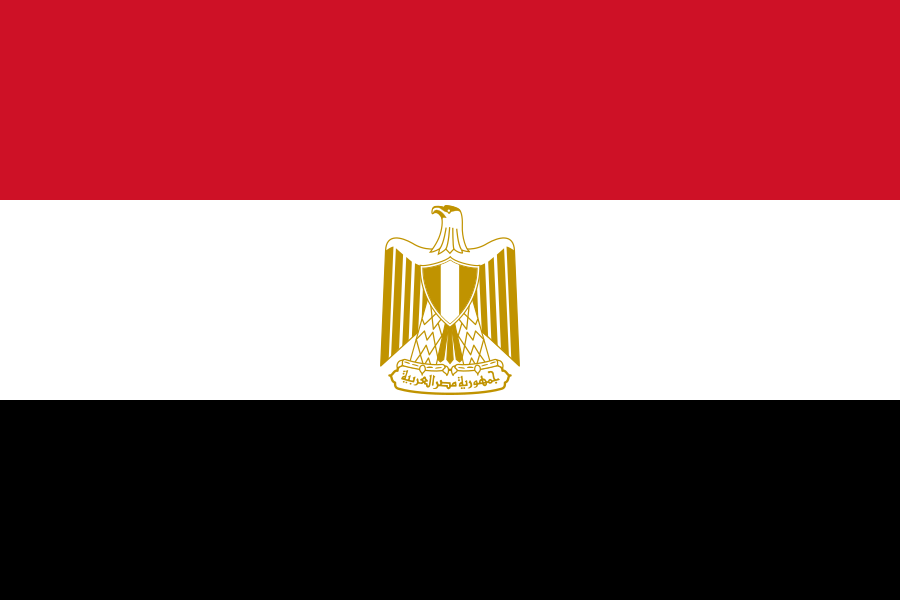
Egypt
Location Info
- Continent: Africa
- Country: Egypt
- Coordinates: 26.8206 , 30.8025
Trust Info
Verified Geographic Data 2026
🌍 Continents

Overview
Egypt is a transcontinental nation situated in the northeast corner of Africa and the southwest corner of Asia via the Sinai Peninsula. It is bordered by the Mediterranean Sea to the north, the Red Sea to the east, Sudan to the south, and Libya to the west. The country is defined by the Nile River, which creates a fertile valley amidst vast desert landscapes.
With a history spanning over five millennia, Egypt is one of the world's oldest nation-states. Today, it serves as a major regional power with a growing economy centered on manufacturing, tourism, and Suez Canal logistics. As of 2026, Egypt continues to expand its infrastructure, including the development of a New Administrative Capital and a high-speed rail network.
Truth & Facts
| Total Area | 1,001,450 sq km |
| Highest Point | Mount Catherine (2,629 m) |
| Estimated Population | 117-120 million |
| Median Age | 25.7 years |
| Capital City | Cairo |
| Government Type | Unitary Republic |
| Unification | c. 3150 BC |
| Modern Republic | June 18, 1953 |
| GDP Growth Rate | 5.3% (Q1 FY 2025/2026) |
| Currency | Egyptian Pound (EGP) |
| High-Speed Rail | 2,000 km network |
| Suez Canal | 193 km length |
| Literacy Rate | 72-75% |
| Life Expectancy | 73 years |
| State Religion | Islam |
| UNESCO Sites | 7 sites |
| Desert Coverage | 95% of total land |
| ICT Growth | 14.5% (2025/2026) |
| Emergency Number | 123 (Ambulance) |
| Governorates | 27 divisions |
| Memberships | UN, AU, Arab League, OIC |
| Renewable Target | 42% by 2030 |
| Birth Rate | 24.22 per 1000 |
| Primary Source | Nile River |
| Arable Land | Approx. 3.5% of total |
📑 Table of Contents
Overview of Egypt
Egypt is a transcontinental state connecting Africa and Asia. It is widely recognized for its pivotal role in human history and its unique geographical positioning along the Nile River.
- Official Name: Arab Republic of Egypt
- Capital City: Cairo
- Official Language: Arabic
- Region: Northeast Africa & Sinai Peninsula
- Currency: Egyptian Pound (EGP)
Historical Development
The history of Egypt is categorized into the Pharaonic, Greco-Roman, Islamic, and Modern eras. It is home to the first unified kingdom established around 3150 BC.
- Early Dynastic Period and Old Kingdom
- The Golden Age of the New Kingdom
- Ptolemaic and Roman influence
- Islamic conquest in the 7th century
- Modern independence movement in 1952
Geography and Regions
Egypt's geography is divided into four distinct regions: the Nile Valley and Delta, the Western Desert, the Eastern Desert, and the Sinai Peninsula.
| Region | Key Feature |
|---|---|
| Nile Delta | Fertile agricultural land |
| Western Desert | Qattara Depression and Oases |
| Sinai Peninsula | Mountainous terrain and Red Sea coast |
Climate and Seasonal Patterns
Egypt features a predominantly hot and dry desert climate, except for the Mediterranean coast which experiences milder winters. Average temperatures vary significantly between the north and south.
- Hot, dry summers (June-August)
- Mild winters (December-February)
- Khamsin dust storms in spring
- Limited annual rainfall
- Large diurnal temperature shifts
Population and Demographics
Egypt possesses the largest population in the Arab world, exceeding 117 million people in 2026. Nearly 99% of the population resides on just 5% of the total land area, primarily along the Nile.
- Dominant Ethnic Group: Egyptian (91%)
- Median Age: 25.7 years
- Urban Population: ~43%
- Major Minorities: Nubians, Bedouins, and Berbers
- High population density in the Nile Delta
Culture and Lifestyle
Egyptian culture is a blend of ancient traditions and modern Islamic influences. Social life revolves around family, religious observances, and a deep-rooted sense of hospitality.
- Influence of Al-Azhar in the Islamic world
- Rich traditions in literature and cinema
- Emphasis on communal dining
- Coptic and Islamic architectural heritage
- Preservation of traditional arts and crafts
Festivals and National Events
Public life in Egypt is punctuated by religious festivals and national holidays. Both Islamic and Coptic Christian dates are officially recognized.
- Ramadan and Eid al-Fitr
- Eid al-Adha
- Sham El Nessim (Spring festival)
- Coptic Christmas (January 7)
- Revolution Day (July 23)
Food and Cuisine
Egyptian cuisine relies heavily on legumes, vegetables, and grains from the fertile Nile Delta. Many dishes have remained largely unchanged for centuries.
- Koshary: A mix of rice, pasta, and lentils
- Ful Medames: Mashed fava beans
- Ta'ameya: Egyptian falafel made with fava beans
- Molokhia: A jute leaf stew
- Traditional flatbread (Eish Baladi)
Economy and Key Industries
The economy is diversifying with a strong focus on manufacturing, energy, and telecommunications. GDP growth reached 5.3% in late 2025.
- Non-oil manufacturing growth (14.5%)
- Suez Canal transit revenues
- Natural gas extraction and exports
- Tourism sector recovery
- Expansion of ICT and financial services
Cost of Living
The cost of living in Egypt is generally lower than in Western Europe or North America, though inflation and currency fluctuations impact local purchasing power.
| Item | Relative Cost |
|---|---|
| Housing | Affordable in outer districts; high in central Cairo |
| Utilities | Subsidized but gradually increasing |
| Food | Low for local produce |
Employment and Business
The Egyptian labor market is characterized by a large young workforce. The government is currently implementing reforms to encourage private-sector activity and startups.
- Major Employer: Public sector and services
- Growth in outsourcing and IT services
- Industrial zones for export manufacturing
- Support for small and medium enterprises (SMEs)
- Increasing participation in the digital economy
Real Estate and Housing
Egypt is witnessing a construction boom, characterized by the development of new fourth-generation cities to alleviate congestion in traditional urban centers.
- New Administrative Capital project
- Urban expansion in New Cairo and 6th of October City
- Government social housing initiatives
- High-end coastal developments on the North Coast
- Modernization of informal settlements
Transportation and Connectivity
Infrastructure projects are modernizing Egypt's transit network, including high-speed rail and expanded metro lines in major cities.
- Egyptian National Railways (one of the oldest globally)
- Cairo Metro expansion (Lines 3 and 4)
- New High-Speed Electric Rail network
- East Cairo Monorail (Operational 2026)
- Extensive bus and microbus networks
Infrastructure and Utilities
National projects focus on water security and energy independence. Egypt is becoming a regional energy hub through solar power and natural gas.
- Benban Solar Park
- Aswan High Dam hydroelectricity
- Expansion of desalination plants
- New road networks linking major cities
- Digital infrastructure and 5G deployment
Education System
Egypt has the largest overall education system in the MENA region. It includes a mix of public, private, and religious (Al-Azhar) institutions.
- Compulsory education up to age 15
- Major Universities: Cairo University, AUC, Al-Azhar
- Growth in international branch campuses
- Reform initiatives for technical and vocational training
- Digitization of the national curriculum
Healthcare and Medical Services
The government is rolling out a Universal Health Insurance system. Medical services are concentrated in major cities like Cairo and Alexandria.
- Public and private hospital networks
- Universal Health Insurance implementation phase
- Specialized centers for cardiac and renal care
- Emergency services accessed via 123
- Growth in pharmaceutical manufacturing
Primary Tourist Attractions
Egypt's attractions are largely focused on its ancient heritage and Red Sea coastline. Sites are managed by the Ministry of Tourism and Antiquities.
- Pyramids of Giza and the Sphinx
- Karnak and Luxor Temples
- Abu Simbel Temples
- The Grand Egyptian Museum (GEM)
- Saint Catherine's Monastery
Activities and Experiences
Beyond archaeological tours, Egypt offers diverse experiences ranging from river cruises to world-class diving.
- Nile River cruises between Luxor and Aswan
- Diving and snorkeling in the Red Sea
- Desert safaris in the Western Oases
- Hot air balloon rides in Luxor
- Exploring Khan el-Khalili bazaar
Key Cities and Destinations
Each region of Egypt offers a distinct environment, from the Mediterranean vibe of Alexandria to the desert majesty of Aswan.
| Destination | Main Appeal |
|---|---|
| Cairo | History and Urban Culture |
| Sharm El Sheikh | Resorts and Diving |
| Luxor | Ancient Monuments |
| Siwa Oasis | Eco-tourism and Tradition |
Travel and Entry Information
Travelers generally require a visa to enter Egypt. Most visitors arrive via Cairo International Airport or coastal hubs like Hurghada.
- E-visa system for many nationalities
- Currency exchange available at banks and kiosks
- Standard voltage: 220V
- Arabic is the primary language; English widely understood in tourism
- Customary tipping (Baksheesh) for services
Regional Connections
Egypt serves as a gateway between Africa, the Levant, and the Mediterranean. It shares borders with several historically significant nations.
- Jordan (accessible via ferry from Nuweiba)
- Israel and Palestinian territories
- Libya to the west
- Sudan to the south
- Cyprus and Greece across the Mediterranean
Environment and Nature
Despite being largely desert, Egypt contains unique ecosystems including the Nile Delta wetlands and Red Sea coral reefs.
- Ras Mohammed National Park
- Wadi El Rayan waterfalls and lakes
- Wadi Al-Hitan (Whale Valley) fossils
- Endangered species like the Egyptian Vulture
- Coral reef conservation in the Red Sea
Government and Administration
Egypt is a republic with a centralized administrative system. The country is divided into 27 governorates, each led by an appointed governor.
- Legislature: House of Representatives and Senate
- Judiciary: Independent court system
- Executive: President and Cabinet
- Local Governance: Governorate councils
- Sustainable Development Strategy: Egypt Vision 2030
Safety and Public Services
Public safety is maintained by the Ministry of Interior. Tourist police are specifically stationed at all major historical and coastal sites.
- Moderate crime rates in urban areas
- Visible security presence in tourist zones
- Emergency ambulance service (123)
- Strict laws regarding unlicensed drones and photography
- Fire department services (180)
Seasonal Travel Recommendations
The optimal time to visit Egypt is during the cooler months when outdoor exploration of historical sites is more comfortable.
- Peak Season: October to April
- Best for Diving: June to September
- Avoid: July and August for southern temple tours
- Spring: Potential for sandstorms (Khamsin)
- Winter: Mild days and cool desert nights
Business and Trade Directory
Egypt hosts a wide range of local and multinational corporations, particularly in the Suez Canal Economic Zone (SCZONE) and industrial parks.
- Suez Canal Authority (Logistics)
- EgyptAir (National Carrier)
- Telecom Egypt (ICT)
- National Bank of Egypt (Finance)
- Orascom Construction (Infrastructure)
General Information FAQs
Where is Egypt located?
Egypt is located in the northeastern corner of Africa and the southwestern corner of Asia, making it a transcontinental country. It is bordered by the Mediterranean Sea to the north and the Red Sea to the east.
What is Egypt known for?
Egypt is primarily known for its ancient civilization, iconic monuments such as the Giza Pyramids and the Sphinx, the Nile River, and its strategic Suez Canal.
Why is Egypt famous?
Egypt is famous for being one of the cradles of civilization, home to the Pharaohs, and for its preservation of immense archaeological treasures like the Valley of the Kings.
What country or region is Egypt part of?
Egypt is part of the North Africa region and is also considered part of the Middle East and the Arab world.
What is the population of Egypt?
As of 2026, the population is estimated to be between 117 and 120 million people, making it the most populous Arab nation.
What languages are spoken in Egypt?
The official language is Arabic. Most locals speak the Egyptian Arabic dialect. English and French are also commonly understood in business and tourism sectors.
What time zone is Egypt in?
Egypt operates on Eastern European Time (EET), which is UTC+2. It also observes Eastern European Summer Time (EEST, UTC+3) during certain months.
What are the key facts about Egypt?
Key facts include its area of approximately 1 million square kilometers, its capital Cairo, its currency the Egyptian Pound, and its dependence on the Nile River for over 90% of its water.
What makes Egypt unique?
Egypt is unique because it is one of the few transcontinental countries in the world and has a continuous recorded history of more than 5,000 years.
How large is Egypt in area?
Egypt covers a total land area of approximately 1,001,450 square kilometers, which is roughly three times the size of Germany.
History FAQs
What is the history of Egypt?
Egypt's history encompasses the era of the Pharaohs, followed by Greek, Roman, Byzantine, Islamic, Ottoman, and British influences before becoming a modern republic in 1953.
When was Egypt established?
Ancient Egypt was established as a unified kingdom around 3150 BC. The modern Arab Republic of Egypt was established following the revolution of 1952.
What major historical events happened in Egypt?
Major events include the building of the Great Pyramids, the expansion of the New Kingdom, the founding of Alexandria by Alexander the Great, the Arab conquest in 641 AD, and the opening of the Suez Canal in 1869.
Who were important historical figures from Egypt?
Famous figures include Ramses II, Tutankhamun, Cleopatra VII, Muhammad Ali Pasha, and modern leaders like Gamal Abdel Nasser.
How has Egypt developed over time?
Egypt has transitioned from a river-based agrarian empire to a complex modern state with a diversified economy, though it remains centered on the Nile Valley.
Geography & Environment FAQs
What is the geography of Egypt?
The geography is defined by the Nile River Valley, the Delta, and vast deserts (Eastern and Western) that cover about 95% of the country.
What natural features surround Egypt?
Egypt is surrounded by the Mediterranean Sea to the north, the Red Sea to the east, and the Sahara Desert to the west and south.
Are there mountains, rivers, or lakes near Egypt?
The Nile is the primary river. Mountains are found in the Sinai (Mount Catherine) and along the Red Sea coast. Lake Nasser is a major man-made reservoir in the south.
What is the elevation of Egypt?
The average elevation is 321 meters. The lowest point is the Qattara Depression at 133 meters below sea level.
What ecosystems exist around Egypt?
Ecosystems include the Nile Delta wetlands, arid desert oases, and the biodiverse coral reefs of the Red Sea.
Climate & Weather FAQs
What is the climate like in Egypt?
Egypt has a hot desert climate. The north has a Mediterranean climate with mild winters and hot summers, while the south is extremely dry and hot year-round.
What is the average temperature in Egypt?
Average temperatures range from 13°C in winter to over 30°C in summer, with southern regions often exceeding 40°C in July and August.
What is the weather like throughout the year in Egypt?
Winter (Dec-Feb) is mild and pleasant; Spring (Mar-May) is warm with possible dust storms; Summer (Jun-Aug) is very hot; Autumn (Sep-Nov) is pleasantly warm.
Does Egypt experience extreme weather?
Extreme weather is usually limited to heatwaves and the Khamsin—a hot, sandy wind that occurs in the spring.
What is the best time of year to visit Egypt?
The best time to visit is between October and April when the weather is cool enough for exploring outdoor historical sites.
Population & Society FAQs
What is the population density of Egypt?
The overall density is low, but the effective density in the Nile Valley and Delta is one of the highest in the world, exceeding 1,000 people per sq km.
What ethnic groups live in Egypt?
Over 90% are ethnic Egyptians. Minorities include Nubians, Berbers (Siwis), Bedouins, and small communities of Greeks and Armenians.
What religions are practiced in Egypt?
Approximately 90% of the population is Sunni Muslim, and about 10% is Christian, mostly Coptic Orthodox.
What is daily life like in Egypt?
Daily life is deeply influenced by religious rhythms, social gatherings at cafes, and the bustling activity of street markets and urban centers.
How diverse is the population of Egypt?
While ethnically homogeneous, Egypt is culturally diverse with distinct traditions in the Delta, Upper Egypt (Sa'id), and the desert regions.
Culture & Traditions FAQs
What cultural traditions are important in Egypt?
Important traditions include the celebration of Ramadan, Moulids (saints' festivals), and the unique spring festival of Sham El Nessim.
What festivals are celebrated in Egypt?
Key festivals include Eid al-Fitr, Eid al-Adha, Coptic Christmas, and national holidays like Police Day and Armed Forces Day.
What cultural landmarks exist in Egypt?
Landmarks include the Cairo Citadel, Al-Azhar Mosque, Coptic Hanging Church, and modern structures like the Cairo Opera House.
What traditional clothing or customs are common in Egypt?
In rural areas, men may wear the Galabeya. Customs emphasize extreme hospitality and respect for elders.
What arts and crafts are associated with Egypt?
Egypt is known for pottery, textile weaving (Egyptian cotton), copper work, and traditional papyrus making.
Food & Cuisine FAQs
What foods is Egypt known for?
Egypt is best known for Koshary, Ful Medames, Falafel, and various grilled meats like Kofta and Kebab.
What traditional dishes originate from Egypt?
Molokhia (a green soup) and Umm Ali (a bread pudding dessert) are quintessential Egyptian dishes.
What are the best restaurants in Egypt?
High-end dining is found in Zamalek and Garden City in Cairo, while authentic local food is best found in traditional downtown eateries.
What local ingredients are commonly used in Egypt cuisine?
Common ingredients include fava beans, lentils, chickpeas, eggplant, coriander, and cumin.
What food markets or street foods are popular in Egypt?
Traditional 'Souqs' like Khan el-Khalili offer local spices, while street carts selling Ful and Ta'ameya are found on almost every corner.
Economy & Business FAQs
What are the main industries in Egypt?
The main industries include petroleum and natural gas, textiles, food processing, tourism, and chemicals.
What economic activities drive the economy of Egypt?
The economy is driven by Suez Canal tolls, remittances from Egyptians working abroad, tourism, and manufacturing.
What businesses operate in Egypt?
Egypt has a mix of state-owned enterprises (like the Suez Canal Authority) and large private conglomerates (like Orascom and El Araby Group).
Is Egypt an important economic center?
Yes, Egypt has one of the largest economies in Africa and serves as a vital logistics hub between Europe and Asia.
What are the major exports or products from Egypt?
Major exports include crude oil and petroleum products, natural gas, fertilizers, textiles, and citrus fruits.
Employment & Jobs FAQs
What job opportunities are available in Egypt?
Opportunities are growing in ICT, construction, energy, and the service sector, particularly in Cairo and the New Administrative Capital.
What are the major employers in Egypt?
The government is the largest employer. Major private employers include the construction, banking, and telecommunications sectors.
What skills are in demand in Egypt?
Skills in digital technology, engineering, finance, and foreign languages (English and German) are highly sought after.
Is Egypt a good place to work?
Egypt offers a dynamic market for professionals, especially in emerging industries, though salaries vary widely between sectors.
What is the unemployment rate in Egypt?
The unemployment rate has generally fluctuated between 7% and 10% in recent years, with higher rates among the youth.
Cost of Living FAQs
Is Egypt expensive to live in?
No, Egypt is considered relatively affordable for foreigners. However, prices for imported goods and central urban housing are higher.
What is the average cost of living in Egypt?
For an individual, monthly costs excluding rent can range from $300 to $600 depending on lifestyle and city.
How much does housing cost in Egypt?
Rent for a one-bedroom apartment in a central city area varies from 5,000 to 15,000 EGP per month.
What are average food and utility costs in Egypt?
Utilities for a standard apartment are roughly 500-1,000 EGP. Food costs remain low for those who buy local produce.
Is Egypt affordable compared to nearby cities?
Yes, Cairo is typically more affordable than neighboring capitals like Amman or Riyadh.
Housing & Real Estate FAQs
What types of housing are available in Egypt?
Options range from traditional apartments in historic districts to modern villas and gated communities in newer suburbs.
What is the average home price in Egypt?
Prices vary by district; new developments in East Cairo can cost significantly more than older units in the city center.
Is it better to rent or buy property in Egypt?
Expats usually rent, but the government has made it easier for foreigners to purchase property in specific investment zones.
Which neighborhoods are popular in Egypt?
Popular Cairo neighborhoods include Maadi, Zamalek, New Cairo, and Sheikh Zayed City.
How has the property market changed in Egypt?
The market has shifted toward the east and west of Cairo, with massive investments in 'Smart Cities' and luxury coastal real estate.
Transportation FAQs
How do you get to Egypt?
Most international travelers arrive via Cairo International Airport (CAI), Hurghada (HRG), or Sharm El Sheikh (SSH).
What is the nearest airport to Egypt?
Cairo International is the primary gateway, followed by Borg El Arab Airport serving Alexandria.
Does Egypt have railway connections?
Yes, Egypt has an extensive rail network connecting Cairo with the Delta and Upper Egypt. A new high-speed rail is under construction.
How reliable is public transportation in Egypt?
The Cairo Metro is very reliable. Buses and microbuses are frequent but can be crowded and navigate heavy traffic.
What major highways or roads connect to Egypt?
Key routes include the Cairo-Alexandria Desert Road and the International Coastal Road.
Education FAQs
What schools are located in Egypt?
There are numerous public, private, and international schools following British, American, and French curricula.
Are there universities in Egypt?
Yes, Egypt is a regional hub for higher education, home to Cairo University, Al-Azhar, and the American University in Cairo (AUC).
What is the literacy rate in Egypt?
The literacy rate is approximately 75%, with higher rates among the younger population.
What educational opportunities exist in Egypt?
Opportunities exist in diverse fields, particularly in medicine, engineering, and Islamic studies.
Is Egypt a good place for students?
Yes, particularly for those interested in archaeology, history, and Middle Eastern studies.
Healthcare FAQs
What hospitals are available in Egypt?
Both public university hospitals and modern private facilities like Dar Al Fouad and El Salam International are available.
Are there emergency medical services in Egypt?
Yes, the national ambulance service can be reached by dialing 123.
What healthcare facilities exist in Egypt?
There are comprehensive hospitals, specialized clinics, and a very dense network of pharmacies.
Is healthcare affordable in Egypt?
Public healthcare is subsidized; private healthcare is more expensive but generally affordable by international standards.
Are specialized medical services available in Egypt?
Yes, Egypt is noted for its high-quality cardiac, orthopedic, and ophthalmic surgery centers.
Tourism & Travel FAQs
What are the top tourist attractions in Egypt?
Top attractions include the Giza Pyramids, the Egyptian Museum, Karnak Temple, and the beaches of the Red Sea.
What are the best things to do in Egypt?
Visit the pyramids, take a Nile cruise, go scuba diving in Ras Mohammed, and explore Islamic Cairo.
Is Egypt worth visiting?
Absolutely. It offers a unique combination of world-class history, vibrant culture, and stunning natural landscapes.
What landmarks should visitors see in Egypt?
The Sphinx, the Temple of Philae, the Citadel of Saladin, and the Library of Alexandria are must-sees.
How many days should tourists spend in Egypt?
A typical trip lasts 10-14 days to cover Cairo, the Nile Valley, and a coastal destination.
Nearby Places FAQs
What places are near Egypt worth visiting?
Petra in Jordan and the Dead Sea are popular nearby international destinations accessible from Egypt.
What cities or towns are close to Egypt?
Amman (Jordan) and Jerusalem are the closest major international cities outside Egypt's borders.
What natural attractions are near Egypt?
The Red Sea mountains and the Sinai desert are significant natural features shared with neighboring regions.
What day trips can be taken from Egypt?
From Cairo, one can visit Alexandria or the Fayum Oasis as day trips.
What famous destinations are within reach of Egypt?
The Greek islands and Cyprus are reachable via short flights from Cairo or Alexandria.
Safety FAQs
Is Egypt safe to live in?
Yes, many expats live safely in Egypt. General precautions against petty crime are recommended, as in any large country.
Is Egypt safe for tourists?
Yes, tourist areas are well-policed and have high security. Millions of tourists visit annually without incident.
What is the crime rate in Egypt?
The crime rate is generally moderate; violent crime against foreigners is rare.
What emergency services operate in Egypt?
Ambulance (123), Police (122), and Fire Department (180).
What safety tips should visitors follow in Egypt?
Use official transportation, respect local dress codes, and stay in well-known tourist areas.
Lifestyle & Living FAQs
Is Egypt a good place to live?
Egypt offers a vibrant lifestyle with a low cost of living and rich social opportunities, though traffic and noise in Cairo can be challenging.
What recreational activities are available in Egypt?
Diving, desert trekking, rowing on the Nile, and visiting diverse cultural venues.
Is Egypt family-friendly?
Yes, Egyptian culture is very family-oriented, and children are welcomed almost everywhere.
What outdoor activities are popular in Egypt?
Kitesurfing in the Red Sea, hiking in the Sinai mountains, and golfing.
What makes life enjoyable in Egypt?
The sunny weather, the warmth of the people, and the constant presence of history and culture.
Practical Information FAQs
What travel tips should visitors know about Egypt?
Always carry cash, drink only bottled water, and learn a few basic Arabic phrases.
What local customs should visitors respect in Egypt?
Dress modestly, especially when visiting religious sites, and be aware of religious practices during Ramadan.
How accessible is Egypt for international visitors?
Egypt is very accessible with numerous direct flights and a well-established tourism infrastructure.
What services are available for tourists in Egypt?
Comprehensive tour agencies, professional guides, and a dedicated Tourist Police force.
What important information should travelers know before visiting Egypt?
Check visa requirements, ensure you have travel insurance, and be prepared for the heat if traveling in summer.