Dominican Republic
Location Info
- Continent: North America
- Country: Dominican Republic
- Coordinates: 18.7357 , -70.1627
Trust Info
Verified Geographic Data
🌍 Continents

Overview
The Dominican Republic is a sovereign nation situated on the eastern two-thirds of the island of Hispaniola in the Greater Antilles archipelago of the Caribbean region. It shares the island with Haiti to the west. The country features a diverse landscape ranging from coastal beaches to fertile valleys and the highest mountain peaks in the Caribbean, including Pico Duarte. The capital and largest city, Santo Domingo, serves as the economic and political center of the nation.
Historically, the Dominican Republic was the site of the first permanent European settlement in the Americas, established by the Spanish in 1496. Since gaining independence in 1844, the nation has developed into the largest economy in the Caribbean and Central American region. Its economic structure has transitioned from a reliance on agriculture to a diverse service-based economy, with tourism, telecommunications, and finance playing primary roles alongside traditional mining and export sectors.
Truth & Facts
| Total Area | 48,671 square kilometers |
| Highest Point | Pico Duarte (3,098 meters) |
| Estimated Population | 11.3 million |
| Official Language | Spanish |
| Capital City | Santo Domingo |
| Administrative Divisions | 31 Provinces and 1 National District |
| Independence from Haiti | February 27, 1844 |
| Restoration of Independence | August 16, 1865 |
| Currency | Dominican Peso (DOP) |
| Primary Industries | Tourism, Mining, Agriculture, Services |
| Major Sea Ports | Haina, Caucedo, Puerto Plata |
| Literacy Rate | 95.5% |
| System Structure | National Health System (SNS) |
| National Sport | Baseball |
| Annual Visitors | Over 10 million (2023) |
| Protected Areas | 25% of land area |
| International Airports | 8 |
| Internet Penetration | ~85% |
| Main Agency | National Police (P.N.) |
| Legal Code | Civil Law |
| Trade Agreements | DR-CAFTA, EPA (EU) |
| Electricity Grid | 110V / 60Hz |
| GDP (Nominal) | ~$120 Billion USD |
| Secondary Languages | English, French, Haitian Creole |
| National Bird | Palmchat (Cigua Palmera) |
📑 Table of Contents
Overview
The Dominican Republic occupies the eastern five-eighths of Hispaniola, an island it shares with Haiti. It is the second-largest Caribbean nation by area and the third-largest by population. The country is recognized for its geographical diversity, featuring mountains, fertile plains, and semi-arid regions.
The nation serves as a major hub for trade and tourism in the Caribbean Basin. With a stable democratic government and a growing middle class, it maintains a significant influence on regional Caribbean politics and economic trends.
- Official Name: República Dominicana
- Capital City: Santo Domingo
- Official Language: Spanish
- Currency: Dominican Peso (DOP)
- Island: Hispaniola
History
Prior to European arrival, the island was inhabited by the Taino people. In 1492, Christopher Columbus arrived, making it the base for Spanish expansion in the New World. Santo Domingo, founded in 1496, became the site of the first cathedral, university, and castle in the Americas.
After centuries of colonial rule and brief periods of French and Haitian occupation, the Dominican Republic declared independence in 1844. The 20th century was marked by periods of political instability, including the dictatorship of Rafael Trujillo (1930–1961), followed by a transition to the current representative democracy.
| Period | Major Event |
|---|---|
| 1492 | Landing of Christopher Columbus |
| 1844 | Declaration of Independence from Haiti |
| 1930-1961 | Trujillo Dictatorship |
| 1966-Present | Modern Democratic Era |
Geography
The geography of the Dominican Republic is the most diverse in the Caribbean. It contains four major mountain ranges, with the Cordillera Central housing Pico Duarte, the region's highest peak. The country also features the lowest point in the Caribbean, Lake Enriquillo, a hypersaline lake located below sea level.
The coastal areas are known for extensive white-sand beaches and coral reefs, particularly in the east and north. Fertile valleys, such as the Cibao Valley in the north, support the majority of the nation's agricultural production.
- Major Rivers: Yaque del Norte, Yuna, Yaque del Sur
- Lakes: Lake Enriquillo, Limon Lagoon
- Mountain Ranges: Cordillera Central, Cordillera Septentrional, Sierra de Neiba
- Coastlines: Atlantic Ocean (North), Caribbean Sea (South)
Climate and Weather
The Dominican Republic has a tropical maritime climate. Average temperatures remain consistent throughout the year, typically ranging between 25°C and 28°C. Altitude significantly affects local temperatures, with mountainous regions experiencing much cooler conditions, sometimes dropping below freezing in the winter.
The country experiences two main rainy seasons: May to June and September to November. It is also located within the Atlantic hurricane belt, with the official season running from June through November.
| Season | Description | Typical Months |
|---|---|---|
| Dry Season | Lower humidity and rainfall | December to April |
| Rainy Season | Increased precipitation | May to November |
| Hurricane Season | Risk of tropical storms | June to November |
Population and Demographics
As of 2024, the population is estimated at approximately 11.3 million people. The demographic profile is primarily a mix of European and African ancestry, with smaller percentages of other groups. A large portion of the population is concentrated in urban centers, with Santo Domingo and Santiago de los Caballeros housing nearly half of the nation's inhabitants.
The country also has a significant immigrant population, primarily from neighboring Haiti. Conversely, a large Dominican diaspora resides abroad, notably in the United States, Spain, and Italy, contributing significantly to the economy through remittances.
- Urban Population: ~82%
- Major Cities: Santo Domingo, Santiago, La Romana
- Median Age: ~28 years
Culture and Lifestyle
Dominican culture is a vibrant blend of Spanish, African, and Taino influences. This is most evident in the nation's music, with Merengue and Bachata being the most popular genres, both recognized by UNESCO as Intangible Cultural Heritage. Family and social gatherings are central to daily life.
Baseball is the most significant sport and a major part of national identity. The country consistently produces world-class talent for international leagues and maintains a highly competitive local winter league.
- Traditional Music: Merengue, Bachata
- National Sport: Baseball (Pelota)
- Religion: Predominantly Roman Catholic (~48%), Protestant (~21%)
Festivals and Events
The most important cultural event is the Dominican Carnival, celebrated throughout February. It features elaborate costumes and masks, with each region having its own unique characters, such as the 'Diablos Cojuelos' of La Vega. Independence Day is celebrated on February 27th with parades and military displays.
Religious festivals are also prominent, such as the Feast of Our Lady of Altagracia in January, which draws thousands of pilgrims to the Basilica in Higüey.
- Carnival: February (National)
- Independence Day: February 27
- Restoration Day: August 16
- Our Lady of Altagracia: January 21
Food and Cuisine
Dominican cuisine, often called 'Comida Criolla,' is based on staples like rice, beans, and meat. The national dish is 'La Bandera Dominicana' (The Dominican Flag), consisting of white rice, red beans, and stewed meat, served with a side of salad or fried plantains.
Other notable dishes include 'Sancocho,' a hearty seven-meat stew, and 'Mangú,' mashed boiled plantains typically served for breakfast with fried eggs, cheese, and salami.
- Staples: Rice, beans, plantains, yucca
- Signature Dishes: La Bandera, Sancocho, Mangú, Mofongo
- Beverages: Coffee, Rum, Mamajuana
Economy and Industries
The Dominican Republic has the largest economy in the Caribbean. Traditionally an exporter of sugar, coffee, and tobacco, the economy has diversified into tourism, telecommunications, and manufacturing within Free Trade Zones. Gold mining is also a significant contributor to export revenue.
The tourism sector is the country's primary source of foreign exchange, supported by a large number of all-inclusive resorts and cruise ship terminals along the coasts.
| Sector | Contribution |
|---|---|
| Services/Tourism | ~60% |
| Industry/Mining | ~25% |
| Agriculture | ~5% |
Cost of Living
The cost of living is moderate compared to other Caribbean islands, though prices vary significantly between urban centers and rural areas. Santo Domingo and tourist hubs like Punta Cana are the most expensive regions. Locally produced goods, such as tropical fruits and vegetables, are affordable, while imported electronics and vehicles carry high taxes.
Utilities like electricity can be relatively high due to dependence on imported fossil fuels for generation.
- Affordable: Local food, public transit, services
- Expensive: Imported goods, electricity, private schooling
Employment and Business
The labor market is dominated by the service sector, particularly in hospitality and retail. Free Trade Zones (Zonas Francas) are major employers, focusing on medical devices, textiles, and electronics assembly. There is also a large informal economy, consisting of small-scale vendors and services.
The government encourages foreign direct investment through various tax incentives, especially in the tourism and renewable energy sectors.
- Key Employers: Tourism resorts, Free Trade Zones, Telecommunication firms
- Unemployment Rate: ~5.5% (Formal sector)
Real Estate and Housing
The real estate market has seen significant growth, particularly in luxury coastal developments and urban high-rises in Santo Domingo. Condominiums are the most popular housing type in major cities. In rural areas, single-family concrete homes are standard.
Foreigners have the same rights as citizens when purchasing property, making the country a popular destination for retirees and vacation home buyers from North America and Europe.
- Major Markets: Santo Domingo (Distrito Nacional), Punta Cana, Las Terrenas
- Property Types: Apartments, Villas, Rural estates
Transportation and Connectivity
The country has a well-developed highway network connecting major cities. Public transportation includes large buses (expresos), minibuses (guaguas), and shared taxis (carros públicos). Santo Domingo features the first metro system in the Caribbean, which continues to expand.
Air travel is highly accessible with eight international airports, the busiest being Punta Cana International and Las Américas International in the capital.
- Public Transit: Metro de Santo Domingo, OMSA buses
- Primary Highways: DR-1 (North), DR-2 (South), DR-3 (East)
- Airports: 8 International, several domestic
Infrastructure and Utilities
The nation has made significant investments in infrastructure, including new highways and bridge projects. The telecommunications network is one of the most advanced in Latin America, with widespread 4G and growing 5G coverage.
The electrical grid remains a challenge, with occasional power outages, though the integration of natural gas and renewable energy sources like wind and solar is increasing stability.
- Power: 110V standard, increasing reliance on Natural Gas
- Water: Piped water available in urban areas; bottled water recommended for drinking
- Telecom: Dominance of Claro, Altice, and Viva
Education
Education is compulsory and free for children between the ages of 5 and 14. The system is divided into primary, secondary, and higher education. While the government has significantly increased funding, challenges in quality and infrastructure persist in rural areas.
The country is home to the oldest university in the Americas, the Universidad Autónoma de Santo Domingo (UASD), founded in 1538.
- Public University: UASD
- Private Universities: PUCMM, UNIBE, INTEC
- Literacy: ~95%
Healthcare
Healthcare in the Dominican Republic consists of both public and private providers. The public system provides services to those under the subsidized insurance regime, while the private sector serves those with contributory insurance and medical tourists. Many doctors are trained internationally.
Major cities have modern, well-equipped hospitals and clinics, but medical facilities in remote rural areas may be limited to basic care.
- Public System: Servicio Nacional de Salud (SNS)
- Insurance: Senasa (Public), various private ARS
Tourist Attractions
The Dominican Republic is the most visited destination in the Caribbean. Key attractions include the Colonial Zone of Santo Domingo, a UNESCO World Heritage site featuring 16th-century Spanish architecture. The resort town of Punta Cana is famous for its nearly 32 kilometers of continuous white-sand beaches.
Nature enthusiasts frequent Samaná Bay for humpback whale watching and the 27 Waterfalls of Damajagua in Puerto Plata for adventure tourism.
- Santo Domingo: Colonial Zone, Alcázar de Colón
- East Coast: Punta Cana, Bavaro, Saona Island
- North Coast: Puerto Plata, Cabarete (kitesurfing)
Things to Do
Visitors engage in a variety of activities from beach lounging to mountain trekking. Hiking Pico Duarte is a popular multi-day excursion for experienced trekkers. The coastlines offer world-class conditions for windsurfing, kitesurfing, and scuba diving.
Golf is also a major draw, with several championship courses designed by famous architects like Pete Dye located in La Romana and Punta Cana.
- Adventure: Hiking Pico Duarte, zip-lining in Samaná
- Water Sports: Diving in Bayahibe, surfing in Cabarete
- Leisure: Golfing at Teeth of the Dog, whale watching
Best Places to Visit
Santo Domingo is essential for history, while the Cibao Valley offers a look into the country's agricultural heartland. Jarabacoa and Constanza are known as the 'Dominican Alps,' offering cool temperatures and pine forests.
For those seeking seclusion, the Bahía de las Águilas in the southwest offers a pristine, undeveloped beach within a protected national park.
- For History: Santo Domingo Colonial Zone
- For Beaches: Punta Cana, Las Terrenas
- For Nature: Jarabacoa, Los Haitises National Park
Travel Guide
Most international visitors require a valid passport and an E-Ticket (electronic entry/exit form). A tourist card fee is typically included in the price of airfare. The official currency is the Dominican Peso, though US Dollars and credit cards are widely accepted in tourist areas.
Spanish is the national language, but English is common in hotels and major tourist zones.
- Entry Requirements: E-Ticket, Valid Passport
- Currency: Peso (DOP), USD widely used
- Transport: Rental cars, taxis, Uber (in cities)
Nearby Places
The Dominican Republic shares a land border with Haiti to the west. To the east, across the Mona Passage, lies Puerto Rico. To the north are the Turks and Caicos Islands and the Bahamas.
Regional flights connect Santo Domingo to other major Caribbean hubs like San Juan, Kingston, and Miami.
- Bordering Country: Haiti
- Nearby Islands: Puerto Rico, Cuba, Jamaica
Environment and Nature
The nation is home to various ecosystems, including cloud forests, dry scrublands, and mangroves. It boasts high levels of biodiversity with over 5,600 plant species, many of which are endemic. Protected areas like Jaragua and Sierra de Bahoruco are vital for the survival of the Solenodon and Hutia, rare endemic mammals.
Conservation efforts are ongoing to protect coral reefs and coastal wetlands from the impacts of climate change and tourism development.
- Endemic Species: Solenodon, Palmchat
- Protected Areas: ~25% of national territory
Government and Administration
The Dominican Republic is a representative democracy with three branches of government: Executive, Legislative, and Judicial. The President is both head of state and head of government, elected every four years by popular vote.
The legislature consists of a bicameral National Congress, including the Senate and the Chamber of Deputies.
- Government Type: Unitary presidential republic
- Current President: Luis Abinader (since 2020)
- Administrative Units: 31 provinces, 1 National District
Safety and Public Services
Public safety is managed by the National Police and the military. In tourist areas, a specialized branch known as POLITUR (Tourism Police) is deployed to assist visitors. General safety precautions, such as avoiding unlit areas at night and keeping valuables secure, are advised.
Emergency services are accessed via the 9-1-1 system, which covers major urban and tourist regions.
- Emergency Number: 9-1-1
- Tourist Assistance: POLITUR
Best Time to Visit
The peak travel season is from December to April, coinciding with the dry season and cooler temperatures. This is also the best time for humpback whale watching in Samaná (January to March).
The 'shoulder' seasons of May and November offer lower prices but a higher chance of rainfall.
- High Season: December - April
- Whale Watching: January - March
- Low Season: June - October (Hurricane risk)
Local Business Directory
The business landscape is dominated by SMEs and large-scale hospitality corporations. Major commercial activity is centered in Santo Domingo's 'Polígono Central' and Santiago's industrial districts.
Online business directories and chambers of commerce provide listings for professional services, manufacturing, and agricultural exporters.
- Chambers: Cámara de Comercio de Santo Domingo
- Industry Groups: AIRD (Industrial Association), ASONAHORES (Tourism Association)
General Information FAQs
Where is Dominican Republic located?
It is located on the island of Hispaniola in the Caribbean region, between the Atlantic Ocean and the Caribbean Sea.
What is Dominican Republic known for?
It is known for its diverse geography, white-sand beaches, Merengue and Bachata music, and producing world-class baseball players.
Why is Dominican Republic famous?
It is famous for being the site of the first permanent European settlement in the Americas and for its extensive all-inclusive tourism industry.
What country or region is Dominican Republic part of?
It is an independent nation in the Caribbean, part of the Greater Antilles.
What is the population of Dominican Republic?
The population is approximately 11.3 million people as of 2024.
What languages are spoken in Dominican Republic?
The official language is Spanish. English is commonly spoken in tourist areas.
What time zone is Dominican Republic in?
It is in Atlantic Standard Time (AST), which is UTC-4. It does not observe daylight saving time.
What are the key facts about Dominican Republic?
Key facts include its capital Santo Domingo, its currency the Peso, and its status as the largest economy in the Caribbean.
What makes Dominican Republic unique?
It uniquely contains both the highest point (Pico Duarte) and the lowest point (Lake Enriquillo) in the Caribbean.
How large is Dominican Republic in area?
It covers an area of 48,671 square kilometers (18,792 square miles).
History FAQs
What is the history of Dominican Republic?
Its history spans from the indigenous Taino era to Spanish colonization in 1492, independence in 1844, and modern democratic development.
When was Dominican Republic established?
Modern independence was established on February 27, 1844.
What major historical events happened in Dominican Republic?
Major events include the arrival of Columbus, independence from Haiti in 1844, and the Restoration War against Spain in 1863.
Who were important historical figures from Dominican Republic?
Key figures include Juan Pablo Duarte, Francisco del Rosario Sánchez, and Ramón Matías Mella, known as the founding fathers.
How has Dominican Republic developed over time?
It transitioned from a colonial agrarian society to a diversified modern economy with a strong emphasis on services and tourism.
Geography & Environment FAQs
What is the geography of Dominican Republic?
It features rugged mountains, fertile valleys, and a coastline of nearly 1,288 kilometers.
What natural features surround Dominican Republic?
It is bordered by the Atlantic Ocean to the north, the Caribbean Sea to the south, and Haiti to the west.
Are there mountains, rivers, or lakes near Dominican Republic?
Yes, it has the Cordillera Central mountains, the Yaque del Norte river, and Lake Enriquillo.
What is the elevation of Dominican Republic?
Elevation varies from 46 meters below sea level at Lake Enriquillo to 3,098 meters above sea level at Pico Duarte.
What ecosystems exist around Dominican Republic?
Ecosystems include tropical rainforests, alpine forests, mangroves, and coral reefs.
Climate & Weather FAQs
What is the climate like in Dominican Republic?
The climate is tropical maritime with little seasonal temperature variation.
What is the average temperature in Dominican Republic?
The average annual temperature is approximately 25°C to 28°C (77°F to 82°F).
What is the weather like throughout the year in Dominican Republic?
It is generally warm and sunny, with distinct rainy seasons in May-June and September-November.
Does Dominican Republic experience extreme weather?
Yes, it is susceptible to hurricanes and tropical storms during the Atlantic hurricane season.
What is the best time of year to visit Dominican Republic?
The dry season from December to April is widely considered the best time for tourism.
Population & Society FAQs
What is the population density of Dominican Republic?
It is approximately 232 people per square kilometer.
What ethnic groups live in Dominican Republic?
The population is largely mixed-race (Mestizo/Mulatto), with significant groups of European and African descent.
What religions are practiced in Dominican Republic?
Roman Catholicism is the primary religion, followed by Protestantism and other Christian denominations.
What is daily life like in Dominican Republic?
Daily life revolves around work, family gatherings, community social events, and sports, particularly baseball.
How diverse is the population of Dominican Republic?
It is quite diverse due to its history of indigenous, European, African, and later immigrant influences.
Culture & Traditions FAQs
What cultural traditions are important in Dominican Republic?
Important traditions include Carnival, religious processions, and the celebration of traditional music and dance.
What festivals are celebrated in Dominican Republic?
Key festivals include Carnival in February, Independence Day, and various Patron Saint festivals (Fiestas Patronales).
What cultural landmarks exist in Dominican Republic?
The Colonial Zone of Santo Domingo contains the most significant cultural landmarks, including the First Cathedral of the Americas.
What traditional clothing or customs are common in Dominican Republic?
Lightweight clothing is standard due to the heat. Traditional dress for folk dance often includes colorful, layered skirts for women.
What arts and crafts are associated with Dominican Republic?
Famous crafts include Faceless Limé Dolls, Larimar jewelry, and amber carvings.
Food & Cuisine FAQs
What foods is Dominican Republic known for?
It is known for rice, beans, plantains, and slow-cooked meats.
What traditional dishes originate from Dominican Republic?
Traditional dishes include La Bandera, Sancocho, and Mangú.
What are the best restaurants in Dominican Republic?
Major cities like Santo Domingo offer high-end culinary options ranging from traditional Creole to international fusion.
What local ingredients are commonly used in Dominican Republic cuisine?
Common ingredients include plantains, yucca, cilantro, garlic, beans, and coconut.
What food markets or street foods are popular in Dominican Republic?
Popular street foods include Chimichurris (Dominican burgers), Pica Pollo (fried chicken), and Empanadas.
Economy & Business FAQs
What are the main industries in Dominican Republic?
The main industries are tourism, mining (gold and ferronickel), agriculture, and manufacturing in free trade zones.
What economic activities drive the economy of Dominican Republic?
Foreign direct investment in tourism and remittances from the diaspora are primary drivers.
What businesses operate in Dominican Republic?
A wide range of international hotel chains, telecommunications firms, and beverage companies (like Brugal and Presidente) operate there.
Is Dominican Republic an important economic center?
Yes, it is the largest and fastest-growing economy in the Caribbean region.
What are the major exports or products from Dominican Republic?
Major exports include gold, medical instruments, tobacco, cigars, cocoa, and sugar.
Employment & Jobs FAQs
What job opportunities are available in Dominican Republic?
Opportunities are highest in tourism, services, telecommunications, and manufacturing.
What are the major employers in Dominican Republic?
The government, resort groups like Puntacana Resort & Club, and free zone manufacturers are major employers.
What skills are in demand in Dominican Republic?
Skills in hospitality, bilingual communication (English/Spanish), tech, and medical engineering are in demand.
Is Dominican Republic a good place to work?
It offers a growing market for professionals, especially in the capital and tourist zones.
What is the unemployment rate in Dominican Republic?
The official unemployment rate fluctuates around 5% to 6%.
Cost of Living FAQs
Is Dominican Republic expensive to live in?
It is generally more affordable than the US or Europe, but costs are higher in major cities and resort towns.
What is the average cost of living in Dominican Republic?
A comfortable lifestyle for a single person can range from $1,200 to $2,000 USD per month depending on location.
How much does housing cost in Dominican Republic?
Rent for a one-bedroom apartment in a city center can range from $400 to $800 USD.
What are average food and utility costs in Dominican Republic?
Utilities including electricity can be $50-$150 USD. Local food is inexpensive, while imported goods are costly.
Is Dominican Republic affordable compared to nearby cities?
It is generally more affordable than San Juan, Puerto Rico, or cities in the Bahamas.
Housing & Real Estate FAQs
What types of housing are available in Dominican Republic?
Options include high-rise apartments, gated villa communities, and traditional rural houses.
What is the average home price in Dominican Republic?
Prices range from $100,000 for small apartments to over $1,000,000 for luxury beachfront villas.
Is it better to rent or buy property in Dominican Republic?
Buying is often preferred for long-term residents due to the potential for appreciation in tourist areas.
Which neighborhoods are popular in Dominican Republic?
Piantini and Naco in Santo Domingo, and Bavaro/Punta Cana are highly sought after.
How has the property market changed in Dominican Republic?
There has been a surge in development of short-term rental properties driven by platforms like Airbnb.
Transportation FAQs
How do you get to Dominican Republic?
Most visitors arrive via international flights to one of the eight major airports.
What is the nearest airport to Dominican Republic?
Major airports include Las Américas (SDQ) and Punta Cana (PUJ).
Does Dominican Republic have railway connections?
It does not have an intercity national rail, but Santo Domingo has an extensive metro system.
How reliable is public transportation in Dominican Republic?
Intercity buses (Caribe Tours, Metro) are very reliable. Local 'guaguas' are frequent but less structured.
What major highways or roads connect to Dominican Republic?
Major highways include the Autopista Duarte (North) and Autopista del Este (East).
Education FAQs
What schools are located in Dominican Republic?
There are numerous public schools and a large network of private and international schools.
Are there universities in Dominican Republic?
Yes, including UASD, PUCMM, UNIBE, and INTEC.
What is the literacy rate in Dominican Republic?
The adult literacy rate is approximately 95%.
What educational opportunities exist in Dominican Republic?
There are opportunities for vocational training and higher education in various professional fields.
Is Dominican Republic a good place for students?
It is a hub for Caribbean students and offers several reputable medical and business programs.
Healthcare FAQs
What hospitals are available in Dominican Republic?
Major hospitals include CEDIMAT and Plaza de la Salud in Santo Domingo.
Are there emergency medical services in Dominican Republic?
Yes, the 9-1-1 system provides emergency medical response in most urban centers.
What healthcare facilities exist in Dominican Republic?
There are public hospitals (hospitales) and private clinics (clínicas).
Is healthcare affordable in Dominican Republic?
Private healthcare is significantly cheaper than in the US, but expensive for those without insurance.
Are specialized medical services available in Dominican Republic?
Yes, specialized services in cardiology, oncology, and cosmetic surgery are well-established.
Tourism & Travel FAQs
What are the top tourist attractions in Dominican Republic?
Top sites include the Colonial Zone, Punta Cana beaches, and Saona Island.
What are the best things to do in Dominican Republic?
Popular activities include whale watching, scuba diving, golfing, and exploring colonial history.
Is Dominican Republic worth visiting?
Yes, it is highly rated for its hospitality, natural beauty, and historical significance.
What landmarks should visitors see in Dominican Republic?
Visitors should see the Alcázar de Colón, the Columbus Lighthouse, and the Basilica of Altagracia.
How many days should tourists spend in Dominican Republic?
A typical stay ranges from 7 to 10 days to cover both beach and cultural sites.
Nearby Places FAQs
What places are near Dominican Republic worth visiting?
Nearby destinations include Puerto Rico, the Turks and Caicos, and various smaller islands like Catalina.
What cities or towns are close to Dominican Republic?
Port-au-Prince, Haiti is the closest major foreign city via land border.
What natural attractions are near Dominican Republic?
The Silver Bank (whale breeding ground) and the Mona Passage are notable nearby marine areas.
What day trips can be taken from Dominican Republic?
Common day trips include Saona Island from La Romana or Los Haitises from Samaná.
What famous destinations are within reach of Dominican Republic?
Miami and San Juan are short flights away.
Safety FAQs
Is Dominican Republic safe to live in?
It is generally safe for residents, though standard urban safety precautions are necessary.
Is Dominican Republic safe for tourists?
Yes, especially within resort areas and tourist zones patrolled by POLITUR.
What is the crime rate in Dominican Republic?
The crime rate varies, with petty theft being the most common issue in crowded urban areas.
What emergency services operate in Dominican Republic?
Police, fire, and ambulance services operate through the 9-1-1 system.
What safety tips should visitors follow in Dominican Republic?
Use official taxis, avoid carrying large amounts of cash, and stick to well-lit areas at night.
Lifestyle & Living FAQs
Is Dominican Republic a good place to live?
Many expats and locals find it offers a high quality of life with a relaxed pace and tropical climate.
What recreational activities are available in Dominican Republic?
Activities include baseball, water sports, hiking, and dancing at local venues.
Is Dominican Republic family-friendly?
Yes, the culture is very family-oriented and there are many family-focused resorts.
What outdoor activities are popular in Dominican Republic?
Hiking, mountain biking, and kiteboarding are very popular.
What makes life enjoyable in Dominican Republic?
The combination of warm weather, friendly social interactions, and accessibility to nature makes it enjoyable.
Practical Information FAQs
What travel tips should visitors know about Dominican Republic?
Always drink bottled water and remember that the local electrical voltage is the same as the US (110V).
What local customs should visitors respect in Dominican Republic?
Dressing modestly is expected when entering churches or government buildings.
How accessible is Dominican Republic for international visitors?
It is highly accessible with multiple daily flights from North America and Europe.
What services are available for tourists in Dominican Republic?
Tourist services include guided tours, rental cars, and widespread banking/ATM access.
What important information should travelers know before visiting Dominican Republic?
Check entry requirements for the E-Ticket and ensure your passport is valid for at least six months.
Miscellaneous FAQs
What is the national bird of Dominican Republic?
The Palmchat (Cigua Palmera).
What is the national flower?
The Bayahibe Rose (Pereskia quisqueyana).
What is the main religion?
Roman Catholicism is the official and most practiced religion.
Is the water safe to drink?
Tap water is not recommended for drinking; bottled water is the standard for consumption.
What is the driving side in Dominican Republic?
Traffic drives on the right side of the road.
What is the currency code?
The currency code is DOP.
Are credit cards accepted?
Yes, major credit cards are widely accepted in cities and tourist establishments.
What is the country's calling code?
The main calling codes are +1-809, +1-829, and +1-849.
Is there high-speed internet?
Yes, high-speed fiber optic internet is available in most urban and developed coastal areas.
What are the major mountain ranges?
Cordillera Central, Cordillera Septentrional, and Sierra de Neiba.
What is the highest mountain?
Pico Duarte, at 3,098 meters.
What is the largest lake?
Lake Enriquillo.
Are there active volcanoes?
There are no active volcanoes in the Dominican Republic.
How many provinces are there?
There are 31 provinces and one National District.
Who is the current head of state?
President Luis Abinader.
What is the main agricultural product?
Sugar cane was traditionally the main product, but cocoa and tobacco are now highly significant.
What type of government does it have?
A unitary presidential representative democracy.
Is there a military?
Yes, the Armed Forces of the Dominican Republic include the Army, Navy, and Air Force.
What is the electrical frequency?
60 Hz.
Is there a national anthem?
Yes, the 'Himno Nacional,' with lyrics by Emilio Prud'Homme and music by José Reyes.
What are the colors of the flag?
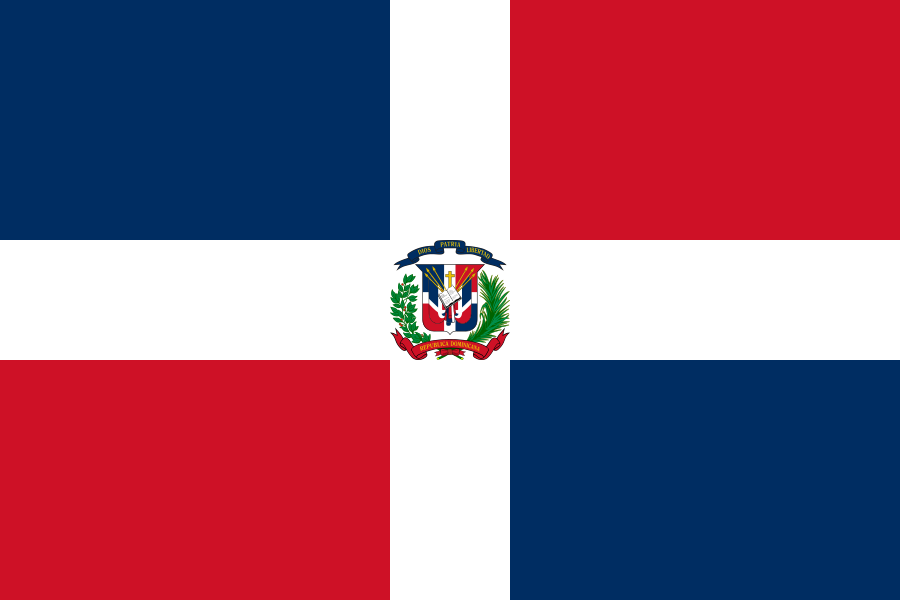
Red, blue, and white, with a central cross and the national coat of arms.
Is English widely understood?
Yes, especially in the hospitality and business sectors.
What are the primary exports?
Gold, cigars, and medical equipment.
Are there many national parks?
Yes, there are 29 national parks protecting various ecosystems.
What is the average literacy rate?
Approximately 95%.