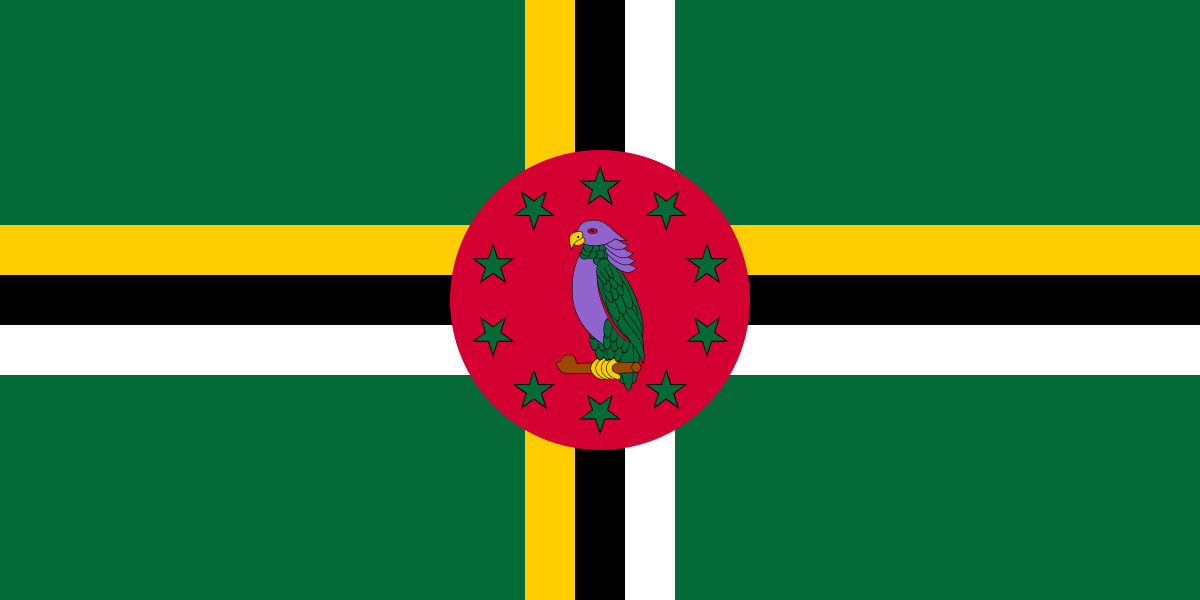
Dominica
Location Info
- Continent: North America
- Country: Dominica
- Coordinates: 15.415 , -61.371
Trust Info
Verified Geographic and Government Data
🌍 Continents

Overview
Dominica, officially the Commonwealth of Dominica, is a mountainous island nation situated in the Lesser Antilles region of the Caribbean Sea. It is distinct from the Dominican Republic and is widely recognized as the "Nature Isle of the Caribbean" due to its lush rainforests, extensive river systems, and rugged volcanic terrain. The island is home to the world's second-largest hot spring, the Boiling Lake, and features some of the highest peaks in the Eastern Caribbean.
Historically, Dominica was the last of the Caribbean islands to be colonized by Europeans, largely due to the fierce resistance of the indigenous Kalinago people. Today, it remains one of the few places in the region where a significant indigenous population resides on their ancestral lands. The nation's economy has transitioned from a heavy reliance on agricultural exports, such as bananas, toward services, ecotourism, and a prominent Citizenship by Investment program.
Truth & Facts
| Total Area | 751 square kilometers |
| Highest Point | Morne Diablotins (1,447 meters) |
| Population | 72,412 (Estimated) |
| Official Language | English |
| Capital | Roseau |
| Government Type | Parliamentary Republic |
| Independence | November 3, 1978 |
| Currency | East Caribbean Dollar (XCD) |
| Major Export | Bananas, soap, citrus fruits |
| Main Airport | Douglas-Charles Airport |
| Literacy Rate | 94% |
| Primary Hospital | Dominica China Friendship Hospital |
| National Bird | Sisserou Parrot |
| UNESCO World Heritage Site | Morne Trois Pitons National Park |
| Forest Cover | 60% of total land area |
| Driving Side | Left |
| Internet TLD | .dm |
| Emergency Number | 999 |
| Legal System | English Common Law |
| Regional Memberships | OECS, CARICOM |
| Energy Source | Hydroelectric and Diesel |
| Life Expectancy | 78 years |
| Endemic Species | Sisserou and Jaco Parrots |
| Program | Citizenship by Investment |
📑 Table of Contents
Overview
Dominica is a sovereign island country located in the Eastern Caribbean. It is part of the Windward Islands chain in the Lesser Antilles. Known for its extensive natural beauty, the nation promotes itself as an ecotourism destination. The capital city, Roseau, serves as the main administrative and commercial hub.
- Official Name: Commonwealth of Dominica
- Motto: Après Bondié, C'est la Ter (After God, the Earth)
- Currency: East Caribbean Dollar
- Language: English and Creole
- Time Zone: Atlantic Standard Time (UTC-4)
History
Dominica's history is shaped by its indigenous Kalinago roots and European colonial competition. It was the last Caribbean island to be colonized due to its rugged terrain and the resistance of its inhabitants. Both France and Britain fought for control before it officially became a British colony in 1805.
- Kalinago settlement predates European arrival.
- French control in the 17th and 18th centuries.
- Transfer to Britain via the Treaty of Paris in 1763.
- Independence achieved on November 3, 1978.
- Recent history focused on climate resilience and economic diversification.
Geography
Dominica is the most mountainous island in the Lesser Antilles. Its volcanic origin has resulted in high peaks, deep valleys, and hydrothermal features like the Boiling Lake. The island is covered by dense rainforest and features hundreds of rivers and waterfalls.
| Feature | Details |
|---|---|
| Highest Peak | Morne Diablotins |
| Major River | Layou River |
| Protected Area | Morne Trois Pitons National Park |
Climate and Weather
The island experiences a tropical maritime climate with heavy rainfall, particularly in the interior mountains. There is a distinct wet season from June to November, coinciding with the Atlantic hurricane season. Coastal areas are generally warmer and drier than the inland forests.
- Average Temperature: 25°C to 28°C.
- Wet Season: June to November.
- Dry Season: January to April.
- High Humidity throughout the year.
- Vulnerability to tropical cyclones.
Population and Demographics
The majority of the population is of African descent, with a significant minority of mixed heritage. Dominica is unique for having the largest remaining settlement of Kalinago people in the Caribbean. The population is concentrated along the coasts, especially in Roseau and Portsmouth.
- Total Population: ~72,000.
- Ethnic Groups: African, Kalinago, European, Mixed.
- Main Religion: Roman Catholicism.
- Urban Centers: Roseau, Portsmouth.
- Aging Population: High number of centenarians.
Culture and Lifestyle
Dominica’s culture is a blend of African, French, British, and Kalinago influences. This is reflected in the local music, dance, and language. Traditional customs remain strong in rural areas, while the cities show more modern Western influences.
- Traditional Dance: Quadrille and Jing Ping.
- Languages: English (Official), Kwéyòl (Creole).
- National Symbol: Sisserou Parrot.
- Attire: Wob Dwiyet (National Dress).
- Handicrafts: Kalinago basket weaving.
Festivals and Events
Festivals in Dominica celebrate its Creole heritage and independence. Carnival is a major event involving street parades and calypso competitions. The World Creole Music Festival attracts international artists and tourists every October.
- Mas Domnik (Carnival): Held before Ash Wednesday.
- World Creole Music Festival: Celebrates Creole culture.
- Independence Celebrations: Feature traditional competitions.
- Kalinago Week: Highlights indigenous culture.
- Jazz 'n Creole: A fusion of music styles.
Food and Cuisine
Dominican cuisine is characterized by the use of fresh local produce, root crops, and seafood. Spices and herbs are integral to the cooking style, which shares similarities with other Creole-speaking islands. The national dish has historically shifted but centers on locally sourced stews.
- Callaloo: A leafy green soup.
- Mountain Chicken: Once a national dish (frog legs).
- Bakes: Fried dough served with saltfish.
- Provisions: Starchy vegetables like yams and dasheen.
- Seafood: Grilled snapper and lobster are common.
Economy and Industries
Historically dependent on agriculture, particularly bananas, Dominica has diversified into services and tourism. The Citizenship by Investment (CBI) program is a major source of government revenue. The nation also exports soap, dental cream, and essential oils.
| Sector | Importance |
|---|---|
| Agriculture | Bananas, citrus, root crops |
| Tourism | Ecotourism and Cruise ships |
| Finance | Offshore banking and CBI |
Cost of Living
The cost of living is moderate compared to larger Caribbean nations but can be high due to the need to import many manufactured goods. Locally produced food is affordable, while utilities and imported fuel can be expensive. Real estate prices vary significantly between Roseau and rural parishes.
- High reliance on imported electronics and vehicles.
- Electricity costs are subject to global fuel prices.
- Public markets offer affordable fresh produce.
- Healthcare costs are subsidised for citizens.
- Housing in the capital is the most expensive.
Employment and Business
The public sector is a major employer in Dominica. Agriculture remains a significant source of employment for the rural population. The government actively encourages investment in hotel development and green energy projects through various incentives.
- Public administration is a top employer.
- Growth in the hospitality and service sector.
- Small and medium-sized enterprises (SMEs) dominate the local market.
- Agricultural cooperatives are common.
- Investment opportunities in geothermal energy.
Real Estate and Housing
Housing ranges from traditional wooden cottages to modern concrete structures designed to withstand hurricanes. Recent years have seen an increase in luxury resort developments funded by the Citizenship by Investment program. Land ownership is open to foreigners, subject to an Alien Landholding License.
- Rise in climate-resilient architecture.
- Apartment rentals common in Roseau.
- Gated resort communities are emerging.
- High demand for coastal properties.
- Building codes updated post-Hurricane Maria.
Transportation and Connectivity
The island's mountainous terrain makes road travel the primary mode of internal transport. Public transit consists of a network of privately owned minibuses. International access is provided by two regional airports and a ferry service connecting to neighboring French islands.
- Douglas-Charles Airport handles regional flights.
- Canefield Airport is near Roseau.
- Ferries link Dominica to Martinique and Guadeloupe.
- Minibuses have designated routes and numbers.
- Rental cars are available for independent travel.
Infrastructure and Utilities
The government is investing heavily in rebuilding infrastructure following major natural disasters. Dominica aims to become the world's first climate-resilient nation. Efforts include upgrading the road network and developing a geothermal power plant.
- Electricity provider: Dominica Electricity Services (DOMLEC).
- Water source: Abundant surface water from rivers.
- Telecoms: Flow and Digicel provide services.
- Geothermal project: Under construction in Laudat.
- Bridge reconstruction projects are ongoing.
Education
Education is compulsory for children between the ages of 5 and 16. The system is modeled after the British educational framework. The island is also home to several offshore medical schools that cater to international students.
- Dominica State College offers tertiary education.
- Primary and secondary schools are island-wide.
- Medical Schools: Ross University (formerly), All Saints University.
- Literacy rate is among the highest in the region.
- Focus on technical and vocational training.
Healthcare
Dominica has a decentralized healthcare system with various community health centers. The main referral hospital is located in the capital. While basic care is accessible, complex medical cases often require transfer to neighboring islands or the United States.
- Network of health centers in every parish.
- New national hospital built with international aid.
- Emphasis on primary healthcare and prevention.
- Public and private clinics available.
- Emergency medical services operate via 999.
Tourist Attractions
Attractions in Dominica are primarily nature-based. The island offers unique geological features and marine biodiversity. It is a premier destination for hiking, diving, and whale watching in the Caribbean.
- Boiling Lake: A strenuous but popular hike.
- Trafalgar Falls: Twin waterfalls in the rainforest.
- Champagne Reef: Named for its volcanic bubbles.
- Emerald Pool: A forest pool fed by a waterfall.
- Kalinago Barana Autê: A cultural model village.
Things to Do
The island caters to active travelers and nature enthusiasts. Activities focus on the outdoors, from long-distance trekking to exploring coral reefs. Cultural tours provide insight into the island's unique history and heritage.
- Hike the Waitukubuli National Trail.
- Dive and snorkel in the Soufrière-Scott’s Head Marine Reserve.
- Join a whale-watching excursion.
- Visit the Roseau Market for local crafts.
- Soak in natural sulfur spas in Wotten Waven.
Best Places to Visit
Visitors often split their time between the bustling capital and the quieter, more scenic northern and eastern coasts. Each parish offers a different landscape, from the volcanic peaks of the south to the red rocks of the north.
| Place | Highlight |
|---|---|
| Roseau | Botanical Gardens and Colonial Architecture |
| Portsmouth | Cabrits National Park |
| Scott’s Head | Panoramic ocean views and diving |
Travel Guide
Travelers to Dominica should be prepared for its rugged terrain and wet climate. While there are no direct long-haul flights, connections are made through hubs like Antigua, Barbados, or San Juan. Packing waterproof gear and sturdy hiking boots is recommended.
- Best flying hubs: San Juan (SJU), Antigua (ANU), Barbados (BGI).
- Local currency: XCD is widely used; USD is often accepted.
- Connectivity: Local SIM cards are easy to obtain.
- Attire: Casual and comfortable; modest in towns.
- Safety: Generally safe with low violent crime rates.
Nearby Places
Dominica is centrally located between two French overseas departments. This makes it easy to explore other islands via ferry or short flights. The maritime culture of the region facilitates travel between these diverse territories.
- Martinique: Located to the south.
- Guadeloupe: Located to the north.
- Saint Lucia: Accessible by regional air.
- Marie-Galante: A quieter island nearby.
- Les Saintes: Known for its beautiful bay.
Environment and Nature
Dominica's environment is its most valuable asset. It contains rare species of flora and fauna, including the imperial parrot. The government maintains a high percentage of protected land to preserve its ecological integrity.
- Home to the Sisserou and Jaco parrots.
- Extensive rainforest and cloud forest ecosystems.
- Marine reserves protect coral reefs.
- Over 300 rivers crisscross the island.
- Abundant volcanic sulfur springs.
Government and Administration
The country is divided into ten parishes for administrative purposes. As a republic, it has a President as the head of state and a Prime Minister who leads the government. It is a member of the Commonwealth of Nations and the United Nations.
- Administrative Parishes: St. George, St. John, etc.
- Parliament: House of Assembly.
- Highest Court: Eastern Caribbean Supreme Court.
- Political System: Multi-party democracy.
- International Status: Independent since 1978.
Safety and Public Services
Dominica maintains a relatively low crime rate compared to many other Caribbean islands. Public services like the police, fire, and ambulance are operational but can be limited in remote mountainous areas. Preparedness for natural disasters is a national priority.
- Emergency Services: Dial 999.
- Police Force: Commonwealth of Dominica Police Force.
- Disaster Management: Managed by ODM Dominica.
- Health Centers: Provide basic emergency stabilization.
- Road Safety: Caution needed on winding mountain roads.
Best Time to Visit
The best time to visit Dominica is during the dry season, which typically runs from January to April. During this period, humidity is lower and rain is less frequent, making it ideal for hiking. However, many visitors come in October for the cultural festivals.
- Peak Season: December to April (Drier).
- Shoulder Season: May and June.
- Festival Season: October (World Creole Music Festival).
- Low Season: July to November (Hurricane risk).
- Whale Watching: Peak months are November to March.
Local Business Directory
Businesses in Dominica are concentrated in the coastal towns. The directory includes banking services, local manufacturers, and tourism operators. Many businesses are family-owned and have operated for several generations.
- Banks: National Bank of Dominica, Republic Bank.
- Telecommunications: Flow, Digicel.
- Supermarkets: Found in Roseau and Portsmouth.
- Hardware: Support the construction sector.
- Excursion Operators: Certified by the Tourism Authority.
General Information FAQs
Where is Dominica located?
Dominica is an island nation located in the Eastern Caribbean Sea. It is part of the Windward Islands chain in the Lesser Antilles, situated between the French overseas departments of Guadeloupe to the north and Martinique to the south.
What is Dominica known for?
Dominica is famously known as the "Nature Isle of the Caribbean." It is renowned for its lush rainforests, 365 rivers, volcanic hot springs, the Boiling Lake, and its commitment to ecotourism and environmental preservation.
Why is Dominica famous?
The country is famous for its rugged, untouched natural beauty and for being the only Caribbean island with a sizeable population of indigenous Kalinago people. It is also famous for its diverse marine life, particularly its year-round whale-watching opportunities.
What country or region is Dominica part of?
Dominica is a sovereign country in the Caribbean region. It is a member of the Commonwealth of Nations, the Caribbean Community (CARICOM), and the Organisation of Eastern Caribbean States (OECS).
What is the population of Dominica?
The population of Dominica is approximately 72,000 people. Most residents live along the coast, with the largest concentration in the capital city, Roseau.
What languages are spoken in Dominica?
English is the official language and is used in government and education. However, Antillean Creole (Kwéyòl), based on French and West African influences, is widely spoken as a secondary language.
What time zone is Dominica in?
Dominica is in the Atlantic Standard Time (AST) zone, which is UTC-4. It does not observe daylight saving time.
What are the key facts about Dominica?
Key facts include: its capital is Roseau, its currency is the East Caribbean Dollar (XCD), it gained independence from the UK in 1978, and it is the most mountainous island in the Lesser Antilles.
What makes Dominica unique?
Dominica is unique for its extensive hydrothermal activity, including the Boiling Lake, and its successful preservation of nearly 60% forest cover. It also maintains a strong indigenous Kalinago culture unlike most other islands in the region.
How large is Dominica in area?
Dominica covers an area of approximately 751 square kilometers (about 290 square miles). It is roughly 47 kilometers long and 26 kilometers wide.
History FAQs
What is the history of Dominica?
Dominica was originally inhabited by the Kalinago people. It was sighted by Christopher Columbus in 1493. After centuries of resistance by the Kalinago and competition between France and Britain, it became a British colony and later an independent republic in 1978.
When was Dominica established?
As a modern sovereign state, Dominica was established on November 3, 1978, when it gained independence from the United Kingdom.
What major historical events happened in Dominica?
Major events include the Kalinago resistance against European settlers, the transition between French and British rule during the 18th century, the abolition of slavery in 1834, and the devastating impact of Hurricane Maria in 2017.
Who were important historical figures from Dominica?
Important figures include Dame Eugenia Charles, the Caribbean’s first female Prime Minister, and various Kalinago chiefs who led the resistance against colonial powers.
How has Dominica developed over time?
Dominica has transitioned from a colonial plantation economy based on sugar and coffee to a banana-exporting nation, and finally to a service-based economy focused on ecotourism and offshore financial services.
Geography & Environment FAQs
What is the geography of Dominica?
Dominica's geography is characterized by high volcanic peaks, deep valleys, and numerous rivers. It has a rugged coastline and is largely covered by tropical rainforest.
What natural features surround Dominica?
The island is surrounded by the Caribbean Sea to the west and the Atlantic Ocean to the east. Submarine drop-offs near the coast create deep waters close to shore.
Are there mountains, rivers, or lakes near Dominica?
Yes, the island is mountainous with peaks like Morne Diablotins. It is said to have 365 rivers and features inland lakes like the Freshwater Lake and the Boiling Lake.
What is the elevation of Dominica?
The elevation ranges from sea level to 1,447 meters (4,747 feet) at the summit of Morne Diablotins.
What ecosystems exist around Dominica?
Ecosystems include coastal mangroves, dry scrub forests, tropical rainforests, cloud forests (montane thickets), and diverse coral reef systems.
Climate & Weather FAQs
What is the climate like in Dominica?
Dominica has a tropical maritime climate. It is warm and humid year-round, with significant rainfall, especially in the interior mountains.
What is the average temperature in Dominica?
The average daytime temperature ranges from 24°C to 30°C (75°F to 86°F). It is cooler in the higher elevations.
What is the weather like throughout the year in Dominica?
The year is divided into a dry season (January to April) and a wet season (June to November). Rainfall can occur even in the dry season due to the island's mountains.
Does Dominica experience extreme weather?
Yes, Dominica is located in the Atlantic hurricane belt and has experienced severe hurricanes, such as Hurricane David in 1979 and Hurricane Maria in 2017.
What is the best time of year to visit Dominica?
The best time to visit is during the dry season, from January to April, when the weather is most predictable for outdoor activities like hiking.
Population & Society FAQs
What is the population density of Dominica?
The population density is approximately 96 people per square kilometer, though people are concentrated in coastal areas due to the steep terrain of the interior.
What ethnic groups live in Dominica?
The population is predominantly of African descent. There is also a significant Kalinago (indigenous) community and smaller groups of mixed, European, and East Indian descent.
What religions are practiced in Dominica?
The majority of the population is Christian, with Roman Catholicism being the largest denomination. Other groups include Anglicans, Methodists, and Seventh-day Adventists.
What is daily life like in Dominica?
Daily life is generally relaxed and centered around community and nature. Many people engage in agriculture or fishing, and there is a strong emphasis on traditional Creole culture.
How diverse is the population of Dominica?
Dominica is ethnically diverse within its Caribbean context, particularly due to the presence of the Kalinago Territory, which preserves indigenous traditions alongside the dominant Afro-Creole culture.
Culture & Traditions FAQs
What cultural traditions are important in Dominica?
Creole traditions, including storytelling, traditional music (Jing Ping), and dance (Quadrille), are vital. The celebration of Independence and the survival of Kalinago crafts are also significant.
What festivals are celebrated in Dominica?
Key festivals include Mas Domnik (Carnival), the World Creole Music Festival, Independence celebrations, and the Jazz 'n Creole festival.
What cultural landmarks exist in Dominica?
Landmarks include the Kalinago Barana Autê (cultural village), the Roseau Historic District, and the Fort Shirley ruins at Cabrits National Park.
What traditional clothing or customs are common in Dominica?
The national dress is the Wob Dwiyet. Customs include the celebration of "Jounen Kwéyòl" (Creole Day) where people wear traditional dress and speak Creole.
What arts and crafts are associated with Dominica?
Dominica is famous for Kalinago basketry made from larouma reeds, as well as pottery and wood carvings.
Food & Cuisine FAQs
What foods is Dominica known for?
It is known for fresh tropical fruits, root vegetables (ground provisions), and spicy stews. Callaloo soup and fresh seafood are staples.
What traditional dishes originate from Dominica?
Traditional dishes include callaloo soup, saltfish and bakes, crab backs, and various stews made with "provisions" like dasheen and yams.
What are the best restaurants in Dominica?
While specific rankings change, popular dining spots are found in Roseau and Portsmouth, often focusing on locally sourced ingredients and Creole flavors.
What local ingredients are commonly used in Dominica cuisine?
Common ingredients include dasheen, tania, breadfruit, bananas, plantains, coconut milk, ginger, and hot scotch bonnet peppers.
What food markets or street foods are popular in Dominica?
The Roseau Market is a primary hub for fresh produce. Popular street foods include bakes (fried dough), fish cakes, and roasted corn.
Economy & Business FAQs
What are the main industries in Dominica?
The primary industries are agriculture (bananas and root crops), ecotourism, and financial services, including the Citizenship by Investment program.
What economic activities drive the economy of Dominica?
The economy is driven by tourism arrivals, agricultural exports, and government-led infrastructure projects funded by international investment.
What businesses operate in Dominica?
Businesses range from small agricultural cooperatives and local retail shops to international telecommunications companies and luxury eco-resorts.
Is Dominica an important economic center?
Within the OECS, Dominica is an important player in the agricultural and ecotourism sectors, though it is not a major regional financial hub like some of its neighbors.
What are the major exports or products from Dominica?
Major exports include bananas, soaps, essential oils (like bay oil), vegetables, and citrus fruits.
Employment & Jobs FAQs
What job opportunities are available in Dominica?
Opportunities are primarily found in the civil service, education, tourism/hospitality, and the agricultural sector.
What are the major employers in Dominica?
The Government of Dominica is the largest employer. Other significant employers include the utility companies and major resort developments.
What skills are in demand in Dominica?
Skills in sustainable agriculture, renewable energy (geothermal), hospitality management, and climate-resilient construction are increasingly in demand.
Is Dominica a good place to work?
Dominica offers a high quality of life for those who value nature and community, though the job market is smaller compared to more industrialized nations.
What is the unemployment rate in Dominica?
The unemployment rate has historically fluctuated around 10-15%, often influenced by the performance of the agricultural and tourism sectors.
Cost of Living FAQs
Is Dominica expensive to live in?
Dominica is generally more affordable than some of its neighboring islands, but imported goods and electricity can be expensive.
What is the average cost of living in Dominica?
The cost varies, but a single person may find expenses manageable on a moderate budget if they rely on local produce rather than imported luxury items.
How much does housing cost in Dominica?
Housing costs vary by location; Roseau is the most expensive. Rent for a standard apartment can range from 800 to 2,000 XCD per month depending on amenities.
What are average food and utility costs in Dominica?
Utility costs, particularly electricity, are relatively high. Food costs are low for local items but high for imported meats and packaged goods.
Is Dominica affordable compared to nearby cities?
It is generally more affordable than Fort-de-France (Martinique) or Castries (Saint Lucia), especially regarding local food and property prices.
Housing & Real Estate FAQs
What types of housing are available in Dominica?
Housing options include traditional wooden homes, modern concrete villas, townhouses in Roseau, and luxury eco-resort residences.
What is the average home price in Dominica?
Home prices can range from 300,000 XCD for basic houses in rural areas to several million dollars for luxury seaside properties.
Is it better to rent or buy property in Dominica?
Buying is often seen as a long-term investment, particularly for those looking to settle, while renting is preferred by students and expatriates.
Which neighborhoods are popular in Dominica?
Popular areas include Goodwill and St. Mary’s Academy in Roseau, and the Portsmouth area for those involved with the university or yachting.
How has the property market changed in Dominica?
The market has seen an increase in high-end developments and a push for more hurricane-resistant building techniques following 2017.
Transportation FAQs
How do you get to Dominica?
Most international travelers fly into nearby islands like Antigua or Barbados and then take a regional flight or ferry to Dominica.
What is the nearest airport to Dominica?
The two airports on the island are Douglas-Charles Airport (DOM) in the northeast and Canefield Airport (DCF) near Roseau.
Does Dominica have railway connections?
No, there are no railways in Dominica. Land transport is entirely by road.
How reliable is public transportation in Dominica?
Public transportation consists of private minibuses. They are frequent and affordable during the day but service is limited at night and on Sundays.
What major highways or roads connect to Dominica?
The island is connected by a main coastal road and several cross-island roads that traverse the mountainous interior.
Education FAQs
What schools are located in Dominica?
Dominica has a network of public and private primary and secondary schools. The Dominica State College is the primary institution for tertiary education.
Are there universities in Dominica?
Yes, the Dominica State College and several offshore medical universities, such as All Saints University, are located there.
What is the literacy rate in Dominica?
The literacy rate is high, estimated at approximately 94% of the adult population.
What educational opportunities exist in Dominica?
Opportunities exist for academic study up to the associate degree level locally, with many students pursuing higher degrees abroad in the UK, US, or at the University of the West Indies.
Is Dominica a good place for students?
It is a quiet, safe environment conducive to study, particularly for those interested in biology, environmental science, or medicine.
Healthcare FAQs
What hospitals are available in Dominica?
The primary facility is the Dominica China Friendship Hospital in Roseau. There is also a hospital in Portsmouth.
Are there emergency medical services in Dominica?
Yes, emergency services are available by dialing 999. Ambulance services operate from the main hospitals.
What healthcare facilities exist in Dominica?
Facilities include public hospitals, specialized clinics, and a network of community health centers throughout the parishes.
Is healthcare affordable in Dominica?
Healthcare is subsidized by the government for citizens, making it relatively affordable, though private care carries higher costs.
Are specialized medical services available in Dominica?
Basic specialties are available, but major surgeries or highly specialized treatments often require travel to larger Caribbean islands or the mainland.
Tourism & Travel FAQs
What are the top tourist attractions in Dominica?
Top attractions include the Boiling Lake, Trafalgar Falls, the Emerald Pool, Champagne Reef, and Morne Trois Pitons National Park.
What are the best things to do in Dominica?
Hiking, scuba diving, whale watching, exploring waterfalls, and visiting the Kalinago Territory are highly recommended.
Is Dominica worth visiting?
Yes, especially for nature lovers, hikers, and those looking for an authentic, non-commercialized Caribbean experience.
What landmarks should visitors see in Dominica?
Visitors should see the Roseau Cathedral, Scott's Head, and the various lookout points within the national parks.
How many days should tourists spend in Dominica?
To fully experience the island’s natural wonders, a stay of 7 to 10 days is typically recommended.
Nearby Places FAQs
What places are near Dominica worth visiting?
Martinique and Guadeloupe are the closest neighbors and are easily accessible by ferry for day trips or extended stays.
What cities or towns are close to Dominica?
Fort-de-France (Martinique) and Basse-Terre (Guadeloupe) are the nearest major regional cities.
What natural attractions are near Dominica?
Nearby attractions include the volcanoes of Martinique and the dive sites of the Iles des Saintes.
What day trips can be taken from [Location]?
Day trips to the French islands via the L'Express des Îles ferry are popular for shopping and different culinary experiences.
What famous destinations are within reach of Dominica?
The beaches of Antigua and the Pitons of Saint Lucia are within a short flight's reach.
Safety FAQs
Is Dominica safe to live in?
Dominica is considered one of the safer islands in the Caribbean, with a strong sense of community and low rates of violent crime.
Is Dominica safe for tourists?
Yes, tourists generally experience a safe environment. Normal precautions should be taken with valuables in crowded areas or at isolated trailheads.
What is the crime rate in Dominica?
The crime rate is low, although petty theft occasionally occurs. Violent crime is rare.
What emergency services operate in Dominica?
Police, Fire, and Ambulance services are active. The Coast Guard also operates for maritime emergencies.
What safety tips should visitors follow in Dominica?
Visitors should hike with guides on unfamiliar trails, be cautious on winding roads, and stay informed during hurricane season.
Lifestyle & Living FAQs
Is Dominica a good place to live?
It is excellent for those seeking a tranquil, nature-focused lifestyle. It is less suitable for those who require high-speed urban living.
What recreational activities are available in Dominica?
Recreation centers on the outdoors: swimming in rivers, hiking, snorkeling, and participating in local festivals.
Is Dominica family-friendly?
Yes, the culture is very family-oriented and the natural environment provides a healthy setting for children.
What outdoor activities are popular in Dominica?
Popular activities include river tubing, canyoning, mountain biking, and sea kayaking.
What makes life enjoyable in Dominica?
The abundance of fresh food, the clean air, the lack of traffic congestion, and the warm hospitality of the people.
Practical Information FAQs
What travel tips should visitors know about Dominica?
Visitors should bring insect repellent, waterproof clothing, and be aware that many businesses close early on Saturdays and all day Sunday.
What local customs should visitors respect in Dominica?
It is polite to greet people with "Good morning" or "Good afternoon." Modest dress is expected when visiting churches or government offices.
How accessible is Dominica for international visitors?
Accessibility is improving with more regional flight connections, though it remains a destination that usually requires one or two stops.
What services are available for tourists in Dominica?
Services include guided tour operators, vehicle rentals, tourist information centers in Roseau, and various accommodation types.
What important information should travelers know before visiting Dominica?
Travelers should know that Dominica uses the Type G (British-style) plug and drives on the left side of the road.
General Information FAQs
What is the official currency?
The official currency is the East Caribbean Dollar (XCD), which is pegged to the US Dollar at a rate of approximately 2.7 to 1.
Does Dominica have an active volcano?
While there are no recently erupting volcanoes, Dominica has nine potentially active volcanic centers and significant geothermal activity.
What is the main source of water in Dominica?
Dominica relies on its abundant rainfall and surface water from its many rivers, which provide a clean and reliable water supply.
Is tap water safe to drink in Dominica?
Yes, tap water in Dominica is generally considered safe to drink as it comes from protected mountain springs.
What is the Sisserou parrot?
The Sisserou parrot (Amazona imperialis) is Dominica's national bird and is endemic to the island. It is a symbol of pride and environmental conservation.