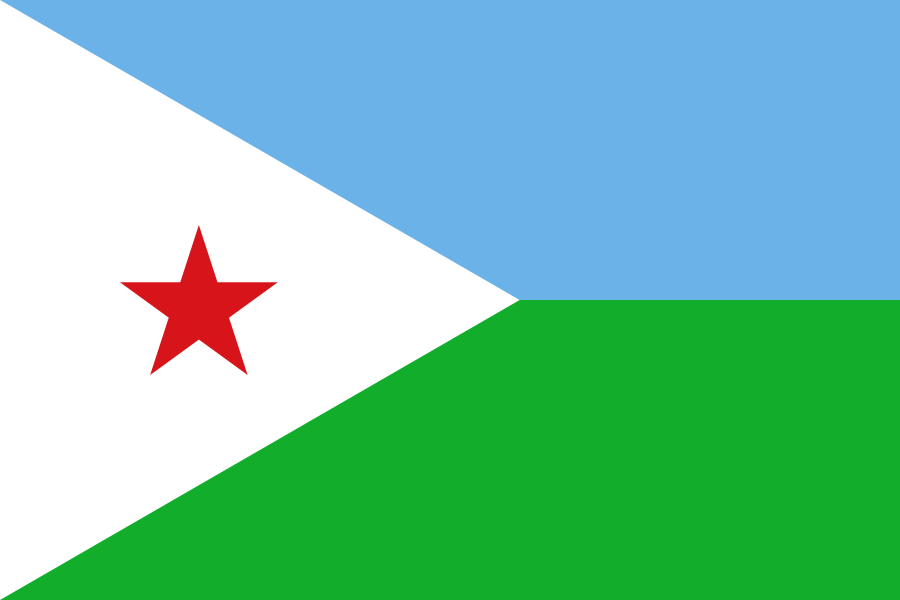
Djibouti
Location Info
- Continent: Africa
- Country: Djibouti
- Coordinates: 11.8251 , 42.5903
Trust Info
Verified Geographic and Statistical Data 2026
🌍 Continents

Overview
Djibouti is a sovereign nation strategically situated in the Horn of Africa, at the junction of the Red Sea and the Gulf of Aden. Bordered by Eritrea, Ethiopia, and Somalia, the country serves as a critical maritime gateway and a major logistics hub for international shipping lanes passing through the Bab el-Mandeb Strait. Its landscape is defined by dramatic volcanic formations, arid deserts, and the lowest point on the African continent, Lake Assal.
Historically known as French Somaliland, the country gained independence in 1977. Its population is primarily composed of the Somali (Issa) and Afar ethnic groups, fostering a rich cultural heritage influenced by African, Arab, and French traditions. Today, Djibouti is recognized for its significant role in global security, hosting several international military bases while driving economic growth through its advanced port facilities and regional trade corridors.
Truth & Facts
| Total Area | 23,200 sq km |
| Coastline | 314 km |
| Lowest Point | Lake Assal (-155m) |
| Total Population | 1,199,460 |
| Official Languages | French, Arabic |
| Capital City | Djibouti City |
| Independence Date | June 27, 1977 |
| Former Name | French Territory of the Afars and Issas |
| Currency | Djiboutian Franc (DJF) |
| Main GDP Sector | Services (Logistics/Ports) |
| Major Port | Port of Djibouti / Doraleh |
| Main University | University of Djibouti |
| Main Hospital | Peltier General Hospital |
| Predominant Religion | Islam (Sunni) |
| Top Attraction | Lake Assal |
| National Park | Day Forest National Park |
| Railway Line | Addis Ababa-Djibouti Railway |
| Internet Connectivity | Submarine Cable Landing |
| Military Presence | International Bases |
| System of Government | Presidential Republic |
| Regional Organization | IGAD |
| Water Source | Desalination and Groundwater |
| Projected GDP Growth | 5.5% to 6.0% |
| Ancient Trade | Land of Punt |
| Primary Airport | Djibouti–Ambouli International Airport |
📑 Table of Contents
Overview of Djibouti
Djibouti is a small but strategically vital country located in the Horn of Africa. It sits at the southern entrance to the Red Sea, making it one of the most important maritime transit points in the world. The nation is bordered by Eritrea to the north, Ethiopia to the west and south, and Somalia to the southeast.
With a landscape characterized by volcanic plateaus and salt lakes, Djibouti offers a unique environment. It serves as a major logistics hub for the region, particularly for landlocked Ethiopia. The population is mainly composed of two ethnic groups, the Somali and the Afar, and the capital city, also named Djibouti, is the country's primary economic and social center.
History and Origins
Djibouti's history is deeply connected to its role as a maritime trade route. In ancient times, the region was part of the Land of Punt and later the Sultanate of Ifat and Adal. In the 19th century, France established a presence in the area, creating the colony of French Somaliland, which later became the French Territory of the Afars and Issas.
- 1888: Foundation of Djibouti City.
- 1896: Djibouti becomes the capital of French Somaliland.
- 1967: The territory is renamed the French Territory of the Afars and Issas.
- 1977: Djibouti gains independence on June 27.
- 1990s: Period of civil conflict between the government and the FRUD.
Geography and Physical Landscape
The geography of Djibouti is dominated by a volcanic landscape and arid plains. The country features several mountain ranges, such as the Goda and Mabla Mountains, which provide a contrast to the surrounding desert. Lake Assal, located in the center of the country, is the lowest point in Africa at 155 meters below sea level.
| Feature | Description |
|---|---|
| Highest Point | Mount Moussa Ali (2,021m) |
| Lowest Point | Lake Assal (-155m) |
| Main Water Bodies | Gulf of Tadjoura, Lake Abbe |
| Land Use | Mostly desert and pasture land |
Climate and Weather Patterns
Djibouti experiences a sub-tropical desert climate characterized by extreme heat and low rainfall. The hot season lasts from May to September, with temperatures often exceeding 40°C. The cooler season occurs between October and April, offering more manageable temperatures for visitors.
- Average summer high: 42°C (108°F).
- Average winter high: 29°C (84°F).
- Humidity: Extremely high in coastal areas during summer.
- Rainfall: Scarce, typically occurring in short, heavy bursts.
Population and Demographics
The population of Djibouti is estimated at approximately 1.2 million people as of 2026. It is a multi-ethnic society where the Somali (primarily the Issa clan) make up about 60% of the population, and the Afar people constitute about 35%. The remaining 5% includes Arab, French, Ethiopian, and Italian communities.
- Urban Population: Over 75% of people live in urban areas.
- Median Age: Approximately 25 years.
- Ethnic Groups: Somali (Issa), Afar, Arab, and European.
- Religion: 94% Sunni Muslim, 6% Christian.
Culture and Lifestyle
Djiboutian culture is a blend of nomadic traditions and Islamic values. Oral storytelling, poetry, and traditional music play a significant role in social life. The lifestyle in rural areas remains centered on pastoralism, while urban life in Djibouti City is influenced by French colonial heritage and international trade.
Festivals and National Events
National holidays and religious festivals are central to the Djiboutian calendar. Islamic holidays like Eid al-Fitr and Eid al-Adha are celebrated with communal prayers and feasts. Independence Day is the most significant secular holiday, featuring military parades and cultural performances.
- June 27: Independence Day.
- Islamic New Year: Celebrated according to the lunar calendar.
- Prophet's Birthday: A public holiday observed nationwide.
Food and Local Cuisine
The cuisine of Djibouti reflects its diverse influences, combining Somali, Afar, Yemeni, and French elements. Spicy stews, grilled meats, and flatbreads are staples. Seafood is prominent in coastal regions, often prepared with aromatic spices like cumin and cardamom.
- Skudahkharis: The national dish, a lamb and rice stew.
- Fah-fah: A spicy soup made with goat or camel meat.
- Sambusa: Fried pastries filled with meat or vegetables.
- Canjeero: A soft, sourdough-like flatbread.
Economy and Key Industries
The economy of Djibouti is heavily dependent on its strategic maritime position. Port services and logistics for transshipment and transit to Ethiopia are the primary revenue drivers. The government is also investing in geothermal energy and telecommunications to diversify the economic base.
| Sector | Importance |
|---|---|
| Port Services | Critical hub for regional trade |
| Logistics | Major employment provider |
| Banking | Expanding regional financial hub |
| Military Bases | Rental income from foreign nations |
Cost of Living
Djibouti has a relatively high cost of living compared to its neighbors, primarily because most consumer goods and food items must be imported. In Djibouti City, housing and utilities, particularly electricity for air conditioning, can be expensive for expatriates and locals alike.
Employment and Business Environment
The public sector and port-related activities are the largest employers in the country. The business environment is centered in Djibouti City, which hosts various international logistics firms and shipping agencies. Unemployment remains a challenge for the youth population despite steady economic growth.
Real Estate and Housing
Housing in Djibouti ranges from modern apartment complexes in the capital to traditional dwellings in rural areas. The demand for quality housing in Djibouti City is driven by a large expatriate community and diplomatic staff, leading to high rental prices in secure neighborhoods.
Transportation and Connectivity
Djibouti serves as a vital transport corridor for East Africa. The Ethio-Djibouti Railway connects the port of Djibouti to Addis Ababa, facilitating the movement of bulk goods. The road network is primarily designed to support truck traffic between the ports and the Ethiopian border.
- Railway: Standard gauge electrified line to Ethiopia.
- Ports: Doraleh Multi-Purpose Port and Port of Djibouti.
- Airport: Djibouti–Ambouli International (JIB).
- Roads: RN1 connects the capital to the south and west.
Infrastructure and Utilities
Infrastructure development is focused on supporting the logistics sector. Water security is a major concern, addressed through desalination plants and deep boreholes. Electricity is increasingly sourced from renewable geothermal energy and interconnections with the Ethiopian power grid.
Education System
The education system follows the French model and is free for citizens. While primary school enrollment has increased significantly, secondary and vocational training are areas of continued focus to prepare the workforce for the port and logistics industries.
Healthcare Facilities
Healthcare services are concentrated in the capital, with Peltier General Hospital being the largest public facility. There are also private clinics and military hospitals that provide more specialized care. Efforts are underway to improve maternal and child health services in regional districts.
Major Tourist Attractions
Djibouti offers unique natural attractions for adventure seekers. From the hyper-saline waters of Lake Assal to the prehistoric rock art of Abourma, the country provides diverse experiences. The coastal islands are popular for their pristine beaches and coral reefs.
- Lake Assal: Hypersaline lake surrounded by volcanoes.
- Lac Abbé: Famous for limestone chimneys and flamingos.
- Moucha Island: Known for diving and snorkeling.
- Day Forest National Park: A rare mountain forest ecosystem.
Things to Do
Popular activities in Djibouti include scuba diving with whale sharks in the Gulf of Tadjoura, trekking in the Goda Mountains, and exploring the volcanic landscapes of the interior. Birdwatching is also common near the salt lakes and coastal wetlands.
Best Places to Visit
Beyond the capital, visitors often travel to Tadjoura, known as the 'White City' for its whitewashed houses and coastal charm. Obock is another historical town, while the Ghoubet-al-Kharab offers stunning views of the 'Devil's Island' and active volcanic areas.
Travel and Entry Guide
Most international visitors enter through Djibouti–Ambouli International Airport. Visas are required for most nationalities and can often be obtained as an e-visa. It is recommended to travel with a local guide when exploring the remote desert regions of the interior.
Nearby Regions and Places
Djibouti is the gateway to the Danakil Depression in Ethiopia, one of the hottest places on earth. It also shares historical and cultural ties with the Somaliland region to the southeast and the Eritrean coastal regions to the north.
Environment and Nature
The natural environment is characterized by arid ecosystems, volcanic fields, and coastal mangroves. Protected areas like Day Forest National Park are essential for conserving the country's limited biodiversity, including the endemic Djibouti Francolin.
Government and Administration
The Republic of Djibouti is divided into five administrative regions—Ali Sabieh, Arta, Dikhil, Obock, and Tadjourah—along with the capital city. The government is led by the President, who holds significant executive authority.
Safety and Public Services
Djibouti is considered one of the safest countries in the region, partly due to the high concentration of international military forces. Public services are most developed in the capital, where emergency services and law enforcement are readily available.
Best Time to Visit
The best time to visit Djibouti is during the cooler months from November to February. During this period, temperatures are pleasant for outdoor exploration and whale shark sightings are at their peak in the Gulf of Tadjoura.
Local Business and Economy
The economy is supported by a mix of international shipping companies, telecommunications providers, and a growing financial sector. Small-scale businesses in the capital focus on retail, hospitality, and specialized services for the expatriate community.
General Information FAQs
Where is Djibouti located?
Djibouti is located in the Horn of Africa, on the northeast coast of the continent. It borders the Red Sea and the Gulf of Aden, and shares land borders with Eritrea, Ethiopia, and Somalia.
What is Djibouti known for?
Djibouti is known for its strategic maritime position, hypersaline Lake Assal (the lowest point in Africa), and its role as a host to several international military bases.
Why is Djibouti famous?
It is famous for its unique volcanic landscapes, the Danakil Desert, and for being the primary gateway for trade to landlocked Ethiopia.
What country or region is Djibouti part of?
Djibouti is an independent sovereign state in East Africa, specifically in the region known as the Horn of Africa.
What is the population of Djibouti?
As of 2026, the population is estimated to be approximately 1.2 million people.
What languages are spoken in Djibouti?
French and Arabic are the official languages. Somali and Afar are widely spoken indigenous languages.
What time zone is Djibouti in?
Djibouti operates in East Africa Time (EAT), which is UTC+3.
What are the key facts about Djibouti?
Key facts include its independence from France in 1977, its capital Djibouti City, and its high reliance on port-based services for its economy.
What makes Djibouti unique?
Djibouti's uniqueness lies in its combination of geological wonders like Lake Assal and Lac Abbé, its blend of Afar and Somali cultures, and its extreme strategic importance in global shipping.
How large is Djibouti in area?
The country has a total land area of approximately 23,200 square kilometers.
History FAQs
What is the history of Djibouti?
Djibouti's history encompasses ancient trade with Egypt, the rise of Islamic sultanates, French colonization starting in the 19th century, and eventual independence in 1977.
When was Djibouti established?
The Republic of Djibouti was established as a sovereign state on June 27, 1977.
What major historical events happened in Djibouti?
Key events include the construction of the Franco-Ethiopian Railway (1897-1917), the referendum for independence in 1977, and the signing of peace accords following civil strife in the 1990s.
Who were important historical figures from Djibouti?
Hassan Gouled Aptidon was the first president of independent Djibouti, serving from 1977 to 1999.
How has Djibouti developed over time?
It has transitioned from a small colonial port into a major international logistics and military hub with modernized infrastructure and growing regional influence.
Geography & Environment FAQs
What is the geography of Djibouti?
The geography is largely desert with volcanic plateaus, salt lakes, and several mountain ranges like the Goda Mountains.
What natural features surround Djibouti?
It is surrounded by the Red Sea and Gulf of Aden to the east, and arid mountainous borders with Ethiopia, Eritrea, and Somalia.
Are there mountains, rivers, or lakes near Djibouti?
Yes, significant features include the Goda Mountains, Lake Assal, and Lac Abbé. There are no permanent rivers, only seasonal ones called wadis.
What is the elevation of Djibouti?
Elevation ranges from -155 meters at Lake Assal to 2,021 meters at Mount Moussa Ali.
What ecosystems exist around Djibouti?
Ecosystems include coastal mangroves, arid desert shrublands, and rare mountain forests in the Goda region.
Climate & Weather FAQs
What is the climate like in Djibouti?
Djibouti has a hot, arid desert climate with high temperatures year-round and very low annual rainfall.
What is the average temperature in Djibouti?
Average daily highs range from 29°C (84°F) in winter to over 42°C (108°F) in the peak of summer.
What is the weather like throughout the year in Djibouti?
The year is divided into a hot season (May–September) with extreme heat and high humidity, and a cooler season (October–April).
Does Djibouti experience extreme weather?
Yes, extreme heat is common, and the country is vulnerable to periodic droughts and occasional flash floods during rare heavy rains.
What is the best time of year to visit Djibouti?
The best time to visit is from November to February when temperatures are cooler and more comfortable for outdoor activities.
Population & Society FAQs
What is the population density of Djibouti?
The population density is approximately 52 people per square kilometer, with the vast majority living in the capital.
What ethnic groups live in Djibouti?
The primary groups are the Somali (Issa) and the Afar. Minorities include Yemenis, Ethiopians, and Europeans.
What religions are practiced in Djibouti?
Approximately 94% of the population practices Sunni Islam, while the remaining 6% is largely Christian.
What is daily life like in Djibouti?
Daily life in the city is busy and commerce-focused, while rural life remains centered on livestock herding and traditional nomadic customs.
How diverse is the population of Djibouti?
It is quite diverse for its size, acting as a melting pot of African, Arab, and European cultures due to its history as a port.
Culture & Traditions FAQs
What cultural traditions are important in Djibouti?
Nomadic heritage, Islamic customs, and hospitality are central. Oral tradition, particularly poetry, is highly valued by both Somalis and Afars.
What festivals are celebrated in Djibouti?
Key festivals include Eid al-Fitr, Eid al-Adha, and Independence Day on June 27th.
What cultural landmarks exist in Djibouti?
Landmarks include the Hamoudi Mosque and the Place Menelik in Djibouti City, along with the prehistoric rock art of Abourma.
What traditional clothing or customs are common in Djibouti?
Men often wear a sarong-like 'macawiis' or western attire, while women commonly wear colorful 'diracs' or traditional Afar wraps.
What arts and crafts are associated with Djibouti?
Common crafts include woven baskets, traditional daggers, and beadwork, often influenced by nomadic aesthetics.
Food & Cuisine FAQs
What foods is Djibouti known for?
It is known for its fusion of Somali, Afar, and French cuisines, particularly spicy meat stews and fresh Red Sea fish.
What traditional dishes originate from Djibouti?
Traditional dishes include Skudahkharis (lamb and rice), Fah-fah (spicy meat soup), and Mukbaza (Yemeni-influenced folded bread).
What are the best restaurants in Djibouti?
Most high-quality restaurants are in Djibouti City, offering Yemeni fish dishes, French bistro fare, and traditional Somali food.
What local ingredients are commonly used in Djibouti cuisine?
Common ingredients include goat meat, camel meat, rice, lentils, and spices such as cloves, cardamom, and cinnamon.
What food markets or street foods are popular in Djibouti?
The Central Market in Djibouti City is famous for Sambusas and fresh tropical fruits.
Economy & Business FAQs
What are the main industries in Djibouti?
The main industries are shipping, port logistics, banking, and providing services for international military bases.
What economic activities drive the economy of Djibouti?
Maritime trade and transit services for Ethiopia are the primary drivers of the economy.
What businesses operate in Djibouti?
Major businesses include Djibouti Telecom, the Port of Djibouti, and various international logistics and shipping companies.
Is Djibouti an important economic center?
Yes, it is the most critical maritime gateway for the Horn of Africa and a major hub for global shipping lanes.
What are the major exports or products from Djibouti?
Djibouti exports salt mined from its lakes and re-exports goods like hides, skins, and coffee from neighboring countries.
Employment & Jobs FAQs
What job opportunities are available in Djibouti?
Opportunities are mostly in logistics, transport, telecommunications, and construction sectors.
What are the major employers in Djibouti?
The Djiboutian government, port authorities, and foreign military installations are the largest employers.
What skills are in demand in Djibouti?
Skills in maritime logistics, engineering, information technology, and fluency in French and English are highly valued.
Is Djibouti a good place to work?
It offers good opportunities for professionals in the shipping and logistics industries, though the cost of living is high.
What is the unemployment rate in Djibouti?
The unemployment rate remains high, particularly among the youth, though official estimates vary significantly.
Cost of Living FAQs
Is Djibouti expensive to live in?
Yes, compared to regional standards, Djibouti is quite expensive because almost all food and consumer goods are imported.
What is the average cost of living in Djibouti?
The average cost is high for the region, with significant expenses for electricity, water, and imported groceries.
How much does housing cost in Djibouti?
Rent for a modern two-bedroom apartment in a secure area of Djibouti City can range from $1,000 to $2,000 per month.
What are average food and utility costs in Djibouti?
Utilities are expensive, especially electricity for cooling. Food costs are high for imported items but lower for local markets.
Is Djibouti affordable compared to nearby cities?
It is generally more expensive than Addis Ababa or Hargeisa, but comparable to other major port cities in the region.
Housing & Real Estate FAQs
What types of housing are available in Djibouti?
Housing options include colonial-style houses, modern apartments, and traditional dwellings in the outskirts.
What is the average home price in Djibouti?
Home prices vary widely, with high-end properties in Djibouti City reaching significant prices due to limited supply.
Is it better to rent or buy property in Djibouti?
Most expatriates choose to rent. Buying property is common among locals and long-term business investors.
Which neighborhoods are popular in Djibouti?
Popular neighborhoods in the capital include Heron, Haramous, and the residential areas near the city center.
How has the property market changed in Djibouti?
The market has seen steady growth due to the influx of foreign personnel and the expansion of the logistics sector.
Transportation FAQs
How do you get to Djibouti?
Most visitors arrive by air at Djibouti–Ambouli International Airport or by rail from Addis Ababa.
What is the nearest airport to Djibouti?
The main airport is Djibouti–Ambouli International Airport (JIB), located just outside the capital.
Does Djibouti have railway connections?
Yes, the Addis Ababa–Djibouti Railway provides modern, electrified transport for passengers and freight to Ethiopia.
How reliable is public transportation in Djibouti?
Public minibuses are common in the city but can be irregular. Taxis are widely available and are the preferred method for tourists.
What major highways or roads connect to Djibouti?
National Road 1 (RN1) is the main highway connecting Djibouti City to the Ethiopian border.
Education FAQs
What schools are located in Djibouti?
There are numerous public schools, French-curriculum schools like Lycée Français de Djibouti, and international schools.
Are there universities in Djibouti?
The primary institution is the University of Djibouti, which offers a range of undergraduate and graduate programs.
What is the literacy rate in Djibouti?
The literacy rate is approximately 68%, with higher rates among the younger urban population.
What educational opportunities exist in Djibouti?
Opportunities include academic studies at the university and vocational training in maritime and logistics fields.
Is Djibouti a good place for students?
It is suitable for students focused on African studies, maritime logistics, or international relations.
Healthcare FAQs
What hospitals are available in Djibouti?
Key hospitals include Peltier General Hospital, the French-run Bouffard Hospital, and several regional hospitals.
Are there emergency medical services in Djibouti?
Yes, though they are most reliable and concentrated within Djibouti City.
What healthcare facilities exist in Djibouti?
The system includes public hospitals, community health centers, and a growing number of private clinics.
Is healthcare affordable in Djibouti?
Public healthcare is subsidized for citizens. Private and specialized care can be expensive.
Are specialized medical services available in Djibouti?
Specialized services are available in the capital, but complex cases may require evacuation to nearby countries or Europe.
Tourism & Travel FAQs
What are the top tourist attractions in Djibouti?
Top attractions include Lake Assal, Lac Abbé, Moucha Island, and Day Forest National Park.
What are the best things to do in Djibouti?
Popular activities include swimming with whale sharks, hiking in the Goda Mountains, and visiting the salt flats.
Is Djibouti worth visiting?
Yes, for travelers interested in unique geology, pristine diving sites, and off-the-beaten-path African experiences.
What landmarks should visitors see in Djibouti?
Visitors should see the Hamoudi Mosque, the central market, and the volcanic formations near Ghoubet-al-Kharab.
How many days should tourists spend in Djibouti?
A stay of 5 to 7 days is usually sufficient to see the major natural attractions and the capital.
Nearby Places FAQs
What places are near Djibouti worth visiting?
Nearby destinations include the Danakil Depression in Ethiopia and the coastal city of Berbera in Somaliland.
What cities or towns are close to Djibouti?
Tadjoura, Obock, and Ali Sabieh are the primary towns within Djibouti worth visiting.
What natural attractions are near Djibouti?
The Red Sea coral reefs and the various desert islands like Maskali are notable natural attractions.
What day trips can be taken from [Location]?
Day trips from the capital can be made to Lake Assal, Arta Beach, or Moucha Island.
What famous destinations are within reach of Djibouti?
Addis Ababa is accessible via a comfortable train ride, and the Red Sea provides access to diverse maritime destinations.
Safety FAQs
Is Djibouti safe to live in?
Yes, it is generally stable and safe, though standard urban safety precautions should be taken in the capital.
Is Djibouti safe for tourists?
Djibouti is considered very safe for tourists compared to many of its neighbors.
What is the crime rate in Djibouti?
The crime rate is low, with petty theft in crowded markets being the most common concern.
What emergency services operate in Djibouti?
Police, fire services, and medical emergency units operate primarily in urban centers.
What safety tips should visitors follow in Djibouti?
Drink bottled water, dress modestly to respect local customs, and avoid driving in remote desert areas at night.
Lifestyle & Living FAQs
Is Djibouti a good place to live?
It is a good place for those who enjoy a warm climate, international communities, and a unique blend of cultures.
What recreational activities are available in Djibouti?
Recreation includes scuba diving, birdwatching, trekking, and visiting the various social clubs in the capital.
Is Djibouti family-friendly?
Yes, especially for families within the diplomatic or expatriate communities that have access to international schools.
What outdoor activities are popular in Djibouti?
Fishing, sailing, and off-road desert excursions are highly popular outdoor pursuits.
What makes life enjoyable in Djibouti?
The combination of a relaxed pace of life, stunning natural beauty, and a hospitable local population makes life enjoyable.
Practical Information FAQs
What travel tips should visitors know about Djibouti?
Carry cash (Djiboutian Francs), learn a few words of French or Arabic, and be prepared for intense heat.
What local customs should visitors respect in Djibouti?
Respect Islamic traditions, dress conservatively in public, and always ask for permission before taking photos of people.
How accessible is Djibouti for international visitors?
It is increasingly accessible with frequent flights from major hubs like Dubai, Paris, and Addis Ababa.
What services are available for tourists in Djibouti?
Services include guided desert tours, diving centers, car rentals, and various hotels ranging from budget to luxury.
What important information should travelers know before visiting?
It is a high-cost destination, the weather is extremely hot from May to September, and French/Arabic are the primary means of communication.