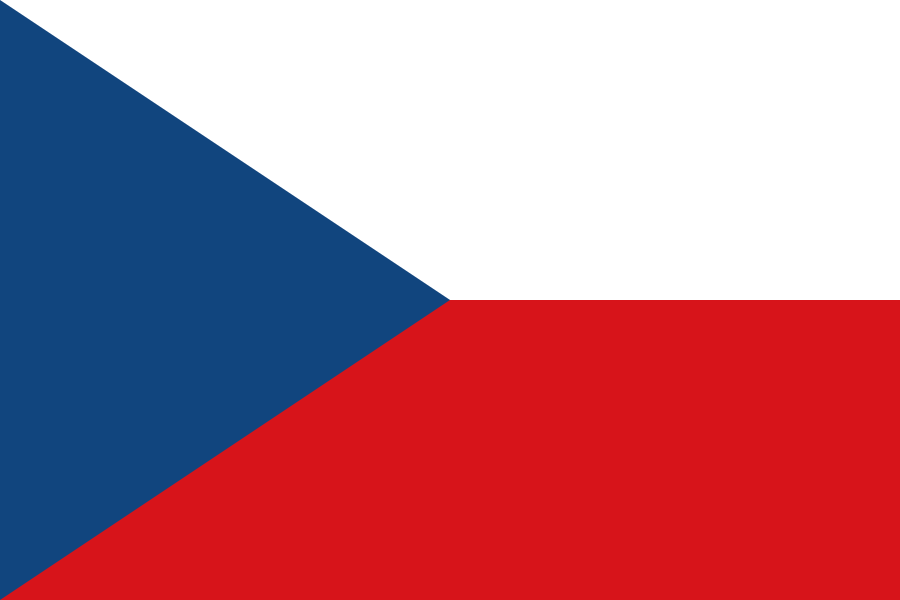
Czech Republic
Location Info
- Continent: Europe
- Country: Czech Republic
- Coordinates: 49.8175 , 15.473
Trust Info
Verified Geographic Information
🌍 Continents

Overview
The Czech Republic, also known as Czechia, is a landlocked country located in Central Europe. It shares borders with Germany, Poland, Slovakia, and Austria. The nation is characterized by its diverse landscape, featuring mountain ranges like the Krkonoše and significant rivers such as the Vltava and Elbe. Historically, the region was the heart of the Kingdom of Bohemia and later a key part of the Austro-Hungarian Empire before becoming Czechoslovakia in 1918.
Following the peaceful Velvet Divorce in 1993, the Czech Republic emerged as an independent state. Today, it is a high-income parliamentary republic and a member of the European Union and NATO. The country is recognized for its robust industrial sector, particularly in automotive manufacturing, and its significant contributions to European arts, science, and beer production. Prague, the capital, serves as a major economic and cultural hub for the region.
Truth & Facts
| Total Area | 78,866 km² |
| Highest Point | Sněžka (1,603 m) |
| Total Population | 10.9 million |
| Official Language | Czech |
| Capital City | Prague |
| Government Type | Parliamentary Republic |
| Establishment of Czechoslovakia | October 28, 1918 |
| Independent Czech Republic | January 1, 1993 |
| Currency | Czech Koruna (CZK) |
| Main Industry | Automotive |
| Electricity Access | 100% |
| Literacy Rate | 99.9% |
| Life Expectancy | 79.1 years |
| UNESCO Sites | 17 |
| Annual Visitors | Approx. 22 million |
| National Parks | 4 |
| Railway Density | One of the highest in Europe |
| Internet Penetration | 88% |
| Global Peace Index Rank | 12th |
| Lower House | Chamber of Deputies |
| EU Accession | May 1, 2004 |
| Nuclear Power Plants | 2 (Dukovany and Temelín) |
| Urban Population | 74% |
| Military Personnel | Approx. 27,000 |
| Highest Court | Constitutional Court |
📑 Table of Contents
Overview
The Czech Republic is a Central European country known for its rich history and strategic location. It is a landlocked nation that serves as a bridge between Eastern and Western Europe. The capital city, Prague, is one of the most visited cities in the world, renowned for its architectural heritage.
- Official Name: Czech Republic / Czechia
- Capital: Prague
- Currency: Czech Koruna (CZK)
- Language: Czech
- Government: Parliamentary Republic
History
The history of the Czech lands dates back to the migration of Slavic tribes in the 6th century. The region later became the Kingdom of Bohemia, reaching its peak under Holy Roman Emperor Charles IV in the 14th century. After centuries under the Habsburg Monarchy, Czechoslovakia was formed in 1918.
- Kingdom of Bohemia (1198–1918)
- Habsburg Rule (1526–1918)
- First Czechoslovak Republic (1918–1938)
- Communist Era (1948–1989)
- Velvet Revolution (1989)
Geography
Czech geography is defined by the Bohemian Massif and the Moravian Lowlands. The country is surrounded by mountains on almost all sides, creating a natural border. Major rivers like the Vltava and Labe provide essential water routes and hydroelectric power.
| Region | Primary Landscape |
|---|---|
| Bohemia | Rolling plains and mountains |
| Moravia | Hilly terrain and lowlands |
| Silesia | Industrial valleys |
Climate & Weather
The country experiences a temperate continental climate. Summers are typically warm, while winters are cold and cloudy with frequent snow in mountainous areas. Rainfall is distributed fairly evenly throughout the year.
- Average Summer Temp: 20°C to 25°C
- Average Winter Temp: -5°C to 0°C
- Annual Precipitation: 500-700 mm
Population & Demographics
The Czech Republic has a population of approximately 10.9 million people. The majority identify as ethnic Czechs, with small minorities of Moravians, Slovaks, and Ukrainians. The society is largely secular, with a high percentage of the population identifying as non-religious.
- Ethnic Groups: Czech (64%), Moravian (5%), Slovak (1.4%)
- Life Expectancy: 79.1 years
- Literacy Rate: 99.9%
Culture & Lifestyle
Czech culture is characterized by its contributions to classical music, literature, and cinema. The lifestyle often revolves around outdoor activities, sports, and a strong social beer culture. Classical music festivals and theatrical performances are staples of urban life.
- Key Figures: Franz Kafka, Antonín Dvořák
- Cultural Assets: Bohemian Glass, Marionettes
- Social Hubs: Traditional Pubs (Hospody)
Festivals & Events
The Czech Republic hosts numerous international festivals throughout the year. These range from classical music celebrations to major film festivals and traditional folk gatherings. Holiday markets are particularly significant during the winter season.
- Prague Spring International Music Festival
- Karlovy Vary International Film Festival
- Easter and Christmas Markets
- Burning of the Witches (Pálení čarodějnic)
Food & Cuisine
Czech cuisine is hearty, emphasizing meat, potatoes, and gravy. Pork is the most common meat, often served with dumplings and sauerkraut. The country is also world-famous for its beer production, particularly Pilsner styles.
- Vepřo knedlo zelo (Pork, dumplings, kraut)
- Svíčková na smetaně (Beef with cream sauce)
- Guláš (Goulash)
- Pilsner Urquell (World's first pilsner)
Economy & Industries
The Czech Republic has a highly developed industrial economy. It is one of the most industrialized nations in the European Union relative to its size. The automotive industry is the primary driver of exports and employment.
| Industry | Major Focus |
|---|---|
| Automotive | Passenger cars (Škoda) |
| Machinery | Engineering and tools |
| Electronics | IT and software development |
Cost of Living
While prices have risen since joining the EU, the Czech Republic remains more affordable than many Western European countries. Housing is the largest expense, particularly in Prague. Public services and groceries are generally reasonably priced.
- Monthly Utilities: 4,500 - 6,000 CZK
- Average Meal: 150 - 250 CZK
- Monthly Transport Pass: 550 CZK (Prague)
Employment & Business
The country consistently maintains one of the lowest unemployment rates in the European Union. Demand for skilled labor is high in the manufacturing and technology sectors. Prague serves as a regional headquarters for many multinational corporations.
- Key Employers: Škoda Auto, CEZ Group, Agrofert
- Main Sectors: Manufacturing, Services, ICT
- Unemployment Rate: Approx. 2.5% to 4%
Real Estate & Housing
The real estate market is characterized by high demand in urban centers. Apartment living is the norm in cities like Prague and Brno, while suburban and rural areas feature single-family homes. Property prices have seen significant growth over the last decade.
- Average Rent (1-bedroom): 15,000 - 25,000 CZK
- Property Ownership: High percentage of home ownership
- Housing Types: Paneláky (communist-era flats), Historic villas
Transportation & Connectivity
The Czech Republic is a major transport hub in Central Europe. It features an extensive railway network and a developing motorway system. Public transportation in major cities is highly efficient and reliable.
- Václav Havel Airport Prague (PRG)
- České dráhy (National Railway)
- Prague Metro (3 lines)
- Tram systems in major cities
Infrastructure & Utilities
Infrastructure is well-developed with universal access to electricity and water. The country relies heavily on nuclear energy and coal for power generation. Internet connectivity is widespread with high speeds available in urban areas.
- Energy Source: 35% Nuclear
- Water Quality: High (Tap water is drinkable)
- Broadband Access: Widely available
Education
Education is free and compulsory from ages 6 to 15. The university system is well-regarded, with Charles University in Prague being the oldest university in Central Europe. Technical education is particularly emphasized.
- Charles University (Est. 1348)
- Czech Technical University (ČVUT)
- Masaryk University (Brno)
Healthcare
The healthcare system is based on mandatory insurance and provides high-quality care. Medical facilities in major cities are modern and well-equipped. The country is a popular destination for medical tourism, particularly for dentistry and aesthetics.
- System Type: Universal (Insurance-based)
- Major Hospitals: Motol University Hospital
- Emergency Number: 112 or 155
Tourist Attractions
The Czech Republic offers a mix of historic cities, medieval castles, and natural wonders. Prague Castle and Charles Bridge are the most iconic landmarks. Outside the capital, the country is dotted with over 2,000 castles and chateaux.
- Prague Castle (Largest ancient castle)
- Charles Bridge
- Český Krumlov (UNESCO site)
- Sedlec Ossuary (Bone Church)
Things To Do
Visitors can engage in a variety of activities from urban exploration to outdoor sports. Hiking is extremely popular, with a world-class trail marking system. Spa treatments and brewery tours are also highly recommended.
- Walking tours of Prague's Old Town
- Hiking in the Giant Mountains
- Visiting a traditional beer spa
- Exploring the Moravian wine region
Best Places To Visit
Beyond Prague, several other cities and regions offer unique experiences. Southern Bohemia is known for its fairy-tale towns, while Southern Moravia is the heart of Czech wine production and features stunning karst landscapes.
| Destination | Known For |
|---|---|
| Karlovy Vary | Thermal springs and film festival |
| Kutná Hora | Silver mines and Gothic architecture |
| Telč | Renaissance town square |
Travel Guide
Traveling in the Czech Republic is straightforward due to its compact size and excellent transit. Most visitors enter via Prague. English is widely spoken in tourist areas, though learning basic Czech phrases is appreciated.
- Entry: Schengen Visa requirements apply
- Transport: Use trains for intercity travel
- Currency: CZK is preferred over EUR
Nearby Places
Due to its central location, the Czech Republic is close to several major European cities. It is an ideal base for exploring neighboring countries. Vienna, Berlin, and Bratislava are all accessible within a few hours.
- Vienna, Austria (4 hours by train)
- Dresden, Germany (2 hours by bus/train)
- Bratislava, Slovakia (4 hours by train)
Environment & Nature
The country takes significant pride in its natural environment. Roughly one-third of the territory is forested. National parks protect unique ecosystems, from sandstone rock formations to ancient primeval forests.
- Šumava (Green Heart of Europe)
- Bohemian Switzerland Sandstone Peaks
- Punkva Caves in Moravian Karst
Government & Administration
The government operates as a multi-party parliamentary system. The President serves as the head of state, while the Prime Minister is the head of government. The country is known for its stable democratic institutions.
- Legislature: Bicameral (Chamber and Senate)
- Administrative Units: 14 Krays (Regions)
- Judiciary: Independent with Constitutional Court
Safety & Public Services
The Czech Republic is consistently ranked as one of the safest countries in the world. Violent crime is rare, though petty theft can occur in crowded tourist areas. Public services like emergency response are highly efficient.
- Safety Rank: Top 15 in Global Peace Index
- Police: Policie České republiky
- Emergency Services: 112 (Universal)
Best Time To Visit
The peak tourist season is during the summer (June-August) and the December holiday period. Spring and autumn offer mild weather and fewer crowds, making them ideal for sightseeing and hiking.
- Sightseeing: May, June, and September
- Skiing: January and February
- Christmas Markets: December
Local Business Directory
The business landscape is a mix of large industrial firms and a growing startup ecosystem. Information technology and manufacturing remain the core pillars. Local businesses are often integrated into global supply chains.
- Major Tech Hub: Prague and Brno
- Traditional Crafts: Glassworks and Textiles
- Agriculture: Hops and Grape production
General Information FAQs
Where is the Czech Republic located?
The Czech Republic is located in Central Europe. It is a landlocked country bordered by Germany to the west, Austria to the south, Slovakia to the east, and Poland to the northeast.
What is the Czech Republic known for?
The country is known for its historic architecture, particularly in Prague, its world-class beer culture (Pilsner), medieval castles, and high-quality glass and crystal manufacturing.
Why is the Czech Republic famous?
It is famous for having the highest density of castles in Europe, the historic Old Town of Prague, and being the birthplace of influential figures like Franz Kafka and Antonín Dvořák.
What country or region is the Czech Republic part of?
It is part of the Central European region and is a member of the European Union, the Schengen Area, and NATO.
What is the population of the Czech Republic?
The population is approximately 10.9 million people as of 2024 estimates.
What languages are spoken in the Czech Republic?
The official language is Czech. Slovak is also widely understood, and English or German are common in business and tourist areas.
What time zone is the Czech Republic in?
It follows Central European Time (CET), which is UTC+1. It observes daylight saving time (CEST, UTC+2) in the summer.
What are the key facts about the Czech Republic?
Key facts include its capital Prague, its status as a parliamentary republic, the use of the Czech Koruna (CZK), and its high industrialization level.
What makes the Czech Republic unique?
Its unique features include the high concentration of UNESCO World Heritage sites, its historical position as the heart of the Holy Roman Empire, and its distinction as the country with the highest beer consumption per capita.
How large is the Czech Republic in area?
The total area of the country is approximately 78,866 square kilometers.
History FAQs
What is the history of the Czech Republic?
The history spans from Slavic settlement to the powerful Kingdom of Bohemia, followed by centuries of Habsburg rule, the 20th-century Czechoslovak state, and finally the independent republic formed in 1993.
When was the Czech Republic established?
The modern Czech Republic was established on January 1, 1993, following the peaceful dissolution of Czechoslovakia.
What major historical events happened in the Czech Republic?
Major events include the Hussite Wars, the Thirty Years' War starting with the Defenestration of Prague, the formation of Czechoslovakia in 1918, the 1968 Prague Spring, and the 1989 Velvet Revolution.
Who were important historical figures from the Czech Republic?
Notable figures include Holy Roman Emperor Charles IV, religious reformer Jan Hus, educator Comenius, composer Bedřich Smetana, and statesman Václav Havel.
How has the Czech Republic developed over time?
It evolved from a medieval kingdom to a key industrial province of Austria-Hungary, then through periods of democratic independence and communist rule, before becoming a modern market economy and EU member.
Geography & Environment FAQs
What is the geography of the Czech Republic?
The geography features a central basin surrounded by mountain ranges. The main regions are Bohemia in the west and Moravia in the east.
What natural features surround the Czech Republic?
It is surrounded by several mountain ranges including the Krkonoše (Giant Mountains), Šumava, Krušné hory (Ore Mountains), and the Jeseníky.
Are there mountains, rivers, or lakes near the Czech Republic?
Yes, major rivers include the Vltava and Labe (Elbe). The Sněžka peak is the highest mountain. While it has few large natural lakes, it has many historic fishponds and reservoirs.
What is the elevation of the Czech Republic?
Most of the country lies between 200 and 600 meters above sea level, with the highest point at 1,603 meters.
What ecosystems exist around the Czech Republic?
Ecosystems include temperate broadleaf and mixed forests, alpine meadows in the mountains, and extensive river wetlands.
Climate & Weather FAQs
What is the climate like in the Czech Republic?
The climate is temperate continental, characterized by warm summers and cold, snowy winters with distinct seasonal changes.
What is the average temperature in the Czech Republic?
Average temperatures range from 20-25°C in the summer to -5 to 0°C in the winter.
What is the weather like throughout the year in the Czech Republic?
Spring and autumn are mild and transitional. Summer brings the most rainfall and warmest days. Winter is often cloudy with freezing temperatures and snow in the highlands.
Does the Czech Republic experience extreme weather?
Extreme weather is rare, though occasional summer floods and winter blizzards in the mountains can occur.
What is the best time of year to visit the Czech Republic?
May, June, and September are generally considered the best months for mild weather. December is popular for Christmas markets.
Population & Society FAQs
What is the population density of the Czech Republic?
The density is approximately 138 people per square kilometer.
What ethnic groups live in the Czech Republic?
The majority are Czechs (64%). Significant minorities include Moravians, Slovaks, Ukrainians, Vietnamese, and Poles.
What religions are practiced in the Czech Republic?
It is one of the most secular countries in the world. Most of the population is unaffiliated, while Roman Catholicism is the largest religious minority.
What is daily life like in the Czech Republic?
Daily life balances a strong work ethic with a high value on leisure, often involving family gatherings, hiking, or visiting the cottage (chata) on weekends.
How diverse is the population of the Czech Republic?
The population is relatively homogenous compared to Western Europe, but urban centers like Prague are increasingly international due to expatriate communities.
Culture & Traditions FAQs
What cultural traditions are important in the Czech Republic?
Important traditions include Easter egg decorating (kraslice), Saint Nicholas Day celebrations, and the traditional Christmas Eve carp dinner.
What festivals are celebrated in the Czech Republic?
Key festivals include the Prague Spring Music Festival, Karlovy Vary Film Festival, and the Burning of the Witches (Pálení čarodějnic).
What cultural landmarks exist in the Czech Republic?
Notable landmarks include Prague Castle, Charles Bridge, the Astronomical Clock, and the historic center of Český Krumlov.
What traditional clothing or customs are common in the Czech Republic?
Traditional folk costumes (kroje) are worn during festivals in Moravia. Customs often involve folk music, dancing, and specialized crafts like glassblowing.
What arts and crafts are associated with the Czech Republic?
The country is famous for Bohemian crystal, glasswork, marionettes, and garnets.
Food & Cuisine FAQs
What foods is the Czech Republic known for?
It is known for heavy, meat-based dishes, dumplings, sauerkraut, and various types of sweet and savory pastries.
What traditional dishes originate from the Czech Republic?
Traditional dishes include Vepřo-knedlo-zelo (roast pork, dumplings, sauerkraut) and Svíčková na smetaně (beef in cream sauce).
What are the best restaurants in the Czech Republic?
Top dining options include traditional beer halls (hospody) for local food and high-end Michelin-starred establishments in Prague.
What local ingredients are commonly used in Czech cuisine?
Common ingredients include pork, beef, potatoes, flour for dumplings, forest mushrooms, and caraway seeds.
What food markets or street foods are popular in the Czech Republic?
Popular street foods include Fried Cheese (Smažený sýr) and Trdelník. Farmer's markets are common in cities from spring to autumn.
Economy & Business FAQs
What are the main industries in the Czech Republic?
The main industries are automotive manufacturing, machinery, metallurgy, electronics, and food processing.
What economic activities drive the economy of the Czech Republic?
Export-oriented manufacturing, particularly in the car industry, and a robust services sector including tourism and IT drive the economy.
What businesses operate in the Czech Republic?
Major companies include Škoda Auto, CEZ Group, and global IT firms like Avast and AVG.
Is the Czech Republic an important economic center?
Yes, it is one of the most stable and prosperous market economies in Central and Eastern Europe.
What are the major exports or products from the Czech Republic?
Major exports include motor vehicles and parts, machinery and equipment, and electronics.
Employment & Jobs FAQs
What job opportunities are available in the Czech Republic?
Opportunities are highest in manufacturing, engineering, information technology, and logistics.
What are the major employers in the Czech Republic?
Škoda Auto is the largest employer. Other major employers include Czech Railways and large retail chains.
What skills are in demand in the Czech Republic?
Technical engineering, software development, healthcare services, and skilled craftsmanship are in high demand.
Is the Czech Republic a good place to work?
It offers high job security, a low unemployment rate, and a generally good work-life balance.
What is the unemployment rate in the Czech Republic?
The unemployment rate is typically among the lowest in the European Union, usually between 2% and 4%.
Cost of Living FAQs
Is the Czech Republic expensive to live in?
Prague is more expensive than other regions, but overall the country remains more affordable than many Western European nations.
What is the average cost of living in the Czech Republic?
A single person may spend between 25,000 and 35,000 CZK per month excluding rent, depending on lifestyle.
How much does housing cost in the Czech Republic?
Rents in Prague for a 1-bedroom apartment range from 15,000 to 25,000 CZK. Prices are significantly lower in smaller cities.
What are average food and utility costs in the Czech Republic?
Utilities for a standard apartment average 5,000 CZK per month, and a basic lunch menu costs around 150-200 CZK.
Is the Czech Republic affordable compared to nearby cities?
It is generally more affordable than Vienna or Berlin, but more expensive than many cities in Poland or Slovakia.
Housing & Real Estate FAQs
What types of housing are available in the Czech Republic?
Housing includes historic townhouses, communist-era prefab apartments (paneláky), modern luxury flats, and detached family houses.
What is the average home price in the Czech Republic?
Home prices vary widely, with Prague averaging over 120,000 CZK per square meter in prime areas.
Is it better to rent or buy property in the Czech Republic?
Historically, Czechs prefer buying, but rising property prices have led to an increase in the rental market in major cities.
Which neighborhoods are popular in the Czech Republic?
In Prague, Vinohrady and Dejvice are popular for residents, while central districts are popular for short-term stays.
How has the property market changed in the Czech Republic?
The market has seen rapid price growth over the last decade due to high demand and limited supply in urban centers.
Transportation FAQs
How do you get to the Czech Republic?
Most international travelers arrive via Václav Havel Airport Prague or by high-speed trains and buses from neighboring European countries.
What is the nearest airport to the Czech Republic?
Václav Havel Airport Prague (PRG) is the main international gateway. Regional airports are located in Brno and Ostrava.
Does the Czech Republic have railway connections?
Yes, it has one of the densest and most efficient railway networks in Europe, with frequent domestic and international services.
How reliable is public transportation in the Czech Republic?
Public transportation is exceptionally reliable and affordable, with integrated transit systems in all major cities.
What major highways or roads connect to the Czech Republic?
Major motorways like the D1 connect Prague to Brno, while other routes link the country to Germany, Poland, and Austria.
Education FAQs
What schools are located in the Czech Republic?
The country has a wide range of state and private primary and secondary schools, along with specialized vocational institutions.
Are there universities in the Czech Republic?
Yes, including world-renowned institutions like Charles University, Masaryk University, and the Czech Technical University.
What is the literacy rate in the Czech Republic?
The literacy rate is virtually 100%.
What educational opportunities exist in the Czech Republic?
Opportunities range from technical and scientific research programs to diverse arts and humanities degrees, often available in both Czech and English.
Is the Czech Republic a good place for students?
Yes, it is popular for international students due to its low tuition fees for Czech-language programs and vibrant student life in cities like Prague and Brno.
Healthcare FAQs
What hospitals are available in the Czech Republic?
Large university hospitals like Motol and Královské Vinohrady in Prague provide specialized care, supported by regional clinics.
Are there emergency medical services in the Czech Republic?
Yes, emergency services are highly trained and can be reached by dialing 112 or 155.
What healthcare facilities exist in the Czech Republic?
Facilities include public and private hospitals, specialized clinics, and a network of general practitioners.
Is healthcare affordable in the Czech Republic?
Healthcare is provided through a mandatory insurance system and is considered high-quality and affordable compared to many other developed nations.
Are specialized medical services available in the Czech Republic?
Yes, particularly in areas like cardiology, oncology, and assisted reproduction.
Tourism & Travel FAQs
What are the top tourist attractions in the Czech Republic?
Top attractions include Prague Castle, Charles Bridge, Old Town Square, and the town of Český Krumlov.
What are the best things to do in the Czech Republic?
Activities include exploring historic sites, hiking in national parks, visiting breweries, and experiencing the classical music scene.
Is the Czech Republic worth visiting?
Yes, it is highly recommended for its architectural beauty, deep history, and unique Central European culture.
What landmarks should visitors see in the Czech Republic?
Visitors should see the Bone Church in Kutná Hora, the Karlštejn Castle, and the spa town of Karlovy Vary.
How many days should tourists spend in the Czech Republic?
A typical visit lasts 4-7 days to cover Prague and at least one other regional town or castle.
Nearby Places FAQs
What places are near the Czech Republic worth visiting?
Nearby attractions include the Saxon Switzerland National Park in Germany and the Tatra Mountains in Slovakia.
What cities or towns are close to the Czech Republic?
Major nearby cities include Vienna, Dresden, Berlin, and Bratislava.
What natural attractions are near the Czech Republic?
The Austrian Alps and the Polish lake districts are within a few hours' drive.
What day trips can be taken from the Czech Republic?
From Prague, popular day trips include Kutná Hora, Plzeň, and the Terezín Memorial.
What famous destinations are within reach of the Czech Republic?
European capitals like Budapest and Warsaw are easily reached by train or short flights.
Safety FAQs
Is the Czech Republic safe to live in?
Yes, it is consistently ranked among the safest countries in the world for residents.
Is the Czech Republic safe for tourists?
It is very safe for tourists, though visitors should remain cautious about pickpockets in crowded areas.
What is the crime rate in the Czech Republic?
The violent crime rate is extremely low, with most offenses being non-violent petty crimes.
What emergency services operate in the Czech Republic?
Police, Fire, and Ambulance services operate 24/7 throughout the country.
What safety tips should visitors follow in the Czech Republic?
Avoid unofficial currency exchange stands, keep an eye on personal belongings in Prague, and use reputable taxi apps.
Lifestyle & Living FAQs
Is the Czech Republic a good place to live?
It offers a high quality of life, excellent public services, and a stable environment, making it a popular choice for expats.
What recreational activities are available in the Czech Republic?
Popular activities include hiking, cycling, skiing, and attending cultural events like opera and theater.
Is the Czech Republic family-friendly?
Yes, the country has many parks, high-quality schools, and safety levels that make it ideal for raising children.
What outdoor activities are popular in the Czech Republic?
Mushroom picking, kayaking on the Vltava, and mountain hiking are cultural staples.
What makes life enjoyable in the Czech Republic?
The combination of rich cultural heritage, affordable public amenities, and access to beautiful natural landscapes makes life enjoyable.
Practical Information FAQs
What travel tips should visitors know about the Czech Republic?
Always validate your ticket when using public transport and carry some cash as smaller shops may not accept cards.
What local customs should visitors respect in the Czech Republic?
Keep noise levels down in residential areas after 10 PM and greet shopkeepers when entering small stores.
How accessible is the Czech Republic for international visitors?
It is very accessible with a major international airport and excellent connections to the European rail network.
What services are available for tourists in the Czech Republic?
There are numerous tourist information centers, guided tours, and extensive hotel and hostel options.
What important information should travelers know before visiting?
The currency is the Czech Koruna, tap water is safe to drink, and tipping is generally 10% in restaurants.