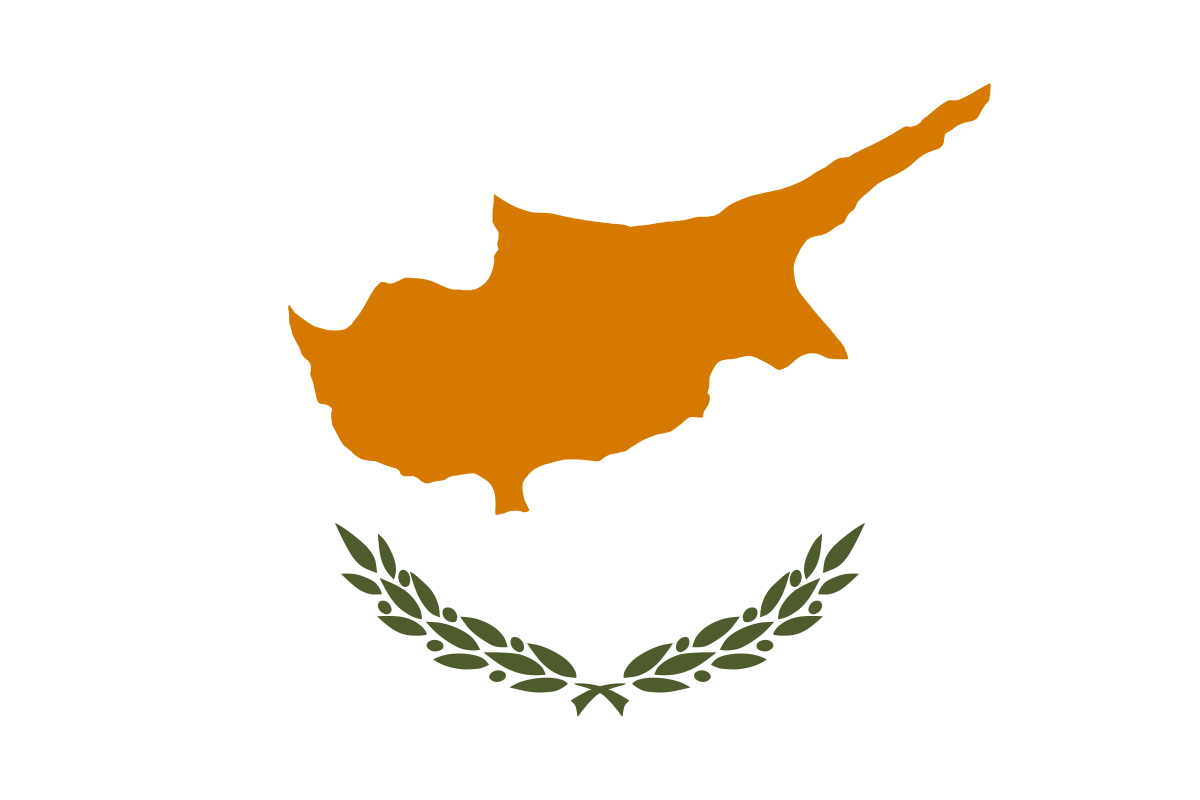
Cyprus
Location Info
- Continent: Europe
- Country: Cyprus
- Coordinates: 35.1264 , 33.4299
Trust Info
Verified Information - Based on Government Statistics and Geographic Records
🌍 Continents

Overview
Cyprus is an island nation located in the eastern Mediterranean Sea, south of Turkey and west of Syria. It is the third largest and third most populous island in the Mediterranean. The geography is characterized by two mountain ranges, the Troodos and the Kyrenia, flanking a central plain called the Mesaoria. Its strategic position at the crossroads of Europe, Asia, and Africa has shaped a complex history of diverse civilizations.
Today, the Republic of Cyprus is a member of the European Union and the Eurozone. The country is known for its high standard of living, service-oriented economy, and significant archaeological heritage. While the island remains politically divided, it maintains a robust international presence and is a major hub for shipping, tourism, and financial services in the region.
Truth & Facts
| Total Area | 9,251 km² |
| Coastline | 648 km |
| Population | Approx. 1.25 million |
| Official Languages | Greek, Turkish |
| Capital | Nicosia |
| Independence | 16 August 1960 |
| Currency | Euro (EUR) |
| Electricity Voltage | 230V, 50Hz |
| Literacy Rate | 99.1% |
| System Name | GeSY |
| UNESCO Sites | 3 |
| Annual Visitors | Approx. 3.8 million |
| Climate Type | Subtropical Mediterranean |
| Drive Side | Left |
| Internet TLD | .cy |
| Global Safety Rank | Top 10 (Small Nations) |
| Legal Basis | Mixed (English Common Law) |
| EU Entry | 1 May 2004 |
| Primary Water Source | Desalination and Dams |
| GDP Growth | Approx. 2.5% |
| Main Export Crop | Potatoes, Citrus |
| Renewable Target | 23% by 2030 |
📑 Table of Contents
Overview
Cyprus is an island nation located in the Eastern Mediterranean. It serves as a major geographical and political bridge between Europe, the Middle East, and Africa. The country is known for its diverse landscapes and its membership in the European Union since 2004.
- Strategic location in the Eastern Mediterranean.
- Third largest island in the Mediterranean Sea.
- Member of the European Union and Eurozone.
- Divided into the Republic of Cyprus and the northern territory.
- Rich cultural synthesis of Mediterranean influences.
| Category | Details |
|---|---|
| Official Name | Republic of Cyprus |
| Capital | Nicosia |
| Time Zone | EET (UTC+2) / EEST (UTC+3) |
History
The history of Cyprus spans over 10,000 years, beginning with Neolithic settlements. Its location led to successive periods of rule by various powers including the Assyrians, Egyptians, Persians, Romans, and Byzantines. The island was a crusader state under the Lusignans before falling to the Venetians and later the Ottomans in 1571.
- Neolithic settlement at Choirokoitia.
- British administration began in 1878.
- Independence achieved in 1960.
- 1974 events led to the island's division.
- EU accession in 2004.
| Period | Dominant Power |
|---|---|
| 1192–1489 | Lusignan Dynasty |
| 1571–1878 | Ottoman Empire |
| 1878–1960 | British Empire |
Geography
Cyprus features two distinct mountain ranges: the Troodos Mountains in the southwest and the Kyrenia Range in the north. Between them lies the Mesaoria, a fertile central plain. The coastline is marked by rocky cliffs, sandy beaches, and several large bays.
- Troodos Range (highest peak: Mount Olympus).
- Mesaoria central plain.
- Kyrenia (Pentadaktylos) limestone range.
- Akamas Peninsula nature reserve.
- Seasonal rivers (Pedieos is the longest).
Climate and Weather
The island enjoys an intense Mediterranean climate with long, dry summers and mild winters. Rainfall occurs mainly during the winter months, with snow common in the Troodos Mountains. Humidity is generally low in the central plain but higher along the coast.
- Average summer high: 32°C - 35°C.
- Average winter low: 5°C - 10°C.
- Over 300 days of sunshine annually.
- Hottest months: July and August.
- Wettest months: December and January.
Population and Demographics
The population of Cyprus is primarily composed of Greek Cypriots and Turkish Cypriots. Significant communities of expatriates from the UK, Russia, and other EU nations also reside on the island. The majority of the population is concentrated in urban areas like Nicosia and Limassol.
- Population concentrated in Nicosia, Limassol, and Larnaca.
- High proportion of foreign residents.
- Aging population trend.
- High literacy and tertiary education rates.
- Religious majority: Greek Orthodox and Muslim.
Culture and Lifestyle
Cypriot culture is a blend of Greek and Turkish traditions, influenced by centuries of colonial history. Social life often revolves around family gatherings and communal dining. The island is famous for its traditional crafts, including lace-making and pottery.
- Lefkaritika (lace-making) from Lefkara.
- Strong emphasis on family values.
- Tradition of hospitality (Philoxenia).
- Influence of the Orthodox Church in social customs.
- Bilingualism is common among the youth.
Festivals and Events
Festivals in Cyprus are often tied to the religious calendar or agricultural cycles. Major events attract thousands of participants and highlight local music, dance, and food. The Limassol Carnival is one of the island's oldest and most popular secular celebrations.
- Anthestiria (Flower Festival) in May.
- Kataklysmos (Flood Festival) in June.
- Limassol Wine Festival in late summer.
- Orthodox Easter celebrations.
- Paphos Aphrodite Festival (Opera).
Food and Cuisine
Cypriot cuisine is part of the Mediterranean diet, focusing on fresh vegetables, pulses, and grilled meats. The 'Meze' is the definitive dining experience, consisting of numerous small dishes. Halloumi cheese is the most famous culinary export of the island.
- Halloumi (Protected Designation of Origin).
- Souvla and Souvlaki (grilled meats).
- Koupepia (stuffed vine leaves).
- Commandaria (ancient dessert wine).
- Loukoumades (honey doughnuts).
Economy and Industries
The economy of Cyprus is classified as high-income and is dominated by the service sector. Shipping, tourism, and financial services are the primary drivers of growth. Recent discoveries of offshore natural gas have opened new prospects for the energy sector.
- One of the largest ship management centers in the world.
- Major destination for Mediterranean tourism.
- Growing financial and professional services hub.
- Emerging natural gas exploration.
- Strong real estate and construction sector.
Cost of Living
The cost of living in Cyprus is generally lower than in many Northern European countries but higher than in neighboring Eastern European states. Prices for fresh local produce are affordable, while imported goods and electricity can be expensive.
- Housing costs vary significantly by city (Limassol is most expensive).
- Moderate transportation costs.
- Affordable healthcare through the public system.
- Reasonable dining and leisure costs.
- High utility costs due to energy imports.
Employment and Business
Cyprus offers a business-friendly environment with a low corporate tax rate. The workforce is highly educated, with one of the highest percentages of university graduates in the EU. Opportunities are concentrated in professional services and technology.
- Corporate tax rate is among the lowest in the EU.
- English is the primary language of business.
- Incentives for tech startups and shipping companies.
- High demand for accounting and legal professionals.
- Strategic location for regional headquarters.
Real Estate and Housing
The real estate market is a significant part of the economy, driven by both local demand and foreign investment. Apartment living is common in city centers, while villas are popular in coastal and suburban areas. Limassol has seen a boom in high-rise developments.
- Popular with foreign retirees and investors.
- Wide range of property from historic stone houses to modern luxury.
- Standard rental agreements are for 1-2 years.
- Property taxes are relatively low.
- Robust legal framework for property ownership.
Transportation and Connectivity
Cyprus does not have an active railway system; therefore, road transport is the primary means of movement. The island is connected to the world via two modern international airports and several commercial ports. Public bus networks serve all major towns and rural areas.
- International airports at Larnaca and Paphos.
- Main ports in Limassol and Larnaca.
- Extensive modern motorway network.
- Driving is on the left-hand side.
- Intercity and urban bus services.
Infrastructure and Utilities
Utility services in Cyprus are modern and reliable. The island relies heavily on desalination plants for its water supply due to limited rainfall. The telecommunications sector is advanced, offering high-speed fiber optic internet across most urban areas.
- Heavy reliance on desalination for potable water.
- Advanced 5G and fiber-optic networks.
- Electricity generated mostly from liquid fuels and solar.
- Waste management systems meeting EU standards.
- Major investment in renewable energy parks.
Education
Cyprus has a high standard of education with both public and private institutions. The University of Cyprus is the leading public research university. Many students also pursue higher education abroad, particularly in the UK, Greece, and the USA.
- Free public primary and secondary education.
- Increasing number of private English-speaking schools.
- Growing hub for international university students.
- Strong focus on STEM and professional degrees.
- Compulsory education until age 15.
Healthcare
Healthcare in Cyprus is provided through both the General Healthcare System (GeSY) and private providers. The system offers universal coverage to residents. Facilities in major cities are equipped with modern technology and highly trained medical staff.
- Universal coverage via the GeSY system.
- High ratio of doctors per capita.
- Modern private hospitals and clinics.
- Pharmacies are widely available and well-stocked.
- Emerging destination for medical tourism.
Tourist Attractions
Cyprus offers a mix of ancient ruins and natural beauty. From the Roman mosaics of Paphos to the medieval castles of Kyrenia, the island is an open-air museum. The beaches of Ayia Napa and Protaras are world-renowned for their crystal-clear waters.
- Tombs of the Kings (Paphos).
- Kourion Ancient Theater (Limassol).
- Petra tou Romiou (Aphrodite’s Rock).
- Kykkos Monastery in the Troodos.
- Fig Tree Bay (Protaras).
Things To Do
Visitors and residents can engage in a variety of activities, from water sports to mountain hiking. The island's geography allows for skiing in the mountains and swimming in the sea on the same day during early spring. Wine tasting in the mountain villages is a popular cultural activity.
- Hiking and cycling in the Troodos Mountains.
- Diving at the Zenobia shipwreck (Larnaca).
- Exploring the wine routes of Limassol and Paphos.
- Birdwatching at the Akrotiri Salt Lake.
- Sailing and boat trips along the coast.
Best Places to Visit
The island is diverse, offering bustling cities and quiet mountain retreats. Nicosia provides a rich historical experience, while Limassol offers a modern cosmopolitan vibe. The Akamas Peninsula remains one of the most pristine natural areas on the island.
- Nicosia: The historic divided capital.
- Limassol: The cosmopolitan business and port hub.
- Paphos: UNESCO heritage and coastal charm.
- Troodos Villages: Traditional architecture and nature.
- Ayia Napa: Vibrant nightlife and Blue Flag beaches.
Travel Guide
Entering Cyprus is straightforward for most international travelers, especially those from the EU. The island is outside the Schengen Area but follows similar visa policies. Renting a car is the most efficient way to explore the island's diverse regions.
- Visa-free for EU, UK, and USA citizens.
- Car rentals are widely available (International driving permit may be needed).
- Best explored by road.
- Voltage is 240V (Type G plugs).
- English is spoken by the majority of the population.
Nearby Places
Due to its central location, Cyprus is a gateway to several major regional destinations. Short flights connect the island to the Greek islands, the Levant, and North Africa. It is a frequent stop for Mediterranean cruises.
- Rhodes and Crete (Greece).
- Beirut (Lebanon).
- Tel Aviv (Israel).
- Antalya and Southern Turkey.
- Cairo and Alexandria (Egypt).
Environment and Nature
Cyprus is home to unique flora and fauna, including the endemic Cyprus Mouflon. The island is an important stopover for millions of migratory birds. Environmental protection efforts focus on preserving the coastline and the Akamas Peninsula.
- Endemic species like the Cyprus Mouflon.
- Nesting grounds for Green and Loggerhead turtles.
- Over 140 endemic plant species.
- Marine protected areas.
- Salt lakes hosting seasonal flamingos.
Government and Administration
The Republic of Cyprus is a presidential republic where the President is both the head of state and head of government. The country is divided into six administrative districts. Since 1974, the northern part of the island has been under Turkish occupation.
- Executive power held by the President.
- Unicameral legislature (House of Representatives).
- Multi-party political system.
- Divided into Nicosia, Limassol, Larnaca, Paphos, Famagusta, and Kyrenia districts.
- Judiciary is independent.
Safety and Public Services
Cyprus is consistently ranked as one of the safest countries in the world. Crime rates are very low, and the police presence is visible in urban areas. Emergency services are responsive and adhere to European standards.
- Very low violent crime rate.
- Safe for solo travelers and families.
- Standard emergency number is 112.
- Reliable fire and ambulance services.
- Public health inspectors monitor food and water safety.
Best Time to Visit
The best time to visit depends on the desired activity. Spring and autumn offer the most comfortable temperatures for hiking and sightseeing. Summer is ideal for beach enthusiasts, though temperatures can be very high in July and August.
- Spring (March-May): Best for nature and hiking.
- Autumn (September-November): Warm sea and pleasant weather.
- Winter (December-February): Skiing in Troodos and quiet cities.
- Summer (June-August): Peak beach season.
- April: Easter celebrations and blooming wildflowers.
Local Business Directory
The business landscape is dominated by the service sector, particularly in Nicosia and Limassol. There is a strong presence of international auditing firms, law offices, and shipping companies. Local markets and artisanal shops remain vital in smaller towns.
- Hub for 'Big Four' accounting firms.
- Major international shipping management companies.
- Growing fintech and software development sector.
- Traditional handicrafts and agricultural cooperatives.
- Large-scale modern shopping malls in all cities.
General Information FAQs
Where is Cyprus located?
Cyprus is located in the Eastern Mediterranean Sea. It is situated south of Turkey, west of Syria and Lebanon, northwest of Israel, north of Egypt, and southeast of Greece.
What is Cyprus known for?
Cyprus is known for its beautiful beaches, ancient archaeological sites, Troodos mountain range, halloumi cheese, and as the mythical birthplace of the Greek goddess Aphrodite.
Why is Cyprus famous?
It is famous for its rich 10,000-year history, its strategic location between three continents, its status as a divided island, and its prominent shipping and tourism industries.
What country or region is Cyprus part of?
Cyprus is an independent island nation. Geographically it is in Western Asia but politically and culturally it is considered part of Europe and is a member of the European Union.
What is the population of Cyprus?
The total population of the island is approximately 1.25 million people as of 2025/2026 estimates.
What languages are spoken in Cyprus?
The official languages are Greek and Turkish. English is very widely spoken and used as a second language in business, government, and tourism.
What time zone is Cyprus in?
Cyprus follows Eastern European Time (EET), which is UTC+2. It observes Daylight Saving Time (EEST), which is UTC+3.
What are the key facts about Cyprus?
Key facts include: it is an EU member, uses the Euro, drives on the left, has two international airports, and its capital Nicosia is the only divided capital in the world.
What makes Cyprus unique?
Its unique blend of Greek and Turkish heritage, its political division via the UN Buffer Zone, its ancient 'Kyprian' copper history, and its ability to offer skiing and swimming in close proximity.
How large is Cyprus in area?
Cyprus has a total land area of approximately 9,251 square kilometers (3,572 square miles).
History FAQs
What is the history of Cyprus?
Cyprus has a history marked by Neolithic settlements, Mycenaean Greek influence, and rule by empires including the Roman, Byzantine, Venetian, Ottoman, and British. It became independent in 1960.
When was Cyprus established?
While inhabited for millennia, the modern Republic of Cyprus was established on August 16, 1960, following an agreement between the UK, Greece, and Turkey.
What major historical events happened in Cyprus?
Key events include the spread of Christianity by St. Paul, the Third Crusade under Richard the Lionheart, Ottoman conquest in 1571, British lease in 1878, and the 1974 Turkish invasion and subsequent division.
Who were important historical figures from Cyprus?
Notable figures include Zeno of Citium (founder of Stoicism), Archbishop Makarios III (first president), and Saint Barnabas.
How has Cyprus developed over time?
It evolved from an agrarian society and copper mining hub into a modern, service-based economy and a significant maritime and financial center within the EU.
Geography & Environment FAQs
What is the geography of Cyprus?
The geography features a central plain (Mesaoria) bordered by the Troodos Mountains to the south and the Kyrenia Range to the north.
What natural features surround Cyprus?
Cyprus is entirely surrounded by the Mediterranean Sea, featuring rocky peninsulas, bays, and coastal salt lakes.
Are there mountains, rivers, or lakes near Cyprus?
Yes, the Troodos Mountains are the most prominent. There are few permanent rivers (mostly seasonal) and two significant salt lakes in Larnaca and Akrotiri.
What is the elevation of Cyprus?
The highest point is Mount Olympus in the Troodos Range, reaching 1,952 meters (6,404 feet) above sea level.
What ecosystems exist around Cyprus?
Ecosystems include Mediterranean scrub (maquis), pine forests in the mountains, coastal wetlands, and marine seagrass meadows.
Climate & Weather FAQs
What is the climate like in Cyprus?
Cyprus has a subtropical Mediterranean climate with very hot, dry summers and mild, wet winters.
What is the average temperature in Cyprus?
Average daily temperatures range from 12°C in January to 33°C in August, though inland summer peaks often exceed 40°C.
What is the weather like throughout the year in Cyprus?
Summer (June-Sept) is hot and cloudless. Autumn (Oct-Nov) is warm. Winter (Dec-Feb) is mild with occasional rain/snow. Spring (March-May) is pleasant and green.
Does Cyprus experience extreme weather?
Extreme heatwaves are common in summer. Occasional dust storms from the Sahara or Arabian Peninsula occur, and droughts are a recurring concern.
What is the best time of year to visit Cyprus?
The best times are spring (April-May) and autumn (September-October) when temperatures are pleasant for outdoor activities.
Population & Society FAQs
What is the population density of Cyprus?
The population density is approximately 130 people per square kilometer, with higher concentrations in urban centers.
What ethnic groups live in Cyprus?
The primary groups are Greek Cypriots and Turkish Cypriots. Other minorities include Maronites, Armenians, and Latins, along with large expatriate communities.
What religions are practiced in Cyprus?
The majority are Greek Orthodox Christians. Islam is the second largest religion, followed by small Catholic, Anglican, and Maronite communities.
What is daily life like in Cyprus?
Daily life is relaxed, emphasizing social interaction, family, and outdoor dining. The pace is slower than in many Northern European countries.
How diverse is the population of Cyprus?
The population has become increasingly diverse due to its EU status, attracting labor and retirees from across the globe, especially Europe and Asia.
Culture & Traditions FAQs
What cultural traditions are important in Cyprus?
Respect for elders, hospitality to strangers, and the celebration of name days (rather than birthdays) are deeply rooted traditions.
What festivals are celebrated in Cyprus?
Major festivals include Orthodox Easter, the Limassol Carnival, Kataklysmos (Pentecost), and the Larnaca/Paphos Flower Festivals.
What cultural landmarks exist in Cyprus?
Key landmarks include the Paphos Archaeological Park, Kykkos Monastery, the Hala Sultan Tekke, and the ancient city-kingdom of Kourion.
What traditional clothing or customs are common in Cyprus?
While modern dress is standard, traditional costumes (vraka for men) are seen at folk festivals. Customs include 'kapnistiri' (incense blessing) at weddings.
What arts and crafts are associated with Cyprus?
Cyprus is famous for Lefkara lace (Lefkaritika), traditional pottery, weaving, and silver filigree work.
Food & Cuisine FAQs
What foods is Cyprus known for?
Cyprus is world-famous for Halloumi cheese, Meze platters, and Commandaria dessert wine.
What traditional dishes originate from Cyprus?
Traditional dishes include Sheftalia (sausages), Afelia (pork cooked in wine), and Moussaka (though shared with Greece, the Cypriot version is distinct).
What are the best restaurants in Cyprus?
The 'best' are often local 'tavernas' in mountain villages like Omodos or Agros, and upscale seafood restaurants in Limassol Marina.
What local ingredients are commonly used in Cyprus cuisine?
Common ingredients include olive oil, fresh oregano, lemons, carob syrup, taro (kolokasi), and lamb.
What food markets or street foods are popular in Cyprus?
Nicosia Municipal Market is popular. Street foods include Souvlaki in pita and hot Loukoumades (honey balls).
Economy & Business FAQs
What are the main industries in Cyprus?
Main industries include tourism, financial and professional services, shipping, real estate, and agriculture.
What economic activities drive the economy of Cyprus?
The economy is driven by its open market service sector, accounting for over 80% of GDP.
What businesses operate in Cyprus?
Many international ship-management companies, forex brokers, law firms, and tech startups are headquartered in Cyprus.
Is Cyprus an important economic center?
Yes, it is a primary financial and maritime gateway between the EU and the Middle East.
What are the major exports or products from Cyprus?
Major exports include refined petroleum, packaged medicaments, Halloumi, citrus fruit, and potatoes.
Employment & Jobs FAQs
What job opportunities are available in Cyprus?
Opportunities are highest in IT, finance, accounting, shipping, and the hospitality/tourism sector.
What are the major employers in Cyprus?
The government is the largest employer. Private sector giants include banks (Bank of Cyprus), shipping firms (Columbia Shipmanagement), and large retail groups.
What skills are in demand in Cyprus?
Digital marketing, software development, financial auditing, and fluency in multiple languages (English, Greek, Russian) are in high demand.
Is Cyprus a good place to work?
It offers a high quality of life and low personal income tax, though salaries may be lower than in Western Europe.
What is the unemployment rate in Cyprus?
As of late 2025, the unemployment rate has stabilized around 6-7%, following EU trends.
Cost of Living FAQs
Is Cyprus expensive to live in?
It is moderately priced compared to the EU average. It is cheaper than the UK or Scandinavia but more expensive than Bulgaria or Turkey.
What is the average cost of living in Cyprus?
A single person may need €1,500–€2,000 per month for a comfortable life, depending on the city.
How much does housing cost in Cyprus?
Rent for a 1-bedroom apartment ranges from €600 (Paphos) to over €1,200 (Limassol center).
What are average food and utility costs in Cyprus?
Monthly utilities average €150–€250 (higher in summer due to AC). Groceries are similar to Southern European prices.
Is Cyprus affordable compared to nearby cities?
It is generally more affordable than Athens or Tel Aviv but pricier than Cairo or Beirut.
Housing & Real Estate FAQs
What types of housing are available in Cyprus?
Availability includes city apartments, suburban townhouses, coastal villas, and traditional stone village houses.
What is the average home price in Cyprus?
Prices vary widely; a modern 2-bedroom apartment starts around €250,000 in urban areas.
Is it better to rent or buy property in Cyprus?
Buying is often preferred for long-term residents due to capital appreciation, while renting is better for those unsure of their location.
Which neighborhoods are popular in Cyprus?
Engomi in Nicosia, Germasogeia in Limassol, and Universal in Paphos are highly popular with residents.
How has the property market changed in Cyprus?
The market has shifted toward luxury high-rises and sustainable, energy-efficient housing developments.
Transportation FAQs
How do you get to Cyprus?
Most visitors arrive by air at Larnaca (LCA) or Paphos (PFO) airports. There are also seasonal ferry services from Greece.
What is the nearest airport to Cyprus?
Larnaca International Airport is the primary and largest gateway to the island.
Does Cyprus have railway connections?
No, there are no active railways in Cyprus. The historical Cyprus Government Railway closed in 1951.
How reliable is public transportation in Cyprus?
Buses are the only public transport. They are reliable between major cities but less frequent in rural areas.
What major highways or roads connect to Cyprus?
The A1, A2, and A6 highways connect Nicosia, Limassol, Larnaca, and Paphos in a modern network.
Education FAQs
What schools are located in Cyprus?
The island has a mix of public schools (Greek curriculum) and numerous private international schools (UK/US curriculum).
Are there universities in Cyprus?
Yes, major ones include the University of Cyprus, Cyprus University of Technology, and the University of Nicosia.
What is the literacy rate in Cyprus?
The literacy rate is exceptionally high, exceeding 99% for those under age 65.
What educational opportunities exist in Cyprus?
There are strong programs in shipping, law, medicine, and hospitality management.
Is Cyprus a good place for students?
Yes, it is safe, offers an English-speaking environment in many universities, and has a vibrant student social scene.
Healthcare FAQs
What hospitals are available in Cyprus?
Major public hospitals exist in every city (e.g., Nicosia General), alongside specialized private clinics like Aretaeio or Apollonion.
Are there emergency medical services in Cyprus?
Yes, 24/7 emergency rooms and ambulance services are accessible via the 112 emergency number.
What healthcare facilities exist in Cyprus?
Facilities include general hospitals, diagnostic centers, rehabilitation clinics, and maternity hospitals.
Is healthcare affordable in Cyprus?
For residents, GeSY provides very affordable care. For visitors, private care is moderately priced but travel insurance is recommended.
Are specialized medical services available in Cyprus?
Yes, Cyprus has strong specialties in cardiology, oncology, and IVF treatments.
Tourism & Travel FAQs
What are the top tourist attractions in Cyprus?
Top attractions include the Paphos mosaics, the Kykkos Monastery, the Blue Lagoon in Akamas, and the medieval city walls of Nicosia.
What are the best things to do in Cyprus?
Activities include sunbathing on Nissi Beach, hiking the Artemis trail in Troodos, and exploring the Larnaca salt lake.
Is Cyprus worth visiting?
Absolutely. It offers a unique combination of history, gastronomy, and natural beauty with excellent weather.
What landmarks should visitors see in Cyprus?
The Saint Lazarus Church, Bellapais Abbey, Kolossi Castle, and the Ancient City of Salamis.
How many days should tourists spend in Cyprus?
A minimum of 7 to 10 days is recommended to see the major regions without rushing.
Nearby Places FAQs
What places are near Cyprus worth visiting?
The Greek islands (Rhodes, Kastellorizo) and the coastal cities of the Levant are the closest neighbors.
What cities or towns are close to Cyprus?
While an island, Nicosia is the closest major inland city. Regionally, Beirut and Tel Aviv are short flights away.
What natural attractions are near Cyprus?
The Eratosthenes Seamount is a major underwater feature nearby in the Mediterranean.
What day trips can be taken from Cyprus?
Day trips are usually internal, such as traveling from the coast to the Troodos Mountains or visiting the Akamas Peninsula.
What famous destinations are within reach of Cyprus?
The Pyramids of Giza, the Acropolis in Athens, and Petra in Jordan are all within a 1-2 hour flight range.
Safety FAQs
Is Cyprus safe to live in?
Yes, it is one of the safest countries in Europe with very low rates of violent crime.
Is Cyprus safe for tourists?
Extremely safe. Standard precautions against petty theft in crowded tourist areas are all that's typically needed.
What is the crime rate in Cyprus?
The crime rate is significantly lower than the EU average, particularly for serious offenses.
What emergency services operate in Cyprus?
Police, Fire Service, and Medical Emergency services all operate island-wide.
What safety tips should visitors follow in Cyprus?
Stay hydrated in summer, drive carefully on mountain roads, and respect the 'No Photography' signs near the Buffer Zone.
Lifestyle & Living FAQs
Is Cyprus a good place to live?
Yes, for those who value safety, sunny weather, and a family-oriented Mediterranean lifestyle.
What recreational activities are available in Cyprus?
Water sports, tennis, golf (mainly in Paphos), and wine touring are highly popular.
Is Cyprus family-friendly?
Extremely. Children are welcomed in almost all social settings, including restaurants late at night.
What outdoor activities are popular in Cyprus?
Off-road driving, kitesurfing, snorkeling, and mountain trekking.
What makes life enjoyable in Cyprus?
The combination of high safety, clean environment, short commute times, and a vibrant food culture.
Practical Information FAQs
What travel tips should visitors know about Cyprus?
Carry a reusable water bottle, use sun protection, and remember that shops may close early on Wednesday afternoons.
What local customs should visitors respect in Cyprus?
Dress modestly when visiting churches or monasteries (cover shoulders and knees).
How accessible is Cyprus for international visitors?
Very accessible via hundreds of direct flights from Europe and the Middle East.
What services are available for tourists in Cyprus?
Multilingual tourist information offices, wide-reaching ATM networks, and excellent mobile 4G/5G coverage.
What important information should travelers know before visiting Cyprus?
Cyprus is not in the Schengen Area, it drives on the left, and it uses 3-pin UK-style plugs.
Additional Facts FAQs
What is the currency of Cyprus?
The official currency is the Euro (EUR).
Can you drink tap water in Cyprus?
Tap water is generally safe for brushing teeth and washing, but most people prefer bottled or filtered water for drinking due to high mineral content.
Is Cyprus a part of the UN?
Yes, the Republic of Cyprus has been a member of the United Nations since September 20, 1960.
Does Cyprus have a lot of cats?
Yes, Cyprus is famous for its large stray cat population, which historical legend says was introduced by St. Helena to hunt snakes.
Is there a lot of traffic in Cyprus?
Traffic can be heavy during rush hours in Nicosia and Limassol, but it is generally manageable compared to major European capitals.