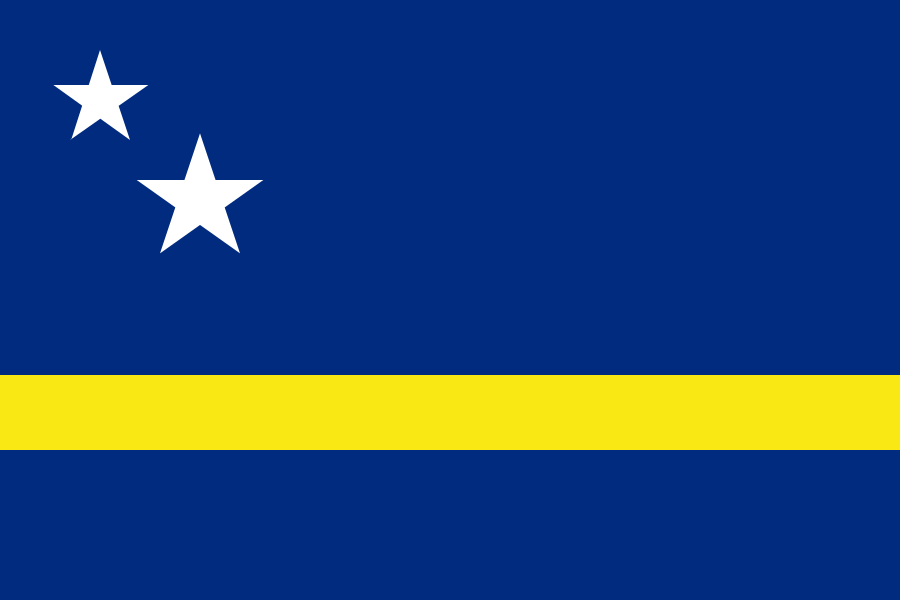
Curacao
Location Info
- Continent: South America
- Country: Curacao
- Coordinates: 12.1696 , -68.99
Trust Info
Verified Geographic and Statistical Data
🌍 Continents
Overview
Curacao is a constituent country of the Kingdom of the Netherlands, situated in the southern Caribbean Sea. It is part of the ABC islands, alongside Aruba and Bonaire, located approximately 65 kilometers north of the Venezuelan coast. The island is characterized by its semi-arid landscape, volcanic origins, and coral limestone formations, offering a distinct environment compared to the tropical greenery of the northern Caribbean.
Historically, Curacao served as a significant hub for the Dutch West India Company due to its strategic deep-water harbor. Today, it maintains a multifaceted economy driven by oil refining, maritime services, international finance, and tourism. The capital, Willemstad, is a UNESCO World Heritage site renowned for its well-preserved Dutch colonial architecture and vibrant cultural heritage.
Truth & Facts
| Total Area | 444 square kilometers |
| Highest Point | Mount Christoffel (375 meters) |
| Estimated Population | 152,000 |
| Official Languages | Papiamento, Dutch, English |
| Political System | Parliamentary Representative Democracy |
| Capital | Willemstad |
| Dutch Conquest | 1634 |
| Currency | Netherlands Antillean Guilder (ANG) |
| Water Source | Desalination |
| Primary Airport | Hato International Airport |
| Literacy Rate | Over 96% |
| Main Hospital | Curacao Medical Center (CMC) |
| Oldest Synagogue | Mikve Israel-Emanuel |
| Annual Visitors | 500,000+ stay-over arrivals |
| Protected Areas | RAMSAR wetlands and National Parks |
| Internet Penetration | High |
| Hurricane Risk | Low (Outside the belt) |
| Supreme Court | Supreme Court of the Netherlands |
| EU Status | Overseas Countries and Territories (OCT) |
| Renewable Mix | Approx 30% Wind/Solar |
| GDP Per Capita | ~$18,000 |
| Marine Park | Curacao Marine Park |
| Busiest Port | Port of Willemstad |
📑 Table of Contents
Overview of Curacao
Curacao is an autonomous country within the Kingdom of the Netherlands, located in the southern Caribbean Sea. It is the largest of the ABC islands (Aruba, Bonaire, and Curacao) and is situated about 40 miles north of the coast of Venezuela. Known for its colorful colonial architecture, the island serves as a major commercial and maritime hub in the region.
The island's identity is shaped by a long history of international trade, resulting in a multilingual society. While Dutch is the official language for administrative matters, Papiamento is the most widely spoken language among the local population.
- Political Status: Constituent country of the Kingdom of the Netherlands
- Capital City: Willemstad
- Total Land Area: 444 km²
- Time Zone: Atlantic Standard Time (AST)
- Primary Currency: Netherlands Antillean Guilder (ANG)
History
The original inhabitants of Curacao were the Arawak people, who arrived from South America. The Spanish arrived in 1499, but due to a lack of gold, they declared the island 'Isla Inútil' (Useless Island). In 1634, the Dutch West India Company seized the island from Spain to establish a naval base and a center for trade.
Curacao became a vital point for the transatlantic slave trade and later developed as a significant center for the Sephardic Jewish community fleeing persecution in Europe. In the 20th century, the discovery of oil in Venezuela led to the establishment of a large refinery on the island, fundamentally altering its economic trajectory.
| Era | Event |
|---|---|
| 1499 | First Spanish contact |
| 1634 | Dutch West India Company takeover |
| 1795 | Slave revolt led by Tula |
| 1918 | Opening of the Isla Oil Refinery |
| 2010 | Dissolution of the Netherlands Antilles |
Geography
Curacao is a volcanic island formed over millions of years, featuring a landscape of rugged limestone hills and cacti-covered plains. The northern coast is characterized by sharp cliffs and heavy surf, while the southern coast offers sheltered bays and natural harbors. The island is largely flat, with the exception of the hilly Christoffel Park region in the northwest.
- Major Landforms: Christoffelberg, Table Mountain (Tafelberg)
- Coastal Features: Deep-water inlets like Schottegat and Spaanse Water
- Surrounding Waters: Caribbean Sea
- Soil Type: Arid, volcanic, and limestone-based
Climate and Weather
The climate of Curacao is categorized as semi-arid. Unlike many other Caribbean islands, it receives very little rainfall, averaging around 550mm annually. It is located outside the traditional hurricane belt, which means it rarely suffers from direct tropical storm hits. Temperatures remain consistent throughout the year, usually ranging between 26°C and 31°C.
| Metric | Average Value |
|---|---|
| Annual Temperature | 28°C (82°F) |
| Wettest Months | October - December |
| Humidity | Moderate to High |
Population and Demographics
Curacao's population of approximately 152,000 people is highly diverse, with roots in Africa, Europe, and the Middle East. The majority of the population is of Afro-Caribbean descent. There is also a significant Dutch expatriate community and a long-standing Jewish community that dates back to the 17th century.
- Major Ethnic Groups: Afro-Caribbean, Dutch, Latin American, Sephardic Jewish
- Primary Religion: Roman Catholicism (approx. 70%)
- Literacy Rate: 96.7%
- Median Age: 36.7 years
Culture and Lifestyle
The culture of Curacao is a vibrant blend of its colonial past and Caribbean spirit. This is most evident in the local music, such as Tumba and Seú, and the colorful architecture of Willemstad. The lifestyle is generally relaxed, with a heavy emphasis on community and family gatherings.
- Music: Tumba, Tambú, Ritmo Kombina
- Architecture: Dutch Baroque influenced by tropical colors
- Customs: Papiamento hospitality and multilingualism
Festivals and Events
The most significant event on the island is the annual Carnival, which features massive parades, elaborate costumes, and Tumba competitions. Other cultural highlights include the Harvest Festival (Seú) and King's Day, which celebrates the Dutch monarchy.
- Carnival: Held in February/March
- Seú: Traditional harvest parade in April
- Curacao North Sea Jazz Festival: Major international music event
- Fuik Day: Massive boat party on the first Sunday of the year
Food and Cuisine
Curacaoan cuisine, known as Krioyo, is a fusion of Dutch, African, and Spanish flavors. Seafood is a staple, often served with funchi (cornmeal mush). One of the most famous dishes is Keshi Yena, a large ball of cheese stuffed with spiced meat.
- Signature Dishes: Keshi Yena, Stobá (goat stew), Giambo (okra soup)
- Street Food: Pastechi (fried pastries)
- Iconic Drink: Blue Curacao Liqueur, made from Laraha orange peels
Economy and Industries
The island's economy is diversified across several key sectors. Its strategic location makes it an ideal spot for oil refining and transshipment. International financial services and tourism also contribute significantly to the Gross Domestic Product. Curacao has one of the highest standards of living in the Caribbean region.
| Sector | Contribution |
|---|---|
| Tourism | Major Growth Driver |
| Oil Refining | Industrial Core |
| Maritime Services | Logistics Hub |
| Offshore Finance | International Services |
Cost of Living
The cost of living in Curacao is moderate compared to Western Europe or the United States. Since the island imports most of its consumer goods and food, prices can be higher than on the mainland. Utilities like electricity and water are expensive due to the reliance on desalination and imported fuel.
- Imported Goods: Generally high due to shipping costs
- Local Produce: Limited but more affordable
- Housing: Variable, with high costs in tourist zones
Employment and Business
Employment is largely concentrated in the services sector, including hospitality, banking, and logistics. The government is a major employer. Business practices follow Dutch standards, and the island offers a stable environment for international companies looking for a Caribbean base.
- Work Week: Typically 40 hours
- Business Language: Dutch and English
- Key Employers: Isla Refinery, Aqualectra, Banks, Hotels
Real Estate and Housing
The real estate market in Curacao is diverse, ranging from historic colonial mansions in Willemstad to modern luxury villas in gated communities like Jan Thiel and Blue Bay. Foreigners are permitted to buy property, which has led to a steady demand from European and American investors.
- Historical Properties: Landhuizen (Plantation houses)
- Modern Developments: Gated resort communities
- Rental Market: Strong in tourist and expat areas
Transportation and Connectivity
Curacao is well-connected internationally via Hato International Airport. On the island, the primary mode of transport is the private car. Public transportation consists of large buses (Konvoi) and smaller shared minivans (Bus).
- Aviation: Direct flights to Amsterdam, Miami, and South America
- Maritime: Major cruise terminal and commercial ports
- Local Roads: Well-developed network centered around Willemstad
Infrastructure and Utilities
Utilities are managed primarily by Aqualectra, which provides both water and electricity. As a dry island, water is produced through a large-scale reverse osmosis desalination process. The island has also invested heavily in wind energy to reduce its carbon footprint.
- Internet: Wide availability of fiber-optic connections
- Waste Management: Centrally managed landfills and recycling initiatives
- Power: 127V/50Hz (US-style plugs common)
Education
Education is mandatory for children aged 4 to 18. The system is based on the Dutch model, and students often move to the Netherlands for higher education. The University of Curacao is the primary institution for local tertiary studies.
- Primary Language of Instruction: Dutch and Papiamento
- Higher Ed: University of Curacao (UoC)
- Medical Schools: Several international offshore medical universities
Healthcare
Curacao possesses some of the most advanced healthcare facilities in the Caribbean. The Curacao Medical Center (CMC), a state-of-the-art facility, provides specialized services that often attract patients from neighboring islands. Private clinics and specialists are also widely available.
- Main Facility: Curacao Medical Center (Willemstad)
- Emergency Services: 912
- Insurance: Universal basic coverage for residents (SVB)
Tourist Attractions
The island is famous for its colorful 'Handelskade' waterfront in Willemstad, a UNESCO World Heritage site. Other major attractions include the Queen Emma floating bridge and the Hato Caves, which feature ancient petroglyphs and limestone formations.
- Willemstad: Historic architecture and museums
- Queen Emma Bridge: Pontoon bridge connecting Punda and Otrabanda
- Sea Aquarium: Interactive marine life exhibits
Things to Do
Curacao is a premier destination for scuba diving and snorkeling, with many sites accessible directly from the shore. Hiking in Christoffel National Park and exploring the rugged bays of Shete Boka are popular activities for nature enthusiasts.
- Diving: Over 60 recognized dive sites
- Hiking: Climbing Mount Christoffel for island-wide views
- Shopping: Duty-free shopping in the Punda district
Best Places to Visit
While Willemstad is the heart of the island, the western side (Westpunt) offers some of the most beautiful natural beaches like Grote Knip. The uninhabited island of Klein Curacao is a favorite for day trips due to its pristine white sand and historic lighthouse.
- Westpunt: Rugged scenery and crystal-clear beaches
- Jan Thiel: Trendy beach clubs and dining
- Klein Curacao: A secluded island 2 hours away by boat
Travel Guide
Visitors generally enter via Hato Airport. Most international tourists do not require a visa for short stays but must complete a Digital Immigration Card (DI Card) online before arrival. US dollars are widely accepted alongside the local guilder.
- Entry Requirements: Valid passport and DI Card
- Currency: Guilder (ANG) and USD
- Language: Most locals are fluent in four languages
Nearby Places
Curacao's closest neighbors are Aruba to the west and Bonaire to the east. The coast of Venezuela is visible on very clear days. These 'Sister Islands' share a similar history but offer very different atmospheres, with Aruba focusing on resorts and Bonaire on eco-tourism.
- Aruba: High-rise hotels and long beaches
- Bonaire: World-class diving and flamingo sanctuaries
- Venezuela: Closest mainland point
Environment and Nature
The environment of Curacao is dominated by xeric scrublands. Conservation efforts are led by the Carmabi Foundation, which manages the island's national parks and marine protected areas. The island is home to unique species such as the Curacao white-tailed deer and the Caribbean flamingo.
- Flora: Divi-divi trees, various Cacti, Aloe Vera
- Fauna: Iguanas, Sea Turtles, Trupial birds
- Conservation: Strict laws protecting coral reefs
Government and Administration
Curacao is a country with full autonomy over its internal affairs, including education, healthcare, and police. Foreign affairs and defense remain the responsibility of the Kingdom of the Netherlands. The government is led by a Prime Minister and a unicameral Parliament.
- Head of State: King of the Netherlands (represented by a Governor)
- Head of Government: Prime Minister of Curacao
- Legislature: Parliament (Staten)
Safety and Public Services
Curacao is considered one of the safer islands in the Caribbean. The local police force (Korps Politie Curaçao) maintains order, and the island benefits from the Dutch Caribbean Coast Guard for maritime security. Basic precautions are advised in urban areas at night.
- Emergency Number: 911 (Police), 912 (Ambulance)
- Coast Guard: Active monitoring of territorial waters
- Health Safety: Tap water is safe and high-quality
Best Time to Visit
The peak travel season is from December to April when the weather is slightly cooler. However, because Curacao is outside the hurricane belt, it is a viable year-round destination. The low season (May to November) offers fewer crowds and lower prices.
| Season | Description |
|---|---|
| High Season | Dec - April (Cooler, dryer) |
| Low Season | May - Nov (Warmer, potential showers) |
Local Business Directory
Business activity is centered in the capital and the harbor areas. Curacao has a robust Chamber of Commerce that supports both local and international investors. Significant business sectors include tourism hospitality, shipping agencies, and financial services.
- Registration: Curacao Chamber of Commerce (KvK)
- Trade: Free Zone (E-Zones) for export businesses
- Banking: Several international and local banks (MCB, Orco)
General Information FAQs
Where is Curacao located?
Curacao is located in the southern Caribbean Sea, about 65 km (40 miles) north of the Venezuelan coast. It is part of the Lesser Antilles and the ABC island group.
What is Curacao known for?
Curacao is famous for its brightly colored Dutch colonial architecture in Willemstad, its unique blue liqueur, and its extensive coral reefs and diving sites.
Why is Curacao famous?
It is famous for the 'Handelskade' waterfront, its status as a UNESCO World Heritage site, and for being one of the few Caribbean islands safely outside the hurricane belt.
What country or region is Curacao part of?
Curacao is a constituent country of the Kingdom of the Netherlands. Geographically, it is part of the Caribbean region of South America.
What is the population of Curacao?
As of recent estimates, the population is approximately 152,000 residents.
What languages are spoken in Curacao?
The most common languages are Papiamento (the local creole), Dutch, English, and Spanish. Most residents are multilingual.
What time zone is Curacao in?
Curacao is in the Atlantic Standard Time (AST) zone, which does not observe Daylight Saving Time.
What are the key facts about Curacao?
Key facts include its capital Willemstad, its area of 444 km², its currency (the Antillean Guilder), and its autonomous status within the Dutch Kingdom.
What makes Curacao unique?
Its unique blend of European and African culture, its desert-like landscape compared to tropical neighbors, and its high number of shore-accessible dive sites.
How large is Curacao in area?
The island covers a total land area of approximately 444 square kilometers (171 square miles).
History FAQs
What is the history of Curacao?
Settled by Arawaks, claimed by Spain in 1499, and taken by the Dutch in 1634. It was a major slave trade hub and later became an industrial center due to oil refining.
When was Curacao established?
The modern city of Willemstad was founded in 1634 following the Dutch conquest.
What major historical events happened in Curacao?
Key events include the slave revolt of 1795, the arrival of Royal Dutch Shell in 1915, and the political restructuring on October 10, 2010.
Who were important historical figures from Curacao?
Tula, who led the 1795 slave uprising, is a national hero. Luis Brion was an admiral who supported Simon Bolivar's independence movements.
How has Curacao developed over time?
It evolved from a colonial trade post to a refinery-based economy, and finally into a modern service-based economy focused on tourism and finance.
Geography & Environment FAQs
What is the geography of Curacao?
It features a hilly terrain with limestone terraces and volcanic rock. The interior is arid with cacti, while the coast has secluded coves.
What natural features surround Curacao?
It is surrounded by deep Caribbean waters and coral reefs. The northern shore features limestone cliffs and rough seas.
Are there mountains, rivers, or lakes near Curacao?
There are no permanent rivers or lakes. The main mountains are Mount Christoffel and Tafelberg (Table Mountain).
What is the elevation of Curacao?
Most of the island is near sea level, peaking at 375 meters at the summit of Christoffelberg.
What ecosystems exist around Curacao?
Ecosystems include xerophytic scrublands, mangrove forests, and extensive coral reef systems.
Climate & Weather FAQs
What is the climate like in Curacao?
It has a tropical semi-arid climate with constant trade winds that provide a cooling effect.
What is the average temperature in Curacao?
The average temperature is around 28°C (82°F) year-round.
What is the weather like throughout the year in Curacao?
Sunlight is consistent. The rainy season is brief and light, occurring from October to December.
Does Curacao experience extreme weather?
Extreme weather is rare. It is outside the primary hurricane path, though it may experience occasional tail-end tropical storm effects.
What is the best time of year to visit Curacao?
January to May is considered the best time for dry and slightly cooler conditions.
Population & Society FAQs
What is the population density of Curacao?
The population density is approximately 340 people per square kilometer, with most concentrated in the Willemstad area.
What ethnic groups live in Curacao?
Major groups include Afro-Curacaoans, Dutch, Sephardic Jews, and immigrants from Latin America and Asia.
What religions are practiced in Curacao?
Roman Catholicism is the largest religion, followed by Protestantism, Judaism, and Islam.
What is daily life like in Curacao?
Daily life is a blend of modern work schedules and a laid-back Caribbean island pace, with a high degree of multilingual social interaction.
How diverse is the population of Curacao?
Very diverse; the island is home to over 50 different nationalities.
Culture & Traditions FAQs
What cultural traditions are important in Curacao?
Traditions include the celebration of Carnival, the Harvest Festival (Seú), and the observance of King's Day.
What festivals are celebrated in Curacao?
The most important are Carnival, Flag Day (July 2), and the end-of-year 'Pagara' firecracker events.
What cultural landmarks exist in Curacao?
Notable landmarks include the Mikve Israel-Emanuel Synagogue, the Kura Hulanda Museum, and various colonial plantation houses (Landhuizen).
What traditional clothing or customs are common in Curacao?
Traditional dress is often seen during Seú, featuring colorful Caribbean patterns. The 'Dushi' concept (meaning sweet/nice) permeates local social customs.
What arts and crafts are associated with [Location]?
Local arts include pottery, Chichi dolls, and colorful paintings inspired by the island's Dutch-Caribbean architecture.
Food & Cuisine FAQs
What foods is Curacao known for?
Curacao is known for its Dutch-influenced Caribbean cuisine, particularly cheese-based and stewed meat dishes.
What traditional dishes originate from Curacao?
Keshi Yena (stuffed cheese), Kabritu Stobá (goat stew), and Funchi (cornmeal mush).
What are the best restaurants in Curacao?
Popular dining spots are located in the Pietermaai District and the 'Marshe Bieu' (Old Market) for authentic local food.
What local ingredients are commonly used in Curacao cuisine?
Okra, goat meat, cornmeal, Laraha oranges, and various local fish like Red Snapper.
What food markets or street foods are popular in Curacao?
Pastechi (savory turnovers) are the most popular street snack, widely available at 'Truk'i Pan' (food trucks).
Economy & Business FAQs
What are the main industries in Curacao?
The main industries are oil refining, tourism, international financial services, and shipping.
What economic activities drive the economy of Curacao?
Trade and logistics due to the deep-water port, tourism arrivals, and offshore banking services.
What businesses operate in Curacao?
A mix of international banks, retail chains, maritime logistics firms, and hospitality groups.
Is Curacao an important economic center?
Yes, it serves as a gateway between Europe, North America, and South America for maritime trade.
What are the major exports or products from Curacao?
Refined petroleum products and the famous Curacao Liqueur.
Employment & Jobs FAQs
What job opportunities are available in Curacao?
Jobs are primarily in the tourism, healthcare, logistics, and financial sectors.
What are the major employers in Curacao?
The Government of Curacao, the oil refinery, and large resort chains like Sandals and Marriott.
What skills are in demand in Curacao?
Multilingualism (Dutch/English/Spanish/Papiamento) is highly valued, along with expertise in finance and hospitality.
Is Curacao a good place to work?
It offers a stable legal environment and high quality of life, though the job market is competitive and often requires specific language skills.
What is the unemployment rate in Curacao?
It has fluctuated between 10% and 15% in recent years, depending on the state of the tourism and oil sectors.
Cost of Living FAQs
Is Curacao expensive to live in?
It is more expensive than South America but generally cheaper than many other upscale Caribbean islands and Western European cities.
What is the average cost of living in Curacao?
A single person may need around $1,500 - $2,500 per month for a modest lifestyle including rent and utilities.
How much does housing cost in Curacao?
Rents for a 1-bedroom apartment range from $600 in local areas to over $1,500 in tourist-centric zones.
What are average food and utility costs in Curacao?
Electricity and water costs are among the highest in the region. Food is mostly imported, leading to higher grocery bills.
Is Curacao affordable compared to nearby cities?
It is comparable to Aruba but slightly more expensive than Bonaire in terms of general consumer goods.
Housing & Real Estate FAQs
What types of housing are available in Curacao?
Options include historic 'kunuku' houses, Dutch colonial townhomes, and modern luxury apartments.
What is the average home price in Curacao?
Prices vary significantly, starting from $150,000 for small local homes to millions for oceanfront villas.
Is it better to rent or buy property in Curacao?
Buying is common for long-term residents and investors, while expats typically rent for the first year.
Which neighborhoods are popular in Curacao?
Jan Thiel, Blue Bay, Pietermaai, and Coral Estate are popular with expats and investors.
How has the property market changed in Curacao?
There has been a recent surge in luxury resort developments and the renovation of historic districts in Willemstad.
Transportation FAQs
How do you get to Curacao?
By air through Hato International Airport or by cruise ship at the Mega Pier or Mathey Wharf.
What is the nearest airport to Curacao?
Hato International Airport (CUR) is the island's only commercial airport.
Does Curacao have railway connections?
No, there are no railways on the island.
How reliable is public transportation in Curacao?
Reasonably reliable for major routes, though frequency is lower on weekends and in rural areas.
What major highways or roads connect to Curacao?
The main artery is the Weg naar Westpunt, which connects the capital to the western end of the island.
Education FAQs
What schools are located in Curacao?
There are numerous public and private primary and secondary schools following the Dutch curriculum.
Are there universities in Curacao?
Yes, the University of Curacao (UoC) and several international medical schools.
What is the literacy rate in Curacao?
The literacy rate is over 96%, reflecting a strong emphasis on education.
What educational opportunities exist in Curacao?
Opportunities exist in vocational training, maritime studies, and higher academic degrees in law and engineering.
Is Curacao a good place for students?
It is a safe, multilingual environment, though many students go to the Netherlands for specialized graduate programs.
Healthcare FAQs
What hospitals are available in Curacao?
The primary hospital is the Curacao Medical Center (CMC) in Willemstad.
Are there emergency medical services in Curacao?
Yes, ambulance services are available by calling 912.
What healthcare facilities exist in Curacao?
Includes the main hospital, various neighborhood clinics (Botikas), and specialized private centers.
Is healthcare affordable in Curacao?
It is generally affordable for residents via the SVB insurance; tourists should have private travel health insurance.
Are specialized medical services available in Curacao?
Yes, CMC offers cardiology, oncology, and other specialized treatments.
Tourism & Travel FAQs
What are the top tourist attractions in Curacao?
The Handelskade, Queen Emma Bridge, Mambo Beach, and Grote Knip beach.
What are the best things to do in Curacao?
Snorkeling with turtles at Playa Piskado, diving the 'Alice in Wonderland' site, and exploring the Christoffel National Park.
Is Curacao worth visiting?
Yes, it offers a more authentic, less commercialized Caribbean experience compared to other major tourist hubs.
What landmarks should visitors see in Curacao?
Fort Amsterdam, the Mikve Israel-Emanuel Synagogue, and the Chichi doll sculptures.
How many days should tourists spend in Curacao?
A stay of 7 to 10 days is recommended to explore both the urban areas and the natural western coast.
Nearby Places FAQs
What places are near Curacao worth visiting?
The sister islands Aruba and Bonaire, and the uninhabited island Klein Curacao.
What cities or towns are close to [Location]?
Oranjestad (Aruba) and Kralendijk (Bonaire) are the nearest significant urban centers.
What natural attractions are near Curacao?
The marine parks of Bonaire and the national parks of northern Venezuela.
What day trips can be taken from Curacao?
The most popular day trip is a boat tour to Klein Curacao.
What famous destinations are within reach of Curacao?
The Los Roques archipelago in Venezuela and the other Dutch Caribbean islands.
Safety FAQs
Is Curacao safe to live in?
Yes, it is considered one of the safer countries in the region with a stable political climate.
Is Curacao safe for tourists?
Yes, though standard travel precautions against petty theft in crowded areas should be taken.
What is the crime rate in Curacao?
Crime is generally low, particularly violent crime against tourists.
What emergency services operate in Curacao?
Police (911), Fire (911), and Ambulance (912).
What safety tips should visitors follow in Curacao?
Do not leave valuables in rental cars at remote beaches and stick to well-lit areas at night.
Lifestyle & Living FAQs
Is Curacao a good place to live?
It is excellent for those who enjoy a warm climate, multilingual culture, and an outdoor-oriented lifestyle.
What recreational activities are available in Curacao?
Sailing, kitesurfing, hiking, scuba diving, and golfing.
Is Curacao family-friendly?
Yes, the calm waters on the southern coast and numerous kid-friendly attractions like the Sea Aquarium make it ideal for families.
What outdoor activities are popular in Curacao?
Mountain biking, rock climbing, and bird watching.
What makes life enjoyable in Curacao?
The year-round sunny weather, the cultural diversity, and the proximity to high-quality beaches.
Practical Information FAQs
What travel tips should visitors know about Curacao?
Renting a car is essential for seeing the island, and the local sun is very strong due to the proximity to the equator.
What local customs should visitors respect in Curacao?
Dress appropriately in town; wearing swimwear in shops or the streets of Willemstad is frowned upon.
How accessible is Curacao for international visitors?
Very accessible via daily flights from the US, Europe, and South America.
What services are available for tourists in Curacao?
Includes numerous information booths in Willemstad, specialized tour operators, and high-speed Wi-Fi in most resorts.
What important information should travelers know before visiting?
Tap water is distilled and perfectly safe to drink; the currency is pegged to the dollar, and the island is generally hurricane-free.