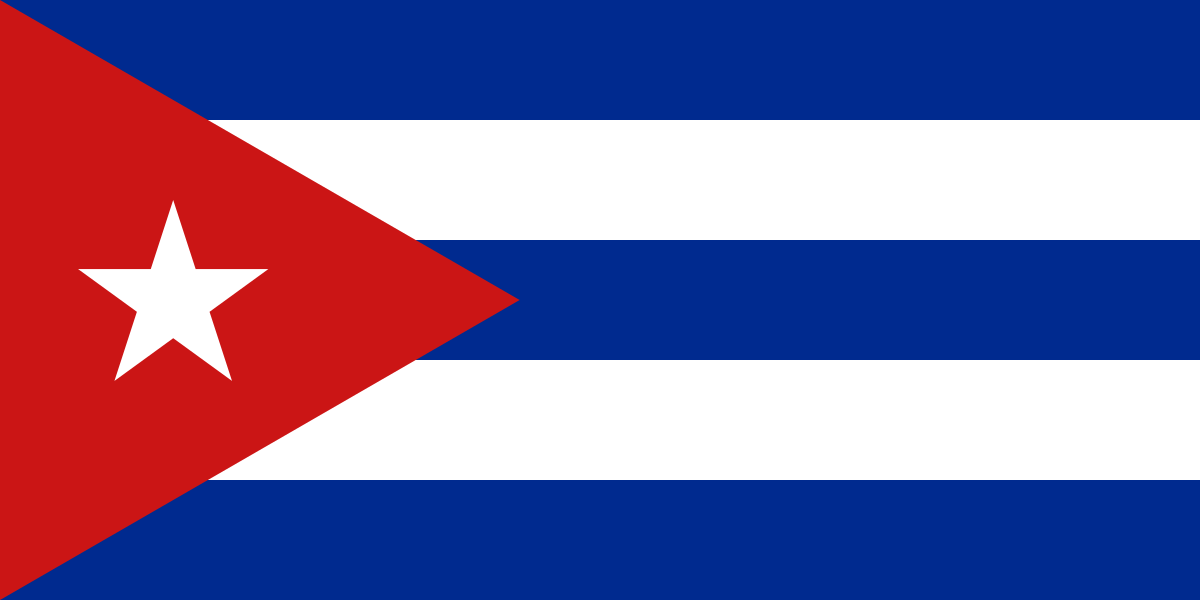
Cuba
Location Info
- Continent: North America
- Country: Cuba
- Coordinates: 21.5218 , -77.7812
Trust Info
Verified Geographic and Statistical Data
🌍 Continents

Overview
Cuba is an archipelago located in the northern Caribbean Sea, at the confluence with the Gulf of Mexico and the Atlantic Ocean. It is the largest island in the Greater Antilles and is situated south of the United States and the Bahamas. The nation is characterized by its diverse terrain, ranging from fertile plains used for agriculture to rugged mountain ranges like the Sierra Maestra.
Historically, Cuba was a Spanish colony for centuries before gaining independence and later undergoing a socialist revolution in 1959. Today, it remains a one-party state with a centrally planned economy. The country is globally recognized for its high literacy rates, comprehensive healthcare system, and significant contributions to music, sports, and biotechnology despite various economic challenges.
Truth & Facts
| Total Area | 109,884 sq km |
| Coastline | 3,735 km |
| Population | 11.0 million |
| Official Language | Spanish |
| Capital | Havana |
| Provinces | 15 Provinces, 1 Special Municipality |
| Independence from Spain | December 10, 1898 |
| Revolution Date | January 1, 1959 |
| Currency | Cuban Peso (CUP) |
| Main Exports | Sugar, Tobacco, Nickel, Pharmaceuticals |
| Electricity Access | 100% |
| Literacy Rate | 99.8% |
| Life Expectancy | 78.2 years |
| National Sport | Baseball |
| UNESCO Sites | 9 |
| National Bird | Tocororo |
| Major Airport | Jose Marti International |
| Internet Users | Approx 7.5 million |
| Safety Index | High |
| Legislature | National Assembly of People's Power |
| UN Membership | October 24, 1945 |
| Water Access | 95% |
| GDP Sector Share | Services (70%), Industry (25%), Agriculture (5%) |
| National Flower | Mariposa (Butterfly Jasmine) |
| Leading Newspaper | Granma |
📑 Table of Contents
Overview
Cuba is an island nation located in the northern Caribbean. It consists of the main island of Cuba, the Isla de la Juventud, and several archipelagos. The capital, Havana, is the largest city and serves as the country's economic and cultural hub.
- Strategic location at the entrance of the Gulf of Mexico.
- Largest island in the Caribbean region.
- Political system based on a socialist state.
- Global reputation for music, cigars, and healthcare.
- Unique preservation of mid-20th-century urban aesthetics.
History
Cuba was originally inhabited by the Ciboney and Taino peoples before the arrival of Christopher Columbus in 1492. It became a vital Spanish colony, serving as a hub for trade between the Old World and the New World. In 1898, after the Spanish-American War, Cuba gained nominal independence from Spain.
- 1959 Revolution led by Fidel Castro and Che Guevara.
- Overthrow of the Fulgencio Batista dictatorship.
- Introduction of a Marxist-Leninist political system.
- U.S. trade embargo initiated in the early 1960s.
- Collapse of the Soviet Union led to the 'Special Period' economic crisis.
Geography
The geography of Cuba is varied, featuring flat to rolling plains and rugged mountains. The Sierra Maestra in the southeast contains the highest point, Pico Turquino. Roughly one-quarter of the land is covered by mountains and hills.
| Feature | Name |
|---|---|
| Highest Peak | Pico Turquino (1,974 m) |
| Longest River | Cauto River (343 km) |
| Largest Wetland | Zapata Swamp |
Climate and Weather
Cuba has a tropical climate, moderated by trade winds that blow throughout the year. The year is divided into a dry season from November to April and a rainy season from May to October. The country is also susceptible to hurricanes, particularly between June and November.
- Average summer temperature: 27°C.
- Average winter temperature: 21°C.
- Annual rainfall: 1,320 mm on average.
- High humidity levels year-round.
- Frequent tropical storms in late summer.
Population and Demographics
Cuba's population is a result of complex historical migrations. Most citizens identify as White, Mulatto (mixed), or Black, reflecting the country's Spanish colonial and African slave trade history. The population growth rate has slowed significantly in recent decades.
- Life expectancy is among the highest in the Americas.
- High concentration of population in urban areas (over 75%).
- Declining birth rates and aging population trends.
- Large diaspora communities in the United States and Spain.
- Strong emphasis on racial integration in post-revolutionary policy.
Culture and Lifestyle
Cuban culture is a rich tapestry of Spanish and West African influences. This is most evident in the country's music, dance, and religious practices. The lifestyle is communal, with a high degree of social interaction in public spaces like the Malecon.
- World-famous music genres: Son, Mambo, and Salsa.
- Religious syncretism, particularly Santeria.
- Classic 1950s American cars are a common sight.
- Strong tradition in literature and cinema.
- High value placed on family and social solidarity.
Festivals and Events
Events in Cuba often blend political significance with traditional celebration. The Santiago de Cuba Carnival is one of the most vibrant festivals in the Caribbean, known for its loud music and elaborate costumes. National holidays often commemorate historical turning points.
- Santiago de Cuba Carnival (July).
- Havana Jazz Festival (January).
- International Ballet Festival of Havana.
- Havana Film Festival (December).
- Triumph of the Revolution (January 1st).
Food and Cuisine
Cuban cuisine is known as 'Comida Criolla,' which is a fusion of Spanish, African, and Caribbean flavors. It relies heavily on staples such as rice, beans, and root vegetables like yuca. Meat is typically slow-cooked and seasoned with garlic and citrus.
- Ropa Vieja: National dish made of shredded beef.
- Moros y Cristianos: Black beans and white rice.
- Congri: Red beans and rice.
- Lechon Asado: Roast suckling pig.
- Tostones: Twice-fried green plantains.
Economy and Industries
The Cuban economy is state-controlled and depends largely on the service sector, particularly tourism and the export of professional services (medical personnel). Agriculture and mining also contribute significantly to the national GDP.
- Largest world producer of high-quality tobacco.
- One of the world's largest reserves of nickel.
- Growing biotechnology and pharmaceutical industry.
- Significant dependence on remittances from overseas Cubans.
- Increasing role of small private businesses (MSMEs).
Cost of Living
The cost of living in Cuba is complex due to the dual economy and varying access to subsidized goods. Many basic services like healthcare and education are free, and some food items are subsidized through a ration system. However, goods sold in the open market can be expensive relative to state wages.
- Subsidized housing and utilities.
- High cost of imported electronics and clothing.
- Ration book (Libreta) provides essential staples.
- Informal markets significantly influence real costs.
- Transportation is relatively inexpensive but often crowded.
Employment and Business
The state remains the largest employer in Cuba, though the private sector has expanded since 2021. Most professionals work in health, education, and public administration. Recent reforms have legalized small and medium-sized private enterprises to stimulate the local economy.
- State-guaranteed employment in various sectors.
- High percentage of workers in the informal economy.
- Self-employment (cuentapropismo) is highly regulated.
- Focus on cooperatives in the agricultural sector.
- Strict regulations on foreign investment partnerships.
Real Estate and Housing
Housing in Cuba is primarily state-regulated, although individuals have been allowed to buy and sell property since 2011. Many Cubans live in historic colonial buildings or Soviet-style apartment blocks. Overcrowding and maintenance of aging infrastructure remain significant challenges.
- High rate of home ownership (approx. 85%).
- Property sales are restricted to citizens and residents.
- Architecture varies from Spanish Colonial to Art Deco.
- Significant shortage of modern housing units.
- Havana's historic center is a focus of renovation.
Transportation and Connectivity
Transportation in Cuba is a mix of traditional and modern methods. While the railway system is one of the oldest in the Americas, it requires modernization. Road transport is dominated by state-run buses and private vintage cars used as taxis.
- Viazul: Primary bus service for inter-city travel.
- 'Guanajos': Large trucks converted into passenger transport.
- Extensive use of bicycles and horse-drawn carriages in rural areas.
- Maritime links to Isla de la Juventud.
- Main highway: Carretera Central running across the island.
Infrastructure and Utilities
Cuba has achieved universal access to electricity, though the power grid is vulnerable to fuel shortages and aging equipment. Water and sanitation systems cover the majority of the population but often face maintenance issues in urban centers.
- Electricity generated mainly from fossil fuels and gas.
- Expansion of solar energy initiatives in rural provinces.
- Public telecommunications managed by ETECSA.
- Limited but growing access to residential fiber-optic internet.
- Extensive system of reservoirs for agricultural irrigation.
Education
Education is a cornerstone of the Cuban state, provided free at all levels. The country eliminated illiteracy shortly after the 1959 revolution through national literacy campaigns. Universities are located in every province, focusing on medicine, engineering, and the arts.
- Compulsory education up to the ninth grade.
- University of Havana: Founded in 1728.
- Strong emphasis on teacher training and sports education.
- Highest number of doctors per capita globally.
- International students often study medicine in Cuba.
Healthcare
Cuba operates a national healthcare system that is free for all citizens. It focuses on preventive care through neighborhood 'consultorios' where doctors and nurses live within the community they serve. The country is a pioneer in several areas of biotechnology.
- Lower infant mortality rates than many developed nations.
- Producer of several unique vaccines and cancer treatments.
- Export of medical professionals to over 60 countries.
- Focus on community-based primary care models.
- Challenges in accessing specific medicines due to economic barriers.
Tourist Attractions
Cuba offers a blend of historic architecture, natural beauty, and pristine beaches. Old Havana is a UNESCO World Heritage site known for its well-preserved colonial buildings and plazas. The Vinales Valley showcases unique karst landscapes and traditional tobacco farming.
- Old Havana (Habana Vieja): Historic heart of the capital.
- Varadero: Famous white-sand beach peninsula.
- Trinidad: Spanish colonial town and UNESCO site.
- Castillo de San Pedro de la Roca in Santiago.
- Cayo Coco: Popular island for snorkeling and resorts.
Things to Do
Cultural immersion is the primary activity for visitors to Cuba. Walking through historic city centers, attending live music performances, and exploring tobacco plantations are popular activities. The island's geography also allows for hiking and diving.
- Walking tour of the Malecon seawall in Havana.
- Scuba diving in the Jardines de la Reina.
- Hiking in the Topes de Collantes National Park.
- Attending a baseball game at Estadio Latinoamericano.
- Visiting a cigar factory in Pinar del Rio.
Best Places to Visit
Beyond the capital, several cities and natural reserves offer unique experiences. Trinidad is celebrated for its cobblestone streets and museum-like atmosphere, while Santiago de Cuba is the cradle of Cuban music and revolution.
| Place | Highlight |
|---|---|
| Havana | Architecture and History |
| Vinales | Nature and Tobacco |
| Varadero | Beach and Relaxation |
| Trinidad | Colonial Heritage |
Travel Guide
Travel to Cuba requires a Tourist Card (visa) for most nationalities. The country uses the Cuban Peso (CUP), and cash is still the primary form of payment, though some state-run shops require digital payments or specific cards.
- Tourist Card is mandatory for entry.
- Health insurance is required for all visitors.
- Limited acceptance of American credit cards.
- Spanish is the only official language.
- Standard voltage is 110V (Type A/B plugs).
Nearby Places
Cuba is centrally located in the Caribbean, making it a neighbor to several other island nations and North American regions. Maritime and air links connect Cuba to Mexico, the Bahamas, and Jamaica.
- Key West, USA: Located 90 miles to the north.
- Yucatan Peninsula, Mexico: To the west.
- Jamaica: Situated to the south.
- Haiti: Located to the east across the Windward Passage.
- The Bahamas: Located to the northeast.
Environment and Nature
Cuba is the most biologically diverse island in the Caribbean. It has over 6,000 species of plants, many of which are endemic. The government has established numerous protected areas and national parks to preserve its coral reefs and forests.
- Alejandro de Humboldt National Park.
- Home to the world's smallest bird (Bee Hummingbird).
- Extensive mangrove forests along the southern coast.
- Protected coral reef systems (Jardines de la Reina).
- Active reforestation programs since the 1960s.
Government and Administration
Cuba is a socialist republic with a single-party system led by the Communist Party of Cuba (PCC). The 2019 Constitution defines the President as the head of state and the Prime Minister as the head of government, appointed by the National Assembly.
- National Assembly of People's Power is the legislative body.
- Local government through Municipal Assemblies.
- Universal suffrage for citizens aged 16 and older.
- Supreme Court is the highest judicial authority.
- State ownership of major productive resources.
Safety and Public Services
Public safety in Cuba is characterized by a high police presence and low rates of violent crime compared to other regional nations. Public services like firefighting and civil defense are well-organized, especially for disaster management during hurricane seasons.
- Civil Defense is highly efficient in hurricane evacuations.
- Police (PNR) are visible in all major tourist areas.
- Low prevalence of drug-related crimes.
- Emergency services available via centralized phone numbers.
- Street lighting is widespread but subject to power conservation.
Best Time to Visit
The optimal time to visit Cuba is during the dry season, from November to April. During these months, the weather is sunny and mild, avoiding the heat and humidity of the summer as well as the peak hurricane risk.
- High Season: December to March.
- Shoulder Season: April and November.
- Hottest Months: July and August.
- Wettest Months: September and October.
- Carnival Season: Late July.
Local Business Directory
Business in Cuba is evolving from a state-dominated model to a hybrid system. While major hotels and industries are state-run (often under Gaviota or Habaguanex), thousands of small private businesses (MSMEs) now operate in food, retail, and tech services.
- State-owned travel agencies: Havanatur and Cubatur.
- Telecommunications: ETECSA (Sole provider).
- National Airline: Cubana de Aviacion.
- Beverage Industry: Havana Club International (Joint venture).
- Growing private sector 'Paladares' (private restaurants).
General Information FAQs
Where is Cuba located?
Cuba is located in the northern Caribbean Sea, south of Florida and the Bahamas, north of Jamaica, and east of Mexico's Yucatan Peninsula.
What is Cuba known for?
Cuba is famous for its vibrant music scene, high-quality cigars, historic Spanish colonial architecture, and its unique political history.
Why is Cuba famous?
It is famous for the 1959 Revolution, its long-running socialist government, the preservation of vintage American cars, and its white-sand Caribbean beaches.
What country or region is Cuba part of?
Cuba is an independent island nation in the Caribbean region of North America.
What is the population of Cuba?
As of recent estimates, the population of Cuba is approximately 11 million people.
What languages are spoken in Cuba?
Spanish is the official language and is spoken by the entire population. Some English is spoken in tourist areas.
What time zone is Cuba in?
Cuba is in the Eastern Time Zone (UTC-5) and observes Daylight Saving Time.
What are the key facts about Cuba?
Cuba is the largest Caribbean island, has a 99.8% literacy rate, and is a one-party socialist state.
What makes Cuba unique?
Its blend of African and Spanish heritage, combined with its resistance to global capitalist trends and preservation of 1950s aesthetics, makes it distinct.
How large is Cuba in area?
Cuba covers a total land area of approximately 109,884 square kilometers (42,426 square miles).
History FAQs
What is the history of Cuba?
Cuba's history includes Spanish colonial rule, a brief period of U.S. intervention, and a landmark socialist revolution in 1959.
When was Cuba established?
The Republic of Cuba was formally established on May 20, 1902, after gaining independence from the U.S. military administration.
What major historical events happened in Cuba?
Key events include the landing of Columbus (1492), the Spanish-American War (1898), the Cuban Revolution (1959), and the Cuban Missile Crisis (1962).
Who were important historical figures from Cuba?
Important figures include Jose Marti, Fidel Castro, Che Guevara, and Camilo Cienfuegos.
How has Cuba developed over time?
It transitioned from a plantation-based colonial economy to a highly literate socialist society with advanced medical capabilities.
Geography & Environment FAQs
What is the geography of Cuba?
Cuba features mostly flat to rolling plains, with rugged mountains in the southeast (Sierra Maestra) and central regions (Escambray).
What natural features surround Cuba?
Cuba is surrounded by the Atlantic Ocean to the north and east, the Gulf of Mexico to the northwest, and the Caribbean Sea to the south.
Are there mountains, rivers, or lakes near Cuba?
Yes, the Sierra Maestra mountains and the Cauto River are prominent features. There are no large natural lakes, but many man-made reservoirs.
What is the elevation of Cuba?
Most of Cuba is low-lying, but its highest point, Pico Turquino, reaches an elevation of 1,974 meters.
What ecosystems exist around Cuba?
Ecosystems include tropical forests, mangroves, dry scrublands, and extensive coral reefs.
Climate & Weather FAQs
What is the climate like in Cuba?
Cuba has a tropical savanna climate with a distinct dry season (winter) and a wet season (summer).
What is the average temperature in Cuba?
The average annual temperature is about 25°C (77°F).
What is the weather like throughout the year in Cuba?
Winters are warm and dry, while summers are hot, humid, and see the majority of the annual rainfall.
Does Cuba experience extreme weather?
Yes, Cuba is in a major hurricane path and frequently experiences tropical storms between June and November.
What is the best time of year to visit Cuba?
The best time to visit is during the dry season, specifically from December to April.
Population & Society FAQs
What is the population density of Cuba?
The population density is approximately 102 people per square kilometer.
What ethnic groups live in Cuba?
The population is predominantly of Spanish and African descent, with a large percentage identifying as Mulatto or mixed race.
What religions are practiced in Cuba?
The main religions are Roman Catholicism and Santeria (an Afro-Cuban syncretic religion).
What is daily life like in Cuba?
Daily life is characterized by a strong sense of community, though residents face economic challenges such as shortages of goods.
How diverse is the population of Cuba?
Cuba is highly diverse, reflecting over 500 years of blending between European, African, and minor indigenous and Asian influences.
Culture & Traditions FAQs
What cultural traditions are important in Cuba?
Music and dance (Salsa, Son, Rumba) are integral, as are the traditions of cigar making and communal celebrations.
What festivals are celebrated in Cuba?
Major festivals include the Santiago de Cuba Carnival, the Havana Jazz Festival, and Labor Day (May 1st).
What cultural landmarks exist in Cuba?
Landmarks include the Castillo del Morro, the Capitolio in Havana, and the colonial city of Trinidad.
What traditional clothing or customs are common in Cuba?
The Guayabera shirt is the traditional formal attire for men. Customs include drinking Cuban coffee and socializing on the Malecon.
What arts and crafts are associated with Cuba?
Cuba is known for its vibrant paintings, hand-rolled cigars, and intricate wood carvings.
Food & Cuisine FAQs
What foods is Cuba known for?
Cuba is known for Ropa Vieja, black beans and rice, and the Cuban sandwich.
What traditional dishes originate from Cuba?
Dishes include Congri, Tostones, Arroz con Pollo, and Lechon Asado.
What are the best restaurants in Cuba?
Famous restaurants include La Guarida in Havana and San Jose in Trinidad (note: these are historically recognized establishments).
What local ingredients are commonly used in Cuba cuisine?
Common ingredients include garlic, cumin, oregano, sour orange, yuca, and black beans.
What food markets or street foods are popular in Cuba?
Popular street foods include pizza, churros, and pork sandwiches (pan con lechon).
Economy & Business FAQs
What are the main industries in Cuba?
Main industries include tourism, sugar, tobacco, nickel mining, and pharmaceuticals.
What economic activities drive the economy of Cuba?
Service exports (especially medical services), tourism, and remittances are the primary economic drivers.
What businesses operate in Cuba?
Most large businesses are state-owned, but there is a growing sector of small private enterprises (MSMEs) in retail and services.
Is Cuba an important economic center?
Cuba is a significant regional player in the Caribbean, particularly in tourism and professional service exports.
What are the major exports or products from Cuba?
Major products include cigars, raw sugar, nickel, fish, and medical vaccines.
Employment & Jobs FAQs
What job opportunities are available in Cuba?
Opportunities exist primarily in the state sectors of health, education, and tourism, with growing private opportunities in hospitality.
What are the major employers in Cuba?
The Cuban government is the largest employer, managing most industries and services.
What skills are in demand in Cuba?
There is high demand for medical professionals, engineers, and tourism industry workers.
Is Cuba a good place to work?
Cuba offers high job security and free benefits, though state wages are generally low relative to the cost of non-subsidized goods.
What is the unemployment rate in Cuba?
Official figures usually report a very low unemployment rate, often under 3%.
Cost of Living FAQs
Is Cuba expensive to live in?
It is inexpensive for those relying on subsidized state services, but expensive for those purchasing imported goods in the open market.
What is the average cost of living in Cuba?
The cost varies wildly based on whether one has access to foreign currency or relies solely on the local peso.
How much does housing cost in Cuba?
Housing is largely state-provided or inherited; the market for buying property is still developing and prices vary by location.
What are average food and utility costs in Cuba?
Basic utilities are heavily subsidized, but food costs can be high for items not included in the monthly ration book.
Is Cuba affordable compared to nearby cities?
Compared to Miami or Nassau, Havana is generally more affordable for basic services but less affordable for modern consumer goods.
Housing & Real Estate FAQs
What types of housing are available in Cuba?
Housing includes colonial-era houses, Art Deco apartments, and modern concrete blocks built in the socialist era.
What is the average home price in Cuba?
Prices range from a few thousand dollars for small apartments to over $100,000 for large homes in prestigious Havana neighborhoods.
Is it better to rent or buy property in Cuba?
Most Cubans own their homes; renting is common for foreigners through state-licensed 'Casas Particulares'.
Which neighborhoods are popular in Cuba?
In Havana, Vedado, Miramar, and Old Havana are the most sought-after neighborhoods.
How has the property market changed in Cuba?
Since 2011, the market has transitioned from a system of 'swapping' to a legal system of buying and selling homes.
Transportation FAQs
How do you get to Cuba?
Most visitors arrive by air at Jose Marti International Airport in Havana or other regional airports like Varadero or Holguin.
What is the nearest airport to Cuba?
The primary hub is Jose Marti International Airport (HAV) in Havana.
Does Cuba have railway connections?
Yes, Cuba has an extensive railway network, including the main line from Havana to Santiago de Cuba.
How reliable is public transportation in Cuba?
Inter-city buses (Viazul) are reliable for tourists; urban public transport is often crowded and experiences delays.
What major highways or roads connect to Cuba?
The Carretera Central is the main highway connecting the eastern and western ends of the island.
Education FAQs
What schools are located in Cuba?
There are state-run primary and secondary schools in every municipality across the country.
Are there universities in Cuba?
Yes, major universities include the University of Havana and the University of Oriente.
What is the literacy rate in Cuba?
The literacy rate is nearly 100%, one of the highest in the world.
What educational opportunities exist in Cuba?
Opportunities are vast in medical sciences, arts, and physical education, all provided free by the state.
Is Cuba a good place for students?
It is excellent for those studying medicine or Spanish language, offering deep cultural immersion.
Healthcare FAQs
What hospitals are available in Cuba?
Major hospitals include Hermanos Ameijeiras in Havana and various provincial clinical hospitals.
Are there emergency medical services in Cuba?
Yes, the SIUM (System of Urgent Medical Emergencies) provides ambulance and emergency care.
What healthcare facilities exist in Cuba?
The system relies on a network of neighborhood polyclinics and family doctor offices.
Is healthcare affordable in Cuba?
Healthcare is free and universal for all Cuban citizens.
Are specialized medical services available in Cuba?
Yes, Cuba offers advanced specialized services in ophthalmology, orthopedics, and oncology.
Tourism & Travel FAQs
What are the top tourist attractions in Cuba?
Key attractions include Old Havana, Varadero Beach, Trinidad, and the Vinales Valley.
What are the best things to do in Cuba?
Visitors enjoy listening to live music, touring cigar factories, and exploring colonial history.
Is Cuba worth visiting?
Yes, it offers a unique historical and cultural experience that is unavailable anywhere else in the world.
What landmarks should visitors see in Cuba?
Important landmarks include the Plaza de la Revolucion, the Malecon, and the Che Guevara Mausoleum.
How many days should tourists spend in Cuba?
A typical trip to see the main highlights lasts between 7 and 14 days.
Nearby Places FAQs
What places are near Cuba worth visiting?
Nearby destinations include the Florida Keys, the Bahamas, and Cancun, Mexico.
What cities or towns are close to Cuba?
Miami and Nassau are the closest major international cities outside of Cuba.
What natural attractions are near Cuba?
The Mesoamerican Barrier Reef and the Everglades are geographically close natural features.
What day trips can be taken from Cuba?
Day trips are common between Havana and Vinales or Varadero.
What famous destinations are within reach of Cuba?
The Cayman Islands and Jamaica are within a short flight from the island.
Safety FAQs
Is Cuba safe to live in?
Yes, Cuba is generally considered very safe for residents due to low levels of violent crime.
Is Cuba safe for tourists?
Cuba is one of the safest destinations in the Caribbean for international travelers.
What is the crime rate in Cuba?
The violent crime rate is extremely low, though petty theft and scams can occur in crowded areas.
What emergency services operate in Cuba?
Police, fire (Bomberos), and medical services are available via national emergency numbers.
What safety tips should visitors follow in Cuba?
Visitors should avoid carrying large amounts of cash and be wary of 'jineteros' (unlicensed street guides).
Lifestyle & Living FAQs
Is Cuba a good place to live?
It offers a high quality of life in terms of culture and safety, though economic restrictions can be challenging.
What recreational activities are available in Cuba?
Activities include baseball, beach sports, dancing, and social gatherings in public plazas.
Is Cuba family-friendly?
Yes, Cuban culture is very family-oriented and children are welcomed in almost all social settings.
What outdoor activities are popular in Cuba?
Hiking, snorkeling, bird watching, and fishing are very popular across the island.
What makes life enjoyable in Cuba?
The combination of a warm climate, strong social ties, and a rich musical heritage makes life enjoyable.
Practical Information FAQs
What travel tips should visitors know about Cuba?
Bring sufficient cash, as American cards often do not work, and download maps for offline use.
What local customs should visitors respect in Cuba?
Respect political sensitivities and always ask before taking photos of government buildings or officials.
How accessible is Cuba for international visitors?
It is highly accessible via flights from Europe, Canada, and Latin America, with specific regulations for U.S. travelers.
What services are available for tourists in Cuba?
State-run hotels, private homestays (Casas Particulares), and guided tour services are widely available.
What important information should travelers know before visiting Cuba?
Ensure you have a valid Tourist Card, health insurance, and be prepared for limited internet connectivity.
Environment FAQs
What is the national bird of Cuba?
The Tocororo is the national bird, chosen for its plumage which matches the colors of the Cuban flag.
Are there dangerous animals in Cuba?
Cuba has very few dangerous animals; there are no venomous snakes on the island.
What is the most famous natural park in Cuba?
Alejandro de Humboldt National Park is famous for its incredible biodiversity.
Does Cuba have coral reefs?
Yes, Cuba is home to some of the healthiest coral reefs in the Caribbean, such as Jardines de la Reina.
Is tap water safe to drink in Cuba?
It is generally recommended for visitors to drink bottled or boiled water.